

ℹ️ 🛹 Web Média Skate 🛹 ℹ️

Chroniques · Opinion
Santa Cruz Skateboards Turns 53: What Still Keeps the Original Brand Alive?
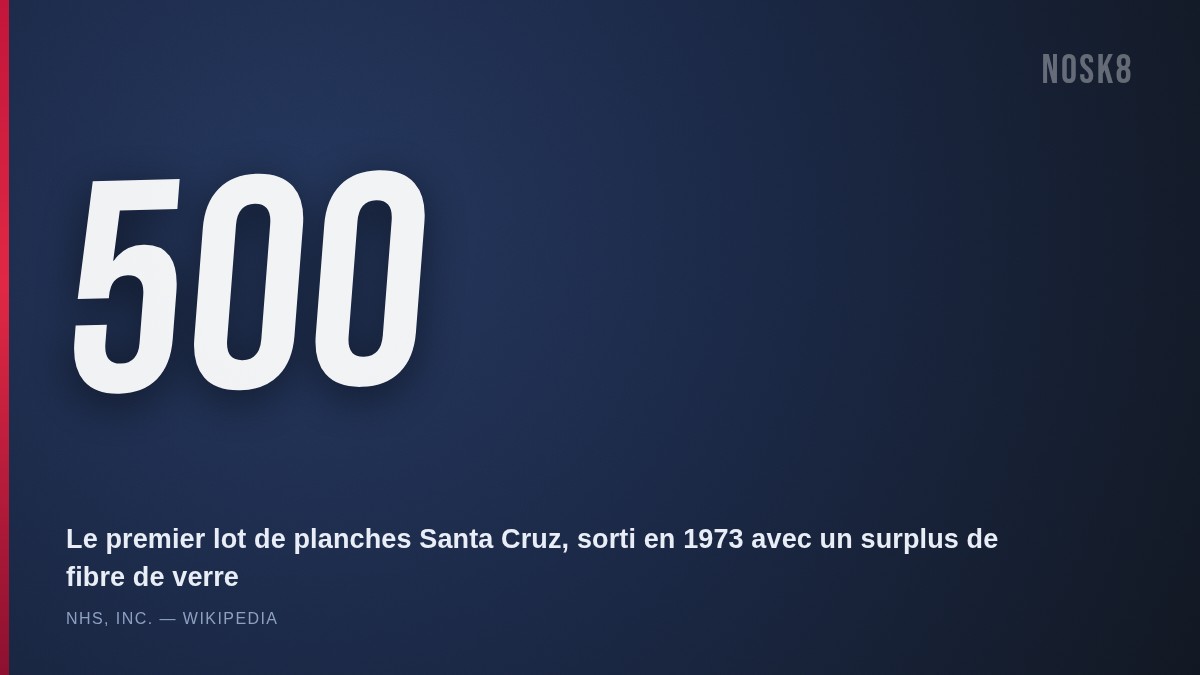
En 1973, trois surfeurs sortent 500 planches avec un surplus de fibre de verre. En 2026, Santa Cruz vend des decks Pokémon en sachet surprise. Entre les deux, qu'est-ce qui a tenu ?
On October 17, 2026, Santa Cruz dropped a line of skateboards sealed in packets, just like Pokémon cards. Thirty possible designs, and three gold variants limited to 500 pieces worldwide. The brand that’s been pulling the surprise‑pack game for 53 years was born in 1973 from a bet between three wiped‑out surfers: crank out 500 boards using the leftover fiberglass from their workshop.

From the 1973 fiberglass stash to the 2026 Pokémon‑style pouch, a half‑century of skate has unfolded. So a simple question popped up for every thirty‑something who’s ever had a Santa Cruz under their feet: what truly sticks around from the original brand?
Dans cet article 6 parties
- 1973: 500 boards and a dusty stockpile
- 1979: Olson, Peters, Alba — three pros in one go, and punk…
- 1985-1986: a screaming hand, and a 16‑year‑old negotiating
- Roskopp, a bike and a Dutch check: when Santa Cruz sells what’s…
- What sticks in 2026: a 1979 name, two designs, and a reflex
- And you, with your Roskopp on the wall?
1973: 500 boards and a dusty stockpile
At first, there was no skate. There was NHS, a surfboard company built in Santa Cruz, California, by Richard Novak, Doug Haut, and Jay Shuirman. The three initials gave the name. Surf didn’t pay much, margins were thin, the company was sputtering.
A friend from a Hawaiian firm challenged them: make 500 skateboards. They had excess fiberglass, so they used it. The first batch shipped fast, demand followed. According to the NHS, Inc. page on Wikipedia, Santa Cruz became the oldest continuously operating skate brand in the world.
Keep that detail in mind. The brand didn’t spring from a skater’s dream. It sprang from a stock to clear and a order that wasn’t turned down.
1979: Olson, Peters, Alba — three pros in one go, and punk in the contests
In 1978, Jim Phillips drew the logo: the red dot, the angular caps, the triangle A. That same year, Novak and Shuirman launched Independent with Fausto Vitello and Eric Swenson.
In 1979, Santa Cruz dropped three riders pro at once: Steve Olson, Duane Peters and Steve Alba. Olson left that same year with the Skateboarder of the Year title. He’s also credited with bringing punk into skate. Stacy Peralta said he’d show up at contests almost untrained, then nailed every run.
Keep Steve Alba in the back of your mind. He’s coming back.
1985-1986: a screaming hand, and a 16‑year‑old negotiating
In 1985, Jim Phillips drew the Screaming Hand, the blue hand that screams. It became the brand’s icon, then a skate icon in its own right.
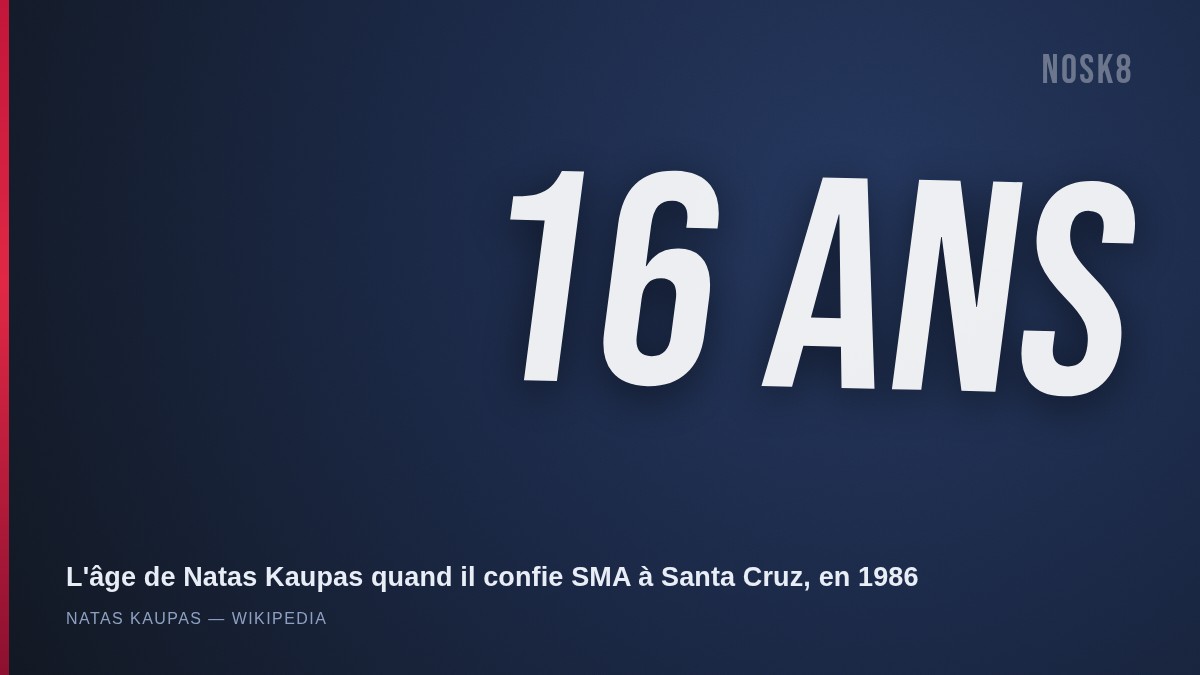
A year later, the story goes through a Santa Monica teen. Natas Kaupas rode for Santa Monica Airlines, Skip Engblom’s little label that couldn’t keep up with demand. At 16, Natas himself brokered the deal that handed SMA’s manufacturing and distribution to Santa Cruz. One of the first real street pros, with Gonz, he landed in a house known for its ramp riders. Two years later came Streets on Fire – 1988, the brand’s video.
Santa Cruz has never been a skater brand. It’s a brand that’s always known how to sign. — What the ’80s say
Roskopp, a bike and a Dutch check: when Santa Cruz sells what’s beyond
Santa Cruz drops a Rob Roskopp board before the rider and Novak even cross paths. In 1993, the two co-founded Santa Cruz Bicycles with engineer Mike Marquez. Their first full-suspension MTB, the Tazmon, hit the streets in 1994. On July 3, 2015, NHS sold the bike brand to Dutch group Pon, owners of Cervélo.
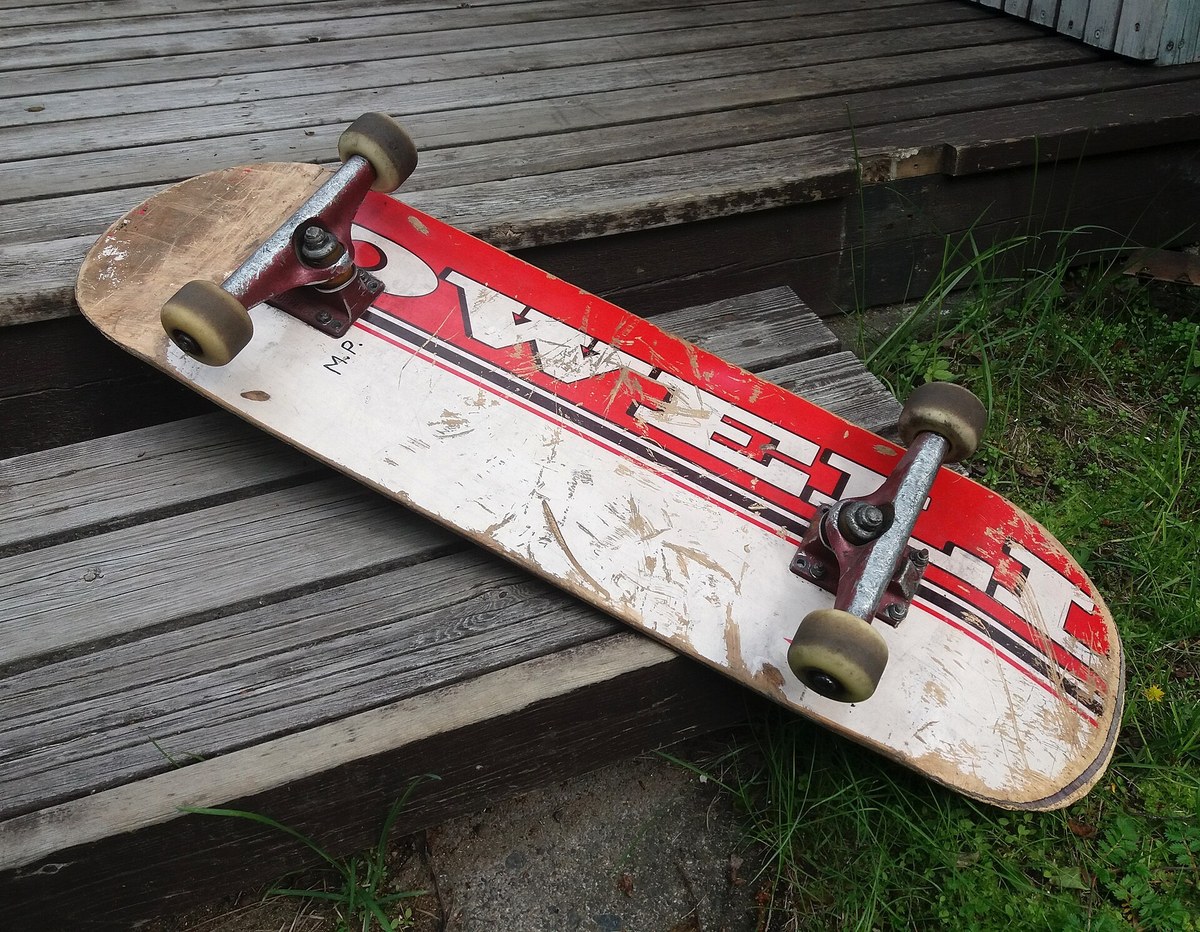
The design, though, doesn’t sell. In February 2013, designer Jeremy Scott walked the runway at New York Fashion Week with pieces eerily close to Phillips’ sketches. The skate scene rumbled, NHS stepped up. In September, Scott admitted his mistake and the pieces were destroyed. You see the purge: the brand gave up the bike, never the hand.
What sticks in 2026: a 1979 name, two designs, and a reflex
Open the Santa Cruz team page today. Eight pros: Emmanuel Guzman, Erick Winkowski, Fabiana Delfino, Jake Wooten, Jereme Knibbs, Maurio McCoy, Rob Pace, Tom Asta. Four ams, including Dutch Keet Oldenbeuving and Taiga Nagai. And a “Veteran” line with Eric Dressen, Ron Whaley, Tom Knox. And Steve Alba, pro back in 1979. Forty‑seven years later, he’s still on the list.
On boards, the shop still sells a Roskopp face, the Natas panther re‑imagined, Corey O’Brien’s Reaper Hand. Next to it, Winkowski’s shaped rise to 10.35 inches. And at Independent, Phillips’ cross, pulled in 2022, returned in 2026.
Here’s the answer. What’s left of the original brand isn’t a skate style: the 2026 roster has nothing to do with the 1979 lineup. It’s three things. Phillips’ drawings, the 1978 point, and the 1985 hand that his son Jimbo carries on. A 1979 guy, Alba. And most of all the 1973 reflex: do what sells with what you’ve got on hand. Yesterday a surplus of fiberglass, today the Pokémon universe.
Too much fiberglass in 1973, Pokémon packs in 2026: the only real DNA of Santa Cruz is the sense of the deal. — The one‑liner answer
And you, with your Roskopp on the wall?
Think back to the board you’d display in the shop window. The smell of grip glue, the half‑peeled red point from the boardslides, the hand screaming on a shirt that’s too big. What you loved, Santa Cruz kept warm and re‑sold to you in a reissue.
It’s always been a Santa Cruz box that knows how to read its era. And if you’re looking to ride wide like back in the day, our piece on the return of 10‑inch decks will tell you where to start. For trucks, the Independent, Thunder, Venture match does the sorting.
Your first Santa Cruz, which was it: Roskopp, Natas, Screaming Hand, or a plain red dot? And would you buy it in a reissue? Drop it in the comments ↓
Le lexique
-
1
Pro / am
Le pro a sa planche signature et un salaire ; l'am (amateur) est sponsorisé mais pas encore passé pro.
-
2
Shaped
Planche à forme découpée, souvent large, héritée des années 80, à l'opposé du popsicle symétrique.
-
3
Réédition
Planche qui reprend le dessin d'un vieux modèle pro, vendue aujourd'hui en série.
-
4
Vert
Skate de rampe à parois verticales, la discipline reine de la fin des années 70 et des années 80.


Continue ta lecture
ChroniquesFully Flared, 19 ans plus tard : la vidéo Lakai qui refuse de vieillir
Sortie en 2007 après quatre ans de tournage, Fully Flared reste la vidéo Lakai qui a tout changé. Explosions, M83, rédemption de Guy Mariano, marathon…
Commentaires (0)