
ℹ️ 🛹 Web Média Skate 🛹 ℹ️

★ Chroniques · Opinion
Flip, 1994: four Europeans crash into Huntington Beach without cars or cash — how Deathbox turned into Flip?
1994 : Rowley, Penny, Glifberg et Scott partent pour Huntington Beach, sans voiture ni argent. Derrière eux, une marque anglaise qui s'appelait Deathbox.

1994, Huntington Beach. Geoff Rowley just turned eighteen, Tom Penny was seventeen. They rolled in from England with a brand that was still called Deathbox a short while ago, no contacts, no car. Rowley will tell it in 2012: “We had no money, no car, just the board we had. We couldn’t afford to break it.”
Thirty years later, Flip is a California brand everyone thinks was born in Huntington Beach. It actually comes from England, from a merger nobody talks about, and from a boss’s bet that most European shops never dared. So how did Deathbox turn into Flip? You’ll see the answer boils down to two moves, and the second has nothing to do with a logo.
Liverpool, 1992: Jeremy Fox announces the trip two years before
Deathbox was born in 1987 in the UK. Three founders: Graham McEachran, Jeremy Fox and Duncan Houlton. Back then, English skate rolled in the rain, with magazines that arrived from the US late and shops that counted on the fingers of one hand.
In Liverpool, the only place that sold boards was a record store. Rowley started around 1989 and skated all day, when his friends came back after an hour. Deathbox became his first sponsor, at the same time as Gullwing trucks.
In 1992, Jeremy Fox introduced his rider in the “Check Out” section of TransWorld. He described him in a rush: “technique, tough, stylish, low-key, punk, street kid.” And he slipped in a line that, read today, is worth a business plan: “When Deathbox sends him to the US, those waves will ride with him.”
Read it carefully. It’s not “if.” It’s “when.” Two years before the plane, the boss had already decided that his crew would end up in California.
Oxford, Copenhagen, Lyon: the squad Deathbox scoops up in Europe
Fox doesn’t just recruit in Liverpool. In Oxford, a kid born in Abingdon skates without a magazine or a shop. Sean Goff, a local pro and co‑owner of SS20, spots him. Fox brings him into Deathbox. His name is Tom Penny, and at sixteen he already has his “Wheels of Fortune” segment in the 411 Video Magazine.
In Copenhagen, there’s Rune Glifberg, a pro since ’92, a ramp rider. In England, Andy Scott and Alex Moul. And in Lyon, a name the French thirty‑somethings know: Jérémie Daclin, European champ, nicknamed “The Master” by Lyon skaters. He filmed for New Deal in the U.S., then chose Deathbox because the brand was closer to home.
Keep that last detail in mind. It’s going to matter.

Here’s what that crew looks like once they arrive: the Flip section of the 411 Video Magazine, 1995. Penny drops a few shots that we’ll loop for a decade.
When Deathbox sent him to the U.S., those waves would ride with him. — Jeremy Fox, TransWorld, 1992
July 1994: no car, no cash, and ten boards we can’t afford
July 1994. Jeremy Fox, his partner Ian Deacon, and Geoff Rowley land the first ones. The version we hear everywhere says “four Europeans in ’94”: Rowley, Penny, Glifberg, and Scott, the pro crew at the time of departure. The brand’s page is more precise. Penny and Glifberg follow a bit later, Glifberg settling in Costa Mesa after high school, in ’95.
Close your eyes for two seconds. You’re coming out of an English winter, concrete still damp, boards wobbling. And you wake up in a city where it doesn’t rain. Rowley: “We grew up dreaming of living in California, waking every morning and going skate without a drop of rain. No one could hold us back.”
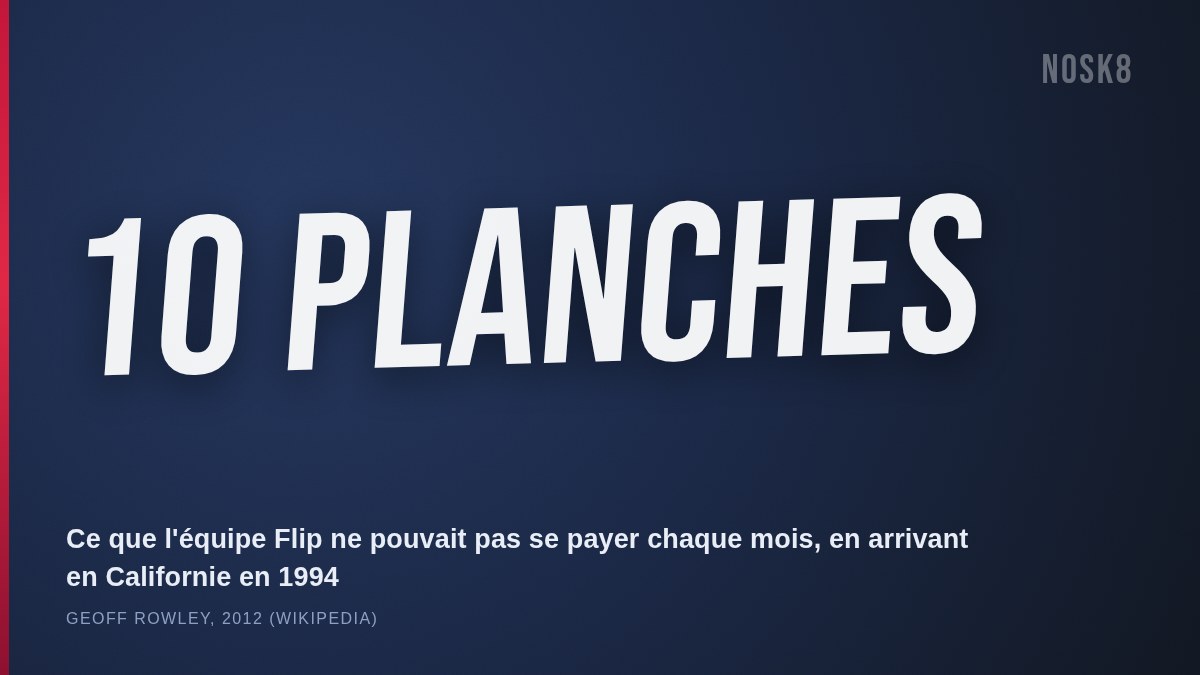
What hits you is the economy. Rowley lays it out straight: the brand was just starting, the crew couldn’t afford to use ten boards a month. Pros on sponsorships who treat their decks like a fifteen‑year‑old kid. No one knows anyone. One hand extended: Ed Templeton and his fledgling brand Toy Machine, right across the street. We’ve told you that friendship in Rowley and Templeton’s story.
Two weeks later, Rowley on the cover of TransWorld
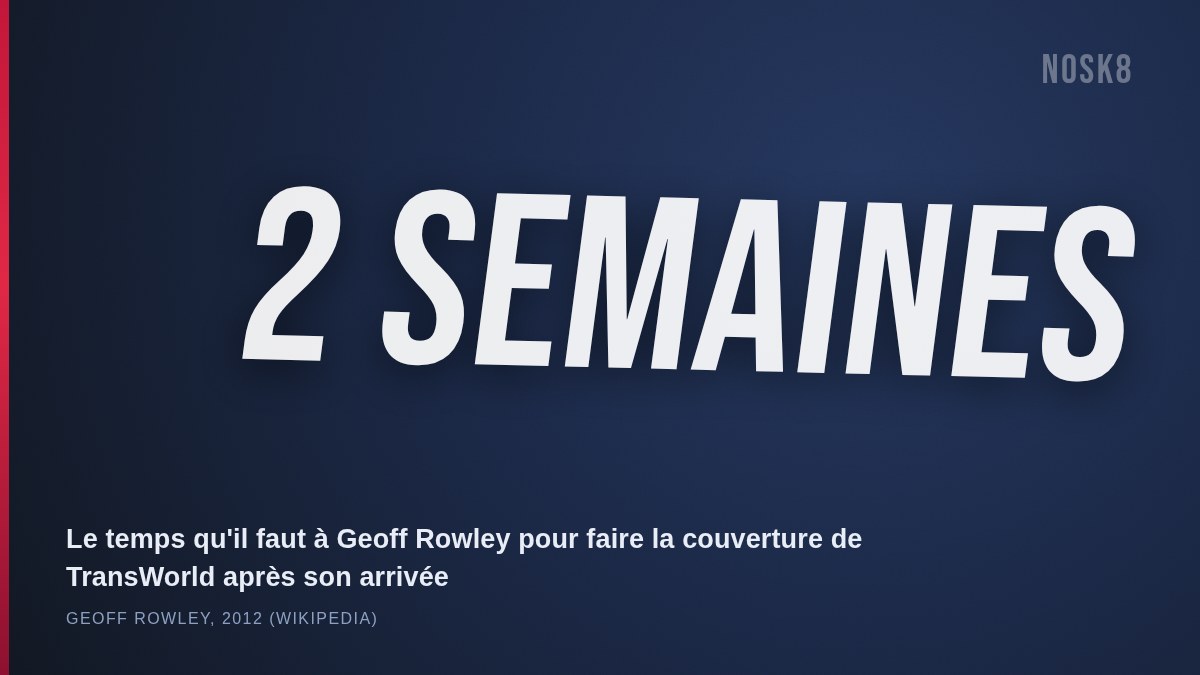
What followed wasn’t in any plan. Rowley’s been in the U.S. for two weeks. The crew tours the TransWorld offices. Photographer Swift has to shoot Gullwing and asks him if he’s riding for them. Rowley: “Yeah, I guess… I had free trucks from the distributor in England. Am I riding for them? I don’t know.”
They’re going to shred. The shot ends up on the magazine’s cover. “I remember getting it and thinking, what just happened?” He says that cover is what made him stay for good.
Penny, meanwhile, speaks for all of California. A frontside flip switch at Carlsbad Gap. A run of five tricks ending in a backside tailslide on a nine‑step stair ramp. By the end of ’95, Tony Hawk himself greets him. Skin Phillips, then at TransWorld, sums up the difference: Flip dudes were “absolutely not impressed by contests or demos. That’s just what they grew up on.”
Bash, Deathbox, Flip: how the name changed, and why the plane matters more
We hit the title question. First move, the name. Deathbox merges with another UK brand, Bash Skateboards, and the whole thing gets rebranded as Flip. It happens before the US: from 1993, the brand’s first film, The Long Overdue, shot by Sean Goff with Rowley, Penny, Moul, Scott and Glifberg, drops under the Flip banner.
But a name doesn’t make a brand. The real pivot is the second move: leaving England. Rowley broke it down in 2006, no fluff. A Europe‑based brand “can’t and won’t get accepted across the whole United States” if it doesn’t live there. Running that kind of outfit from the UK was just “too damn pricey.”
A European brand can’t and won’t get accepted across the whole United States if it doesn’t live there. — Geoff Rowley, 2006
There you have it, crystal clear. Deathbox became Flip in two steps. First a mash‑up with Bash and a fresh name before ’93. Then a move in July ’94 to chase the only market that makes legends. The name flipped the label. The flight flipped the brand. And that deal, Fox had it inked in plain sight in TransWorld back in ’92.
The owners, though, stay English. In 2006, Rowley notes they’re still UK citizens and one of them runs a big chunk of the work from England. Flip lives in California, but it never gave up on England.
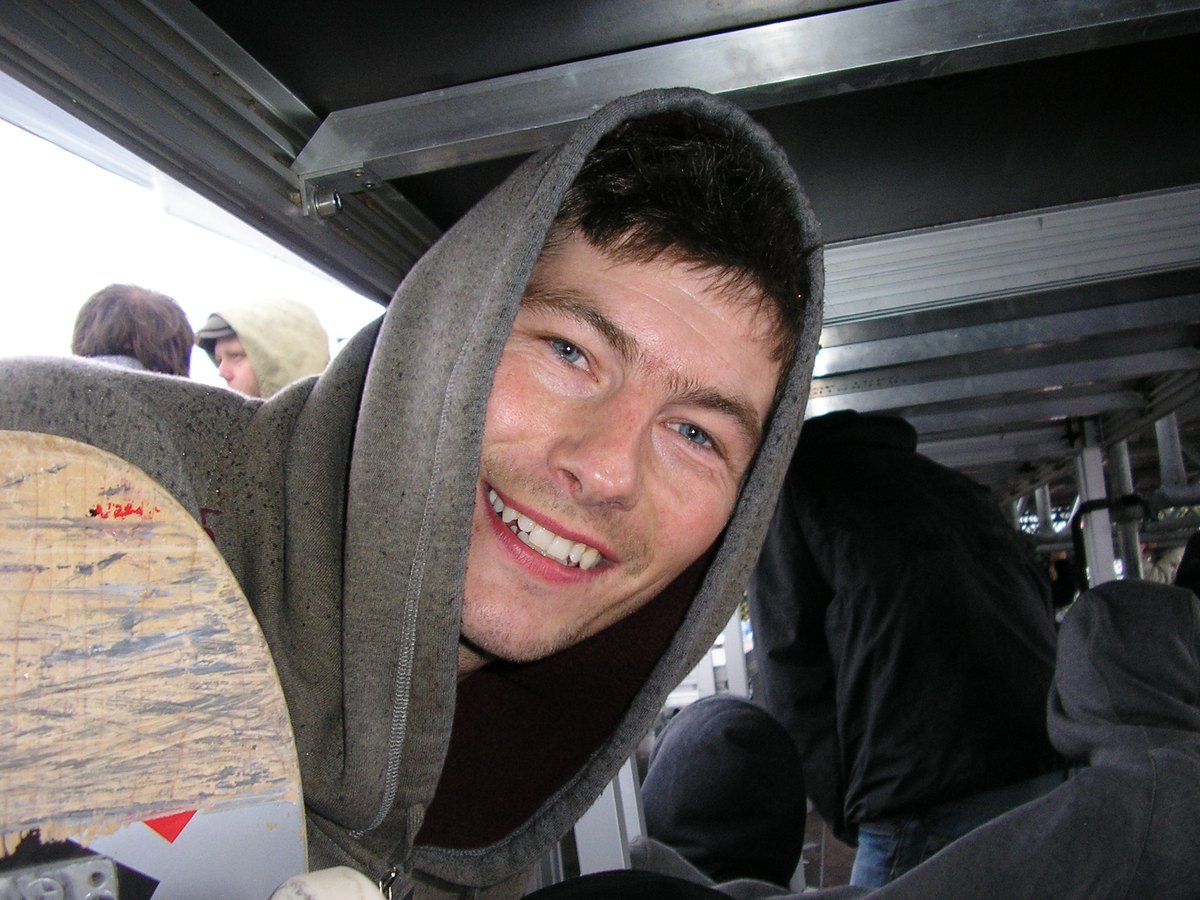
Daclin said no: Lyon, 1997, and another brand
You remember the Lyonnais? When Deathbox headed to the States, Jérémie Daclin got the invite. He turned it down. He explained in 2012: he’d rather try to build his own brand in France. He’d come to Deathbox for a shop close to home. A shop in California wasn’t that close anymore.
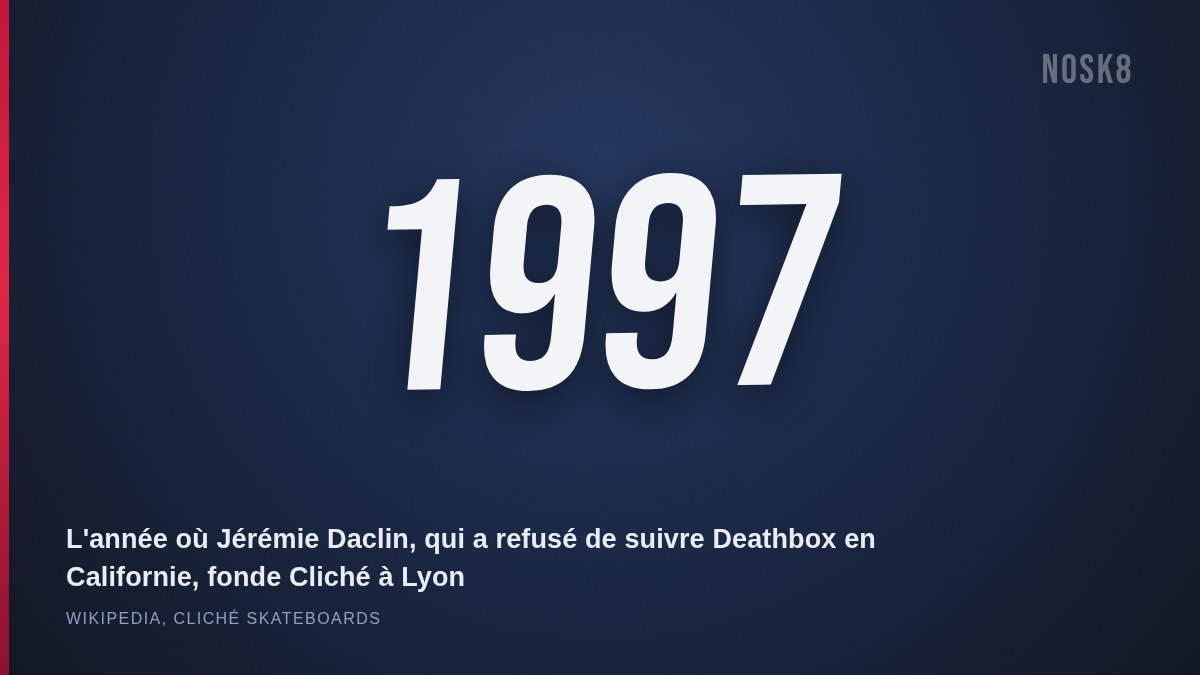
In 1997, he launches Cliché in Lyon. Salomon snaps it up in 2001. Two brands born from the same split: the one that took the plane and the one that stayed. That's the other half of the deal, the part that Flip stories almost always forget.
What the deal brought: from Huntington Beach to Sorry
In 2000, Rowley is named Skater of the Year by Thrasher. He becomes co‑owner of Flip, then leaves the brand in October 2015 after more than twenty years. Penny enters the Skateboarding Hall of Fame in 2023. Glifberg does every X Games edition and, at 46, becomes the oldest skateboarder in Olympic history, in Tokyo.
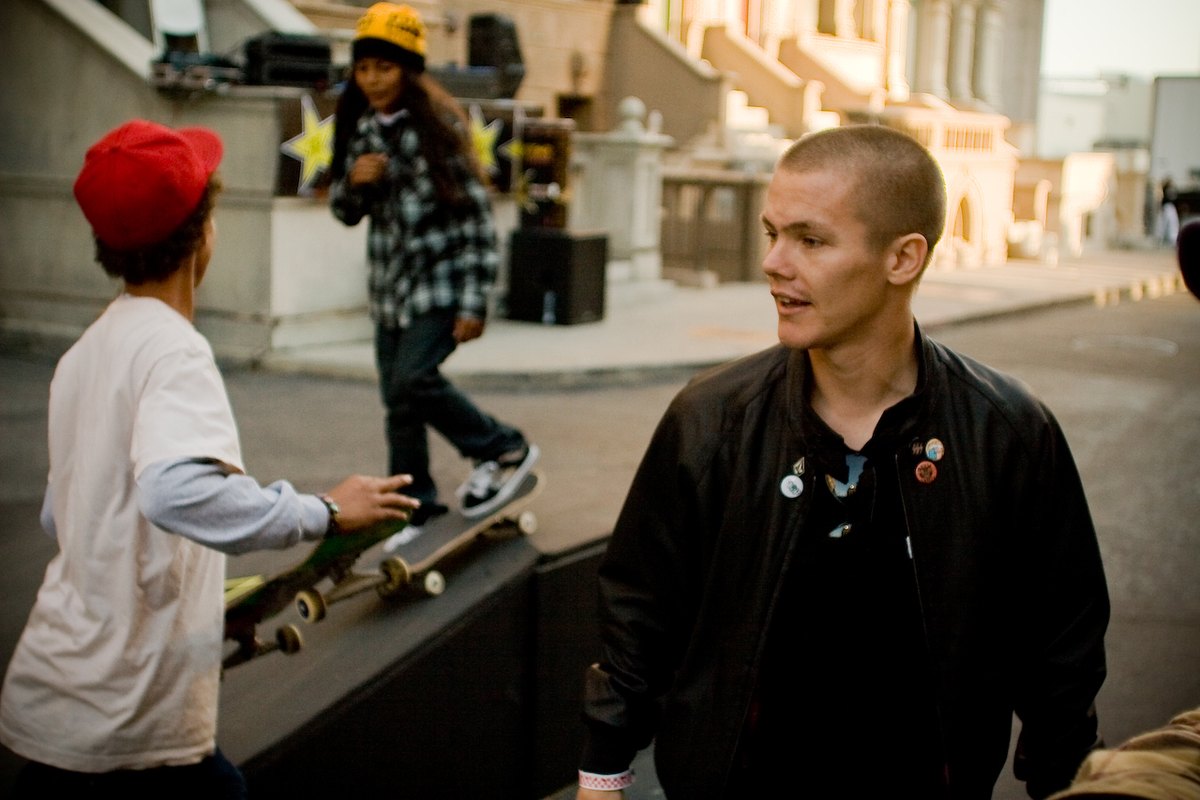
And there’s the video. Sorry, in 2002, with Rowley’s part still a touchstone for an entire generation of rail skaters. Eight years after guys who didn’t even have cars.

Today, a kid from Oxford or Lyon can get spotted by a California brand with a clip posted from his bedroom. No one will ask him to cross the Atlantic on a single board. That’s good news. But the next one to drop a game‑changing part might, too, have counted his boards first.
You, in 1994 at Jérémie Daclin’s shoes, would have taken the plane with Flip or stayed to grow your brand at home? Drop it in the comments ↓
Follow NOSK8 where you hang out
Parts, spots, behind the scenes: it all drops on the accounts first.
Le lexique
-
1
part
La séquence d’un skateur dans une vidéo de marque. Une part réussie peut lancer une carrière.
-
2
switch frontside flip
Un frontside flip (flip + rotation de 180° côté ventre) lancé dans la position inverse de son pied naturel.
-
3
Skater of the Year
Le titre décerné chaque année par Thrasher au skateur qui a marqué la saison. Rowley l’a reçu en 2000.
-
4
411 Video Magazine
Magazine vidéo des années 90 diffusé en VHS, avec des sections consacrées aux marques (« Industry »).
Shop NOSK8
Voir toute la boutique →
TEE-SHIRTS
TEE-SHIRT NOSK8® P.B HEART #PHILI
Le prix initial était : 35,00 €.29,00 €Le prix actuel est : 29,00 €.
TEE-SHIRTS
TEE-SHIRT NOSK8® MATRICE HEART #CMD
Le prix initial était : 35,00 €.29,00 €Le prix actuel est : 29,00 €.
TEE-SHIRTS
TEE-SHIRT NOSK8® P.B HEART #PARIS
Le prix initial était : 35,00 €.29,00 €Le prix actuel est : 29,00 €.
TEE-SHIRTS
TEE-SHIRT NOSK8® P.B HEART #PARENTALADVISORY
Le prix initial était : 35,00 €.29,00 €Le prix actuel est : 29,00 €.
TEE-SHIRTS
TEE-SHIRT NOSK8® P.B HEART #BARÇA
Le prix initial était : 35,00 €.29,00 €Le prix actuel est : 29,00 €.
CASQUETTES
CAP NOSK8® P.B.P #PAW
Le prix initial était : 35,00 €.25,00 €Le prix actuel est : 25,00 €.
CASQUETTES
CAP NOSK8® P.B #POLARBEAR
Le prix initial était : 35,00 €.25,00 €Le prix actuel est : 25,00 €.
CASQUETTES
CAP NOSK8® N8 #NOSK8
Le prix initial était : 35,00 €.25,00 €Le prix actuel est : 25,00 €.
HOODIES
HOODIE NOSK8® MATRICE HEART #ALT
Le prix initial était : 60,00 €.49,00 €Le prix actuel est : 49,00 €.
HOODIES
HOODIE NOSK8® MATRICE HEART #CTRL
Le prix initial était : 60,00 €.49,00 €Le prix actuel est : 49,00 €.
HOODIES
HOODIE NOSK8® I.L.N #ILOVEN8
Le prix initial était : 60,00 €.49,00 €Le prix actuel est : 49,00 €.
HOODIES
HOODIE NOSK8® NOSKATE #NSITA
Le prix initial était : 60,00 €.49,00 €Le prix actuel est : 49,00 €.
HOODIES
HOODIE NOSK8® P.B HEART #BARÇA
Le prix initial était : 60,00 €.49,00 €Le prix actuel est : 49,00 €.
SWEAT
SWEAT NOSK8® P.B HEART #NYC
Le prix initial était : 45,00 €.39,00 €Le prix actuel est : 39,00 €.
SWEAT
SWEAT NOSK8® P.B HEART #PARIS
Le prix initial était : 45,00 €.39,00 €Le prix actuel est : 39,00 €.
SWEAT
SWEAT NOSK8® P.B HEART #POLARBEAR
Le prix initial était : 45,00 €.39,00 €Le prix actuel est : 39,00 €.
SWEAT
SWEAT NOSK8® P.B HEART #BARÇA
Le prix initial était : 45,00 €.39,00 €Le prix actuel est : 39,00 €.
SWEAT
SWEAT NOSK8® P.B HEART #PHILI
Le prix initial était : 45,00 €.39,00 €Le prix actuel est : 39,00 €.
Continue ta lecture
PortraitsMike Carroll et les 2 marques qu’il a bâties, puis quittées
Comment Mike Carroll a façonné deux marques iconiques du skate, Girl et Lakai, avant de s'en écarter. Un parcours entre succès et rupture.
Commentaires (0)