ℹ️ 🛹 Web Média Skate 🛹 ℹ️

★ Tricks
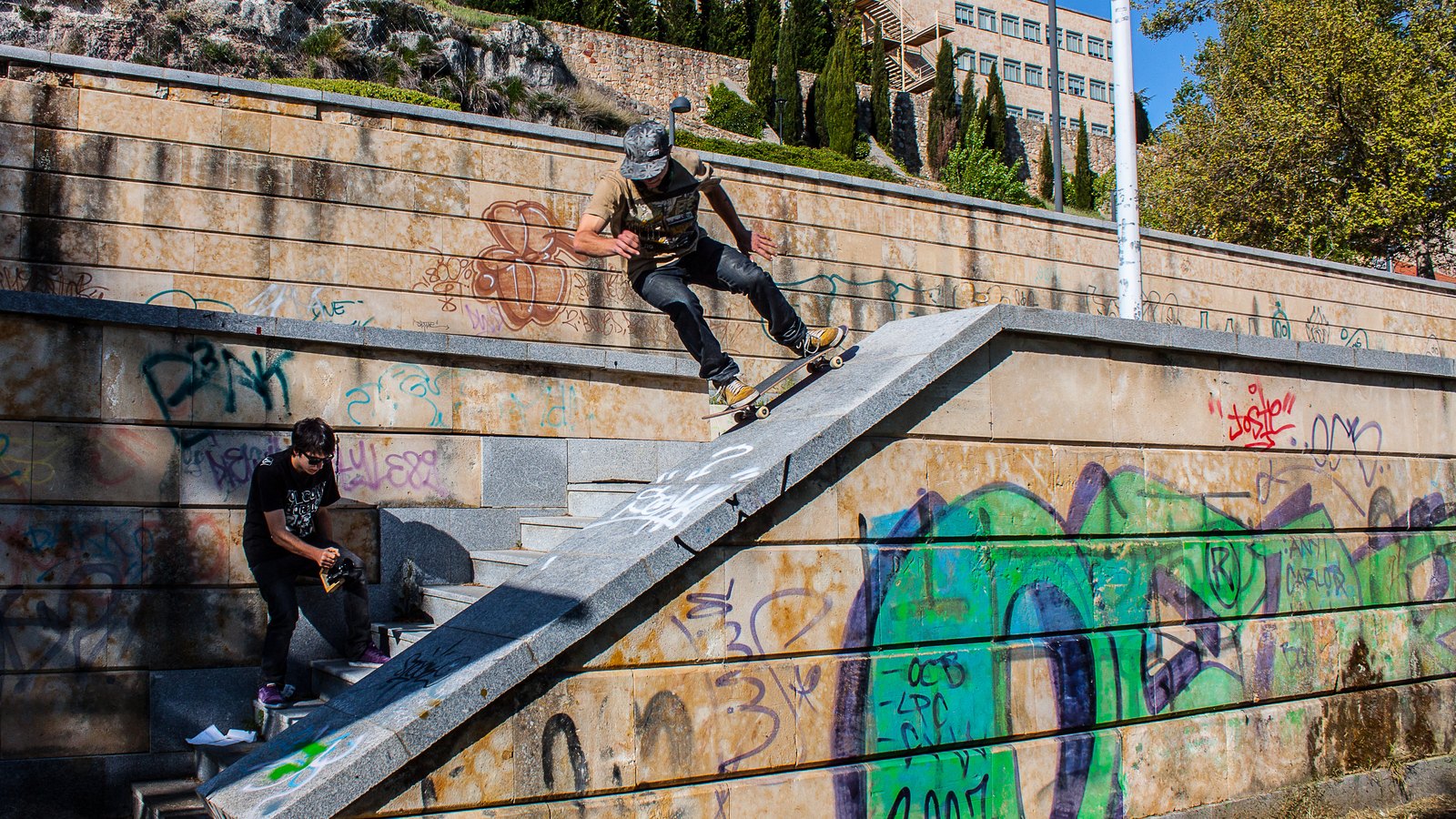
Wallride: 45° or You're Off — The Approach Angle That Decides Everything
Le wallride décroche presque toujours pour une raison de géométrie. L’angle d’attaque chiffré, le mur par lequel commencer et les 4 erreurs qui font tout rater.
Le wallride décroche presque toujours pour une raison de géométrie. L’angle d’attaque chiffré, le mur par lequel commencer et les 4 erreurs qui font tout rater.
→ Pour aller plus loin : Rock to fakie : 4 phases, une seule où ton poids doit basculer — laquelle ?
You line up the wall. You roll in with speed, you send the ollie — and the second the wheels hit the concrete, the board goes its own way. Down, out, anywhere but with you. Meanwhile you keep going straight ahead, on foot.
That’s the universal wallride fail. And it’s almost never a guts problem or a pop problem. It’s a geometry problem.
A wall is a flat surface that forgives nothing. Either your line works for it or it doesn’t. There’s no in-between, no saving it in the air, no fixing it once the wheels are down. The whole thing is decided in the ten feet before you get there.
What follows is the full mechanic — speed, approach, shoulders, weight, exit. And at the end, the actual number for the angle plus the kind of wall to start on. Because it’s not the same wall depending on what you’re after.
Level
Intermediate
Time
3-8 sessions
Prereqs
Rolling ollie, kickturn
Surface
Smooth wall, clean ground
The wallride was born in an empty pool, back in 1976

Before it was a street thing, the wallride was a pool thing. In 1976, in the drained pools of California, Tom Inouye goes above the lip and rides the wall. Nobody else can do it. He can. The nickname sticks: « Wally ». The trick takes the wall’s name.
Three years later, Rodney Mullen gets credit for the first backside wallride. But the trick stays locked inside skateparks until the mid-80s, when Natas Kaupas and Mark Gonzales take it outside. Kaupas starts out throwing his board against a wall and catching it rolling. Then he rides up it with no hands.
September 1984: Craig Stecyk shoots him mid-wallride, and the photo lands on the cover of Thrasher. From there, every wall in the city becomes an obstacle. Kaupas opens his Streets on Fire - 1989 part with a frontside wallride. Rick Howard puts it back on the map at the end of his Goldfish - 1993 part. Then Philly takes it over — Ricky Oyola, Matt Reason, Fred Gall — and turns the city’s storefronts into a playground.
The record? 7’6” (2.29 m), set August 25, 2004 in Hollywood by Brad Edwards and Aaron Murray. You? You’re starting at hip height. That’s exactly right.
Read next : The ollie in 6 steps, the foundation you need before anything else.
The 6 moves of a wallride, in order
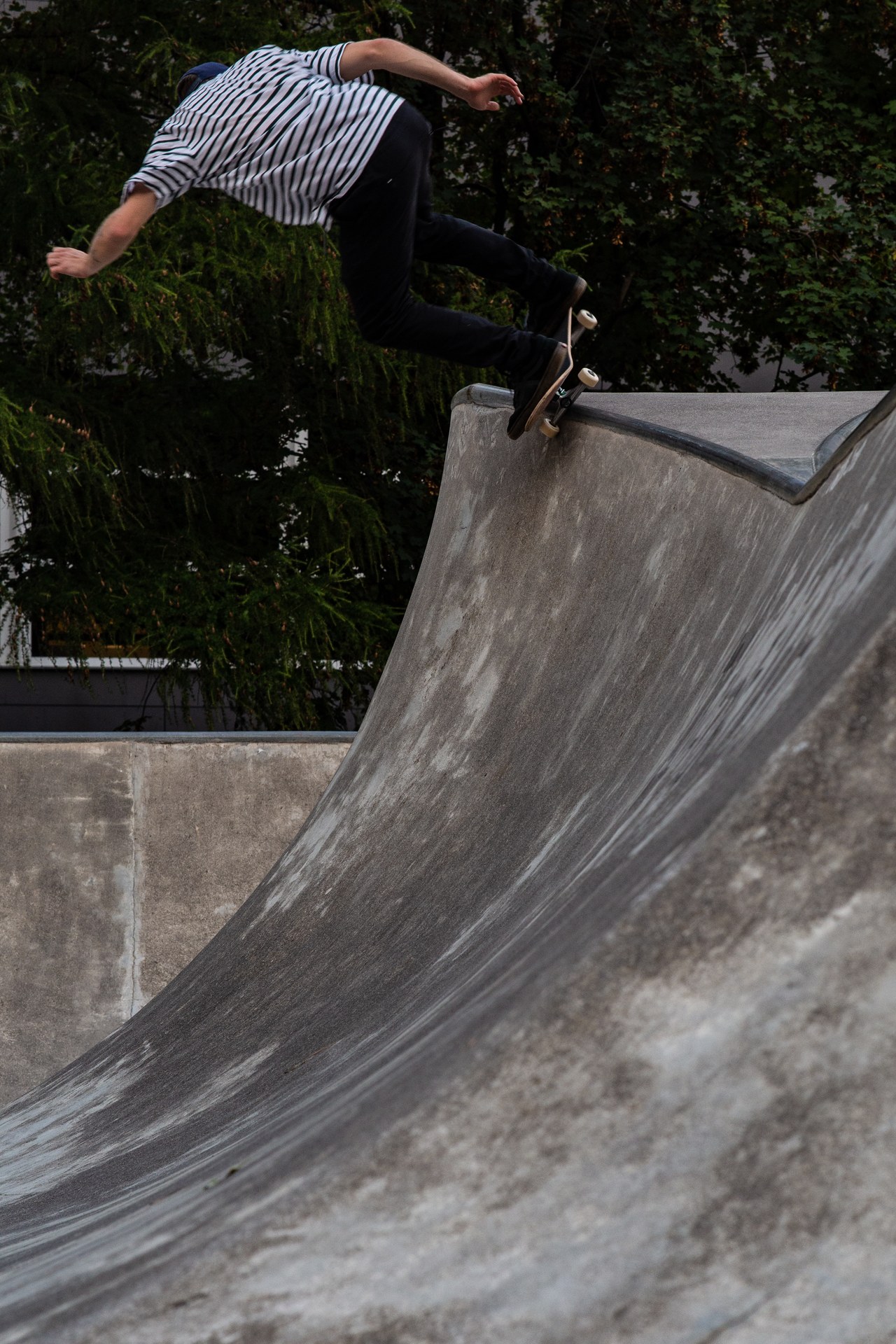
-
Speed: more than you think
Speed is what pins the wheels to the concrete, exactly like a kid sprinting through a turn and leaning into it. Too slow and gravity wins before you ever roll. Figure on a solid push, the kind you’d take to ollie a curb. And you don’t brake. Ever.
-
The approach: on an angle, never head-on
You’re not rolling at the wall, you’re rolling along the wall while closing in on it. It’s a diagonal, not a collision. Pick your entry point on the wall before you push, and draw a mental line straight to it. The exact number comes further down. For now just hold onto this : straight at the wall, there is no wallride.
-
The ollie: early, and low
You pop about three feet out, not right at the base. The point isn’t to go up, it’s to buy yourself time to turn the board sideways while you’re still moving forward. A explosive ollie glues you to the wall and bounces you off. A mellow ollie lets you ride across it.
-
The shoulders: they decide before your feet do
Your body follows your shoulders, your board follows your body. Open your chest toward the wall as you pop, like you’re about to put a hand on it. Plenty of skaters do everything else right and keep their torso square to their line. The board leaves, and they have no idea why. Same mechanic as on a backside 180 where the chest goes before the board.
-
The weight: your body into the wall
Both wheels touch at the same time, flat. And right there, your instincts sell you out : your brain wants to pull your chest away from the concrete. Do the opposite. Drive your hips into the wall, keep your weight stacked over the board. A wallride lasts half a second. Half a second of full commitment, zero hesitation.
-
The exit: you come down, you don’t fall off
You set up the landing the moment you’re on the wall. Look where you want to come down, let the nose drop first, knees loose. If you came in from the left, you go back out to the left. Your entry diagonal gives you your exit diagonal. Same move as a rock to fakie where your weight has to shift at the right moment : you ride it, you don’t take it.
The 4 mistakes that make your board drop out
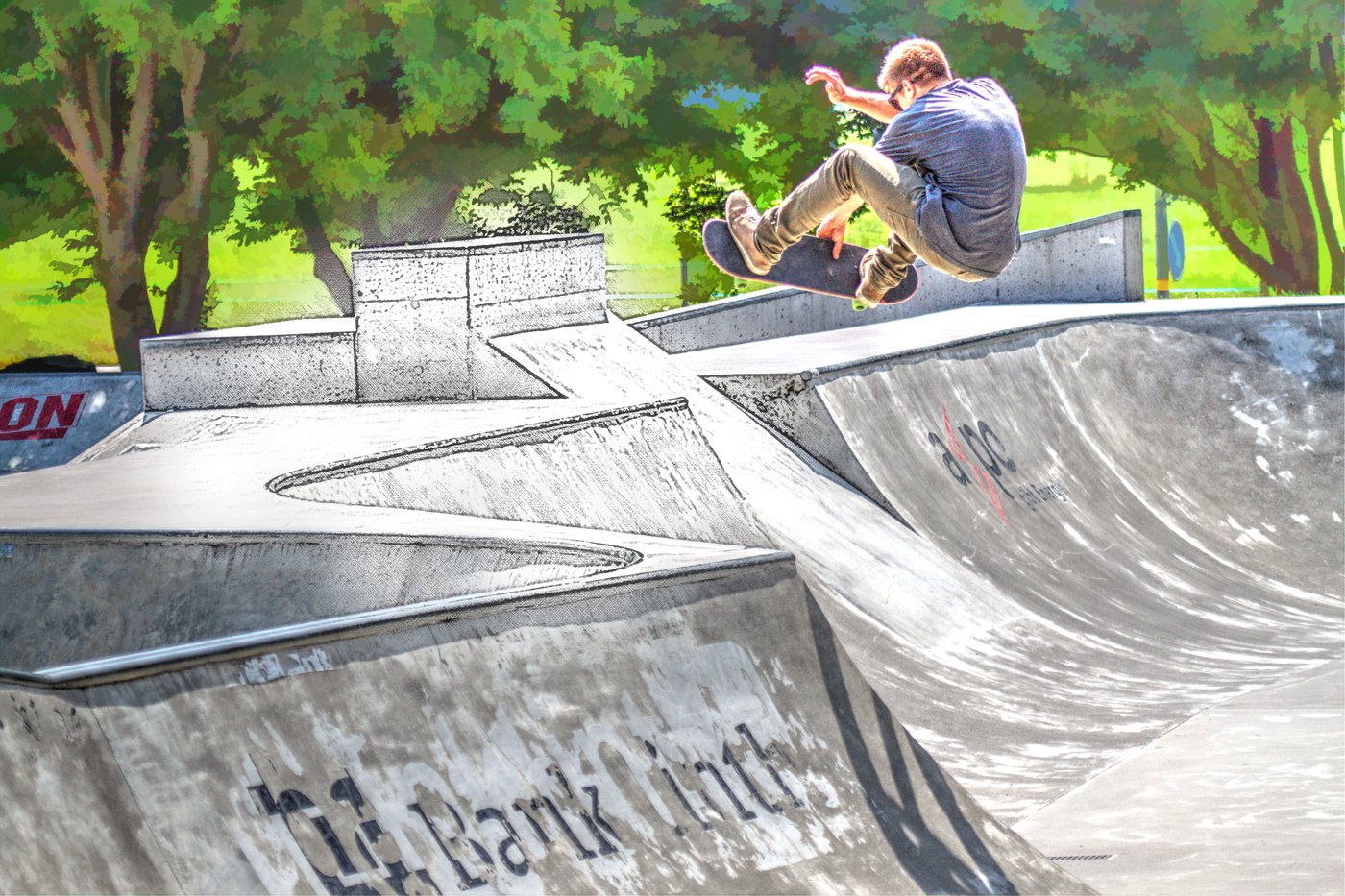
The 4 classic fails
- You come in too head-on. At 80 or 90°, you’ve got no sideways speed left, so nothing carries you across the wall. You slam into it and drop straight back down. Open up your diagonal.
- You come in too parallel. Under 20°, you graze the wall without ever getting up on it, or you land one wheel and the board kicks out sideways. You need a real entry angle, not a brush-by.
- You brake on the way in. It’s unconscious, it happens to everybody. Without speed, nothing pins the wheels to the concrete : gravity takes you back instantly. Film yourself from the side, you’ll see the slowdown.
- Your weight leaves the wall. You lean back to protect yourself, the board gets left alone against the wall and drops out. Hips toward the wall, eyes on the exit, never on your feet.
The approach angle: 45° to learn it, 30° to hold it
Here’s the answer, no dancing around it. You hit the wall at about 45° : a clean diagonal, halfway between rolling along the wall and charging into it. That’s the angle that gives you both things at once : enough speed into the wall to get up on it, enough speed along the wall to actually ride it.
Once the first ones start landing, you close the angle down. Around 30°, you stay on the wall longer and the wallride gets long, drawn out, clean. The one you see in clips. Below 20°, you graze it without getting up. Above 60°, you hit the wall instead of riding it. Your whole margin lives inside that range.
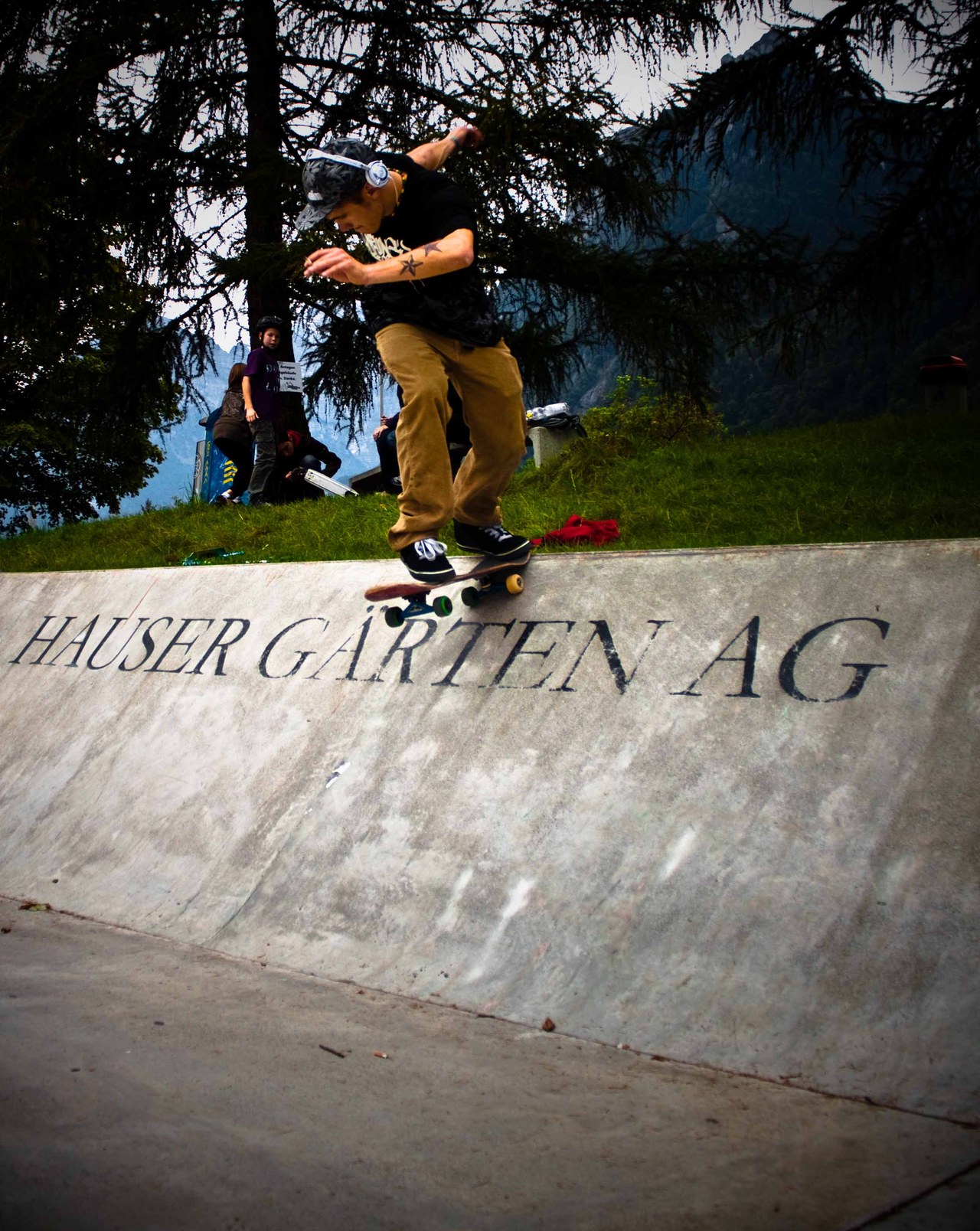
The kind of wall matters as much as the angle. For your first tries : a wall that leans back slightly, or a wall with a bank at the base, a little ramp that feeds you up onto it. That wall does half the work. It lets you feel the weight without punishing you.
What to stay away from at the start : a dead-vertical 90° wall, rough surface that grabs your wheels, gravel on the ground, and anything with a ledge at the bottom. The perfect wall is smooth, clean, leaning back a touch, with six feet of good pavement in front of it to set your line. The Brooklyn Banks made half this trick’s history for exactly that reason.

How many sessions before you’re really landing it ?
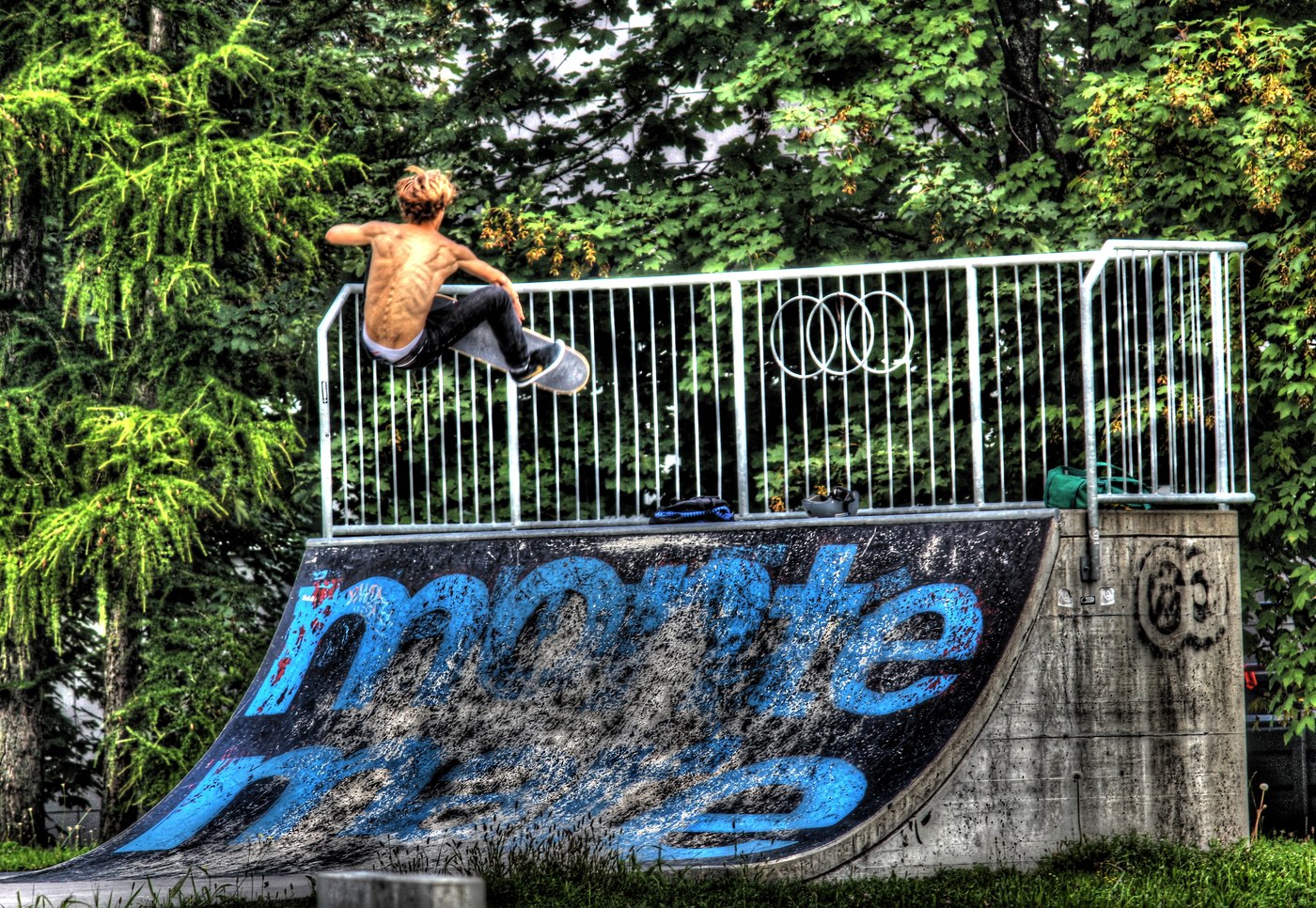
Three to eight sessions if your rolling ollie is dialed. Night one, don’t even try to ride it : get up on the wall, set the wheels down, come back off. Two wheels touching the concrete at the same time is already a win.
If it’s still not clicking after three sessions, film yourself from the side. Nine times out of ten you’ll see the same thing : an angle that’s too closed, or a chest that stays square. Two fixes, not three.
And the day you actually ride the wall, half a second of it, wheels making that dull sound against the concrete, then back down to the ground : you get why Kaupas spent the 80s hunting walls everywhere he went. After that, you never look at a building the same way again.
What’s your wall, the one you always go back to ? Drop the spot and the angle you take on it. Tell us in the comments ↓
Le lexique
-
1
wallride
Figure où le skateur roule sur un mur, les quatre roues posées sur la paroi verticale, avant de redescendre au sol.
-
2
backside wallride
Wallride abordé dos au mur : le skateur tourne le dos à la paroi au moment de monter dessus.
-
3
kickturn
Changement de direction en soulevant l'avant de la planche sur les roues arrière, sans quitter le sol.
-
4
bank
Plan incliné en béton ou en bois qui relie le sol à un obstacle, et sert de rampe d'accès.
Shop NOSK8
Voir toute la boutique →
TEE-SHIRTS
TEE-SHIRT NOSK8® P.B CENTRE #RNB
Le prix initial était : 35,00 €.29,00 €Le prix actuel est : 29,00 €.
TEE-SHIRTS
TEE-SHIRT NOSK8® P.B HEART #ORIGINAL
Le prix initial était : 35,00 €.29,00 €Le prix actuel est : 29,00 €.
TEE-SHIRTS
TEE-SHIRT NOSK8® P.B CENTRE #ORIGINAL
Le prix initial était : 35,00 €.29,00 €Le prix actuel est : 29,00 €.
TEE-SHIRTS
TEE-SHIRT NOSK8® NOSKATE #NSITA
Le prix initial était : 35,00 €.29,00 €Le prix actuel est : 29,00 €.
TEE-SHIRTS
TEE-SHIRT NOSK8® P.B HEART #POLARBEAR
Le prix initial était : 35,00 €.29,00 €Le prix actuel est : 29,00 €.
CASQUETTES
CAP NOSK8® P.B #POLARBEAR
Le prix initial était : 35,00 €.25,00 €Le prix actuel est : 25,00 €.
CASQUETTES
CAP NOSK8® N8 #NOSK8
Le prix initial était : 35,00 €.25,00 €Le prix actuel est : 25,00 €.
CASQUETTES
CAP NOSK8® P.B.P #PAW
Le prix initial était : 35,00 €.25,00 €Le prix actuel est : 25,00 €.
HOODIES
HOODIE NOSK8® NOSKATE #SNC
Le prix initial était : 60,00 €.49,00 €Le prix actuel est : 49,00 €.
HOODIES
HOODIE NOSK8® P.B CENTRE #RNB
Le prix initial était : 60,00 €.49,00 €Le prix actuel est : 49,00 €.
HOODIES
HOODIE NOSK8® MATRICE HEART #ALT
Le prix initial était : 60,00 €.49,00 €Le prix actuel est : 49,00 €.
HOODIES
HOODIE NOSK8® MATRICE HEART #CTRL
Le prix initial était : 60,00 €.49,00 €Le prix actuel est : 49,00 €.
HOODIES
HOODIE NOSK8® I.L.N #ILOVEN8
Le prix initial était : 60,00 €.49,00 €Le prix actuel est : 49,00 €.
SWEAT
SWEAT NOSK8® P.B HEART #BARÇA
Le prix initial était : 45,00 €.39,00 €Le prix actuel est : 39,00 €.
SWEAT
SWEAT NOSK8® P.B HEART #PHILI
Le prix initial était : 45,00 €.39,00 €Le prix actuel est : 39,00 €.
SWEAT
SWEAT NOSK8® P.B HEART #NYC
Le prix initial était : 45,00 €.39,00 €Le prix actuel est : 39,00 €.
SWEAT
SWEAT NOSK8® P.B HEART #PARIS
Le prix initial était : 45,00 €.39,00 €Le prix actuel est : 39,00 €.
SWEAT
SWEAT NOSK8® P.B HEART #POLARBEAR
Le prix initial était : 45,00 €.39,00 €Le prix actuel est : 39,00 €.
Continue ta lecture
ÉvénementsGarda Rookie Fest 2026 : 3 victoires en 48 h pour Mattia Murroni — et un ticket que les autres n’ont pas
Mattia Murroni gagne le contest Grom du Garda Rookie Fest 2026 avec un run à 87 points, après avoir remporté les deux Best Trick du…
Commentaires (0)