

ℹ️ 🛹 Web Média Skate 🛹 ℹ️

 Back
Chroniques · Opinion
Yeah Right! 23 and still asking: what set Rick Howard and Girl apart?
Yeah Right! at 23: what did Rick Howard and Girl have that others didn't?
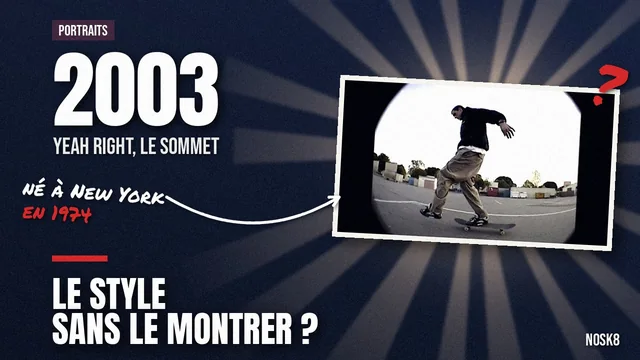
Yeah Right! at 23. Invisible boards, Owen Wilson on a parking lot, Koston in a wig: the 2003 Girl video still spins on repeat. And in the credits, a name we often forget: Rick Howard, co‑founder of the brand. So what did Girl have that the others didn’t?
In this article 6 parts
A classic that looks like no other
In 2003, Girl Skateboards, alongside Chocolate Skateboards, dropped a bomb: Yeah Right!. Directed by Ty Evans and Spike Jonze, this video quickly became a benchmark. We still remember its soundtrack that fit the vibe, its generous length, and especially its special effects. Frankly, we’d never seen that in a skate video before.
University professor Duncan McDuie‑Ra even ranks it among the four “finalists” of the skate video canon in his book Skateboard Video. That gives you an idea of its standing. And then there’s that short, poignant prologue, a tribute to Keenan Milton, Chocolate rider, who is gone in 2001. A solid shout‑out to a bro.

Special effects never seen in a skate video
From the opening credits, you knew you were about to see something insane. Flip tricks shot in ultra‑slow‑mo, so close to the ground you could almost feel the decks. Spike Jonze’s personal cam, rolling at 100 fps, showed every move with sick clarity. You could spot each rider just by their shoes, that’s how precise it was.
But the real thrill was the green‑screen effects. The “invisible boards” segment, the “magic board,” or the “Skatetrix” sequences—those were unheard of. They brought a fresh, inventive vibe to skate video culture. Girl took a real risk doing that, instead of playing it all serious.

The cameo that had everyone laughing
One of the most memorable moments in Yeah Right! is Owen Wilson’s cameo. Remember that parking lot scene with Rick Howard, Eric Koston, and Mike Carroll? He’s trying a backside bluntslide on a stair‑rampe. And then, surprise.
While the camera looks away for a beat, Eric Koston, with a wig and the same gear, slips in unseen, nails the trick like it’s nothing. Then Wilson pops back into frame, smooth as ever. It was a brilliant sketch, full of self‑deprecation, that nailed the Girl crew vibe: fun, off‑beat, and totally no‑stress.

Before the video: Girl, then Lakai
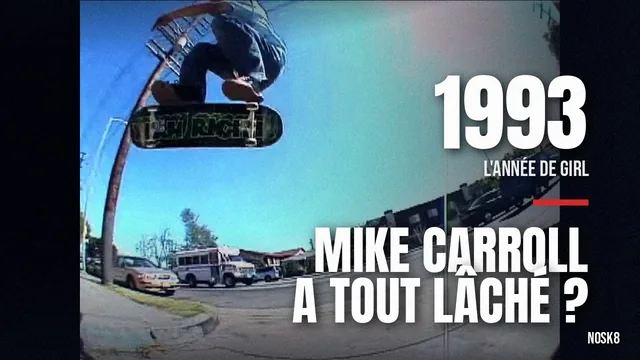
Girl Skateboards kicked off in 1993, founded by a powerhouse crew: Mike Carroll, Rick Howard, Spike Jonze and Megan Baltimore. Carroll and Howard were fresh off Plan B. Rick Howard, we’d already seen him in the 1992 Plan B “Questionable” vid. They built Girl with a clear vision in mind.

Twenty years later, in 2013, Howard and Carroll recounted how the skate industry wasn’t kind to them. A board factory, under pressure from another brand, even cut ties with Girl. Luckily, Fausto Vitello had their back, letting them know he’d cover them. In 1999, Carroll and Howard also launched Lakai, their own shoe line, to stop relying on sponsors. The first Lakai drops hit in May 2000, with the “Howard” and “Carroll” models among others. Brandon Biebel, who opened Yeah Right!, even said in 2012 that Girl and Lakai were a “dream come true” for him.

Yeah Right! is 23: what set Rick Howard and Girl apart?
The real difference with Girl, and what Rick Howard embodied, was first and foremost the crew spirit and humor. Howard doesn’t even have a solo spot in Yeah Right!: you see him in the veteran montage, alongside Guy Mariano, Rudy Johnson or Jeron Wilson, and of course in the legendary sketch with Owen Wilson. It says a lot about the mentality: no over‑star‑ing, just genuine collaboration and a sense of irony.
Rick Howard said it in a 2000 interview: “We launched Girl partly to give pro skaters a future.” It was a brand built by skaters, for skaters. And that changed everything. They took the risk of making a goofy, DIY video packed with fresh special effects and light‑hearted sequences, with a film director like Spike Jonze, instead of sticking to a serious, classic skate video. That spirit, that freedom, turned Yeah Right! into a classic and made Girl stand out. Humor, inventiveness, and camaraderie—that’s the Girl recipe.
And you, what’s your best memory of Yeah Right!?
We’re curious to know what stuck with you most from Yeah Right! 23 years ago. The invisible boards, Owen Wilson, or Koston’s part? Drop it in the comments.
Continue ta lecture
PortraitsRodney Mullen, 34 victoires sur 35 en freestyle : pourquoi tout recommencer dans la rue ?
Champion du monde de freestyle à 14 ans, 34 contests gagnés sur 35, l'inventeur de l'ollie sur le plat a tout recommencé dans la rue…
Commentaires (0)