
ℹ️ 🛹 Web Média Skate 🛹 ℹ️

Tricks
The boneless is over 40 years old and it's everywhere again: how do you land one clean?
Le boneless est né au tournant des années 80 et il ressort partout, en park comme en rue. Les 5 étapes, les 4 fails, et le curb exact sur lequel commencer.
→ Pour aller plus loin : 50-50 sur un curb : le premier grind, en 4 étapes
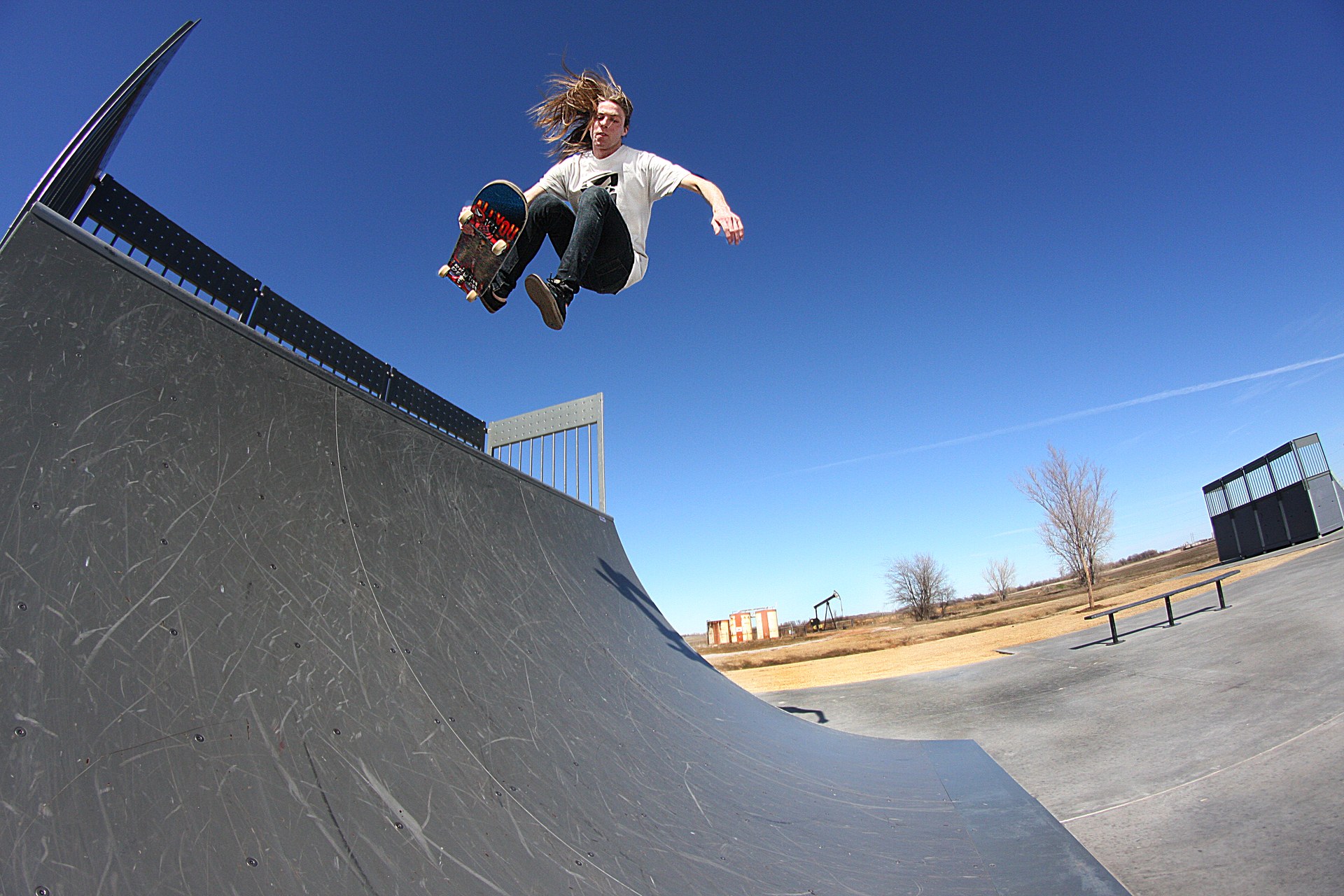
You've seen it three times this week. In a bowl edit, in a street clip posted by some 17-year-old, in a story from your buddy who picked skating back up at 38. A hand grabs the board, a foot drops to the ground, and the guy comes up the other side like he just cheated.
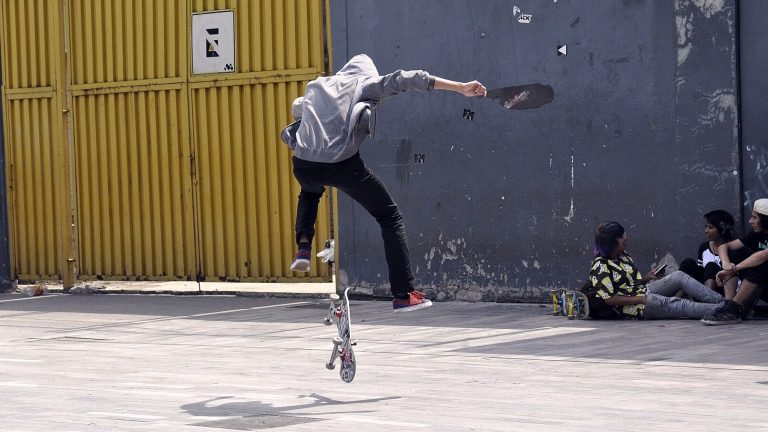
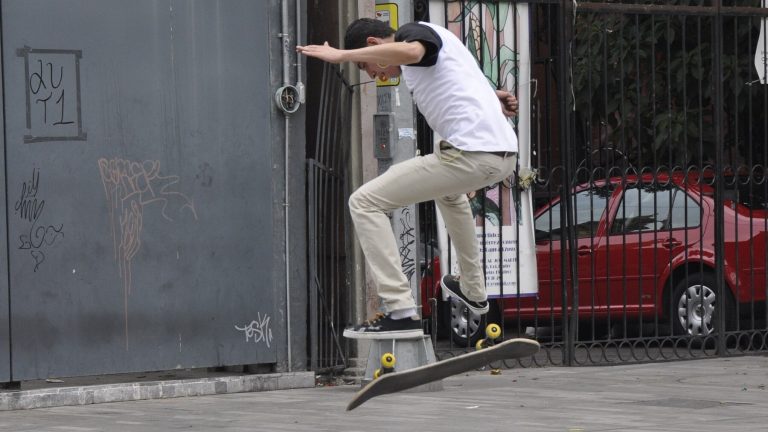
That's a boneless. A jump where you plant your front foot on the ground and hold your board in your hand on the way up. And no, it's nothing new: this thing has been kicking around skating since the turn of the '80s. Over forty years on the clock.
For twenty of those years, we filed it under corny — the stuff you did with a helmet and wrist guards. Now it's back everywhere, and not just in parks.
Here's where it came from, why it's back, and — in the last section — the full method plus the exact obstacle you should be taking your first fifty tries on.
Level
Beginner
Time
2-5h
Requirements
Rolling, stopping
Surface
Low curb, bank
A trick born before the ollie took over
The boneless was invented by Gary Scott Davis. Back then, nobody really thought it was doable — until the day one of his buddies called him up to say he'd just landed it. Davis rolls over, tries it, and gets it: by planting your front foot on the ground, you go way higher than you would jumping with both feet on the board.
The name has nothing to do with skating. "Boneless," as in no bones. It came from a doll that belonged to a girl Davis knew — "Harry the Boneless One." The trick inherited that, and nobody ever bothered changing it.
Put it back in context. Alan Gelfand pulls his ollie in 1978 in a Florida bowl. Rodney Mullen doesn't take it to flat until a few years later. In between, there's a window where getting a board off the ground is still guesswork — and the boneless is the most direct answer: you grab, you push off with your leg, you go up.
That's why Wikipedia frames it as a kind of ancestor to the ollie. Historically that's not quite right, but the idea holds: it was how you got over something back when nobody knew how to pop yet.
Why the boneless is showing up everywhere right now
Three reasons, and not one of them is nostalgia.
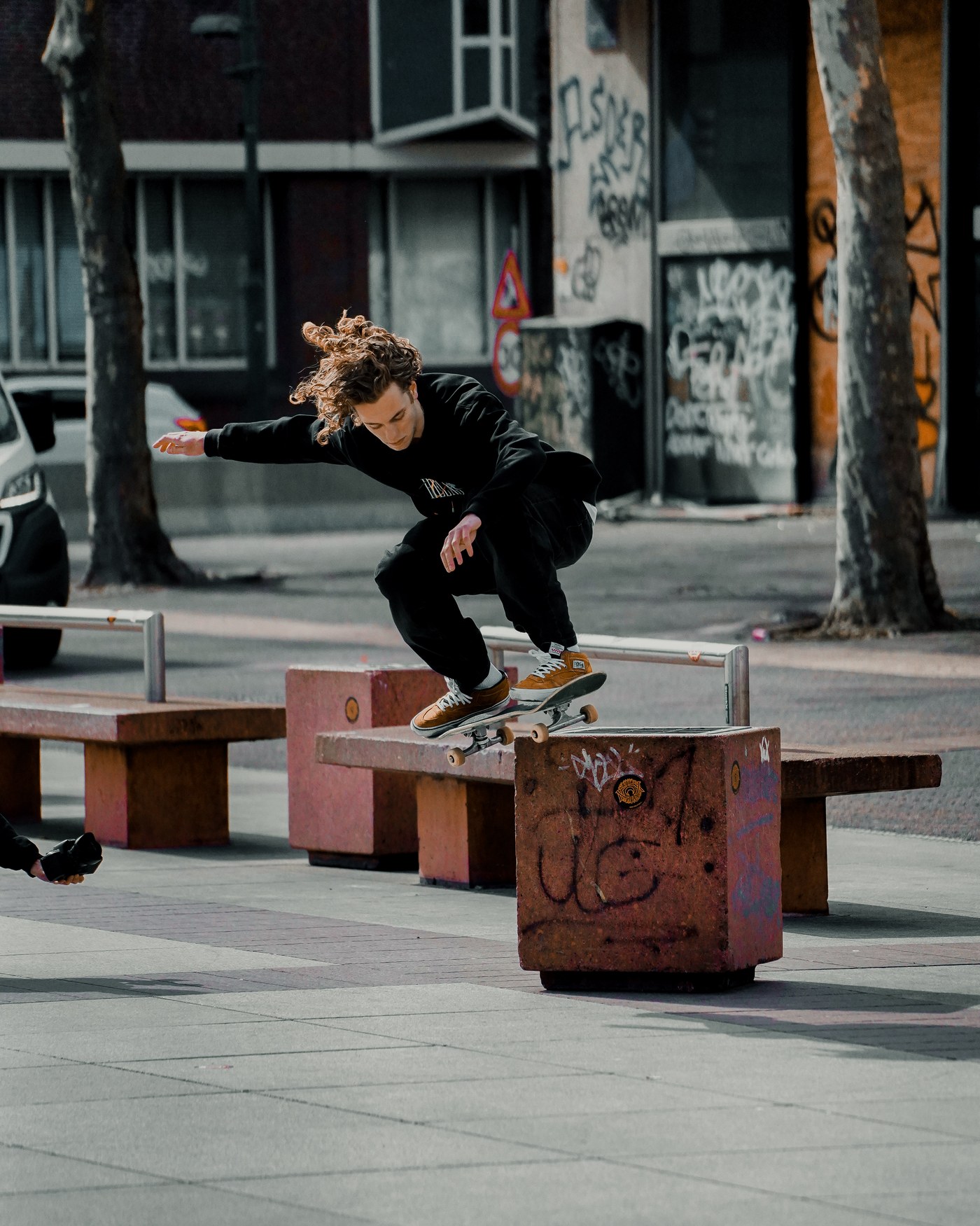
First: the boneless works anywhere. A bench, a low wall, a two-stair gap, the coping of a bowl. Where an ollie needs a specific speed and a dialed pop, the boneless needs a leg. You can pull it damn near standing still.
Second: it photographs. Your body is open, the board is in your hand, the whole silhouette reads in a single frame. On a seven-second vertical, that lands — a clean kickflip doesn't.
Third, and it's the dumbest one: the skaters who are thirty-five today are teaching their kids tricks. And the first thing you show a kid who doesn't have an ollie yet is this. Like the hippie jump or the no comply, the boneless belongs to that family of tricks that gets you airborne without ever touching pop.
Everyone hits the same wall, in the same spot: the foot that plants. Three out of four people put it down too far from the board, end up in the splits, and bail on everything. It's not a skill-level thing — it's a distance thing, and it gets fixed in one session. Even guys with twenty years of skating blow it the first time they try it again.
The 5 steps to landing a clean boneless
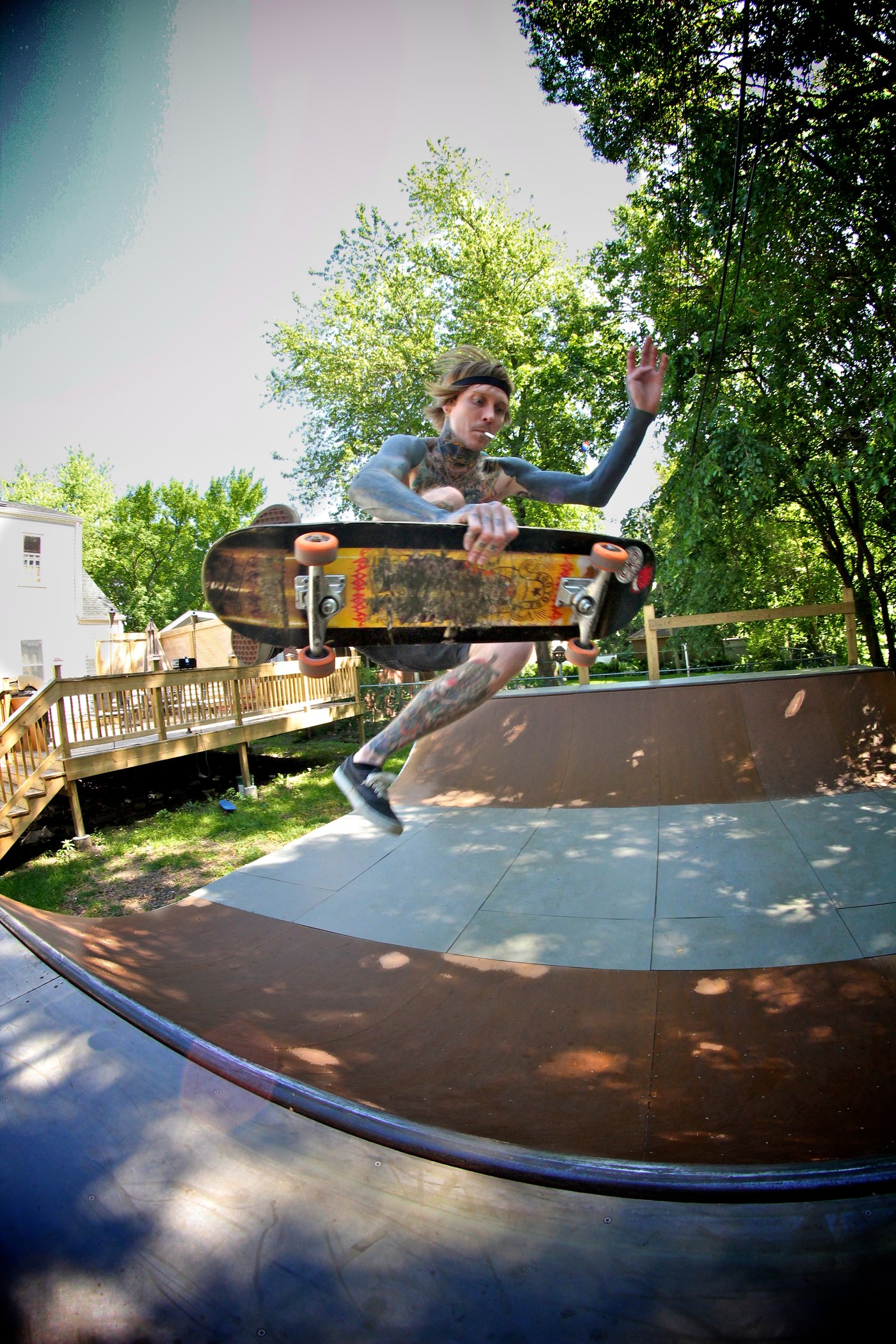
-
Feet first, everything else after
Back foot on the tail, same as an ollie. Front foot mid-board, squared up. That's the one that's going to the ground, so don't creep it up to the nose: the further forward it sits, the more you'll have to stretch to reach the pavement. Weight stays on the back leg.
-
The hand grabs before the foot leaves
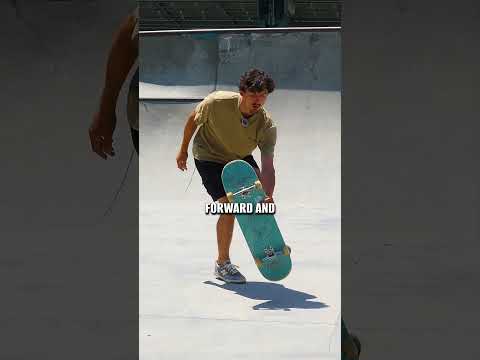
Order matters, and this is where it's won or lost. You grab first — front hand on the rail, heelside, level with the front bolts. Only then does the front foot drop. Flip that order and the board leaves without you and you're standing there next to it.
-
The foot plants tight to the board
This is the step everybody blows. The front foot lands right next to the rail, four to six inches away, max. Not three feet out front. You're not taking a step, you're setting a base. The closer you are, the harder and straighter that leg can push.
-
The push: the leg does the trick
You extend the planted leg like you're hopping off one foot. At the same time, the hand pulls the board up and the back leg keeps it under you. The hand isn't what lifts you, the leg is. The hand just guides. Eyes forward, never on your feet.
-
Get the foot back on in the air, not on landing
At the top, you bring the front foot back onto the board — over the front bolts. It has to be there before the wheels touch. Wait for the landing and you come down on one leg and pitch forward. Knees bent on impact, hand lets go at the last second.
The 4 classic fails and how to fix them
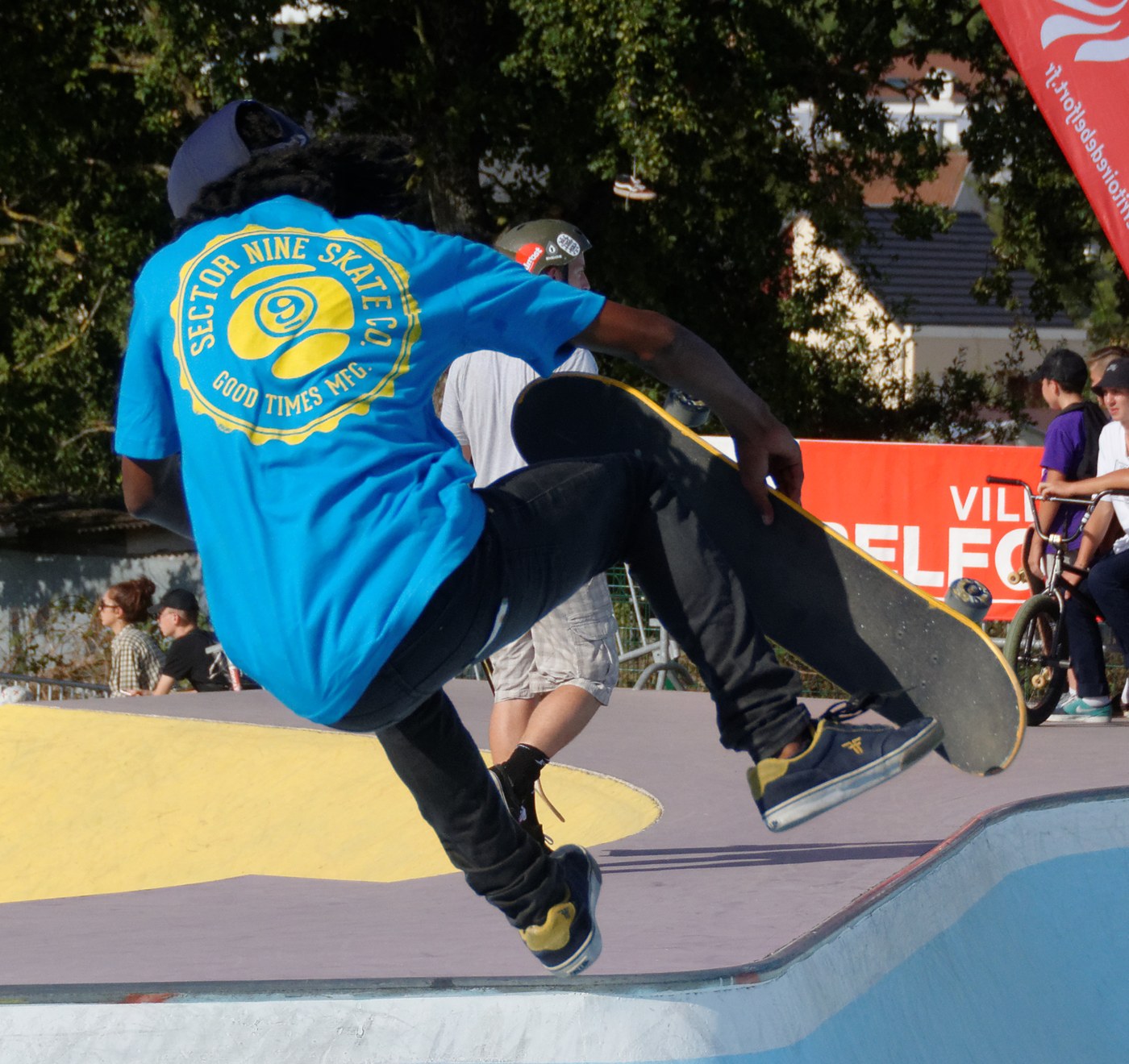
The 4 classic fails
- You end up in the splits — your foot landed too far out front. Bring it in toward the rail. Do ten tries standing still, forcing yourself to plant the foot right against the board, close enough to touch it.
- The board slips out of your hand — you're grabbing too late or too far toward the middle. Hand on the rail, at the front bolts, before the foot moves. Fingers wrap under the board, not on the grip.
- You're getting four inches of air — you're pulling with your arm instead of pushing with your leg. The arm lifts nothing. Bend the planted leg and snap it straight, like a vertical jump.
- You land on one foot — the front foot came back too late. Bring it in at the peak, not on the way down. Film yourself from the side: you'll spot the gap immediately.
The curb you need to start on
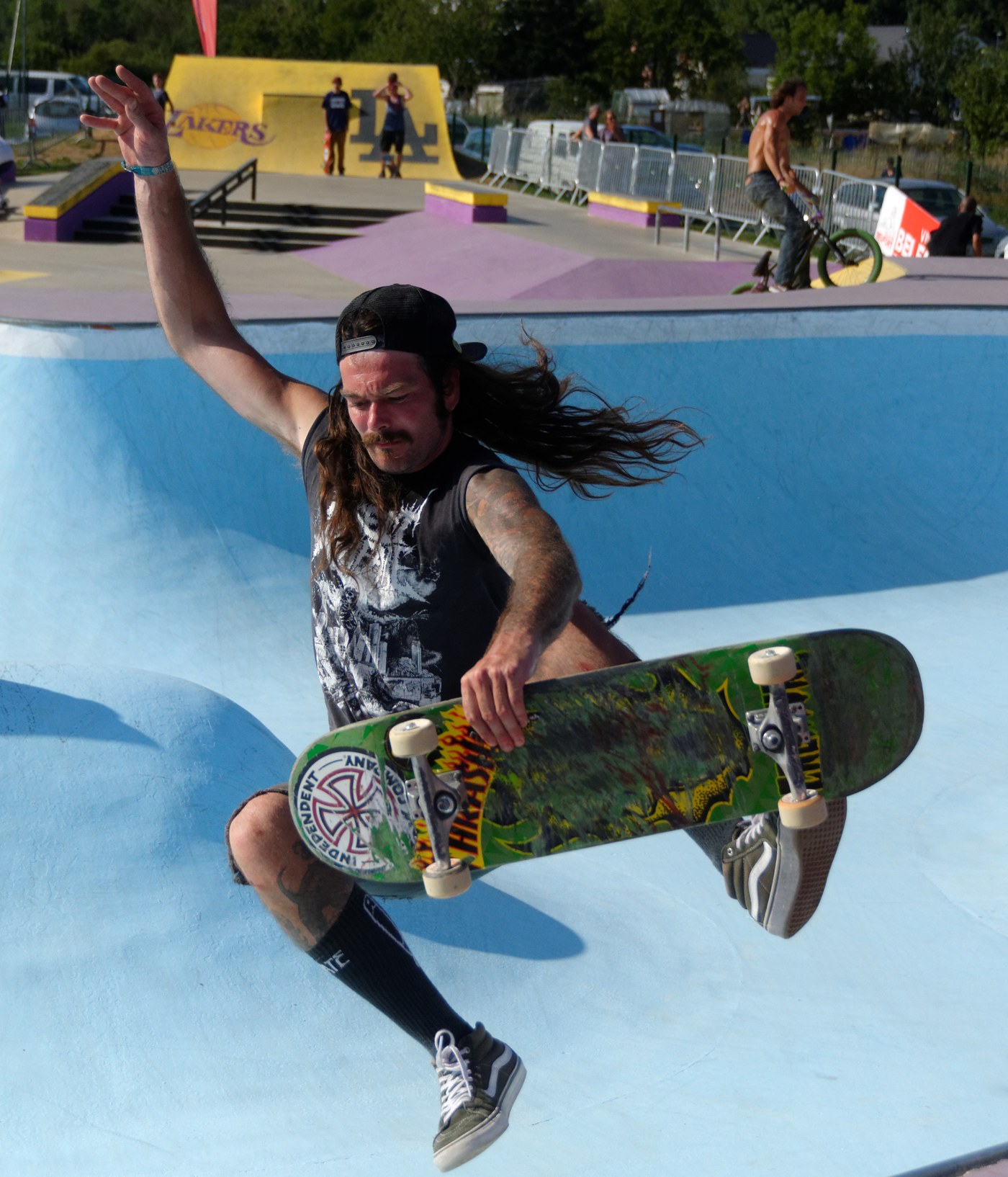
Here's the answer I promised, and it fits in one line: a curb, five or six inches, flat, with smooth ground on both sides. Not a ramp. Not a bench. Not a skatepark bank.
Why so low? Because height teaches you nothing and scares you plenty. On a six-inch curb, your front foot plants on ground you can see, the board stays within reach, and if it goes wrong you step down. You can rip through forty tries in twenty minutes without ever getting hurt — and that's exactly what this trick needs.
The progression that works, in this order: twenty boneless standing still first, board wedged against the curb, just to feel the hand and the leg. Then the same motion rolling dead slow, parallel to the curb, without going up it. Then you go up the curb. Then you take it as a gap. And only then do you go find the first quarter in the park.
The detail that changes everything and nobody tells you: roll slower than your instinct says. The boneless doesn't need speed — speed only stops you from planting the foot. If you've been struggling for three sessions, cut your speed in half. Nine times out of ten, that's it.
Read next: The ollie in 6 steps — because once the boneless is on lock, that's where you're going to want to go.
How long before you land it clean ?
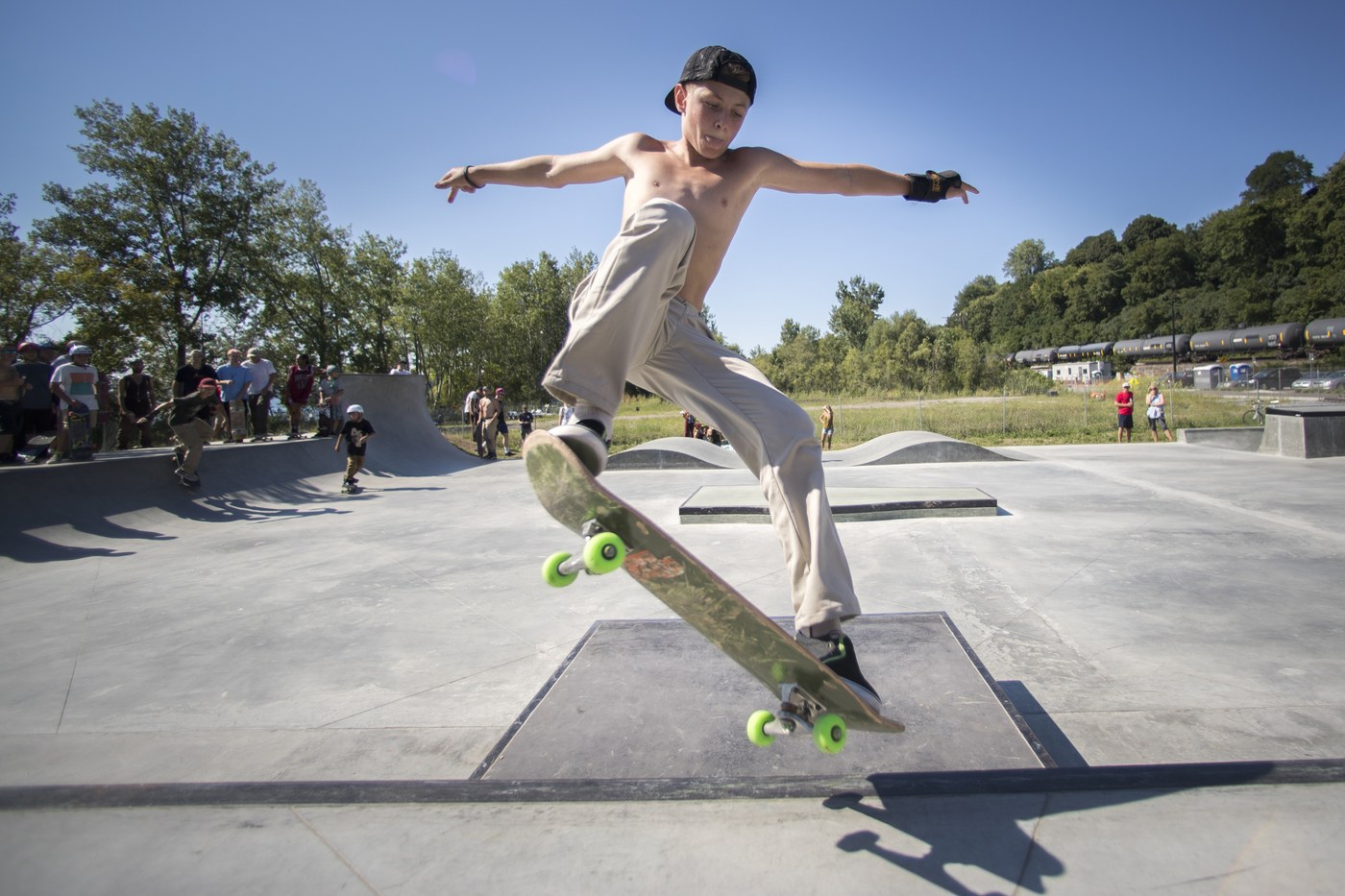
Two to five hours of actual skating. Some people get it in one session, others take three weekends. It has nothing to do with talent, it comes down to one thing: are you planting your foot close to the board, or are you taking a step?
It clicks all at once and you feel it physically. One try where the leg fires at the right moment, where the board stays glued to your hand without pulling, where the foot comes back without you thinking about it. You're not going any higher than the tries before — but for the first time, you didn't correct anything in the air. That silence, inside the motion, is what tells you it's dialed.
And after that you won't stop doing it. It's the one trick in skating that works everywhere: in a bowl, on a bench, out front of your building, forty years after Gary Scott Davis decided to try something nobody thought was possible.
How far from the board do you plant your foot ? And what curb did you land your first one on ? Drop it in the comments ↓
Follow NOSK8 where you hang out
Parts, spots, behind the scenes: it all drops on the accounts first.
Le lexique
-
1
boneless
Saut où le skateur pose son pied avant au sol et tient sa planche à la main pour s'élever, au lieu de la faire décoller au pop.
-
2
tail
L'arrière relevé de la planche, celui qu'on tape au sol pour faire décoller l'avant.
-
3
curb
Un trottoir, ou le bord de béton d'un module. La hauteur de départ idéale pour apprendre un trick sans se faire mal.
-
4
quarter
Module courbe d'un quart de cercle, sur lequel on remonte pour sortir en l'air au-dessus du bord.
-
5
no comply
Figure cousine du boneless : le pied avant se pose au sol, mais sans jamais attraper la planche avec la main.
Continue ta lecture
ÉvénementsTaranto 2026 : la France signe le doublé en street, quand trois finalistes hommes sur huit repartent sans un seul point de trick
Résultats officiels de la finale street des Jeux Méditerranéens 2026 à Taranto : doublé français avec Joseph Garbaccio et Lucie Schoonheere, podiums complets et l'étrange…
Commentaires (0)