
ℹ️ 🛹 Web Média Skate 🛹 ℹ️

Chroniques · Opinion
Nobody Can Sit Through 5 Minutes Anymore: Does the Full-Length Skate Video Still Have a Future?
La part de 5 minutes contre le clip vertical de douze secondes. Chiffres Thrasher à l’appui : ce que chaque format raconte, et lequel survit vraiment.

→ Pour aller plus loin : 42 ans sous contrat : comment Mark Gonzales garde un sponsor aussi longtemps ?
There's a VHS copy of Yeah Right! - 2003 sitting somewhere at your parents' place, and you know exactly how long it runs: seventy minutes. You sat through all of them. More than once. In 2026, you open Instagram, watch a switch heelflip for nine seconds, scroll, and you'll never know the guy's name.
The question isn't which of the two is more noble. It's more annoying than that: does anybody still watch a skate video all the way through, and if the answer is no, is it even worth making one? Thrasher's public numbers have an answer. Just not the one you'd expect.
70 minutes in 2003, 3 minutes tops in 2026: what we traded away
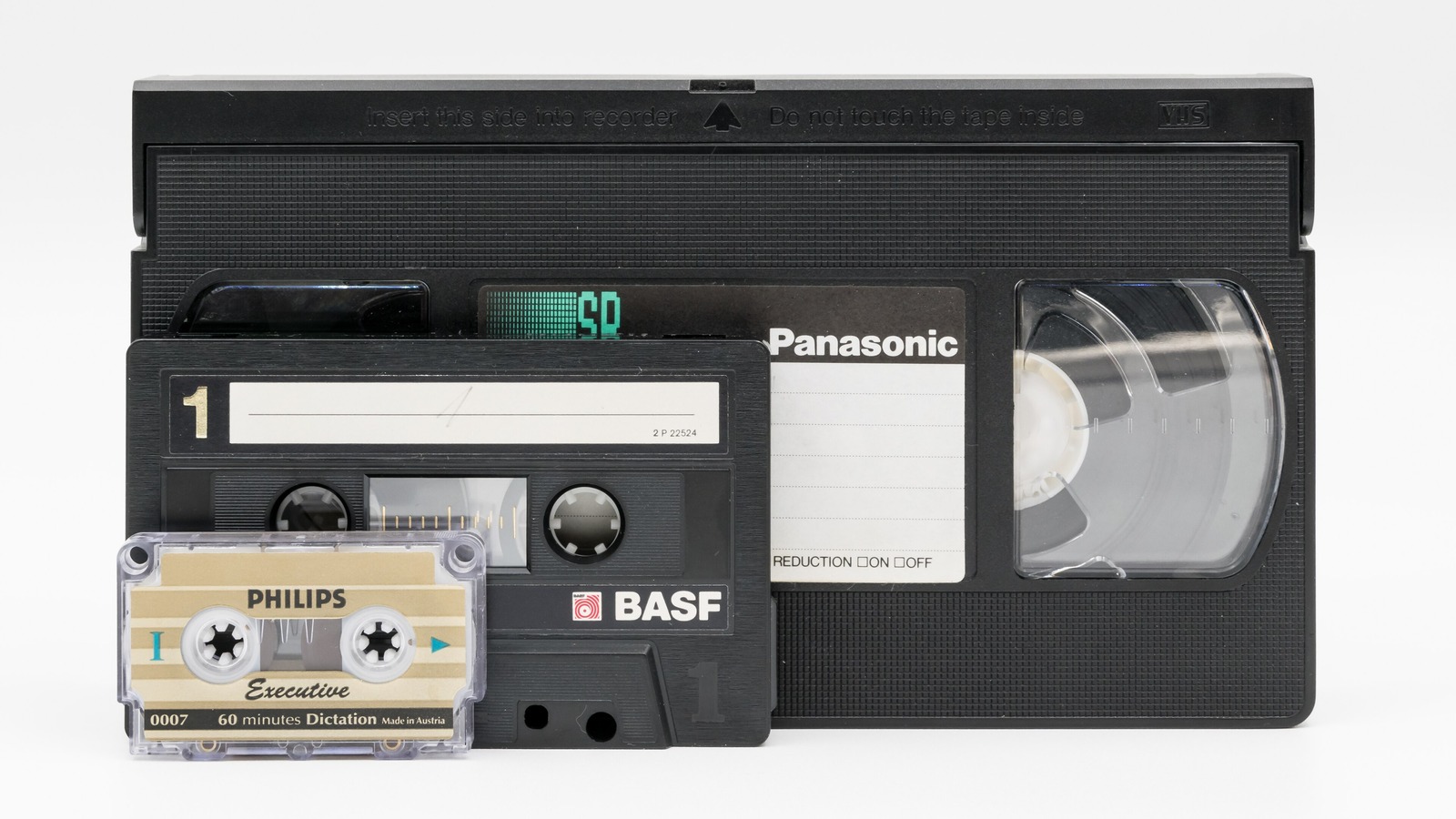
The 4K remaster of Yeah Right! - 2003 that Crailtap put online runs 1 hr 10 min 52 sec. You didn't throw that on in the background. You sat down, somebody killed the lights, and anybody talking during Koston's part caught hell for it. The format carried a social rule: we watch together, start to finish, in the order the editor picked.
Today the unit of measurement has switched sides. A YouTube Short maxes out at three minutes, and nobody makes three-minute ones. On every other platform the logic is the same: the content has to land inside the first second, because the second one is never guaranteed.
This isn't a trial. It's a plumbing report. The pipe changed diameter, so what flows through it changed shape. The real question is what got left on the side of the road when we sorted through it — and whether anybody went back for it.
The tape didn't ask for your opinion every eight seconds. That was its flaw. That was mostly its strength. — What the format demanded
5:53, 4:37, 6:45: the long video already got skinny
Look at the actual runtimes of what Thrasher puts on its channel, pulled September 5, 2026. Mason Silva's "Spitfire" part: 5 min 53 sec, 580,000 views. Tyshawn Jones' "The General" part: 4 min 37 sec, 947,000 views. Nyjah Huston's "Shine On" part: 6 min 45 sec, 1.3 million views.
We still call that long-form. Honestly, that stings. In 1999 that was a freefall: a five-minute part was one chunk of the full video, and the full video ran an hour. Today's long-form is yesterday's short-form, left standing alone on the market.

And yet these parts work. A million views on an edit under seven minutes that tells no story, says not one word, and never holds a face in close-up for more than a second. The vertical clip didn't kill that format. If anything it made it more valuable: when everything runs twelve seconds, five minutes becomes a statement.
What twelve seconds can't tell you
The vertical clip does one thing extremely well, and it does it better than any 2003 edit ever could: it delivers the trick. Tight frame, slow-mo at the right beat, raw audio. If you want to learn what a clean nollie backside heelflip actually looks like, a twelve-second loop beats a whole part.
You know that moment where you rewatch a clip and realize you still have no idea who that is? Right. What it can't do is give you a character. A clip shows you a trick; a full-length shows you a person. The difference lives in the connective tissue — the push toward the spot, the way he gets back up, the homie screaming off-camera, the stretch where the edit slows down because the editor knows you need to breathe.
That's also why skateboarding's collective memory is made of full-lengths and not clips. We remember Video Days - 1991 and the 411 Video Magazine because they ran long enough to leave a mark. Nobody remembers a reel they saw three weeks ago — not even the one they shared twice.
A clip shows you a trick. A full-length shows you a person. That's not the same industry. — The dividing line
1.45 million views for an hour of raw footage: the number that breaks the theory
Here's the number that should end the debate, and that nobody ever brings up. In December 2022, Converse dropped As You Wish, an 18 min 29 sec full-length. It sits at 658,000 views today. In April 2024, Thrasher posted the rough cut of Louie Lopez's part alone: 1 hr 00 min 04 sec of raw footage, slams, blown tries, people standing around waiting for the light to come back.
Read that number again. That rough cut pulled 1,451,000 views. More than double the finished video it came from. An hour of raw, shot with no licensed soundtrack and no flashy editing, beats the polished product by 2.2x.
And it's not a one-off. The rough cut of Nyjah's part in Distress runs 23 min 48 sec and cleared 554,000 views in eight months. The full Distress video, out six months earlier, sits at 535,000. The behind-the-scenes of one part outperforms the brand's entire film.
In other words: people didn't stop watching long. They stopped watching long when it's packaged. An hour of raw footage, they'll take. Eighteen minutes of calibrated product, less so.
The answer: yes, but it's switching jobs
So — does the full-length skate video still have a future? Yes. And it's a real yes, backed by numbers, not some old head's consolation prize. But it won't be doing the job it used to do. It's moving to a different desk at the company.
Up through the 2000s, the full-length was the sales tool. You dropped it to launch a team, move shoes, put a name in circulation. That job, the vertical clip now does a thousand times better, for a thousand times less, in front of a thousand times more people. Fighting on that ground is a lost cause, and pretending otherwise is just comfort nostalgia.
What's left for the full-length is the one thing vertical can't manufacture: proof. The clip shows a result; long-form shows the price paid. The forty-seven tries, the light dying, the bloody knee on attempt twelve, the silence after the roll-away. You can't sell that in twelve seconds, and it's exactly what 1.45 million people went looking for inside an hour of raw footage.
The five-minute part isn't going anywhere either. It just becomes something else: a file. A filmed résumé you watch once, all the way through, when a name starts circulating. It doesn't need to pull numbers every week anymore — it needs to exist, to be well made, and to still be there in ten years.
What survives, and in what shape
What's disappearing isn't the very short or the very long. It's the middle — the twenty-minute brand video, too long for a scroll, too calibrated to get attached to. It's getting crushed from both ends, and the view counts have been saying so since 2024.
What holds up: twelve seconds to hook, an hour of raw to convince, five edited minutes to last. Three formats, three jobs. A skater who only drops clips is everywhere and nowhere; a skater who only drops a part every three years doesn't exist long enough for anyone to wait on him.
And there's a very dumb reason this isn't flipping back: you can't watch an hour of raw footage while walking. You have to sit down. Exactly like 2003 in front of the tape getting passed around. The social ritual didn't die, it just switched screens — and switched content: we don't sit down for the finished product anymore, we sit down for the behind-the-scenes.
So no, nobody sits through five minutes by accident anymore. But when the content shows the work instead of hiding it, they'll sit through sixty. That might be the best news we've had on this subject in twenty years.
Last skate video you watched all the way through, no skipping : which one was it, and what kept you there ? Drop it in the comments ↓
Follow NOSK8 where you hang out
Parts, spots, behind the scenes: it all drops on the accounts first.
Le lexique
-
1
part
Section d'une vidéo de skate consacrée à un seul skateur, montée sur son propre morceau. L'équivalent d'un album solo.
-
2
rough cut
Version brute d'une part : les essais ratés, les chutes et l'attente que le montage final avait retirés.
-
3
line
Suite de plusieurs figures enchaînées sans poser le pied, filmée d'un seul plan.
-
4
replaquage
Moment où les roues retrouvent le sol après une figure. C'est là que le trick est validé ou perdu.

Continue ta lecture
ÉvénementsSkate à Curitiba : 1,01 point a décidé du titre — et ce qui se joue derrière vaut bien plus
Wallace Gabriel et Duda Ribeiro gagnent l'étape d'ouverture du Circuito Banco do Brasil de Skate à Curitiba. Podiums complets, scores, et la place en Street…
Commentaires (0)