
ℹ️ 🛹 Web Média Skate 🛹 ℹ️

Tricks
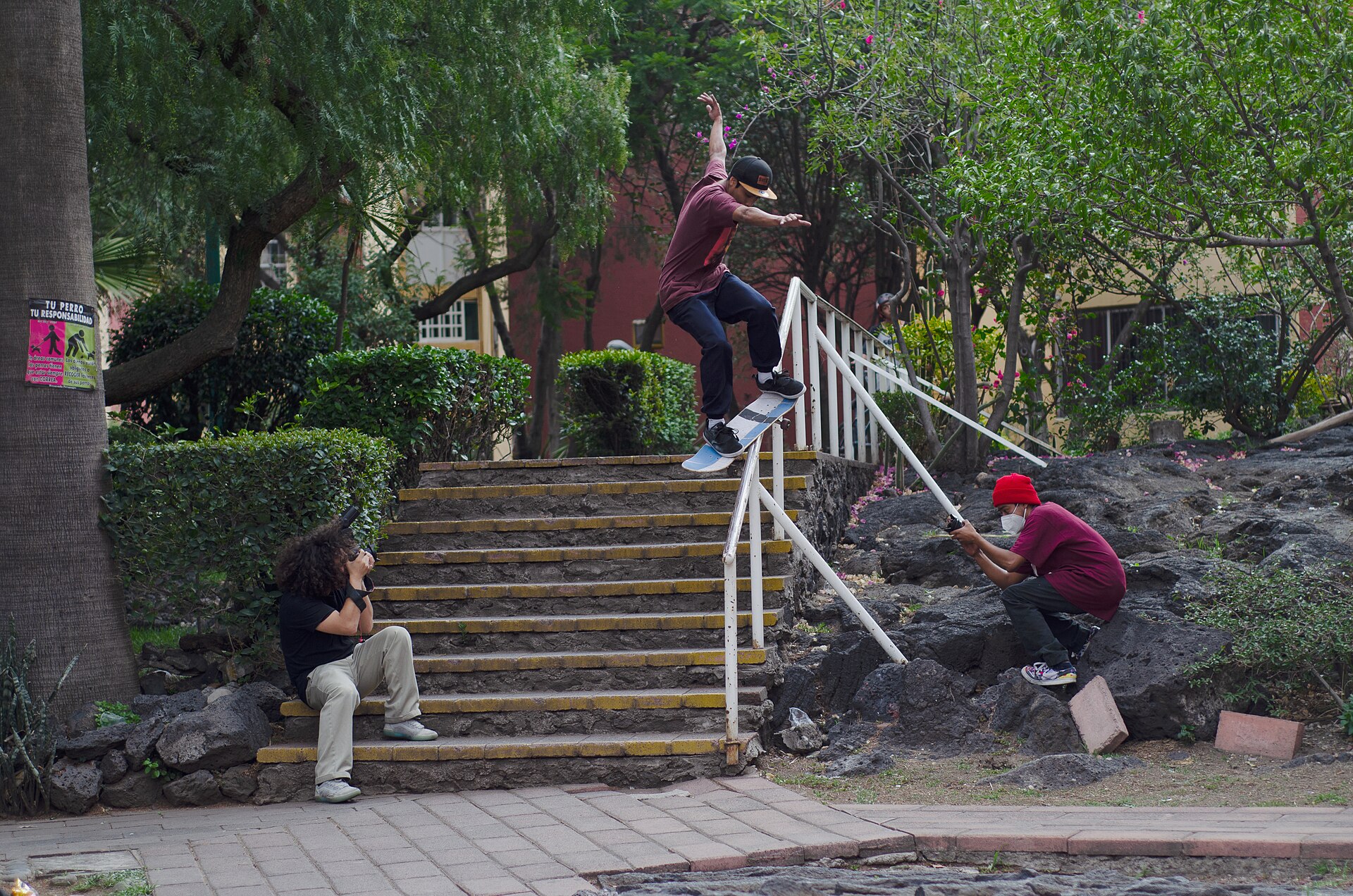
Smith Grind: Your Body Angle Is Never Right — Where Does It Really Come From?
Le nose plonge, le board se redresse, et ton corps n'est jamais au bon endroit. Le problème ne vient pas de tes pieds.
→ Pour aller plus loin : Feeble grind : la planche pivote pendant le grind — d’où ça vient vraiment ?
The back truck catches the ledge. The nose dips. And then, instead of sliding, your board levels out into a 5-0, or it slips under the ledge and you go over the top. You try again. Same thing. It feels like your body is never in the right place, never at the right angle.
The Smith grind is the trick that looks simple in a photo and makes you doubt everything under your feet. On paper, you can already do a 50-50 and a 5-0. You just drop the nose a little lower. Except you don't.
Everybody hits this wall head-on. Guys who've been landing clean crooks for years stay stuck for weeks on the backside Smith. They fall off the street side, they end up in a feeble without meaning to, they catch the corner of the ledge with the nose. It's not a skill problem. This trick asks your body to do something it refuses to do on reflex.
Here's the plan: where the trick comes from, the 5 steps to lock it in, the 4 fails that give away your angle, a drill to check where you're at. And at the end, the real reason your body always ends up crooked.
Level
Advanced
Time
Several weeks
Prereqs
50-50, 5-0 on a ledge
Surface
Waxed curb or ledge
Mike Smith, early 80s: the grind where you let the rail drop

The trick is named after a guy, not a move. Mike Smith, a vert skater from Southern California, two Thrasher covers in June 1981 and January 1982. He's credited with the Smith Stop, a stall on the coping that would end up being called the Smith grind all over the planet.
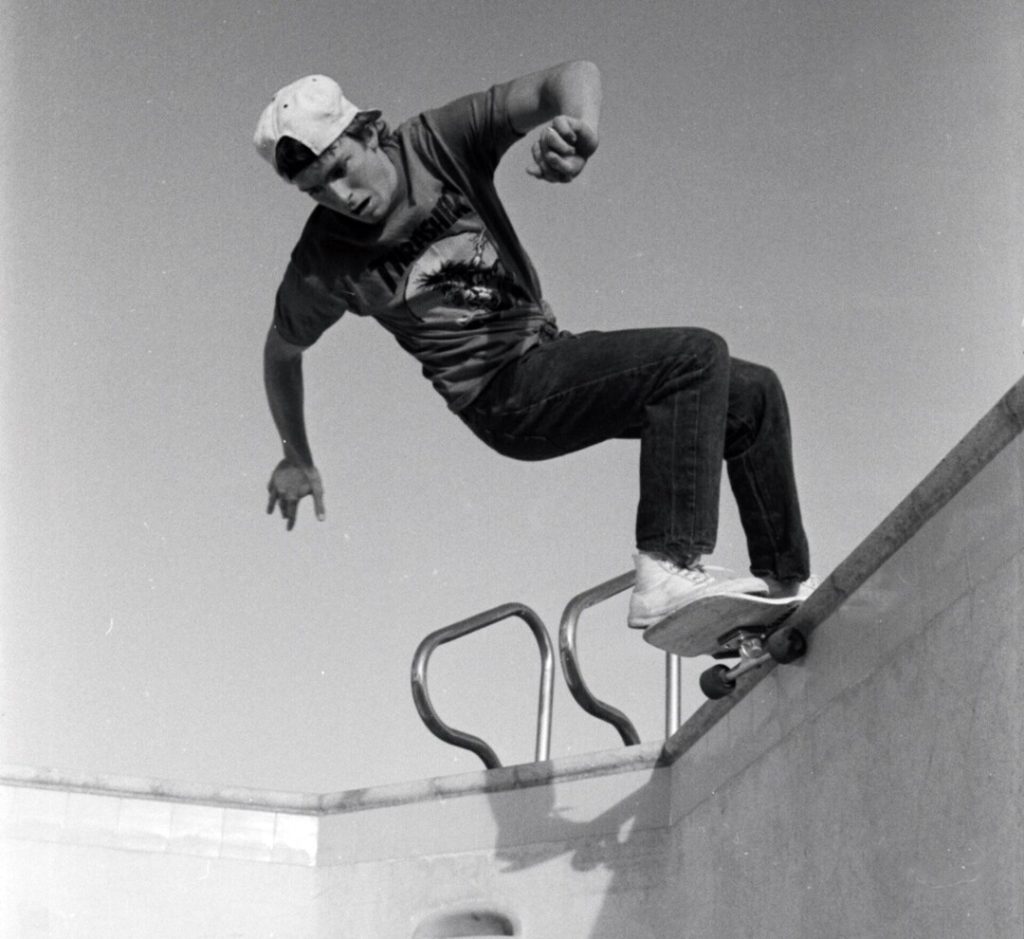
In 2021, when Smith was inducted into the Skateboarding Hall of Fame, Tony Hawk summed up his contribution in one line: "He did a grind, but he dropped his rail, no one did that before." The rail, here, is the edge of the board. Remember that line. It comes back at the end.
The trick then moved from the pool to the street. Curbs, ledges, handrails. The principle hasn't moved since: all your weight on one truck, and a board deliberately off balance.
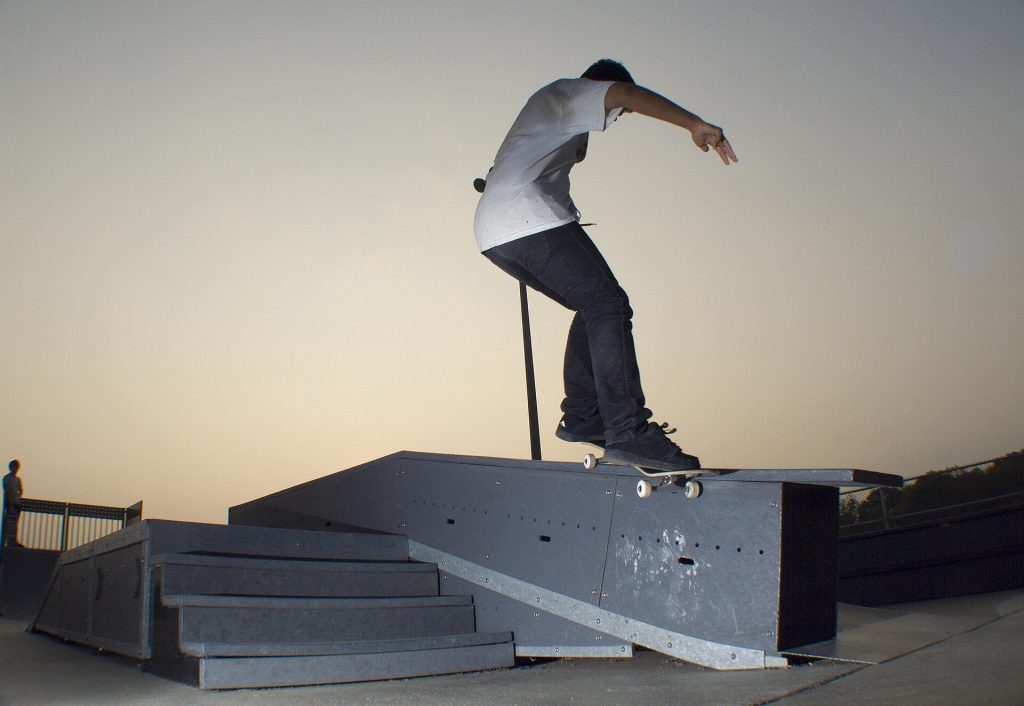
The 5 steps to lock in a clean Smith grind
-
The approach: almost parallel
Come in at a shallow angle, almost hugging the ledge. Too much angle and your back truck goes right across the edge. Back foot on the tail, front foot just behind the front bolts. Keep your speed honest: a slow Smith stops dead in the middle.
-
Shoulders before the pop
Before you even ollie, your shoulders need to be lined up with the ledge. Not turned toward the street, not turned toward the ledge. In line. Your eyes go to the end of the ledge, where you want to come out. That's the step everyone skips.
-
The pop: an ollie higher than the ledge
Pop a real ollie, higher than the edge. If you only get level with it, the back truck smacks the side instead of landing on top. The back truck aims for the edge, the front truck goes over and reaches for the other side.
-
The lock: let the nose drop
The back truck lands, your front foot pushes down, toe side on backside, heel side on frontside. The nose dips below the edge. Your weight stays over the back truck, back knee bent. That knee carries everything.
-
The exit: bring the nose back up
At the end of the ledge, a little tap on the tail to lift the nose, and shoulders turning just slightly toward the exit. The board comes back flat, you set both trucks down at the same time. A lazy exit and the nose hangs up on the corner.
The 4 angle fails and what they say about your body
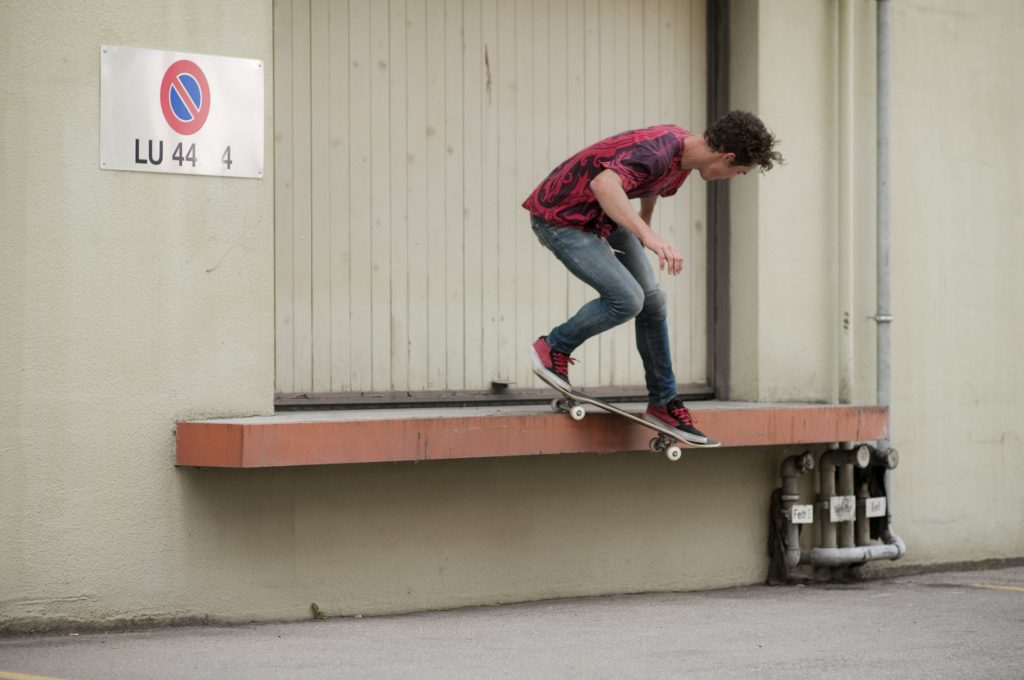
The 4 classic fails
- The board levels out into a 5-0: your weight is too far back and your front foot isn't pushing. The nose rises on its own. Load the front foot down as soon as you lock.
- You fall off the street side: on backside, you lean away from the ledge because you're scared of falling onto it. The board slides out from under you. Your head has to stay over the back truck, not next to it.
- It turns into a feeble: your back truck locks too far over, and the board goes sideways. Your shoulders turned toward the ledge during the pop. Keep them in line until the lock.
- The nose catches the corner: on the way out, you turn your chest too early and the nose stays under the ledge. Hold the Smith all the way, then pop out.
See what they have in common? None of these fails come from your feet. They all come from your upper body, and all from the same hesitation. Honestly, that's why half the tutorials go in circles: they talk about foot placement for ten minutes.
The control drill: a Smith stall on a curb, then rolling
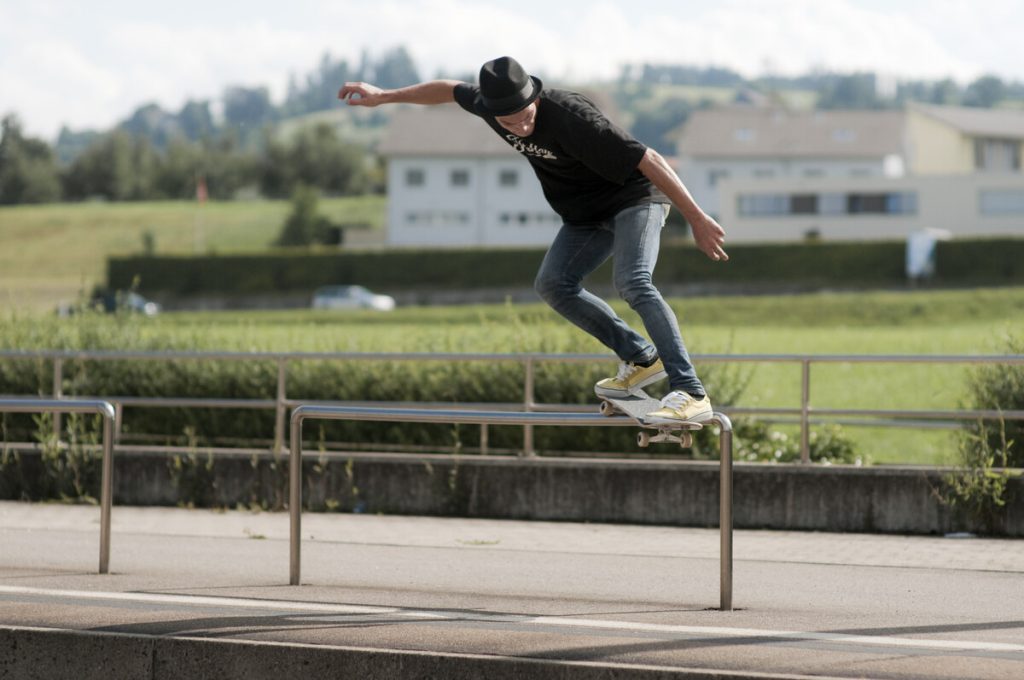
Find a low curb, well waxed. Board stopped, back truck set on the edge, nose hanging over the other side. Step on. Hold the position for 5 seconds, no hands. If you can't do it standing still, you'll never do it at 15 km/h.
During those 5 seconds, watch what your body does. Are your shoulders in line with the curb? Is your head over the back truck? If you feel yourself pulling back, that's your problem. You just saw it without taking a single slam.
Then roll slowly and do Smith stalls: set it, stay half a second, pop out. Ten in a row without leaning toward the street, and you move on to the grind. Your truck setup matters too: trucks that are too loose make you wobble on the lock, more on that in our piece on tight or loose trucks.
If you're coming from the crooked grind, watch out. The crook taught you to load the nose. The Smith asks for the opposite: weight back, nose hanging.
So where does that body angle that's never right actually come from?
It doesn't come from your feet. It comes from your head, and it's decided before you even pop. When you come up on the ledge, you look at your back truck. Your head drops, your shoulders open, your hips follow. By the time the truck lands, your body is already a quarter turn behind. It's like walking down stairs staring at your feet: you always end up missing a step.
And behind that look, there's a deeper reflex: the fear of the rail dropping. Your body doesn't like a board that's off balance. So it compensates. It pulls back, it leans away from the ledge, it tries to keep the board flat. It does everything it can to avoid the very move that defines the trick.
That's where Tony Hawk's line makes sense. Mike Smith invented this grind by accepting to drop his rail. That's exactly what your body refuses. So the fix comes down to two moves: look at the end of the ledge instead of your truck, and let the nose drop without holding it back.

Thrasher filmed Julian Agliardi's backside Smith from several angles on a phone. Pause it at the lock and watch two things: where his head goes, and what line his shoulders are on. More than forty years after Mike Smith's coping, that's still where it all happens.
And then one day, it clicks. You look at the end of the ledge, you feel the back truck bite, the nose drops on its own, and you slide. Your body stops fighting. The sound of the truck on the edge lasts longer than usual. You come out flat, and you know you can do it again. That Smith, you'll go looking for it on every ledge you pass.
Does your Smith grind go street side, into a 5-0 or into a feeble? And is it frontside or backside that's giving you trouble? Tell us in the comments ↓
Follow NOSK8 where you hang out
Parts, spots, behind the scenes: it all drops on the accounts first.
Le lexique
-
1
Smith grind
Grind sur le truck arrière, le nose qui plonge sous le bord du ledge ou de la coping.
-
2
5-0
Grind sur le truck arrière seul, le board à plat au-dessus du ledge, nose en l'air.
-
3
feeble grind
Grind sur le truck arrière, le board en travers, le nose qui passe par-dessus le ledge côté opposé.
-
4
lock
Le moment où le truck se cale sur l'arête du ledge et que la position se fige.
-
5
coping
Le tube ou la bordure au sommet d'une rampe ou d'une piscine, sur lequel on grind.
-
6
curb
Un trottoir ou un petit muret bas, le spot parfait pour apprendre un grind.
Shop NOSK8
Voir toute la boutique →
TEE-SHIRTS
TEE-SHIRT NOSK8® NOSKATE #NSITA
Le prix initial était : 35,00 €.29,00 €Le prix actuel est : 29,00 €.
TEE-SHIRTS
TEE-SHIRT NOSK8® P.B HEART #POLARBEAR
Le prix initial était : 35,00 €.29,00 €Le prix actuel est : 29,00 €.
TEE-SHIRTS
TEE-SHIRT NOSK8® I.L.N #ILOVEN8
Le prix initial était : 35,00 €.29,00 €Le prix actuel est : 29,00 €.
TEE-SHIRTS
TEE-SHIRT NOSK8® P.B HEART #NYC
Le prix initial était : 35,00 €.29,00 €Le prix actuel est : 29,00 €.
TEE-SHIRTS
TEE-SHIRT NOSK8® MATRICE HEART #CTRL
Le prix initial était : 35,00 €.29,00 €Le prix actuel est : 29,00 €.
CASQUETTES
CAP NOSK8® P.B #POLARBEAR
Le prix initial était : 35,00 €.25,00 €Le prix actuel est : 25,00 €.
CASQUETTES
CAP NOSK8® N8 #NOSK8
Le prix initial était : 35,00 €.25,00 €Le prix actuel est : 25,00 €.
CASQUETTES
CAP NOSK8® P.B.P #PAW
Le prix initial était : 35,00 €.25,00 €Le prix actuel est : 25,00 €.
HOODIES
HOODIE NOSK8® NOSKATE #NSITA
Le prix initial était : 60,00 €.49,00 €Le prix actuel est : 49,00 €.
HOODIES
HOODIE NOSK8® P.B HEART #BARÇA
Le prix initial était : 60,00 €.49,00 €Le prix actuel est : 49,00 €.
HOODIES
HOODIE NOSK8® P.B CENTRE #ORIGINAL
Le prix initial était : 60,00 €.49,00 €Le prix actuel est : 49,00 €.
HOODIES
HOODIE NOSK8® P.B HEART #PARIS
Le prix initial était : 60,00 €.49,00 €Le prix actuel est : 49,00 €.
HOODIES
HOODIE NOSK8® P.B HEART&BACK #ORIGINAL
Le prix initial était : 60,00 €.49,00 €Le prix actuel est : 49,00 €.
SWEAT
SWEAT NOSK8® P.B HEART #NYC
Le prix initial était : 45,00 €.39,00 €Le prix actuel est : 39,00 €.
SWEAT
SWEAT NOSK8® P.B HEART #PARIS
Le prix initial était : 45,00 €.39,00 €Le prix actuel est : 39,00 €.
SWEAT
SWEAT NOSK8® P.B HEART #POLARBEAR
Le prix initial était : 45,00 €.39,00 €Le prix actuel est : 39,00 €.
SWEAT
SWEAT NOSK8® P.B HEART #BARÇA
Le prix initial était : 45,00 €.39,00 €Le prix actuel est : 39,00 €.
SWEAT
SWEAT NOSK8® P.B HEART #PHILI
Le prix initial était : 45,00 €.39,00 €Le prix actuel est : 39,00 €.
Continue ta lecture
PortraitsBrighton Zeuner, or X Games à 13 ans : que doit-elle à la rampe de Jeff Grosso ?
En 2017, Brighton Zeuner gagne l'or des X Games à 13 ans et un jour. Quatre ans plus tôt, Jeff Grosso venait skater la rampe…
Commentaires (0)