
ℹ️ 🛹 Web Média Skate 🛹 ℹ️

Chroniques · Opinion
42 Years on the Books: How Mark Gonzales Keeps a Sponsor That Long?
De la couverture Thrasher de 1984 à Krooked et adidas, Mark Gonzales n'a jamais été sans sponsor. Il a pourtant claqué la porte de Vision et de Blind au bout de quatre ans. Ce qui le retient tient en une ligne.

→ Pour aller plus loin : 11 ans, Osaka, un park indoor : le prodige de Reddit, c’est le talent ou l’argent ?
November 1984. A sixteen‑year‑old kid grinds on a beanplant, a board under his feet, and lands the cover of Thrasher. His name is Mark Gonzales. Forty‑two years later, his name still grinds the board and the shoe. We’ve already talked about his 1991 Wallenberg ollie. Here’s another angle: the money side of things.
In a scene where a pro swaps sponsors every three or four years, that’s a freak. Brands get sold, bought, shelved in licensing catalogs. Gonz, though, is still in the game. So how do you stay that long, and what does it cost when you’re gone?
Thrasher 1984: a kid from South Gate and an Alva board
At first, nothing business‑like. Gonz grew up in South Gate, south of Los Angeles. He steps onto his cousin’s board at eight. By fifteen, he meets Tommy Guerrero and Natas Kaupas, who are pulling ramp tricks into the streets. Nobody’s calling it street yet.
The 1984 cover flips the script. One sponsor, a photo in the shop, and suddenly the kid has value. The first implicit contract of his life: you skate, we supply you, we put you on the front. He’ll keep signing that deal for four decades.
Vision, 1985: the first pro model
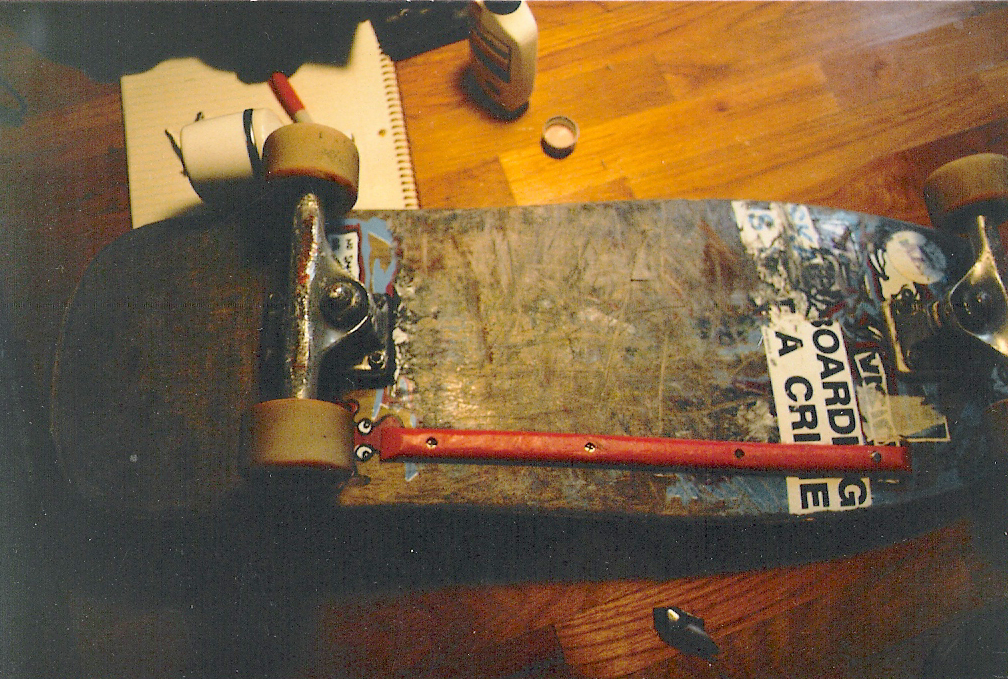
Right after the cover, Gonz joins Vision. In May 1985, he competes in his first pro contest, the Sacto Streetstyle, in Sacramento. Vision drops his pro model right after.
The exact numbers of that contract never went public, and we’re not going to make them up. What we do know is enough: a name on a board, and a brand riding on its riders’ backs. Vision launches Vision Street Wear, clothes, then shoes.
Bottom line, Vision sells a style, and the style is Gonz. In 1986, he ollies the Embarcadero gap that’ll carry his name. That same year, with Natas, he’s the first to skate a handrail. Street is born under his feet, with a Vision logo glued underneath.
1989: Blind, a name chosen to poke at Vision
In 1989, Gonz leaves. He co‑founds Blind with Steve Rocco under the World Industries umbrella. The name isn’t random: Vision, the sight, and Blind, the blind. It’s a jab aimed at his former employer, taken as such.
Why leave? Because Gonz became the product. At Vision, he sells and doesn’t make any decisions. At Blind, he draws the logo, the one we still see today. Jason Lee follows right after him, then Rudy Johnson and Guy Mariano.
In 1991, Spike Jonze films Video Days, often cited as the most important skate video ever. In the early ’90s, Blind becomes one of the biggest board brands in the world.
1993: the year everyone left Blind
Four years after launching it, Gonz leaves Blind in 1993. Wikipedia sums it up in one blunt line: he goes due to frustrations similar to those he had at Vision. He moves on to his own brands, ATM Click and then 60/40 with Ron Chatman.
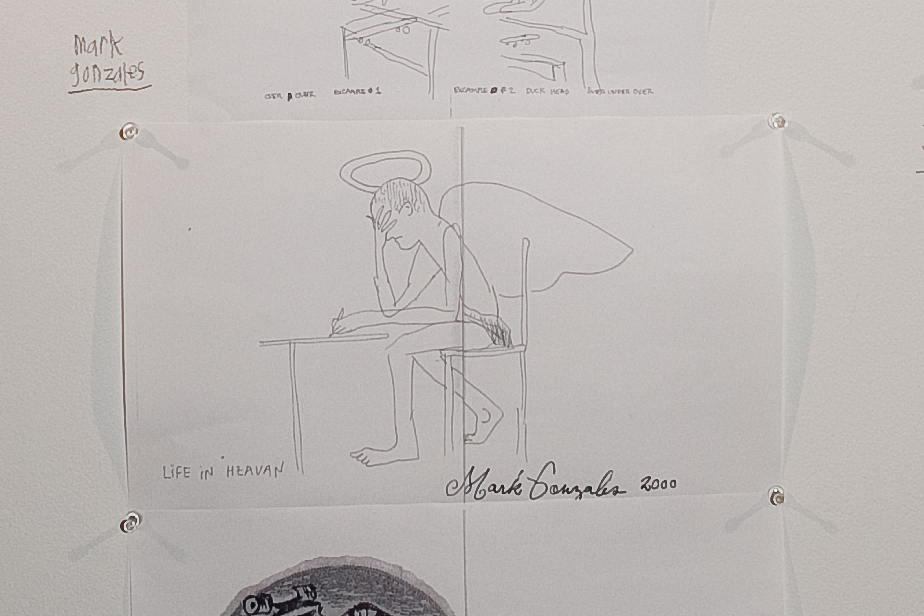
That same year he sparks controversy. He takes a graphic he drew for one of his pro models at Vision and slaps it on an ATM Click board. The message is clear: the drawing is his, no matter which logo paid for it back then.
Blind pays the price. By the end of 1993, Rudy Johnson, Guy Mariano, Tim Gavin and Jeron Wilson head to Girl, which has just been born. Jason Lee launches Stereo. In a few months, the brand loses its founder and half the crew from Video Days.
Deluxe, then Krooked in 2002: the house he never leaves

After the personal brands, Gonz drops his bags at Deluxe in San Francisco. He skates for Real, the label of Tommy Guerrero and Jim Thiebaud, with stakes in Kicked Out of Everywhere, Non-Fiction and Real to Reel.
In 2002 he launches Krooked, still with Deluxe. This time the setup’s different. Gonz is the art director and he draws most of the graphics, ads and visuals for the brand. He’s no longer the face of a label owned by others. The brand is his signature.
Twenty‑four years later, Krooked is still with Deluxe. It’s the longest board relationship of his whole career. And it’s no coincidence that it lines up with the only time he’s holding the pen.
adidas, fifteen years in 2013: pay a signature, not a trophy case
When it comes to shoes, the story’s even longer. In 2013, adidas Skateboarding’s team page introduces him with a line that doubles as a contract: “Fifteen years on adidas.” Fifteen years, so he arrived around 1998. And he’s still the face of adidas in the 2020s.
The same profile keeps him alive between Paris and New York, backed by adidas, Krooked, Fourstar, Spitfire and Independent. The interview that follows is worth every press release. What adidas does he rock? “What is free is good,” which means free is good. A pair lasts about a week, and he often has no board on him. With another brand it’d be seen as a shrug. With him, it’s the brand.
adidas doesn’t buy contest results. The brand buys the guy that Transworld ranked the most influential skater of all time in December 2011, ahead of Tony Hawk and Rodney Mullen.
Meanwhile, the brands he left have changed hands. Vision was sold, then its licensing rights were resold. Blind is now owned by Dwindle Distribution. The logo Gonz drew is still there, though he’s not been part of it for over thirty years.
42 years later: why Gonz stays and why he leaves
Line up the dates side by side. Vision, 1985 to 1989: four years. Blind, 1989 to 1993: four years. Krooked, since 2002: twenty‑four years. adidas, since the late ’90s: nearly thirty years. The pattern jumps out.
That’s the answer. Gonz keeps a sponsor that long only if the brand lets him keep what he sells, his style and his freedom. With Krooked he owns the design. With adidas you pay a signature, not a podium, and no one tells him to play it safe. Wherever he was just a rider in someone else’s house, he left after four years.
Leaving costs both sides. For him it means starting from scratch, building ATM Click, 60/40, fighting for a graphic he sees as his own. For the brand it’s worse. Blind lost its founder, then its crew. A rider who draws his own brand isn’t replaceable.
What you’ll see in any shop: a Krooked board with its twisted little guys on the wall, an adidas pair in the rack, the same name on both. Skate knows the other school, the big transfer one. Gonz took the opposite path: stay where he holds the pen.
The lesson boils down to one line: you don’t keep a sponsor by being loyal. You keep one by being impossible to copy, and by never selling what makes you who you are.
If a brand offered you a lifetime contract, would you sign for the board or for the right to draw on it? Drop it in the comments ↓
Follow NOSK8 where you hang out
Parts, spots, behind the scenes: it all drops on the accounts first.
Continue ta lecture
ChroniquesChampionnats du monde de skate São Paulo 2026 — Quatre couronnes, zéro routine
Bijueska, Brown, Sasaki, Matsumoto : retour sur les championnats du monde de skateboard São Paulo 2026 qui ont redessiné la hiérarchie mondiale.
Commentaires (0)