
ℹ️ 🛹 Web Média Skate 🛹 ℹ️

★ Tricks
Manual: Holding 3 Seconds is All About the Eyes, Not the Legs
Le tail racle, le nose retombe, et tu forces encore plus sur les cuisses. Daewon Song a gagné 10 000 dollars en manual : ce qui le fait tenir n'est pas dans ses jambes.
→ Pour aller plus loin : Pat Duffy : Questionable, 1992 et l’explosion du street
Your first manual in skate usually looks like this. You lift the nose, the rear wheels roll, and half a second later the tail skids on the ground. Or the front wheels drop with a clack. You try again, you tighten your thighs, you push harder with your legs. Nothing changes.
The manual is rolling on two wheels without the tail touching. On paper, it’s the simplest trick in the world. In reality, it’s the one that gets the most grumbles at the skatepark.
The problem is that everyone works it with their legs. While the thing that keeps you going is elsewhere. Higher up. And Daewon Song made it a career.
Here’s the method to hold 3 seconds in two weeks. The reference point, the arms, the speed. In that order.
Level
Beginner
Time
2 weeks
Prerequisites
Ride, brake
Surface
Smooth, flat floor
Daewon Song, $10,000 for a manual: the trick’s king

If one skater turned the manual into an art, it’s Daewon Song. Born in Seoul in 1975, he started filming with World Industries in Love Child - 1992. That video shows the first hardflip ever filmed.
In 1997, he teamed up with his buddy Rodney Mullen for a weird video: Rodney vs. Daewon - 1997. Two parts face‑to‑face, like a match. The two created Almost Skateboards together in 2003. Paul Rodriguez, years later, will say it’s his favorite part of Daewon.
And in March 2014, Daewon won the Berrics 2Up, a public‑voted manual contest against nine other pros. On March 4, he walked away with the trophy and $10,000. For tricks on two wheels.
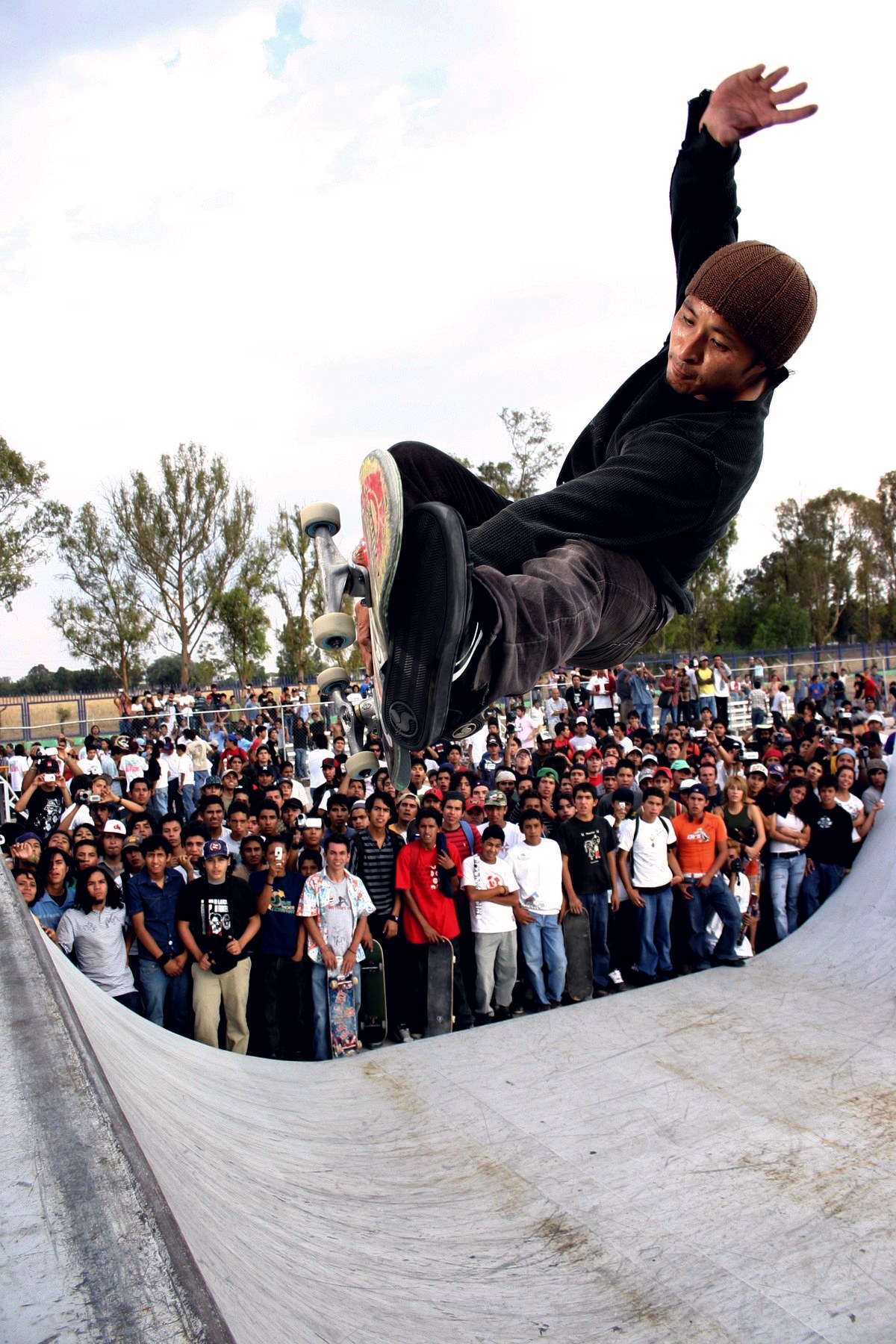
The thing is, even he struggled. Tom Penny, a ’90s legend, mainly praised his manual flow. Nobody’s born with that. Your 200 tails that grind, Daewon had them too. It’s the wall everyone hits the same way: you push with your legs, you fall, you try again.
Also read: Mastering the manual, the trick that separates beginners.
Also read: Daewon Song left Almost after 15 years to start Thank You: what it means to be your own boss
The 2‑week plan: 6 milestones to 3 seconds

-
Days 1 and 2: find your tipping point
At the stop, board on carpet or grass so it doesn’t roll. Front foot on the front bolts, back foot just behind the rear bolts. Shift your weight back until the nose lifts. The goal: feel the spot where the nose rises without the tail touching. That spot is only a few centimeters.
-
Days 3 and 4: roll and lift
Push twice, plant your feet, then tip. Don’t try to hold it. Aim to lift the nose without the tail scraping, even for half a second. If it scrapes, move your back foot a centimeter forward. That usually does the trick.
-
Days 5 to 7: pick a landmark
Before tipping, pick a fixed point 4 or 5 meters ahead. A crack, a painted line, a pole. As soon as the nose lifts, keep your eyes on it. No more looking at your board. It feels scary at first, that’s normal.
-
Days 8 to 10: let your arms do the work
Arms out, shoulder‑wide, palms open. They’re the ones correcting, not your knees. Too far back? Your arms move forward. Nose dropping? They step back a bit. Small tweaks, never big spins.
-
Days 11 and 12: find your speed
Do the same manual at three speeds: very slow, a quick step pace, and pretty fast. Note the one where you hold it longest. For most beginners, that’s the middle one. That’s your work speed for the next phase.
-
Days 13 and 14: the 3‑second test
Landmark, arms, good speed. Count out loud: one, two, three. Place your foot or let the nose drop on its own. Film yourself over ten tries. You’ll instantly spot the ones where your eyes let the landmark slip.
The 4 classic fails and how to fix them
The 4 classic fails
- The tail keeps raking everything : your weight is too far back or your back foot is on the tail. Raise it on the bolts and sit a bit lower.
- The nose drops straight down : you’re tipping too timidly. Flip hard, then fix it with your arms, not the other way around.
- The board flies ahead of you : you’re falling on your backside. Wear a helmet, and as soon as you feel it going, jump off the board toward the back while staying upright.
- You’re looking at your feet : it’s the fail nobody sees, and it’s the worst. We’ll get back to that just below.
The minimum speed: slower than you think
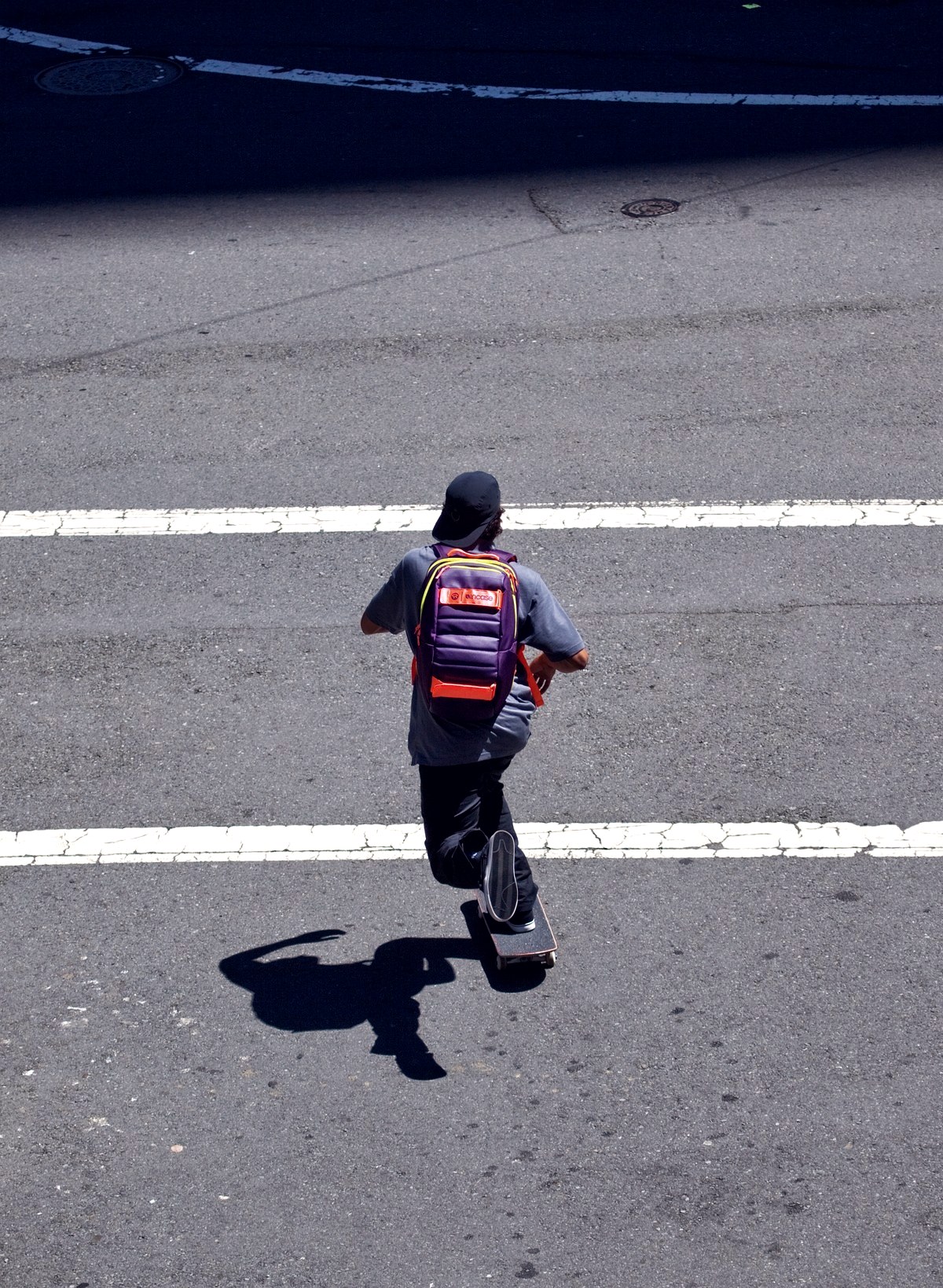
If you’re too slow, the board stops as soon as the nose lifts and you fall forward. If you’re too fast, every pebble turns into a trap and you lose the chance to correct. Between those extremes is a sweet spot.
This zone is basically the speed of a quick step. Two pushes and you’re good. At that pace, you’ve got time to pick your reference, bring your arms out, and flip calmly.
And most importantly, you can keep your eyes forward. The faster you go, the more you’re tempted to stare at the ground right under your nose. That’s exactly what you shouldn’t do.
Also read : Flip in flip out: why you land your two flips but never the combo?
Why your eyes hold the board, not your legs
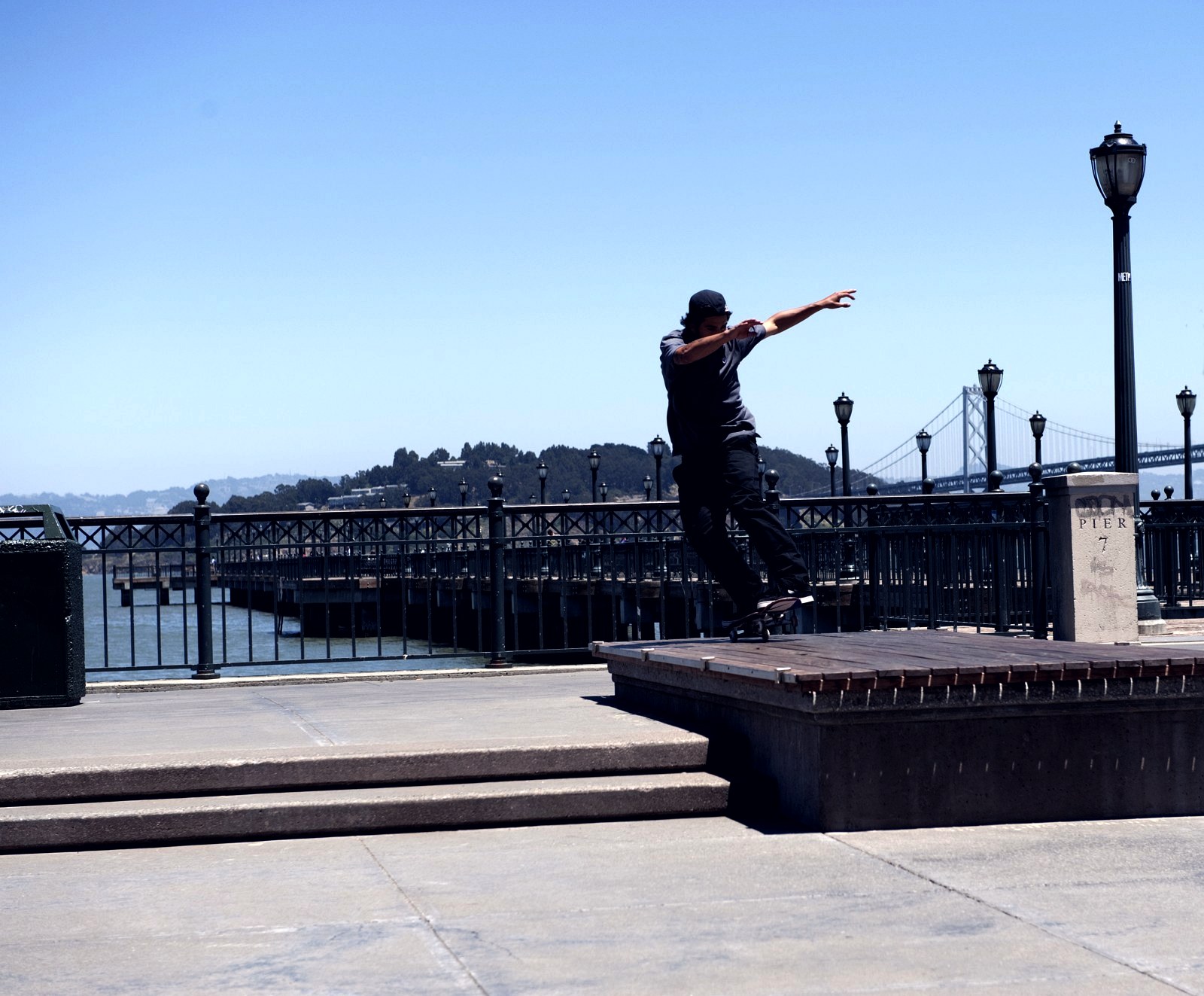
That’s the answer to the title. When you lock your nose on something, you’re looking at a moving target. Your body follows that motion and starts to sway with it. Every little jolt of the board becomes a jolt to your torso.
It’s not just a feeling. In 2010, researchers at the University Hospital of Zurich measured the balance of 20 people. When they fixed their gaze on a stationary point in a fixed environment, their bodies swayed less, in all directions. When they tracked a moving point with their eyes, their bodies rocked at the same pace. The study is published in Gait & Posture.
In skate terms: your reference point at 4 meters is the stationary point. The ground around you is the fixed environment. Both calm your body. Your legs just need to stay loose, and your arms make the small adjustments.
So no, you’re not lacking leg power. You’re missing a spot to place your gaze. That’s why you held a half‑second by tightening your legs, and you’ll hold three seconds by lifting your head.
3 seconds: the day it actually sticks
One day you’ll flip, lock in that crack, and start counting. One. Two. At three you realize the tail hasn’t touched. The rear wheels are humming on the concrete, your arms barely move, and you plant the nose without even thinking. That’s the moment.
After that, everything opens up. Manual on a curb, then on a pad, then the combos. The flip in flip out starts right there. And if your ollie isn’t tight yet, no sweat: the manual can be learned without it.
Daewon cashed in $10,000 with that trick at 39. You’re chasing three seconds. Lift your head, throw your arms out, and count.
What’s your manual record, and where do you look while you hold it? Drop it in the comments ↓
Follow NOSK8 where you hang out
Parts, spots, behind the scenes: it all drops on the accounts first.
Le lexique
-
1
manual
Rouler en équilibre sur les deux roues arrière, le nose en l'air, sans que le tail touche le sol.
-
2
nose
L'avant relevé de la planche, devant les trucks avant.
-
3
tail
L'arrière relevé de la planche, celui qu'on frappe pour un ollie.
-
4
manual pad
Un bloc bas et plat au skatepark, fait pour enchaîner un manual d'un bout à l'autre.
-
5
curb
Une bordure de trottoir ou un petit muret, souvent le premier obstacle pour poser un manual.
Shop NOSK8
Voir toute la boutique →
TEE-SHIRTS
TEE-SHIRT NOSK8® P.B CENTRE #RNB
Le prix initial était : 35,00 €.29,00 €Le prix actuel est : 29,00 €.
TEE-SHIRTS
TEE-SHIRT NOSK8® P.B HEART #ORIGINAL
Le prix initial était : 35,00 €.29,00 €Le prix actuel est : 29,00 €.
TEE-SHIRTS
TEE-SHIRT NOSK8® P.B CENTRE #ORIGINAL
Le prix initial était : 35,00 €.29,00 €Le prix actuel est : 29,00 €.
TEE-SHIRTS
TEE-SHIRT NOSK8® NOSKATE #NSITA
Le prix initial était : 35,00 €.29,00 €Le prix actuel est : 29,00 €.
TEE-SHIRTS
TEE-SHIRT NOSK8® P.B HEART #POLARBEAR
Le prix initial était : 35,00 €.29,00 €Le prix actuel est : 29,00 €.
CASQUETTES
CAP NOSK8® P.B #POLARBEAR
Le prix initial était : 35,00 €.25,00 €Le prix actuel est : 25,00 €.
CASQUETTES
CAP NOSK8® N8 #NOSK8
Le prix initial était : 35,00 €.25,00 €Le prix actuel est : 25,00 €.
CASQUETTES
CAP NOSK8® P.B.P #PAW
Le prix initial était : 35,00 €.25,00 €Le prix actuel est : 25,00 €.
HOODIES
HOODIE NOSK8® P.B HEART #NYC
Le prix initial était : 60,00 €.49,00 €Le prix actuel est : 49,00 €.
HOODIES
HOODIE NOSK8® P.B HEART #ORIGINAL
Le prix initial était : 60,00 €.49,00 €Le prix actuel est : 49,00 €.
HOODIES
HOODIE NOSK8® P.B HEART #PHILI
Le prix initial était : 60,00 €.49,00 €Le prix actuel est : 49,00 €.
HOODIES
HOODIE NOSK8® MATRICE HEART #CMD
Le prix initial était : 60,00 €.49,00 €Le prix actuel est : 49,00 €.
HOODIES
HOODIE NOSK8® P.B HEART #POLARBEAR
Le prix initial était : 60,00 €.49,00 €Le prix actuel est : 49,00 €.
SWEAT
SWEAT NOSK8® P.B HEART #BARÇA
Le prix initial était : 45,00 €.39,00 €Le prix actuel est : 39,00 €.
SWEAT
SWEAT NOSK8® P.B HEART #PHILI
Le prix initial était : 45,00 €.39,00 €Le prix actuel est : 39,00 €.
SWEAT
SWEAT NOSK8® P.B HEART #NYC
Le prix initial était : 45,00 €.39,00 €Le prix actuel est : 39,00 €.
SWEAT
SWEAT NOSK8® P.B HEART #PARIS
Le prix initial était : 45,00 €.39,00 €Le prix actuel est : 39,00 €.
SWEAT
SWEAT NOSK8® P.B HEART #POLARBEAR
Le prix initial était : 45,00 €.39,00 €Le prix actuel est : 39,00 €.
Continue ta lecture
ÉvénementsPremier de sa heat à Tokyo, Zion Wright a raté la finale : qu’est-ce qui l’a coulé ?
Tokyo, 5 août 2021. Zion Wright gagne sa heat de park avec 67.21 et finit 11e. Il manque 5,79 points. La raison est dans le…
Commentaires (0)