
ℹ️ 🛹 Web Média Skate 🛹 ℹ️

Chroniques · Opinion
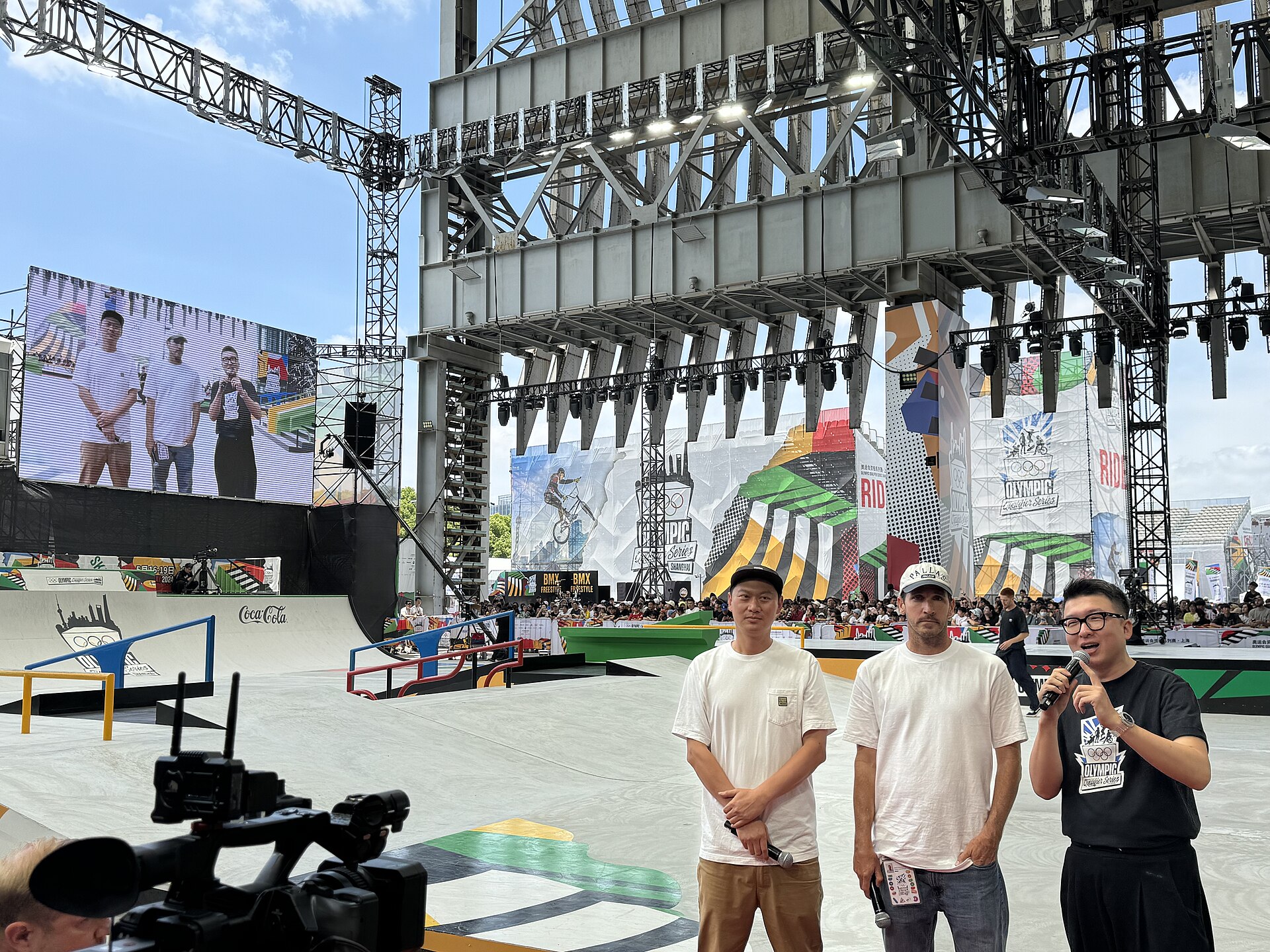
Olympic Skating Killed Street Skating — And Nobody's Really Complaining
Quand Yuto Horigome a posé son switch 360 flip sur le podium de Tokyo, j'ai regardé ça depuis mon canapé. Et j'ai ressenti de la tristesse. Pas parce que le skate est aux Jeux — parce qu'il y est et que ça marche. Ce qu'on a perdu dans l'échange, personne n'en parle vraiment.

→ Pour aller plus loin : Etnies a 40 ans : qu’est-ce qui tient encore de la marque d’origine ?
At the Tokyo Games in 2021, when Yuto Horigome landed his switch frontside 360 kickflip on the way to the podium, I watched it from my couch with a mix of fascination and something I couldn't put a name to. It wasn't until the Coca-Cola ad that followed that I figured it out: it was sadness.
Not because skating is in the Olympics. Because skating is in the Olympics and it works. The viewers are there, brands are pumping in millions, 14-year-olds are signing with Red Bull. And meanwhile street skating — the real thing, the one we grew up on — vanished from the mainstream conversation without anyone yelling murder.
1996 at EMB: what the cameras never would have filmed
(function(){
var VID='2x5vGWq4lss';
var container=document.getElementById('yt-2x5vGWq4lss');
var played=false;
function initPlayer(){
var player=new YT.Player(container,{
width:'100%',height:'450',videoId:VID,
playerVars:{cc_load_policy:1,cc_lang_pref:'fr',hl:'fr',mute:1,rel:0,autoplay:0,enablejsapi:1},
events:{
onReady:function(e){
try{e.target.setOption('captions','track',{'languageCode':'fr'});}catch(x){}
if('IntersectionObserver' in window){
var obs=new IntersectionObserver(function(entries){
if(entries[0].isIntersecting&&!played){played=true;e.target.playVideo();obs.disconnect();}
},{threshold:0.4});
obs.observe(container);
}
}
}
});
}
if(window.YT&&window.YT.Player){
initPlayer();
} else {
var prev=window.onYouTubeIframeAPIReady;
window.onYouTubeIframeAPIReady=function(){if(prev)prev();initPlayer();};
if(!document.querySelector('script[src*="youtube.com/iframe_api"]')){
var s=document.createElement('script');s.src='https://www.youtube.com/iframe_api';document.head.appendChild(s);
}
}
})();
In 1996, at Embarcadero, dudes skated because there was nothing else to do. No prize money, no broadcasting deal, no qualifying round. Mark Gonzales piecing together a line on a ledge greased up with burger runoff. Koston running the same front crook on the same bar for three hours straight. Nobody timing it, nobody scoring it.
This isn't cheap nostalgia. It's a plain description of what street skating was: an activity that was structurally non-competitive. You find the spot yourself. You pick the trick yourself. The session ends when the security guard or the rain runs you off. The only gauge is your crew — and even then, they'd hype you up when you bailed.
None of that fits an Olympic format. And the Olympics understood that perfectly, because they took street skating, dropped it onto an artificial plaza (not a real spot — a plaza engineered so everything reads clean from the stands), added judges, a clock, and a score. What came out of it resembles skating the way an aquarium resembles the ocean.
Street skating was structurally non-competitive. Not out of ideology. By nature. — What we forgot to defend
Yuto, Jagger, Nyjah: three prodigies who don't need you to exist
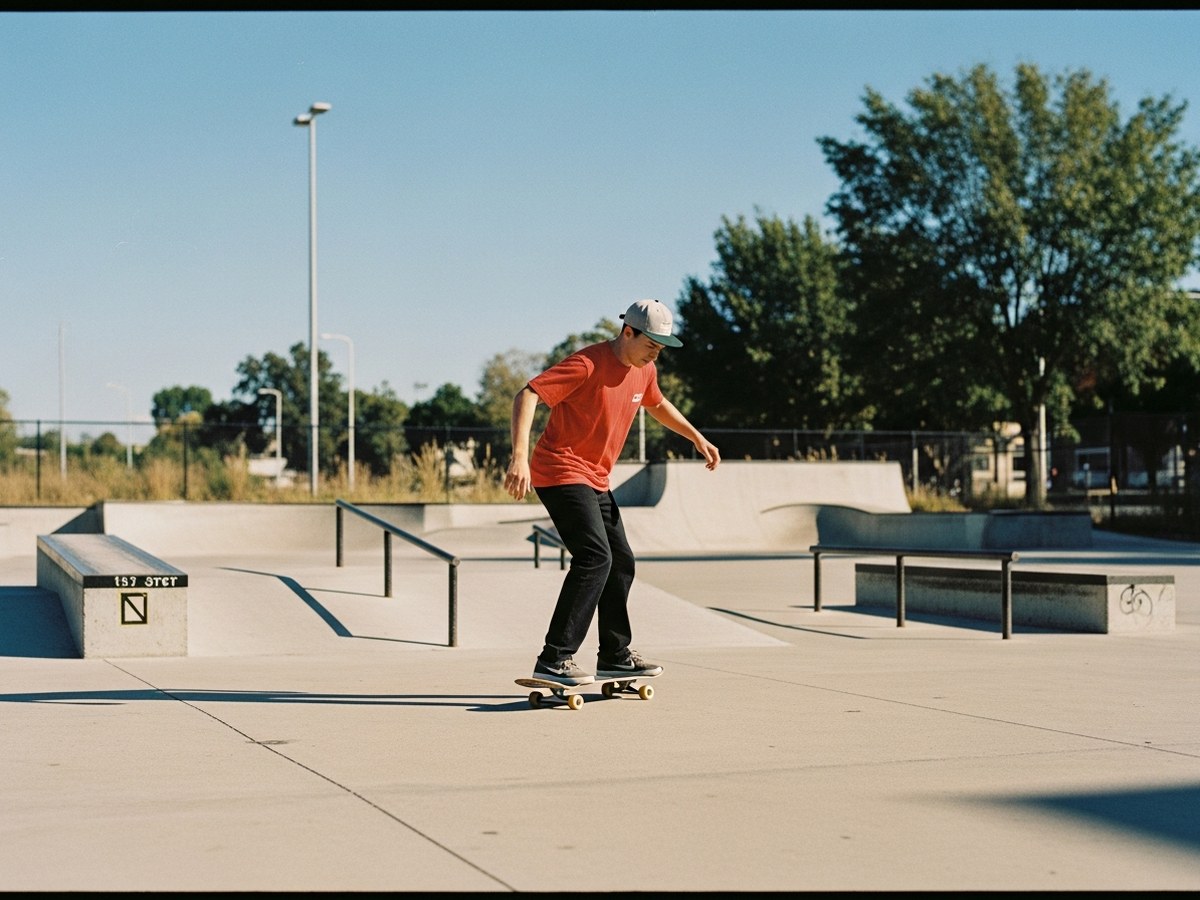
Let's be clear: Yuto Horigome skates better than you, better than me, better than probably 99.8% of humans alive. His switch 360 flip is surgical. Jagger Eaton has a flow so smooth it makes you want to quit out of pure shame. Nyjah Huston puts down tricks on spots that would make any normally constituted human throw up out of fear.
But their skating exists inside a frame that turns it into something else. Olympic skating is high-performance sport. Not culture. The difference isn't a question of level — it's a question of meaning.
When Rodney Mullen invented the flatground kickflip in the '80s, nobody asked him to. There was no contest prompting it. He did it because the idea crossed his mind and his body took years to catch up. The kickflip was born out of a void — not out of a box to tick on a scoring sheet.
Today, a kid gunning for the Olympics optimizes his run. He drills the tricks that score best under the current judging criteria. He trains combinations that stack the most points. That's elite-level stuff. It's respectable. But it isn't really street skating anymore.
Gonz, Yeah Right and the camera that erased faces — we never got over it
There's a sequence in Yeah Right - 2003 where the skaters' faces are wiped out by the tech of the day. Spike Jonze turned it into a visual gimmick. The result: you saw the bodies, the boards, the spots. The whole trick in its actual context. No close-up on the face doing the post-landing satisfaction thing.
That's the exact opposite of what the Olympics did. The Olympic camera hunts for the face. It wants the athlete. It wants the emotion after the podium, the tears, the flag. It wants to turn the skater into a TV character with a narrative arc: the obstacle, the training, the win.
Street skating has no narrative arc. It has sessions. Days when it comes, days when nothing comes. Spots that get knobbed. Trucks that snap. Homies who quit. That unevenness, that absence of manufactured drama — that's skating. And that's exactly what doesn't translate to TV.
Olympic skating produced exceptional athletes. And buried the question of what skating ever meant. — The deal we never signed
Bercy in 1997, Trocadéro today: the gap says everything
There was something about Bercy in the '90s. Not the place — the fact that dudes skated there because they had no other option, because it was open, because the ground was good. The Bercy session wasn't organized, wasn't filmed for content, wasn't hashtagged. It existed because it was warm out and the boards rolled.
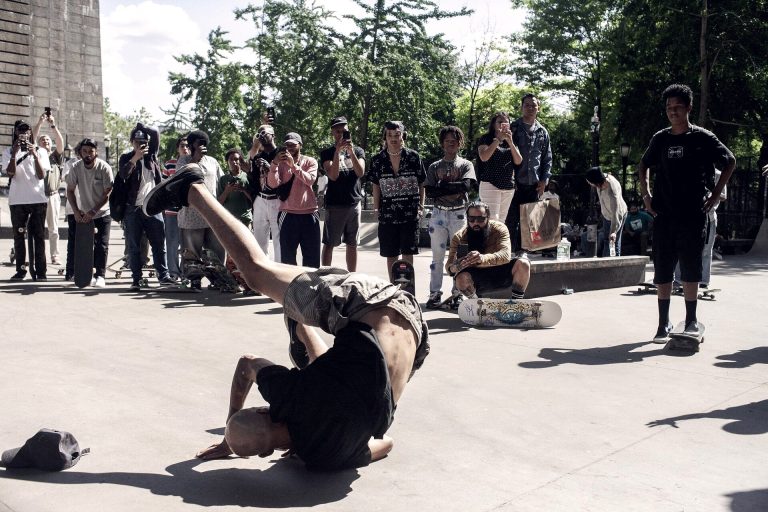
Today, when you skate Trocadéro on a Saturday morning, there are as many iPhone cameras pointed at you as there are onlookers. Everybody films. A few actually skate. Skating has become a living wallpaper for social media content. That's not the Olympics' fault, it's the fault of a broader cultural drift — but the Olympics accelerated and legitimized that turning of the skater into a performer for an audience.
Daewon Song wasn't training for a crowd. His California sessions in the '90s often went down with no witnesses at all. What we saw of them is what the team filmer chose to capture. Between the actual session and the video, there was distance. Some intimacy left intact.
Nobody's complaining. And that's the problem.
That headline is an observation, not an accusation. Street skating, '90s-2000s edition, wasn't killed by the Olympics. It was killed by the fact that people watched the Olympics — and liked what they saw. Not everyone. But enough.
Brands followed the audience. Element, Primitive, Plan B — street skateboards sold to kids who watch the Games the way they'd watch soccer. Not to skate, to watch athletes perform. Nothing wrong with that. But it isn't the same culture anymore.
What bugs me isn't that skating is Olympic. It's that the conversation about what we gave up in the trade never really happened. Everyone clapped. Sponsors ran their medal-winner campaigns. And that was that.
Nobody said it out loud: we took a fundamentally anti-institutional practice and turned it into an institutional discipline. And everyone seems fine pretending that isn't a contradiction.
What we stand up for, what we keep
This isn't a call for gatekeeping. No sorting real skaters from the rest — that would be dumb and counterproductive. The kid who found skating watching the Tokyo Games and now rolls out Sunday mornings on his first complete? That's good news. Skating gets passed down, it stays alive.
But you can welcome the new heads without erasing the memory of what skating was before it was a sport. Before "spot" meant a certified plaza. Before "session" meant a scheduled training block. Before "crew" meant a national team.
Watching a VHS of Mouse - 1996 today means watching dudes skate real spots, in real cities, with cops rolling into frame every now and then. No grandstand, no judge, no clock. Just tricks and asphalt. That thing doesn't come with a medal. But that's what started all of it.
And if we could stop pretending the two are the same thing, that'd already be honest.
What about you — did you watch Olympic skating and love it, hate it, or shrug it off ? And if you disagree with me, even better. Say it in the comments ↓
Follow NOSK8 where you hang out
Parts, spots, behind the scenes: it all drops on the accounts first.

Continue ta lecture
ConseilsComment choisir sa premiere planche de skate en 2026 : taille, marque, budget
Tu veux te lancer dans le skate mais tu sais pas quelle planche acheter ? Taille, marque, budget : voici tout ce qu'il faut savoir…
Commentaires (0)