

ℹ️ 🛹 Web Média Skate 🛹 ℹ️

Chroniques · Opinion
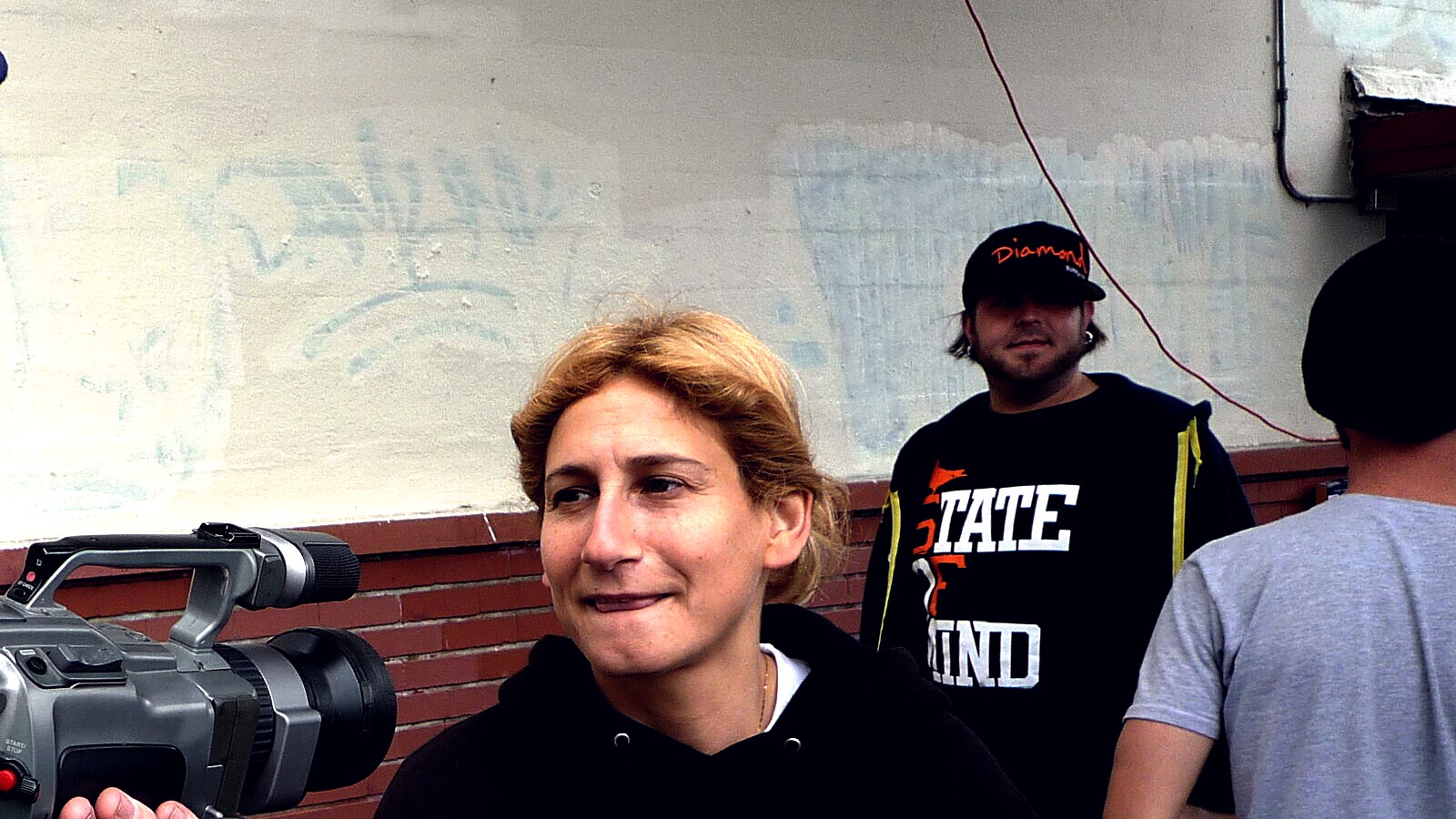
Elissa Steamer: Her biggest checks came from a video game, not her boards — how?
En 1999, Elissa Steamer est la seule femme des dix pros de Tony Hawk's Pro Skater. Son plus gros chèque viendra du jeu, pas de ses boards. Voici comment.
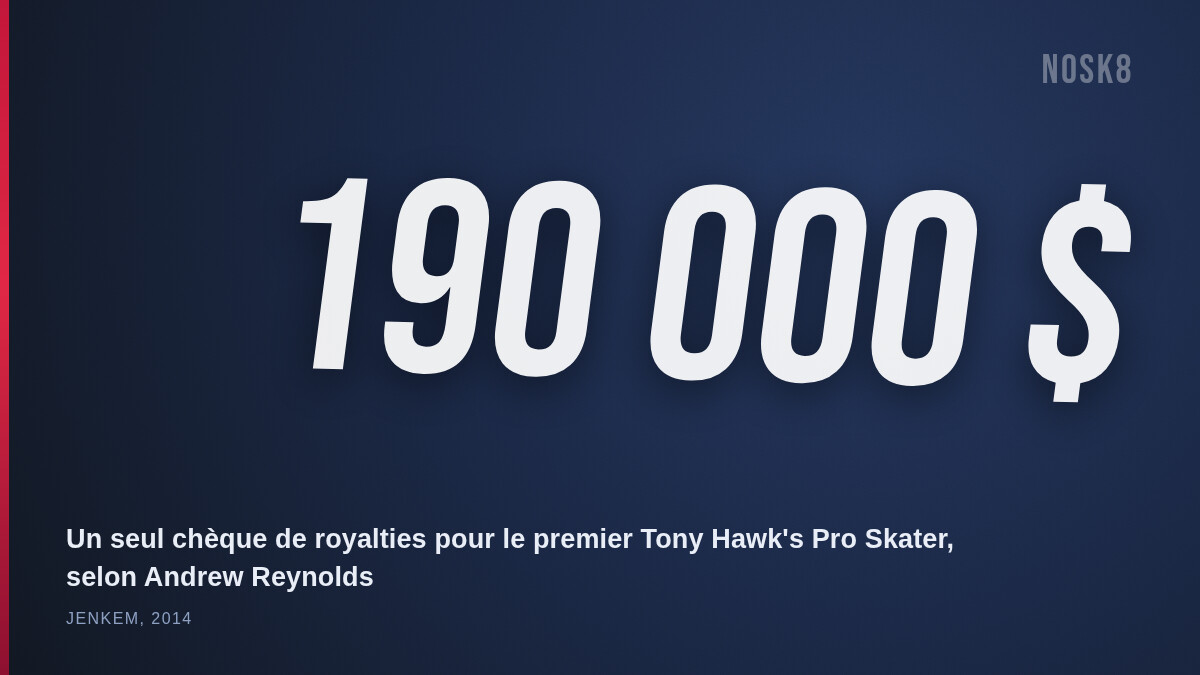
In 2014, Elissa Steamer drops a confession on the mic that few pros would: her biggest career checks didn’t come from her boards. They came from a video game. Andrew Reynolds, who was in the same game, talks about a single check of about $190,000.

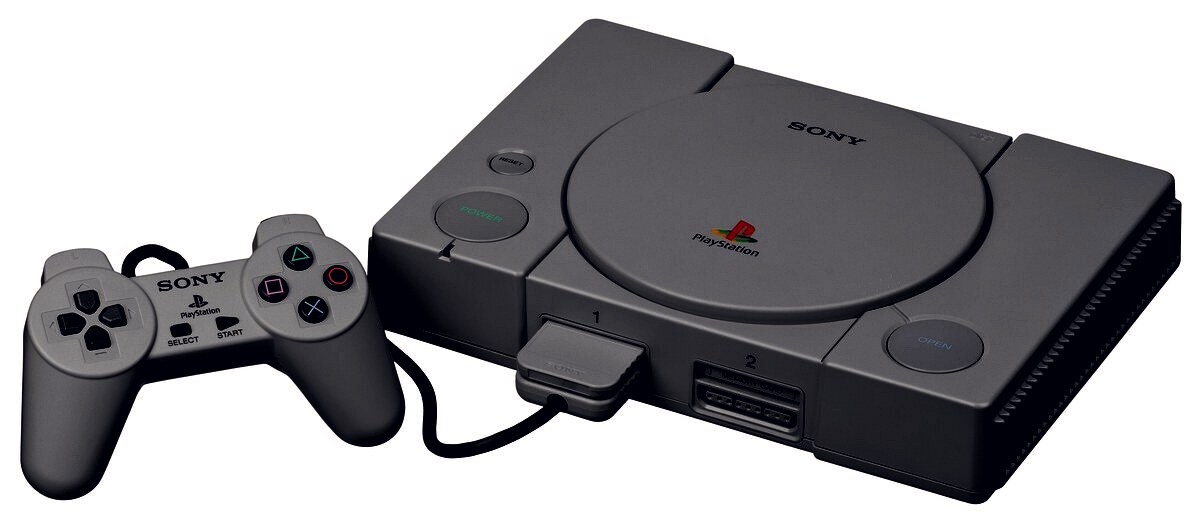
This game is Tony Hawk's Pro Skater, released on PlayStation on September 29, 1999. Ten pros in the cast, one woman. One question still lingers: how did a skater from Fort Myers make more with a controller than with twenty years of boards under her name?
Dans cet article 7 parties
- Fort Myers, 1996: Toy Machine and a VX1000 in the living room
- Activision, 1998: the check Tony Hawk refused
- Ten pros, one girl: why Steamer in 1999
- The $190,000 check, and the door that closes
- Bootleg, Zero, four gold medals: what the game changed for her
- Activision, Neversoft and skate in the living room
- Verdict: why a game earned more than its boards
Fort Myers, 1996: Toy Machine and a VX1000 in the living room
Elissa Steamer was born in 1975 in Fort Myers, Florida, and started skating in 1989 at a small municipal park on Grand Avenue. In 1995, Lance Mountain already sent her boards. But her first real sponsor was Toy Machine, Ed Templeton’s brand, and it was Chad Muska who opened the door for her.
In 1996, Jamie Thomas moved in with her in Fort Myers to film his part of Welcome to Hell - 1996. You know the rest: the first female part that mattered in a street video, featured in our profile of Elissa Steamer and in the 30‑year chronicle of Welcome to Hell. She turned pro in 1998.
Money-wise, the model is simple. A pro gets a royalty on every board sold under her name. No contest prize to hope for: the women’s street category didn’t hit the X Games until 2004.
Activision, 1998: the check Tony Hawk refused
In September 1998, Activision, which had its skate game developed by Neversoft, reached out to Tony Hawk. On the table, a single check to use his name and face forever.
Hawk said no. He demanded a percentage on every copy sold. In his book How Did I Get Here - 2010, he recounts that in two years he had earned ten times the initial offer.
Ten pros, one girl: why Steamer in 1999
Hawk picks the other pros himself. His criteria, from his book: skill, personality, and diversity. Everyone gets a slice of the royalties, picks their gear and special tricks.
In the end: Bob Burnquist, Kareem Campbell, Rune Glifberg, Tony Hawk, Bucky Lasek, Chad Muska, Andrew Reynolds, Geoff Rowley, Jamie Thomas and Elissa Steamer. Look closely. Muska and Thomas are the two guys from Toy Machine who got her into the brand and filmed her three years earlier.
Everyone finds their payoff. Activision wants a credible cast for the skaters buying the PlayStation. Steamer, she, earns a showcase that no VHS will ever give her: the room of millions of kids.
The $190,000 check, and the door that closes
In September 2014, Andrew Reynolds recounts the scene in Jenkem magazine. In the first game, all pros get royalties based on copies sold. And one day a check for about $190,000 arrives. They laugh, they can’t believe it.
I love that Elissa Steamer got $190,000 too. That’s my favorite moment. — Andrew Reynolds, Jenkem - 2014
Then the window shuts. According to Reynolds, a pro whose name he doesn’t know walks into the office and offers to be in the game for free. Management quickly gets it. For the next installments, no more royalties: a flat fee, “$10,000 or something like that.”
Bootleg, Zero, four gold medals: what the game changed for her
The game is blowing up. By the end of December 1999, 350,000 copies were already shipped to U.S. stores. In 2001, that number hit 3.5 million according to Wired. Reynolds says it straight up: back in the day, a quarter of the kids in demo were talking about the game, not its latest video cut.
Same thing for Steamer. The game puts her in the hands of kids who’d never seen a Toy Machine VHS. She stays in the top five episodes and then in the 2020 remake. On the boards, her best royalty drops during Bootleg, the little brand born at Baker, around Reynolds and Erik Ellington. Bootleg stops after Bootleg 3000 – 2003. She kicks back with three months of pay.
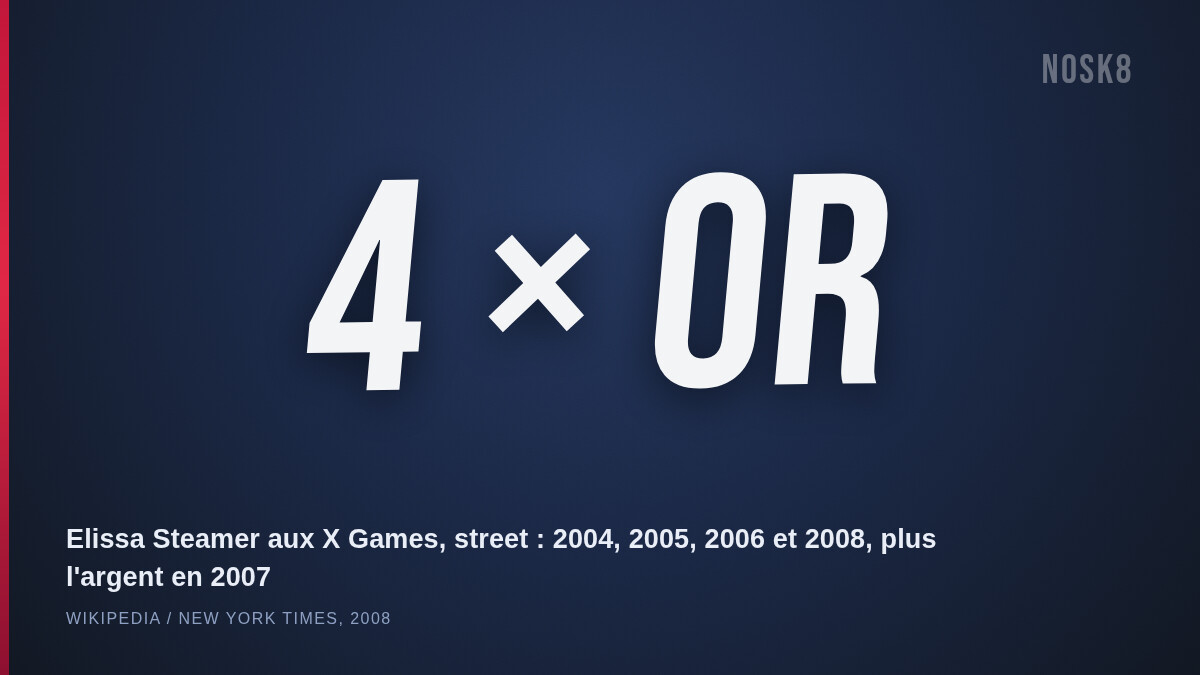
In June 2006, Jamie Thomas brings her into Zero. At the X Games, she takes gold in street in 2004, 2005, 2006 and 2008, silver in 2007. In 2015, she makes the Skateboarding Hall of Fame.
Activision, Neversoft and skate in the living room
For Activision, the bet pays off with a franchise: Neversoft drops a sequel each year until 2007. The Guardian summed it up in 2020: the game introduced skate to an entire generation, brands and trick names included.
For the pros, the market shifts rules. The first game pays by volume. The next ones pay flat, because a rider agreed to come for free. Deal lesson on the side: visibility is traded as long as no one resells it.
Verdict: why a game earned more than its boards
The answer rests on three things. First, a contract: Tony Hawk rejects a lump sum and demands a percentage per copy sold, and that model spreads to the nine other pros in the first game. Then volume: 3.5 million copies in two years, versus a board royalty that depends on what shops sell. Finally timing: the percentage existed only on the first episode, before the switch to flat.
Steamer was in the only window where a video game paid skaters like stars. She herself said it: her biggest checks came from game royalties. The real winner is Activision, which built a franchise. But for a skater who hadn’t yet made a category at the X Games, the game paid what the board market didn’t.
To dig deeper into the guy behind the deal, the Tony Hawk profile traces his journey. And the full interview with Reynolds is worth reading on Jenkem.
You, who did you pick in the first Tony Hawk’s Pro Skater, and did you know Elissa Steamer was the only girl in it? Drop it in the comments ↓

Continue ta lecture
TricksVarial kickflip : Cyril Jackson le pose pour The Berrics, pourquoi le tien part encore de travers ?
Tu sais faire le kickflip et le pop shove-it, mais ensemble la planche s'arrête à 90° ou file derrière toi. Les 6 étapes, les 4…
Commentaires (0)