ℹ️ 🛹 Web Média Skate 🛹 ℹ️

Tricks
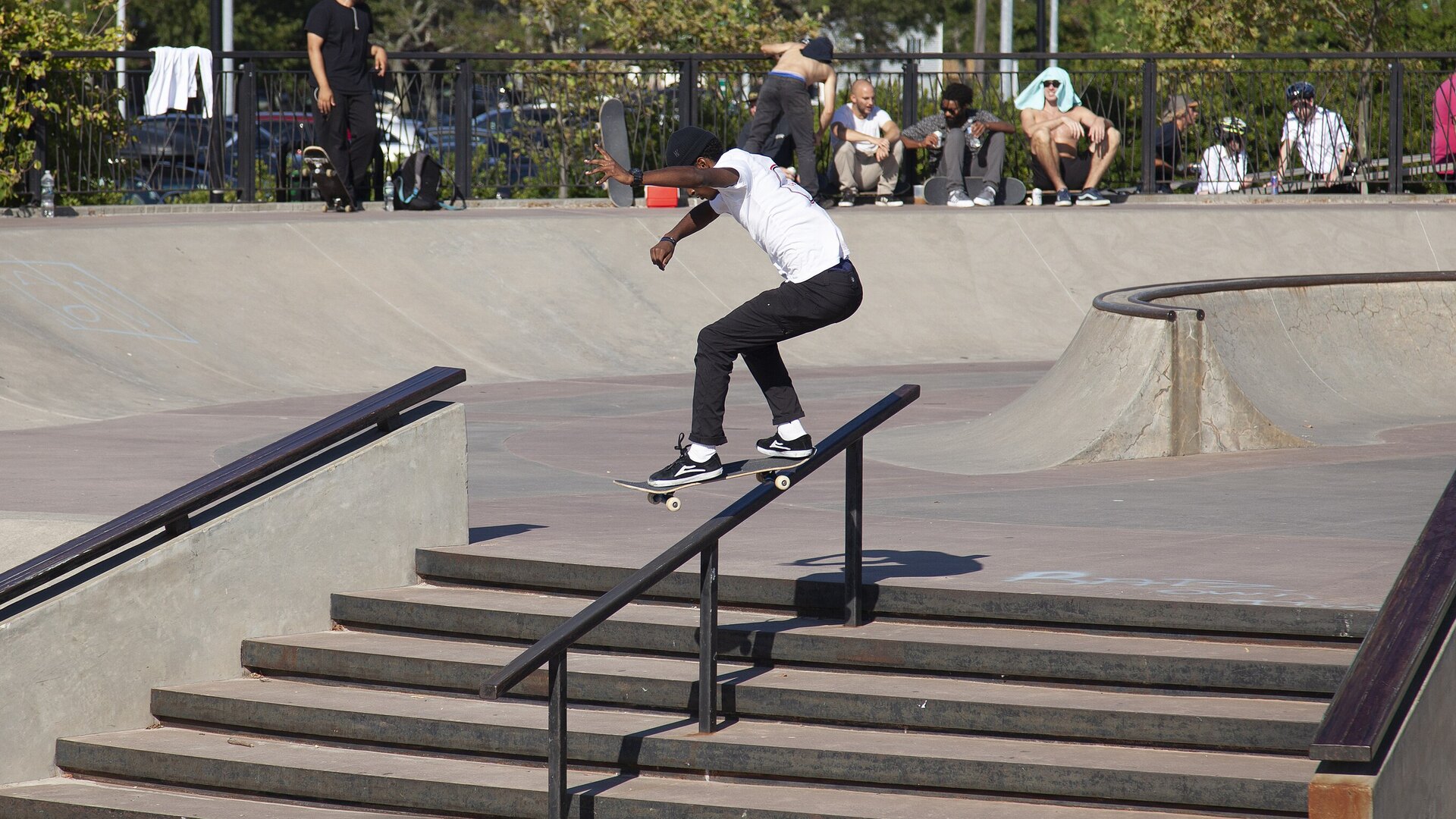
Boardslide: why does your board always slip off in the middle of the rail?
Mark Gonzales et Natas Kaupas ont glissé les premiers sur une rampe d'escalier en 1986. Toi, ta planche lâche pile au milieu de la barre. Ce n'est ni la barre ni la cire : c'est un réflexe, et il se corrige.
The guy who painted the Supreme store in London in 2011 is also one of the first two people to ever slide a board down a stair handrail. Mark Gonzales, with Natas Kaupas, in 1986. Forty years later, you’re copying their move on the skatepark rail, and it always gives out in the same spot: dead in the middle.
Watch The boardslide broken down: approach, ollie, slide and exit

You lock in clean. The first two meters slide. Then out of nowhere the board pivots, the tail drops one way and you go the other. Why there, and never at the start? It’s not the rail, not your wax, not your trucks. We get there after the 6 adjustments and the 4 fails.
Here are the 6, in order, with the trap in each one.
Level
Intermediate
Time
A few sessions
Prerequisite
Clean rolling ollie
Surface
Low flatbar, then rail
Dans cet article 6 parties
1986: Gonzales and Kaupas on the first handrail?
Before 1986, a stair handrail was for your hands. That year, Mark Gonzales et Natas Kaupas became the first to skate handrails. Wikipedia also credits them with the first known boardslides on a handrail. The 50-50 came later.
Gonz is the same guy who co-founded Blind with Steve Rocco in 1989, then Krooked in 2002. His paintings hang from Tokyo to New York. And the move you’re working on at the park is his: board across the rail, the middle of the deck on the metal, one truck on each side.
It’s most skaters’ first slide, because it forgives you on the way in. It stops forgiving in the middle. If you’ve never touched a rail, start with our first boardslide guide. Here, we fix the one that gives out.
Also worth reading: the 50-50 grind broken down.
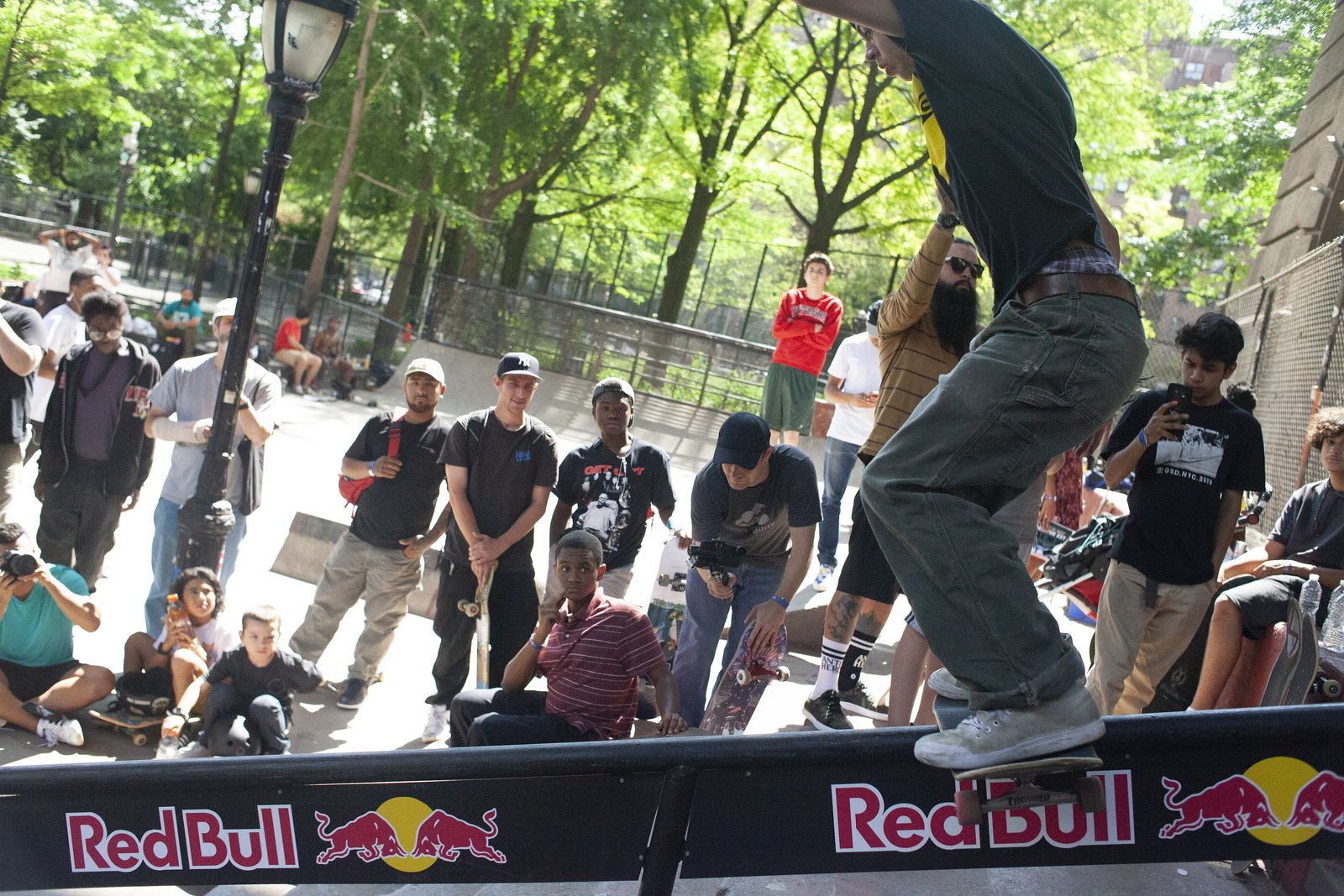
The 6 adjustments to ride it all the way to the end
-
Angle of approach: almost parallel
Ride in alongside the rail, a foot away, almost parallel. Not at 45°. Come in at an angle and you have to turn more than 90° to lock in, so all your speed goes into the turn instead of the slide. Result: you stall in the middle.
-
Speed: one notch more than you think
A four-meter rail needs momentum. Too slow and the board stops before the end and tips. Push twice more than usual. Fast holds better than slow.
-
The ollie: front truck over the top
Ollie high enough for the front truck to clear the other side of the rail. The middle of the board has to land right on the metal. Too short and the front truck hits. Too long and you land on the tail and it turns into a botched tailslide .
-
Shoulders: lined up with the rail
Your lower body turns 90°, your upper body doesn’t. Shoulders stay in line with the rail, like you’re looking down the path. If your torso follows your legs, the board keeps turning under you.
-
Weight: over the rail, a hair forward
Knees bent, hips right over the rail. A little extra weight on the front foot. Not sitting, not leaning back.
-
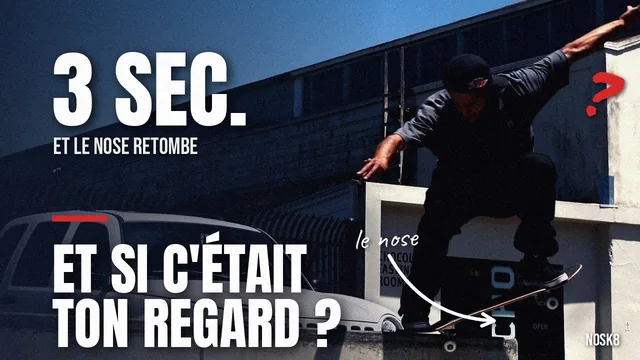
The exit: you turn with your eyes
At the end, snap the nose back in line with your hips and land on the bolts. Your eyes have already found the ground at the bottom of the rail. The body follows the head, always.
The 4 classic fails, and what they give away
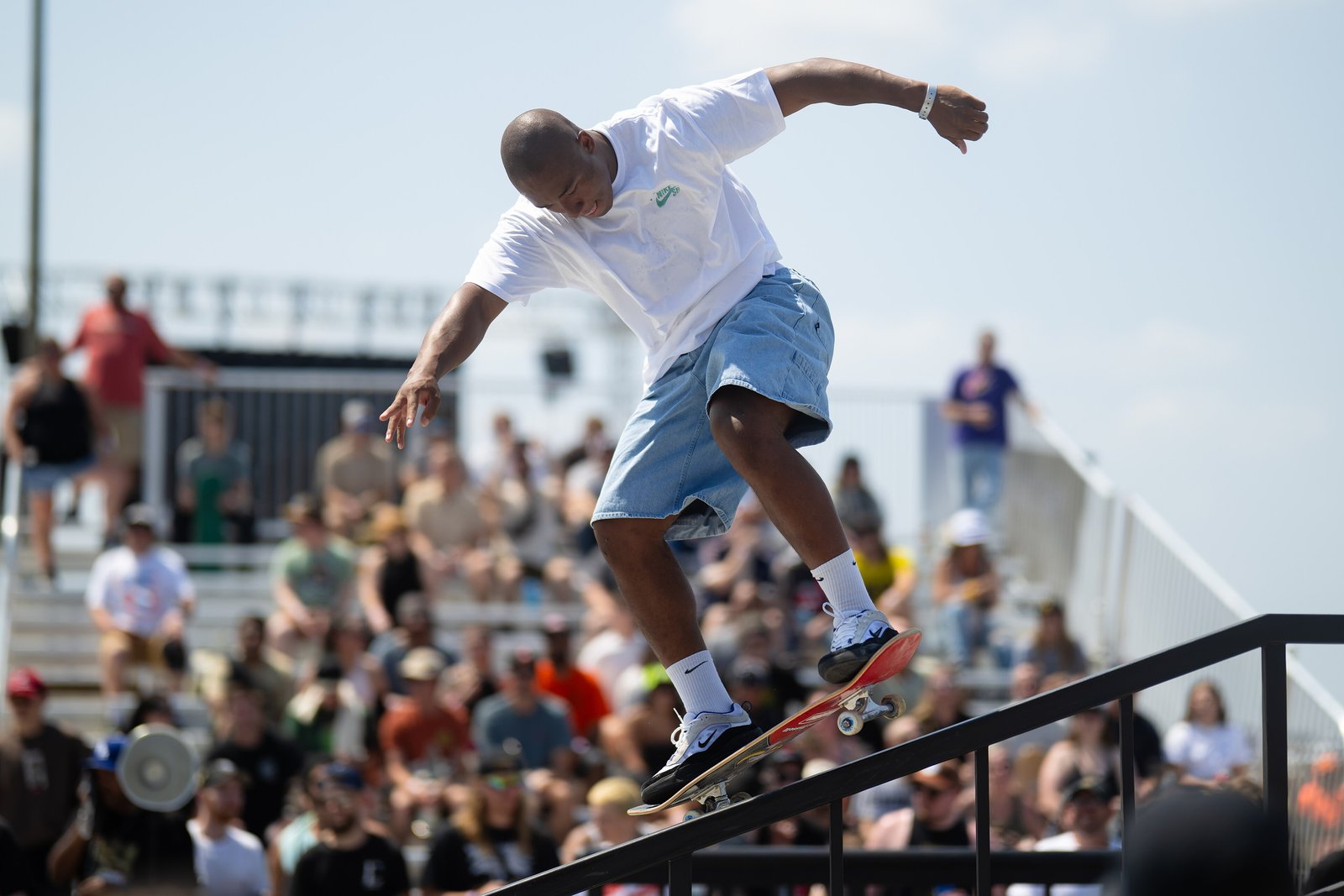
The 4 classic fails
- The front truck hits the rail: your ollie is too low or too early. Pop it half a meter later, and higher than the rail.
- You stop dead on the rail: not enough speed, or a dry rail. Push harder. A bit of wax on the metal and it slides on its own.
- The board keeps turning: your shoulders followed your legs. Lock your upper body in line with the rail.
- It gives out in the middle, the tail drops: your weight went back. That’s the fail in the title, and it gets its own section.
So why does your board slip off in the middle?
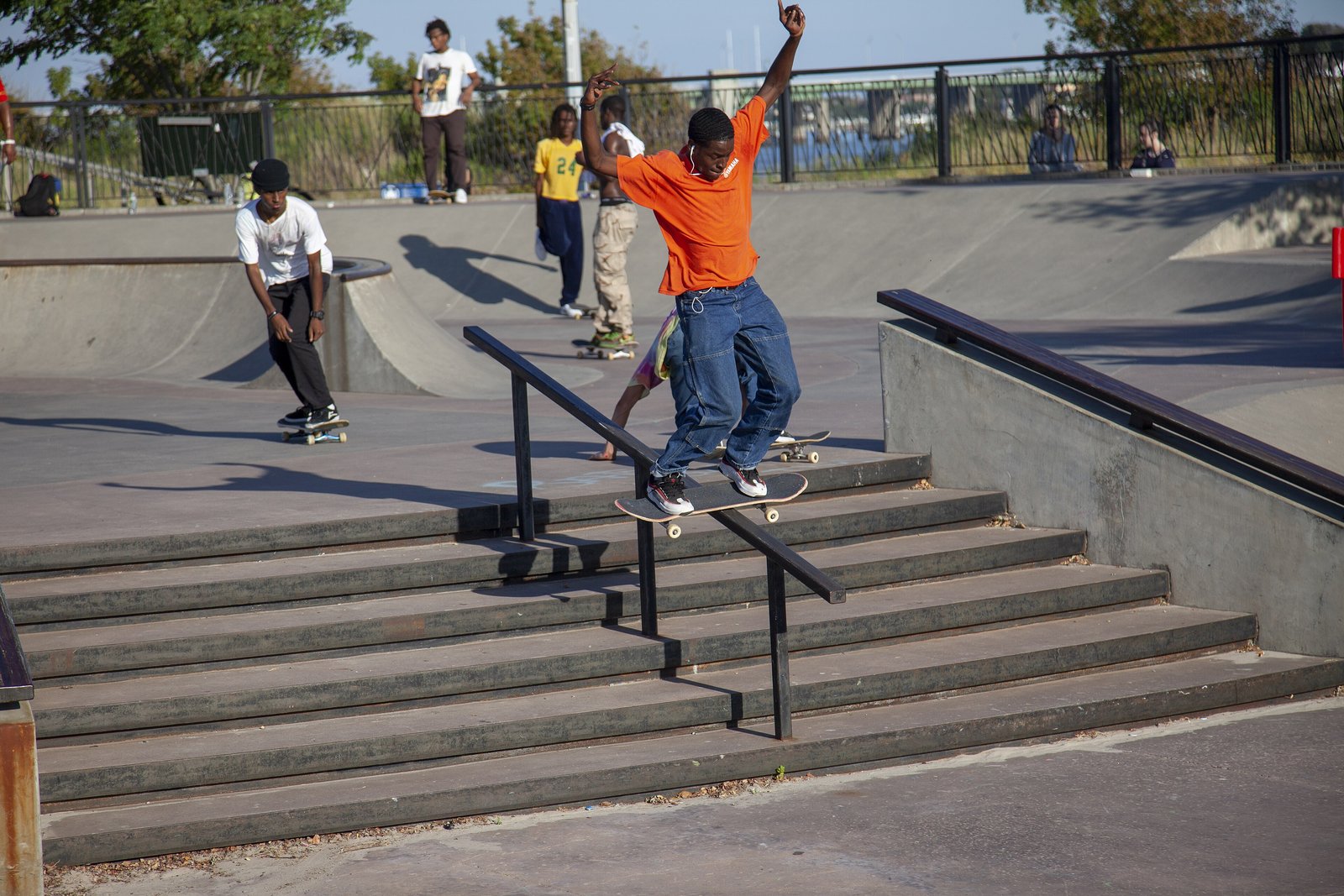
Because halfway down, you lean back. Not on purpose. The first two meters go by, your brain clocks that you’re hanging over nothing, and your body protects itself: hips go back, weight slides onto the back foot. The board is still sitting on its middle. With the weight behind, the tail dips, the nose lifts, and you come off the rail on the back-foot side.
The second culprit shows up at the same time: your eyes. They drop to the rail, right under your feet. Your head goes down, your shoulders turn with it, and the board follows your shoulders. Both happen at once, and that’s why it always gives out in the same spot.
The fix is three moves. Put a hair more weight on the front foot than feels normal. Keep your shoulders in line. And lock your eyes on the exit, the end of the rail, the second you land on it. Not your feet. The exit.
How many sessions before you ride it out for real?
Mostly it depends on the rail. On a low flatbar, close to the ground, the fear fades fast and your weight stays forward. Start there. When you slide end to end three times in a row without thinking, step it up.
Film yourself from the side, in slow motion. The hip shift shows up in a second, long before you feel it. And if you’re still stuck, go back to your ollie: a short ollie forces you to land leaning back, and everything else follows.
The day you ride the whole rail, eyes on the exit, both feet on the bolts at the bottom, you’ll get why Gonz and Natas turned it into their playground.
And once it’s in the bag?
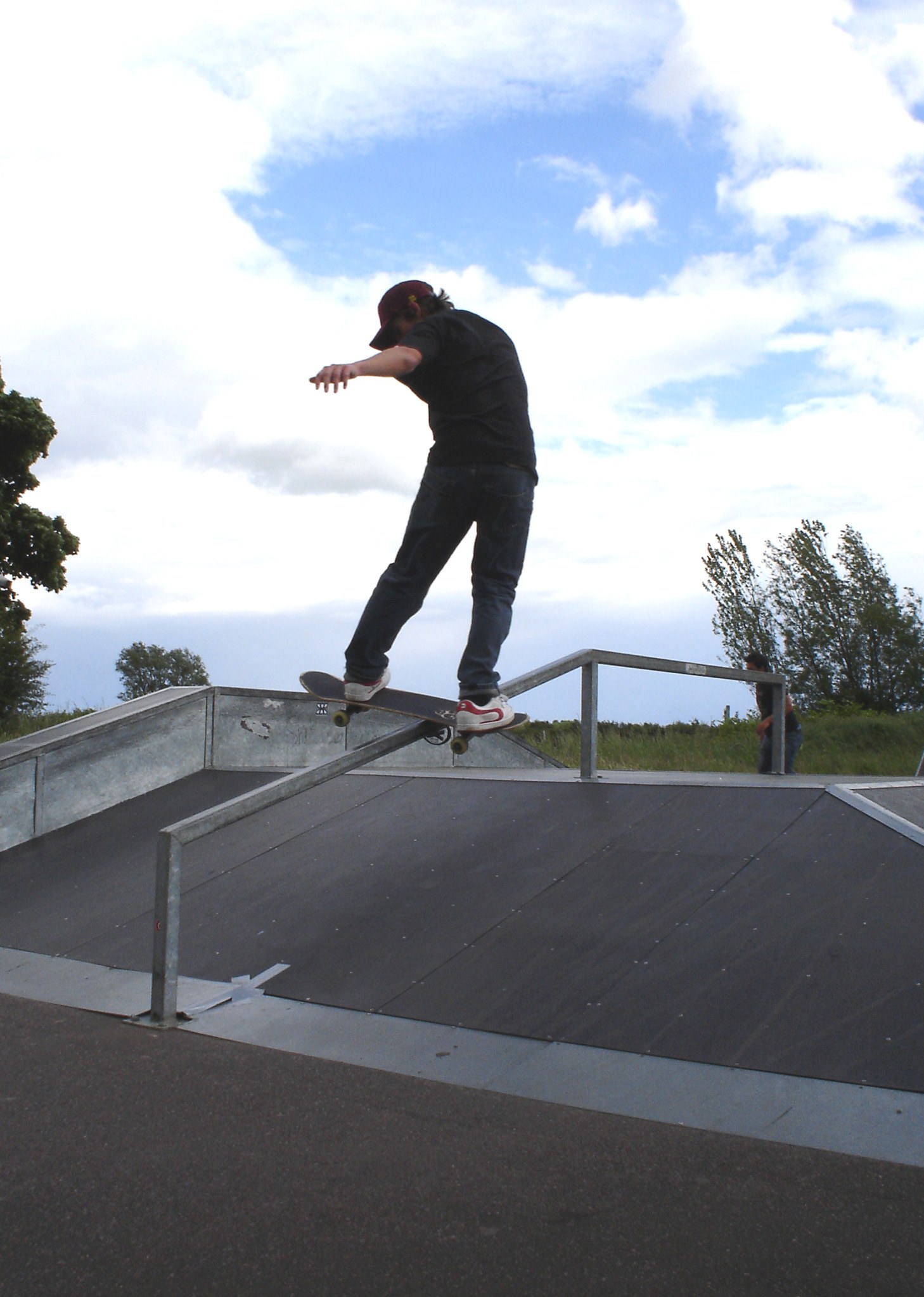
Switch up the move on the same rail. The lipslide uses the same position, coming over the top. The feeble grind puts you on the back truck, the smith grind asks for the same shoulder control. And if a friend is still stuck on the ollie, send them the 6 steps of the ollie.
Where does your board give out: at the start, the middle or the exit? And what rail was your first full boardslide on? Tell us in the comments ↓
Le lexique
-
1
boardslide
Slide où la planche passe en travers de la barre et glisse par son milieu, les deux trucks de part et d'autre.
-
2
lipslide
Même position que le boardslide, mais la planche passe par-dessus la barre avec le tail avant de se poser.
-
3
flatbar
Une barre de métal basse et à plat, posée au sol, idéale pour apprendre les slides.
-
4
handrail
Une rampe d'escalier en métal, le terrain historique du boardslide en street.
-
5
tail
L'arrière relevé de la planche, celui qu'on frappe pour un ollie.
-
6
nose
L'avant relevé de la planche, devant les trucks avant.
Continue ta lecture
TricksVarial kickflip : Cyril Jackson le pose pour The Berrics, pourquoi le tien part encore de travers ?
Tu sais faire le kickflip et le pop shove-it, mais ensemble la planche s'arrête à 90° ou file derrière toi. Les 6 étapes, les 4…
Commentaires (0)