

ℹ️ 🛹 Web Média Skate 🛹 ℹ️

★ Chroniques · Opinion
2,820 French skateparks shut down at nightfall — and nobody ever actually made that call
L'État recense 3 352 skateparks en France. 2 820 n'ont aucune lampe. Ils sont donc fermés aux seules heures où les skateurs sont libres — et personne n'a voté ça.
→ Pour aller plus loin : Le skate féminin a explosé en 5 ans. Pourquoi 36 Skater of the Year et zéro femme ?
Mid-December in Strasbourg, the sun goes down at 4:36 p.m. In Paris, 4:56. In Marseille, 5:05. Your class gets out at five, or your shift ends at 5:30. By the time you get home, grab your board and cover the half mile to the park, it's been dark for thirty minutes. So you stay in. And somewhere, someone types into a report that "young people aren't using the facility."
This isn't a vibe. The French state counts 3,352 skateparks nationwide. 2,820 have no lighting at all. Eight out of ten. The obstacles are there, the concrete got poured, the mayor cut the ribbon with the tricolor sash on — and the park becomes unusable during the exact hours the people it was built for are free. Nobody voted on this. That's the part that gets you: no elected official ever made that call. Let's look at how it gets made anyway, and at what the towns that stopped letting it make itself are doing instead.
3,352 skateparks, 2,820 without a single light
The numbers come from the national sports facility census, the database the Ministry of Sports maintains town by town. Every facility has a file: surface area, ground material, year it opened, and a box that says whether or not it's lit.
Across the 3,352 "Skatepark" entries, that lighting box is checked "no" 2,820 times. In rural towns, 1,427 fall into that bucket. And if you think this is a countryside problem, look at the big urban centers: 113 lit skateparks out of 520. Four out of five sitting in the dark, in the middle of a city, with streetlights thirty meters away.
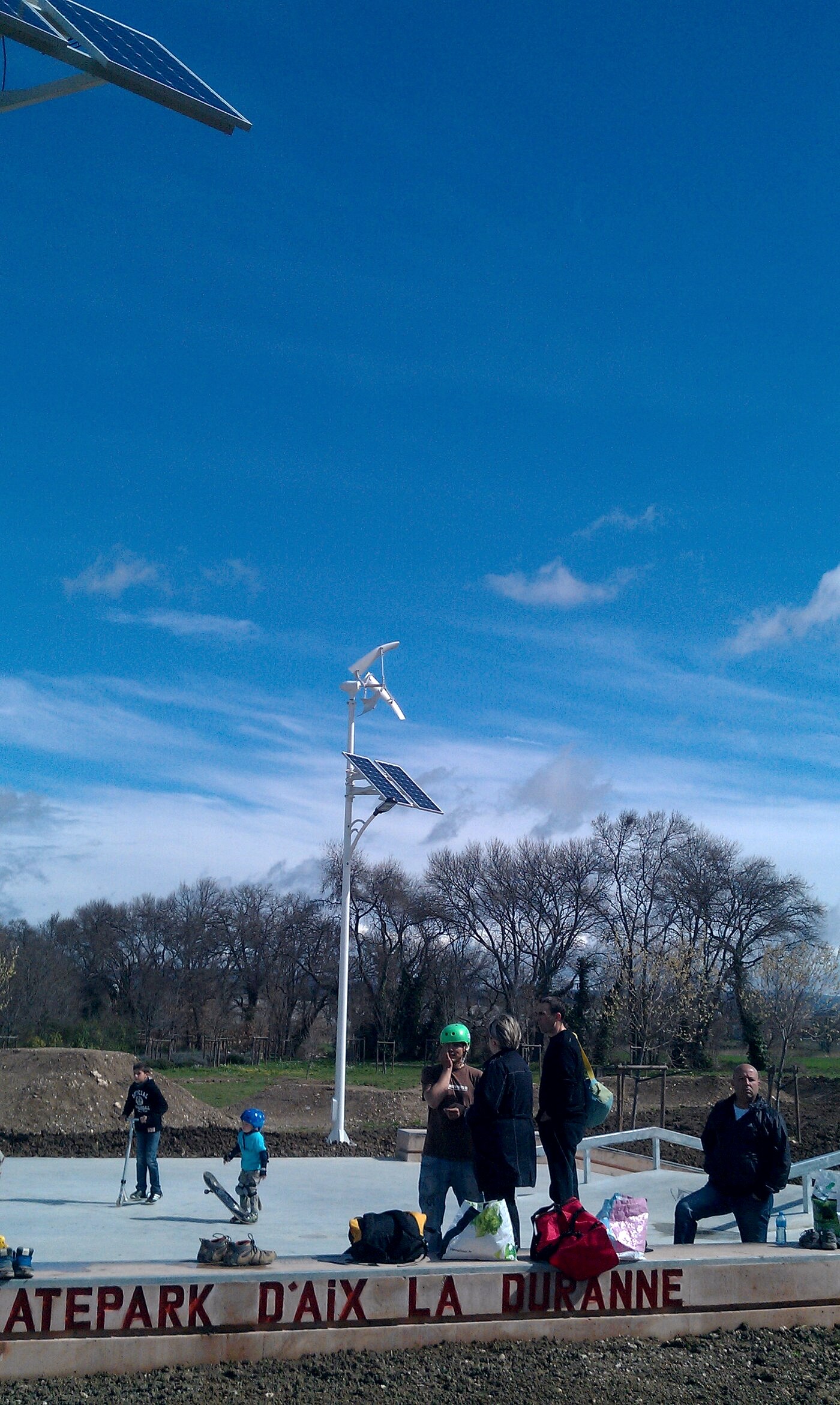
Stack the rest on top: 3,208 are fully outdoors, so rain shuts them down, and only 40 are covered or indoor — one in eighty. Now do the math on what's left. From November through February, between the dark and the rain, the average French skatepark is rideable on weekends if the weather holds. The rest of the time, it's a concrete object sitting in a field.
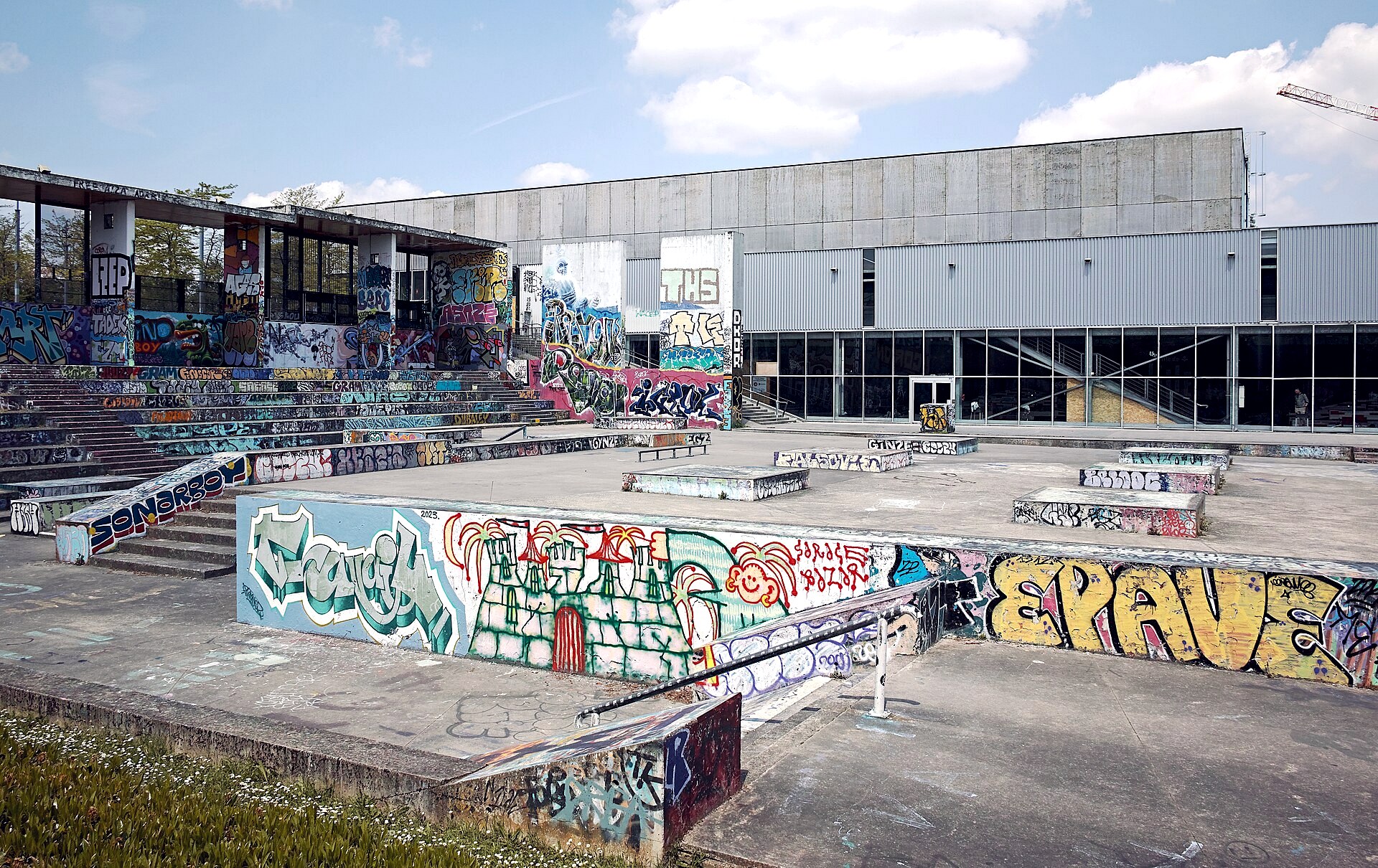
We built 3,352 facilities and refused 2,820 times to pay for the bulb that makes them usable. — The number nobody quotes
Asphalt and catalog obstacles: the savings that cost the most
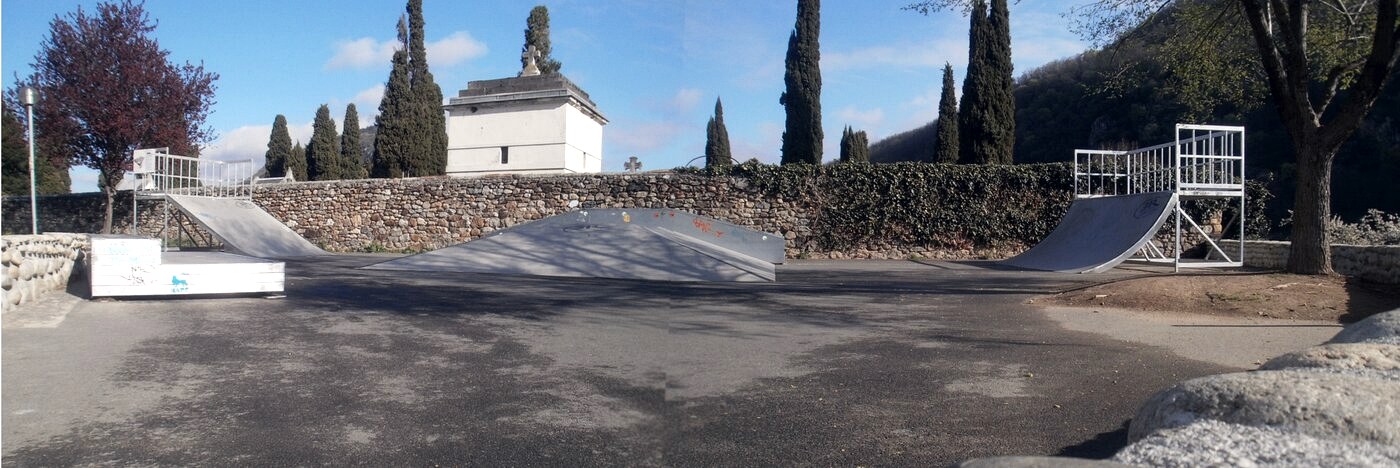
Lighting isn't the only line item that gets cut, just the easiest one to measure. The same database says 2,328 skateparks have an asphalt surface, versus 817 in concrete. Two out of three roll on road-grade blacktop.
Asphalt is the choice that sounds sensible in a meeting: cheaper, the road crew already knows how to lay it, it's down in three days. Except it ages like a country road. It pebbles up, it ripples in the heat, it cracks in the freeze. A year after the ribbon cutting, you feel every piece of grit through your wheels, and a two-millimeter rock is enough to put you on the ground. Troweled concrete costs double and lasts twenty-five years. The Marseille bowl, poured in 1991, still rolls.
Same story with the obstacles. Prefab ramps get ordered off a catalog, show up on a truck, get bolted to the slab. They're loud, they cook in the summer, and the sheet metal starts peeling after three winters. Nobody in the chain ever asked whether the transition angle would actually let you land a trick — because nobody in the chain skates.
Behind the stadium, out past the edge of town: the lot tells you everything
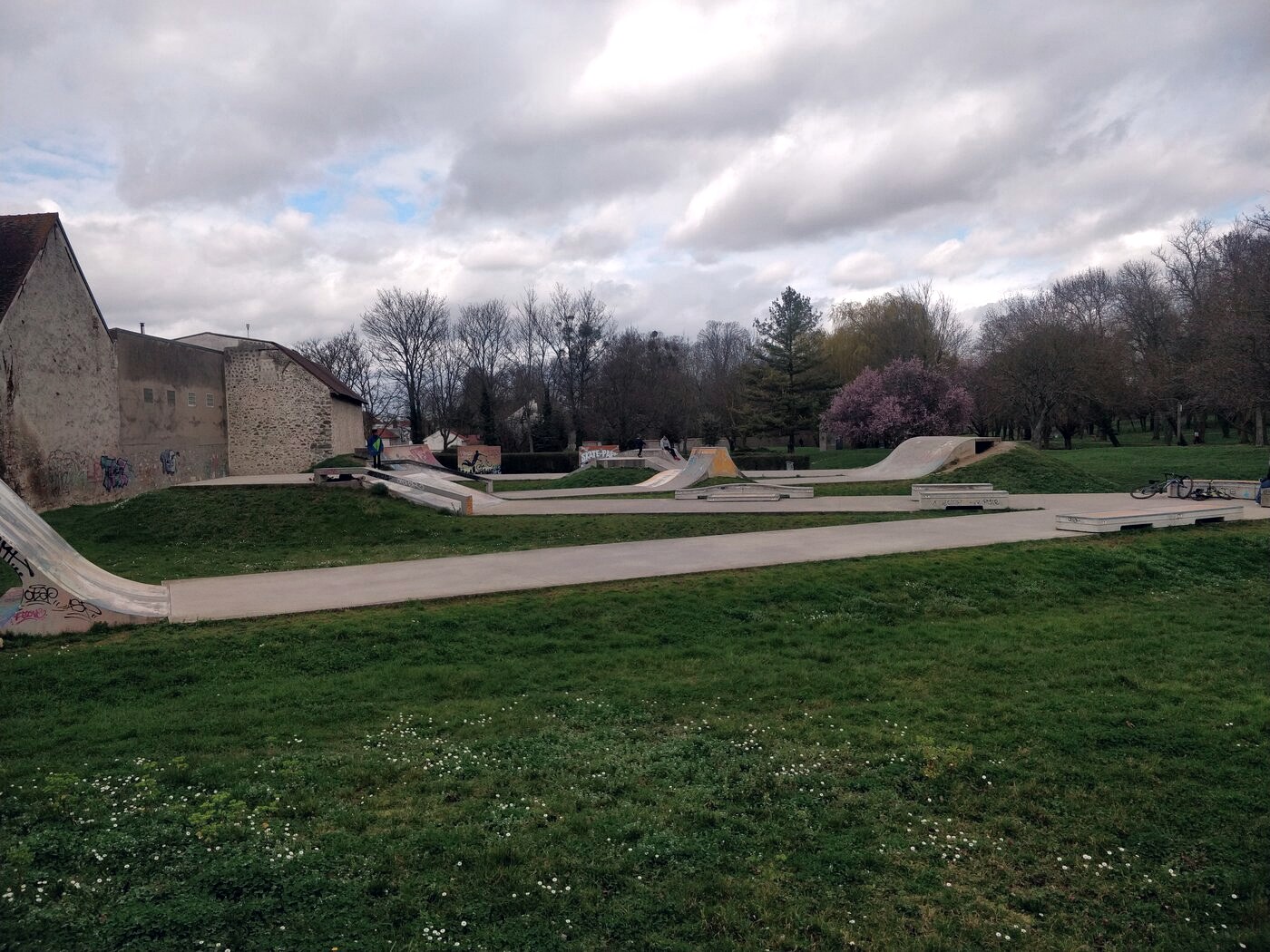
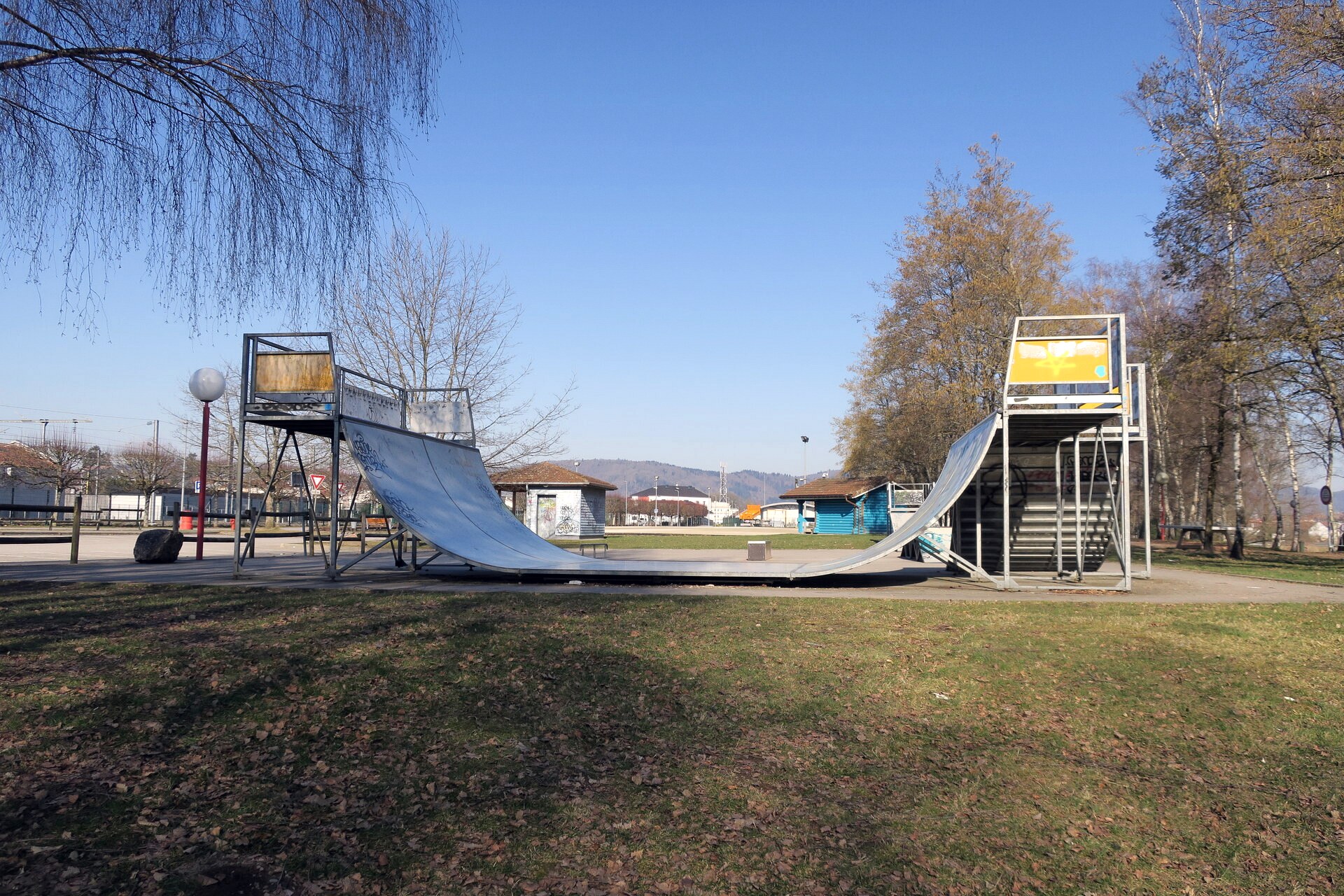
Look at where yours is. Odds are it's behind the stadium, at the far end of the sports complex parking lot, or up against the edge of the industrial zone. Never on the town square. Never in front of city hall. Never where people actually walk.
That's not a quirk of the land registry, it's a decision. Skateparks make noise — the real kind, wheels on concrete and tails cracking — and they gather teenagers. Two things a town would rather keep away from houses. So they take whatever municipal lot is furthest from anybody's window.
The outcome is automatic. A spot with no foot traffic is a spot you don't dare roll up to alone when you're just starting. Where parents won't let a fourteen-year-old girl head down at six. Where two dudes squatting the obstacles are enough to clear everyone out, because there's no witness and no storefront anywhere near. The distance that was supposed to protect the neighbors emptied out the park. And since it's empty, it doesn't get maintained. It spins like that for ten years, right up to the report concluding "demand did not materialize."
A skatepark banished to the edge of town isn't an isolated facility. It's an abandoned one on a delay. — What the land map says
"Failure to meet user expectations": the box city halls check on themselves
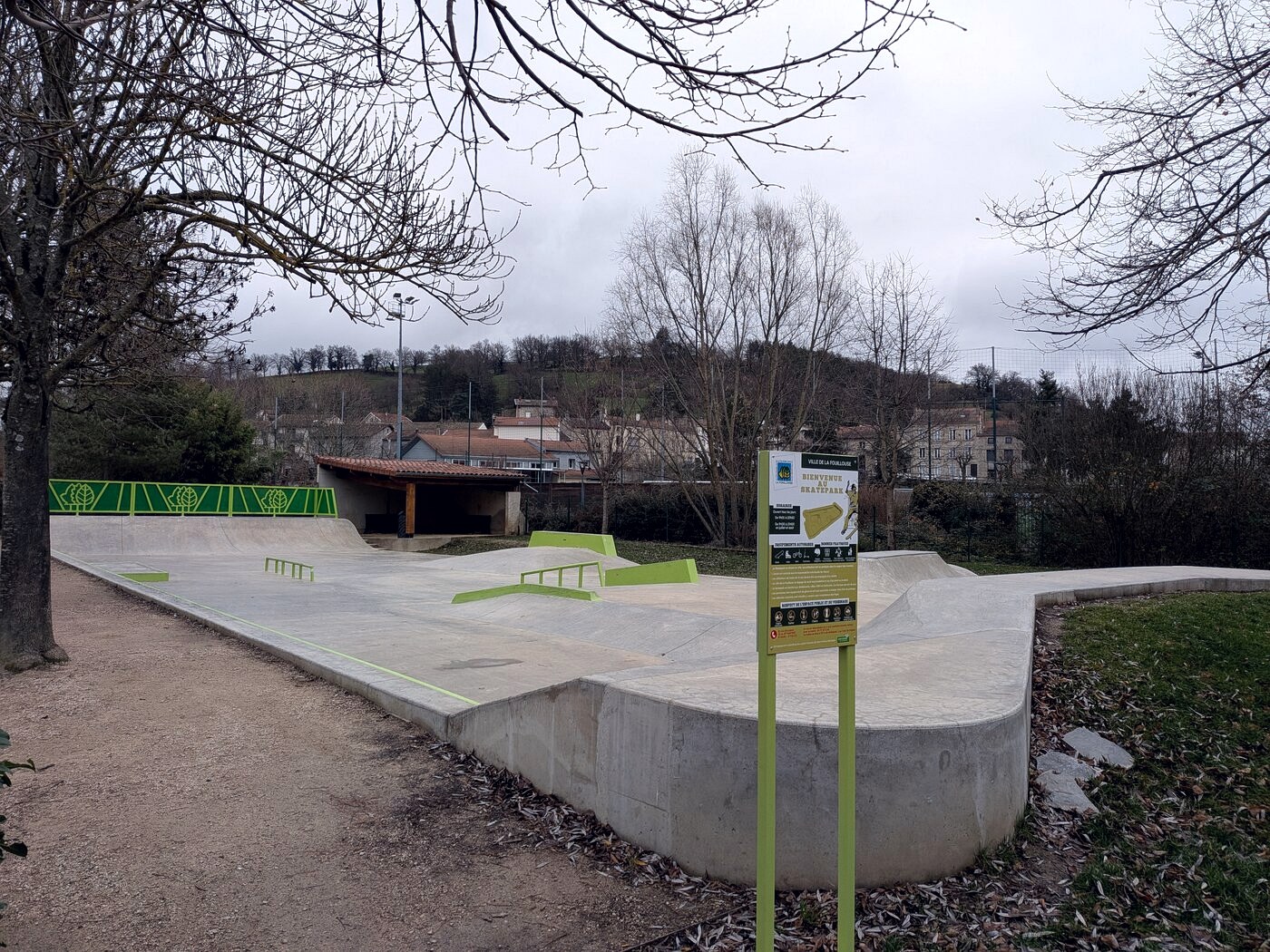
The heaviest line isn't in what skaters say. It's in the ministry's own form.
When a town files work on a facility, it has to state the reason. Among the boxes: "normal wear, upgrade," "code compliance," "damage from vandalism"… and one more telling one: "Failure to meet user expectations."
On skateparks, that box has been checked 113 times. A hundred and thirteen towns wrote down in black and white, in an official document, that the facility they had built did not match what people wanted from it. That's not a rider venting on a forum: that's the administration recording its own miss and filing it.
A hundred and thirteen out of 3,352 sounds small — but that only counts the ones with the budget to redo it and the honesty to check the right box. 3,042 entries have no work reason listed at all: in the overwhelming majority of cases, nothing has happened since the opening day.
Here's the problem: the decision made itself, with not one skater in the room
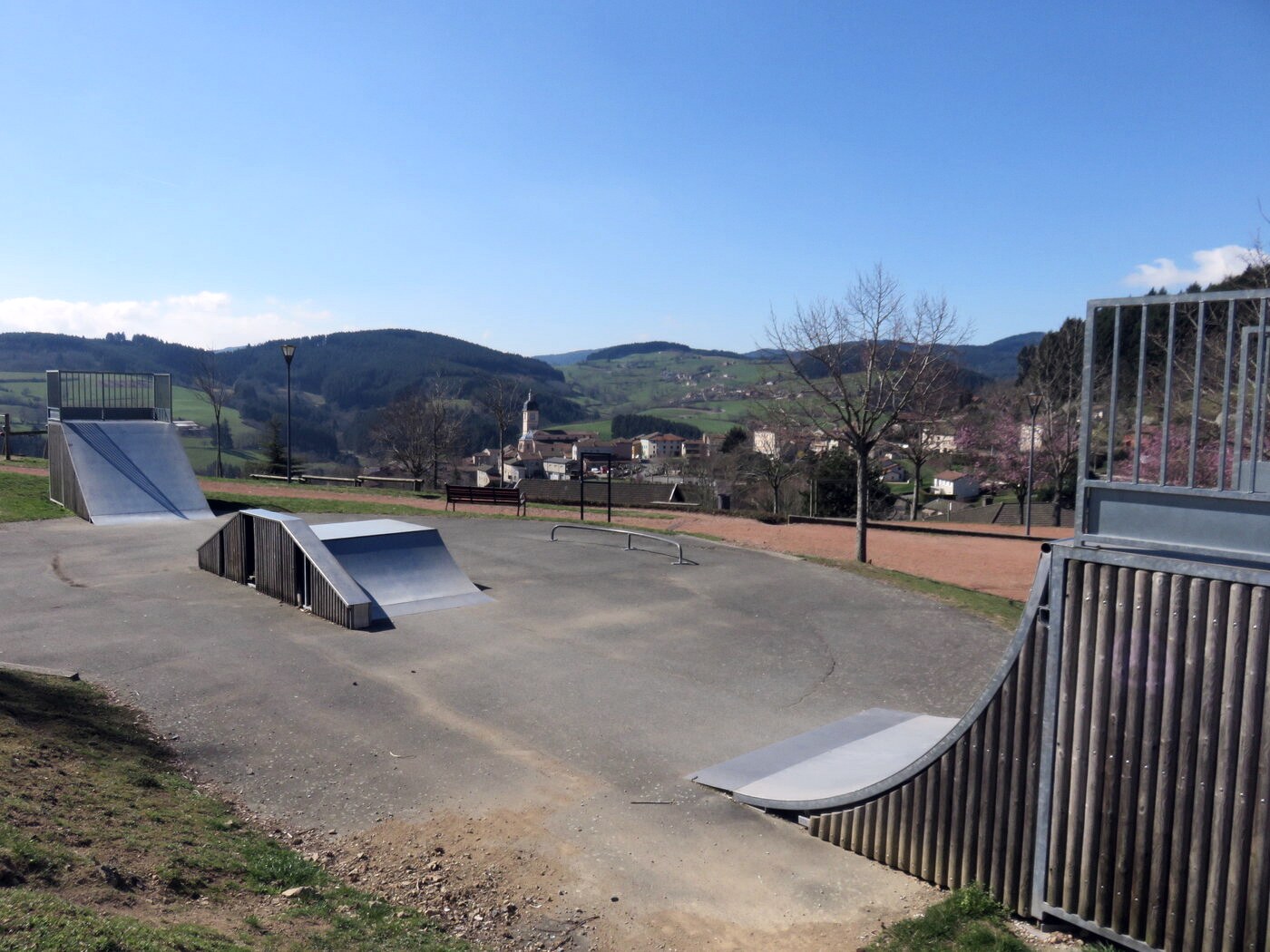
Here's the answer, and it fits in one line: the typical French skatepark is designed with zero skaters in the loop, by people delivering an outdoor recreation amenity — not a place to skate. No decision was ever made against riders. It's worse than that: the whole chain runs without them, and every single call, taken on its own, looks reasonable.
Walk it through. The sports department puts a line in the budget, because there has to be "something for the kids." The technical department picks the available lot furthest from housing. The engineering firm orders off a catalog, because that's what public procurement lets you buy fast. Lighting gets cut in the trade-offs: it's the easiest line to pull without the project disappearing from the program, and no regulation requires it on a free-access site. Maintenance isn't budgeted anywhere, because nobody ever assigned a department to a thing that's neither a stadium nor a garden.
Four mistakes, always the same four, all of them fixable. The surface: asphalt instead of troweled concrete, immediate savings, unrideable park in three years. The light: four poles, and the place goes from "open weekends if it's nice out" to "open every night." The location: off the beaten path, so nobody goes alone anymore. The design: obstacles bolted down at random with no line between them — you land a trick, you stop, you push again. A park gets drawn like a run, not like a shopping list.
And the fifth one, the one that contains the other four: nobody brought into the room the one group of people capable of looking at a plan and saying that transition's too steep and that rail's at the wrong height.
Malmö, fall 2005: when the skate association is at the table
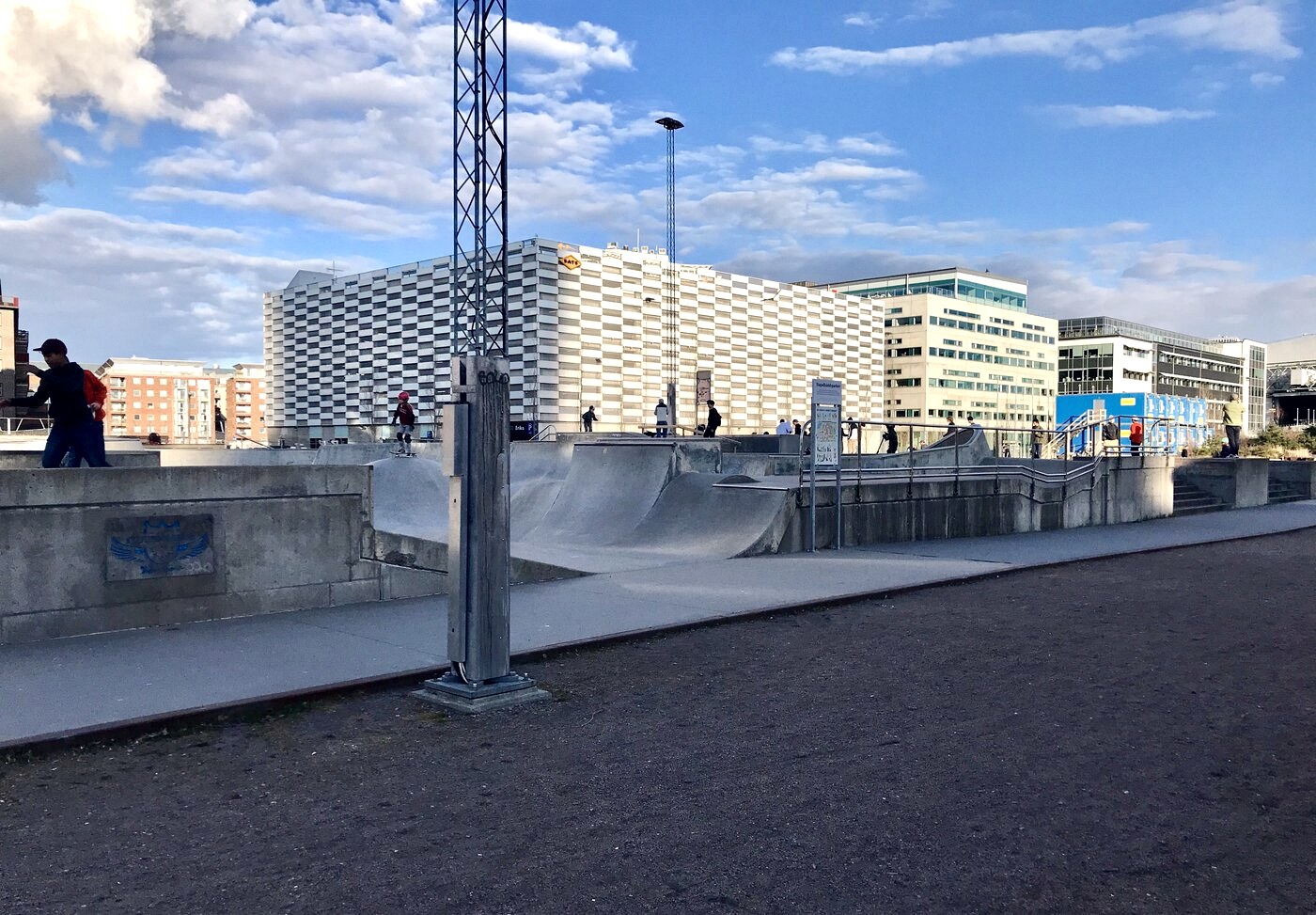
Malmö, Sweden, on the old Kockums shipyard grounds. Stapelbäddsparken opens in fall 2005: roughly 5,300 m², street and bowl. It came out of a partnership between the city of Malmö, the skateboard association Bryggeriet and designer Stefan Hauser. Three parties: the city funds it and runs it, the designer draws it, and the riders' association is a stakeholder — not consulted at the eleventh hour over a 3D render. It was Bryggeriet's very first project, skaters who got a seat where, over here, there's only an engineering firm.
What came next tells you whether it works. Bryggeriet started a high school, Bryggeriets Gymnasium, with skating on the curriculum. Oskar Rozenberg, born November 11, 1996 in Malmö, went through that school before representing Sweden in park at the Tokyo Games. A city that size produced an Olympian because it let skaters draw their own terrain, then turn it into a school. Twenty years on, what that looks like in the streets is nothing like anything we've got here.
Le Prado, 1991: France knows how to do this, it already did
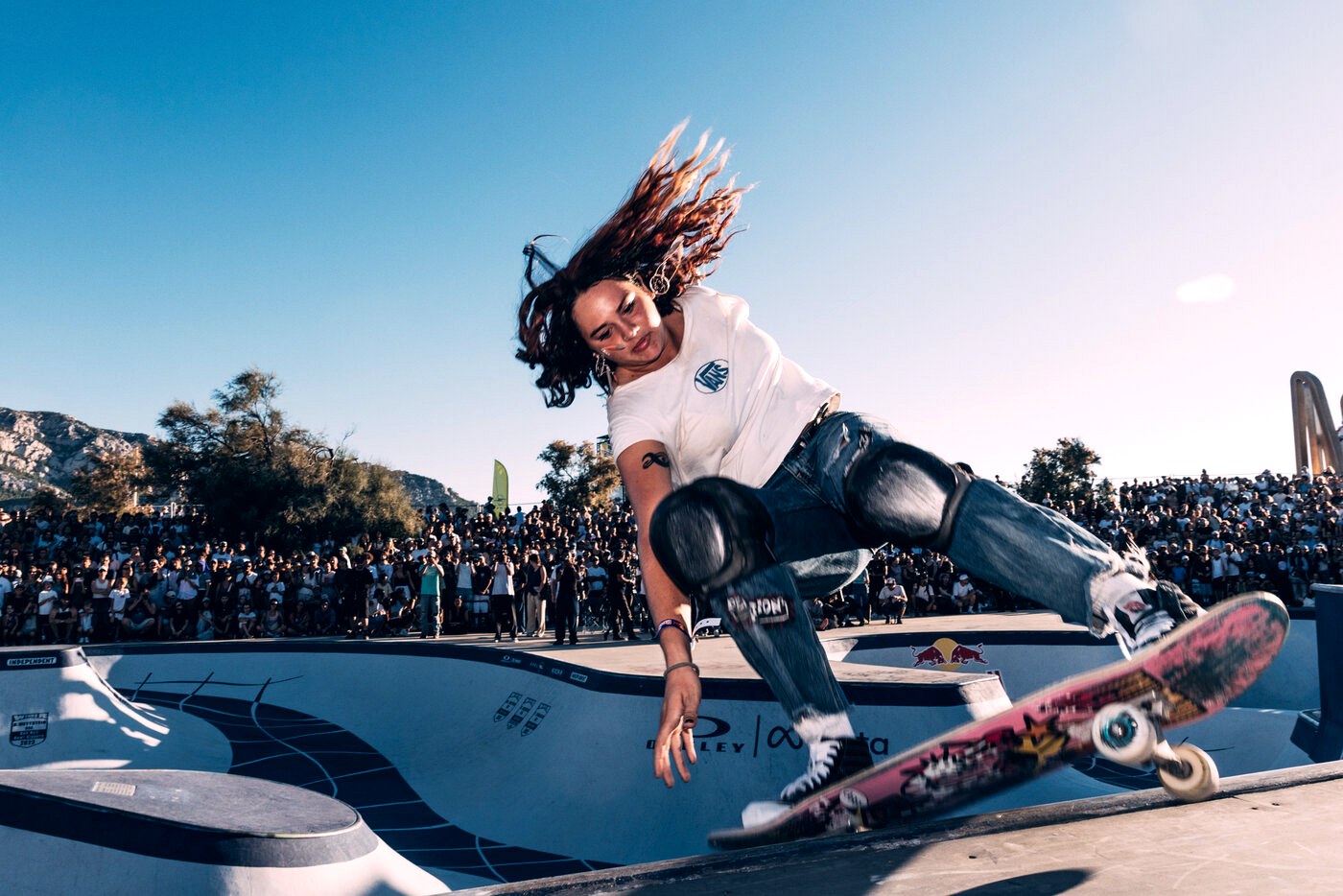
You don't have to go to Scandinavia to find a counterexample. It's in Marseille, at the Escale Borély, and it's thirty-five years old.
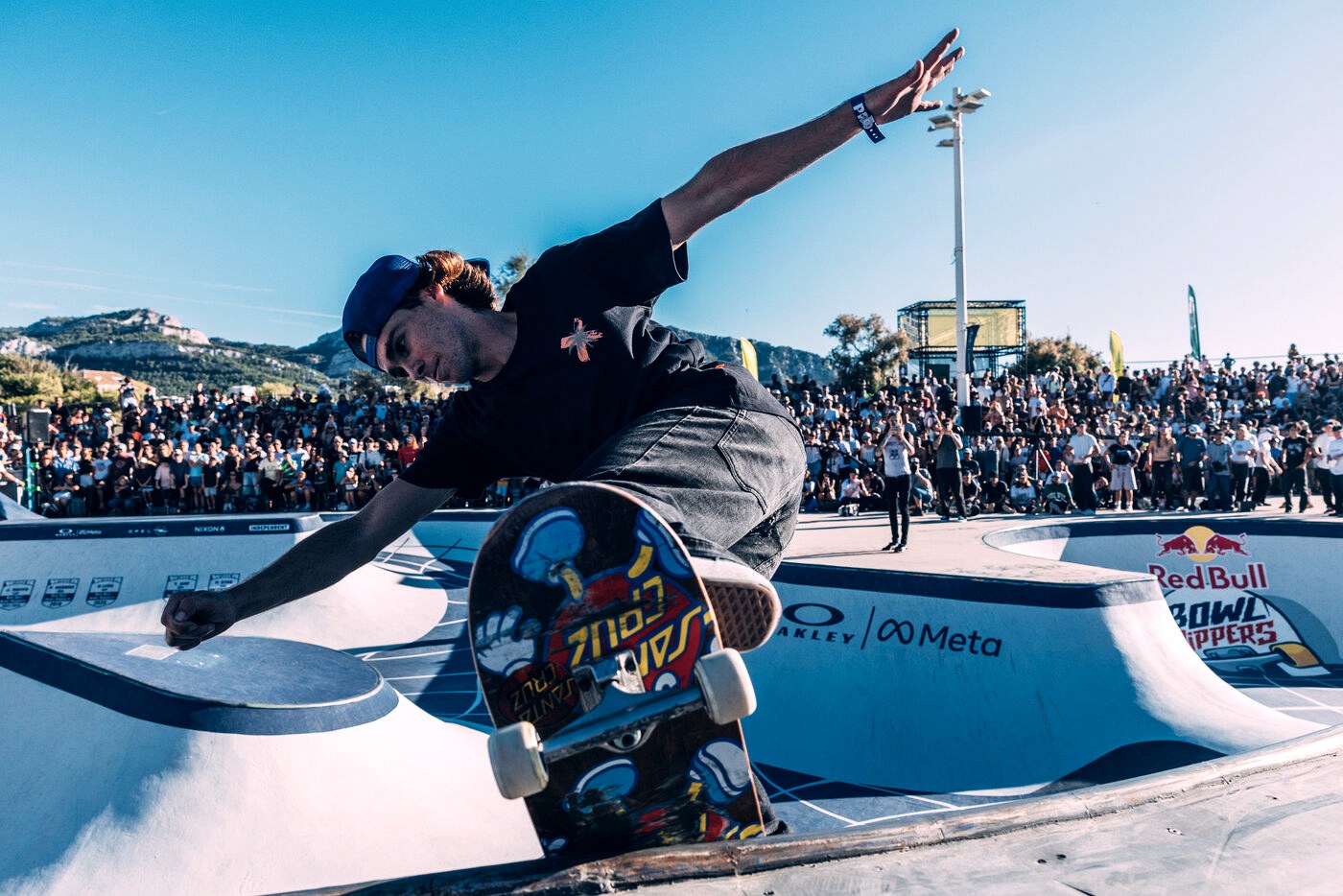
The Prado bowl opened in 1991, commissioned by the City of Marseille and designed by Jean-Pierre Collinet. Cement concrete. A spine at 1.70 m, a figure-eight running 1.80 to 2.20 m, a mega bowl at 2.70 m: specific numbers, chosen on purpose, not off a catalog. Free access, and lights at night. Le Monde called it "arguably the most famous skatepark on the continent." It's been replicated in Huntington Beach, California, and it's in Tony Hawk's Pro Skater 2.
That one isn't empty. It runs year-round, it's hosted the Red Bull Bowl Rippers since 2016, and it built riders: Vincent Matheron, born May 15, 1998 in the 12th arrondissement, got put on a board there by his dad Patrick — and finished 7th in the Olympic park final in Tokyo, captain of the French team. Concrete builds riders when it's poured right, it's that simple.
1991. Before the Olympics, before World Skate, before any stimulus package: a French town pulled it off thirty-five years ago, with the tech of the day. The "we can't afford it" argument dies right there.
What you can actually do in your own town
You have no power over a municipal budget. You do have power over what gets said in the meeting, and it's more than you think — because there's nobody on the other side. The engineering firm has no counterpart. The chair is open.
Ask city hall when the skatepark opened and whether there's a maintenance budget: that information is public, it's in the national sports facility census, and asking forces somebody to go dig it up. If a renovation is dragging, write in and ask to be included in the design — two or three riders putting it in writing already counts as an identified user group, and that changes the nature of the file. On lighting, be specific: an off-grid pole goes up with no trenching and no hookup, for a fraction of what new construction costs. It's the only expense that doubles the open hours of a facility you already paid for.
In the meantime, you skate anyway. The ministry's 3,352 files say nothing about what you do with a supermarket parking lot at seven at night, a stretch of smooth sidewalk, or one obstacle you've ended up knowing by heart. That's how it started everywhere else, Malmö included — Bryggeriet didn't come out of a city council vote.
Your town's skatepark: does it have lights, or do you head home when it gets dark ? Drop the name of your town and what's wrong with yours. Say it in the comments ↓
Le lexique
-
1
bowl
Cuvette en béton aux parois courbes, héritée des piscines vides, où l'on skate en enchaînant les remontées.
-
2
coping
Le tube métallique posé sur le bord haut d'un bowl ou d'une rampe, sur lequel on cale ses tricks.
-
3
module
Élément d'un skatepark : rampe, plan incliné, bosse ou rail, souvent acheté préfabriqué et boulonné sur la dalle.
-
4
transition
La courbe qui relie le sol au mur d'une rampe. Son angle décide si un trick est jouable ou non.
Shop NOSK8
Voir toute la boutique →
TEE-SHIRTS
TEE-SHIRT NOSK8® NOSKATE #NSITA
Le prix initial était : 35,00 €.29,00 €Le prix actuel est : 29,00 €.

TEE-SHIRTS
TEE-SHIRT NOSK8® P.B HEART #POLARBEAR
Le prix initial était : 35,00 €.29,00 €Le prix actuel est : 29,00 €.
TEE-SHIRTS
TEE-SHIRT NOSK8® I.L.N #ILOVEN8
Le prix initial était : 35,00 €.29,00 €Le prix actuel est : 29,00 €.

TEE-SHIRTS
TEE-SHIRT NOSK8® P.B HEART #NYC
Le prix initial était : 35,00 €.29,00 €Le prix actuel est : 29,00 €.

TEE-SHIRTS
TEE-SHIRT NOSK8® MATRICE HEART #CTRL
Le prix initial était : 35,00 €.29,00 €Le prix actuel est : 29,00 €.

CASQUETTES
CAP NOSK8® P.B #POLARBEAR
Le prix initial était : 35,00 €.25,00 €Le prix actuel est : 25,00 €.
CASQUETTES
CAP NOSK8® N8 #NOSK8
Le prix initial était : 35,00 €.25,00 €Le prix actuel est : 25,00 €.

CASQUETTES
CAP NOSK8® P.B.P #PAW
Le prix initial était : 35,00 €.25,00 €Le prix actuel est : 25,00 €.
HOODIES
HOODIE NOSK8® NOSKATE #NSITA
Le prix initial était : 60,00 €.49,00 €Le prix actuel est : 49,00 €.
HOODIES
HOODIE NOSK8® P.B HEART #BARÇA
Le prix initial était : 60,00 €.49,00 €Le prix actuel est : 49,00 €.
HOODIES
HOODIE NOSK8® P.B CENTRE #ORIGINAL
Le prix initial était : 60,00 €.49,00 €Le prix actuel est : 49,00 €.
HOODIES
HOODIE NOSK8® P.B HEART #PARIS
Le prix initial était : 60,00 €.49,00 €Le prix actuel est : 49,00 €.
HOODIES
HOODIE NOSK8® P.B HEART&BACK #ORIGINAL
Le prix initial était : 60,00 €.49,00 €Le prix actuel est : 49,00 €.

SWEAT
SWEAT NOSK8® P.B HEART #NYC
Le prix initial était : 45,00 €.39,00 €Le prix actuel est : 39,00 €.
SWEAT
SWEAT NOSK8® P.B HEART #PARIS
Le prix initial était : 45,00 €.39,00 €Le prix actuel est : 39,00 €.
SWEAT
SWEAT NOSK8® P.B HEART #POLARBEAR
Le prix initial était : 45,00 €.39,00 €Le prix actuel est : 39,00 €.
SWEAT
SWEAT NOSK8® P.B HEART #BARÇA
Le prix initial était : 45,00 €.39,00 €Le prix actuel est : 39,00 €.
SWEAT
SWEAT NOSK8® P.B HEART #PHILI
Le prix initial était : 45,00 €.39,00 €Le prix actuel est : 39,00 €.
Continue ta lecture
ChroniquesLe skate féminin a explosé en 5 ans. Pourquoi 36 Skater of the Year et zéro femme ?
Podiums olympiques à 14 ans, 900 rentré par une ado, contrats signés. Et 36 Skater of the Year sans une seule femme. Ce que les…
Commentaires (0)