
ℹ️ 🛹 Web Média Skate 🛹 ℹ️

Tricks
Rock to Fakie: 4 Phases, Only One Where Your Weight Shifts — Which One?
Le rock to fakie bloque tout le monde au même endroit : le coping. Les 4 phases du trick, les 4 chutes classiques, et l’instant exact où ton poids doit basculer.

→ Pour aller plus loin : 50-50 sur un curb : le premier grind, en 4 étapes
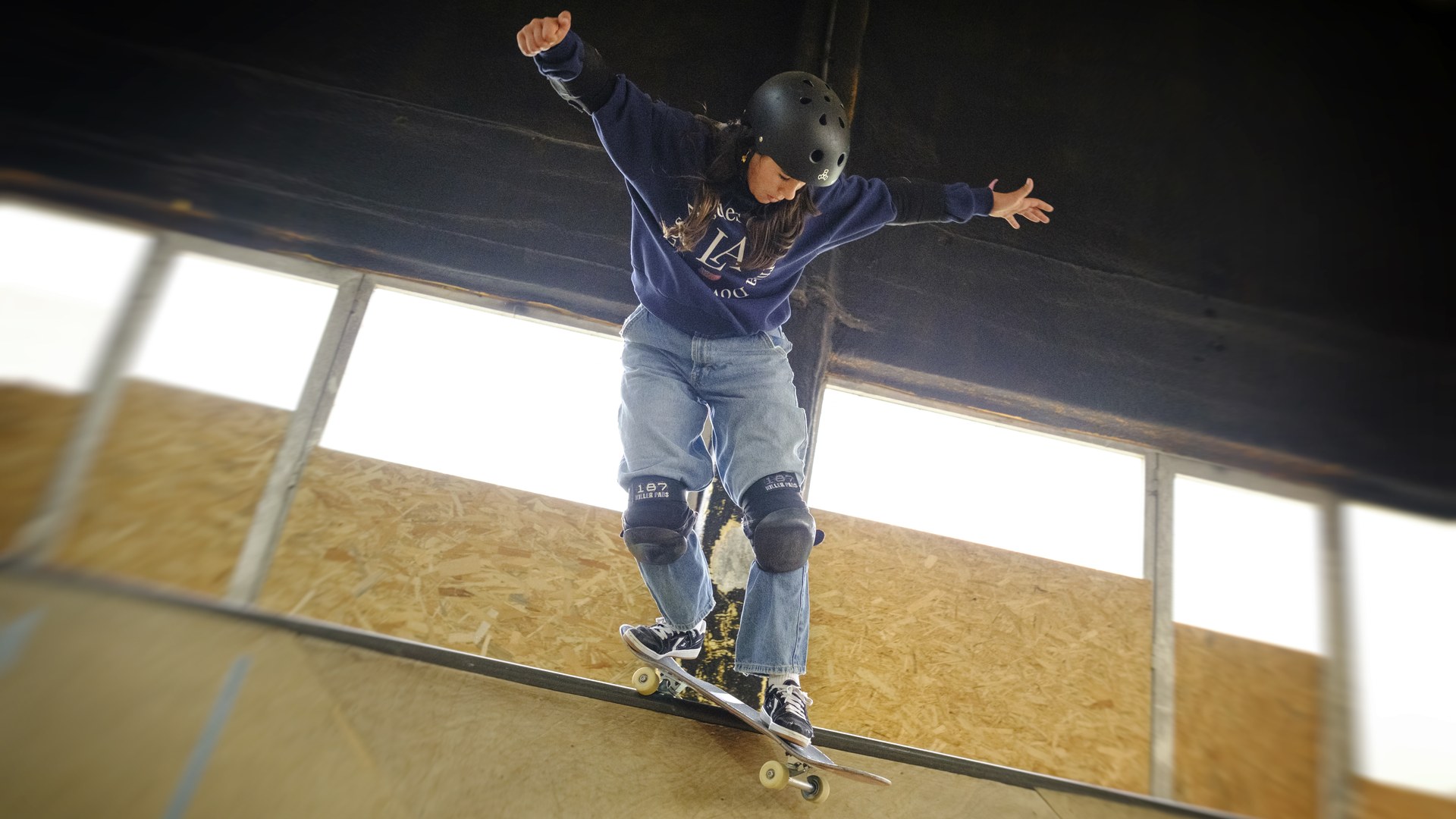
You’re rolling toward the ramp. You pump up. And about eight inches from the top, something in your body says nope. You stand up, you roll back down, you never even tried it. Three times. Ten times. The whole session.
The rock to fakie stops everybody in exactly the same spot. Not because it’s technically hard — it’s actually one of the simplest tricks you can do on the lip of a ramp. It stops you because it asks you to do the opposite of what your instincts are screaming.
On paper it’s three seconds: you roll up, your front wheels cross over the lip, the board hangs there for a split second, you come back down rolling backward. Three seconds, and one real question inside them.
Where you put your weight. Which foot, and when. There are four phases in this trick, and only one where the weight actually moves from one foot to the other. Get the timing wrong and you’re going down, guaranteed. The exact answer is further down, phase by phase. First, understand what’s jamming you up.
Level
Beginner transition
Time
2-6h
Prereqs
Rolling, dropping in
Surface
3 ft mini ramp
What a rock to fakie actually is

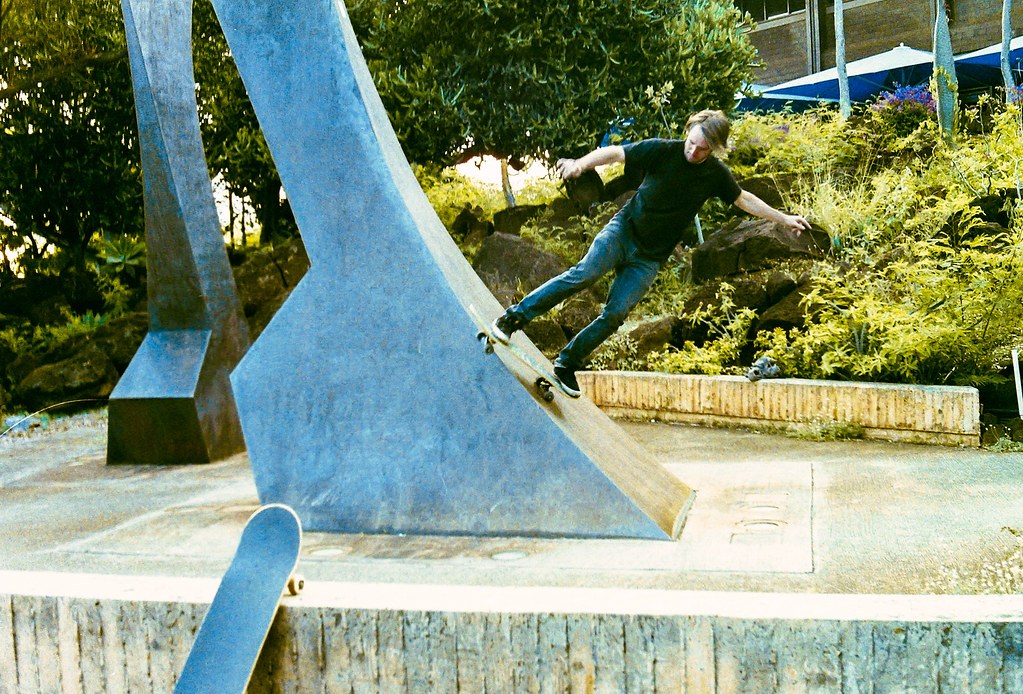
The definition fits in one sentence. You ride up the transition, you set your front wheels over the lip, the board rocks there for a beat, straddling the edge — that’s the « rock » — then it drops back in and you roll down backward. Rolling backward, in skate talk, is rolling fakie. Hence the name.
That edge is the coping: the metal pipe running along the top of the ramp. It’s there to protect the lip and to give tricks something to catch on. It’s also the thing scaring you, and that’s normal — until your front wheels are past it, your brain just sees an obstacle about to stop your board dead.
Wikipedia files it under the « quick and common » tricks, the ones you mostly use to link other stuff together on a mini ramp. Translation: nobody’s going to clap for your rock to fakie. It’s the front door. Once you’re through it, the whole ramp vocabulary opens up — the rock and roll (same trick, but you spin 180 and roll away forward), the boneless, grinds on the coping.
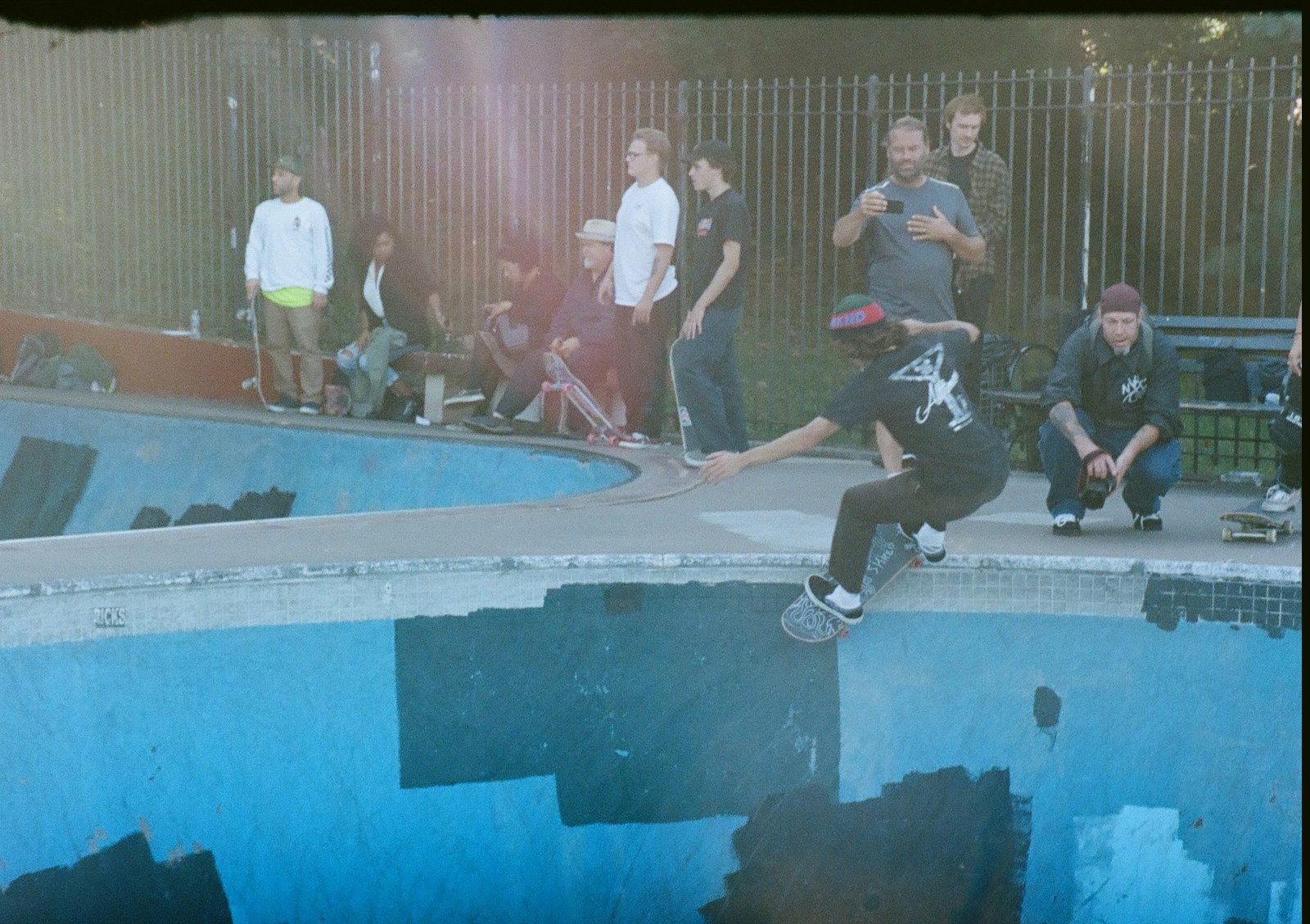
The first trick ever done on the lip of a ramp is credited to Jay Adams — empty California pools, back in the 70s. There have been hundreds since. They all start with the same move: agreeing to hang your front wheels out over nothing.
And let’s be clear about it: that mental block isn’t a lack of guts. It’s a perfectly healthy survival reflex — your body refuses to throw its center of gravity out over a drop. Every ramp skater you watch float over the coping like it’s nothing hit the exact same wall. It took them two hours, or three weeks. You don’t jump the wall, you wear it down: go a little higher every try and it gets so thin you end up going through it without noticing.
Read next: How to skateboard: 5 steps from zero to your first ollie.
The 4 phases of a rock to fakie
-
The roll-up
You hit the transition straight on, no angle, with enough speed to reach the top without forcing it. Feet where they normally live: back foot on the tail (the kicked-up end in back), front foot over the front bolts. Weight stays centered, split between both feet. You’re not doing anything special here — you’re just riding up.
-
Getting the front wheels over
About a foot and a half from the top, you lean a little into the front foot to push the nose over the coping. Both front wheels clear it. Your chest goes with them — not just the foot. This is the exact moment your instincts tell you to lean back. Don’t.
-
The rock
The board is straddling the lip, front wheels hanging in space, back truck against the coping. You sit there half a second, weight on the front foot, shoulders stacked over the board. This is the balance point of the whole trick. Plenty of people blow through it in a blink: early on, take your time, feel it.
-
Rolling back in fakie
Now — and only now — you shift your weight onto the back foot. The nose lifts, the front wheels come back over the coping, and the board rolls back down the transition backward. Look down the ramp over your shoulder, knees bent, weight recentered the second all four wheels are on the tranny. You’re rolling fakie. Done.
The 4 classic fails and how to fix them
The 4 classic fails
- Your front wheels catch on the coping — that’s the hang-up, the most common slam and the nastiest. You leaned back too early: the front wheels dropped before they cleared the lip. Stay on that front foot half a second longer.
- You can never get the front wheels over at all — not enough speed, or you’re braking with your shoulders halfway up. Roll up three times without trying anything, just to tap the coping with your front wheels and come back down. Then you go over it.
- The board goes sideways on the way down — you rode up at an angle. Check your line from the flat bottom: you want to hit the transition square to the coping, shoulders parallel to the board.
- You get bucked at the bottom of the ramp — you stayed leaned back through the fakie roll-in. As soon as all four wheels are on the tranny, recenter your weight and bend your knees, same as when you drop in.

Start on a mini ramp, not in the bowl
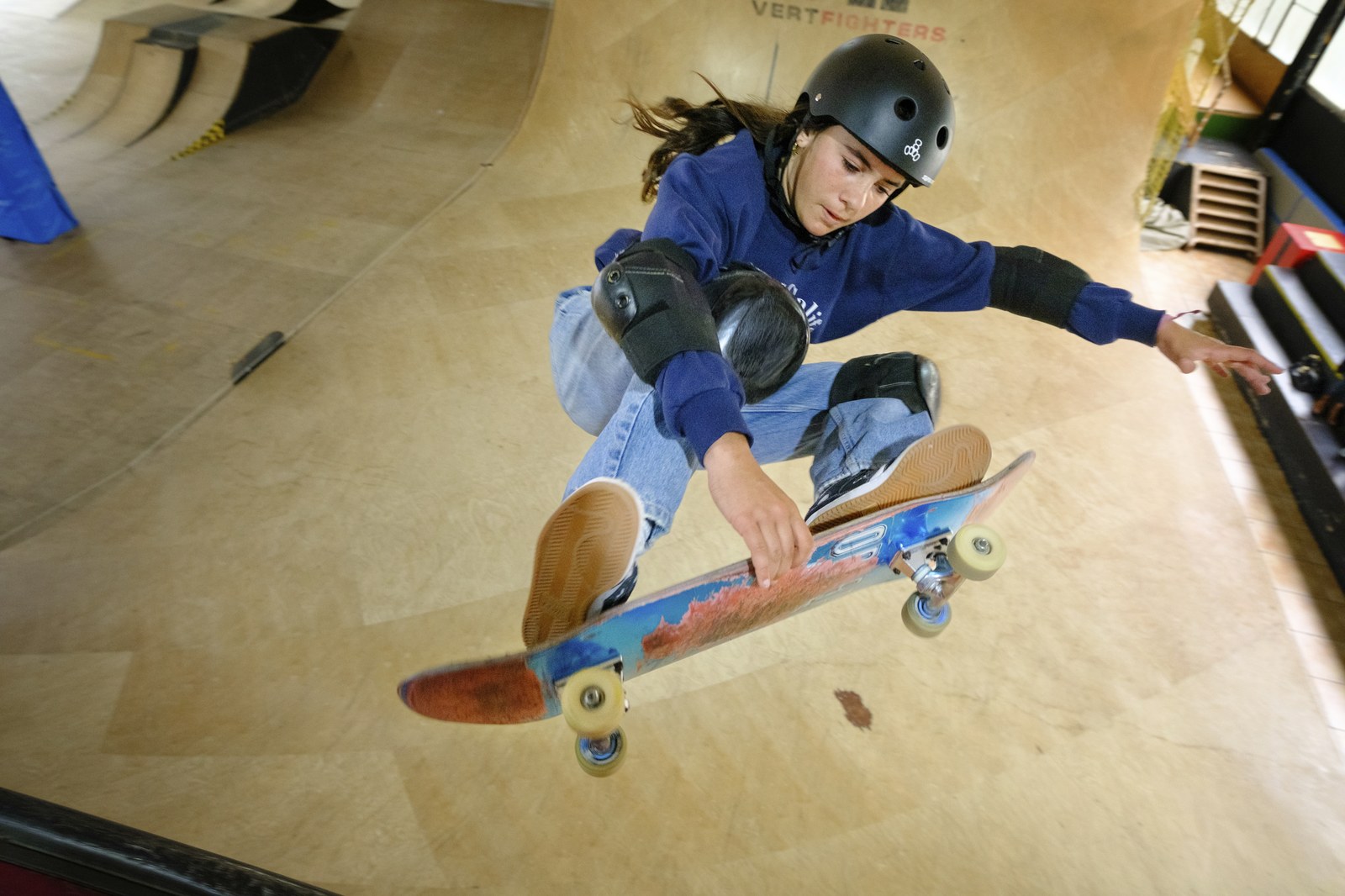
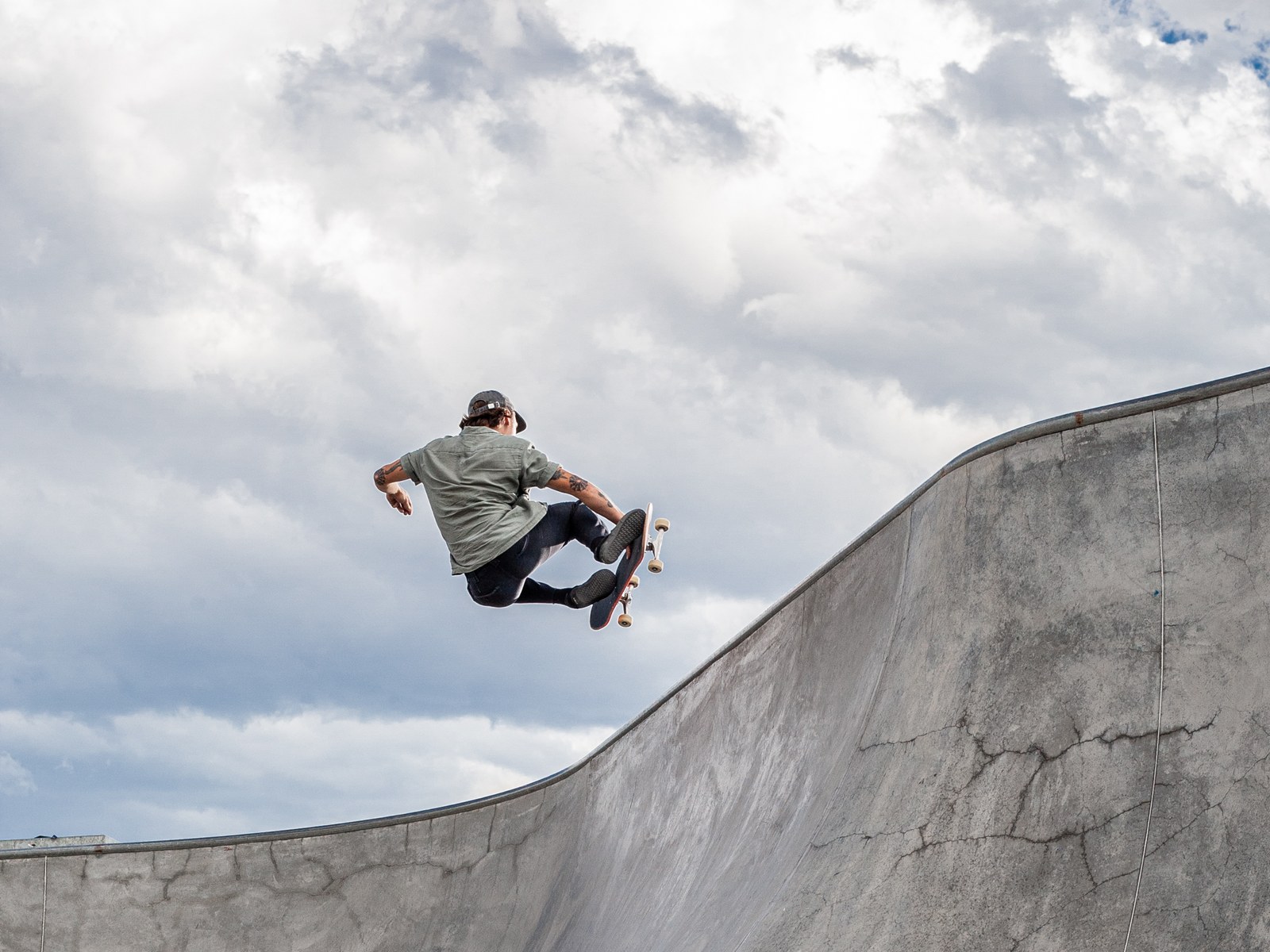
A mini ramp is a ramp somewhere around three feet tall — Wikipedia puts the low end at about 0.91 m, i.e. 3 feet. At that height the transition is mellow, the fall is short, and above all: you can see the top while you’re rolling up. In a six-foot concrete bowl you see nothing, you just eat it.
If your town only has a skatepark with two beat-up obstacles, look closer: there’s almost always a quarterpipe (a quarter of a ramp, half a mini) somewhere. That’s enough. You don’t need a brand-new park, you need three feet of transition and a metal bar on top.
Two things are non-negotiable before you roll up. A helmet — a hang-up throws you backward, head first, and that’s not the kind of slam you catch with your hands. Knee pads if the ramp is over three feet, because they let you knee-slide out instead of fighting to stay on your feet. Every ramp skater wears them. Nobody thinks it looks dorky.
Honest prereq check: can you drop in from the deck, board set on the coping, and ride down without bailing halfway? If yes, you’re ready. If not, work on that first — it’s the same forward weight shift, just simpler. Same one you needed for that one-inch curb drop that freaks everybody out at the start.
No decent ramp in your town? Here’s what to look for
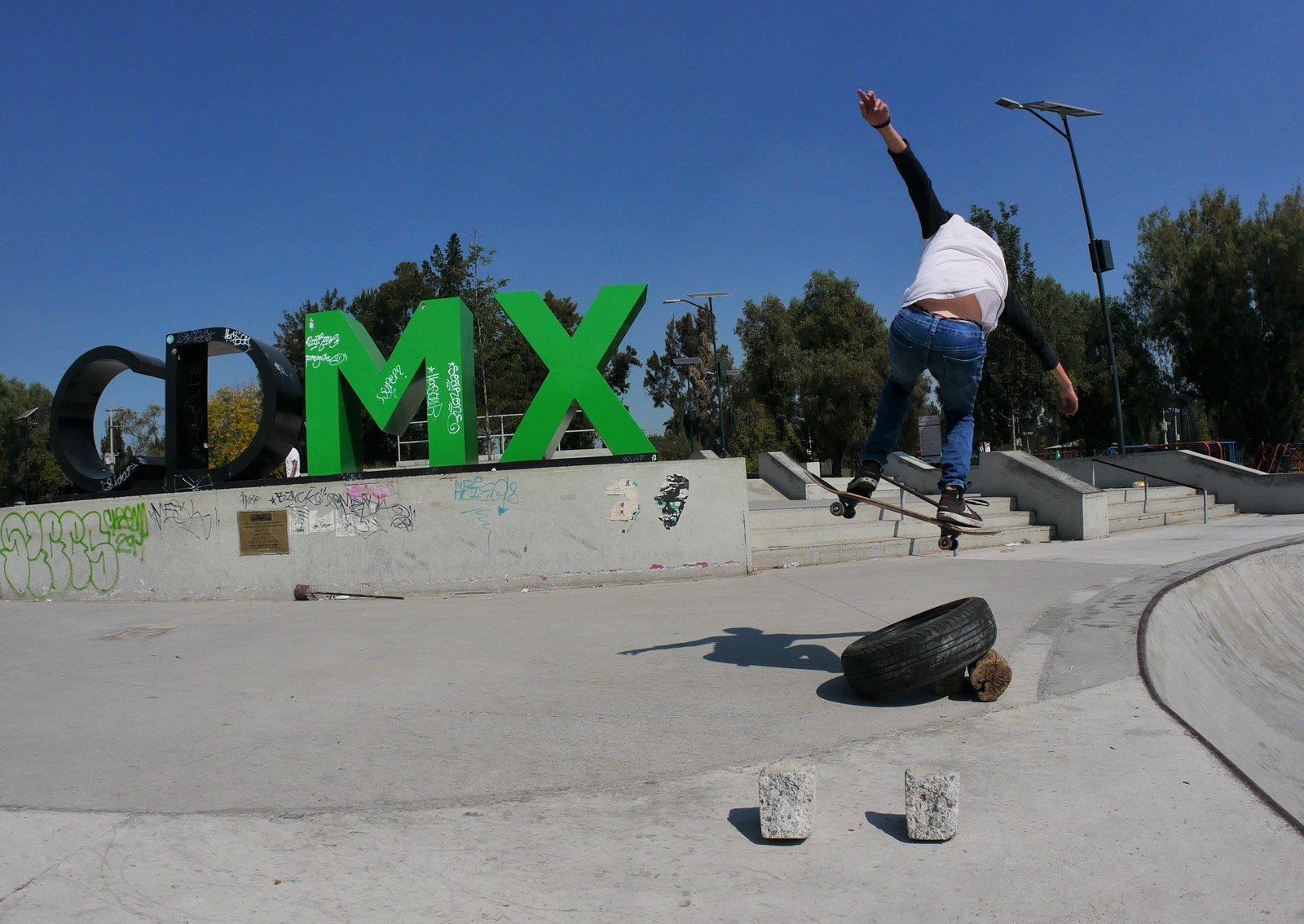
You’re looking for three things, in this order. A transition, even a short one, even an ugly one — a city park quarterpipe, the rounded lip of a concrete basin, a club ramp sitting in a gym. A metal or smooth concrete lip at the top of it, one your front wheels can pass over without snagging. A height you can look at from the bottom without your throat closing up — if it scares you before you even roll up, it’s too tall for today.
What you’re not looking for: a new park, a crew, a coach. The rock to fakie gets learned alone, in ten minutes, on three feet of transition. It’s probably the most democratic trick in skating — no rare spot, no special gear, just a lip and repetition.
And if there’s genuinely nothing: a used wooden ramp usually goes for a few bucks on the classifieds, and it fits in a driveway. Plenty of people learned exactly like that, in some small town, on a setup that creaked.
So where does your weight actually go?
Here’s the answer, straight. Your weight stays on your front foot through the first three phases, and it only moves to the back foot at one single moment: when your front wheels are back over the coping. Not before. One shift, one moment.
Phase by phase, in detail. Roll-up: weight split between both feet, body centered over the board, not leaning forward or back. Front wheels over: you shift forward — roughly 70% of your weight on the front foot — and your chest moves with it, otherwise the board goes and you stay behind. Rock: you hold that position, weight still forward, half a second, shoulders over the front truck. Fakie roll-in: there, and only there, you go to the back foot to lift the nose, then recenter the second all four wheels touch the tranny.
The rule in one sentence, the one you can repeat to yourself at the top of the ramp: you move your weight back when your front wheels have cleared the bar, never while they’re still hanging out over nothing. Every rock to fakie slam comes from leaning back too early. Every single one.
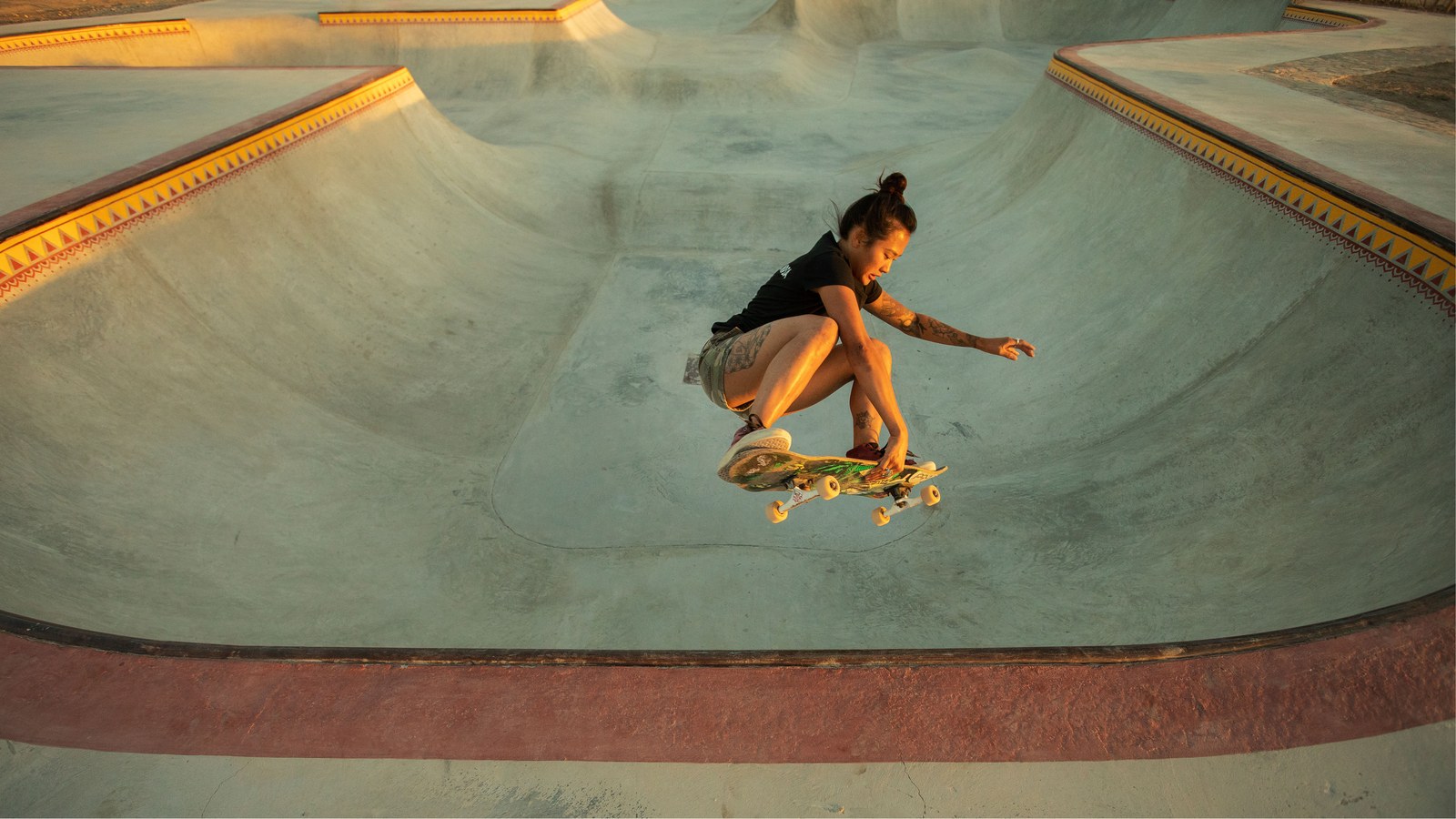
And the click comes like this: one try where you’ve stopped thinking about anything, where your front wheels go over without you deciding it, and you feel the board settle on the lip for a beat before it comes back. A short, weird, weightless feeling, almost silly for how good it is. After that first one, you’ll do ten in a row the same day. That’s how thick the wall was.
Then you take it somewhere taller, you add the 180 to roll away forward, you try the boneless. But it all starts with that one weight shift, on that metal bar, in your town, on whatever busted ramp you’ve got.
What ramp did you land your first rock to fakie on, and how many tries did it take ? Tell us in the comments ↓
Follow NOSK8 where you hang out
Parts, spots, behind the scenes: it all drops on the accounts first.
Le lexique
-
1
coping
Le tube de métal fixé tout en haut d’une rampe ou d’un bowl. Il protège l’arête et sert d’appui aux figures.
-
2
fakie
Rouler en marche arrière, pieds à leur place habituelle. La planche avance par son tail au lieu de son nose.
-
3
hang-up
Chute où les roues avant restent accrochées sur le coping au retour : la planche bloque et le skateur part en arrière.
-
4
tail
La partie relevée à l’arrière de la planche, celle sur laquelle le pied arrière appuie pour poper.
-
5
quarter
Un quart de rampe : une seule courbe avec son coping en haut, l’équivalent de la moitié d’une mini-rampe.

Continue ta lecture
PortraitsSky Brown, bronze olympique à 13 ans : à 18 ans, qu’est-ce qu’on fait de sa vie après ça ?
Bronze olympique à 13 ans et 28 jours, crâne fracturé quatorze mois plus tôt, or aux X Games à 18 ans. Ce que devient une…
Commentaires (0)