
ℹ️ 🛹 Web Média Skate 🛹 ℹ️

★ Tricks
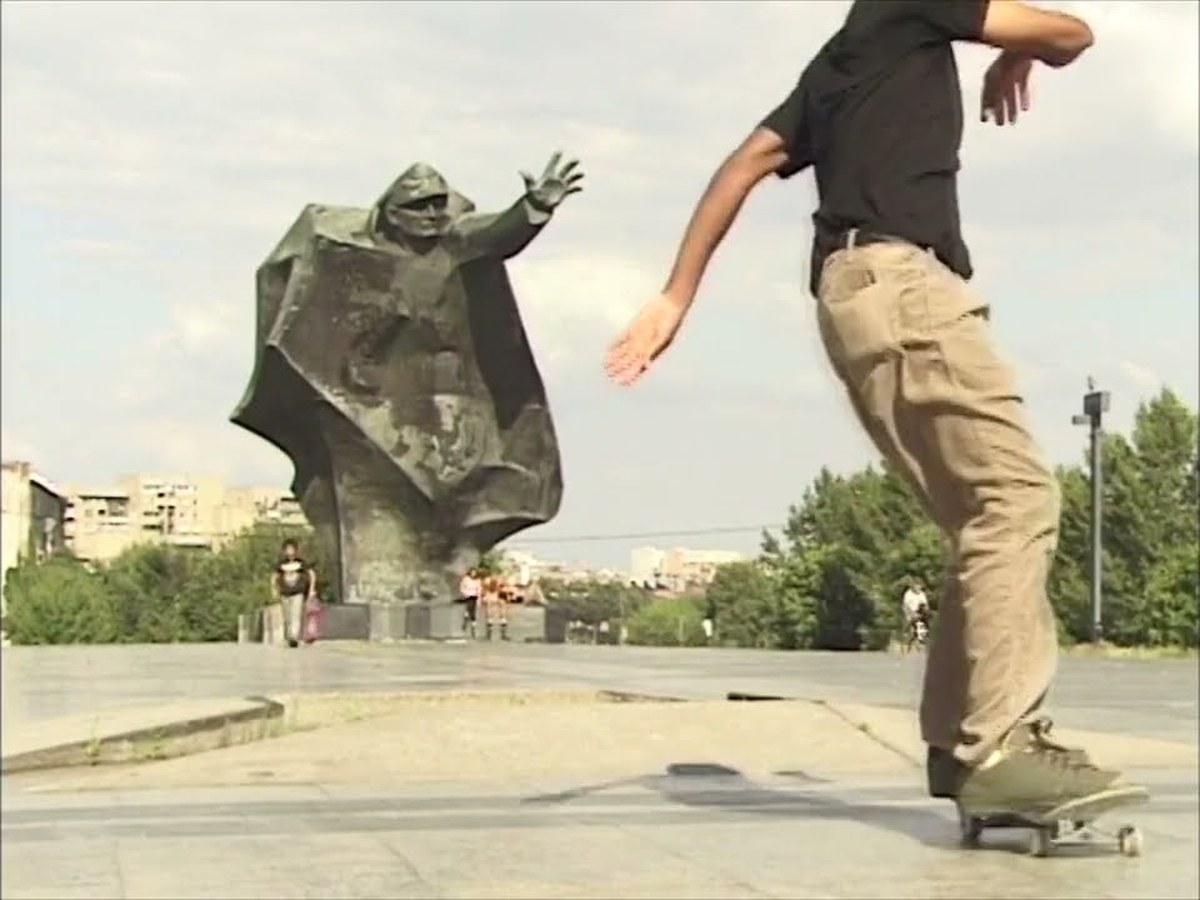
Ray Barbee in Ban This: 1989
En 1989, Ray Barbee signe sa part dans Ban This avec une planche de flat et des no comply. Trente ans après, on essaie encore de le copier.

→ Pour aller plus loin : Samarria Brevard dans Quit Your Day Job en 2017
In 1989, a kid from San Jose drops into one of the most iconic skate videos ever made. He shows up with a flat board, and his no‑comply runs are pure fire. Forget the giant ramps. Ray Barbee just laid the groundwork for modern street skating. He does it with a flow that people still try to copy thirty years later.
Powell-Peralta, 1989
By the end of the '80s, the skate industry was ruled by massive vertical ramps. Competitions were sanitized, run by the big brands of the day. Powell-Peralta reigned supreme. They had the legendary Bones Brigade, with the era’s undisputed headliners: Tony Hawk, Steve Caballero, or Mike McGill. Yet the focus was slowly sliding from skateparks to the raw concrete of downtowns. A new wave of skaters was re‑imagining urban furniture. No half‑measures, no transitions.
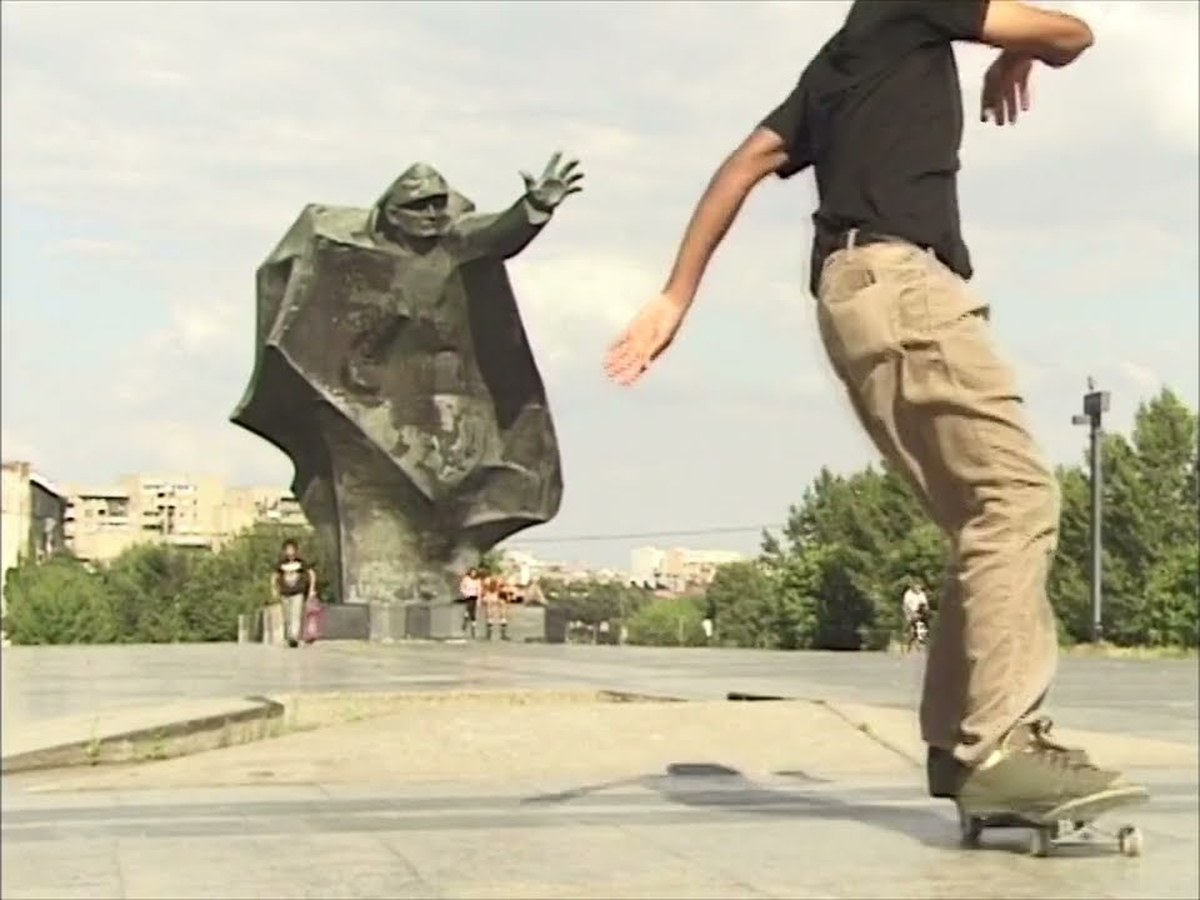
In this intense cultural shift, the Bones Brigade Video Show #4 drops. It’s called Ban This, released in 1989. Stacey Peralta, the brand’s director and creative mind, gets it. They needed to give these young wolves some spotlight. They were ditching ramps to claim sidewalks and California staircases. The film hit VHS, circulating hand‑to‑hand in schoolyards and skateparks. It instantly became a cult icon for everyone. They discovered a fresh way to skate the city.
Amid this monumental backdrop, Ray Barbee’s slice arrives. He’s a true UFO. He flips the established norms of the sport. While most pros were betting on pure ramp speed or jaw‑dropping aerial tricks, Barbee comes from a different angle. He’s got a contagious grin. He rides a wide old‑school‑style board. His approach to skating is wildly horizontal. His set lasts just a few minutes, but it’s enough to redefine what can be done on a four‑wheel slab of wood. It happens on the flat asphalt of a parking lot or a public square.
Also read : No comply can be learned without an ollie: 5 steps, where do you start?
The line‑up
The set opens with ground runs. They set the tone right away. You see variations of manuals and no complies, executed with a mind‑blowing chill. Ray Barbee chains flat tricks and quick curb drops. He syncs with his gear. He shows that creativity trumps jump height or surface technicality. The crowd sees smooth chains. Every trick flows naturally into the next. It creates a continuous line that never really stops.
The core of the set reveals a series of no complies over urban obstacles. There are manhole covers and small steps. It happens around San Jose and Los Angeles. Barbee alone popularizes the frontside and backside no comply. He folds it into fluid lines. He turns a 1970s freestyle legacy move into a lethal weapon for street skate. Each impulse is delivered by planting the back foot on the ground while lifting the board. It’s a technical move that demands perfect timing. The skater nails it with an apparently disarming ease.
The final sequence picks up speed. Tricks get more aggressive on sloped spots and rough concrete edges. It showcases the perfect transition between old‑school style and the modern street era. You see bumps to bars, quick fortune grinds, and mastered landings. The surfaces are far from smooth, typical of California urbanism in that decade. This nonstop technical demo ends on a joyful note. It cements the set’s status as one of the most influential sequences in the discipline’s history.
Urban spots
These spots are mostly up in Northern California. They’re around San Jose, the hometown of Ray Barbee. Far from the sanitized, pay‑to‑play skate parks, you’ll find public wooden benches. There are also concrete traffic islands and the low walls of administrative buildings. Ordinary sidewalks double as play zones. These everyday American backdrops suddenly take on an artistic edge under the board’s wheels. They reveal the hidden potential of every street corner.
Back then, the very idea of a street spot wasn’t even codified. Skaters had to improvise against hostile passersby, local cops, and shop owners. The concrete slabs of these 1980s public spaces have wide joints, rough edges, and cracks. They make every landing a delicate affair. They demand balance every second. These authentic settings bear the wear of time and the flow of pedestrians. They give the video a raw, realistic texture that productions shot in controlled environments sorely lack.
Today, the vast majority of these historic spots have vanished. They’ve been erased by urban gentrification, downtown renovations, and aggressive anti‑skate measures. The walls have been decked out with metal spikes. The slabs have been redone. The wooden benches have been swapped for anti‑vagrancy furniture. This gear is designed to keep boards from touching any corner. Despite their physical disappearance, these places live in skaters’ collective memory. They live through this video. Every frame of Ban This becomes an irreplaceable archaeological archive.
The Youngbloods
The soundtrack for Ray Barbee’s part in Ban This is the track Get Together. It comes from the band The Youngbloods. The song first dropped at the end of the ’60s. This bold musical choice cuts a sharp line against heavy rock, aggressive punk, or thrash metal. Those styles traditionally drive ’80s skate videos. With its folk‑rock twang, pacifist lyrics, and laid‑back groove, the track pours a sunny vibe. It makes the whole sequence feel positive and deeply optimistic.
The blend of skate footage and vocal melody works flawlessly. It creates a rare synergy between body movement and musical vibration. When Barbee launches his smooth curves and aerial sequences over the choruses, the video takes on a quasi‑poetic edge. The viewer is hooked instantly. This choice proves that street skate can be told on a different register than raw rebellion. It injects a laid‑back elegance and a profoundly human soul.
This pairing of vintage pop‑rock and street skate is set to shape video editing for good. It’s opening the door to far more eclectic musical choices in the decades to come. Before Ban This, pairing that mellow sound with kids tearing up the concrete seemed off‑beat. Producers wanted to sell a loud, rebellious vibe. By daring that huge stylistic leap, the production gives Barbee’s cut a rare timelessness. This segment turns into an audiovisual masterpiece. We still watch it today with the same intact emotion.
Read also : Wade Speyer, 1991: how a hidden San Francisco ledge gave its name to all the “hubbas”?
Stacey Peralta
Behind the camera, we find Stacey Peralta himself. He’s backed by Powell‑Peralta’s crew. These crews hit the American roads hunting tomorrow’s talent. The gear back then was heavy, bulky analog cameras. It’s a long way from today’s lightweight, high‑def gear. It takes total chemistry between the filmmaker and the skater. Every shot is designed to highlight the rider’s overall line. He doesn’t pepper the action with unnecessary angles. Those angles break the flow of the move.
The edit, orchestrated by the same creative team, takes a bold gamble. It lets the footage breathe. It favors wide shots to appreciate the skater’s full run. Unlike the ultra‑fast, frenetic cuts that will dominate productions a few years later, Ban This takes its time. The film sets its frame. It shows the urban backdrop and contextualizes the action. This documentary approach gives the video an invaluable historical value. It documents a pivotal era with precision. Street skate was still hunting its own brands and aesthetic codes at that point.
The trust between Ray Barbee and Stacey Peralta shows up on screen. It’s visible in every shot. It speaks to the total artistic freedom given to the young prodigy. He’s laying out his unique skate vision. Peralta knows how to spot talent that breaks the mold. He gives them a huge international stage. He leans on the reach of the Powell-Peralta brand. This killer partnership between a visionary director and an inspired skater shows how crucial solid artistic direction is. It turns a simple street session into a landmark moment in pop culture.
Board and Style
On the gear side, Ray Barbee rides a board with the classic late ’80s shape. It’s wide, with a short nose and a pronounced tail. It’s set up with wide trucks and relatively hard wheels. The shoes from that era don’t have any fancy tech. They’re usually just classic canvas or reinforced leather sneakers. That simplicity forces skaters to make up for it with style. They also compensate with balance and surgical foot placement. That lets them nail physically demanding tricks.
The technical and stylistic legacy of that board is massive. It directly inspired whole generations of pro skaters. They carried the street skate torch through the ’90s and 2000s. Street icons like Tommy Guerrero or Natas Kaupas recognized it. East Coast legends did too, later on. Everyone acknowledged the huge impact of that smooth, laid-back style. By proving you could create full visual art without giant rails or insane speeds, Barbee opened the door. An entire slice of the skate community found their place. They didn’t see themselves in vert culture.
Every time a skater lands a no‑comply with style in a Tokyo, Paris, or New York street, they’re paying an unconscious tribute. That tribute goes to that 1989 session, immortalized in Ban This. Ray Barbee’s legacy isn’t just about trick count or pure tech innovation. It’s about an attitude. It’s a way of inhabiting urban space with a grin and timeless elegance. That indelible cultural imprint makes this board an absolute skate heritage monument. It’s etched forever in our community’s history.
Sources
Shop NOSK8
Voir toute la boutique →
TEE-SHIRTS
TEE-SHIRT NOSK8® NOSKATE #NSITA
Le prix initial était : 35,00 €.29,00 €Le prix actuel est : 29,00 €.
TEE-SHIRTS
TEE-SHIRT NOSK8® P.B HEART #POLARBEAR
Le prix initial était : 35,00 €.29,00 €Le prix actuel est : 29,00 €.
TEE-SHIRTS
TEE-SHIRT NOSK8® I.L.N #ILOVEN8
Le prix initial était : 35,00 €.29,00 €Le prix actuel est : 29,00 €.
TEE-SHIRTS
TEE-SHIRT NOSK8® P.B HEART #NYC
Le prix initial était : 35,00 €.29,00 €Le prix actuel est : 29,00 €.
TEE-SHIRTS
TEE-SHIRT NOSK8® MATRICE HEART #CTRL
Le prix initial était : 35,00 €.29,00 €Le prix actuel est : 29,00 €.
CASQUETTES
CAP NOSK8® P.B #POLARBEAR
Le prix initial était : 35,00 €.25,00 €Le prix actuel est : 25,00 €.
CASQUETTES
CAP NOSK8® N8 #NOSK8
Le prix initial était : 35,00 €.25,00 €Le prix actuel est : 25,00 €.
CASQUETTES
CAP NOSK8® P.B.P #PAW
Le prix initial était : 35,00 €.25,00 €Le prix actuel est : 25,00 €.
HOODIES
HOODIE NOSK8® NOSKATE #NSITA
Le prix initial était : 60,00 €.49,00 €Le prix actuel est : 49,00 €.
HOODIES
HOODIE NOSK8® P.B HEART #BARÇA
Le prix initial était : 60,00 €.49,00 €Le prix actuel est : 49,00 €.
HOODIES
HOODIE NOSK8® P.B CENTRE #ORIGINAL
Le prix initial était : 60,00 €.49,00 €Le prix actuel est : 49,00 €.
HOODIES
HOODIE NOSK8® P.B HEART #PARIS
Le prix initial était : 60,00 €.49,00 €Le prix actuel est : 49,00 €.
HOODIES
HOODIE NOSK8® P.B HEART&BACK #ORIGINAL
Le prix initial était : 60,00 €.49,00 €Le prix actuel est : 49,00 €.
SWEAT
SWEAT NOSK8® P.B HEART #BARÇA
Le prix initial était : 45,00 €.39,00 €Le prix actuel est : 39,00 €.
SWEAT
SWEAT NOSK8® P.B HEART #PHILI
Le prix initial était : 45,00 €.39,00 €Le prix actuel est : 39,00 €.
SWEAT
SWEAT NOSK8® P.B HEART #NYC
Le prix initial était : 45,00 €.39,00 €Le prix actuel est : 39,00 €.
SWEAT
SWEAT NOSK8® P.B HEART #PARIS
Le prix initial était : 45,00 €.39,00 €Le prix actuel est : 39,00 €.
SWEAT
SWEAT NOSK8® P.B HEART #POLARBEAR
Le prix initial était : 45,00 €.39,00 €Le prix actuel est : 39,00 €.
Continue ta lecture
TricksComment faire un heelflip : les 6 étapes — et pourquoi ton board part toujours en biais
Ton talon frappe, la planche part en biais, tu retombes à côté. Les 6 étapes du heelflip dans l'ordre, les 4 fails classiques, et la…
Commentaires (0)