
ℹ️ 🛹 Web Média Skate 🛹 ℹ️

★ Tricks
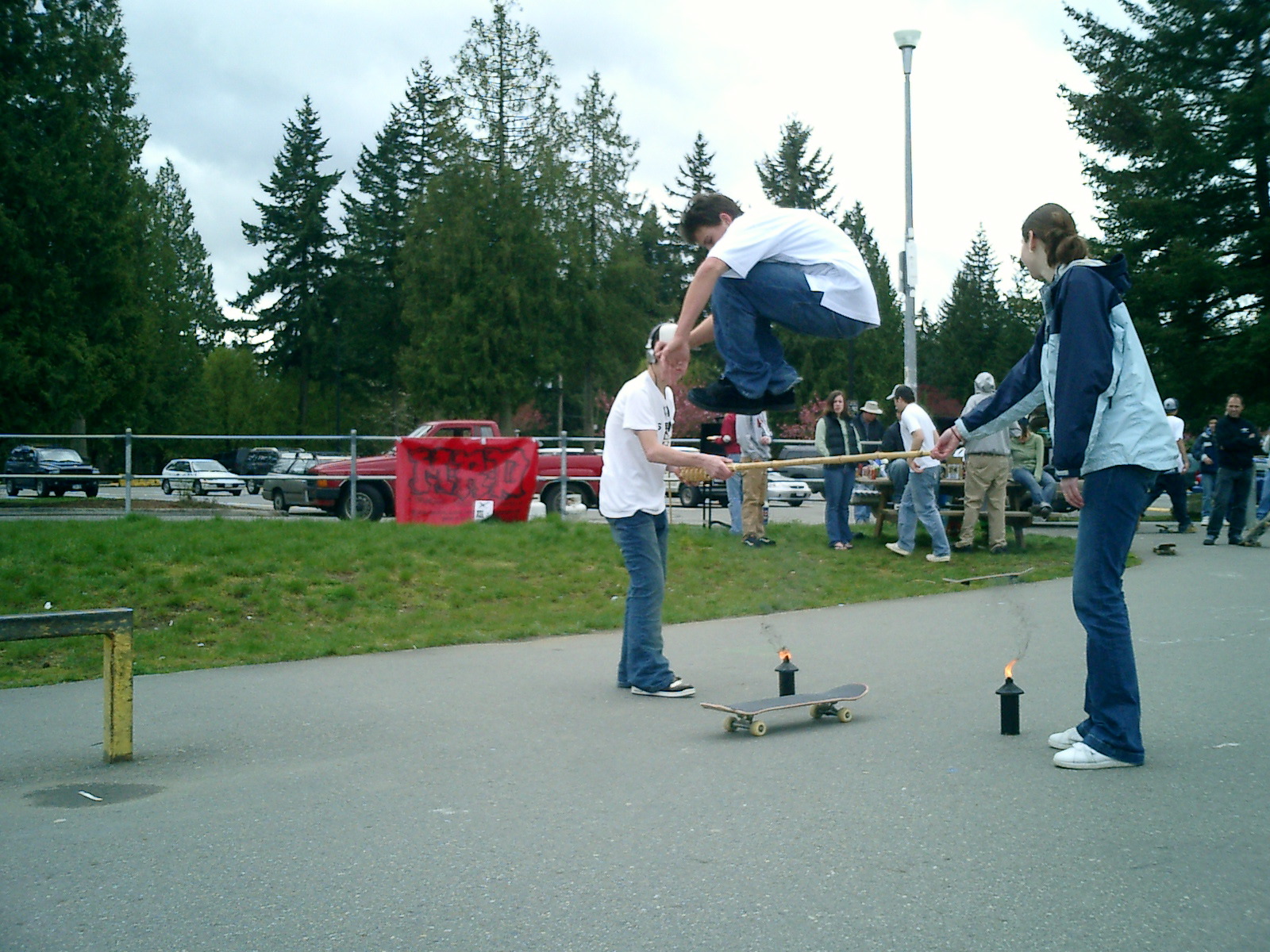
Hippie Jump: Why Jumping Without Your Board Teaches You More Than 10 Botched Ollies
Tu sautes, la planche roule seule sous toi, tu retombes dessus. Le hippie jump se rentre en une session — et il installe la vitesse, l'équilibre et le regard que ton ollie réclame.
Your ollie won’t get off the ground. Three weeks of smacking the tail, watching the board hop 4 cm and come down sideways. You try again. Still nothing.
And meanwhile, you’re not working on anything else. Not your balance, not your speed, not that dumb little thing nobody ever talks about: where you put your eyes.
There’s a trick that works exactly those three things, goes down in a single session, and doesn’t ask for one hit of the tail. The hippie jump: you jump, the board keeps rolling underneath you on its own, you land right back on it.
It sounds like a joke. It’s one of the best progression tools a beginner can have. Here’s why — and how to land it today.
Level
Beginner
Time
1 to 2 sessions
Prerequisites
Rolling, pushing
Surface
Flat, smooth, clear
A trick where the board does all the work by itself

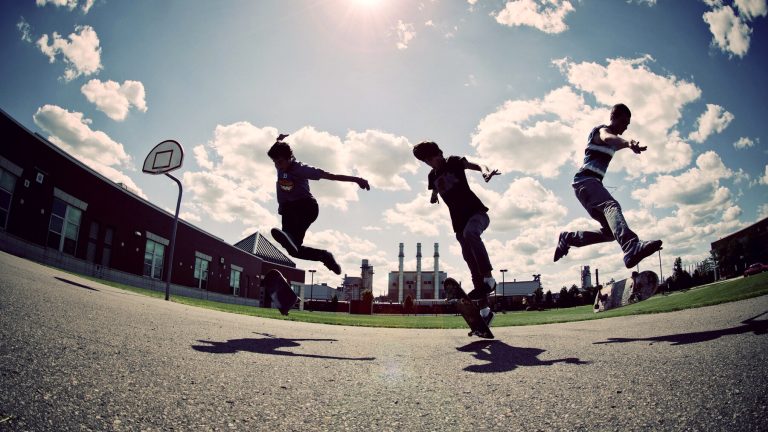
The whole idea fits in one sentence. You’re rolling, you come up on a low obstacle — a bar, a rope, a branch resting on two cones. You jump over it without taking the board with you. It rolls through underneath on its own, you land back on the bolts, you keep rolling.
No pop, no tail whatsoever. Strictly speaking, it’s not even a trick: the official definition calls it an athletic feat rather than a skateboard move. You do nothing with your board — you do everything with your body.
The guy who made it famous is Mark Gonzales — an American skater from the ’80s and ’90s who invented a good chunk of modern street skating and loved anything that looked a little absurd. Since then, the hippie jump has been everywhere: sessions with the homies, video games, high-jump contests. The recorded record sits at 150.3 cm, cleared by Germany’s Steffen Köster on July 14, 2013 in Frankfurt. Almost five feet, with the board flying through underneath.
Also worth a read: The ollie in 6 steps.
Speed isn’t a risk here — it’s the fuel
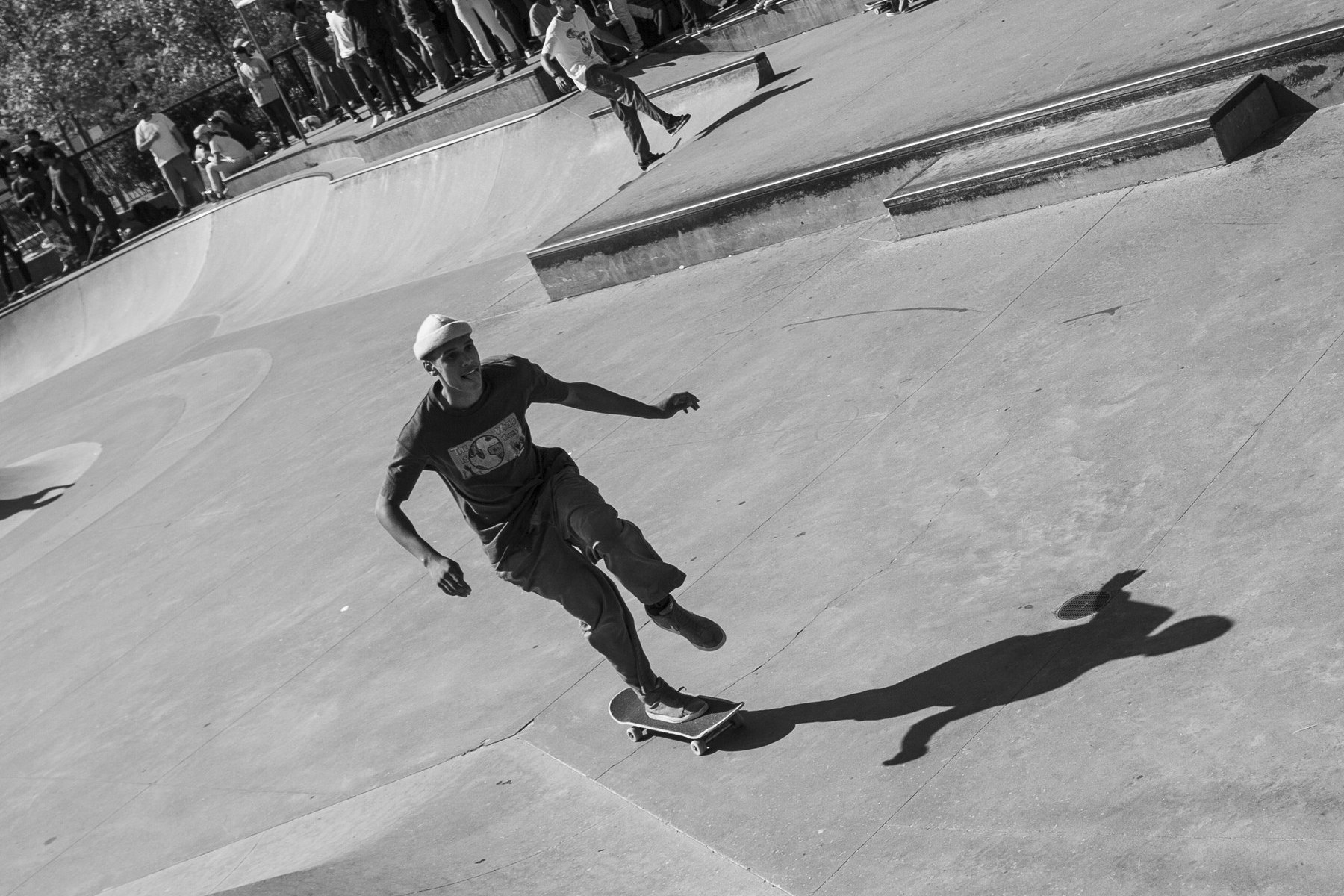
Here’s the counterintuitive part. Almost every beginner trick gets practiced standing still or at a crawl. This one is the exact opposite: too slow and it’s impossible. The board doesn’t have the momentum to cover the distance of your jump underneath you — it stalls, and you land next to it.
For the first time since you started skating, speed becomes your ally instead of the thing that freaks you out. You’re forced to push hard, hold a steady roll, knees loose, without braking on the approach. That’s the skill that blocks more beginners at the skatepark than any other: they roll so slowly that nothing can possibly work.
6 steps to your first hippie jump
-
Pick a ridiculous obstacle
Seriously: ridiculous. A rope stretched 10 cm off the ground between two bags, a wooden stick laid across two bricks. Something that falls over the second you touch it — never anything solid. Your first one has to happen at a height where you can’t get hurt, otherwise you hesitate at the last moment — and hesitating is exactly what makes you blow it.
-
Set your feet like you’re just cruising
No special stance. Both feet over the bolts, weight spread even. That’s the position you’re going to land in, so you might as well be there already. No foot on the tail — the kicked-up part at the back — you’re not popping anything.
-
Actually go for it
Three or four solid pushes: easy jogging speed, not walking speed. And above all, no braking on the approach. The natural reflex is to slow down when you see the obstacle coming. That reflex is exactly what this trick teaches you to kill.
-
Look past the obstacle, never at the obstacle
Lock your eyes on a spot on the ground two meters past the bar. If you stare at the bar, your body stops right on it. Same rule as riding a bike: you go where you look. That one detail will pay off on every trick you learn from here on out.
-
Jump off both feet, straight up
Small crouch, then go straight up. Not forward, not backward: your body is already carrying the board’s speed. Pull your knees up toward your chest — that’s ten free centimeters right there.
-
Land on the bolts, knees bent
Aim for the bolts — where the trucks mount under the board. Both feet at the same time, knees loose. If you’re still rolling three meters later, it’s landed. Film yourself: you’ll swear you jumped twice as high as the footage shows.
The 4 classic fails and how to fix them
The 4 classic fails
- The board stalls under the obstacle — you weren’t going fast enough, or you braked on the way in. Start building speed three pushes earlier and don’t let yourself look at your feet.
- You land behind the board — you jumped backward without realizing it, usually out of self-protection. Look at that spot on the ground past the obstacle, not at the bar.
- You land in front of the board — the opposite: you threw yourself forward. There’s nothing to push into — your body already has the speed. Just jump straight up, that’s it.
- You jump too early — you take off a meter before the bar and come down right on top of it. Wait until your front wheel clears the obstacle. You’ll get the feel for it in two or three tries.
Raising the bar, one centimeter at a time
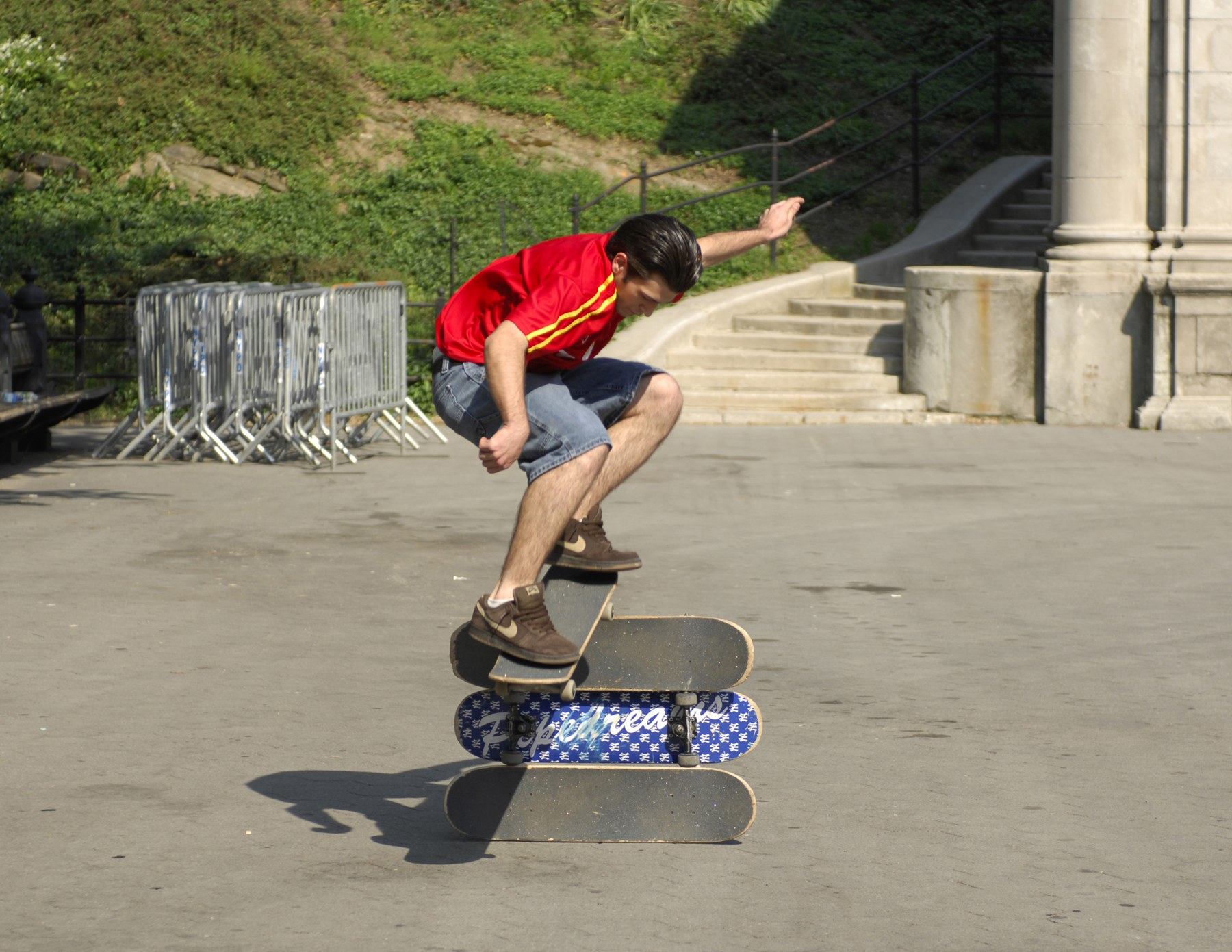
The progression is stupid simple, and that’s exactly why it works: raise the obstacle a few centimeters, land three clean passes, raise it again. Rope at 10 cm, then 20. One board flat on the ground, then two stacked, then three.

The rule: you never raise it until you’ve got three makes in a row. Not two out of five. Three in a row. That’s what turns a lucky one into a move your body actually owns.
And this is where it gets interesting. You’re building a habit — small step, lock it in, next step — on a trick where failing costs you nothing. When you apply the same method to the no comply or the manual, you’ll already know how to break a trick down into pieces.
So: why does it teach you more than 10 botched ollies?
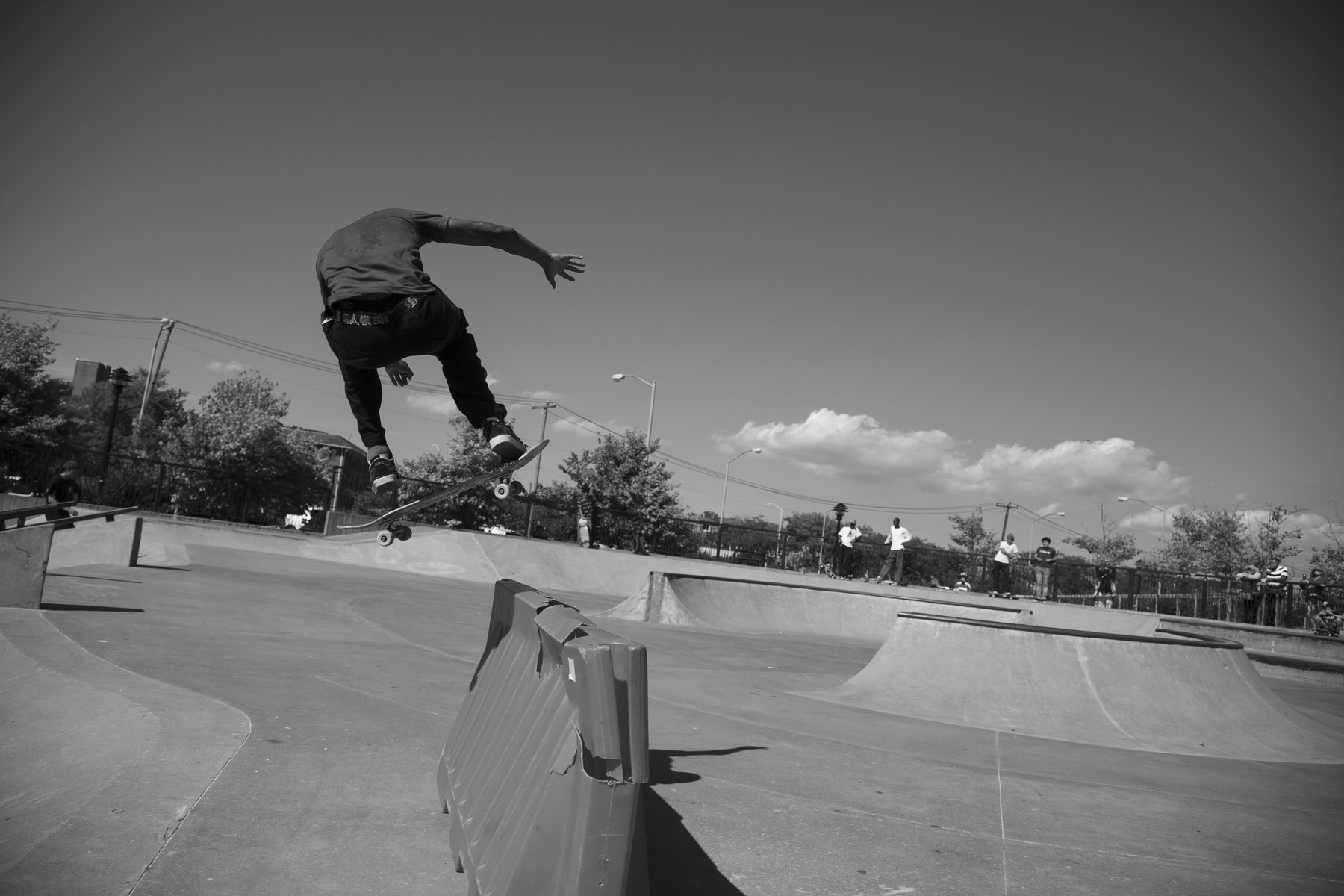
Straight answer, in three points.
One. A botched ollie teaches you nothing because the feedback it gives you is unreadable. The board shoots off sideways: was it the pop? The slide? Your shoulders? You don’t know, so you repeat the same fuzzy motion ten times. The hippie jump only hands you one variable at a time: landed in front, landed behind, or braked. The fix is obvious on every single try. That’s what learning is — not repeating.
Two. It makes you work the three foundations the ollie assumes you already have: rolling fast without tensing up, jumping while keeping your body lined up over the board, setting your eyes far ahead. You can spend six months popping stationary ollies without ever touching those three. The day you want to ollie over something while rolling, they’ll all come up missing at once.
Three. You actually land it. Often the very first evening. And that counts for more than anyone wants to admit: after three weeks of ollies that won’t leave the ground, the little voice saying “maybe I’m just not built for this” gets loud. Landing something — anything — shuts it up. You head back to the park knowing your body is capable of learning — and that’s the headspace you land an ollie in, not frustration.
So no, it doesn’t replace the ollie. It sets it up, it patches your confidence back together, it makes everything else readable. Ten botched ollies leave you exactly where you started. One session of hippie jumps moves you forward.
Go stretch a rope ten centimeters off the ground. An hour is all it takes.
What’s the highest obstacle you’ve cleared with a hippie jump — and what did you build it out of? Drop it in the comments ↓
Follow NOSK8 where you hang out
Parts, spots, behind the scenes: it all drops on the accounts first.
Le lexique
-
1
pop
Le coup sec donné avec le pied arrière sur l'arrière de la planche pour la faire décoller du sol.
-
2
tail
La partie relevée à l'arrière de la planche, celle qu'on frappe au sol pour faire un ollie.
-
3
les vis
Les quatre boulons visibles sur le dessus de la planche, à l'aplomb des trucks. Le repère où poser les pieds à la réception.
-
4
no comply
Figure où l'on pose un pied au sol pour faire décoller la planche, sans utiliser le pop classique.
Shop NOSK8
Voir toute la boutique →
TEE-SHIRTS
TEE-SHIRT NOSK8® P.B HEART #PHILI
Le prix initial était : 35,00 €.29,00 €Le prix actuel est : 29,00 €.
TEE-SHIRTS
TEE-SHIRT NOSK8® MATRICE HEART #CMD
Le prix initial était : 35,00 €.29,00 €Le prix actuel est : 29,00 €.
TEE-SHIRTS
TEE-SHIRT NOSK8® P.B HEART #PARIS
Le prix initial était : 35,00 €.29,00 €Le prix actuel est : 29,00 €.
TEE-SHIRTS
TEE-SHIRT NOSK8® P.B HEART #PARENTALADVISORY
Le prix initial était : 35,00 €.29,00 €Le prix actuel est : 29,00 €.
TEE-SHIRTS
TEE-SHIRT NOSK8® P.B HEART #BARÇA
Le prix initial était : 35,00 €.29,00 €Le prix actuel est : 29,00 €.
CASQUETTES
CAP NOSK8® P.B #POLARBEAR
Le prix initial était : 35,00 €.25,00 €Le prix actuel est : 25,00 €.
CASQUETTES
CAP NOSK8® N8 #NOSK8
Le prix initial était : 35,00 €.25,00 €Le prix actuel est : 25,00 €.
CASQUETTES
CAP NOSK8® P.B.P #PAW
Le prix initial était : 35,00 €.25,00 €Le prix actuel est : 25,00 €.
HOODIES
HOODIE NOSK8® MATRICE HEART #ALT
Le prix initial était : 60,00 €.49,00 €Le prix actuel est : 49,00 €.
HOODIES
HOODIE NOSK8® MATRICE HEART #CTRL
Le prix initial était : 60,00 €.49,00 €Le prix actuel est : 49,00 €.
HOODIES
HOODIE NOSK8® I.L.N #ILOVEN8
Le prix initial était : 60,00 €.49,00 €Le prix actuel est : 49,00 €.
HOODIES
HOODIE NOSK8® NOSKATE #NSITA
Le prix initial était : 60,00 €.49,00 €Le prix actuel est : 49,00 €.
HOODIES
HOODIE NOSK8® P.B HEART #BARÇA
Le prix initial était : 60,00 €.49,00 €Le prix actuel est : 49,00 €.
SWEAT
SWEAT NOSK8® P.B HEART #BARÇA
Le prix initial était : 45,00 €.39,00 €Le prix actuel est : 39,00 €.
SWEAT
SWEAT NOSK8® P.B HEART #PHILI
Le prix initial était : 45,00 €.39,00 €Le prix actuel est : 39,00 €.
SWEAT
SWEAT NOSK8® P.B HEART #NYC
Le prix initial était : 45,00 €.39,00 €Le prix actuel est : 39,00 €.
SWEAT
SWEAT NOSK8® P.B HEART #PARIS
Le prix initial était : 45,00 €.39,00 €Le prix actuel est : 39,00 €.
SWEAT
SWEAT NOSK8® P.B HEART #POLARBEAR
Le prix initial était : 45,00 €.39,00 €Le prix actuel est : 39,00 €.
Continue ta lecture
PortraitsYuto Horigome, 2 titres olympiques d’affilée : le skate street est-il devenu japonais ?
Deux Jeux, deux ors en street masculin, et un podium mondial 100 % japonais en 2023. Portrait de Yuto Horigome et de la filière qui…
Commentaires (0)