
ℹ️ 🛹 Web Média Skate 🛹 ℹ️

 Back
Tricks
Grind or slide: have you been mixing them up all along?
One question sorts every trick: what's rubbing? Get the answer, six tricks compared side by side and the order to learn them without slamming.
Before his game came out in 1999, Tony Hawk turned down a one-off check from Activision and asked for a percentage of every copy sold instead. By 2001 it had sold 3.5 million units, and Elissa Steamer would later say her biggest checks came from video games. That game also put a word in everybody’s mouth, and everybody’s been using it wrong.

Look at the controls of Tony Hawk’s Pro Skater – 1999: four buttons, for the ollie, the flip, the grab and the grind. No slide button. Twenty-seven years later, someone slides a rail and the whole skatepark still yells « grind ».
Even Wikipedia gets tangled: its page says a slide happens « on the deck or the trucks ». The difference actually fits in one sentence. It comes right after six tricks and four myths, and it changes the order you’ll learn things in.
Level
Beginner
Time
A few sessions
Prerequisite
Clean rolling ollie
Surface
Waxed curb, low flatbar
In this article 6 parts
- Empty pools, the 70s: the grind has a ten-year head start on…
- Six tricks everybody mixes up, sorted into three pairs
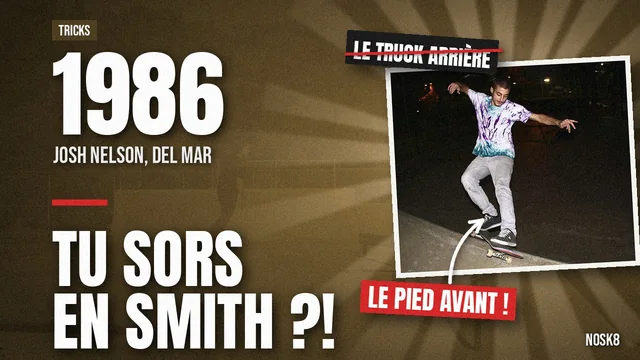
- Crooked, feeble, smith: the sideways board that fools you
- So, grind or slide: what’s the difference?
- On a grind the truck locks you in, on a slide nothing…
- The click: you’ll never look at a bench the same way
Empty pools, the 70s: the grind has a ten-year head start on the slide
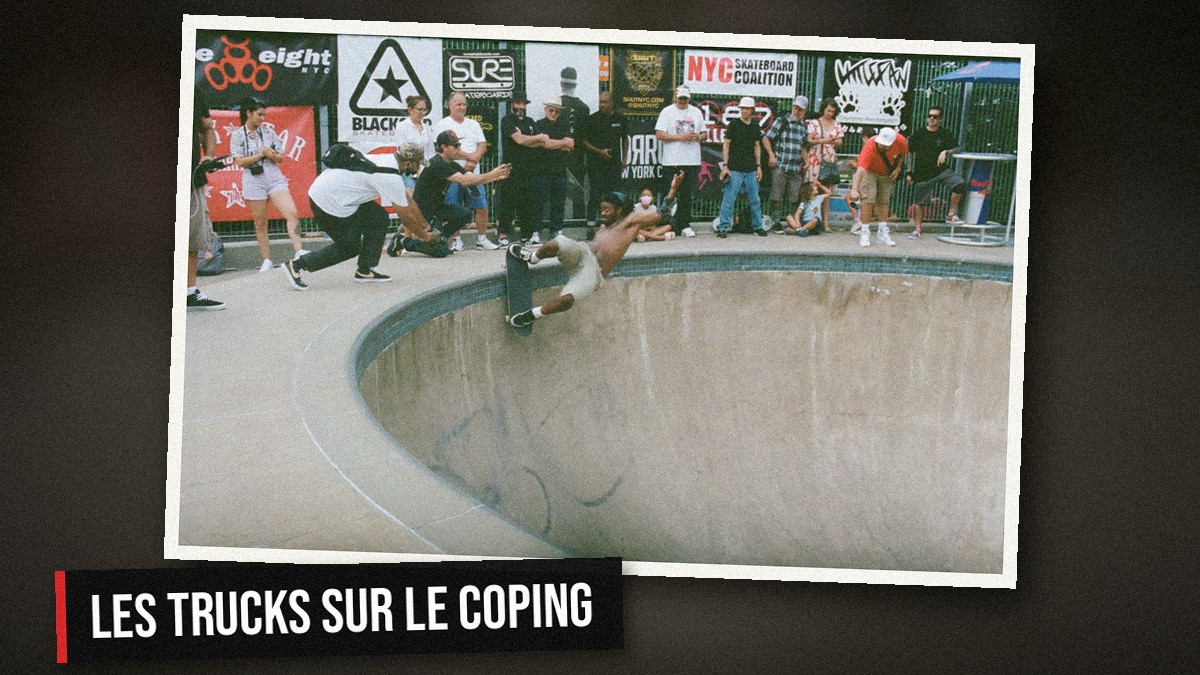
The grind most likely comes from swimming pools, in the mid-70s. Skaters scraped their trucks along the edge. Back then those trucks came off roller skates and were far too narrow. They got wider, and the move stuck.
That metal shows no mercy. It rubs dry and eats through paint, concrete and steel. That’s why cities bolt knobs onto their benches: you walk past them every day, and they’re there to stop you.
The rail slide came much later. In the late 80s, in Oceanside, California, part of the scene says Natas Kaupas stunned a contest by attempting a boardslide down a handrail. With Mark Gonzales, he then did what’s considered the first real rail slide, followed by 50-50s.
Everybody hits the same wall. You watch a video, you hear « grind », you repeat it. At the park nobody corrects you, because nobody’s sure. And you end up in front of a rail with no idea which part of your board should touch it. You fall, you get up, you fall again, without knowing what you’re missing.
Six tricks everybody mixes up, sorted into three pairs
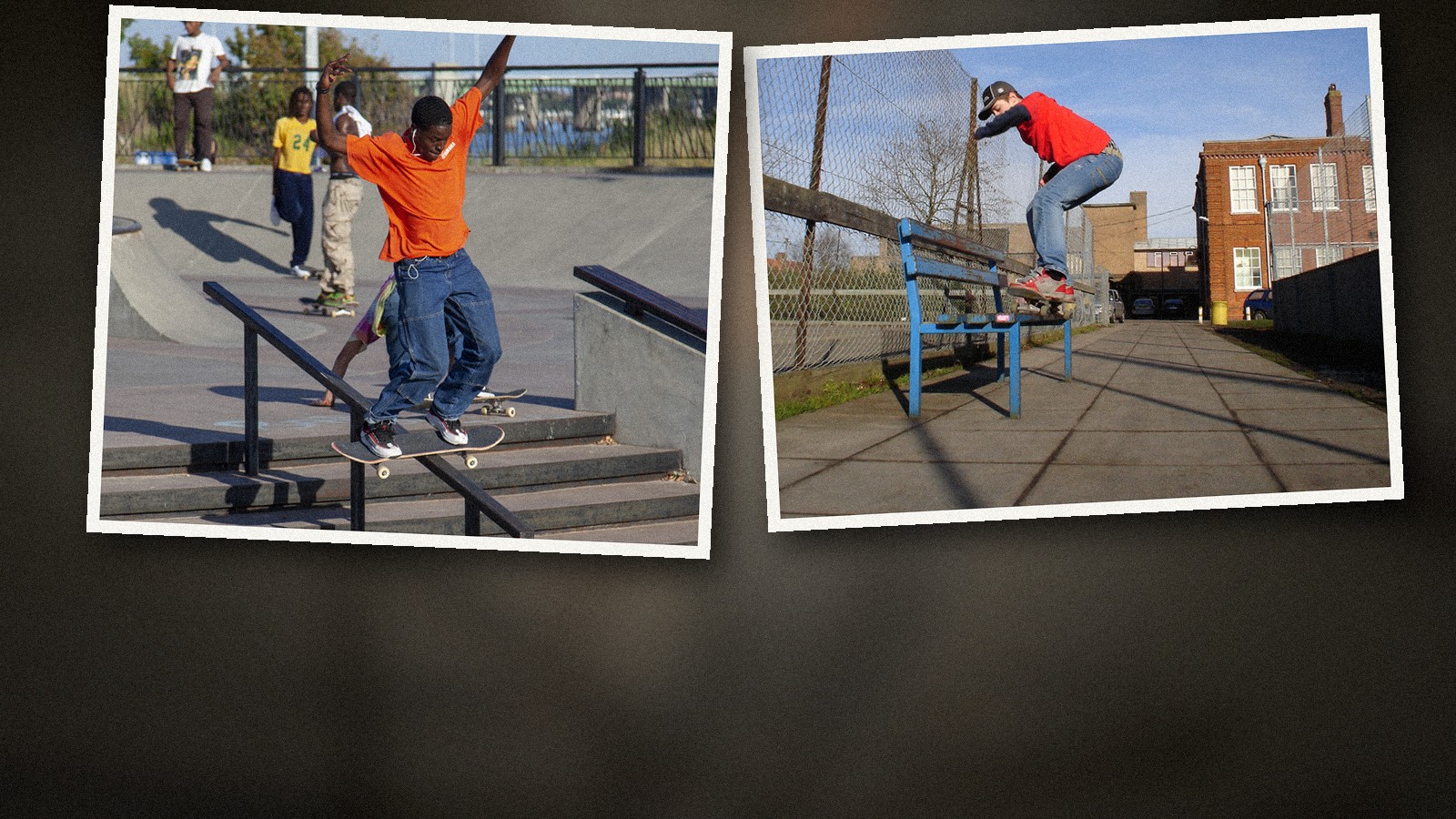
Take them two at a time. In each pair your body heads to the same spot, but a different part of the board makes contact.
-
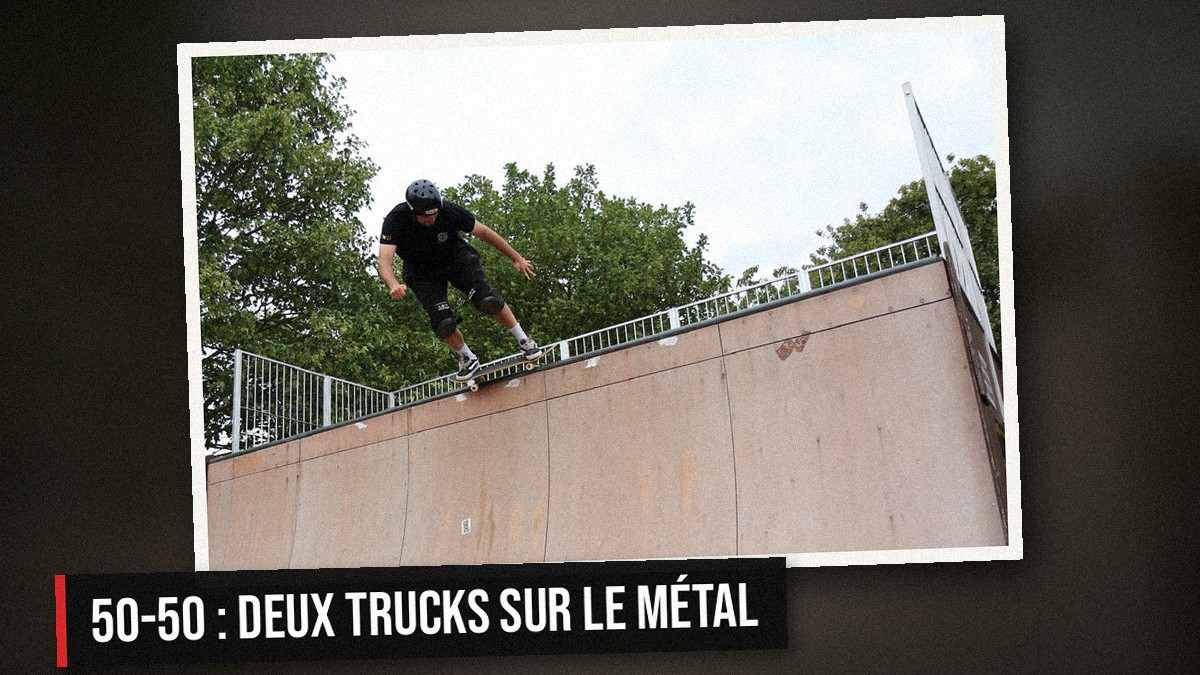
The 50-50
You come in parallel to the obstacle, both trucks lock on and the board stays straight. You roll along like a train on tracks. It’s almost everyone’s first grind.
-
The boardslide
You go across, and the rail ends up under the middle of your board, between the two trucks. Same obstacle as the 50-50, nothing in common under your feet. The boardslide happens in your upper body.
-
The 5-0
Only the back truck grinds, the nose stays up. You hold it like a manual on a ledge.
-
The tailslide
Same back end, but this time the tail slides along the edge, with the board sideways. Your wheels hang in the air.
-
The nosegrind
The opposite of the 5-0: only the front truck grinds, tail in the air. Your weight goes forward, and that’s the scary part. The nosegrind takes commitment.
-
The noseslide
The front end of your board lands on the edge and slides, board sideways. Neither truck touches.
Crooked, feeble, smith: the sideways board that fools you
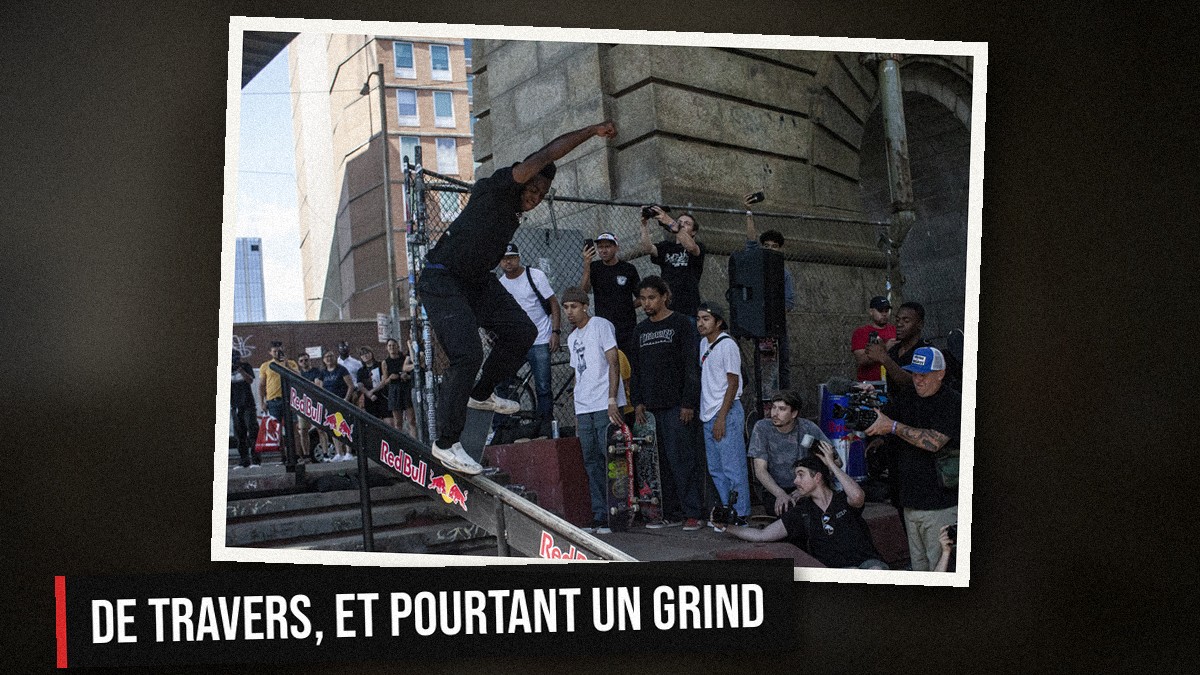
You’ve got the logic now, and this is where it gets lost. The crooked, the feeble and the smith are all done with the board at an angle, and they’re all called grinds. Here are the four lines that keep the confusion going.
The 4 myths
- « Grinds are for rails, slides are for ledges »: the obstacle decides nothing. Both work anywhere, on a rail, a bench or a curb.
- « If it’s sideways, it’s a slide »: the crooked proves you wrong. Board at an angle, and it’s still a grind.
- « No grind in the name, so it’s not a grind »: the 50-50 and the 5-0 don’t have the word, and they’re the two best-known grinds.
- « It’s all the same anyway »: not to your body. You don’t fall the same way, and you don’t fix the same thing.
So, grind or slide: what’s the difference?
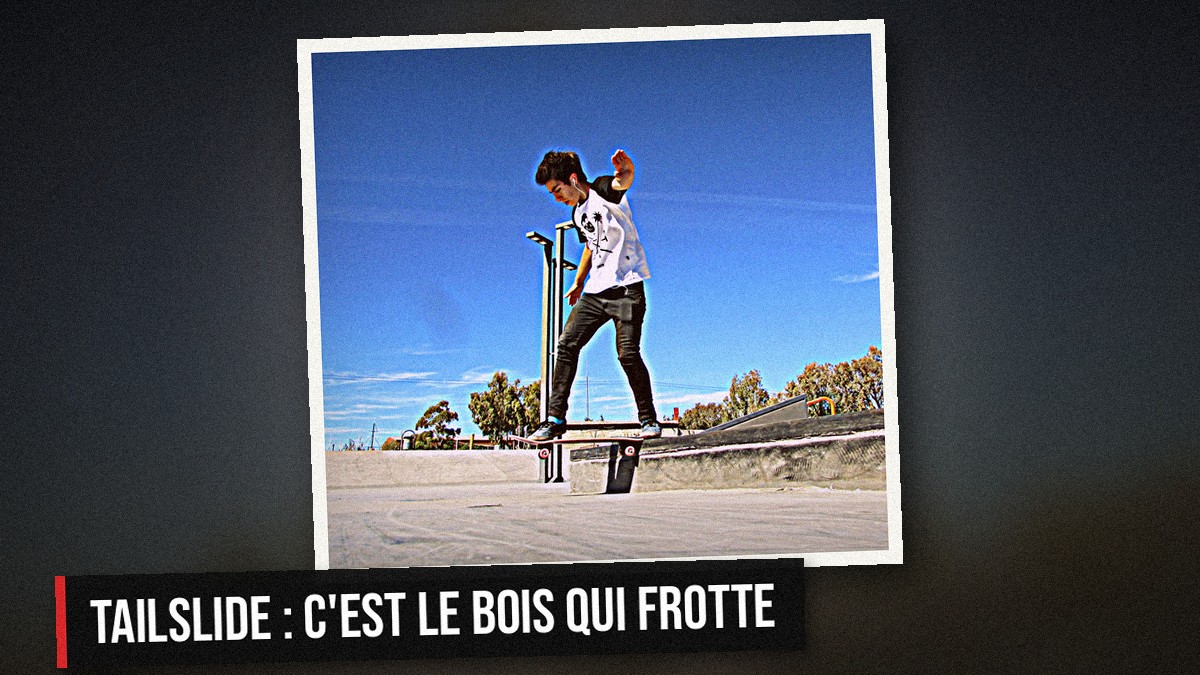
Look at what’s rubbing. If it’s the metal of the trucks, it’s a grind. If it’s the wood of the board, it’s a slide.
That’s it. The obstacle, the angle and the name don’t count. On the grind side you’ve got the 50-50, the 5-0, the nosegrind, the crooked, the feeble and the smith. On the slide side, the boardslide, the lipslide, the noseslide, the tailslide and the bluntslide. Even Mark Gonzales’s darkslide, invented in 1991 with the board flipped over, passes the test: it’s the wood that rubs.
It works with your eyes shut too. Metal screeches and scrapes, wood hisses. And if you’ve been saying grind for years, you haven’t missed much: the game didn’t even have a button for it.
On a grind the truck locks you in, on a slide nothing holds you
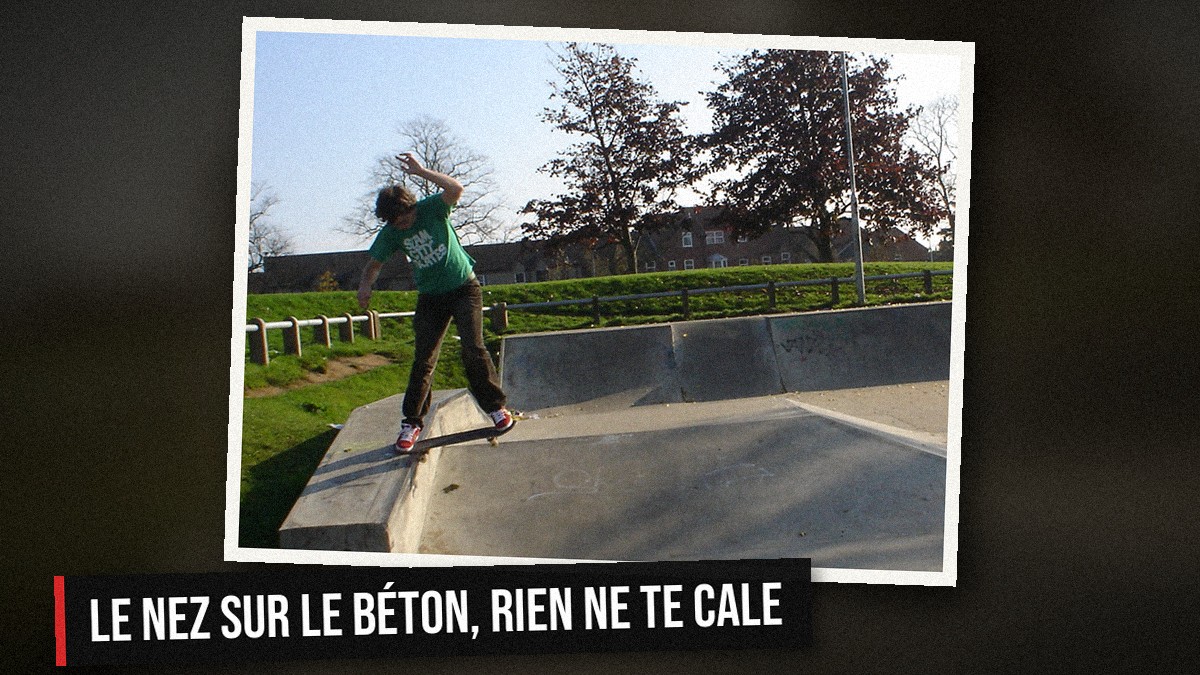
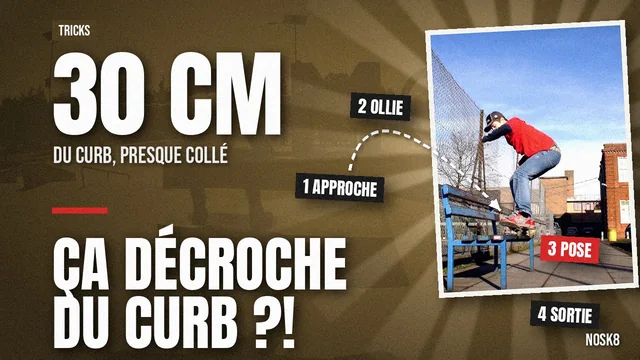
On a grind, the truck catches the obstacle. Your ollie has to get you high enough to set it down, and your speed does the rest. If you fall, check those two things first: ollie too low, or not enough speed.
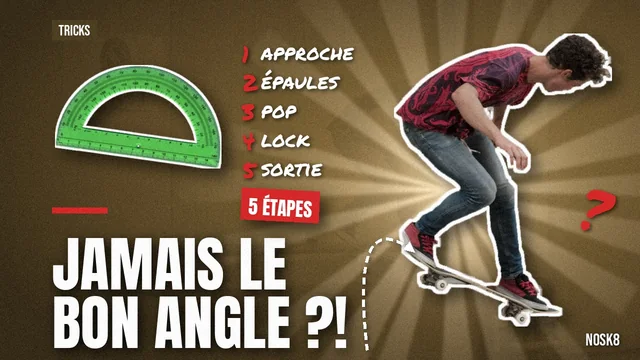
On a slide, nothing locks you in. Your board slides sideways, and it all comes down to your shoulders and your weight. Lean back too far and it shoots out in front of you. Here, height matters less than the nerve to stay over it.
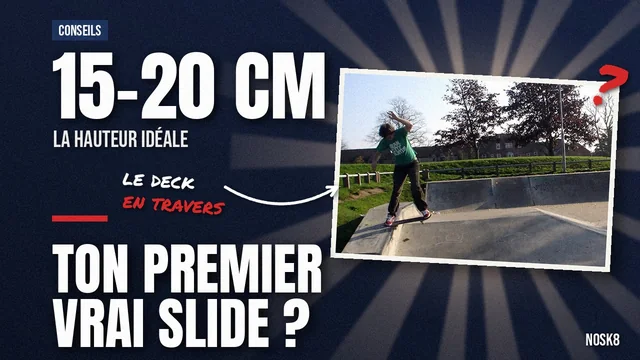
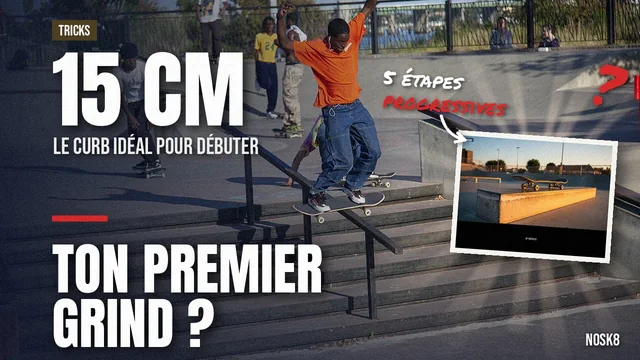
So start with a 50-50 on a waxed curb, then a noseslide on the same curb. You don’t need to jump high, and you’ll feel the difference in your feet. The boardslide comes after, on a low flatbar. Film yourself from the side: you’ll see what’s rubbing, and so what you actually just did.
The click: you’ll never look at a bench the same way
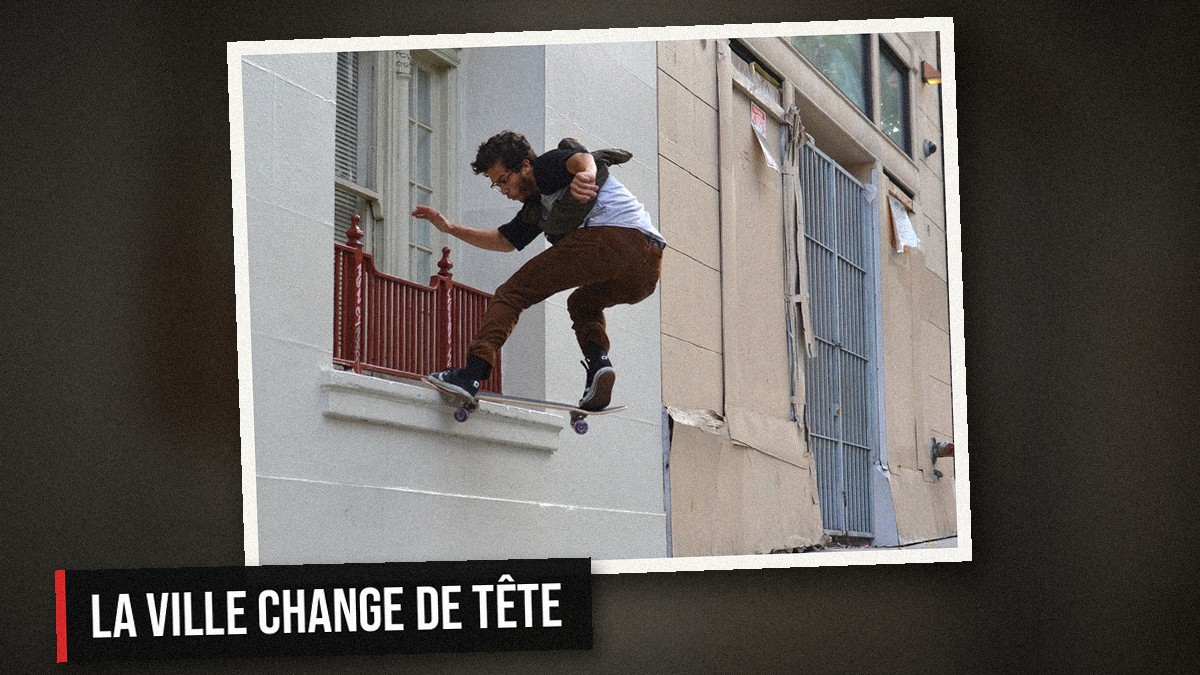
The click comes one evening, without warning. You’re walking through town, a window ledge passes at hip height, and you know what your nose would do on it. You can already hear the wood. The street furniture hasn’t changed, but you don’t read it like everyone else anymore. You’re no longer the one yelling « grind » from a distance: you know what’s rubbing, and you know what you’ll try tomorrow.
And when you boot the game up again, think of Tony Hawk and his percentage, or of Elissa Steamer in Welcome to Hell – 1996. Four buttons changed their bank accounts. The rest you learn on a curb.
You were saying grind for everything too, huh? And your first one was a 50-50 or a noseslide? Drop it in the comments ↓
Le lexique
-
1
Truck
Pièce de métal qui relie les roues à la planche. C'est elle qui frotte sur un grind.
-
2
Tail
Bout arrière relevé de la planche.
-
3
Curb
Petit muret ou bordure de trottoir, souvent ciré pour glisser.
-
4
Flatbar
Barre de métal basse et plate, posée au sol.
-
5
Coping
Rebord arrondi en haut d'une rampe ou d'un bowl.


Continue ta lecture
ChroniquesEMB, San Francisco : pourquoi la place où le street moderne est né a-t-elle disparu ?
Une place de bureaux sous une autoroute, des briques, une fontaine en béton : EMB a appris le street au monde entier. Puis la ville…
Commentaires (0)