
ℹ️ 🛹 Web Média Skate 🛹 ℹ️

Chroniques · Opinion
EMB, Love Park, Pulaski: The 3 Spots That Made the 2000s
Trois dalles de béton qui ont changé le skate pour toujours. Si tu regardais des VHS de 411 VM dans les années 2000, tu sais de quoi on parle.

→ Pour aller plus loin : Etnies a 40 ans : qu’est-ce qui tient encore de la marque d’origine ?
Some spots are more than just a slab of concrete. Places where skating got reinvented, where impossible tricks became the standard, where the best parts of your life probably ended up looping as a screensaver on your old iMac.
EMB — Embarcadero, San Francisco
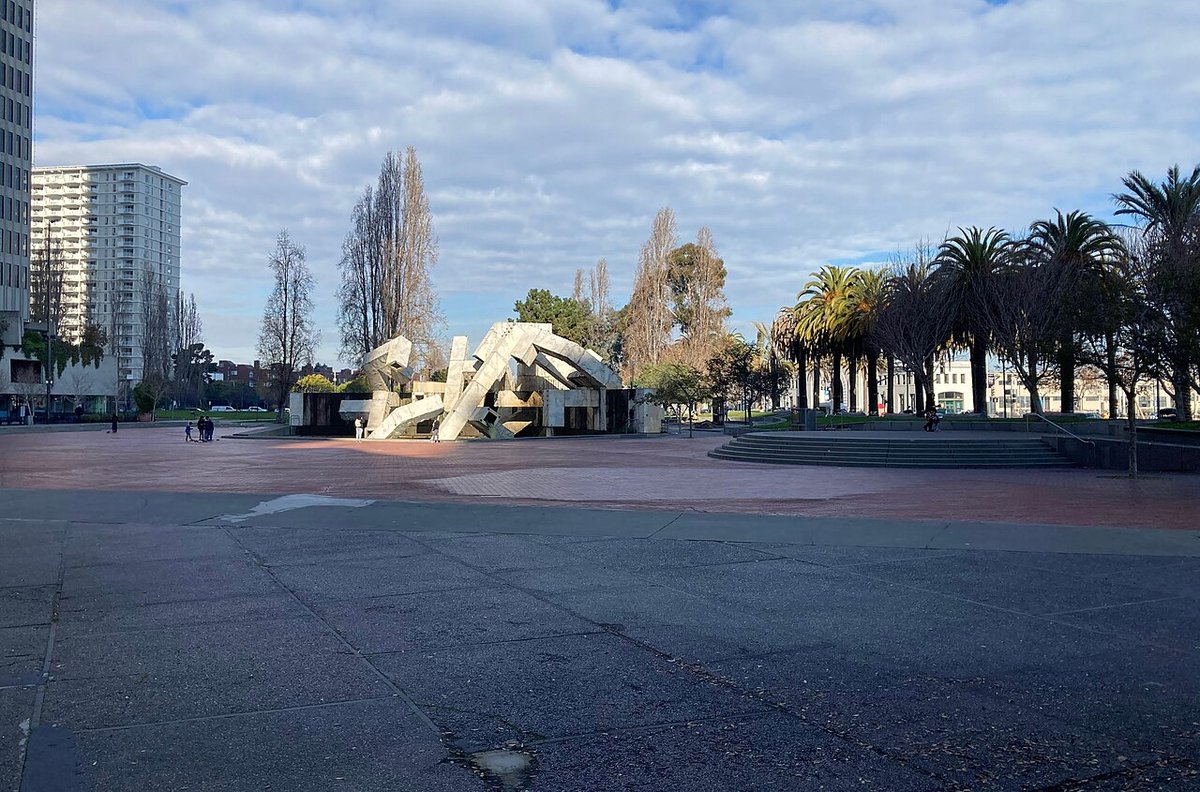
Before the city shut it all down in 1994, Embarcadero Plaza was skateboarding's world headquarters. Jake Phelps was there. So was Mike Carroll. And that concrete bank with its rough little coping — the EMB ledge — literally invented modern ledge skating. When World Industries dropped videos filmed there, you'd rewind them over and over knowing you'd never see anything like it anywhere else.
What went down at EMB in the early 90s shaped every clip you watched on VHS through the end of the 2000s. That's not nostalgia — that's history.
Love Park — Philadelphia
John F. Kennedy Plaza. Everybody calls it Love Park. And for good reason: the red granite steps, the perfect ledges, the natural flow of the terrain. Josh Kalis, Stevie Williams, Allen Iverson skating there one weekend (okay, that one's a rumor) — Love Park was a playground for pros.
That 2002 Transworld with the Kalis part at Love might be the best skate part ever filmed in a single spot. Four minutes of ledge tricks in a perfect urban setting. If you didn't grow up on that, you missed something.
The city tried to ban skating there in 2002. Skaters pushed back. The mayor fenced the whole thing off anyway. Classic story: the city destroys the very thing that makes it unique.
Pulaski Park — Washington DC
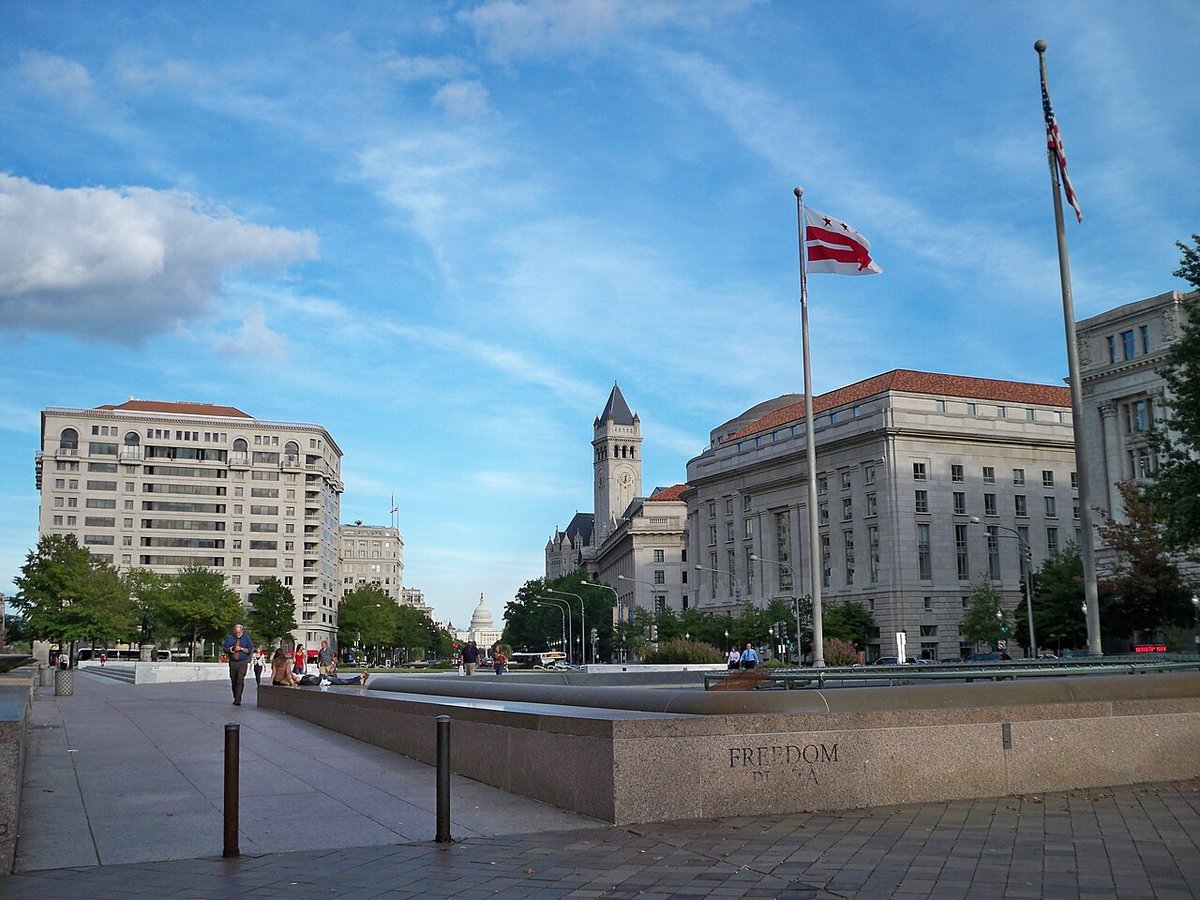
Franklin Square, for those in the know. The Pulaski steps. If Love Park was the East Coast, Pulaski was its more underground twin. Chuck Treece, the Zoo York crew, the whole DC scene — it all revolved around those flawless steps with a metal ledge bolted on top.
What made Pulaski different: the culture. Fewer cameras, more raw sessions. The tricks that went down there rarely made it into the mags — they lived in the heads of whoever was there.
Why it still matters in 2026
All three spots are closed, capped, or made over. But their DNA is everywhere. Every modern plaza that lets skaters ride, every waxed ledge in an urban skatepark — that's a straight line back to EMB, Love Park and Pulaski.
Next time you're hunting a spot downtown and you find that perfect set of steps: you're standing in the direct lineage of those three places. That's skateboarding's quiet way of passing it down.
EMB: the spot born from an earthquake
What few people know: EMB owes its existence to a disaster. In 1989, the Loma Prieta earthquake rocked San Francisco. The city tore down the Embarcadero Freeway, the overpass crushing the waterfront, in 1991. In its place opened a wide plaza of bare concrete. Skaters moved in before City Hall even understood what was happening.
Officially, the plaza was called Justin Herman Plaza. Nobody said that. It was EMB, period. In 2017, the city finally dropped the name — too tied to a city planner who had bulldozed entire neighborhoods — and quietly renamed it Embarcadero Plaza. The spot itself had been gone for a long time already.
Love Park: built in 1965, killed in 2016
Architecturally, Love Park was no joke. The plaza was designed in 1965 by Vincent Kling, from an idea by city planner Edmund Bacon, and opened as JFK Plaza in 1967. Its smooth granite and perfect drops made it a skate magnet as early as the 80s.
The city never liked that. First anti-skate ordinance as far back as 1984, 300-dollar fines under Rendell, a harder crackdown from mayor John Street in the early 2000s. In 2016, the plaza was leveled and rebuilt as a greened-up, sanitized version. Final twist: in 2024, the city of Malmö, Sweden, bought up the original granite to rebuild a piece of the real Love Park. The spot died at home and came back to life 4,000 miles away.
Three dead spots, one DNA that won't die
EMB, Love Park, Pulaski: all three were shut down, capped or moved. And yet none of them really disappeared. Their way of skating street furniture, of turning a public plaza into a playground, spread everywhere. When a city signs off on a skate plaza today, it's unknowingly replaying what got invented on those three slabs.
What was your legendary spot back in the 2000s? Drop it in the comments.
Follow NOSK8 where you hang out
Parts, spots, behind the scenes: it all drops on the accounts first.
Continue ta lecture
PortraitsChloe Covell : les 3 tricks qui expliquent pourquoi elle est hors-catégorie
À 16 ans, Chloe Covell fait des tricks que la plupart des pros masculins ne font pas. Mais ce qui la distingue vraiment, c'est autre…
Commentaires (0)