

ℹ️ 🛹 Web Média Skate 🛹 ℹ️

 Back
Portraits
Elissa Steamer, 1996: the only girl in Welcome to Hell — so why is her name missing everywhere?
In 1996, Elissa Steamer was the only girl in Welcome to Hell. Thirty years later, her name is nowhere to be found. Why?
Fort Myers, Florida, spring 1996. A Toy Machine dude rolls in from California with a camera and crashes at her place for the week. His name is Jamie Thomas. He’s there to film the part of a kid from the Grand Avenue city park who’s never had a single clip to her name.

The video would drop under the title Welcome to Hell. Thirty-five minutes that rewired American street skating. One girl in the credits. And today, when you stumble on a list of the parts that changed everything, she’s not on it.
Not left out on purpose. Not buried by some conspiracy. Just missing. We’re going to break down exactly why. But first we have to tell you what actually went down that week, and the twenty-two years that followed.
In this article 8 parts
- Fort Myers, 1989: a city park and zero career plan
- A week at her place, one camera, and the first women’s street…
- What the part proves, and the word nobody used
- The timeline
- $190,000 in royalties, and millions of kids who never knew her name
- Four X Games golds — and wanting to puke at 33
- Why her name is missing everywhere
- 2018: Baker gives her a board, twenty-two years later
Fort Myers, 1989: a city park and zero career plan
She starts skating in 1989, in Fort Myers. Not California, not San Francisco, not some neighborhood with a scene. A little city park on Grand Avenue, in a Florida town where nothing happens.
In 1995, Lance Mountain starts sending her boards for The Firm. Real hits her up right after. It’s Toy Machine that ends up putting her on, thanks to Chad Muska pushing hard — he was the centerpiece of the team back then. At that point, Ed Templeton’s brand is Muska, Mike Maldonado, Jamie Thomas and Brian Anderson.
Here’s the detail that matters: nobody put her on as « the girl ». She came up like everyone else, through a homie on the team who thought she ripped. That’s the last time it ever went down that way.
A week at her place, one camera, and the first women’s street part
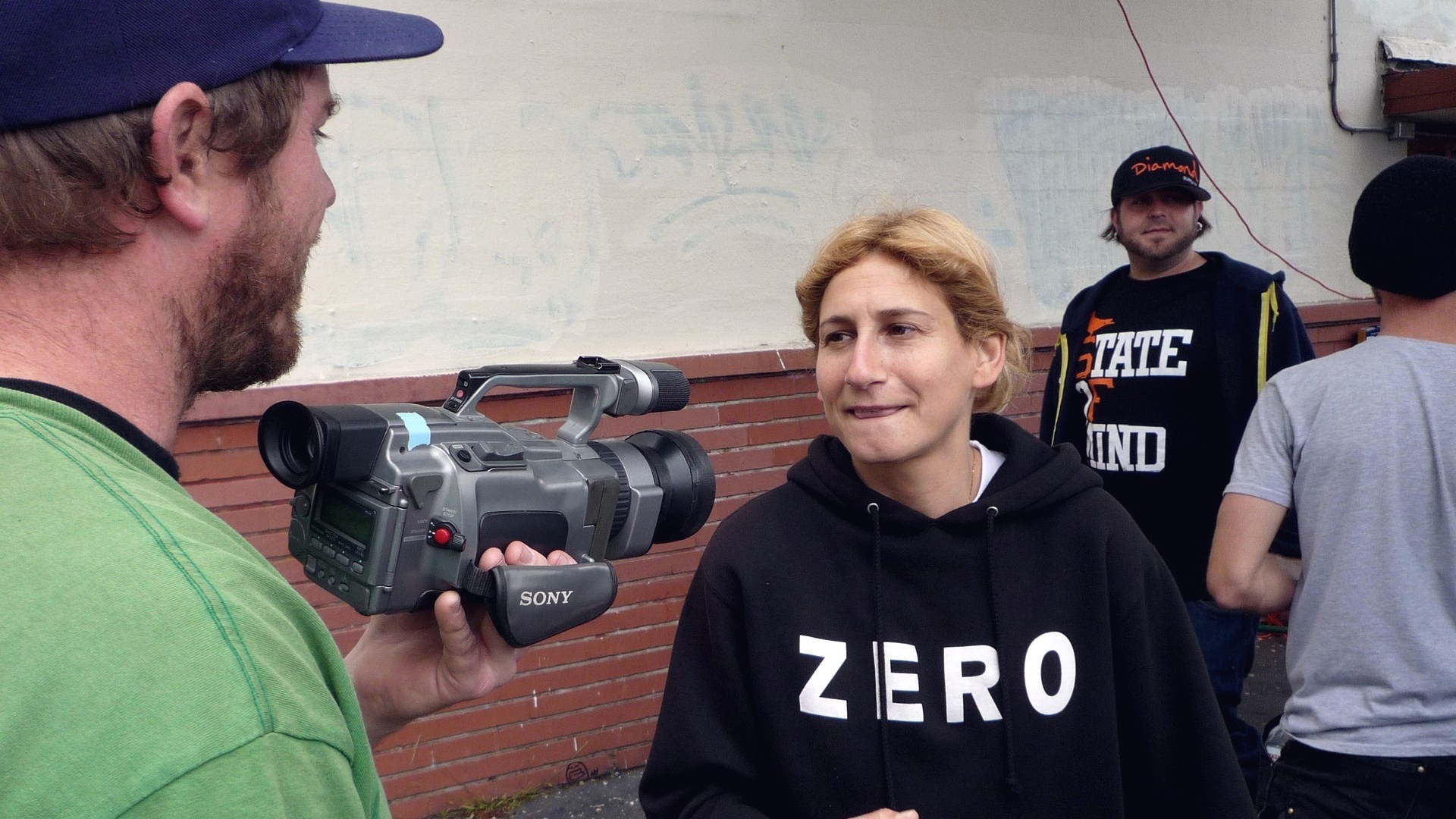
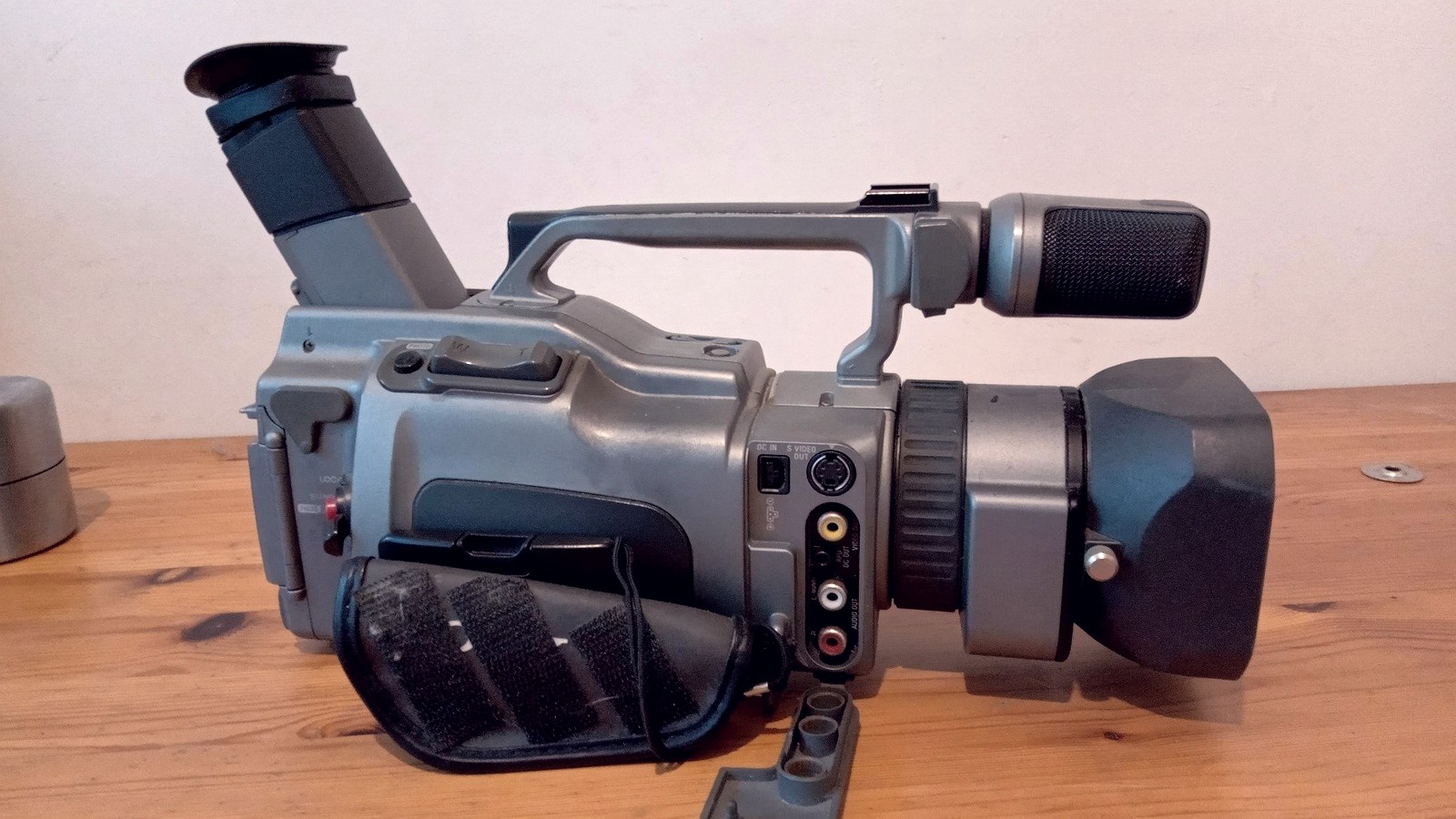
Thomas sets up in Fort Myers and films her entire section in one week, according to her official bio at the Skateboarding Hall of Fame. It’s her very first footage. Not a best-of stacked over three years: seven days in the streets, then straight to the edit.
Look at the result. It’s not a bonus section tacked on at the end, not an « honorable mention » title card, not a soft edit. It’s a part, dropped right in with everyone else’s, same treatment, same song hitting just as hard.
In 1997, this video got passed around as a third-generation VHS. Smeared image, blown-out sound, the counter going haywire. You watched it at your buddy’s place because he had the copy, and when her part came on, there was always somebody in the room going « hold up, that’s a girl? ». Nobody answered. You rewound it and watched it again.
What the part proves, and the word nobody used
The Hall of Fame describes her as « the first girl, since the street skating boom, to be accepted into the boys’ club as an equal ». Read that again. Accepted into. Not « one of the best parts of 1996 ». Accepted. The compliment already contains the off-ramp.
Our piece on thirty years of Welcome to Hell put it another way: her section is nobody’s quota. She throws down raw street, on par with the dudes around her, in a video that never went easy on anyone.
She turns pro in April 1998, then drops another part in Jump Off a Building. When the Toy Machine team empties out, she calls Templeton to tell him she’s out too, and lands at Bootleg, the Baker sub-brand Jay Strickland started with Andrew Reynolds. She’d say in 2014 that her biggest board royalty checks came from that stretch.

Two years after Welcome to Hell, she proves it all over again in public. Same brand, same treatment, zero handouts. And still nobody filing her in the right list.
The timeline
Career
- 2000
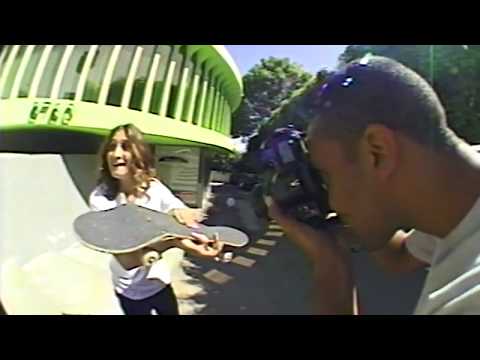 BakerPart in Baker 2G, alongside Reynolds and Ellington. She’s the only woman on the roster.
- 2003
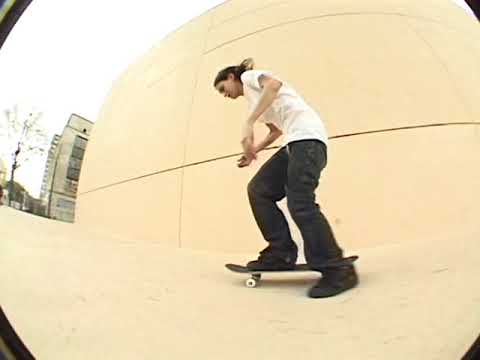 BootlegBootleg 3000. The brand shuts down right after the drop, leaving her board‑free.
- 2009
 ZeroFive years at Zero, and just one section: the one she shares with Jamie Thomas in Strange World.
- 2018
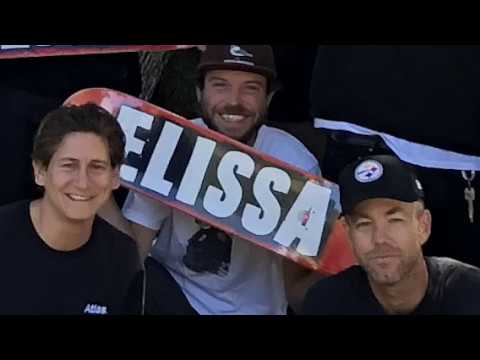 BakerBaker turns pro and drops her first signature deck for the brand. She’s 42.
- 2020
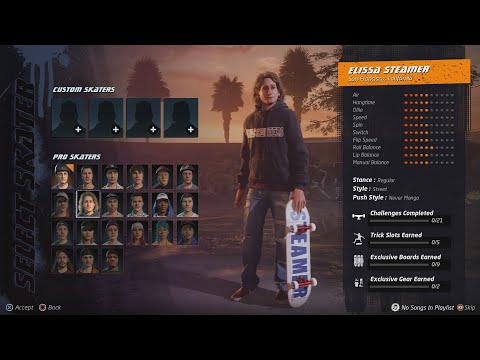 THPS 1+2The remake of Tony Hawk’s Pro Skater puts her back on the roster. Twenty‑one years after the first episode.
$190,000 in royalties, and millions of kids who never knew her name
She’s playable in the first five Tony Hawk’s Pro Skater games, then in the 2020 remake. In the first one, released in 1999, she’s the only woman on the roster, surrounded by Hawk, Caballero, Muska, Reynolds, Rowley and Thomas.
Andrew Reynolds explained in 2014 what it paid out: « For the first game, everybody got paid. Elissa Steamer, me, everyone, we were laughing, we got a royalty check for something like $190,000. We were like: what? this is insane! […] I love that Elissa Steamer got $190,000 too. That’s my favorite part. » She confirmed that same year that the biggest checks of her career came from video games, not skateboarding.
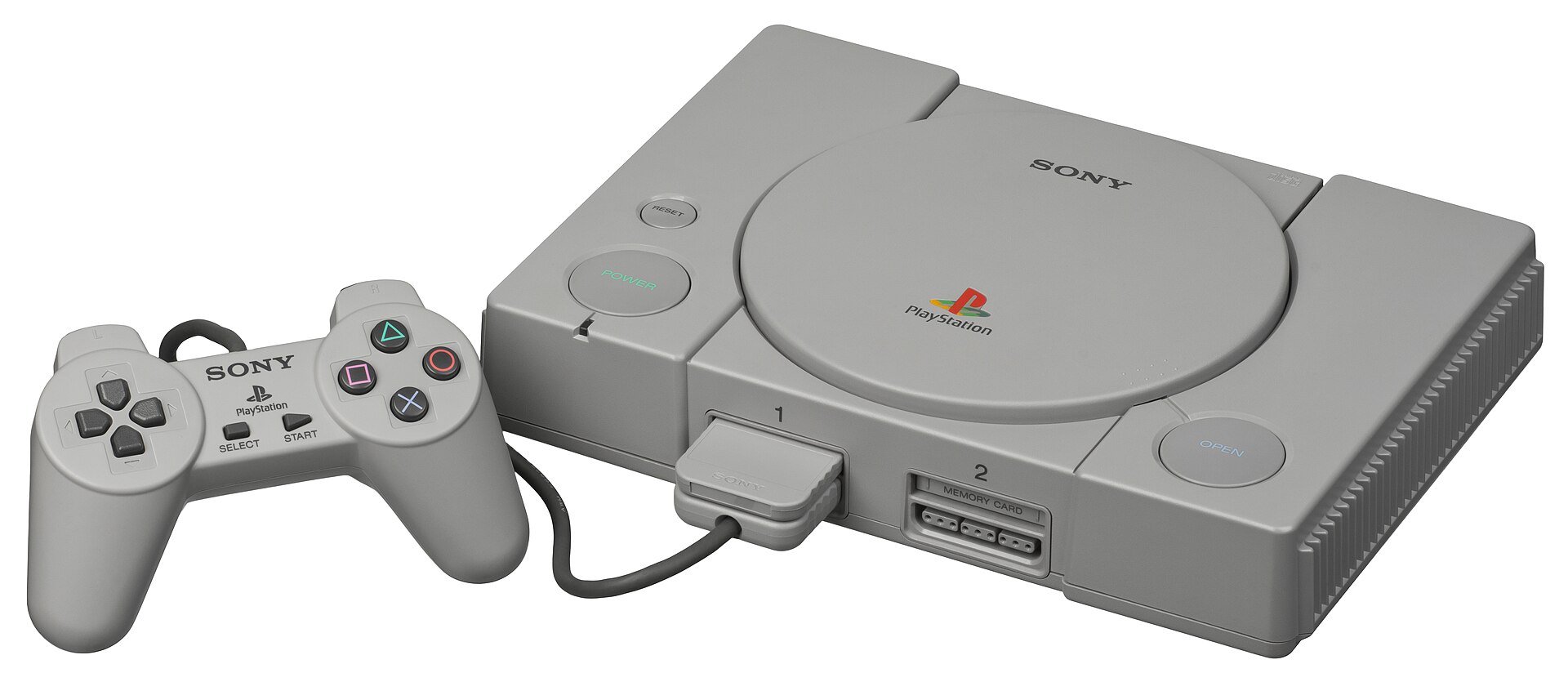
Hold onto that image, we’re coming back to it in two minutes. It explains everything else.
Four X Games golds — and wanting to puke at 33
The women’s street category doesn’t even exist at the X Games until 2004. She wins the very first one. Then 2005. Then 2006. In 2007 she takes second behind Marisa Dal Santo, and in 2008 she grabs gold back in Los Angeles.
After that last win, she tells the New York Times she felt like throwing up the whole contest, and chalks it up to age. She’s 33. Mimi Knoop, vice president of the Action Sports Alliance, sums it up: « Elissa paved the way for these girls in street and she set the bar for everyone coming up. »
Meanwhile, Jamie Thomas brings her onto Zero in June 2006. Five years, and never a full part. Just a section shared with him. When she leaves in July 2011, she says it straight: « It’s like breaking up with someone. Zero was five years of my life. »
That’s about the only time anyone handed her a mic long enough to tell her own story: VICE gave her four episodes of Epicly Later’d. Four episodes, for a thirty-year career.

Why her name is missing everywhere
Here’s the answer, and it fits in one sentence: she was never put on the same list as everyone else. Three things, stacked on top of each other.
First, the ranking. Skateboarding’s memory gets built through comparison. Your part against mine, your 1996 against his. Her, they filed in a separate category from day one: « the best female skater ». A compliment that pulled her out of the general standings. Nobody ever had to choose between her part and Brian Anderson’s, so she never showed up on the same list.
Second, no heirs. A legend gets passed down by the people who name-drop it. For twenty years, nobody got introduced as « the next Steamer », because there was no circuit and no women’s team behind her to produce a bloodline. One exception doesn’t start a lineage. She stays a piece of trivia you pull out at the end of a conversation.
Third, the PlayStation paradox. The thing that spread her name the widest is exactly the thing that erased the person. Millions of kids picked her off a menu, did hours of manuals with her at the Warehouse, without wondering for one second who she actually was. She wasn’t a skater to follow. She was a character. Her name went everywhere and went empty at the same time.
Add to that the fact that she never told her own story (five years at Zero with no full part, barely any interviews, zero storytelling) and you’ve got the whole file. Her name is missing everywhere because it never had a slot to sit in.
2018: Baker gives her a board, twenty-two years later
In June 2018, Shake Junt drops a guest board with her name on it. A few days later, Baker turns her pro and puts out her first signature board for the brand. She’s 42, and it’s the first time in her career a company that size gives her the status with no strings attached.
The rest runs at her own pace: Gnarhunters, her own thing started in late 2013 with FTC, distributed by Baker Boys since 2021. The Skateboarding Hall of Fame in 2015. San Francisco, a house, dogs, surfing.
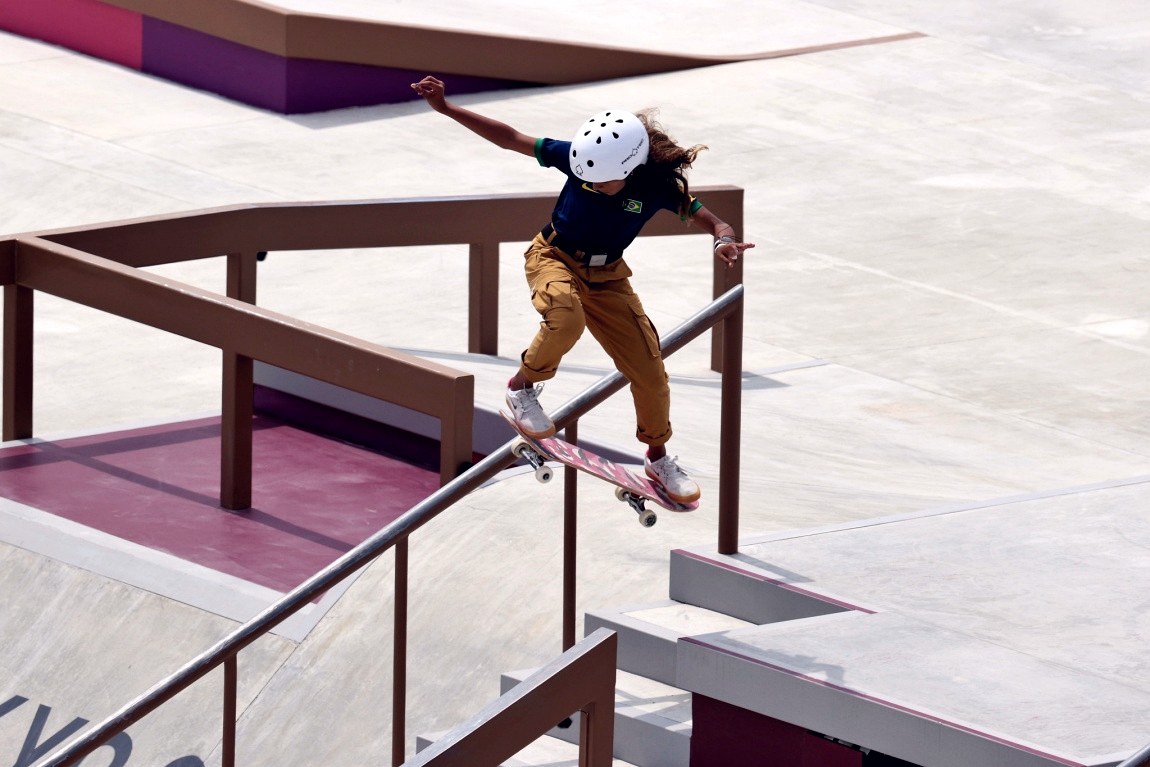
Today, when you watch a thirteen-year-old lock a rail in a world final and sign with a brand before she’s out of high school, Rayssa Leal and everyone coming up behind her, there’s a part filmed in one week in Florida at the end of that chain. Nobody name-checks it. It’s there anyway, in every contract signed.
So next time you put together your list of the parts that actually changed something, put her on it. Not in the category next to it. On the list.
Did you first spot her in Welcome to Hell or in the Tony Hawk menu? Share how you first came across her name.Post a comment
Le lexique
-
1
part
Section individuelle d'une vidéo de skate, montée pour un seul rider, avec sa musique et ses images à lui.
-
2
VX1000
Caméra Sony sortie en 1995, devenue l'outil standard du skate de rue pendant près de quinze ans.
-
3
guest board
Planche éditée en série limitée pour un skateur qui ne fait pas partie du team officiel de la marque.


Continue ta lecture
PortraitsPourquoi Josh Kalis a quitté la Californie pour Love Park ?
Toy Machine, Alien Workshop, San Diego : Josh Kalis avait tout en Californie. Il a pourtant choisi une place en granit de Philadelphie où la…
Commentaires (0)