
ℹ️ 🛹 Web Média Skate 🛹 ℹ️

★ Conseils
Nollie: the 3 adjustments that decide if your board pops
Ton pied avant claque le nose et la planche reste au sol. Trois réglages décident si ça décolle — et le troisième est celui que personne ne t'explique.
→ Pour aller plus loin : Skater sous la pluie : ce que ça détruit vraiment sur ta planche
Level: Intermediate
You put your front foot on the nose, you snap, and the board stays glued to the ground. Or it pops two inches and flies sideways. Thirtieth try, same feeling: your body refuses to understand what your head already gets.
A nollie is an ollie popped off the front of the board instead of the back. On paper it's the same move, mirrored. Under your feet it's nothing alike — and that's exactly where everyone stalls.
Three adjustments decide whether your board leaves the ground. You've probably read the first two somewhere. Nobody ever explains the third one properly — and it's the one that makes the difference. It comes later in this guide, because it's useless until the other two are locked in.
The classic mistake
Plenty of skaters think they landed their first nollie when they actually did a fakie ollie. They look alike: same natural stance, same end of the board snapping first. The difference is the direction you're rolling. Moving toward the nose, it's a nollie. Rolling backwards, it's a fakie ollie — a legit trick, far easier, and it teaches you nothing about the nollie.
A nollie is not a mirrored ollie
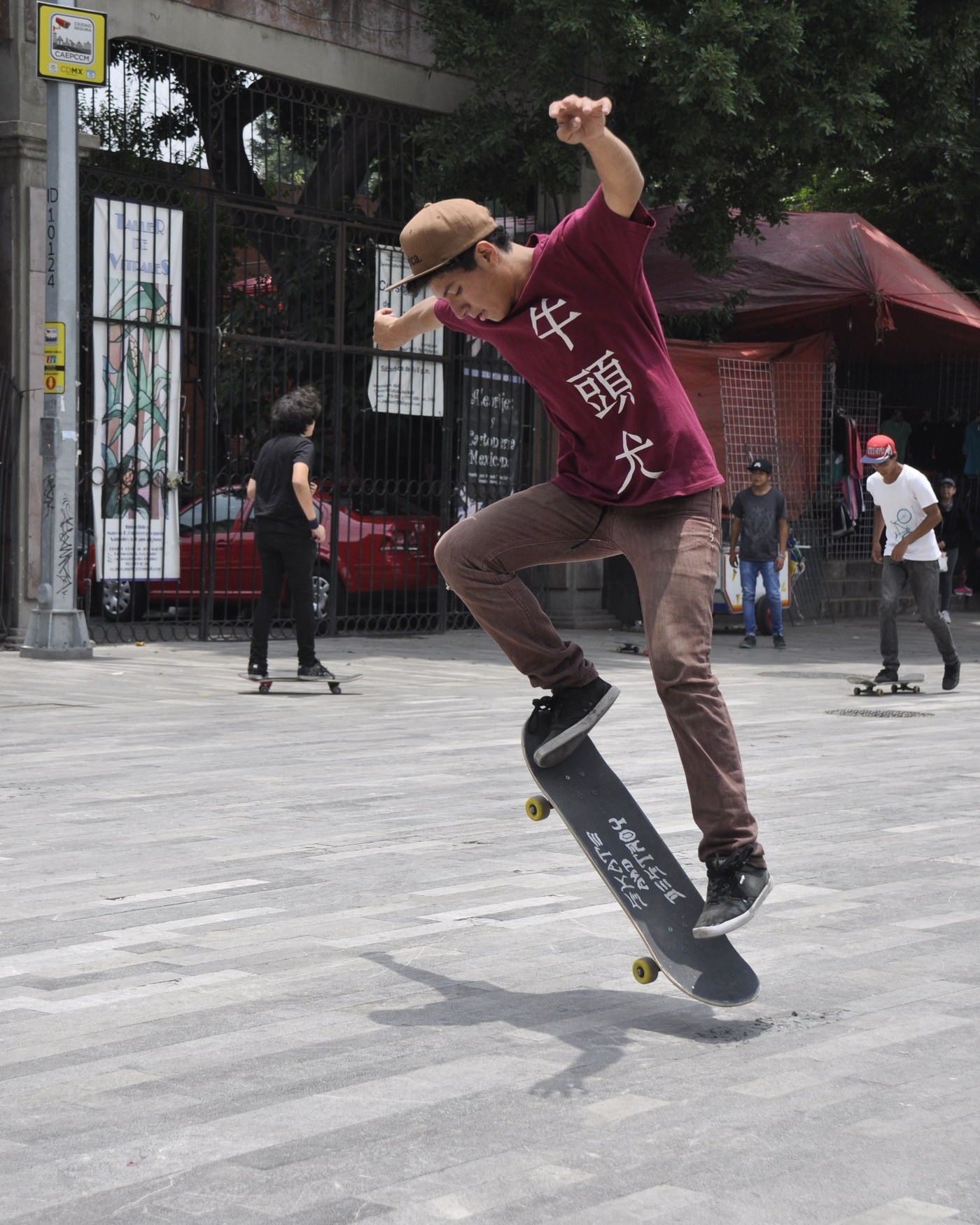
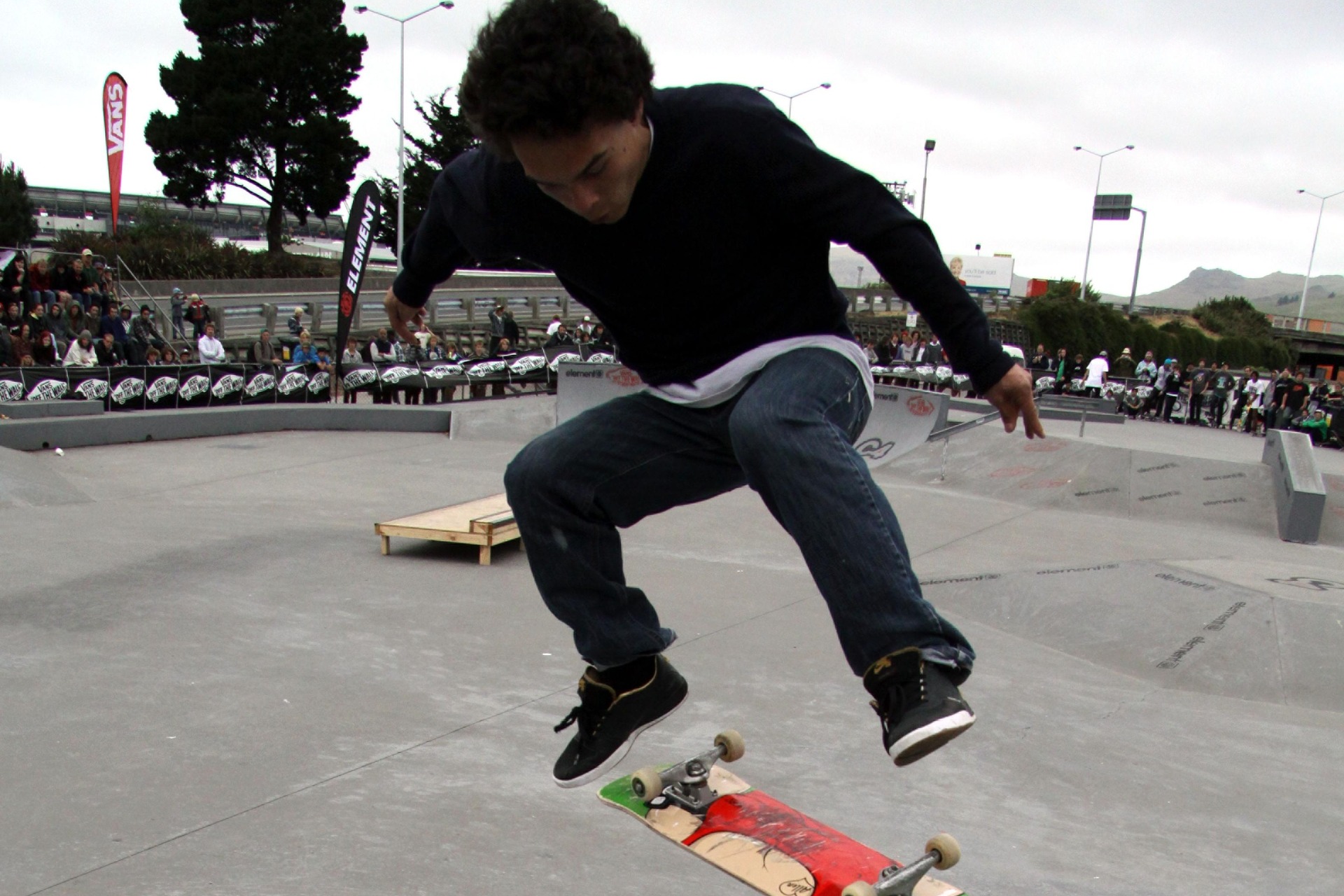
In an ollie your back foot snaps the tail and your front foot drags up to level the board. Your weight already sits behind: your natural stance does half the work.
In a nollie everything flips. Front foot snaps the nose, back foot drags. Except your weight doesn't flip by itself — you have to push it forward on purpose, while you're already rolling forward. It's counter-intuitive, and your brain makes you pay for it.
There's a hardware reason too. On a standard deck the nose and the tail aren't the same length: roughly 7.25 inches of nose against 6.875 inches of tail on a common 8.25-inch shape — a gap of just under a centimetre. Nine and a half millimetres is invisible. Under your foot, it moves the pivot point and the exact moment the board snaps. Your nose fires later, flatter, and forgives a sloppy stance far less.
Nollie or fakie ollie: the one-second test
One question: which way are you rolling?
In a nollie you roll forward in your usual stance and pop the end that leads the way. In a fakie ollie you keep the exact same foot position but roll backwards: the tail leads, and that's what you snap, with your back foot. The move looks like a nollie, the feeling is close, the difficulty isn't.
It's the most common mix-up in street skating — enough that the standard definition of the nollie makes a point of flagging it.
Adjustment 1 — your feet
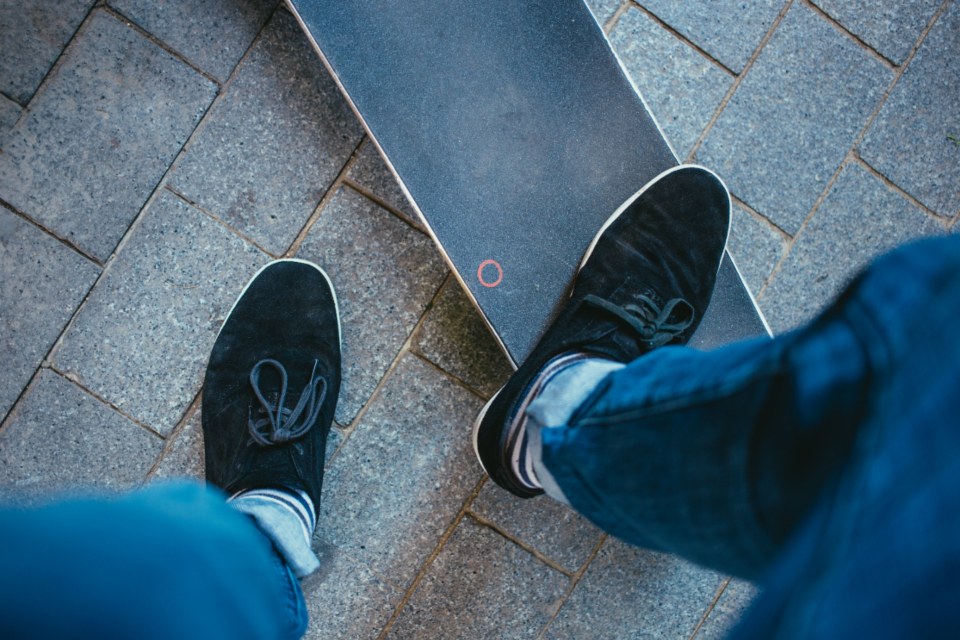
Front foot: ball of the foot on the nose, toes nearly hanging off the tip. Not sideways, not halfway to the bolts. You have to be able to slam that nose into the ground, same violence as a tail snap.
Back foot: flat, mid-board, never on the tail. It's the one dragging up the grip to level the deck under you. Too far back and the board shoots off at an angle — that's the number one cause of crooked nollies.
Worn grip steals that drag: your sole slips instead of biting, and you blame your technique. If yours is six months old and shiny in places, replace it before grinding your teeth.
Adjustment 2 — speed: the nollie hates standing still
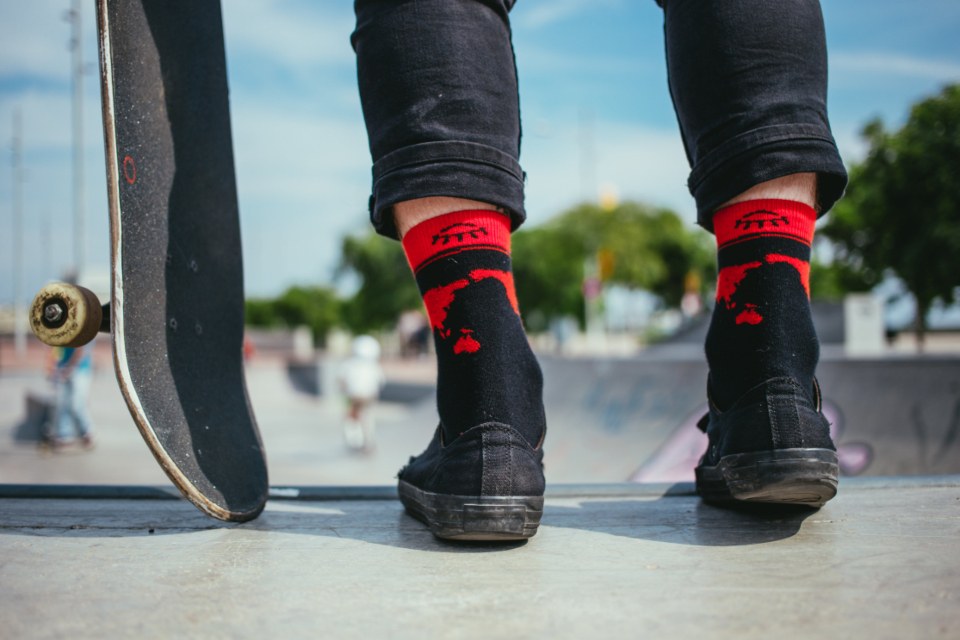
Natural reflex when a trick scares you: try it standing still, on grass, on carpet. For the nollie that's the best way to bake in a bad habit. Static, nothing pushes you forward, so your body leans back to find balance — the exact opposite of what you're trying to learn.
Take a comfortable pushing speed, the one where you roll without thinking. Smooth ground, straight line, nobody in front. Speed does two things: it steadies the board while your back foot drags, and it forces you to stay over the deck instead of jumping backwards.
Shoulders parallel to the board, eyes twenty metres ahead, never on your feet.
Adjustment 3 — weight: the answer nobody gives you
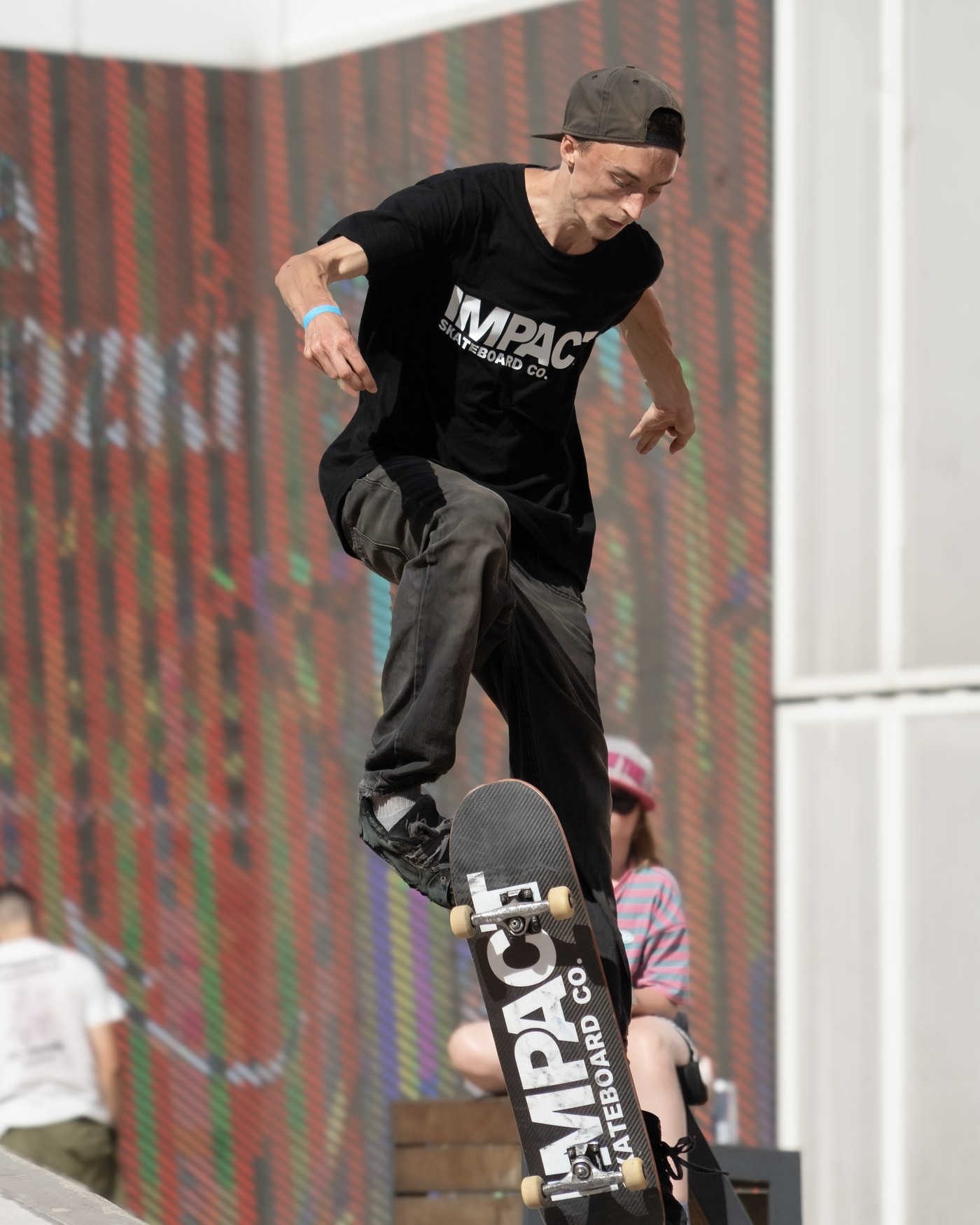
Here's the answer, in one sentence: at the moment of the pop, all your weight has to travel over your front foot, then come back within the same second. Not before, not after. Not halfway.
As long as your centre of gravity stays mid-board, your front foot punches thin air. It presses a nose that never goes down, so there's no rebound, so there's no pop. You can repeat the move a thousand times with perfect foot placement: without the weight transfer, nothing leaves the ground.
Concretely: roll, bend your knees, and let your chest move forward over the front foot — as if you wanted to plant the nose into the concrete. The nose hits, it rebounds, and right then your back foot drags up while your weight travels back to centre. The board arrives under you, not in front of you.
The proof it's working is a sharp crack instead of a dull thud. Sound before height: until you hear that nose snap, don't chase pop height. Once it cracks, height shows up on its own within days.
So: feet placed, speed set, weight transferred. The first two are conditions. The third is the cause.
What your nollie opens up
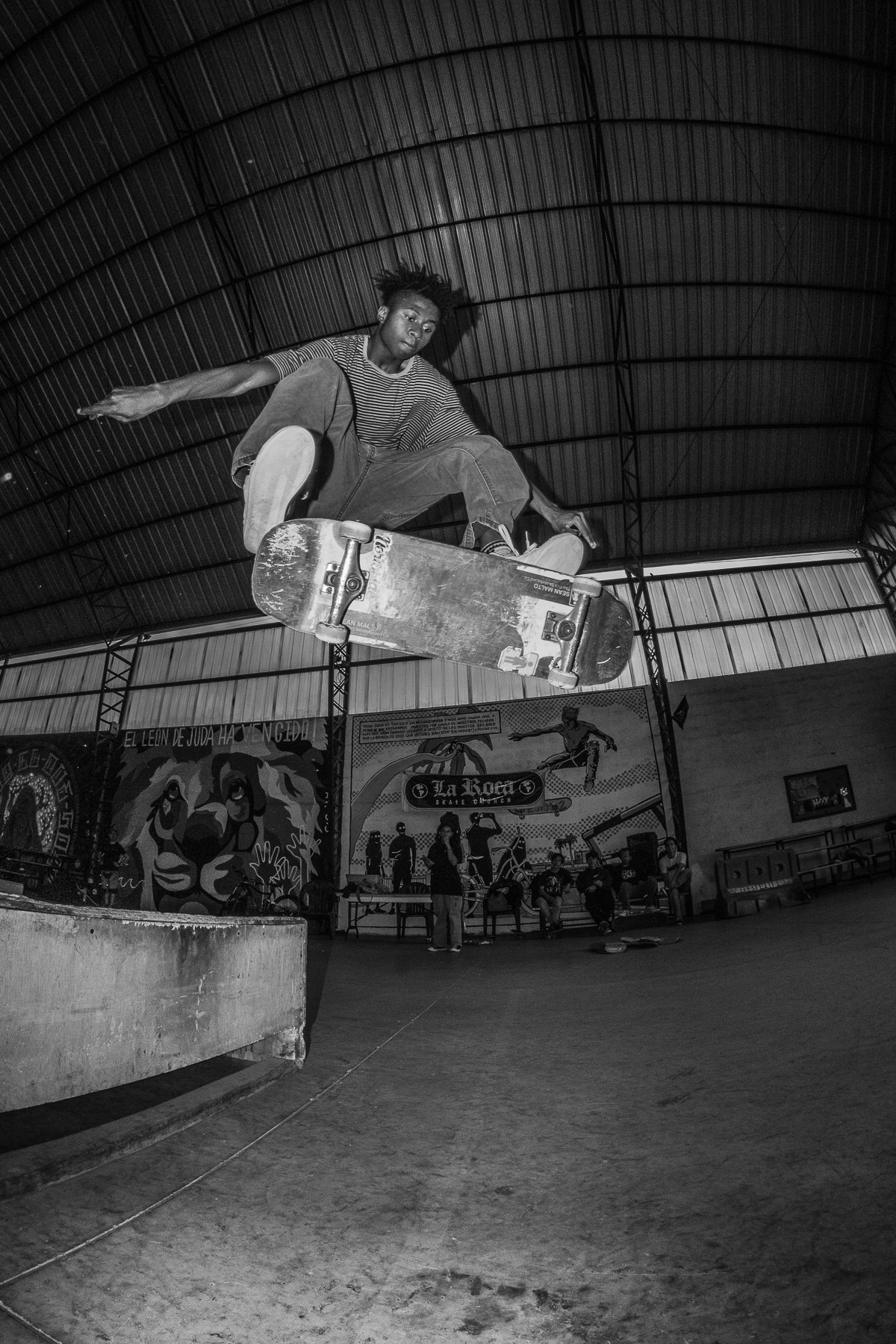
The nollie isn't a finish line, it's a door. Once the pop is clean, the same base gives you the nollie shove-it, nollie frontside and backside 180, nollie flip, nollie heelflip and the whole family of flips popped off the nose.
A few riders built their reputation on it: Karl Watson, Shuriken Shannon, Tuukka Korhonen, Sean Malto. And Kevin Romar, whose nollie backside 360 became a signature.
Nollie on a curb: where it finally pays off
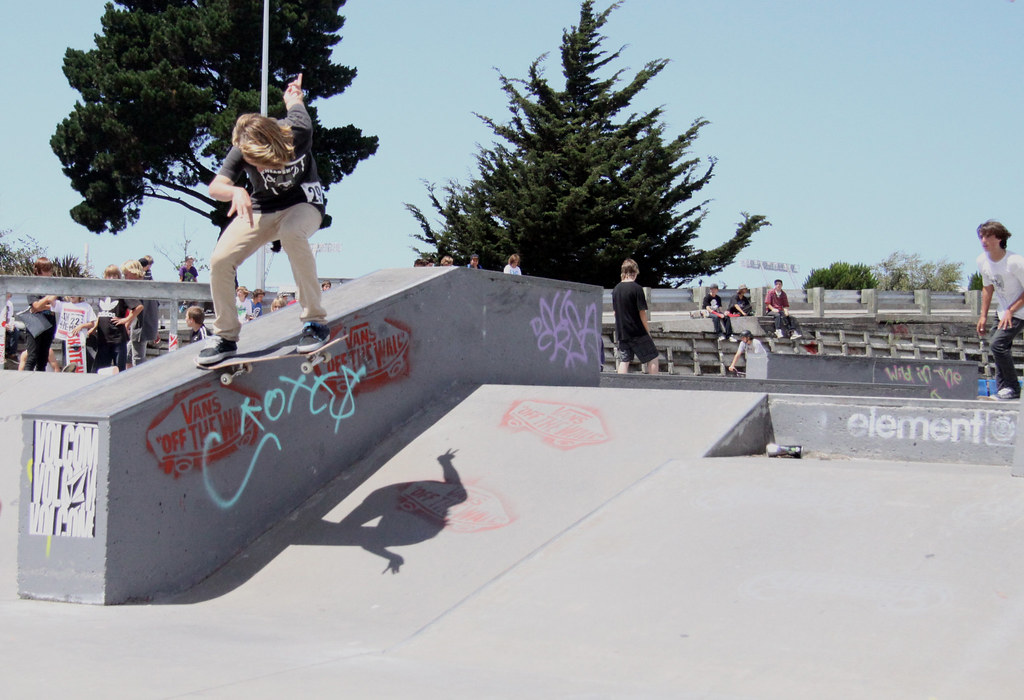
As long as you only land it rolling straight on flat, the nollie stays an exercise. It becomes a weapon the day you take it to a curb: nollie noseslide, nollie crooked, nollie 50-50. Your body arrives facing the obstacle, and you see it until the last centimetre instead of guessing over your shoulder.
That's what makes the nollie precious in street: inside a line, it lets you attack an obstacle in the direction you're already rolling, with no repositioning. A spot you thought was stuck opens up, just because you can pop off the other end of the board.
Takeaway
If you only keep one thing: the nollie isn't missed with your feet, it's missed with your hips. Film yourself from the side for ten tries. If your chest stays behind at the moment of the pop, you've found the culprit.
Go out, roll, and forget about height for two sessions. Chase one thing only: the sound of the nose cracking. Everything else falls into place once that crack is there.
Le lexique
-
1
fakie ollie
Ollie réalisé en roulant en marche arrière, avec la position de pieds habituelle : c'est le tail qui claque, pas le nose.
-
2
noseslide
Glisse sur le nose de la planche le long d'un curb ou d'un ledge, la board posée en travers de l'obstacle.
-
3
nollie heelflip
Nollie dans lequel le pied avant part vers l'extérieur du talon pour faire tourner la planche sur elle-même.
Shop NOSK8
Voir toute la boutique →
TEE-SHIRTS
TEE-SHIRT NOSK8® P.A CENTRE #PARENTALADVISORY
Le prix initial était : 35,00 €.29,00 €Le prix actuel est : 29,00 €.
TEE-SHIRTS
TEE-SHIRT NOSK8® NOSKATE #SNC
Le prix initial était : 35,00 €.29,00 €Le prix actuel est : 29,00 €.
TEE-SHIRTS
TEE-SHIRT NOSK8® MATRICE HEART #ALT
Le prix initial était : 35,00 €.29,00 €Le prix actuel est : 29,00 €.
TEE-SHIRTS
TEE-SHIRT NOSK8® P.B CENTRE #RNB
Le prix initial était : 35,00 €.29,00 €Le prix actuel est : 29,00 €.
TEE-SHIRTS
TEE-SHIRT NOSK8® P.B HEART #ORIGINAL
Le prix initial était : 35,00 €.29,00 €Le prix actuel est : 29,00 €.
CASQUETTES
CAP NOSK8® P.B #POLARBEAR
Le prix initial était : 35,00 €.25,00 €Le prix actuel est : 25,00 €.
CASQUETTES
CAP NOSK8® N8 #NOSK8
Le prix initial était : 35,00 €.25,00 €Le prix actuel est : 25,00 €.
CASQUETTES
CAP NOSK8® P.B.P #PAW
Le prix initial était : 35,00 €.25,00 €Le prix actuel est : 25,00 €.
HOODIES
HOODIE NOSK8® NOSKATE #NSITA
Le prix initial était : 60,00 €.49,00 €Le prix actuel est : 49,00 €.
HOODIES
HOODIE NOSK8® P.B HEART #BARÇA
Le prix initial était : 60,00 €.49,00 €Le prix actuel est : 49,00 €.
HOODIES
HOODIE NOSK8® P.B CENTRE #ORIGINAL
Le prix initial était : 60,00 €.49,00 €Le prix actuel est : 49,00 €.
HOODIES
HOODIE NOSK8® P.B HEART #PARIS
Le prix initial était : 60,00 €.49,00 €Le prix actuel est : 49,00 €.
HOODIES
HOODIE NOSK8® P.B HEART&BACK #ORIGINAL
Le prix initial était : 60,00 €.49,00 €Le prix actuel est : 49,00 €.
SWEAT
SWEAT NOSK8® P.B HEART #NYC
Le prix initial était : 45,00 €.39,00 €Le prix actuel est : 39,00 €.
SWEAT
SWEAT NOSK8® P.B HEART #PARIS
Le prix initial était : 45,00 €.39,00 €Le prix actuel est : 39,00 €.
SWEAT
SWEAT NOSK8® P.B HEART #POLARBEAR
Le prix initial était : 45,00 €.39,00 €Le prix actuel est : 39,00 €.
SWEAT
SWEAT NOSK8® P.B HEART #BARÇA
Le prix initial était : 45,00 €.39,00 €Le prix actuel est : 39,00 €.
SWEAT
SWEAT NOSK8® P.B HEART #PHILI
Le prix initial était : 45,00 €.39,00 €Le prix actuel est : 39,00 €.
Continue ta lecture
TricksLe no comply s’apprend sans ollie : 5 étapes, par laquelle tu commences ?
Tu n'as pas encore de ollie ? Le no comply se rentre quand même : ton pied avant fait le travail. Les 5 étapes, les…
Commentaires (0)