
ℹ️ 🛹 Web Média Skate 🛹 ℹ️

Chroniques · Opinion
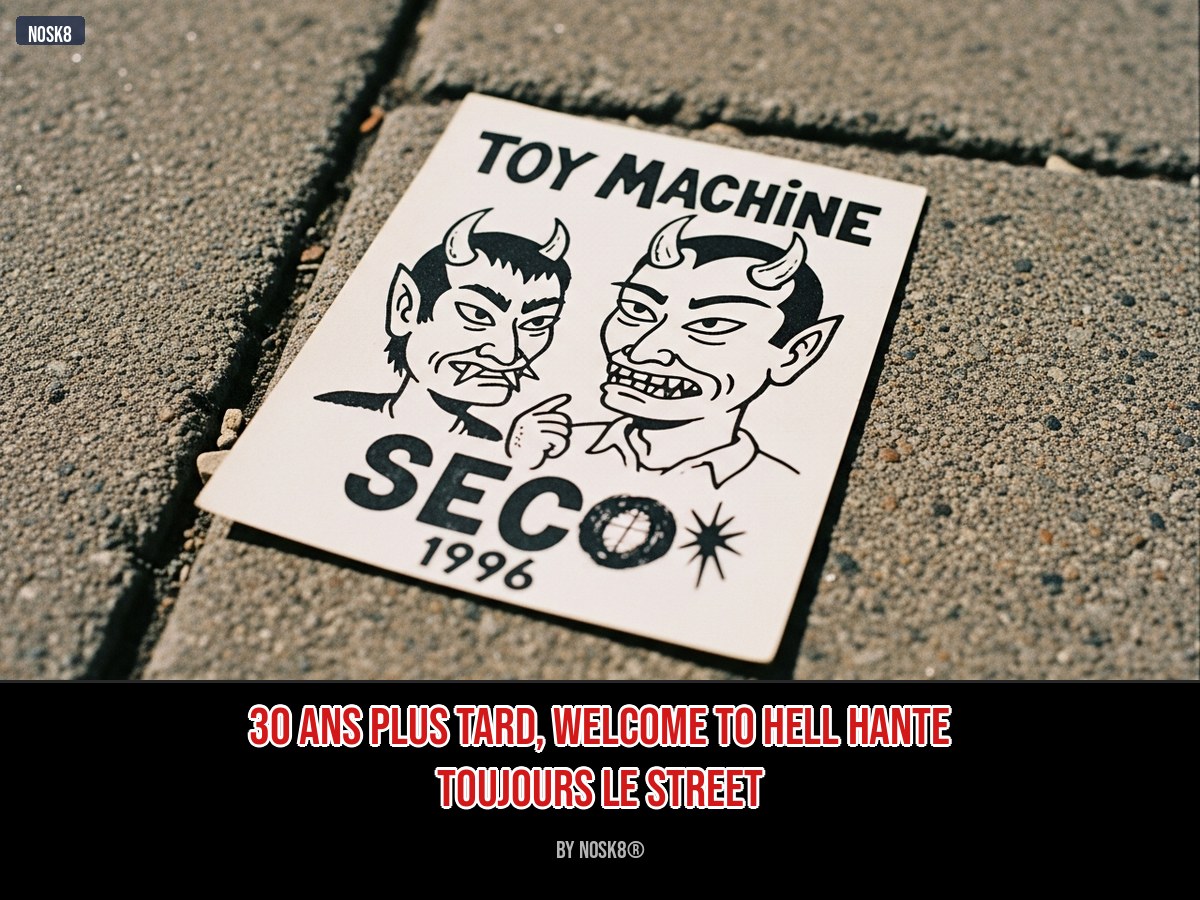
Welcome to Hell: Toy Machine killed the American dream in 35 min
1996, Huntington Beach. Toy Machine balance Welcome to Hell, lance Jamie Thomas et vire Muska. 30 ans après, la VHS qui hante encore ton skate.

→ Pour aller plus loin : Etnies a 40 ans : qu’est-ce qui tient encore de la marque d’origine ?
Contents
1996: The year Toy Machine had to grow up
Ed Templeton is 24 and has just taken the brand by the horns. Toy Machine is no longer the visual joke of 1993. With Welcome to Hell, Templeton wants to impose a vision: uncompromising, raw, technical skateboarding, but dressed in a hellish, cardboard iconography, punk zine style. The opening credits, set to Power of Lard, hit like a manifesto.
The computer crash that made Chad Muska flee
Days before the premiere in San Diego, Jamie Thomas's computer crashed. Everything was gone. Months of footage lost. Premieres canceled. The team took the hit, except for one: Chad Muska, who saw his entire part disappear. The discussion turned into a shouting match, Muska slammed Toy Machine's door and went to Shorty's.
Three years later, Muska would release the most iconic part of the late 90s in Fulfill the Dream. The ghost-of-what-could-have-been hangs over Welcome to Hell like a phantom. Imagine Muska alongside Thomas and Templeton — the pantheon would have been unbalanced.
Jamie Thomas, Elissa Steamer, Brian Anderson: the 1996 trinity
Jamie Thomas's final part is an act of war. The 50-50 on the 20 stairs, dropped as a closer, isn't just a trick: it's a declaration. Hardcore street skateboarding had just been born. Six months later, Thomas would start Zero. The lineage is direct.
Elissa Steamer opens another door
Brian Anderson, Donny Barley: style before fashion
Why it still haunts 2026
Thirty years later, scroll TikTok one evening and you'll stumble upon clips of Thomas's part. The Lard sync, the tight zooms, the VHS grain, Ed Templeton's iconography — everything has become syntax. Modern street skateboarding speaks Welcome to Hell without knowing it.
For the generation that watched this VHS rewound to its limit in a teen's bedroom in 1997, it's more than an object. It's the precise moment when skateboarding stopped playing around and started to mean something. Current brands, from Toy Machine to Zero and Hockey, still live in the wake of those 35 minutes.
Ed Templeton continues to paint. Jamie Thomas still runs Mystery and Zero. Elissa Steamer has been inducted into the Skateboarding Hall of Fame. Brian Anderson has become an essential voice on the place of queer skaters. All of them survived the hell they captured that summer of 1996. Not everyone can say the same.
To relive the entire experience in HD, the full video has been looping on YouTube for years — genuine vintage VHS tapes go for €80 a piece on eBay. Pirate copies still lurk in boxes around the world, and that's perfectly fine.
Welcome to Hell - 1996, raw no-compromise skating — do we miss that today? Drop your take. Drop a comment ↓
Follow NOSK8 where you hang out
Parts, spots, behind the scenes: it all drops on the accounts first.



Continue ta lecture
SpotsMACBA Barcelone : pourquoi ce marbre est devenu le QG mondial du street skate
MACBA Barcelone : histoire, anatomie et conseils pratiques pour skater le QG mondial du street skate en 2026.
Commentaires (0)