

ℹ️ 🛹 Web Média Skate 🛹 ℹ️

 Back
Portraits
Rodney Mullen, 34 wins out of 35 in freestyle: why restart on the streets?
Rodney Mullen won 34 of 35 freestyle contests, then started over on the street in 1992. The three real reasons, backed by facts and video parts.
Rodney Mullen, 1992, a Questionable tape hanging out with friends. His part starts as you’d expect: flat‑ground freestyle, smooth, almost too clean. Then the vibe shifts. Same board, same feet, but this time on rails, ledges, real street. Check it out: it’s the same dude, but re‑inventing everything.
Watch Imagine Witnessing These Live! Rodney Mullen + Famous Slam

Thirty‑four wins out of thirty‑five contests in ten years. A world champ at 14. At 25, he drops everything to start from scratch, front‑camera style. No one does it without a reason. Especially not him.
So why did this freestyle king ditch it all to end up on the street, like a rookie? Three answers. The first digs its roots back to a kid deal signed in Florida in 1977. We trace the thread.
In this article 7 parts
- Gainesville, 1977: a dentist dad and a deal
- 34 out of 35: Ten Years Undefeated (Almost)
- 1989: Freestyle Fades, Rocco Calls
- 1992, Questionable : the part that flips the floor
- 1993, Virtual Reality : the confirmation
- Why he started over on the streets : three reasons
- After Plan B: A-Team, Almost and a hip to relearn
Gainesville, 1977: a dentist dad and a deal
Rodney Mullen was born August 17, 1966 in Gainesville, Florida. He hopped on a board on New Year’s Day 1977. He was 10.
Two years later, in 1979, he wins the Oceanside Nationals. In 1980, he takes the Oasis Pro and turns pro. He’s 14. Right after, he grabs his first world freestyle title at the same age.
34 out of 35: Ten Years Undefeated (Almost)
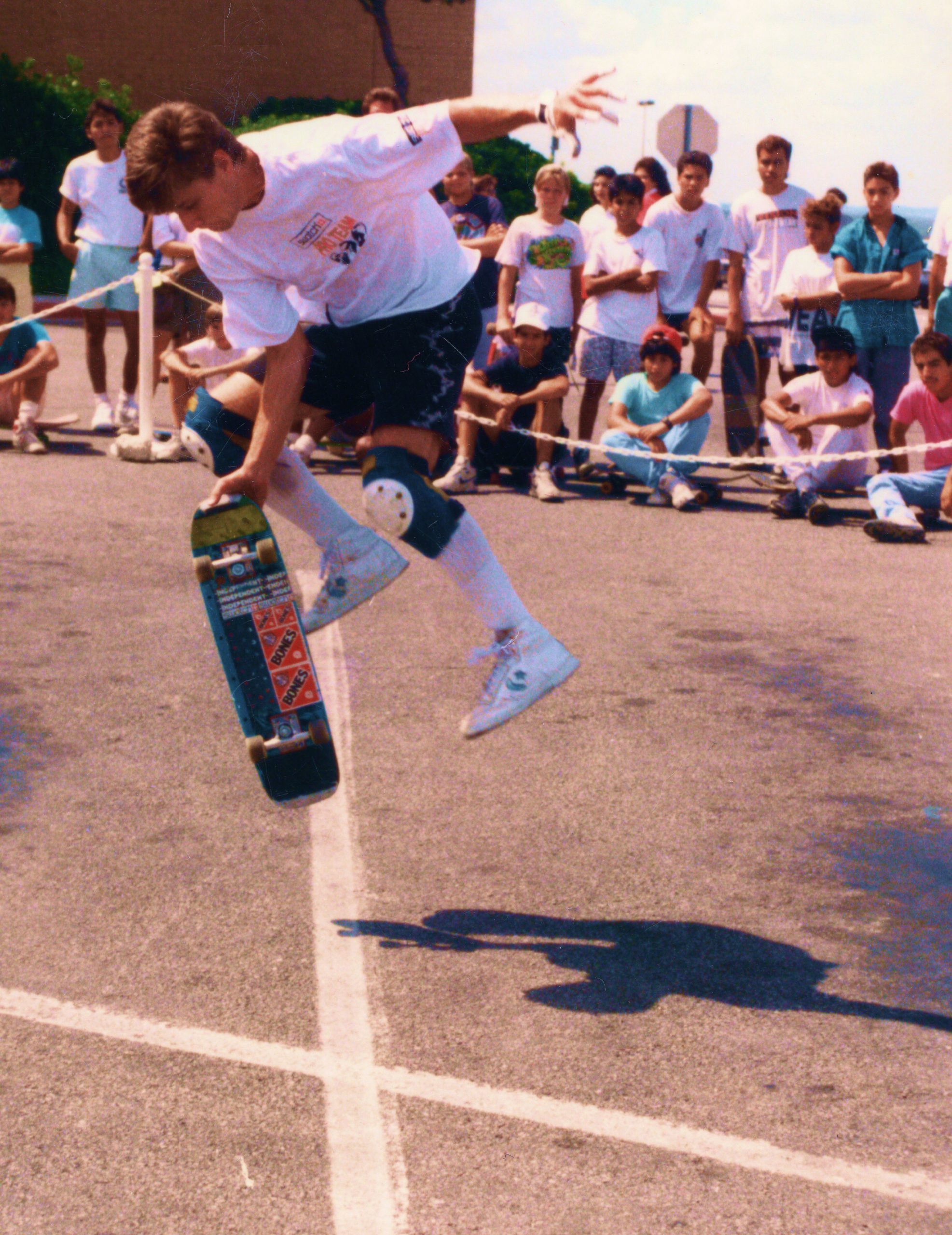
Freestyle in the 80s was all about flatground. A board, some smooth pavement, and tricks linked up like a choreographed routine. Mullen reigned supreme. Over a decade, he won 34 out of 35 contests he entered.

He rode for the Bones Brigade, Powell Peralta’s team. The one from the VHS tapes you wore out, the one with Tony Hawk. But his biggest impact wasn’t in the trophies. It was in what he invented.
In 1982, he dropped the flatground ollie. The same year brought the modern kickflip, the heelflip, and the impossible. In 1983, the 360 flip. Read that list again: it’s half of what you learned in a session.
The Skateboarding Hall of Fame says it straight up. His 1982 flatground ollie became the most influential trick in skate history. Everything else flowed from it. No ollie, no kickflip to learn, no stairs, no gaps.
1989: Freestyle Fades, Rocco Calls
By the late 80s, the scene was shifting. Freestyle was losing its crowd. Contests dried up, eyes were looking elsewhere. Folks around Mullen were letting him know he’d have to transform his style.
In 1988, he still dropped a pure freestyle part in Public Domain, the Powell Peralta video. Watch it with today’s eyes: everything he did on flatground, you later saw over stairs.

In 1989, he took a detour into movies. He doubled for Christian Slater in Gleaming the Cube. A Hollywood side quest, not a career plan.
The real turning point was elsewhere. Early 1989, he left the Bones Brigade. He became the main investor in World Industries, launched with Steve Rocco. It was the very first skater-owned brand. If you want the full story, we laid it out in our feature on World Industries and Steve Rocco.
1992, Questionable : the part that flips the floor
In 1991, Mullen joined Plan B. The brand was founded by Mike Ternasky, Danny Way and Colin McKay. Ternasky saw something the contests weren’t showing anymore. He pushed Mullen into street.

In 1992, Questionable dropped, directed by Ternasky. Check the credits : Mullen, Danny Way, Colin McKay, Rick Howard, Mike Carroll, Matt Hensley, Pat Duffy, Sean Sheffey, Sal Barbier, Ryan Fabry. A cast that reads like a legend roster, and back then it was just a team video.
Mullen’s part tells the whole story in its edit. It opens with freestyle on flat ground. Then it flips into the streets. Past and present, jammed into one sequence.
1993, Virtual Reality : the confirmation
One year later, Plan B drops it again. Virtual Reality premiered on June 11, 1993. Thrasher shelved it, like Questionable before, among the best skate videos ever.
For Mullen’s part, Thrasher talks about an avalanche of NBDs, tricks never landed before. The 1985 freestyler turned into a street‑kicker who still invents. Same method, new terrain.

Why he started over on the streets : three reasons
Here we are. A guy who’s unbeaten or almost, leaves his discipline to start from scratch. It’s not a whim. Three reasons stack up, and they interlock.
One: freestyle had lost its stage. No audience, no contests, no coverage. Staying king of an empty kingdom feeds no one. Street, on the other hand, was becoming skate’s hub.
Two: his tricks were already street‑ready. The ollie, kickflip, heelflip, 360 flip. He’d invented them on flat. He wasn’t going back to zero. He was laying his own grammar on curbs, stairs and rails.
Three: he bet on the skaters. In 1989, he put his money into World Industries, a brand run by skaters. In 1991, at Plan B, Ternasky opened the street door for him and pushed him through it.
After Plan B: A-Team, Almost and a hip to relearn
In 1997, he launched A-Team, with Marc Johnson and Gershon Mosley on the roster. The adventure ended in 2000. He moved on to Almost, alongside Daewon Song. He also filed a patent for Tensor wheels in 2000.
In 2002, Transworld readers named him Skater of the Year. Nineteen years after the 360 flip, he’s still at the top. In 2004 came The Mutt, his autobiography written with Sean Mortimer. If you’re only going to read one skate book, it’s this one.
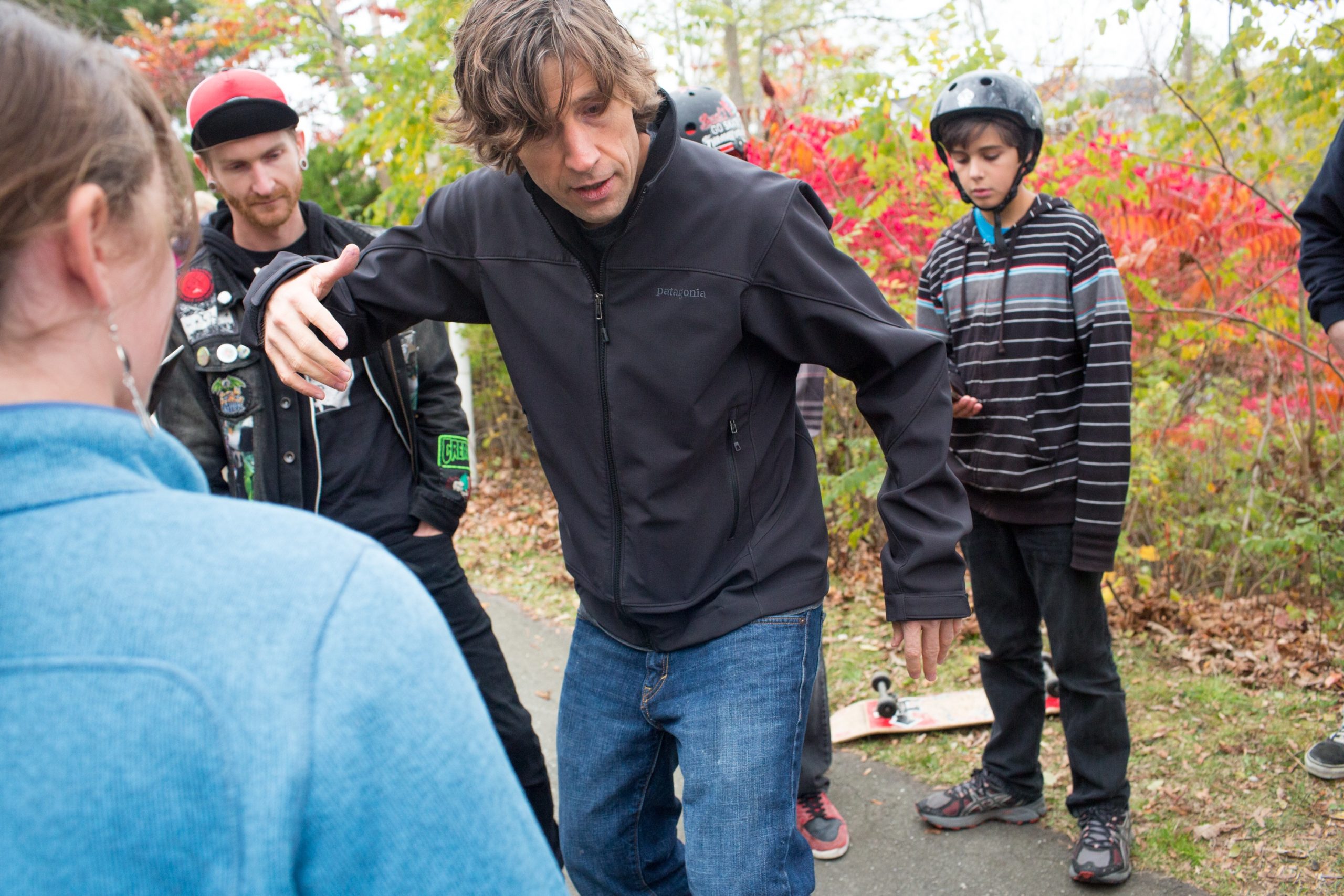
Then the body demanded its payback. His right hip was stuck in scar tissue. From 2007 onward, he relearned his tricks in other stances. The Gainesville kid kept the same reflex: when one surface stops working, he finds another.
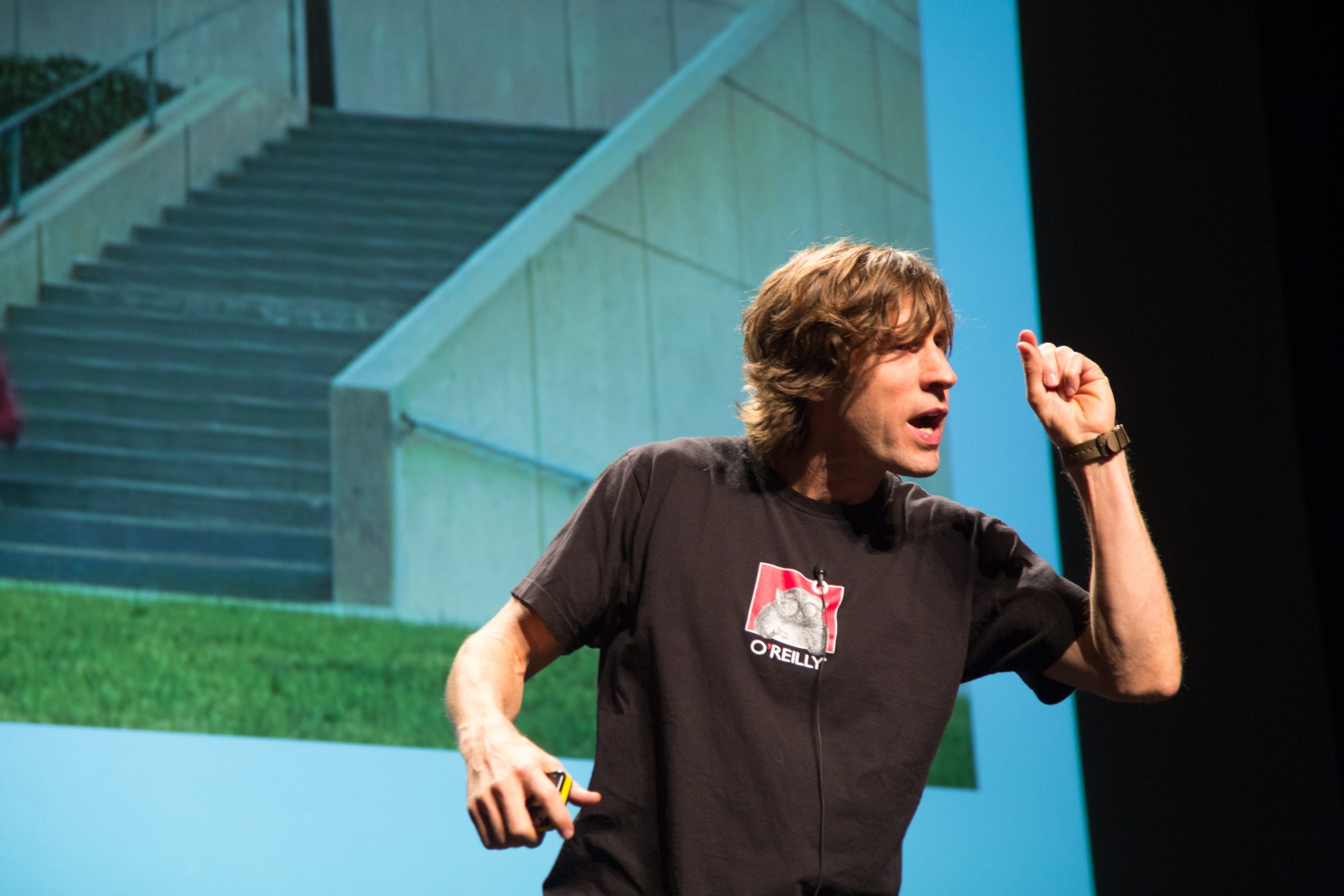
He tells it all on stage. In 2012, TED uploaded his talk “Pop an ollie and innovate!”. PopTech in 2013, in Camden, Maine, under the title “Getting Back Up”. TED brands him the godfather of street. Transworld had ranked him 3rd among the 30 most influential skaters in December 2011. The Hall of Fame inducted him in May 2013.
Next time you land a kickflip on a step, think of this 1982 freestyler. He nailed the trick on flat, then had the guts to take it to the streets. Find his full profile on Rodney Mullen’s rider page.
Did you discover Rodney Mullen through the Bones Brigade, via Questionable or a TED Talk? Tell us the first part of him that blew your mind.Post a comment

Continue ta lecture
ChroniquesStevie Williams fonde DGK en 2002 : qu’est-ce que ça change de passer de rider payé à patron ?
Chocolate, DC, une chaussure à son nom : Stevie Williams avait tout du rider payé. En 2002, il fonde DGK. Reebok, Kalis, dix ans de…
Commentaires (0)