

ℹ️ 🛹 Web Média Skate 🛹 ℹ️

★ Portraits
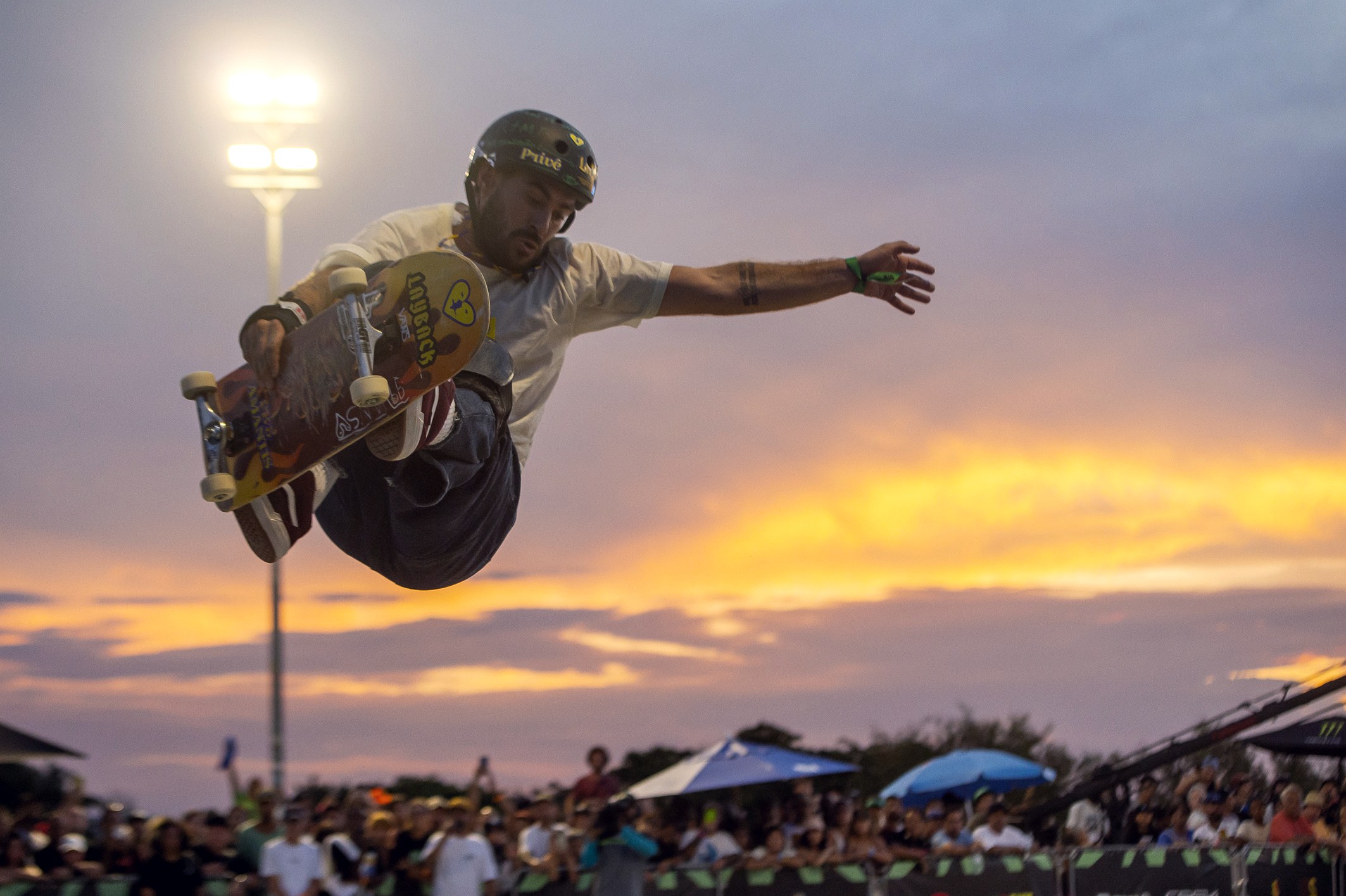
Pedro Barros has had a bowl in his backyard since he was 13. Is that really his edge?
Fin 2008, André Barros coule un bowl dans le jardin familial de Rio Tavares. Son fils a 13 ans. Dix-sept ans, six ors X Games et une médaille olympique plus tard, on regarde ce que ce terrain lui a vraiment donné.
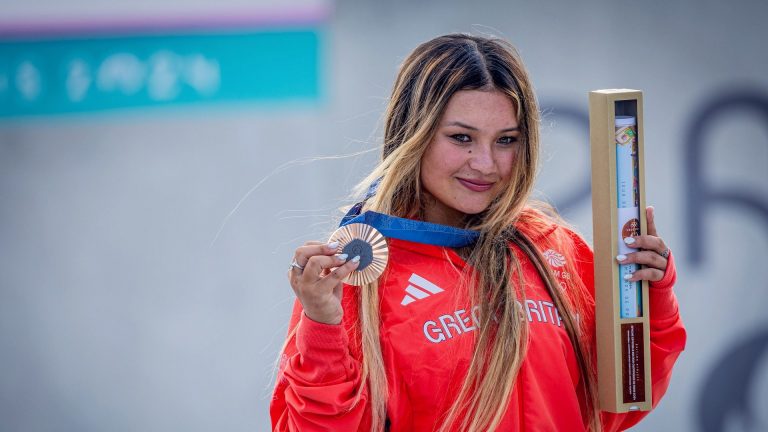
→ Pour aller plus loin : Sky Brown, bronze olympique à 13 ans : à 18 ans, qu’est-ce qu’on fait de sa vie après ça ?
Late 2008, in a corner of Florianópolis that was still just a strip of sand and scrub, three guys poured concrete in a backyard. One of them was named André Barros. A surfer, not a skater. His kid was 13 and had just taken first at the amateur X Games in vert. The bowl that came out of the ground that month is called the RTMF, for Rio Tavares. Seventeen years later, Pedro Barros still rides it.
That's the story everybody tells about him, and it's a little too clean to be honest: the kid who got a park at home, obviously he was going to turn out a champion. Except there are more than twenty-five private parks in Rio Tavares alone — his dad is the one who gives the number. And only one Olympic medalist came out of it. So let's take a closer look.
Rio Tavares, 2008: the concrete came before the medals
You have to go back to the 90s. A crew of friends — André Barros, Rafael Bandarra, Léo Kakinho — buys land in Rio Tavares, on the south end of the island of Florianópolis. Back then nobody wants it. It's far, it's humid, there's nothing there. But they surf, and it's ten minutes from the beach. That's argument enough for them.
The Barros family land runs 50,000 m². Not a suburban backyard: a sítio. When the concrete shows up in late 2008, it isn't just a bowl — a half-pipe, a mini ramp and a bowl, all three at once. Pedro is 13 and has just won amateur gold at the X Games. The timing is no accident: the dad built for what the son was already doing.
The bowl has a face of its own. Not the perfect Cali pool everybody's been copying for forty years. A slightly warped shape, transitions that don't forgive, fast roll. The Americans who came through and skated it gave it their stamp. In this culture, that counts as a certificate.

A bowl in the backyard, open to the neighborhood
Here's the detail that changes everything, and the one the "rich skate kid" version always forgets to mention: the RTMF isn't a private club. The family opens it to the public several times a week. Kids from Rio Tavares learn to set down a rock to fakie on the same coping as an Olympic medalist.
This isn't PR. It's how the neighborhood works: twenty-five private parks inside the same few blocks doesn't make twenty-five fortresses, it makes a circuit. You skate one, you finish the session at another. Florianópolis has built itself a bowl scene denser than any European city has, Marseille and its Prado included.
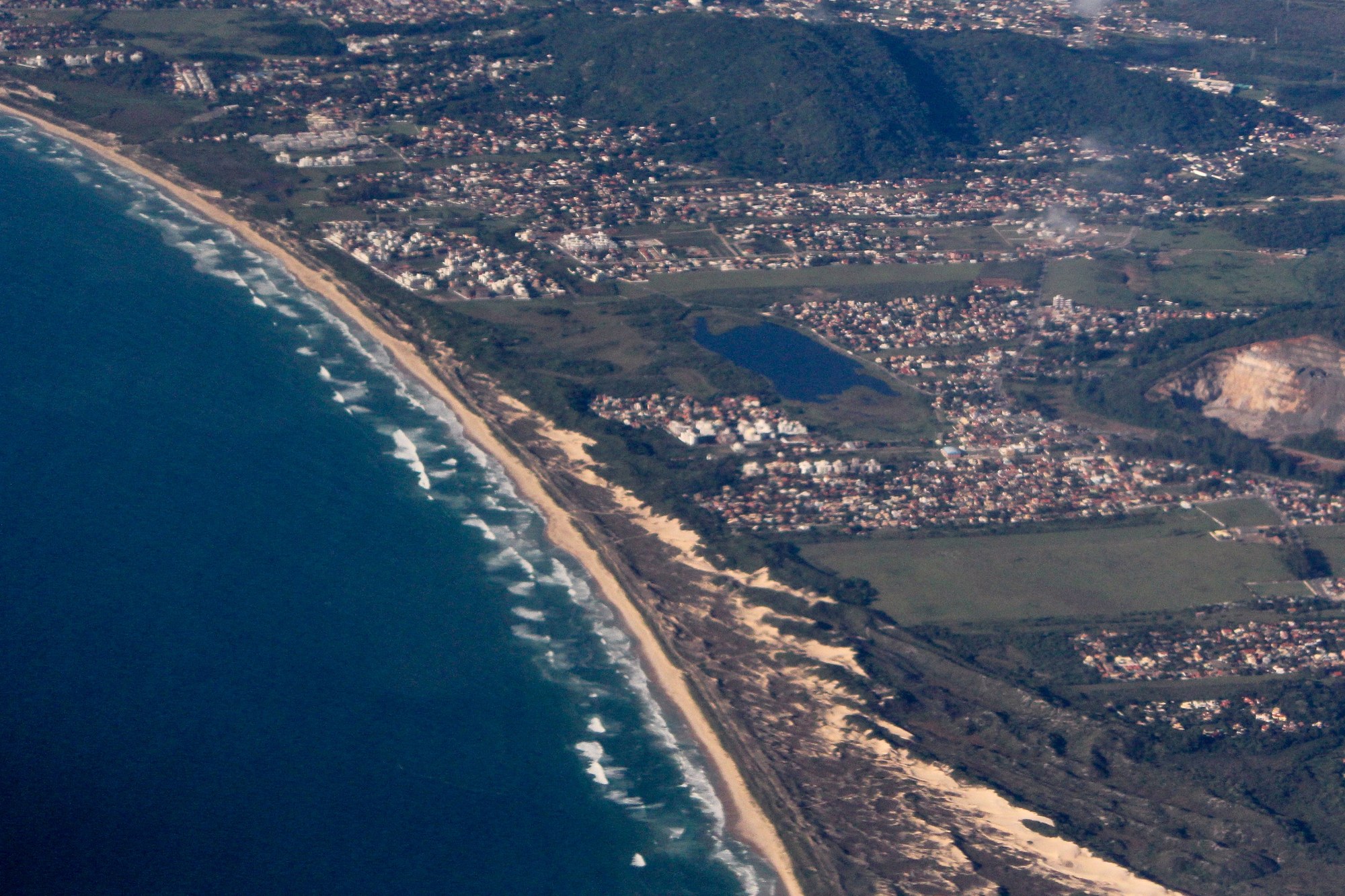
Barros has never left the island. He started his beer there, LayBack. He started his clothing brand there, Privê. He runs community projects in the neighborhood he grew up in. At the Tokyo Games, he dropped into the park with the map of Florianópolis printed on the bottom of his board. That's not a sentimental detail: this is a guy who refused to move to California when the entire industry was telling him he had to move to California.
The timeline
Career
- 2008
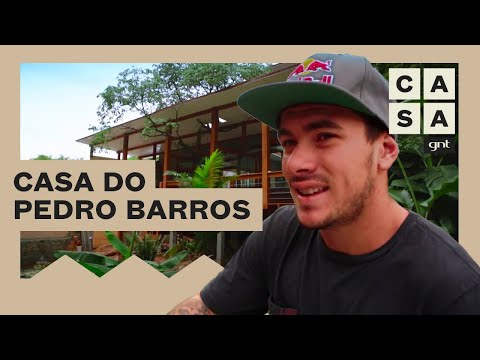 Casa GNTAndré Barros pours the RTMF in the family backyard, in Rio Tavares. Pedro is 13 and has just won amateur gold at the X Games.
 - 2014
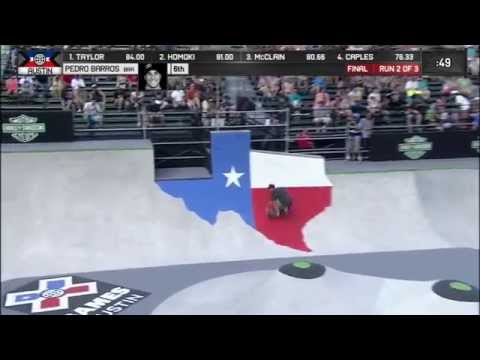 X GamesFifth X Games park gold, in Austin. Since his rookie gold in 2010, he's never finished lower than second in the discipline.
 - 2016
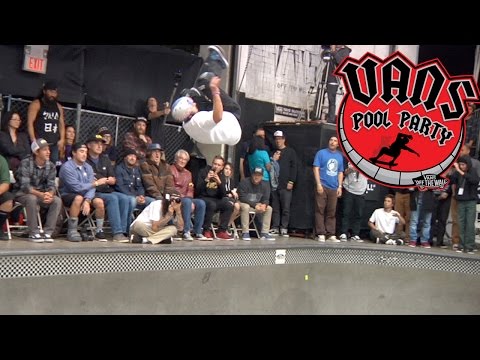 ThrasherVans Pool Party, plus the Florianópolis stop of the Vans Park Series, won at home on his own island.
 - 2018
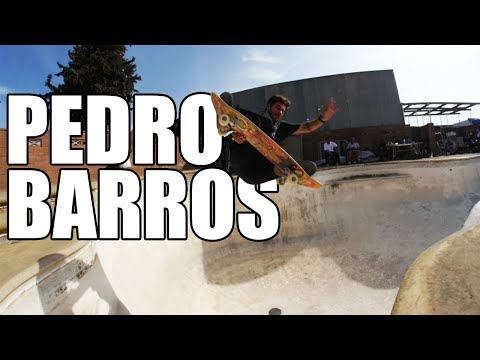 Drop DeadSilver Era part for Drop Dead, and the park world title in Nanjing. The year the contest skater and the video skater both stood up at once.
 - 2021
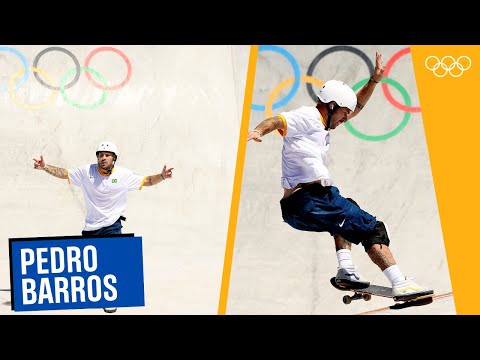 OlympicsOlympic silver in Tokyo, 86.14 points. Brazil's first men's park medal, in the discipline's first appearance at the Games.
Tokyo 2021: 86.14 points and a medal that didn't exist before
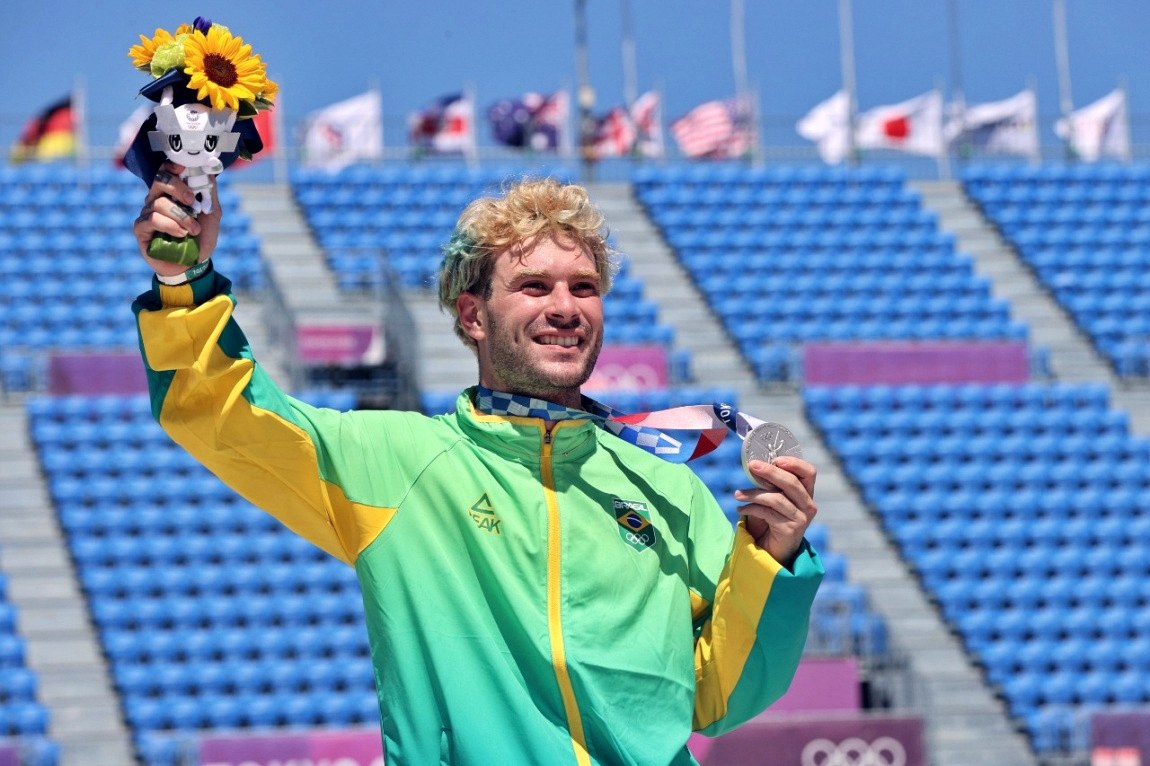
Park makes its Olympic debut in August 2021, a year later than planned. Barros gets through qualifying at 77.14. Fourth. In the final, he puts down a run worth 86.14 that parks him behind Australia's Keegan Palmer and ahead of the rest of the world. Silver.
Look at the photo just below: the stands are empty. No crowd, health protocol. The guy who grew up with the whole neighborhood screaming on the deck of his dad's bowl took his medal in a silent stadium. He's smiling anyway, and he means it.
A style the judges never knew where to file
To place that style, you have to go back to 2018. His Silver Era part - 2018 wasn't something you passed around on VHS, but you watched it the way you used to watch VHS: the Vimeo link dropped into a group chat, four friends around the same computer screen, and this dude going way too fast through Brazilian transitions none of us could find on a map. You'd scrub back to the same section again. Twenty years after Welcome to Hell, the ritual hadn't changed — only the progress bar had.
Barros skates fast. Too fast for a scored format. Where the discipline has standardized around calibrated runs — this trick here, maximum rotation there — he strings together lines that look like a session with your friends run at 1.5x.
It's cost him points. It's also earned him six X Games golds, which settles the argument. But the real information is somewhere else: when World Skate wrote the rules for Olympic park, they had to invent a scoring system for a discipline that had never had one. Barros already had ten years of backyard bowl in his legs. A bowl nobody had drawn up for a judge.
Paris 2024: fourth, 0.20 off the bronze
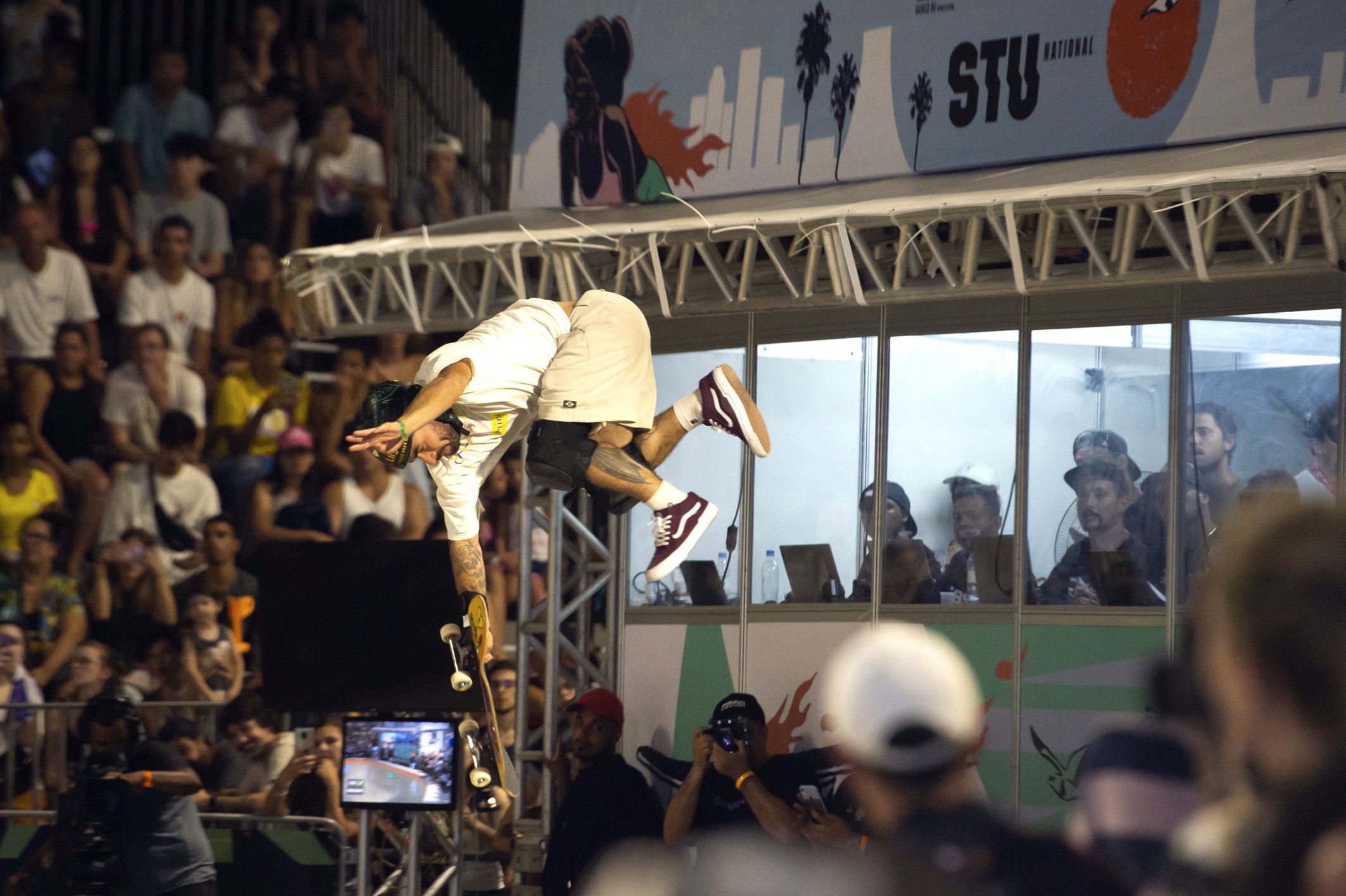
Three years later, same discipline, different ending. On August 7, 2024, in the park final in Paris, Barros puts down a 91.65. That's massive. That's fourth. Keegan Palmer keeps the gold at 93.11, American Tom Schaar takes silver at 92.23, and Brazil's Augusto Akio the bronze at 91.85.
Zero point two zero. Twenty hundredths of a point between a second Olympic medal and fourth place, the one nobody ever talks about. At 29, in a discipline where the winners are often ten years younger than him. And the countryman who bumps him off the podium grew up in a Brazilian bowl too.
So is that backyard bowl really his edge?
Straight answer: no. Not the way people mean it.
A childhood spot doesn't manufacture a résumé. Otherwise Rio Tavares would have produced twenty-five champions instead of one. Hours on the board, sure, that counts, and Barros has thousands of them on a kid who has to take two buses to find concrete. But that's not where the difference gets made.
What the RTMF gave him is something else, and it's rarer: he never had to perform to earn the right to skate. No opening hours, no session to get your money's worth out of, nobody scoring. When you skate at home, you can spend three months on one trick and it costs nobody anything. You can also build a style no jury ever signed off on — because no jury was there.
That's exactly what you see in Tokyo and in Paris. The guy doesn't skate like someone who learned to win contests. He skates like someone who learned to skate, and shows up at contests with what he's got. The Tokyo silver and the 0.20 in Paris come from the same place: a dude who never let himself get formatted, in a discipline that ended up formatting itself around him.
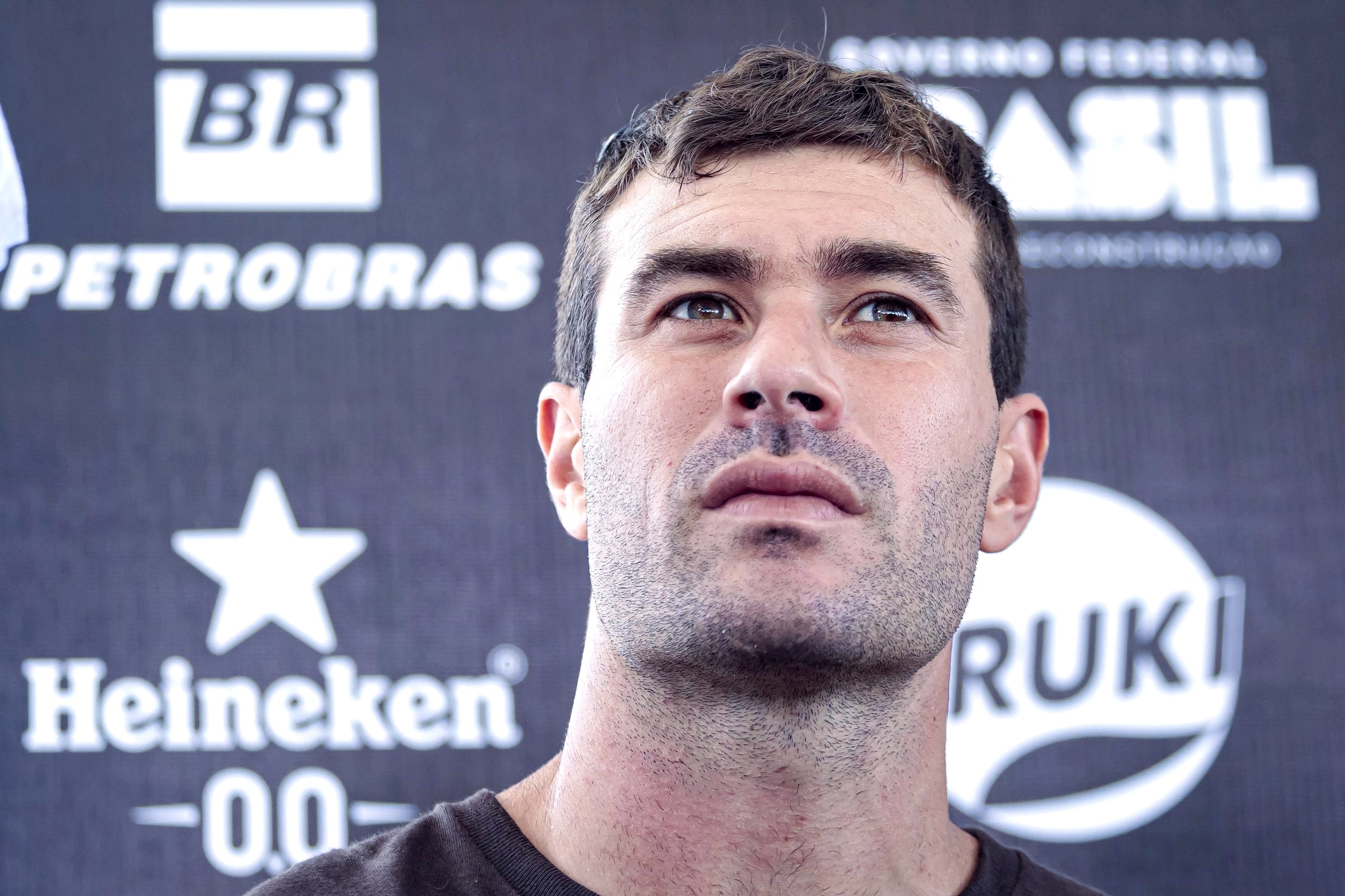
These days, when you see a 15-year-old throw an air higher than looks safe, with an arm placement nobody taught them, there's a good chance they spent their childhood on a neighborhood bowl rather than inside a federation program. Same mold as Barros. Or rather the same lack of a mold. Scenes that pour concrete for their kids, like Malmö has for twenty years, don't manufacture champions. They manufacture people who skate for themselves. A few become champions by accident.
Barros is 31. The discipline professionalized around him and he changed nothing: same island, same bowl, same way of rolling too fast. Rayssa Leal is 18 with four straight titles; he's got thirteen years on her, and he was finishing fourth at the Games two years ago. The backyard has nothing to do with it. The freedom he took there does.
What about you — where did you learn: a neighborhood bowl, a parking lot, some janky backyard ramp? Drop the exact spot.Post a comment
Le lexique
-
1
bowl
Cuve en béton aux parois courbes, héritée des piscines vidées de Californie. On y roule en continu, sans jamais poser le pied.
-
2
coping
Le tube métallique posé sur le bord supérieur d'un bowl ou d'une rampe. C'est là que se bloquent les grinds et que se prennent les appuis.
-
3
run
Passage chronométré d'un skateur en compétition, généralement 45 secondes, noté d'un seul bloc par les juges.
-
4
transitions
Les parties courbes qui relient le fond plat d'un bowl à ses murs verticaux. Plus elles sont serrées, moins elles pardonnent.
Shop NOSK8
Voir toute la boutique →
TEE-SHIRTS
TEE-SHIRT NOSK8® NOSKATE #NSITA
Le prix initial était : 35,00 €.29,00 €Le prix actuel est : 29,00 €.
TEE-SHIRTS
TEE-SHIRT NOSK8® P.B HEART #POLARBEAR
Le prix initial était : 35,00 €.29,00 €Le prix actuel est : 29,00 €.
TEE-SHIRTS
TEE-SHIRT NOSK8® I.L.N #ILOVEN8
Le prix initial était : 35,00 €.29,00 €Le prix actuel est : 29,00 €.
TEE-SHIRTS
TEE-SHIRT NOSK8® P.B HEART #NYC
Le prix initial était : 35,00 €.29,00 €Le prix actuel est : 29,00 €.

TEE-SHIRTS
TEE-SHIRT NOSK8® MATRICE HEART #CTRL
Le prix initial était : 35,00 €.29,00 €Le prix actuel est : 29,00 €.

CASQUETTES
CAP NOSK8® P.B.P #PAW
Le prix initial était : 35,00 €.25,00 €Le prix actuel est : 25,00 €.

CASQUETTES
CAP NOSK8® P.B #POLARBEAR
Le prix initial était : 35,00 €.25,00 €Le prix actuel est : 25,00 €.

CASQUETTES
CAP NOSK8® N8 #NOSK8
Le prix initial était : 35,00 €.25,00 €Le prix actuel est : 25,00 €.

HOODIES
HOODIE NOSK8® P.B HEART #NYC
Le prix initial était : 60,00 €.49,00 €Le prix actuel est : 49,00 €.

HOODIES
HOODIE NOSK8® P.B HEART #ORIGINAL
Le prix initial était : 60,00 €.49,00 €Le prix actuel est : 49,00 €.

HOODIES
HOODIE NOSK8® P.B HEART #PHILI
Le prix initial était : 60,00 €.49,00 €Le prix actuel est : 49,00 €.

HOODIES
HOODIE NOSK8® MATRICE HEART #CMD
Le prix initial était : 60,00 €.49,00 €Le prix actuel est : 49,00 €.

HOODIES
HOODIE NOSK8® P.B HEART #POLARBEAR
Le prix initial était : 60,00 €.49,00 €Le prix actuel est : 49,00 €.

SWEAT
SWEAT NOSK8® P.B HEART #NYC
Le prix initial était : 45,00 €.39,00 €Le prix actuel est : 39,00 €.
SWEAT
SWEAT NOSK8® P.B HEART #PARIS
Le prix initial était : 45,00 €.39,00 €Le prix actuel est : 39,00 €.
SWEAT
SWEAT NOSK8® P.B HEART #POLARBEAR
Le prix initial était : 45,00 €.39,00 €Le prix actuel est : 39,00 €.
SWEAT
SWEAT NOSK8® P.B HEART #BARÇA
Le prix initial était : 45,00 €.39,00 €Le prix actuel est : 39,00 €.
SWEAT
SWEAT NOSK8® P.B HEART #PHILI
Le prix initial était : 45,00 €.39,00 €Le prix actuel est : 39,00 €.
Continue ta lecture
PortraitsNatas Kaupas — L’architecte du street skating que personne n’attendait
Natas Kaupas — L'architecte du street skating que personne n'attendait Avant lui, le skate se pratiquait dans les bowls et les rampes. Après…
Commentaires (0)