
ℹ️ 🛹 Web Média Skate 🛹 ℹ️

Portraits
Mark Gonzales: The 1986 Rail That Made Street
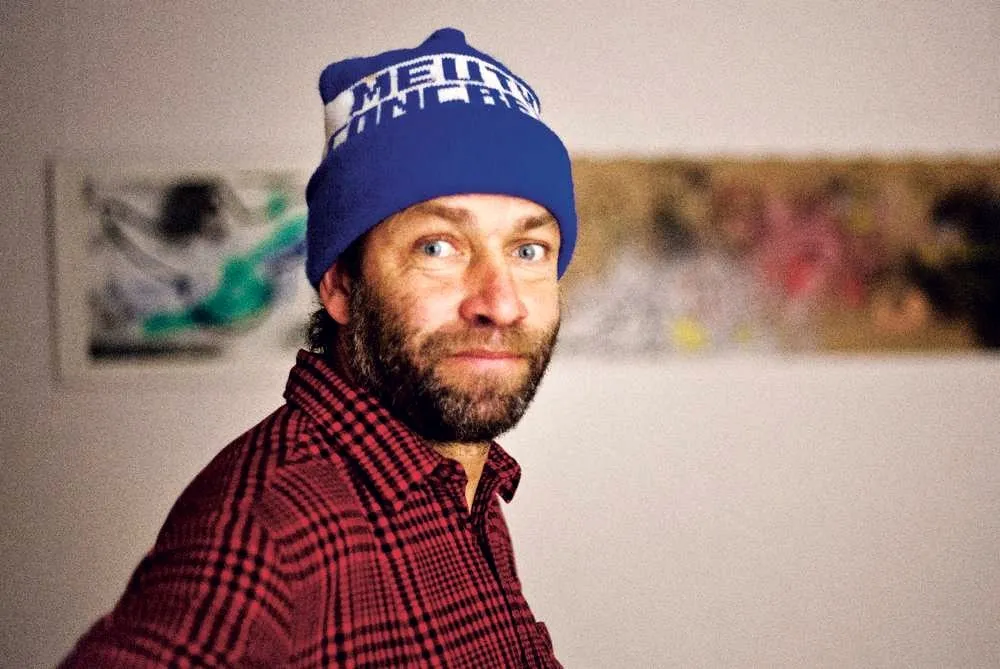
Né en 1968 à Los Angeles, Mark Gonzales a réinventé le skate street dans les années 80. À 58 ans, il skate encore, peint, écrit de la poésie — et refuse toujours de jouer le jeu.

In 1986, an 18-year-old kid grinded a handrail in San Francisco. Not some little three-stair rail — a real one. The kind of thing nobody had touched in street skating. That kid was Mark Gonzales. He’s 58 now. And he’s still skating.
Here’s the weird part about the Gonz — and a lot of people miss it — he’s not trying to make a comeback. He never left.
1986: the guy who changed everything without meaning to
Before Gonzales, street skating existed, but nobody had framed it as a discipline in its own right. Skateparks were shutting down one after another across the States. Kids ended up outside, in the streets, making it up as they went. Gonzales looked at that environment differently: rails, stairs, curbs — all of it was a playground.
That first handrail he grinded in 1986 isn’t a footnote. It’s the moment street skating got serious. Before him, nobody rode handrails. After him, everybody tried. And most of them ate it.
What made Gonzales different wasn’t raw technical ability. It was the impulse — the way he’d roll up on a spot with no plan and find the line right there, on the spot. Rodney Mullen was reinventing the mechanics of the skateboard in a garage. The Gonz was reinventing the relationship between a skater and the city.
Real Skateboards and the golden era
In 1991, Gonzales co-founded Real Skateboards with Jim Thiebaud. The timing was perfect: street skating was blowing up, videos were circulating for real, brands were getting organized. Real became a benchmark. Not the most commercial brand. The most respected one.
If you grew up in the 90s with skate decks around you, you crossed paths with Gonzales’ artwork whether you knew it or not. His drawings — those naive characters, those lines that look tossed off but don’t look like anything else — became a visual signature you clock instantly. The Gonz skates, the Gonz draws, the Gonz writes poetry. All three at once, from day one.
The timeline
Career
- 1986
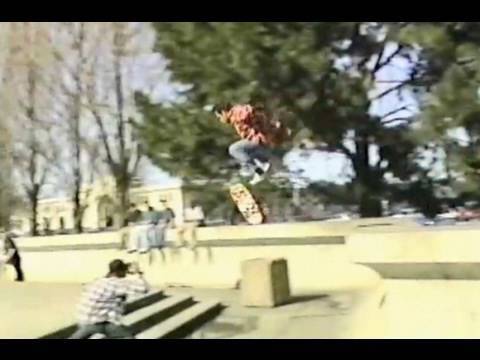 ThrasherFirst handrail ever grinded in street skating — San Francisco. Street skating jumps to another level.
 - 1991
 RealCo-founds Real Skateboards with Jim Thiebaud. It becomes one of the most influential brands in independent skating.
 - 1999
 ThrasherRat Pack part for Thrasher — Skater of the Year. Gonzales gets inducted into the circle of certified legends.
 - 2002
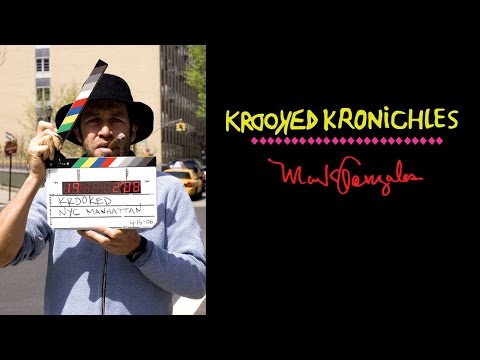 KrookedFounds Krooked Skateboards. His own playground, his own rules. The brand is still running today.
 - 2020s
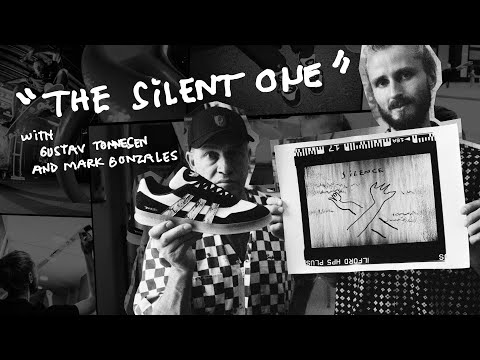 adidasStill putting out footage. Clips drop regularly. Past 50, he’s still an active presence in contemporary skating.
Krooked: his own world since 2002
In 2002, Gonzales founded Krooked Skateboards. The name says it all: no straight line, no falling in line. Krooked is the anti-program. Gonzales went all in on his graphic universe there — Krooked decks look like pieces of art you’d hang on a wall as readily as grind on a curb.
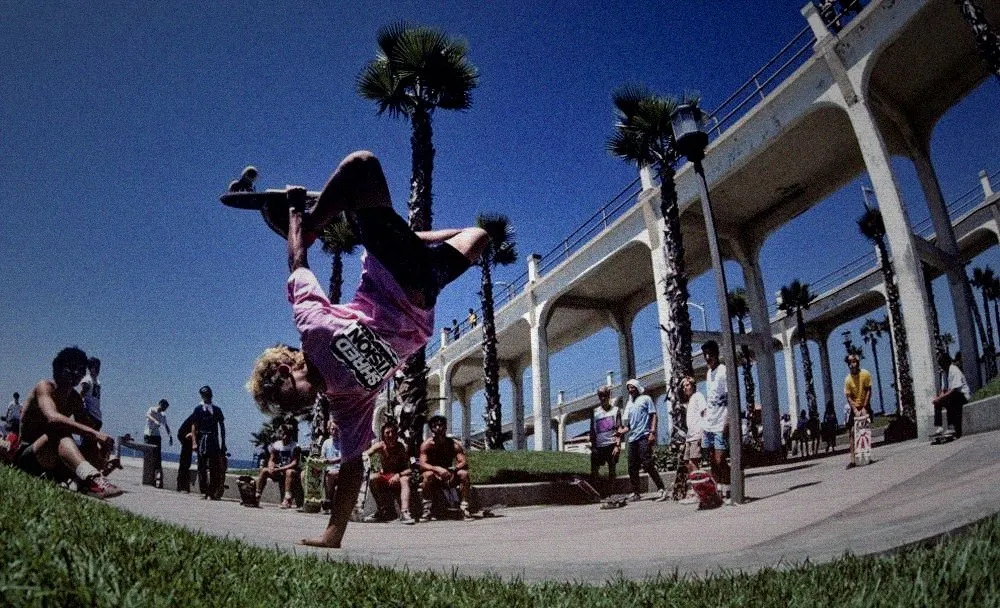
The brand is distributed by Deluxe Distribution in the States and sits inside that ecosystem of independent skate brands the heads support out of conviction. Not because an ad told them to. Because it’s Gonz, and it means something.
Why he’s still « dangerous » at 58
Dangerous here isn’t a metaphor about tricks. It’s about stance. In a world that professionalized at warp speed — World Skate contests, the Olympics, six-figure contracts signed at 16 — Gonzales embodies something that messes with the whole thing just by existing.
He doesn’t play the contest game. He doesn’t do polished promo interviews. His videos drop when they drop, in whatever format he feels like. His drawings sometimes bleed into his skate footage — he mixes everything, and he doesn’t ask permission.
In a system built to reward optimized athletes, the Gonz is still an artist who skates. That difference is huge. And at 58, holding that ground without selling out and without disappearing might be the hardest trick of his career.
The artist and the poet
Gonzales shows his paintings regularly. Not on the skate circuit — in art galleries. His studio work has a life of its own, separate from skateboarding. Canvases, sculptures, installations. The same creative chaos as his skating, translated into other mediums.
He publishes poetry too. Short pieces, often disorienting, running on that internal logic that runs through everything he does. For a lot of skaters who came up in the 90s and 2000s, finding out Gonzales wrote poems was almost a shock — and at the same time, completely obvious. How could somebody who skates the way he skates not have that kind of relationship with language?
What’s left to understand
Mark Gonzales isn’t an icon frozen in amber, the kind nostalgia brands love to sell. He’s a guy who keeps producing — videos, drawings, poems — running on the same logic for forty years.
If you’ve never actually sat down and watched him skate — not the greatest-hits montage, but a full session, a recent clip — do it. The unpredictability is intact. So is the lightness. And that knack for finding a line in an ordinary spot nobody else would have wanted.
At 58, the Gonz is still here. And that’s exactly what makes him dangerous.
So what’s your favorite Gonzales clip ? Old ones, new ones — drop the moment that stuck with you.Post a comment
Follow NOSK8 where you hang out
Parts, spots, behind the scenes: it all drops on the accounts first.
Continue ta lecture
ChroniquesLe skate olympique a tué le skate de rue — et personne ne s’en plaint vraiment
Quand Yuto Horigome a posé son switch 360 flip sur le podium de Tokyo, j'ai regardé ça depuis mon canapé. Et j'ai ressenti de la…
Commentaires (0)