
ℹ️ 🛹 Web Média Skate 🛹 ℹ️

★ Tricks
Flip in flip out: why you land both flips but never the combo
Tes kickflips passent, ton manual tient toute la longueur du pad. Mais dès que tu enchaînes les deux, la sortie casse. Le coupable n'est pas là où tu crois.
→ Pour aller plus loin : Fakie bigspin : la planche tourne à 360°, toi à 180° — qui part en premier ?
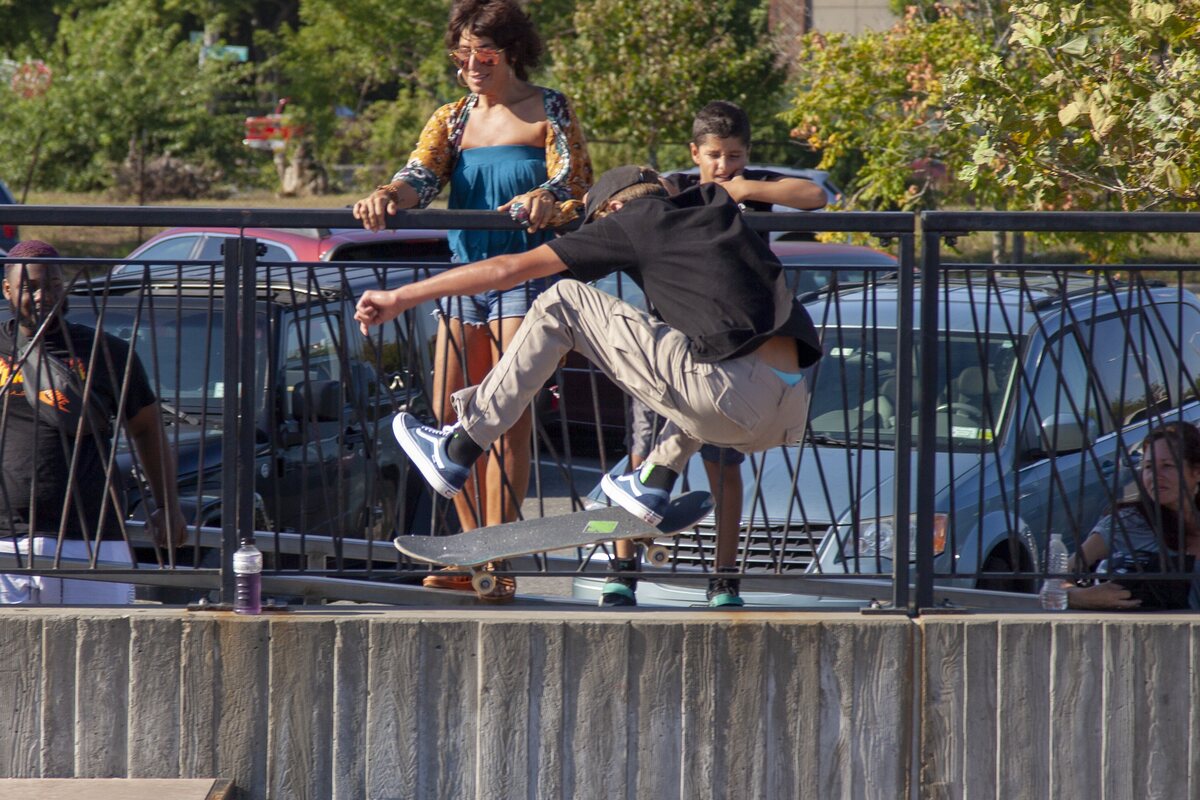
Kickflip onto the edge of the pad. You land in a manual, back wheels grinding on the concrete, two meters of pad ahead. Then it's time to flip out, and nothing happens. The board slaps, you jump into thin air, and the whole session saw it.
The worst part? On their own, everything works. You land kickflips on flat. You hold the manual the whole length of the pad. But glue the pieces together and they refuse to cooperate.
That's the flip in flip out: a flip to get on the obstacle, a manual or a grind on it, a flip to get off. Manual pad and ledge combos are all over social feeds. And under every clip, the same question: how do you link them?
Here are the 6 steps, in order. With the most common fails. And at the end, the exact reason your combo breaks even though your flips are clean.
Level
Intermediate
Time
Several weeks
Prerequisites
Kickflip, manual
Surface
Low manual pad
Daewon Song, 2006: the Skater of the Year who lived on 2 wheels

If one name sticks to the manual pad, it's Daewon Song. In 2006, Thrasher named him Skater of the Year, the title every pro wants on their résumé. The same year, Almost dropped Cheese and Crackers - 2006, from the brand he co-founded with Rodney Mullen.
Their story starts in a schoolyard in Gardena, California. Mullen, the guy who invented the flatground kickflip, saw young Daewon skating. He sent him boards, then became his mentor. Daewon took all of Mullen's flatground science and put it on obstacles: pads, tables, curbs.
Tom Penny, another legend, said it in Transworld's "Most Influential" series: what blows him away about Daewon is his manual combos. In 2014, Daewon was still winning The Berrics' 2UP, a manual contest voted on by the fans.
No Mullen, no Daewon. And no Daewon, none of those pad combos scrolling through your feed.
Also read: Mastering the manual, the trick that separates beginners from real skaters.
The 6 steps of the flip in flip out, from approach to exit
-
Pick the right pad
A low pad, curb height, long enough to hold your manual without stress. Avoid chipped edges. One truck hanging up on the way in, and the whole combo goes with it.
-
The approach: medium speed
Too fast and your flip in goes too far, you miss the pad. Too slow and you've got no speed left to get off. Set your feet in kickflip position well before the pad, not at the last second.
-
The flip in: flick a hair earlier
Pop and flick a little earlier than on flat. The board has to finish spinning above the edge of the pad. Catch it with your back foot first: that's the one carrying the manual.
-
The landing: straight into manual
Land with your weight on the back, front wheels already up. If all four wheels touch before you lift the nose, it's too late, you lose your speed. Arms out, eyes on the end of the pad.
-
The manual: hold the line
The board has to stay straight on the pad. You correct your balance with your knees and arms, never by twisting your shoulders. Meanwhile, your front foot gets ready for the exit. More on that below.
-
The flip out: pop from the manual
Your tail is already low, you just have to snap it. Pop, flick, and send it before the end of the pad, not right at the edge. Land on the bolts, knees bent. If you roll away, you made it.
The 4 classic flip in flip out fails
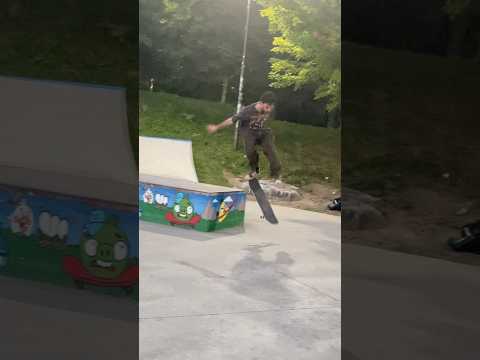
The 4 classic fails
- You land on all four wheels: your weight stayed in the middle. Shift it back before the board even touches the concrete.
- The nose taps during the manual: you're leaning your chest forward. Arms out, back straight, eyes far ahead.
- The flip out won't pop: you let the nose drop before popping. The pop comes out of the manual, tail already low, without going back to flat.
- The board goes sideways on the way out: your flick can't find the edge of the board. The problem is in your feet, not your leg. Read on to see why.
Start on flat, not on the pad
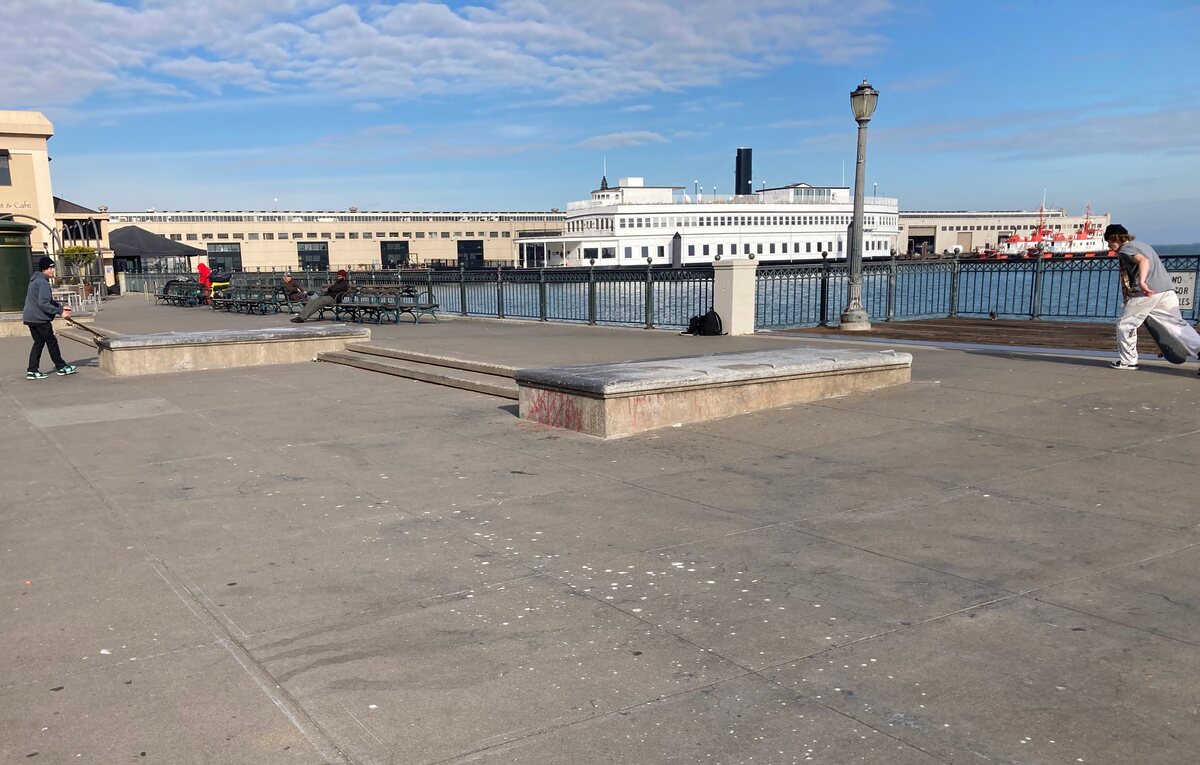
Before touching a pad, do the whole combo on the ground. Kickflip, two seconds of manual on flat, kickflip out. Flat forgives nothing, but it won't drop you off an edge either.
Once it works on flat, split the combo in two on the pad. First kickflip manual, nothing else, until the landing is automatic. Then ollie up and kickflip out. You glue the pieces back together only after that.
Same logic on a ledge. A flip in crooked starts as a plain crooked grind, the flip comes later.
And film yourself. In slow motion, you'll see right away whether your front foot moves during the manual, or stays planted where it landed. Keep that image in mind, it's the one that matters.
So why do your 2 flips work, but not the combo?
Because the flip in flip out isn't decided in the flips. It's decided in the one second of manual between them.
On flat, you set your feet before every kickflip, calmly, in the right spot. In the combo, nobody gives you that time. Your front foot lands from the flip in wherever it can, often in the middle of the board and too straight. And that's where you try to flick the flip out from. The board can't spin cleanly: it goes sideways, or it doesn't go at all.
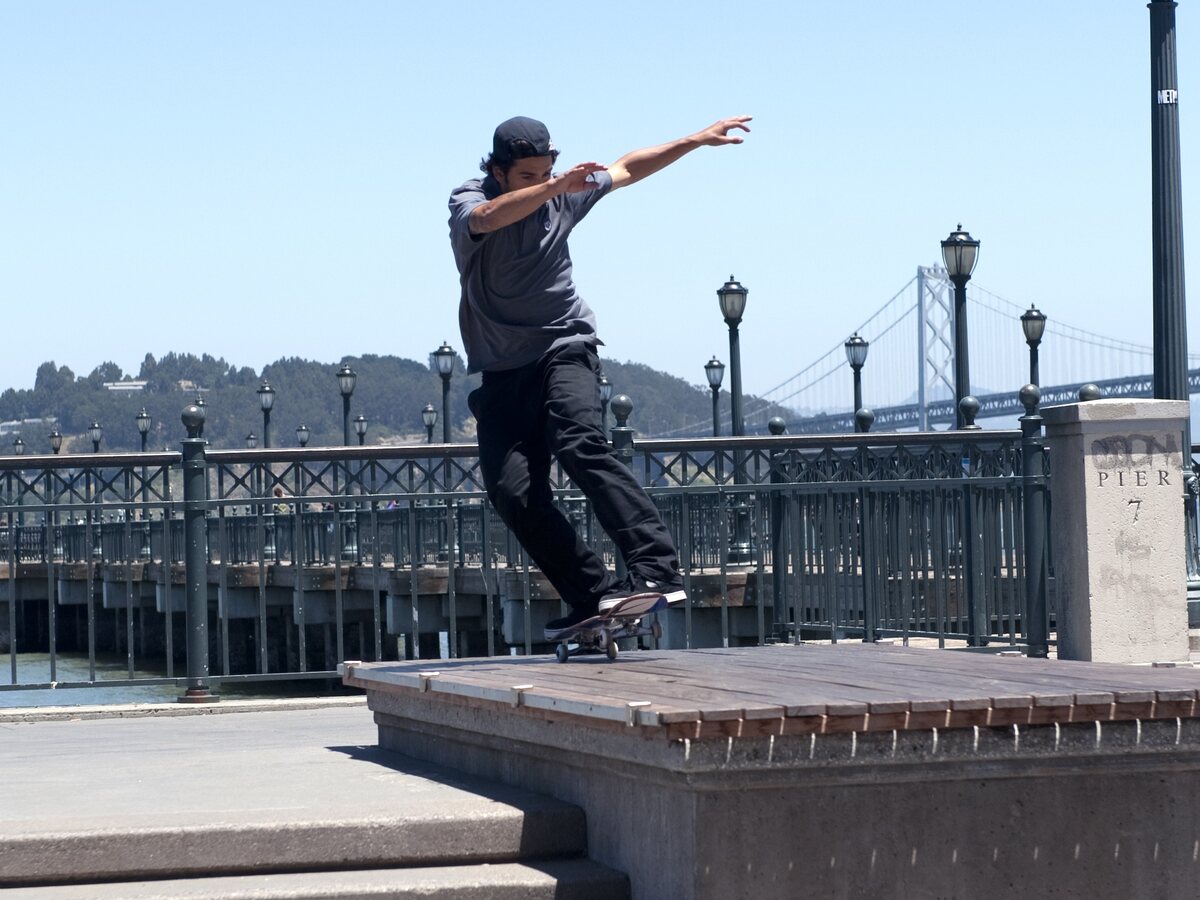
The answer is one move. During the manual, you reset your front foot into kickflip position without breaking your balance. A few centimeters toward the edge, the front of your foot hanging off a bit. That little reset is what turns two tricks stuck together into one combo.
Practice that reset alone, in a manual on flat, with no flip after it. Once your foot finds its spot without the front wheels touching, the flip out almost comes by itself.
And the first time the board spins off the end of the pad, all four wheels hitting the concrete at once, you'll get why Daewon spent his life on 2 wheels.
Where does your flip in flip out break: on the way in, during the manual, or on the way out? Tell us in the comments ↓
Le lexique
-
1
manual
Rouler en équilibre sur les deux roues arrière, le nose en l'air, sans que le tail touche le sol.
-
2
manual pad
Bloc bas et plat, souvent en béton, fait pour enchaîner un manual d'un bord à l'autre.
-
3
flick
Le coup de pied avant qui glisse vers le bord du board et le fait tourner sur lui-même.
-
4
flip out
Le flip qui sert à sortir d'un obstacle, après un manual ou un grind.
Shop NOSK8
Voir toute la boutique →
TEE-SHIRTS
TEE-SHIRT NOSK8® NOSKATE #NSITA
Le prix initial était : 35,00 €.29,00 €Le prix actuel est : 29,00 €.
TEE-SHIRTS
TEE-SHIRT NOSK8® P.B HEART #POLARBEAR
Le prix initial était : 35,00 €.29,00 €Le prix actuel est : 29,00 €.
TEE-SHIRTS
TEE-SHIRT NOSK8® I.L.N #ILOVEN8
Le prix initial était : 35,00 €.29,00 €Le prix actuel est : 29,00 €.
TEE-SHIRTS
TEE-SHIRT NOSK8® P.B HEART #NYC
Le prix initial était : 35,00 €.29,00 €Le prix actuel est : 29,00 €.
TEE-SHIRTS
TEE-SHIRT NOSK8® MATRICE HEART #CTRL
Le prix initial était : 35,00 €.29,00 €Le prix actuel est : 29,00 €.
CASQUETTES
CAP NOSK8® P.B #POLARBEAR
Le prix initial était : 35,00 €.25,00 €Le prix actuel est : 25,00 €.
CASQUETTES
CAP NOSK8® N8 #NOSK8
Le prix initial était : 35,00 €.25,00 €Le prix actuel est : 25,00 €.
CASQUETTES
CAP NOSK8® P.B.P #PAW
Le prix initial était : 35,00 €.25,00 €Le prix actuel est : 25,00 €.
HOODIES
HOODIE NOSK8® MATRICE HEART #ALT
Le prix initial était : 60,00 €.49,00 €Le prix actuel est : 49,00 €.
HOODIES
HOODIE NOSK8® MATRICE HEART #CTRL
Le prix initial était : 60,00 €.49,00 €Le prix actuel est : 49,00 €.
HOODIES
HOODIE NOSK8® I.L.N #ILOVEN8
Le prix initial était : 60,00 €.49,00 €Le prix actuel est : 49,00 €.
HOODIES
HOODIE NOSK8® NOSKATE #NSITA
Le prix initial était : 60,00 €.49,00 €Le prix actuel est : 49,00 €.
HOODIES
HOODIE NOSK8® P.B HEART #BARÇA
Le prix initial était : 60,00 €.49,00 €Le prix actuel est : 49,00 €.
SWEAT
SWEAT NOSK8® P.B HEART #BARÇA
Le prix initial était : 45,00 €.39,00 €Le prix actuel est : 39,00 €.
SWEAT
SWEAT NOSK8® P.B HEART #PHILI
Le prix initial était : 45,00 €.39,00 €Le prix actuel est : 39,00 €.
SWEAT
SWEAT NOSK8® P.B HEART #NYC
Le prix initial était : 45,00 €.39,00 €Le prix actuel est : 39,00 €.
SWEAT
SWEAT NOSK8® P.B HEART #PARIS
Le prix initial était : 45,00 €.39,00 €Le prix actuel est : 39,00 €.
SWEAT
SWEAT NOSK8® P.B HEART #POLARBEAR
Le prix initial était : 45,00 €.39,00 €Le prix actuel est : 39,00 €.
Continue ta lecture
ChroniquesYeah Right! a 23 ans : qu’est-ce que Rick Howard et Girl avaient de différent ?
Planches invisibles, Owen Wilson, Koston en perruque : Yeah Right! (Girl, 2003) a 23 ans. Ce que Rick Howard et Girl avaient de différent, avec…
Commentaires (0)