
ℹ️ 🛹 Web Média Skate 🛹 ℹ️

★ Tricks
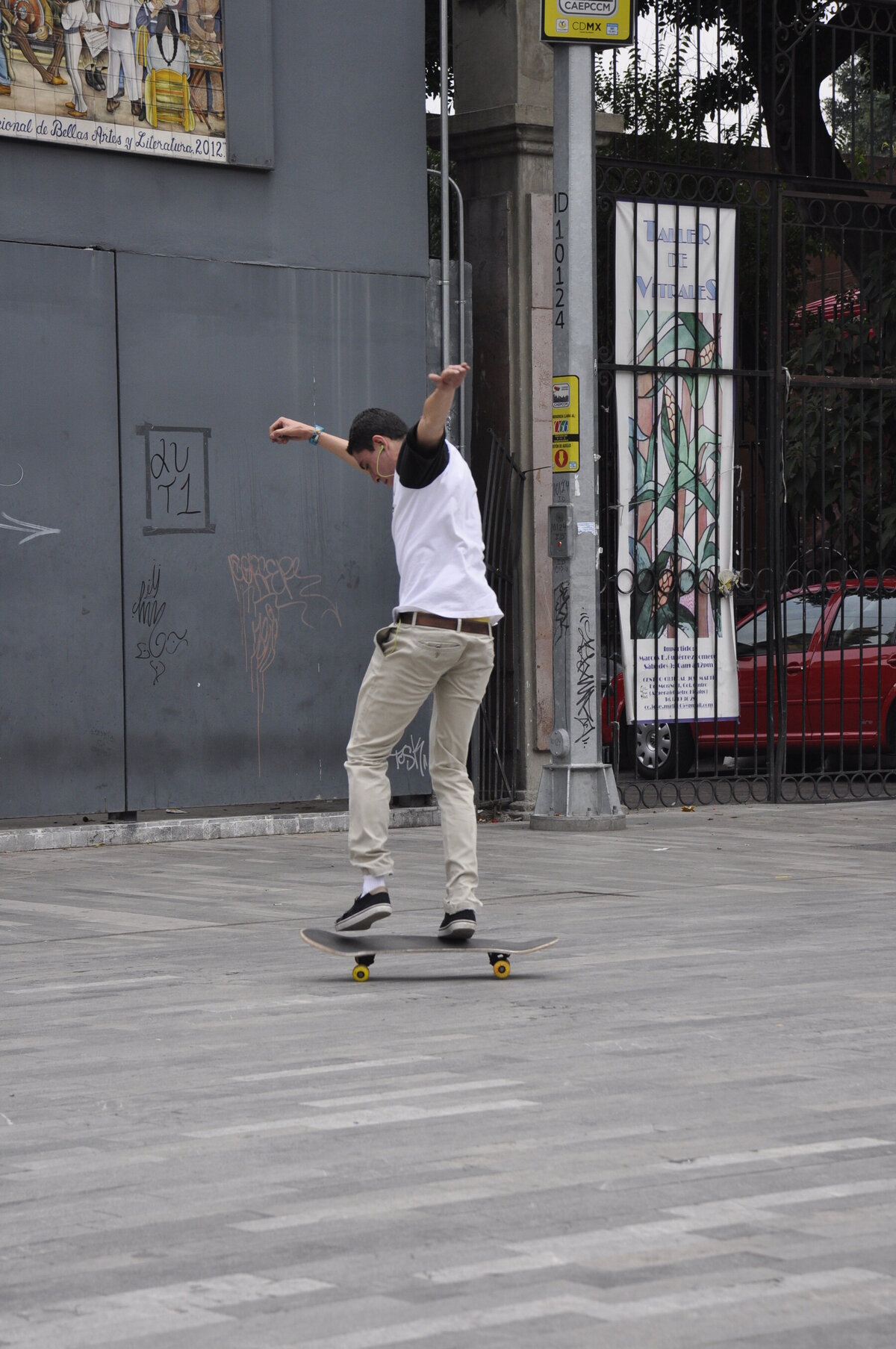
Fakie bigspin: the board goes 360°, you go 180° — which one leaves first?
La planche a 360° à parcourir, toi 180°. Le repère précis pour savoir quand lâcher les épaules, les 4 fails classiques et le drill qui règle le timing en une session.
La planche a 360° à parcourir, toi 180°. Le repère précis pour savoir quand lâcher les épaules, les 4 fails classiques et le drill qui règle le timing en une session.
→ Pour aller plus loin : Wallride : 45° ou tu décroches — l’angle d’attaque qui décide de tout
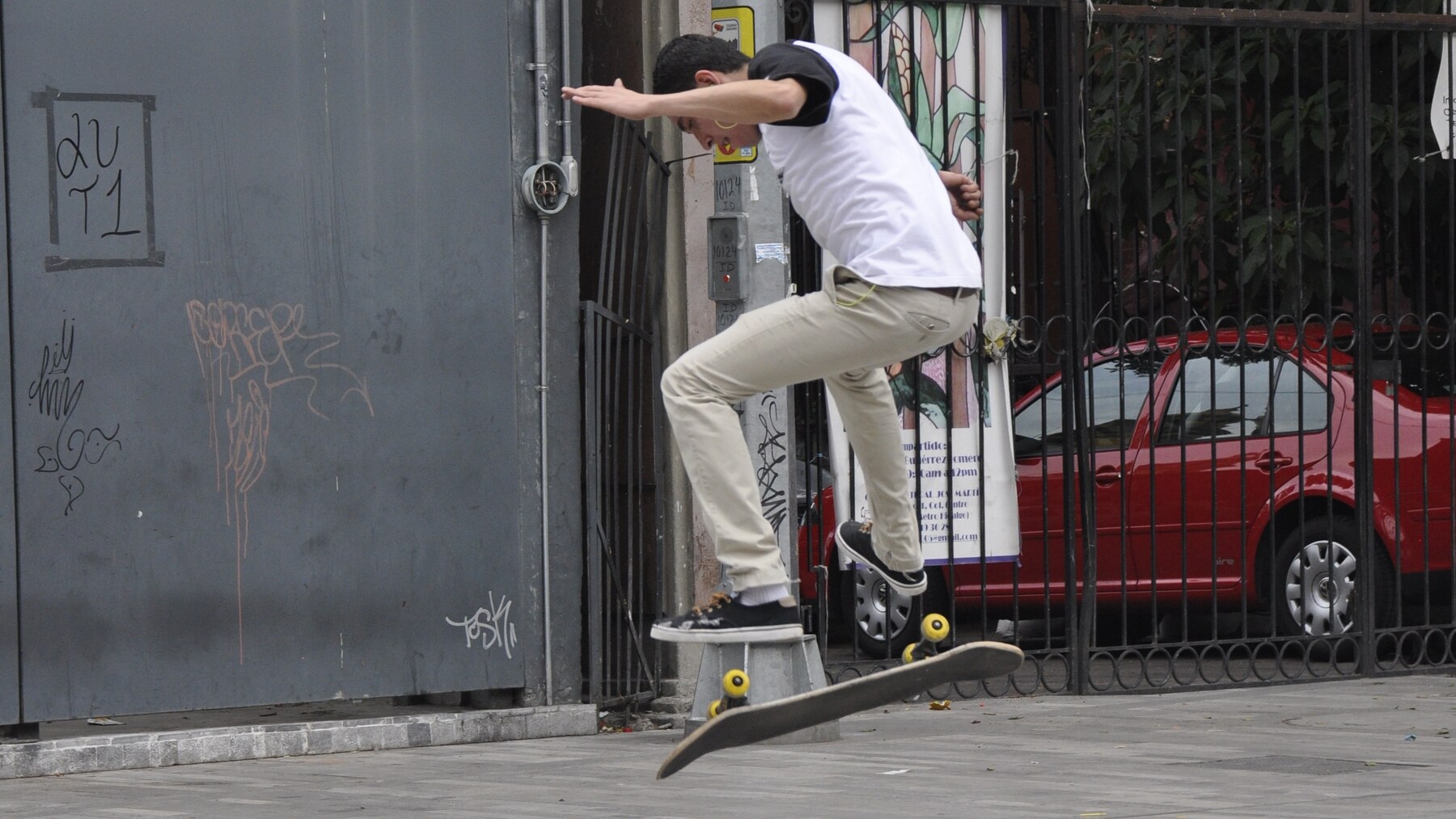
You're rolling fakie, you pop, and two things have to go: the board 360°, you 180°. On paper, at the same time. In real life, "at the same time" doesn't exist. One leaves before the other, and until you figure out which one, you're gonna spend your sessions picking your board up ten feet away.
You know the two possible endings. Version A: the board spins perfect, you're still facing backwards, watching it roll away. Version B: you turned, it didn't — 180 and it stops right there, stuck sideways.
It's never about power or pop height. A fakie bigspin six inches off the ground works just fine. It's about order. We're breaking down the motion, the four classic fails, the drill that fixes this in one session — and the answer on timing, exact, at the end of the article.
Level
Intermediate
Time
5-15h
Prereqs
Fakie ollie, pop shove-it
Surface
Smooth flat, slight roll
A trick named after a lottery game

A bigspin is an addition: the board does 360°, the rider does 180°, same direction. Two rotations, one pop. That's it, and that's already a lot.
The name doesn't come from skating. It comes from a California lottery game, The Big Spin. The guy who named the trick was watching Brian Lotti, born in 1972, his part in Now'N Later - 1991 for Planet Earth, and figured "Lotti" sounded like lottery. Nobody ever bothered to correct it.
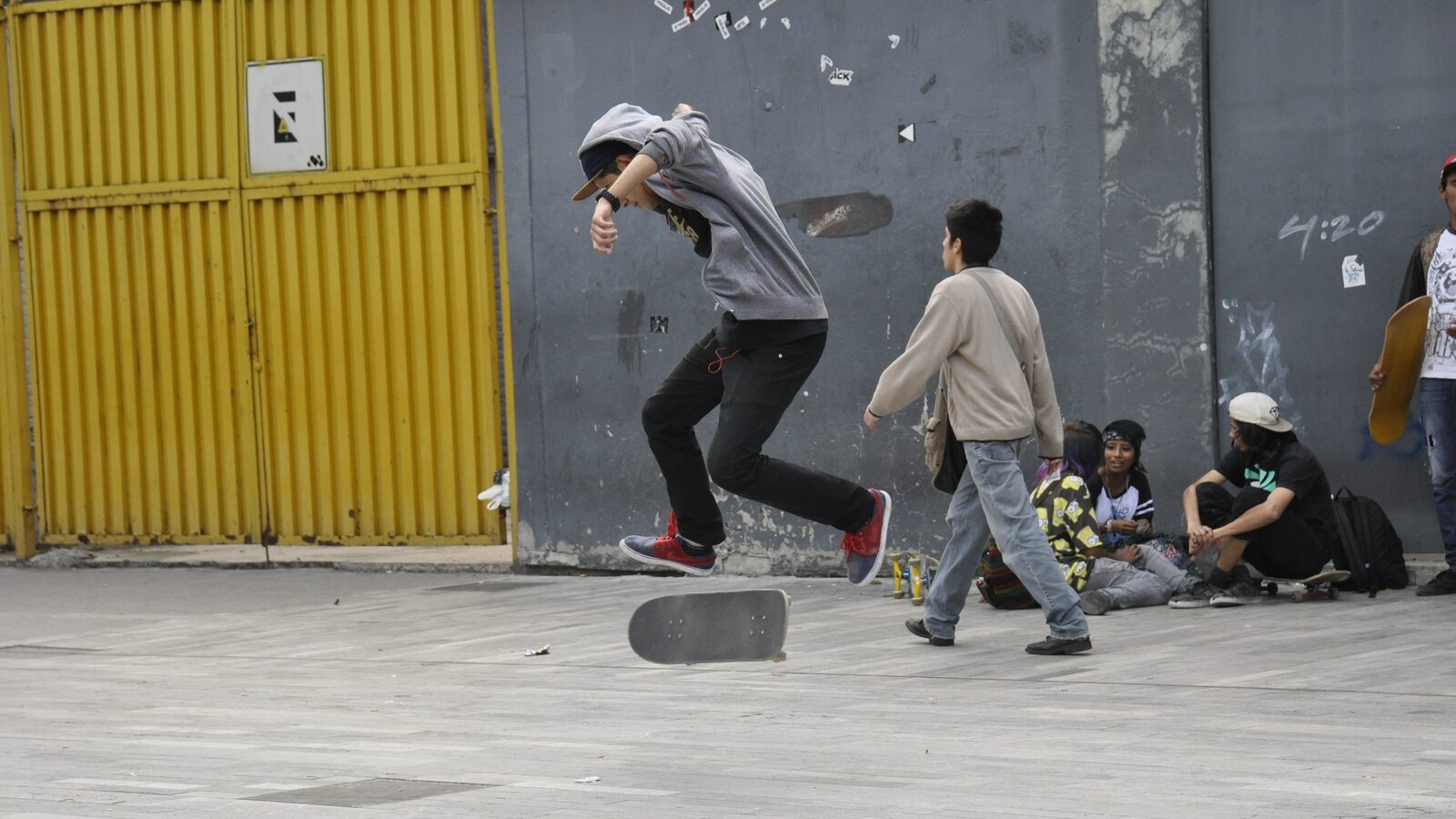
The fakie version adds the thing that makes the trick addictive: you take off rolling backwards and you come out riding forward. Your 180 puts you back the right way. That's why it ends up in every line — it doesn't break the flow, it relaunches it.
Also worth reading: The ollie in 6 steps, the foundation none of this holds up without.
What spins, and which way
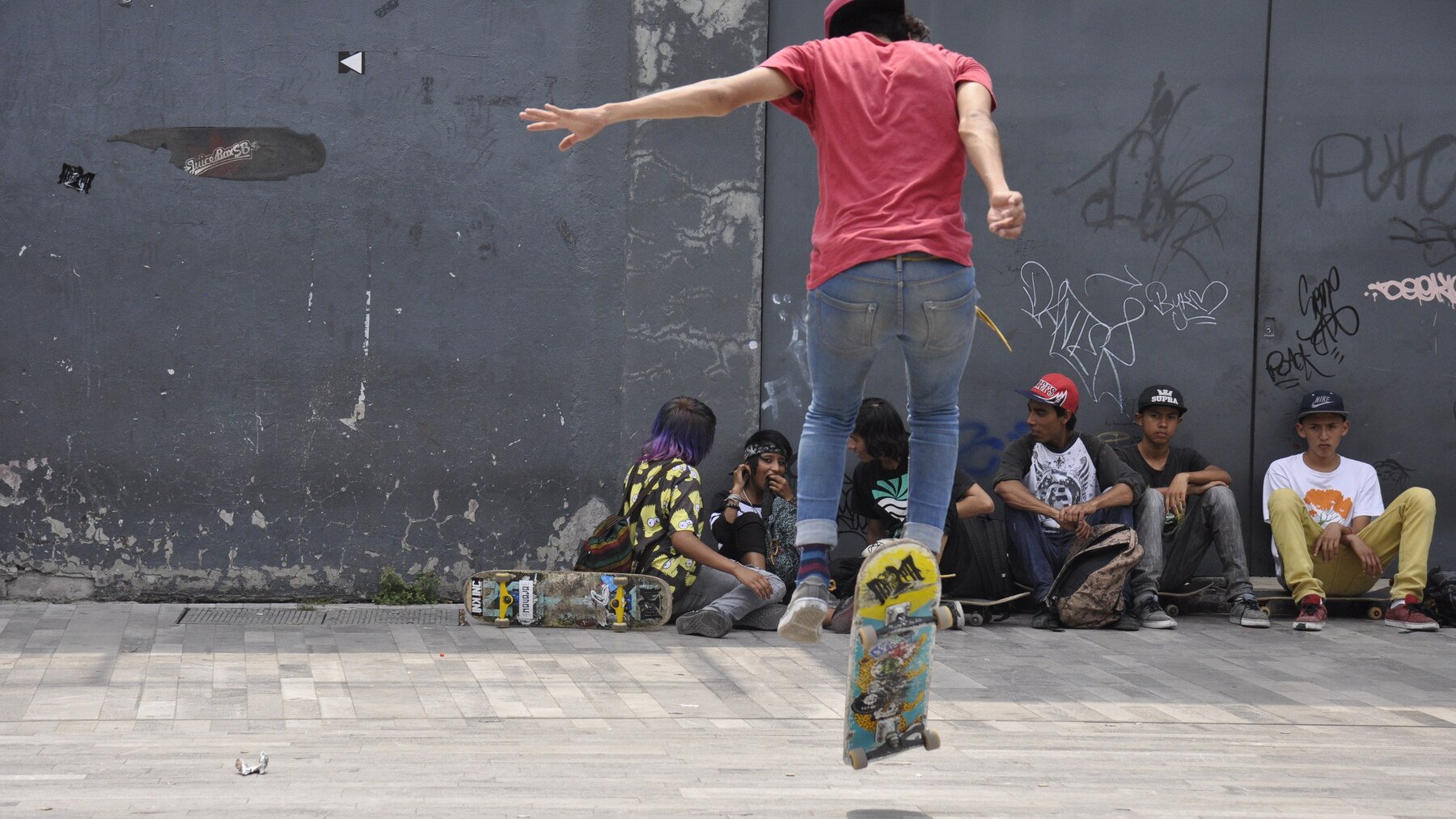
Before we talk timing, you need to know what produces what. In a bigspin, every degree has a specific cause, and it isn't the pop.
-
The feet: the back foot hangs off
Back foot on the tail, not centered: toes hanging slightly off the edge. That overhang is what lets you scoop. Front foot flat, pulled back a bit compared to a regular fakie ollie — you need room in front of it.
-
Winding up: you load the rubber band
Before the pop, you open your shoulders against the direction of rotation. Not a ton: a quarter turn of the upper body, arms low and close in. You're not turning yet, you're loading. All your body rotation is gonna come out of that, not from throwing your hips mid-air.
-
Pop and scoop: one single motion
You smack the tail and, in the same motion, you sweep the back foot backwards, heel side. That scoop is what makes the 360°. The pop alone gives you height; the scoop gives you rotation. A regular shove-it only goes 180 because the sweep stops halfway. Here you go all the way through, foot leaving the board out the back.
-
Releasing the shoulders
The rubber band snaps back. Your shoulders open, the chest goes, the hips follow. One rule: it happens AFTER the scoop, not during. We'll get into it in detail below — that's the whole point of this article.
-
The front foot waits, it doesn't go hunting
Big mistake: reaching for the board with your front foot. It stays up there, knee tucked, over the zone where the board reappears. The board comes back under it. Chase it and you land off the side.
-
The landing: you roll away forward
You set both feet over the bolts once the board has closed out its 360 and you've done your 180. Knees bent, weight centered. You were rolling backwards, now you're rolling forward: that's the gift of the fakie bigspin, it puts you back the right way around.
The 4 classic fails and how to fix them
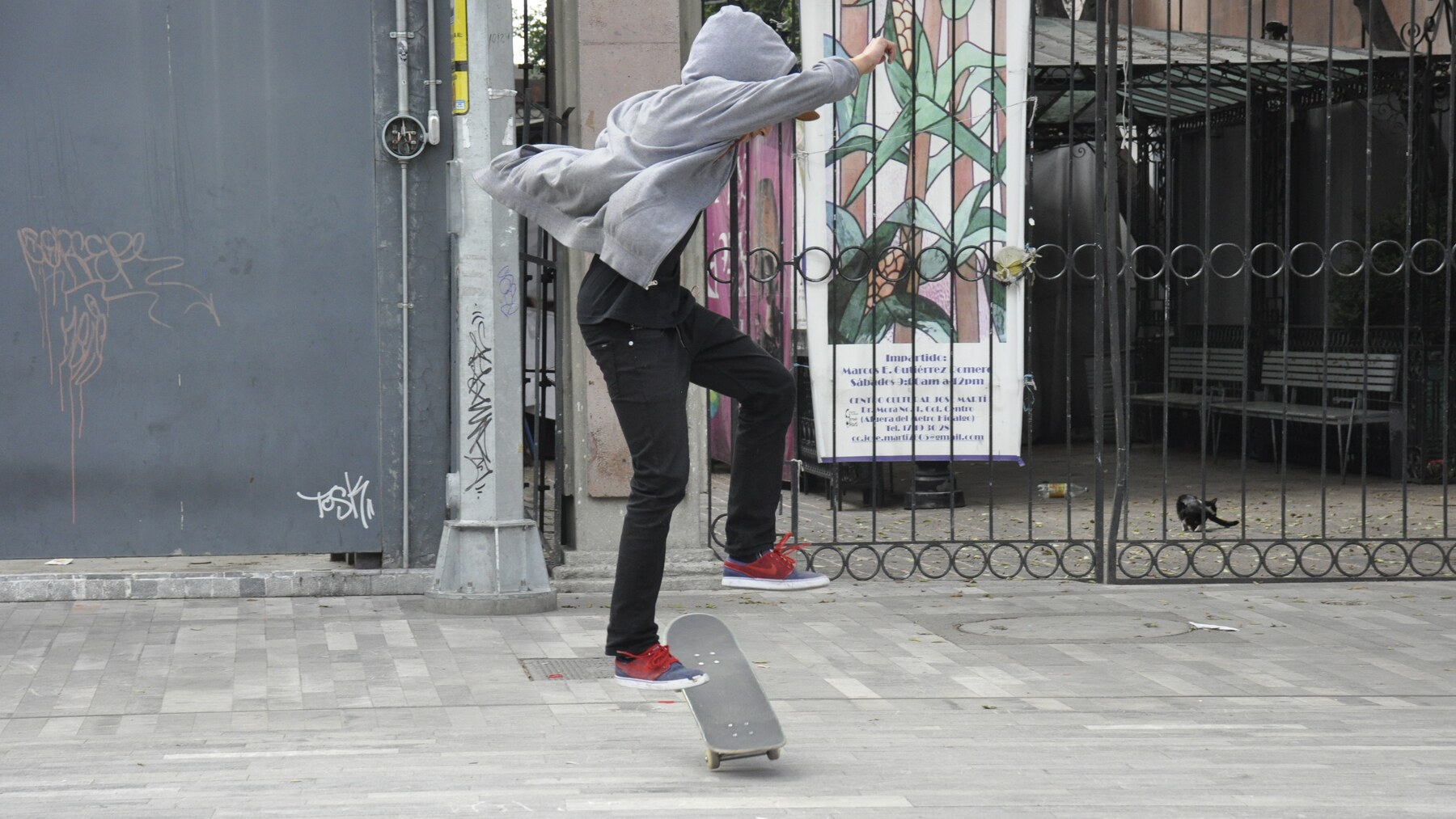
The 4 classic fails
- The board stops at 180: your scoop is too short. You pop and pull your foot straight up instead of sweeping it back. Overdo it: finish the motion like you're trying to throw your heel behind you.
- You turn, the board doesn't: you released the shoulders before the scoop. Your body goes, the back foot follows your chest and stops sweeping anything. Go do ten fakie 360 shove-its without turning at all, just to get the foot motion back.
- The board shoots out in front of you: you're scooping diagonally forward instead of back, or your pop is off-axis. Check that your tail is hitting flat, not on a corner.
- One foot on grip, one in the air: your front foot went hunting. Leave it up over the spot where the board comes back, and look at the bolts, not the nose.
The drill that fixes the timing in one session
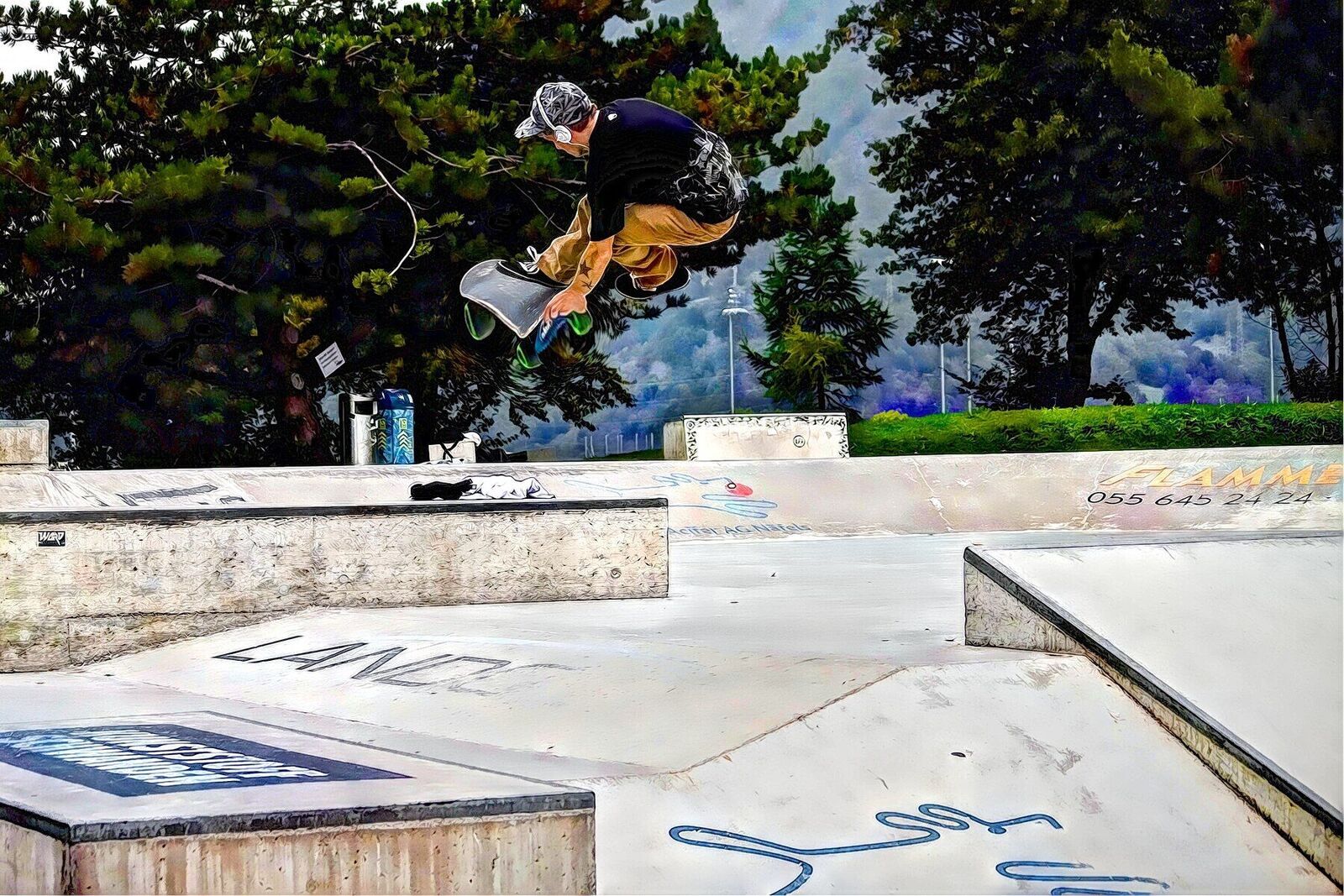
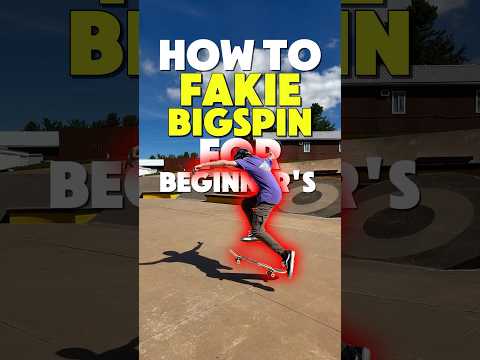
You don't learn the fakie bigspin all at once. It's two motions you learn separately before you glue them together. In this order.
Step 1 — the fakie 360 shove-it, on its own. You pop, you scoop all the way, you keep your body perfectly square. The board does a full rotation under you and you catch it without having turned a single degree. Until you've got three clean landings in a row, you add nothing. That drill is what teaches you how fast your board spins, and that speed is what dictates your timing.
Step 2 — the body's fakie 180, no board rotation. A plain fakie ollie with a 180 of the chest, the board following without spinning on itself. Same principle as the backside 180, where your chest goes before your board. Remember that line, because on the bigspin it's the exact opposite.
Step 3 — you glue them. Scoop first, shoulders after. And that's when you realize the question isn't "how" anymore, it's "when."
So, which one leaves first?
The board. Always. No exceptions, on every bigspin, fakie or not.
And it's not a style preference, it's mechanics. Your board has 360° to cover, you have 180°, half as much. Leave together and you finish your rotation while it's only halfway through its own, and you watch it close out the spin without you. The body being late isn't a flaw to fix, it's the setting.
The exact cue, the one you can put to work next session: your shoulders release once the board has done its first quarter turn, roughly 90°. Not on the pop. Not when you feel the tail crack. One beat later, when the nose has already started coming around in front of you.
By feel it's even simpler: you have to feel the sweep in your back calf before you feel your front shoulder open. Two signals, two moments, never one. If they show up together, you're late on the board: it never got time to get going and your body is dragging it around.
We're talking tenths here: at normal pop height, there's less than a tenth of a second between the scoop and the release. That's why you can't think it, you repeat it until the body knows it. The step 1 drill exists for that and nothing else.
Once the timing is in, it never leaves you. It's the way into the fakie bigspin flip and into the tre flip, which runs on that same scoop pushed all the way through. And the day you land one rolling, you get why everybody puts it at the end of a line: you come out facing the rest of the spot, ready to keep going.
Your fakie bigspin — does it fall apart on the scoop or on the shoulders? Tell us where it breaks down for you. Drop it in the comments ↓
Le lexique
-
1
fakie
Rouler en arrière en gardant sa position de pieds habituelle. Le tail passe devant, le nose derrière.
-
2
scoop
Balayage du pied arrière vers l'arrière au moment du pop. C'est lui qui donne sa rotation à la planche.
-
3
tail
L'extrémité arrière relevée de la planche, celle qu'on frappe au sol pour décoller.
-
4
pop shove-it
Figure où la planche tourne à 180° sous les pieds après un pop, sans que le rider tourne.
Shop NOSK8
Voir toute la boutique →
TEE-SHIRTS
TEE-SHIRT NOSK8® P.B HEART #PHILI
Le prix initial était : 35,00 €.29,00 €Le prix actuel est : 29,00 €.
TEE-SHIRTS
TEE-SHIRT NOSK8® MATRICE HEART #CMD
Le prix initial était : 35,00 €.29,00 €Le prix actuel est : 29,00 €.
TEE-SHIRTS
TEE-SHIRT NOSK8® P.B HEART #PARIS
Le prix initial était : 35,00 €.29,00 €Le prix actuel est : 29,00 €.
TEE-SHIRTS
TEE-SHIRT NOSK8® P.B HEART #PARENTALADVISORY
Le prix initial était : 35,00 €.29,00 €Le prix actuel est : 29,00 €.
TEE-SHIRTS
TEE-SHIRT NOSK8® P.B HEART #BARÇA
Le prix initial était : 35,00 €.29,00 €Le prix actuel est : 29,00 €.
CASQUETTES
CAP NOSK8® P.B #POLARBEAR
Le prix initial était : 35,00 €.25,00 €Le prix actuel est : 25,00 €.
CASQUETTES
CAP NOSK8® N8 #NOSK8
Le prix initial était : 35,00 €.25,00 €Le prix actuel est : 25,00 €.
CASQUETTES
CAP NOSK8® P.B.P #PAW
Le prix initial était : 35,00 €.25,00 €Le prix actuel est : 25,00 €.
HOODIES
HOODIE NOSK8® MATRICE HEART #ALT
Le prix initial était : 60,00 €.49,00 €Le prix actuel est : 49,00 €.
HOODIES
HOODIE NOSK8® MATRICE HEART #CTRL
Le prix initial était : 60,00 €.49,00 €Le prix actuel est : 49,00 €.
HOODIES
HOODIE NOSK8® I.L.N #ILOVEN8
Le prix initial était : 60,00 €.49,00 €Le prix actuel est : 49,00 €.
HOODIES
HOODIE NOSK8® NOSKATE #NSITA
Le prix initial était : 60,00 €.49,00 €Le prix actuel est : 49,00 €.
HOODIES
HOODIE NOSK8® P.B HEART #BARÇA
Le prix initial était : 60,00 €.49,00 €Le prix actuel est : 49,00 €.
SWEAT
SWEAT NOSK8® P.B HEART #NYC
Le prix initial était : 45,00 €.39,00 €Le prix actuel est : 39,00 €.
SWEAT
SWEAT NOSK8® P.B HEART #PARIS
Le prix initial était : 45,00 €.39,00 €Le prix actuel est : 39,00 €.
SWEAT
SWEAT NOSK8® P.B HEART #POLARBEAR
Le prix initial était : 45,00 €.39,00 €Le prix actuel est : 39,00 €.
SWEAT
SWEAT NOSK8® P.B HEART #BARÇA
Le prix initial était : 45,00 €.39,00 €Le prix actuel est : 39,00 €.
SWEAT
SWEAT NOSK8® P.B HEART #PHILI
Le prix initial était : 45,00 €.39,00 €Le prix actuel est : 39,00 €.
Continue ta lecture
TricksBackside 180 : ton buste part avant ta planche — comment on règle ça en 3 temps ?
Ton corps finit sa rotation, ta planche en est à 90°. Ce n'est pas ta hauteur d'ollie le problème — c'est l'ordre. Les 3 temps…
Commentaires (0)