
ℹ️ 🛹 Web Média Skate 🛹 ℹ️

Conseils
Rolling Off a Curb on a Skateboard: Every Street Has 2 cm That Change Everything
Tu bloques au premier trottoir ? Descendre ne demande aucune figure : vitesse, genoux pliés, poids sur le pied arrière. Et la loi t'offre 2 cm dans chaque rue.

→ Pour aller plus loin : Skater sous la pluie : ce que ça détruit vraiment sur ta planche
Level: Beginner
You're comfortable on flat ground. You push, you turn, you're even starting to feel at home on the board. Then the first curb shows up, and everything freezes: you slow down, put a foot down, and step off like a pedestrian with a board under their arm.
Everybody goes through it. Rolling off a curb is the first real obstacle between you and actually skating the streets — not just doing laps in a parking lot.
The good news: it takes zero tricks. None. And there's even a spot on every street in France where the curb is only two centimeters high. We'll get there, but first you need to understand why you keep getting bucked off.
Skip the classic mistake
Braking right before the edge. It's everyone's reflex, and it's exactly what sends you to the ground. Too slow, your front wheels drop into thin air, the nose dives, and the board stops dead while you keep going. The slower you roll, the harder you eat it. You take a curb with speed, not against it.
Why the first curb bucks you off

A board is two trucks. When you reach the edge, the front truck rolls out into nothing and there's nothing left holding it up. Right at that moment, one thing decides your fate: where your weight is.
Weight forward, the nose dives, the wheels hit the lower pavement first, the board digs in and you go headfirst. Weight back, the nose stays up, the back truck clears the edge, and all four wheels land at almost the same time. You keep rolling like nothing happened.
That's it. No technical secret, no hidden trick. The move is called a roll-off — literally rolling off the edge. Here's how to do it clean.
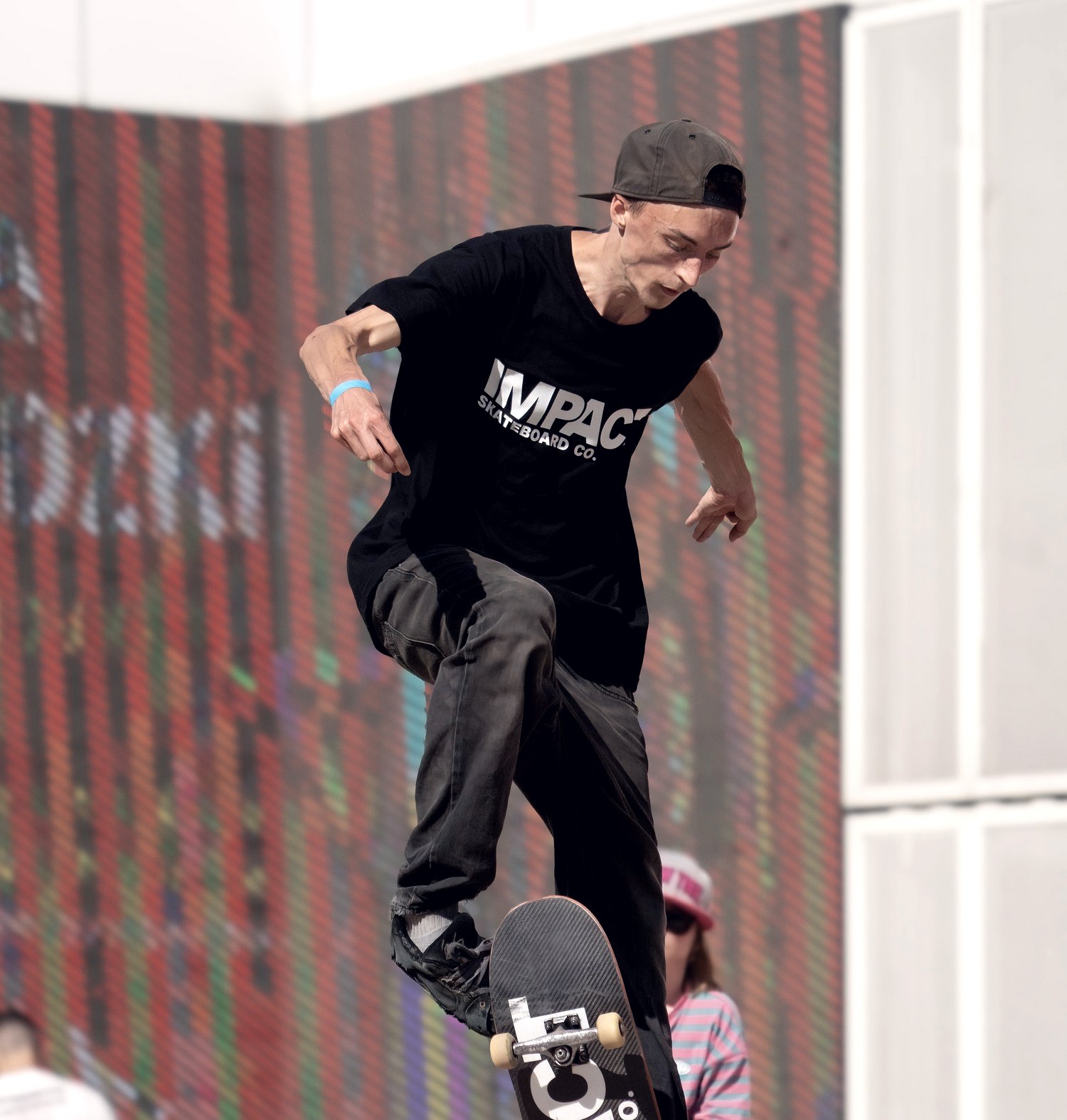
- Come in straight, square to the edge — never at an angle. Hit it crooked and one wheel drops before the other, the board pivots on its own and you end up sideways in midair.
- Keep your speed — an easy jogging pace is plenty. Don't brake in the last ten feet.
- Bend your knees — get low, like you're sitting down on an invisible chair. Your legs become your shocks.
- Shift your weight onto your back foot right before the edge, to lift the nose slightly. Not a jump: a weight shift, just like when you turn.
- Look far ahead, not at your feet. Your body always follows your eyes — stare at the ground and that's where you'll end up.
- Absorb the landing by letting your knees bend even more. Stiff legs = shock in your ankles and a board that bounces.
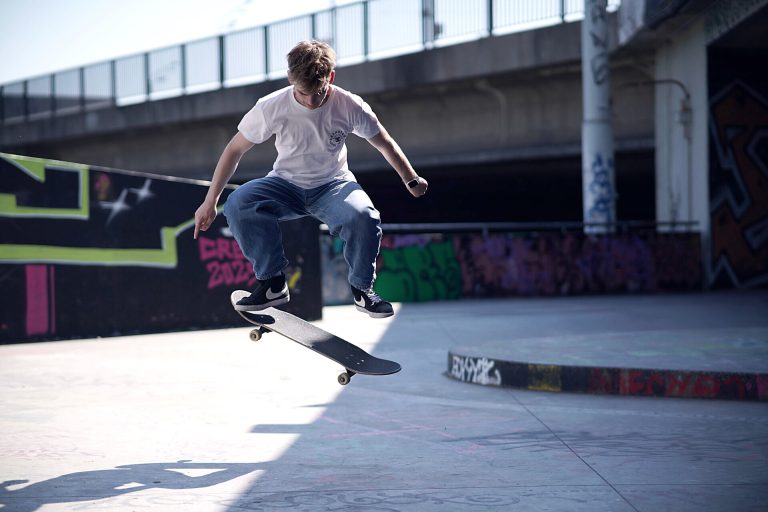
The 4 beats of the move, frame by frame
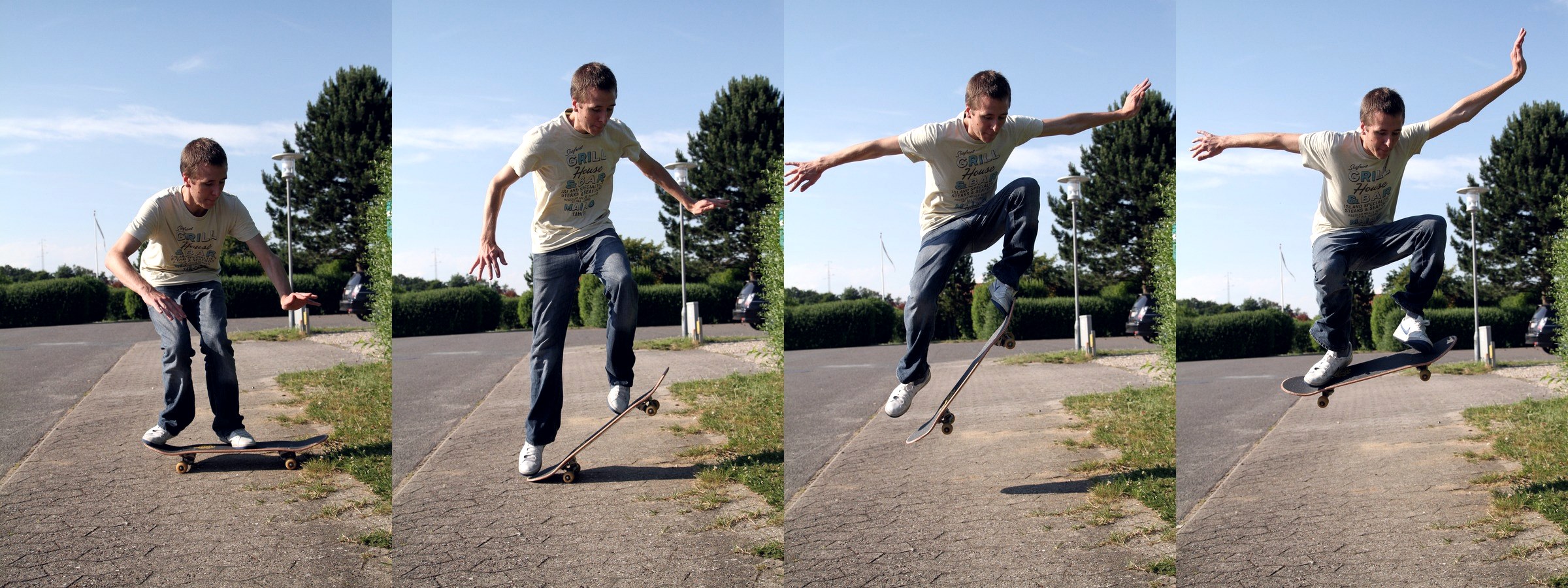
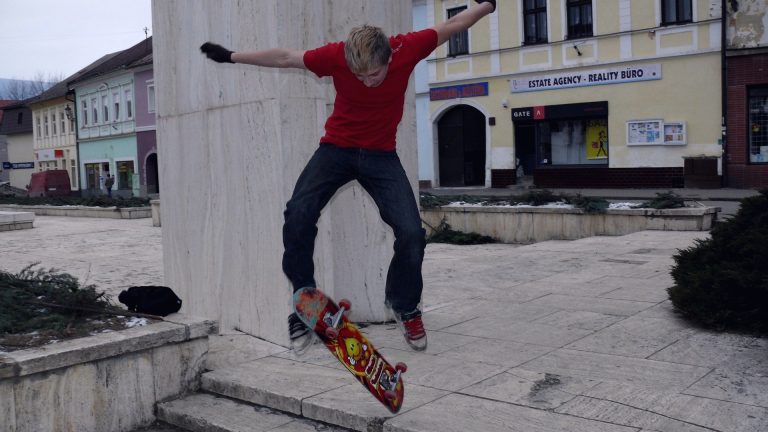
Getting down, you've got now. Getting up onto a curb is a different story: there, you have to get the board off the ground. That's the ollie, the foundational trick invented in 1978 by Alan Gelfand.
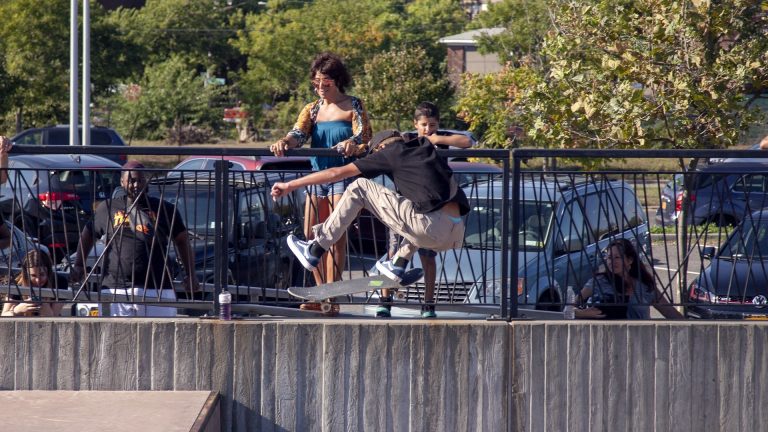
In the sequence above, you can see the four beats. Crouched and compressed. The back foot slams the tail into the ground — that's the pop, the sharp crack of the board bouncing back. The front foot slides up the grip toward the nose. And both feet end up level, board stuck underneath.
Don't go after the ollie until the roll-off is automatic. The logical order is down first, up second. If you want to get your body ready for the jump without risking your board, the hippie jump is the perfect drill: you jump, the board keeps rolling on its own, you land back on it.
Remember this
Rolling off a curb takes zero tricks. Getting up onto one takes one. A lot of beginners stall because they think they need to jump for both — and they never try the easier of the two. Start with low curbs, the 5-to-8-centimeter ones around parking lots, and work your way up.
Nobody's watching you as much as you think
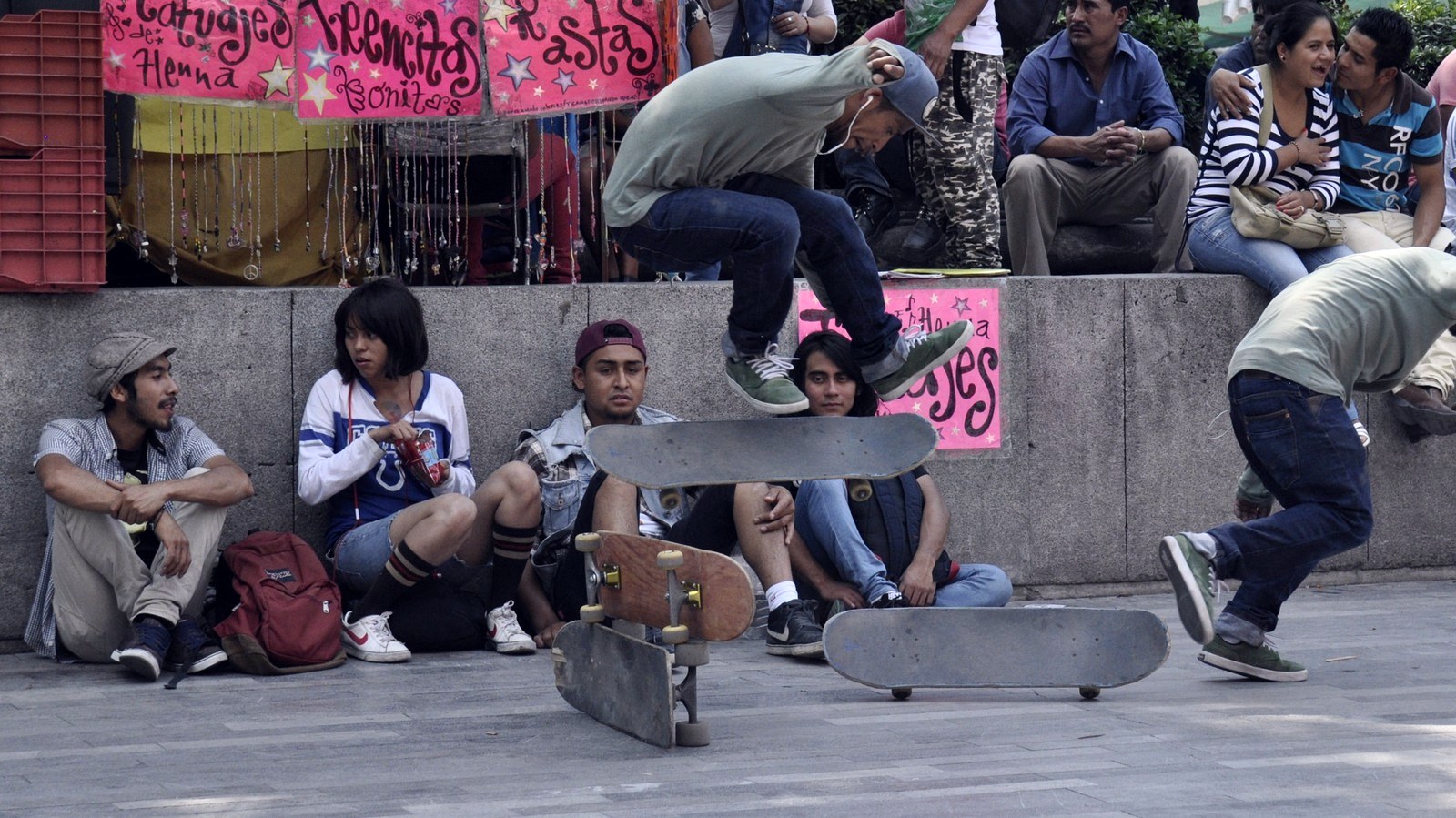
The real reason a lot of people never try isn't technique. It's the fear of being seen eating it in front of a bus stop.
Except out in the street, people are on their phones. The ones actually watching are other skaters — and they know exactly what you're going for, because they've blown the same move dozens of times. Nobody has ever laughed at a beginner who tries. People laugh at the ones who don't.
Where to practice before you hit the streets
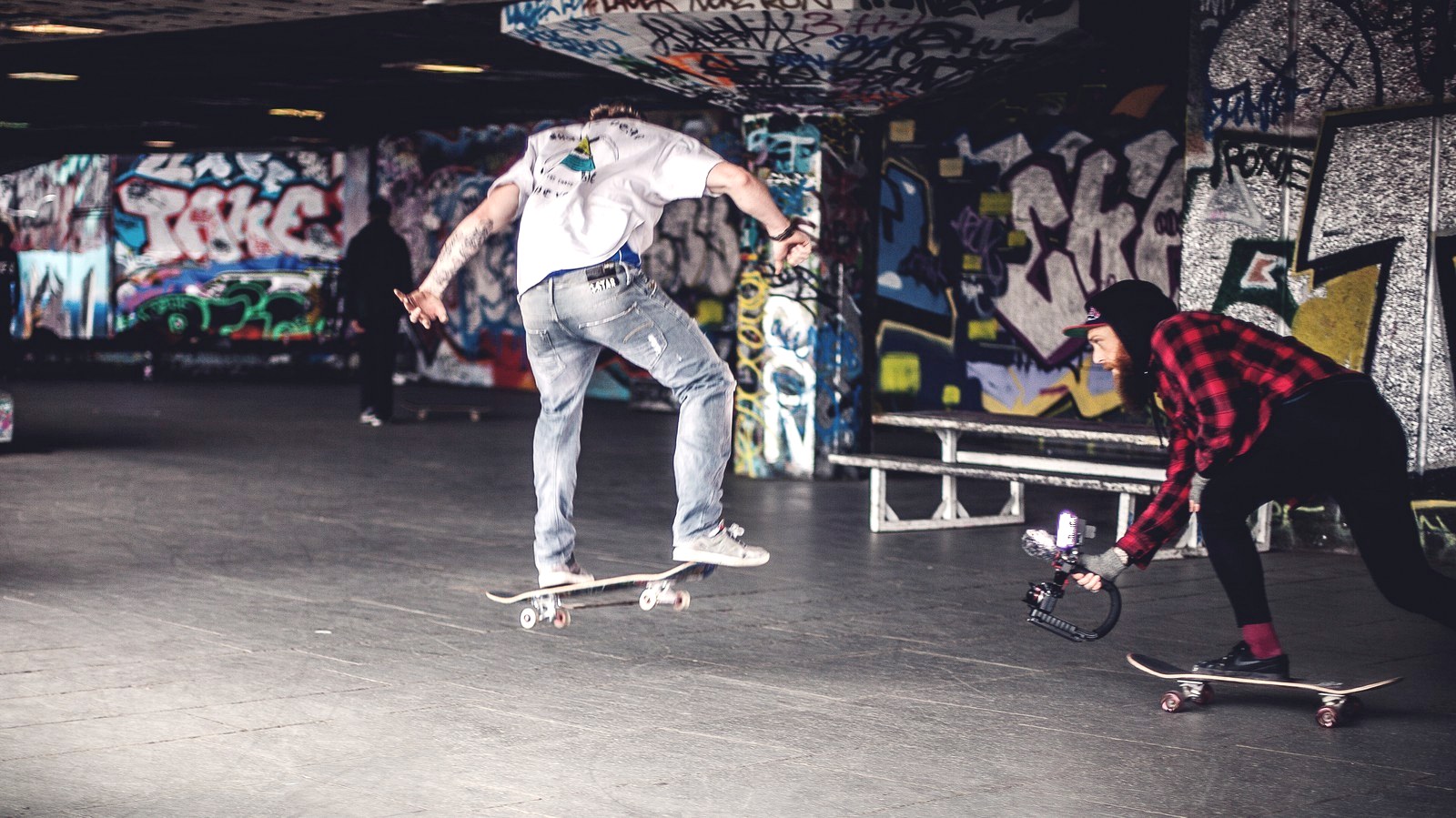
Don't take your first tries between two parked cars. Find a spot where falling costs nothing:
- A supermarket parking lot on a Sunday — smooth asphalt, low curbs everywhere, zero traffic. The best training ground in France, and it's free.
- A business park in the evening — same curbs, nobody around after 7 p.m.
- A skatepark, on the flat away from the obstacles — the ground is perfect and nobody's going to judge you.
- A schoolyard or gym on the weekend — often the only truly smooth surface in a small town.
Count on about twenty passes over the same low curb before it becomes automatic. That's not much. That's one afternoon.
How long before it feels natural ?
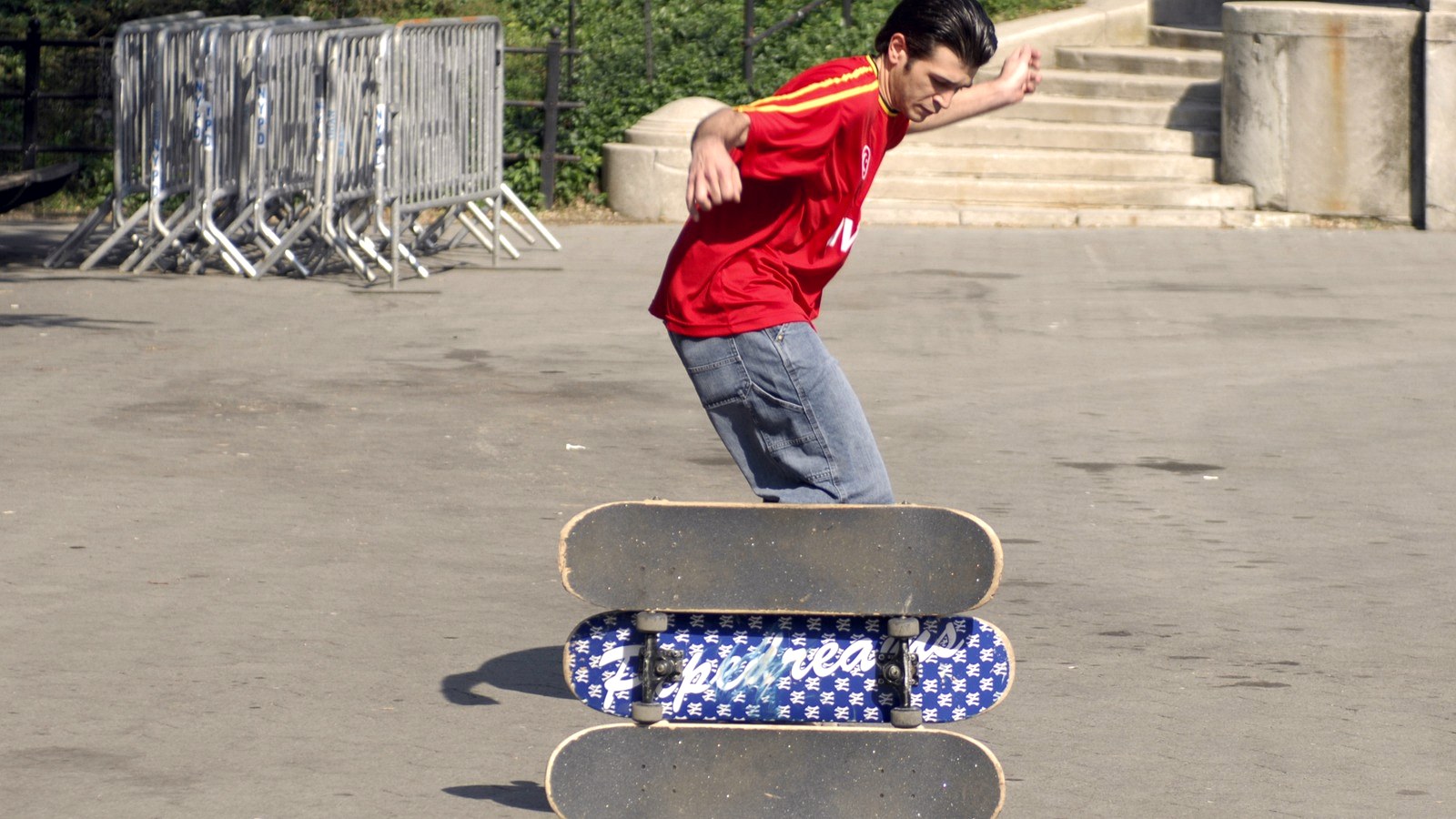
Nobody can give you an exact number, but the ballpark is always the same: one to three sessions to roll off a low curb without thinking. That's short. Way shorter than what you imagine when you're stuck at the edge.
What takes time is what comes next — getting up onto it, linking things together, landing a trick. There, the clock runs in weeks, not afternoons. The good news is that getting down is the easy part, and on its own it unlocks 90 % of your movement through the city.
One last checkpoint: if you've been putting a foot down on every try for twenty minutes, don't force it. Lower the height, do ten clean passes on a smaller curb, then come back. Progress in skating always means stepping down one notch before climbing two.
The 2 centimeters the law hands you on every street
Here's the part nobody told you, and it's the one that changes your everyday.
In France, at every crosswalk, the curb has to be lowered — that's what's called a curb cut. And accessibility regulations are very precise about it: the lip can be at most 2 centimeters high (up to 4 centimeters if the edge is beveled). It's written into the street accessibility rules, and it applies everywhere, in every town.
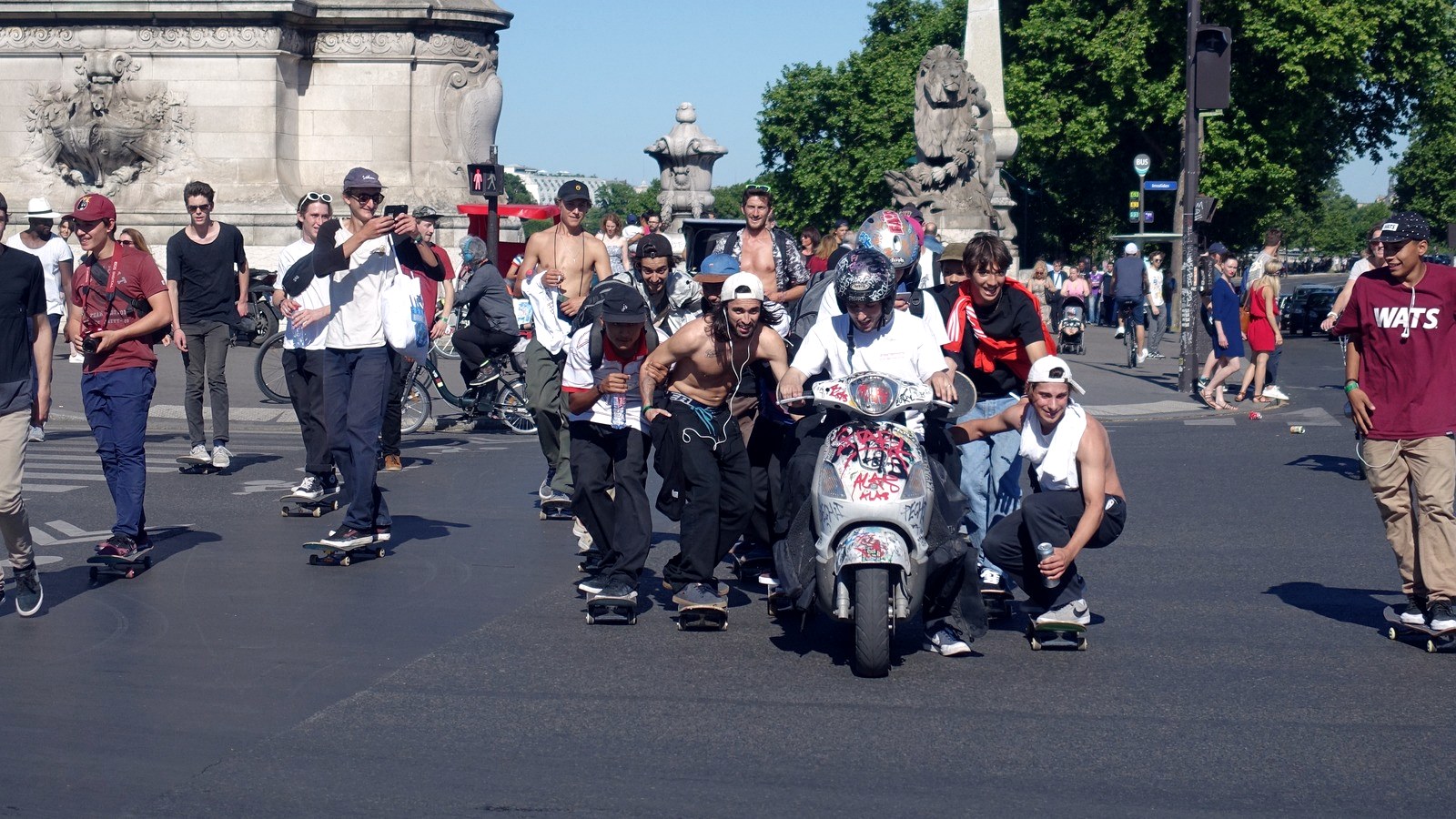
Two centimeters is less than the width of a two-euro coin. Your wheels roll over it without you needing to jump, shift your hips, or even really think about it. Just come in straight and keep your speed.
In other words: on any street, every fifty meters, there's an entrance and an exit to the sidewalk cut just for you. Your city is already full of spots you can roll through — you just weren't seeing them.
So here's the full answer, the one we promised you at the top of this page. To roll off a curb: speed, a straight line, knees bent, weight on the back foot, eyes far ahead. And for everywhere else you need to go, the 2-centimeter curb cuts at the crosswalks do the work for you. You don't need to know how to jump to skate the city starting today. You just need to know where to look.
The gear that actually makes a difference
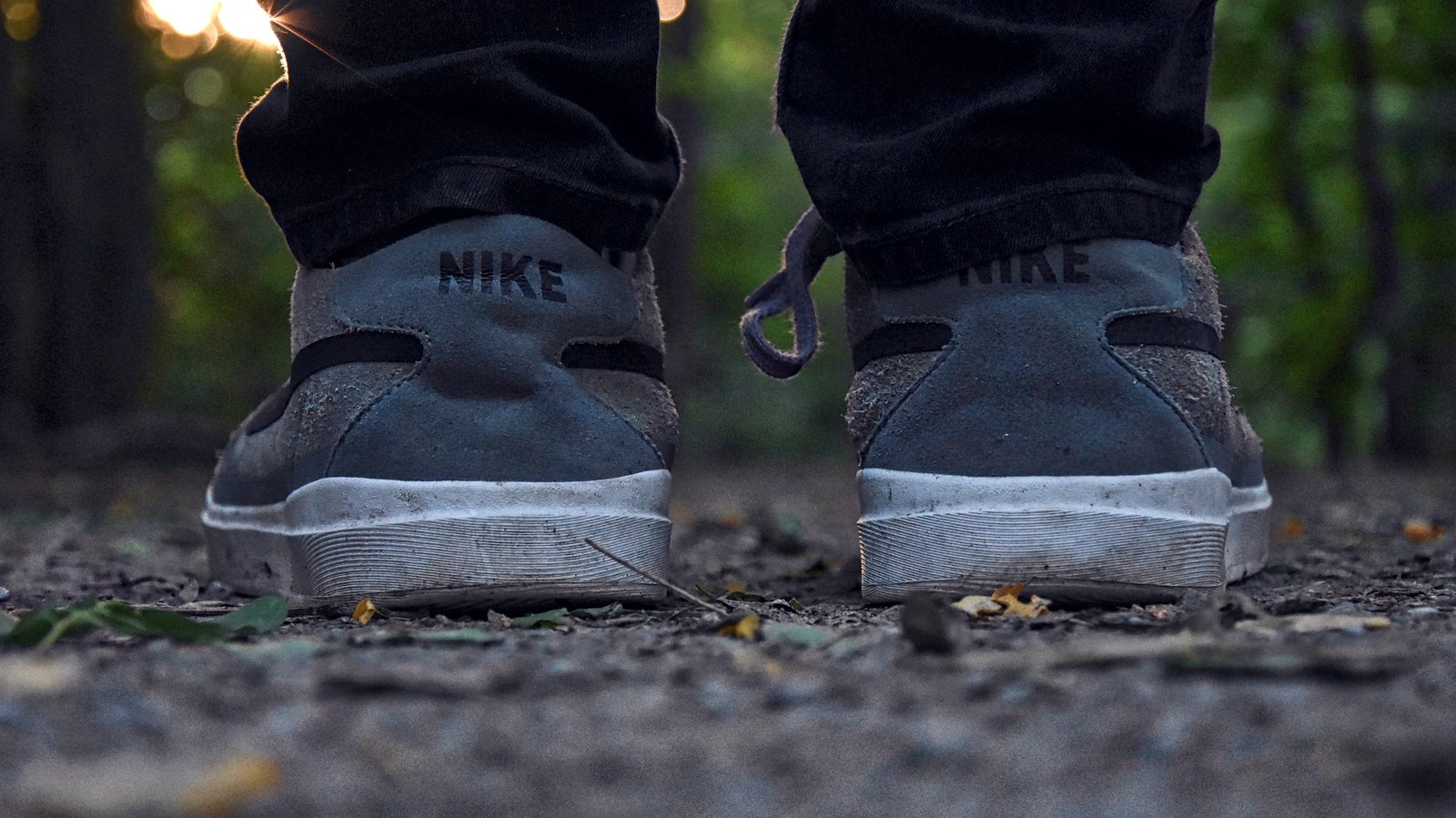
Three things matter for skating the streets, and all of them are within reach:
- Wheels that are big enough. Under 52 mm, every pebble stops you dead. For street, aim for 54 to 56 mm in 99A — more forgiveness on rough asphalt without losing speed.
- Flat-soled shoes. A running sole is curved: your foot rolls on the board and you lose contact at the worst possible moment. Entry-level models are more than enough to get started.
- A helmet. Non-negotiable when you're learning to clear edges. Check for the EN 1078 standard on the label, it's the only thing that matters.
Shop-wise, Decathlon is still the easiest option for a first helmet and pads without blowing your budget. For a properly assembled complete, a real skate shop or Skatedeluxe will get you gear that lasts longer than two weeks. If you don't have your board yet, start by picking the right deck size — everything else follows from there.
Frequently asked questions
Do you need to know how to ollie to roll off a curb?
No, and that's the number one mix-up. Getting down is done rolling, without the board leaving the ground. The ollie is for getting UP onto the curb, or clearing an obstacle. A lot of beginners wait months until they can jump when they could already be rolling off any curb in town.
How high a curb for a first try?
Start with 5 centimeters, the height of parking-lot curbs. Move up to 10 once you stop putting a foot down. A standard city curb is no problem once those two steps are locked in — same feeling, just a little longer to absorb in the knees.
My board makes a horrible noise when it lands, is that normal?
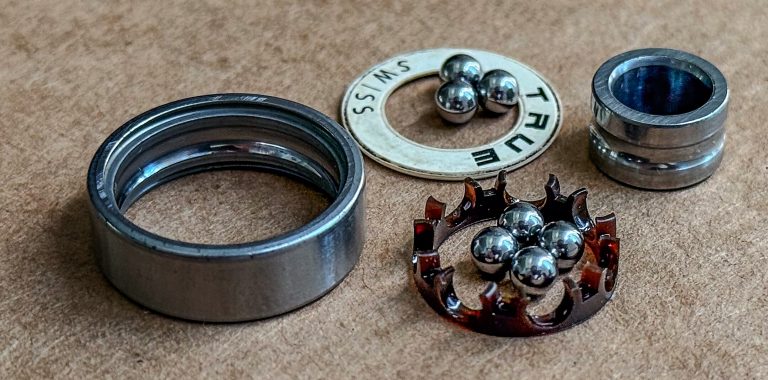
Yes, a sharp crack on landing is normal. What's not is a constant grinding afterward: that means your bearings took a hit or picked up grit. If the sound sticks around, pull the bearings and clean them. And bend your knees more on landing — absorbing the impact is your job, not the board's.
Can I learn without going to the skatepark?
Totally. The roll-off is learned on any low curb, and most of your progress happens on flat ground. If the skatepark still intimidates you, you can even start with tricks that don't require jumping, like the no comply.
The first curb you roll off is the moment your board stops being a parking-lot toy and becomes a way to get around. After that, you never look at a street the same way again. You see lines.
Go skate.
What was your first curb, and how many times did you put a foot down before you made it ? Tell us in the comments ↓
Follow NOSK8 where you hang out
Parts, spots, behind the scenes: it all drops on the accounts first.
Le lexique
-
1
ollie
Figure de base qui consiste à faire décoller la planche du sol sans les mains, en claquant l'arrière contre le sol.
-
2
tail
L'arrière relevé de la planche. C'est lui qu'on claque contre le sol pour décoller.
-
3
nose
L'avant relevé de la planche, à l'opposé du tail.
-
4
pop
Le rebond sec de la planche quand le tail claque le sol. Plus il est franc, plus la planche monte haut.
-
5
roll-off
Franchir un bord en roulant, sans sauter, en reculant simplement son poids sur le pied arrière.
Continue ta lecture
ÉvénementsAsian Games 2026 : 4 titres de skate en 4 jours, et le Japon n’en a gagné qu’un la dernière fois
Park et street du 24 au 27 septembre au Hall B d’Aichi Sky Expo : programme jour par jour, prix réels des billets, horaires en…
Commentaires (0)