
ℹ️ 🛹 Web Média Skate 🛹 ℹ️

Conseils
Old School Skateboards: Why Is Everyone Back On 10 Inches?
Shapes larges, rééditions Powell Peralta et Santa Cruz : le skate old school revient partout. Pourquoi ça marche, et quel deck vintage prendre selon ton niveau.

→ Pour aller plus loin : Skater sous la pluie : ce que ça détruit vraiment sur ta planche
Level: Beginner
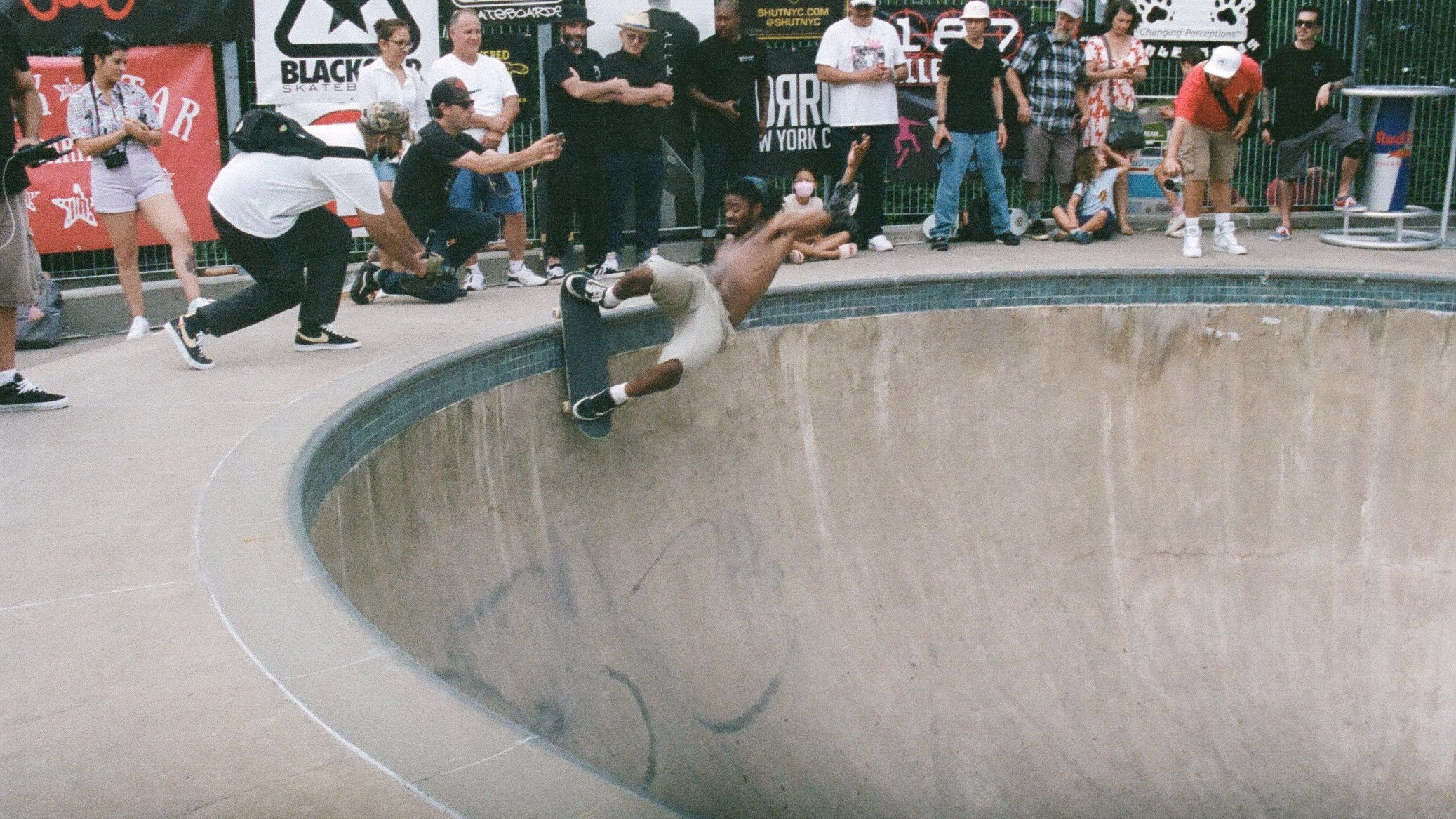
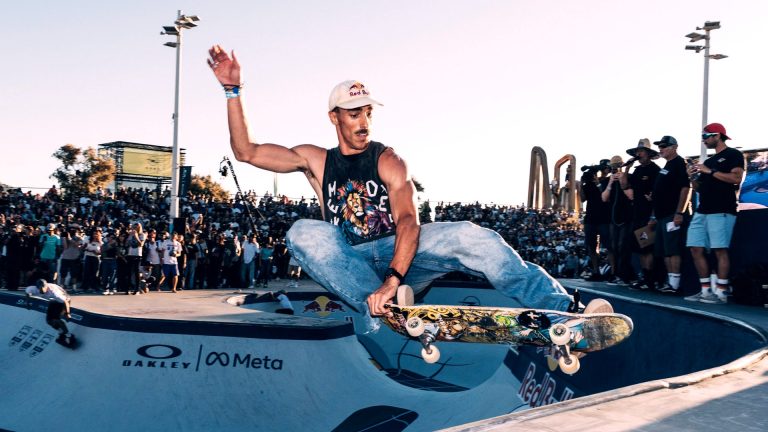
You’re scrolling, and this board pops up. Wide as a cutting board, a big round nose, a skull graphic on the bottom like something off your dad’s old tee. Under the feet of a guy absolutely flying around a bowl. And you’re left wondering what that thing even is.
It’s called an old school deck. A shape from the 70s and 80s, back on the shelves today, sold by the very brands that invented it. And right now it’s everywhere: in the shops, all over TikTok, under the feet of everyone riding bowls.
The real question isn’t whether it looks cool. It’s whether you should actually buy one. The answer is further down — but it’s not the same depending on what you want to do on your board.
Don’t make the classic mistake
The mistake we see all the time: a beginner buys an old school because the graphic looks sick, then spends three weeks bailing ollies on it. Makes sense. A 10-inch board is almost an inch wider and usually has a single tail — it was never built for learning street tricks. You’ll think you suck when really it’s just the wrong tool for the job.
So what exactly is an old school deck

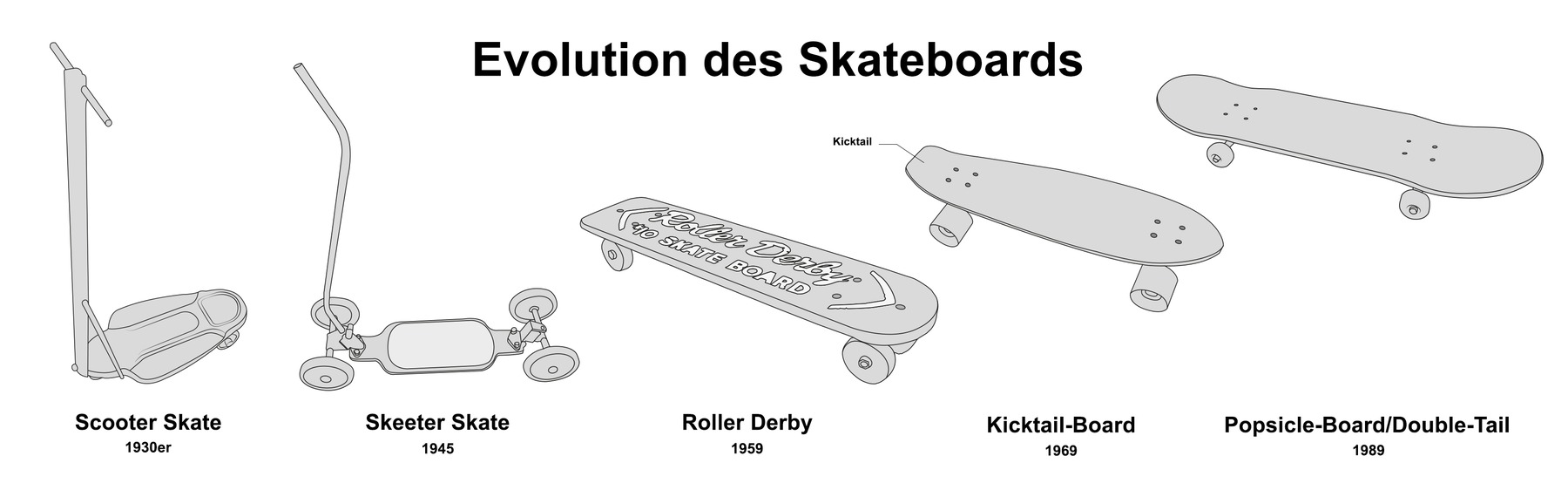
Your current board is what’s called a popsicle: the popsicle-stick shape, symmetrical, with a nose and tail that match. It’s been the standard since the early 90s. Widths run from 7.5 to 9 inches, and the best-selling size in the world is the 8.25 at 32.475 inches long.
An old school flips that whole logic. Wider. Often a single kicktail (the upturn at the back), a flat or pointed nose, sometimes fishtail cutouts. At Santa Cruz, some shapes on sale today go up to 10.35 inches wide. Next to that, your 8.25 looks like a ruler.
Here are the four widths that actually matter, and who they’re for:
- 8.25 inches — the standard — This isn’t old school, it’s your reference point. Street, skatepark, tricks. If you’re still learning to ollie, stay here.
- 9.0 inches — the first step — The most rideable wide shape. Stable enough to cruise and carve, still light enough to pop an ollie. The smart compromise if you want a taste without ditching your current setup.
- 9.5 inches — for transition — Bowl, ramp, transitions. Your feet get room to breathe, and the board holds its line on its own at speed. Street tricks get tough.
- 10 inches and up — pure old school — Concrete pools, coping, big transition. It’s a tank. You’re not flipping this thing anymore — you’re grinding and hauling speed.
- Don’t look at the length — Same as on a modern board: width decides everything else. Length just follows.
- Look at the number of tails — A single kick at the back means no riding or popping switch. That’s the real old school marker, way more than the graphic.
Why these boards are back right now
These shapes didn’t come out of nowhere. Powell Peralta was born in 1978, founded by George Powell and Stacy Peralta. A year later they launched the Bones Brigade — the team a teenage Tony Hawk, Rodney Mullen and Steve Caballero all rode for. The boards from that era? That’s old school.
The brand brought its vintage models back under the Powell Classic name starting in 2005, then folded everything back in at the end of 2010. In March 2011, VCJ — the artist behind the skulls and skeletons of the 80s — came back to work with them. Over at Santa Cruz, the parent company has been around since 1973, and the famous Screaming Hand was drawn by Jim Phillips Sr. in 1985. You’ve seen these graphics on t-shirts without ever knowing where they came from.
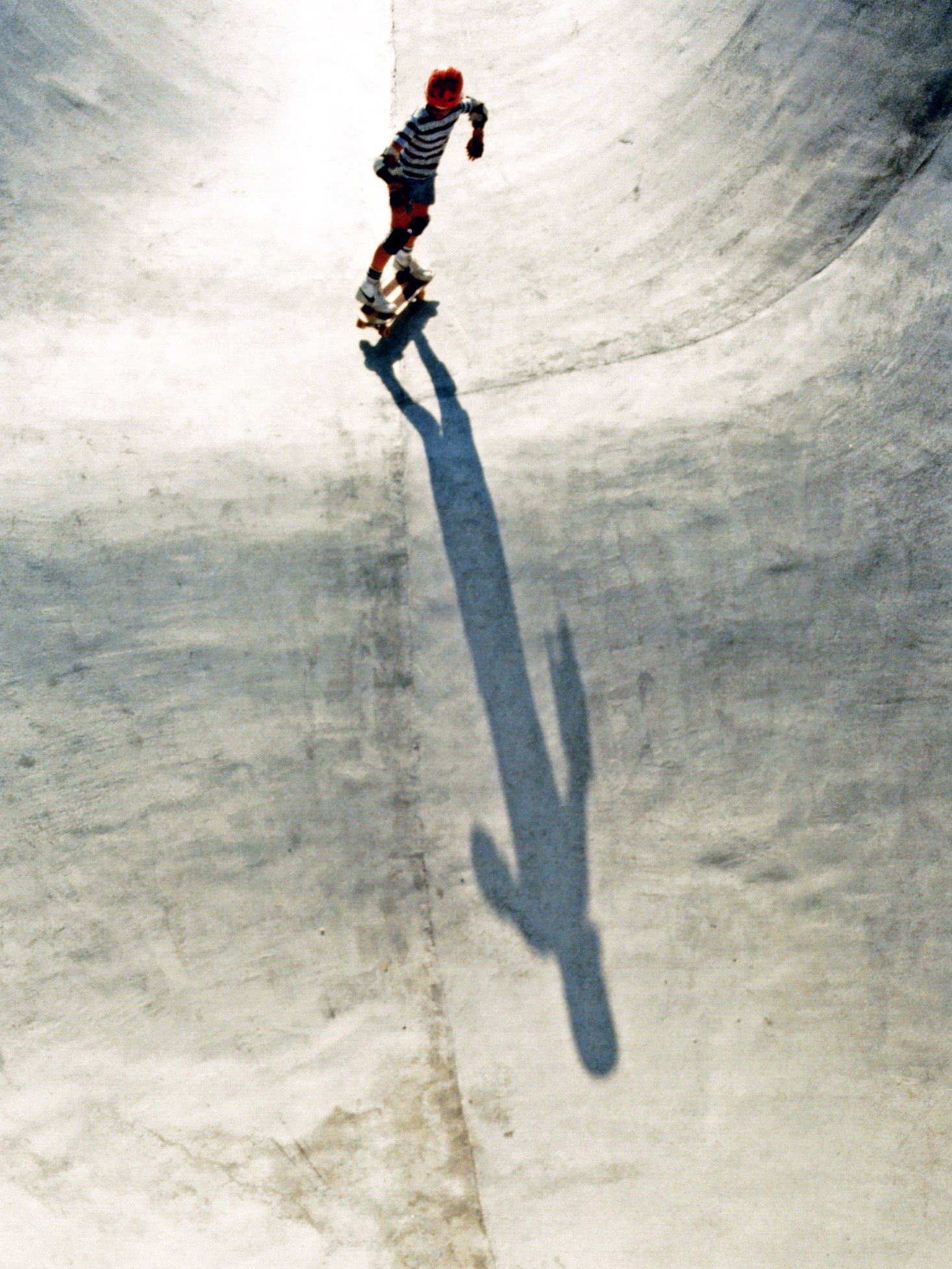
What’s changed recently isn’t the boards — it’s the terrain. Cities are pouring concrete bowls everywhere, and a bowl rides better on something wide. Add the clips looping on your feed, the video games, the vintage graphics getting a fresh coat, and you get a generation of kids discovering a 45-year-old shape like it just dropped.
Keep this in mind
A reissue is not a collector’s piece to hang on your wall. It’s a brand-new board, with fresh wood, made to be skated. The price doesn’t come from its age — it comes from being pressed in small runs. If a seller starts talking about it going up in value, walk away.
What actually changes under your feet
In practice, you step on and three things change at once.
You’re more stable, instantly. More surface under your sole, less speed wobble when you start bombing. It’s a relief. A lot of beginners feel way better on wide boards — makes sense, they don’t have millimeter-perfect foot placement yet. We already dug into this in our guide on board width based on your shoe size.
Pop gets hard to find. The wood is wider, so heavier, and the tail is often less steep. Snapping the board off the ground takes more muscle. An ollie you were landing at 8 inches drops to 4.
The rest of the setup has to follow. Wide trucks (169 mm or more), and bigger, softer wheels — 58 to 60 mm in 78A to 90A, not the hard 99A street stuff. Otherwise the board chokes on the smallest pebble. Our wheel guide by terrain covers exactly this, and it holds for wide shapes too.
So, which one should you get
Here’s the straight answer, depending on where you’re at.
You’re just starting out and want to learn tricks? No. You don’t get an old school. You get a classic 8.0 or 8.25, and you put in your first six months on it. It’s all laid out in our first board guide. Ollie, kickflip, shove-it: all of it was invented on a popsicle, and all of it gets learned on a popsicle.
You already have a street setup and want something different? Yes, and aim for 9.0 inches. It’s the smartest step up: wide enough to completely change how riding feels, reasonable enough to stay playable. Keep your street setup for tricks, and pull this one out when you just want to cruise.
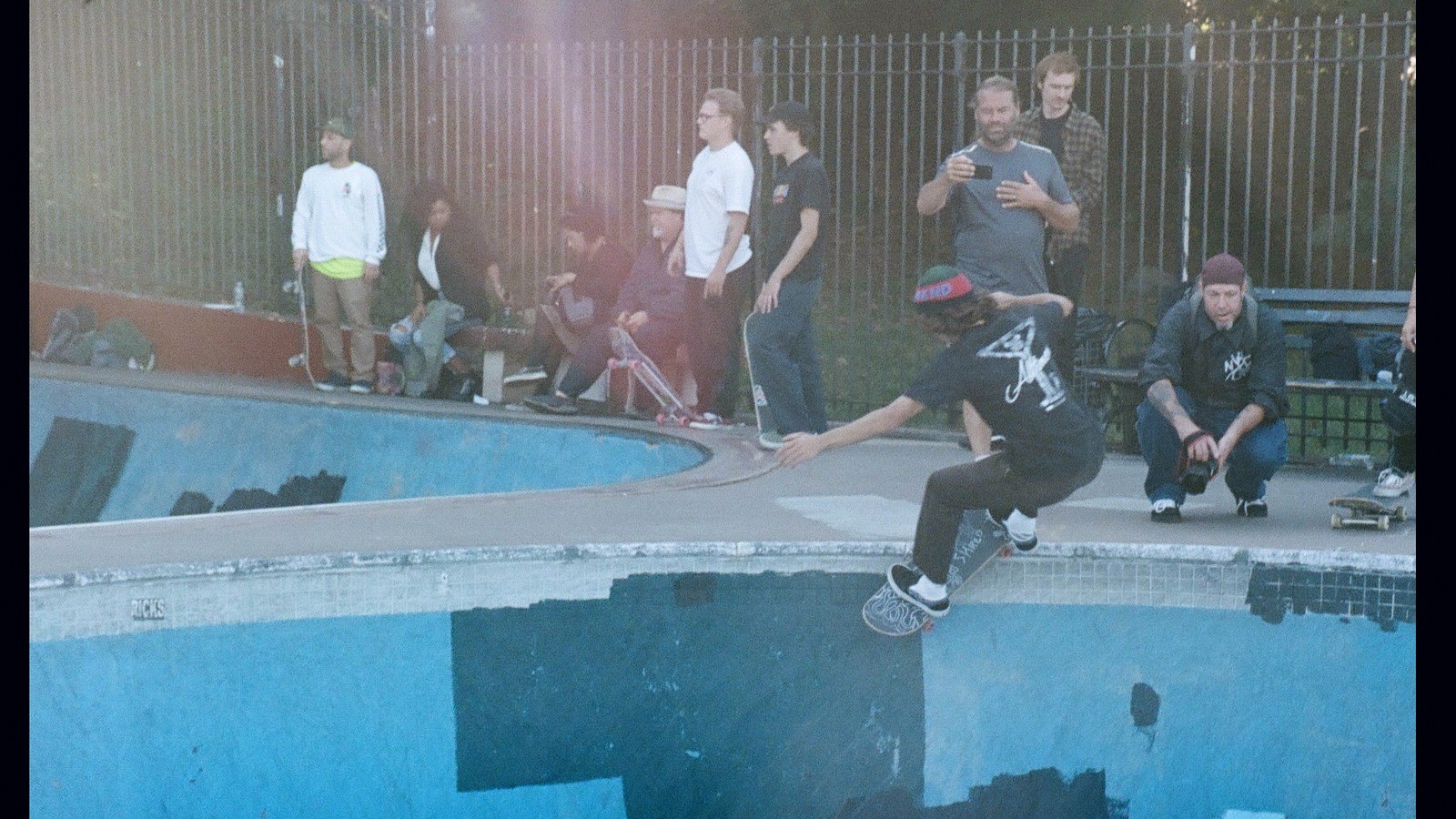
You live in bowls and ramps? Yes, and here you can go 9.5 or 10 inches without a second thought. This is exactly what these boards were drawn for. You’ll gain speed, confidence through the transitions, and style.
And here’s what really changes — the thing nobody tells you until you try it: on something wide, you stop fighting your board. You set your feet, you push, and it just goes without flinching. For a beginner who spent a month wobbling on a 7.75, that feeling is worth a lot. It won’t replace learning tricks — but it makes you want to stay on the board longer, and that’s how you actually progress.
Where to find a real old school deck
The pecking order, as always:
- Your local skateshop — They usually have two or three wide shapes in stock, and more importantly they can mount the wide trucks and the right wheels for you. You walk out with a board that rolls, not a cardboard box.
- The brand sites — Powell Peralta and Santa Cruz sell their reissues direct, with exact dimensions listed.
- The specialist online shops — Skatedeluxe and the other online skate stores carry wide shapes with width filters. That’s where you compare fastest.
- Big-box stores and home decor sites — Skip them. An old school board sold as wall art has neither the wood nor the drilling to be ridden.
Budget-wise, a new branded deck runs around €50 to €70 for a classic shape. Reissues and wide shapes usually sit a notch above, because they’re pressed in small batches. Add wide trucks and soft 60 mm wheels, or you’re bolting a truck body onto go-kart wheels.
Frequently asked questions
Can I ollie on an old school deck?
On a 9.0, yes — lower and harder than on a street deck. From 9.5 up it becomes a real workout, and on single-tail shapes you lose the whole nose game. It’s not a trick board, it’s a speed board.
Reissue or an actual 80s board found secondhand?
Reissue, no contest. A board from 1985 has spent forty years drying out: the wood has warped, the glue has let go, the pop is long gone. The reissue brings back the shape and the graphic with fresh wood. The real vintage ones, we leave to the collectors.
Is an old school the same thing as a cruiser or a longboard?
No. A cruiser is short and often plastic, made for getting around. A longboard runs over 35 inches and is built for going downhill. An old school is still a skateboard, with a kicktail and concave — it just does everything a skateboard did before street took over.
Will my current trucks fit on it?
On a 9.0, your 149 mm trucks might just squeak by. Beyond that, no: the board overhangs the wheels, you lose balance in turns and you scrape wood on the ground. Plan for wide trucks from day one, and the budget that comes with them.
An old school shape won’t teach you the kickflip. But if you already have a board and you’re chasing the feeling that’s missing — going fast without thinking, through a concrete curve — this is exactly the right board. The rest is just art on wood.
Ride on.
What width are you riding right now? And if you’ve already tried a wide shape, tell us how it felt. Drop it in the comments ↓
Follow NOSK8 where you hang out
Parts, spots, behind the scenes: it all drops on the accounts first.
Le lexique
-
1
kicktail
Le relevé à l'arrière de la planche. C'est lui qu'on claque au sol pour décoller : sans kicktail, aucun ollie n'est possible.
-
2
popsicle
La forme moderne en bâtonnet glacé, symétrique avec un nez et un tail identiques. Le standard du skate depuis le début des années 90.
-
3
concave
La courbure creusée dans la largeur du plateau. Elle cale tes pieds et t'aide à sentir la planche sans regarder.
-
4
coping
Le tube métallique posé sur le bord haut d'un bowl ou d'une rampe. C'est dessus qu'on bloque les grinds.
Shop NOSK8
Voir toute la boutique →
TEE-SHIRTS
TEE-SHIRT NOSK8® P.A CENTRE #PARENTALADVISORY
Le prix initial était : 35,00 €.29,00 €Le prix actuel est : 29,00 €.
TEE-SHIRTS
TEE-SHIRT NOSK8® NOSKATE #SNC
Le prix initial était : 35,00 €.29,00 €Le prix actuel est : 29,00 €.
TEE-SHIRTS
TEE-SHIRT NOSK8® MATRICE HEART #ALT
Le prix initial était : 35,00 €.29,00 €Le prix actuel est : 29,00 €.
TEE-SHIRTS
TEE-SHIRT NOSK8® P.B CENTRE #RNB
Le prix initial était : 35,00 €.29,00 €Le prix actuel est : 29,00 €.
TEE-SHIRTS
TEE-SHIRT NOSK8® P.B HEART #ORIGINAL
Le prix initial était : 35,00 €.29,00 €Le prix actuel est : 29,00 €.
CASQUETTES
CAP NOSK8® P.B #POLARBEAR
Le prix initial était : 35,00 €.25,00 €Le prix actuel est : 25,00 €.
CASQUETTES
CAP NOSK8® N8 #NOSK8
Le prix initial était : 35,00 €.25,00 €Le prix actuel est : 25,00 €.
CASQUETTES
CAP NOSK8® P.B.P #PAW
Le prix initial était : 35,00 €.25,00 €Le prix actuel est : 25,00 €.
HOODIES
HOODIE NOSK8® MATRICE HEART #ALT
Le prix initial était : 60,00 €.49,00 €Le prix actuel est : 49,00 €.
HOODIES
HOODIE NOSK8® MATRICE HEART #CTRL
Le prix initial était : 60,00 €.49,00 €Le prix actuel est : 49,00 €.
HOODIES
HOODIE NOSK8® I.L.N #ILOVEN8
Le prix initial était : 60,00 €.49,00 €Le prix actuel est : 49,00 €.
HOODIES
HOODIE NOSK8® NOSKATE #NSITA
Le prix initial était : 60,00 €.49,00 €Le prix actuel est : 49,00 €.
HOODIES
HOODIE NOSK8® P.B HEART #BARÇA
Le prix initial était : 60,00 €.49,00 €Le prix actuel est : 49,00 €.
SWEAT
SWEAT NOSK8® P.B HEART #BARÇA
Le prix initial était : 45,00 €.39,00 €Le prix actuel est : 39,00 €.
SWEAT
SWEAT NOSK8® P.B HEART #PHILI
Le prix initial était : 45,00 €.39,00 €Le prix actuel est : 39,00 €.
SWEAT
SWEAT NOSK8® P.B HEART #NYC
Le prix initial était : 45,00 €.39,00 €Le prix actuel est : 39,00 €.
SWEAT
SWEAT NOSK8® P.B HEART #PARIS
Le prix initial était : 45,00 €.39,00 €Le prix actuel est : 39,00 €.
SWEAT
SWEAT NOSK8® P.B HEART #POLARBEAR
Le prix initial était : 45,00 €.39,00 €Le prix actuel est : 39,00 €.
Continue ta lecture
ConseilsSac à dos de skate : les 6 trucs qui sont toujours dedans (et le critère que les sacs mode zappent)
Ce que les skateurs ont vraiment dans leur sac, le litrage à viser, et le seul critère qui sépare un sac de skate d'un joli…
Commentaires (0)