
ℹ️ 🛹 Web Média Skate 🛹 ℹ️

 Back
Tricks
Axle Stall: Locking Both Trucks on the Coping—Where Does It Really Come From
Does your axle stall slide or hold on just one truck? It comes from the Z-Boys' pools: we break down the real blocker and the 6 steps to lock it in.
In the mid-’70s, in Southern California, a crew of surf kids spends its days at the bottom of empty backyard pools. The youngest is Jay Adams. He joins the Zephyr team in 1974, at 13, and as early as 1975 Skateboarder magazine is covering their sessions.
Watch Axle stall: locking the back truck, the technique on video

It’s on the edge of these pools that boards learn to stop dead, sitting on their two axles. Fifty years later, you set yours down in the same spot, and it slides, tips, or rolls back into the ramp without you. Why does a move born by accident still resist you this much?
The answer is in the trick’s history, and we get to it further down. First, the stats.
Level
Intermediate
Time
2-6h
Prerequisite
Rock to fakie
Surface
Mini ramp with coping
In this article 6 parts
Venice, 1975: what were the Z-Boys after at the bottom of those pools?
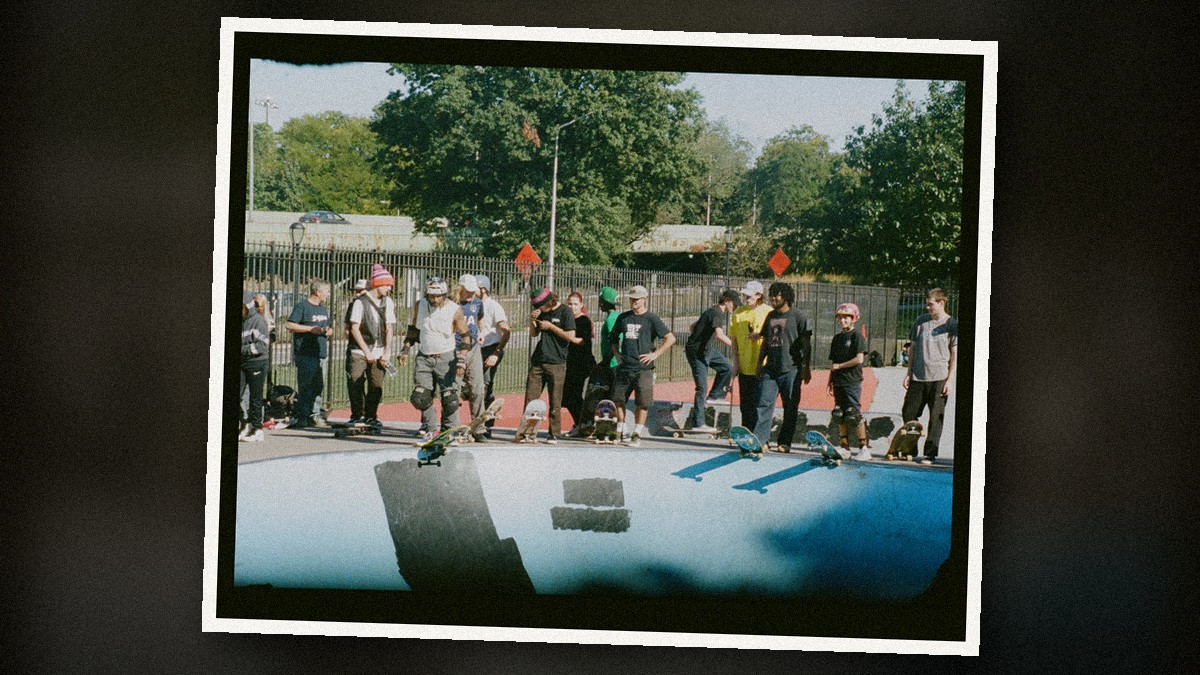
The Z-Boys ride their boards like a wave: low on their legs, a hand brushing the concrete. For them, an empty pool is a wall to climb back up. For two years they hit every bowl in Southern California. That’s where they lay the foundations of vertical skating.
Climbing higher, they eventually reach the edge. Wikipedia credits Jay Adams with the first lip trick, a move held on the rim of the ramp. Tony Alva, his teammate, said of him: “Some kids grow up on cookies and milk. He grew up on surf and skate.”
Nobody patents the axle stall that day. One day, a rider goes too high, the trucks scrape the lip, and the board grinds. The move is born from an accident that gets repeated, not from some credited invention.
Roller skate trucks: why wouldn’t the board hold?
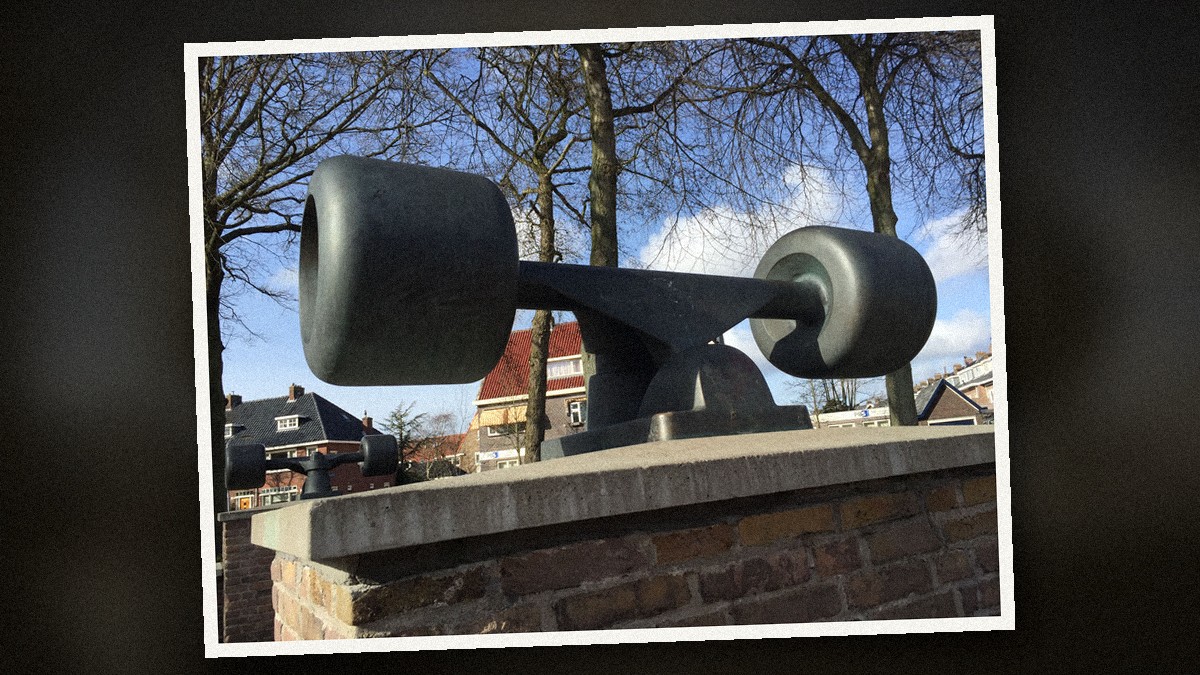
Back then, a lot of boards rolled on trucks borrowed from roller skates. They’re narrow. Sitting on a ledge, they offer almost no contact surface. The board slides or flips. The trick already exists, the gear hasn’t caught up.
Then truck makers designed for skateboarding start widening the hanger. The axle finally has room to sit on the edge. In 1978, in Newark, California, Fausto Vitello and Eric Swenson launch Independent with Richard Novak and Jay Shuirman. Rick Blackhart, there from the start, sums up the two brands dominating then, Bennett and Tucker: « One snapped, the other wouldn’t turn. »
Keep that detail in mind, it comes back later. The name of the trick doesn’t refer to a rider or a place. Axle, in plain English, is simply the axle.
Just one truck on the coping: your stall already goes by another name
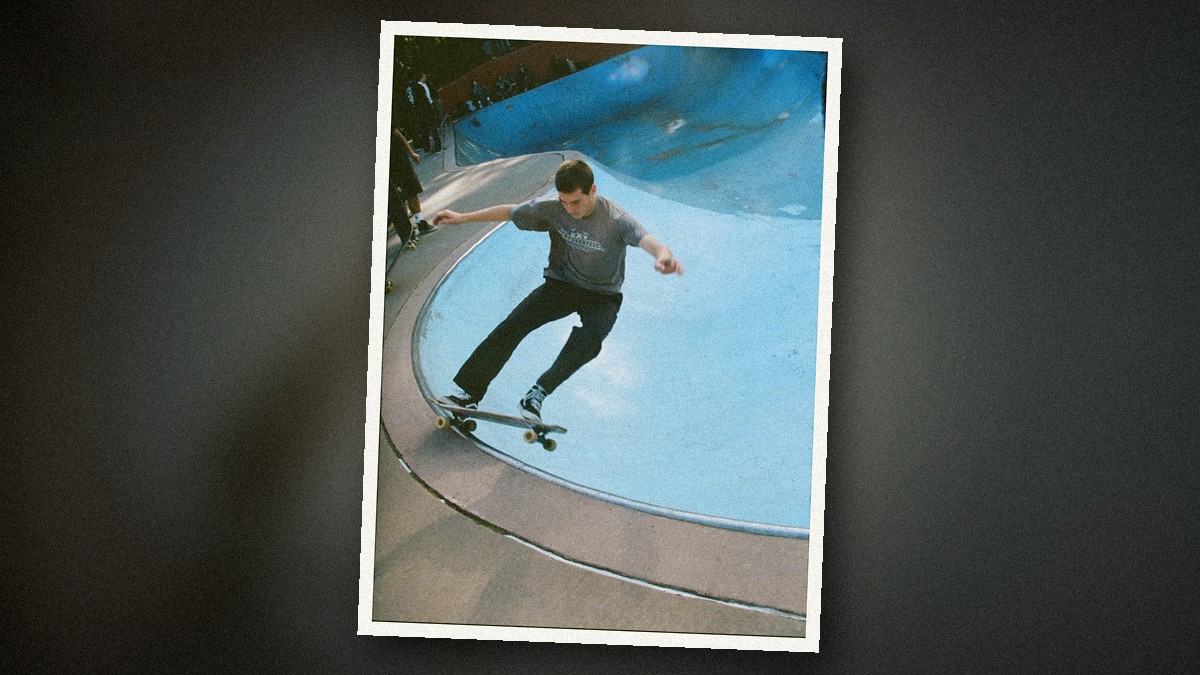
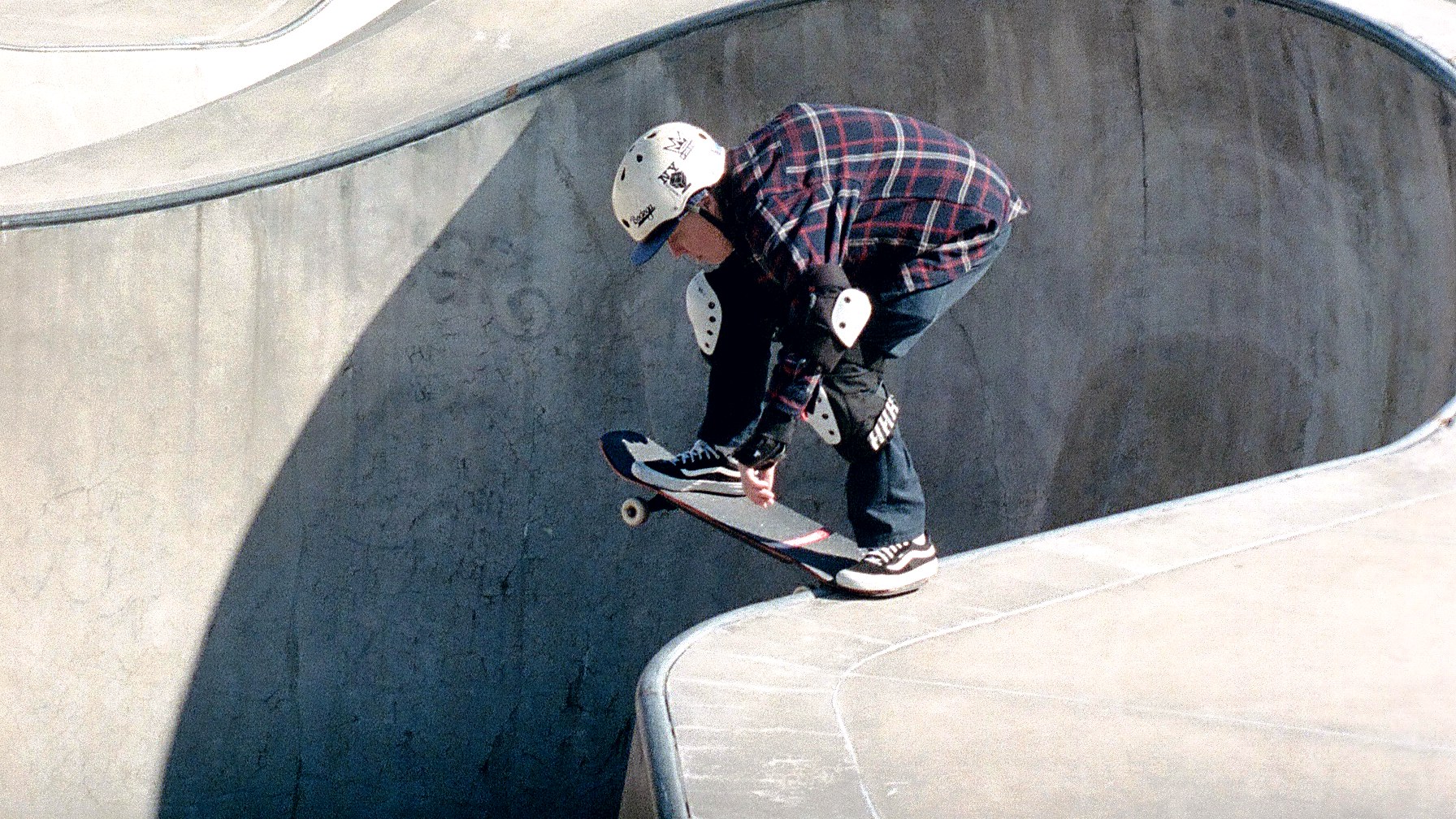
The problem, almost everyone has it. You get on, you lock in, and only the back truck catches. The front one floats over the ledge or drops back in. In the photo it’s intentional: that’s a five-0. On you, it’s a botched axle stall.
The axle stall is a 50-50 at a standstill: both trucks locked on the coping, frontside or backside. You use it to catch your breath between tricks or to start a drop in. Four mistakes come up over and over.
The 4 classic axle stall fails
- The front truck stays in the air: you turn before reaching the top. Come in straighter, with enough speed that the nose clearly clears the coping.
- The board goes back into the ramp: your shoulders stayed on the ramp side. Your weight pulls everything down. Your chest has to get over the edge.
- It slides along the coping: you come in at an angle, with speed going sideways. Come up square to the coping and turn at the top, not on the way up.
- The truck catches on the way out: you drop back in without unloading the front. A little pressure on the tail, the front truck frees up, and you roll away clean.
The 6 steps to lock in both trucks
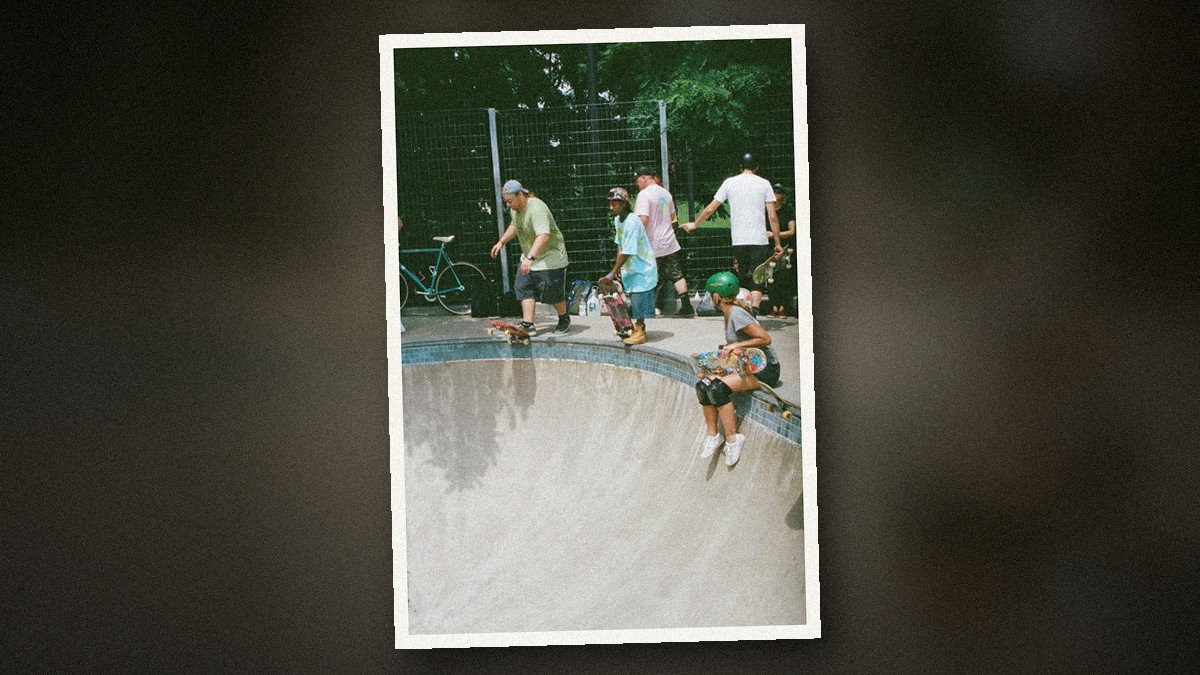
You start stationary. It’s the part everyone skips, and it’s the part that fixes the problem. The video shows the key move: lock the back truck first.
-
Stationary on the platform: set the board parallel to the coping, each truck straddling the edge, two wheels on the platform side, two on the ramp side.
-
The tip test: feet on the bolts, lean your chest toward the ramp until it starts to go, then come back. Ten times, both trucks stuck to the metal.
-
The climb: on the ramp, come up straight toward the coping, with just enough speed to get the nose past the edge.
-
The quarter turn: at the top, turn 90°. The back truck lands first, the front follows right after.
-
The lock: weight over the coping, knees bent, eyes on the edge. Hold it for two seconds.
-
The exit: light pressure on the tail to unweight the front, shoulders toward the ramp, and you drop back in.
So where does the lock-up really come from?
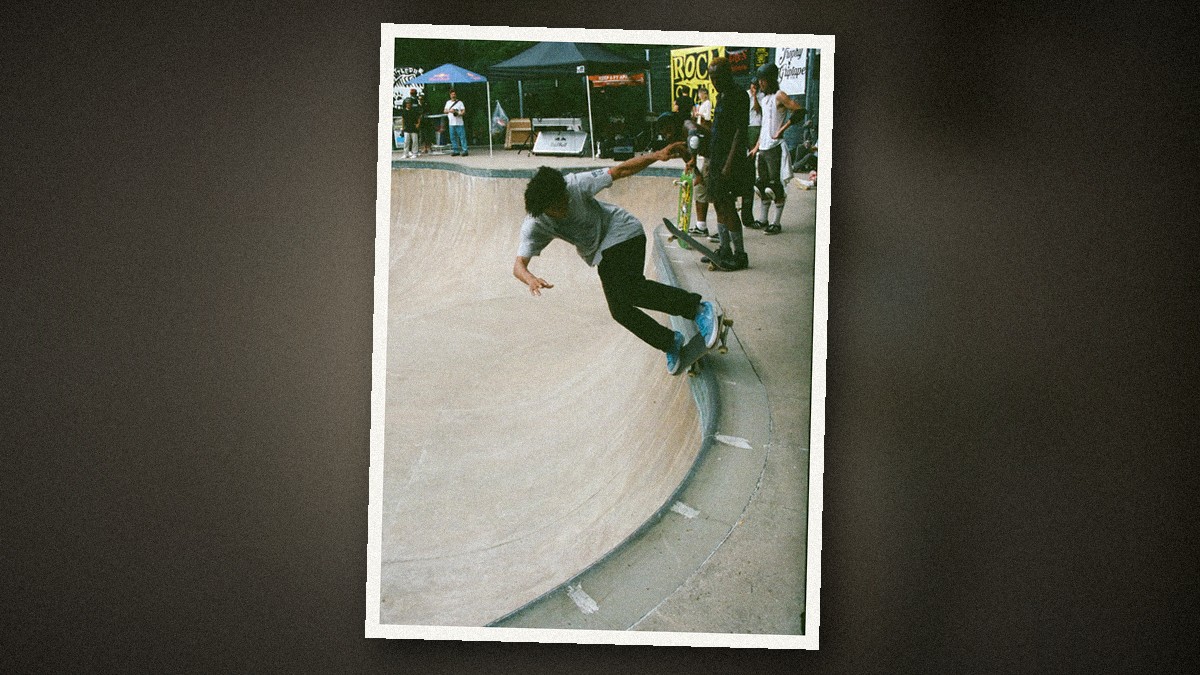
Same spot as 1975, same answer: it’s the trucks. The Z-Boys didn’t sit on the edge because their skate trucks were too narrow to get on it. You’ve got wide trucks, but you’re not using them. You plant your deck, not your axles.
The name said it from the start. Axle stall, the stall on the axle. As long as you’re thinking ‘deck on the coping,’ your weight stays in the ramp and the front truck never gets there. Think ‘both hangers on the edge,’ and your torso goes over the coping on its own. A stall isn’t held with your feet. It’s held with both axles.
Your control drill is step 2, stationary: board set, rock forward and back without lifting either truck. The day you feel the front hanger bite as much as the back one, you’ve got it. Do it rolling, and it sticks.
If it still slips after a session, film yourself from the side. Check where your shoulders are when the back truck touches. Nine times out of ten, they’re still over the ramp.
And once it sticks?
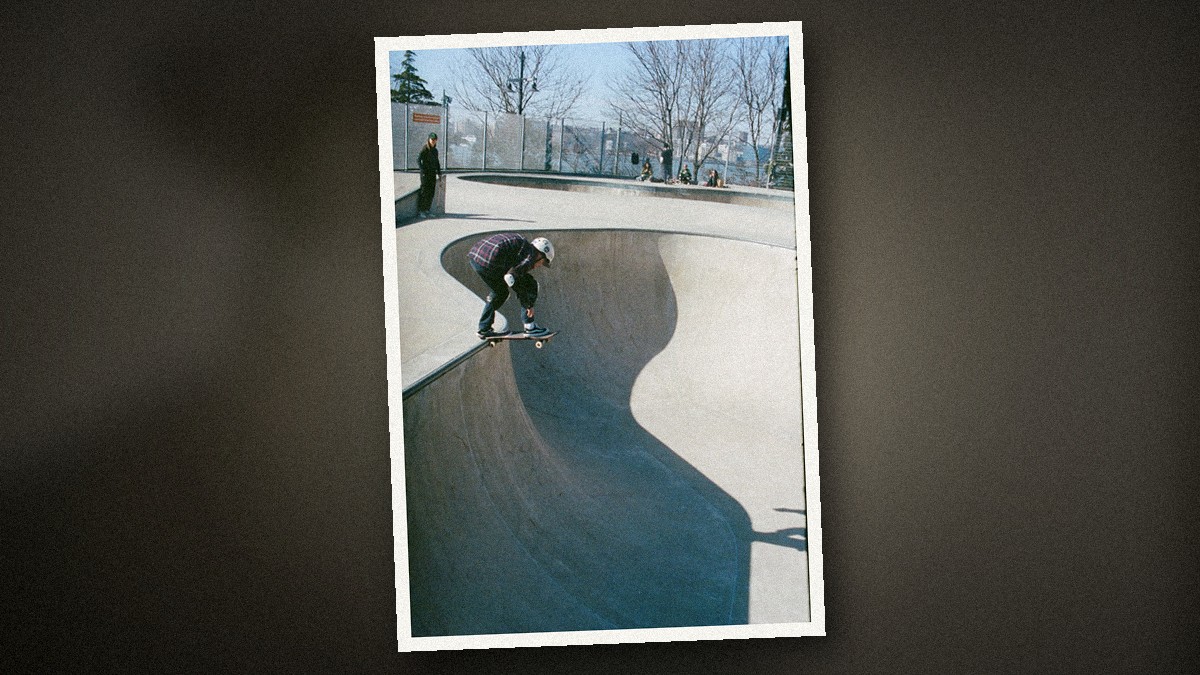
You use it everywhere. The axle stall sets you up at the top of the ramp, calm, before you drop back in: the drop-in becomes a reflex. The rock to fakie works the same weight shift, but with one truck coming through. And the day you slide it, it’s a 50-50, the same one you’d do on a street curb.
Next, you’ll be able to shift your weight onto one truck at a time: the feeble and the smith grind come out of that. And to see the pools where it all started, Dogtown and Z-Boys – 2001 is part of our list of skate movies.
Your first axle stall, was it the front truck or your shoulders that gave out ? How many sessions did it take before it finally stuck ? Tell us in the comments ↓
Le lexique
-
1
Coping
Le rebord arrondi, souvent en métal, en haut d'une rampe ou d'une piscine.
-
2
Hanger
La pièce en T du truck, qui porte l'axe des roues.
-
3
50-50
Grind où les deux trucks frottent l'arête en même temps.
-
4
Five-0
Stall ou grind sur le seul truck arrière.
-
5
Drop in
Entrer dans la rampe depuis le coping, planche à la verticale.
-
6
Axle stall
Arrêt sur le coping, les deux trucks posés sur l'arête : un 50-50 à l'arrêt.




Continue ta lecture
TricksSmith grind : l’angle du corps n’est jamais bon — d’où ça vient vraiment ?
Le nose plonge, le board se redresse, et ton corps n'est jamais au bon endroit. Le problème ne vient pas de tes pieds.
Commentaires (0)