
ℹ️ 🛹 Web Média Skate 🛹 ℹ️

Conseils
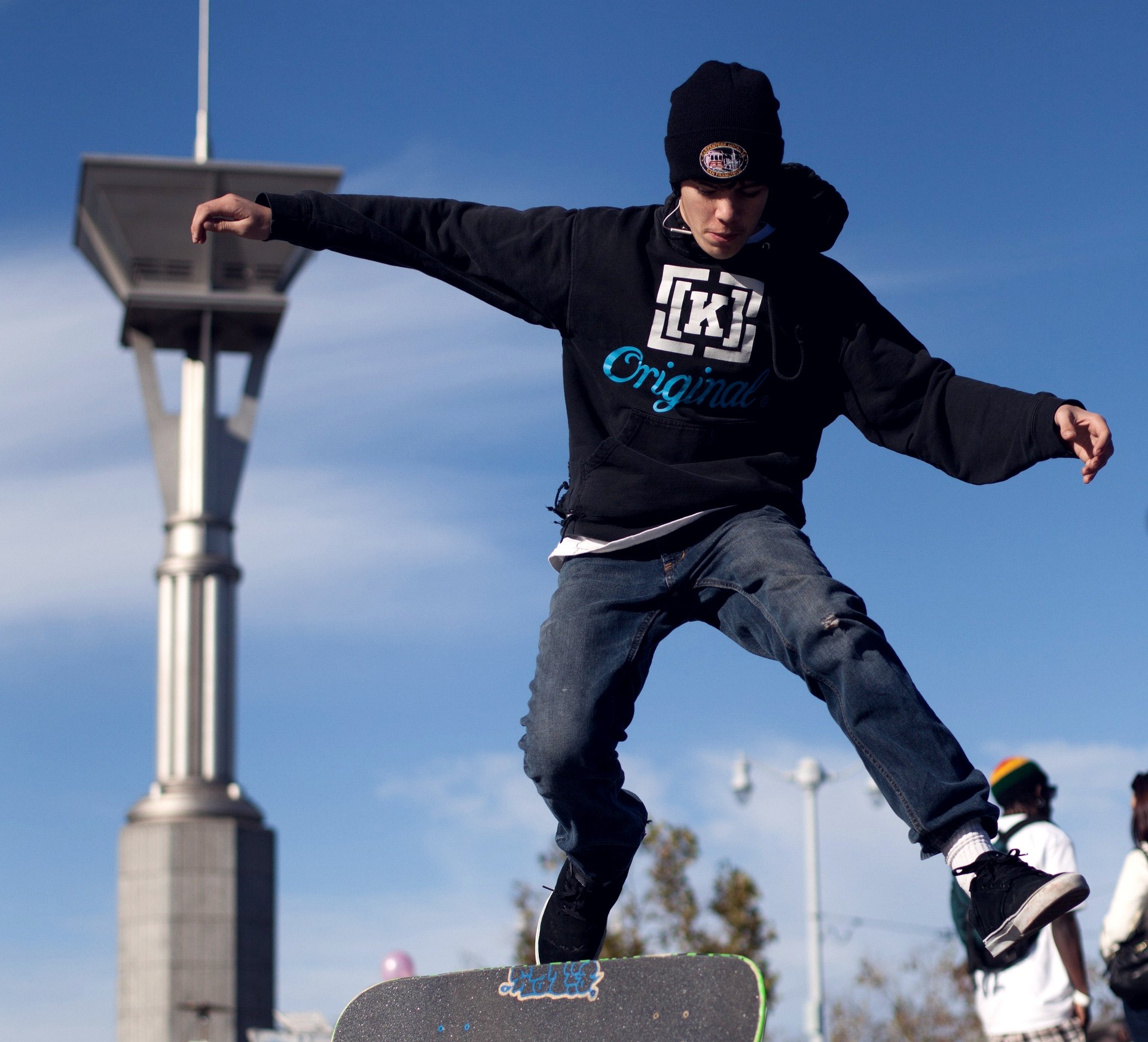
Backside flip: a 180 and a kickflip at once — which one goes first?
Ton kickflip sort propre mais le backside flip part en biais ? Le problème n'est pas ton flick : c'est l'ordre dans lequel tu déclenches les deux gestes.

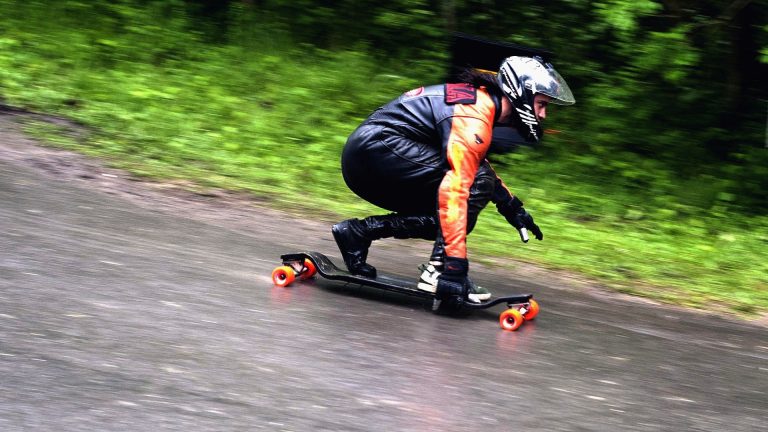
→ Pour aller plus loin : Skater sous la pluie : ce que ça détruit vraiment sur ta planche
Level: Intermediate
Your kickflip comes out clean. Not once in ten tries — every session, on flat, on a curb, rolling. So you figure the backside flip is the same move with a half-turn on top. You try it. And the board goes sideways, half-turned, half-flipped, while you land a metre away.
A backside flip is a kickflip and a 180° body rotation firing off in the same fraction of a second. Two moves, one instant. The question that stops everyone at the exact same place: which of the two do you trigger first?
The answer is less obvious than it looks, and it explains almost every attempt that spins out. We'll get there — but first you need to understand why your board goes crooked.
The mistake everyone makes
You turn your shoulders at the moment you snap the tail. It's the natural reflex, and it's exactly what breaks the trick: the board goes varial, the back end shoots forward and the flip never finishes. You spend three sessions blaming your flick, when the problem happened a tenth of a second earlier, in your shoulders.
Backside flip: what you're really adding to your kickflip
Backside means you turn with your back facing the direction you're rolling — you lose sight of your line for half a second. That's what makes the trick scary, far more than the flip itself.
You're stacking three things: a full kickflip, a 180° body rotation, and 180° of board that has to follow your feet instead of running off on its own. If you've never landed a clean 180, start there: the backside flip isn't a flip trick, it's a rotation trick with a flip happening inside it.
- Load your shoulders BEFORE you snap — crouched, shoulders opened towards the nose, like a spring being wound. You're not turning yet. You're loading.
- Feet: back foot deep in the tail pocket — front foot half a centimetre further back than on your usual kickflip, and slightly more angled. That delays the flick, and that's the point.
- Vertical pop, never angled — you snap straight down. Any tilt of the tail at the pop sends the board varial instead of turning it with you.
- The flick comes a fraction AFTER the pop — on a kickflip, pop and flick are almost simultaneous. Here you let the board rise first, then you scrape the corner of the nose.
- Unwind: shoulders first, hips next, legs last — the body unscrews, it doesn't throw itself. Your eyes look for the ground over your back shoulder.
- Catch between 90° and 135°, back foot first — you stop the board with the back foot before the rotation ends, and your feet finish the half-turn together.
Why your board goes sideways instead of turning with you
When the board goes diagonal there's basically one cause: the tail got snapped crooked. Your back foot, instead of dropping straight down, drifts outwards as your shoulders start moving. You've added a scoop — the move that makes shove-its — to a trick that needs none.
The board then spins twice at once: your rotation, and its own. It escapes forward and your feet never find it again. Same mechanics that make the varial heelflip so temperamental, except here the scoop is parasitic: you don't want it.
The test that settles it in one session: film yourself head-on in slow motion. If the tail slides sideways before touching the ground, your flick isn't the problem.
Keep this
Your back foot doesn't turn anything. It lifts the board, full stop. The rotation comes from the shoulders and the eyes. The day you stop trying to push the board around with the tail, the trick unlocks in two sessions.
Timing: the flick doesn't happen at the same time as the pop
On a kickflip, pop and flick are almost glued together. Here you have to separate them. Your body is turning, so your front foot travels an arc: flick too early and it scrapes the nose while the board is still on the ground — it goes flat and sideways.
The mental image: you pop, the board rises ten centimetres, and that's when the front foot goes for the corner. A fraction. In slow motion the gap is barely visible, and yet it's what separates a flip that finishes from a flip that dies halfway.
So which one do you trigger first?
The rotation. Always the rotation. But not when you think.
You don't trigger the rotation during the pop — you load it before. That's the answer, and that's what unlocks the trick: in your crouch, your shoulders deliberately wind the opposite way, towards the nose. They're under tension when the tail hits the ground. The pop stays a vertical, neutral move that turns nothing at all. And it's on the way up that you release: shoulders unwind, hips follow, the board comes along because your feet are on it.
The exact order, the one to repeat before every try: load → vertical pop → flick → shoulders unwind → back-foot catch. Five beats inside half a second. Everyone fails because they merge two of them — the load and the pop — and turn a backside flip into a failed varial.
Your three-week routine
- Week 1 — the backside 180 on its own, stationary then rolling. Goal: turn while keeping the tail perfectly vertical at the pop. Twenty a session, no more.
- Week 2 — the loose backside flip. Pop, flick, turn, don't try to land on it. Watch the board finish on the ground. If it lands flat and turned, you're ready.
- Week 3 — the catch. Back foot only, front foot after. The first roll-aways will be ugly and sideways. They still count.
Where to work on it
- Smooth flat with a very slight slope — speed helps the rotation finish. Learning it stationary is the best way to make it harder than it is.
- A low curb or a painted line — you need a visual marker for the half-turn. Your eyes need something to find again.
- Never on rough ground — a half-finished backside flip means a sideways landing. You want forgiving concrete.
A backside flip isn't a foot trick, it's a tempo trick. You don't train to flick harder — you train to do nothing at all for a tenth of a second, between the pop and the flick. That wait is the hard part, and it's exactly why a landed backside flip is visible from ten metres away.
Load the shoulders. Snap straight. Wait. Scrape.
Follow NOSK8 where you hang out
Parts, spots, behind the scenes: it all drops on the accounts first.
Le lexique
-
1
backside
Sens de rotation où le skateur tourne en présentant son dos à la direction dans laquelle il roule.
-
2
pop
Le coup de pied arrière qui claque le tail au sol et fait décoller la planche. C'est la base de tous les tricks aériens.
-
3
flick
Le coup de pied avant qui gratte le coin du nose vers l'extérieur et déclenche la rotation de la planche sur elle-même.
-
4
scoop
Geste du pied arrière qui pousse la planche latéralement. Il crée les shove-it, mais il parasite un backside flip.
-
5
catch
Le moment où les pieds rattrapent la planche en vol pour stopper sa rotation avant la réception.
Shop NOSK8
Voir toute la boutique →
TEE-SHIRTS
TEE-SHIRT NOSK8® NOSKATE #NSITA
Le prix initial était : 35,00 €.29,00 €Le prix actuel est : 29,00 €.
TEE-SHIRTS
TEE-SHIRT NOSK8® P.B HEART #POLARBEAR
Le prix initial était : 35,00 €.29,00 €Le prix actuel est : 29,00 €.
TEE-SHIRTS
TEE-SHIRT NOSK8® I.L.N #ILOVEN8
Le prix initial était : 35,00 €.29,00 €Le prix actuel est : 29,00 €.
TEE-SHIRTS
TEE-SHIRT NOSK8® P.B HEART #NYC
Le prix initial était : 35,00 €.29,00 €Le prix actuel est : 29,00 €.
TEE-SHIRTS
TEE-SHIRT NOSK8® MATRICE HEART #CTRL
Le prix initial était : 35,00 €.29,00 €Le prix actuel est : 29,00 €.
CASQUETTES
CAP NOSK8® P.B.P #PAW
Le prix initial était : 35,00 €.25,00 €Le prix actuel est : 25,00 €.
CASQUETTES
CAP NOSK8® P.B #POLARBEAR
Le prix initial était : 35,00 €.25,00 €Le prix actuel est : 25,00 €.
CASQUETTES
CAP NOSK8® N8 #NOSK8
Le prix initial était : 35,00 €.25,00 €Le prix actuel est : 25,00 €.
HOODIES
HOODIE NOSK8® MATRICE HEART #ALT
Le prix initial était : 60,00 €.49,00 €Le prix actuel est : 49,00 €.
HOODIES
HOODIE NOSK8® MATRICE HEART #CTRL
Le prix initial était : 60,00 €.49,00 €Le prix actuel est : 49,00 €.
HOODIES
HOODIE NOSK8® I.L.N #ILOVEN8
Le prix initial était : 60,00 €.49,00 €Le prix actuel est : 49,00 €.
HOODIES
HOODIE NOSK8® NOSKATE #NSITA
Le prix initial était : 60,00 €.49,00 €Le prix actuel est : 49,00 €.
HOODIES
HOODIE NOSK8® P.B HEART #BARÇA
Le prix initial était : 60,00 €.49,00 €Le prix actuel est : 49,00 €.
SWEAT
SWEAT NOSK8® P.B HEART #BARÇA
Le prix initial était : 45,00 €.39,00 €Le prix actuel est : 39,00 €.
SWEAT
SWEAT NOSK8® P.B HEART #PHILI
Le prix initial était : 45,00 €.39,00 €Le prix actuel est : 39,00 €.
SWEAT
SWEAT NOSK8® P.B HEART #NYC
Le prix initial était : 45,00 €.39,00 €Le prix actuel est : 39,00 €.
SWEAT
SWEAT NOSK8® P.B HEART #PARIS
Le prix initial était : 45,00 €.39,00 €Le prix actuel est : 39,00 €.
SWEAT
SWEAT NOSK8® P.B HEART #POLARBEAR
Le prix initial était : 45,00 €.39,00 €Le prix actuel est : 39,00 €.
Continue ta lecture
Événements0 $ à gagner, 21 riders de 7 à 31 ans : les résultats de The Boardr Series à Fontana
Sept catégories, 21 riders de 7 à 31 ans et zéro dollar de prize money : les podiums complets de l'étape de Fontana, les 21-22…
Commentaires (0)