

ℹ️ 🛹 Web Média Skate 🛹 ℹ️

 Back
Conseils
Tight or Loose Trucks: It All Comes Down to One Variable
Should you tighten or loosen trucks? The right setting depends mostly on your weight, and a 3-session method finds it without wheelbites or wipeouts.
Level: Beginner
In 1978, Rick Blackhart summed up the trucks of the era in one line: “one snapped, the other wouldn’t turn”. That frustration gave birth to Independent, in Newark, California. Forty-eight years later, at the skatepark, the question that still comes up most is the same one: tight or loose trucks, how tight do you crank yours?
Watch Serrer et desserrer ses trucks de skate en une minute

Wrong question. Your homie can give you his setting down to the quarter turn, and it’ll do you almost nothing. Tight or loose trucks can’t be copied. It comes down to one variable, and it’s neither your spot nor your favorite trick.
Let’s find it together. One wrench, three sessions, and zero avoidable wipeouts.
The mistake we see all the time
The classic: some 175-pound grown man sets your board up “like his,” because he rides well. You weigh 110 pounds. Your board won’t turn anymore, you muscle your feet to make the carve, and coming out of the turn you go straight into the wall. You think you’re the problem. It’s someone else’s setup.
In this article 5 parts
Tight or loose trucks: a quarter turn on the nut changes everything
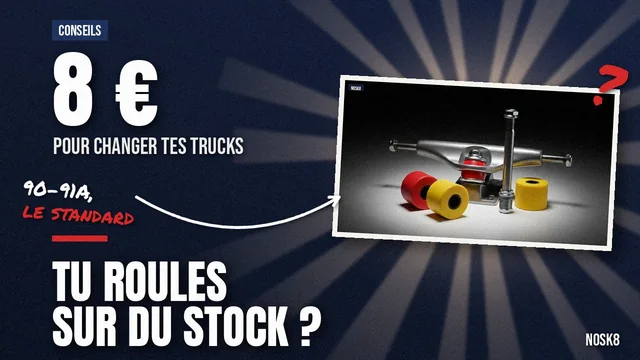
Flip your board over. In the middle of each truck there’s a big vertical bolt: the kingpin. Around it, two urethane rubbers: the bushings. On top, a nut. Tighten the nut, the bushings squish, the board leans less. Loosen it, they relax, and the board turns easier.
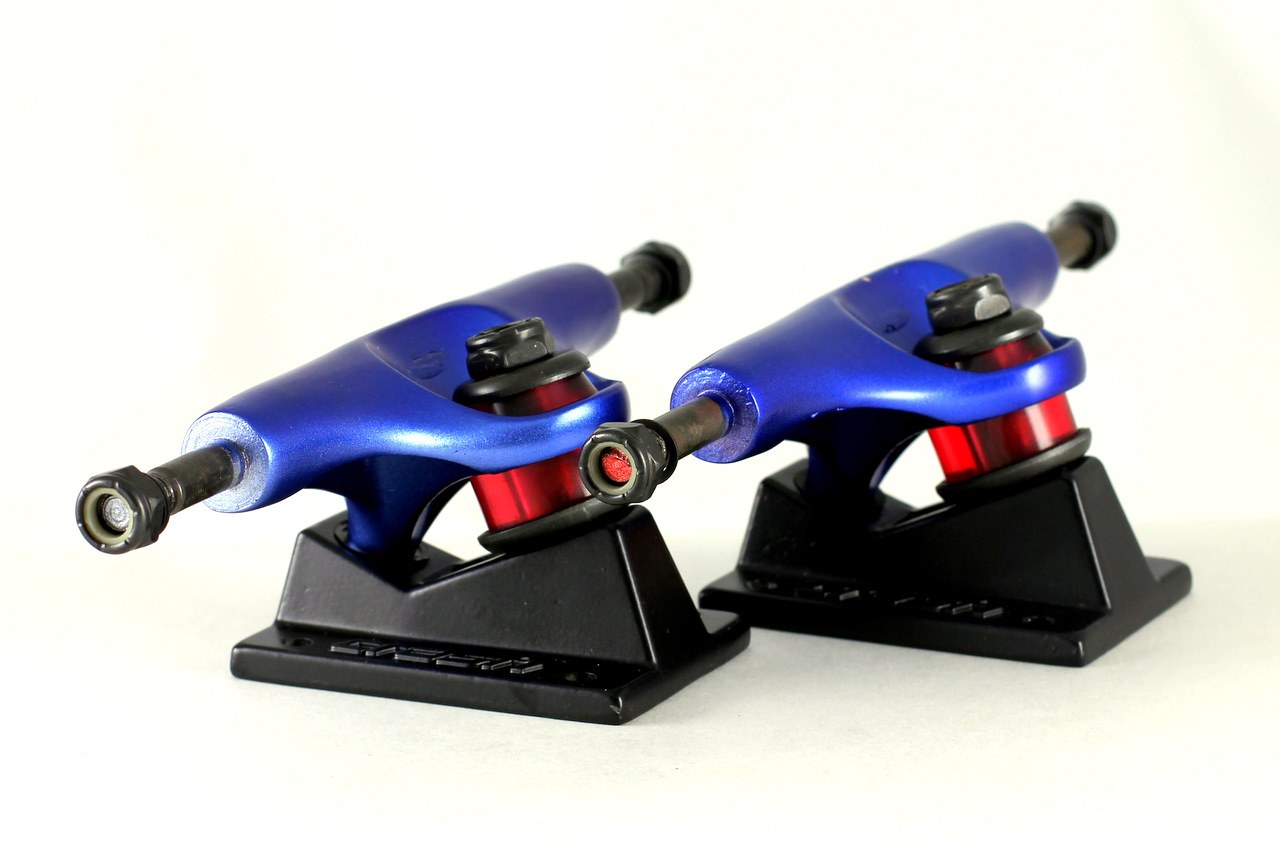
These gums come in several hardnesses, measured in « A ». At Independent, the range runs from 78a to 96a, around $9 a set. The higher the number, the firmer the gum. Here are the four you see most:
- 88a, the soft ones — They give the moment you lean into a turn. Perfect if you’re light, a struggle if you’re heavy.
- 90a, the all-rounder — The go-to setting. It turns without feeling floaty.
- 92a, one notch firmer — For riders who find the 90a too mushy even when they tighten down.
- 94a, the hard ones — They hold up under a big frame or at high speed.
- A quarter turn at a time, never more — Between tests, you only move the nut a quarter turn. Otherwise you lose track of what changed.
- Set both trucks the same — Front tight and rear loose, and your board turns crooked, and you’ll feel it on the first carve.
Bowl, Street, Skatepark: Why You Get Told Both Sides
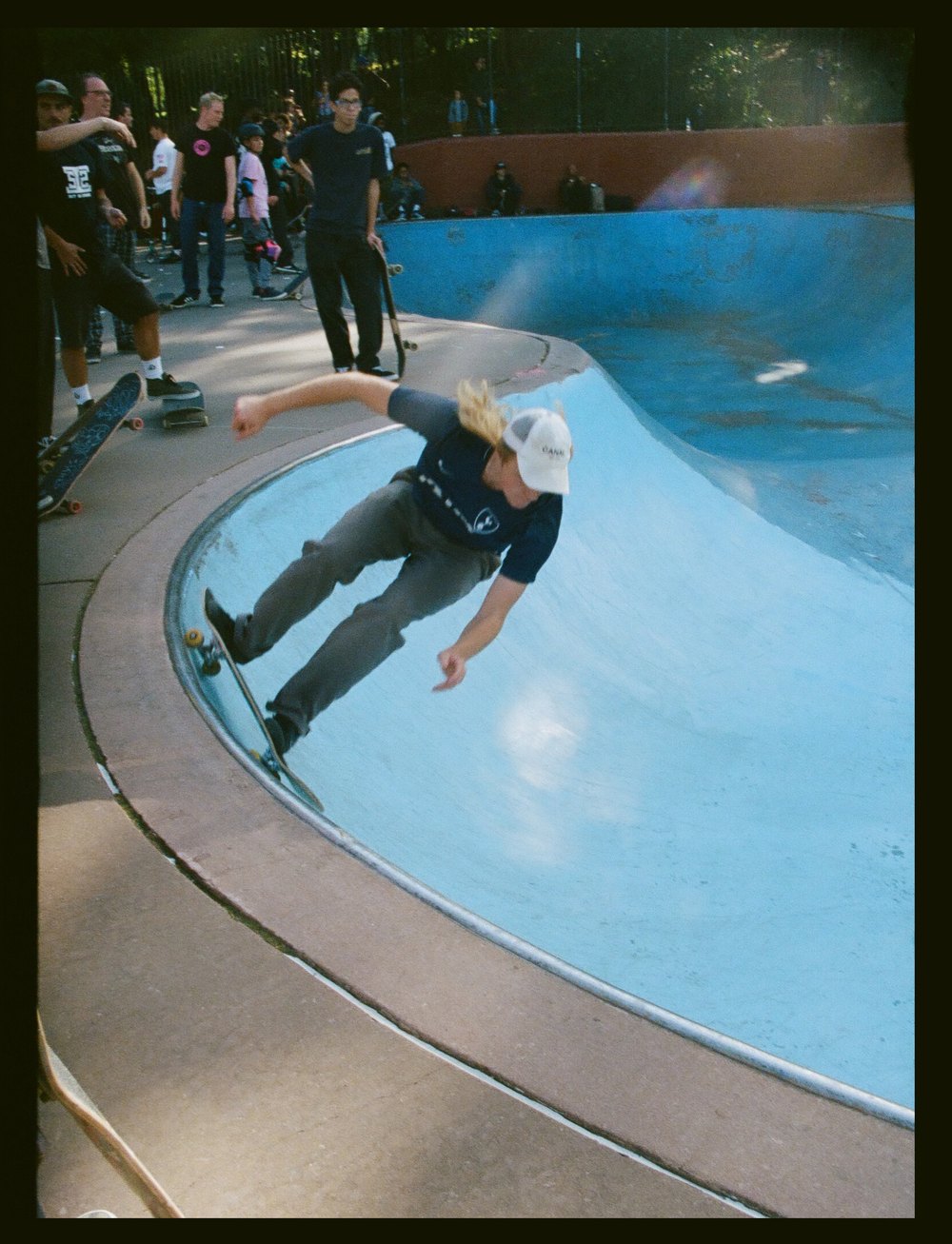
Ask three skaters, you’ll get three opinions. The bowl rider will tell you to loosen up so you can carve the transitions without lifting your foot. The street skater will tell you to tighten up so you land straight after an ollie. And the all-around guy will say « meh. »
They’re all kind of right. In a bowl, you turn by leaning the board, so trucks that pivot easily help. On the street, you mostly do straight lines, jumps and landings, so you want a board that doesn’t go crabbing on you when you land a little off.
Except the terrain only shifts your setup a little. We’re talking a quarter turn, half a turn max. Two skaters riding the same bowl can run completely opposite setups. And the terrain can’t explain that.
The Takeaway
The terrain is fine-tuning. If you have to turn the nut several turns before your board feels right, the problem isn’t the spot. It’s the bushings, and what’s pressing on them.
Tricks: What Loose Trucks Actually Cost You
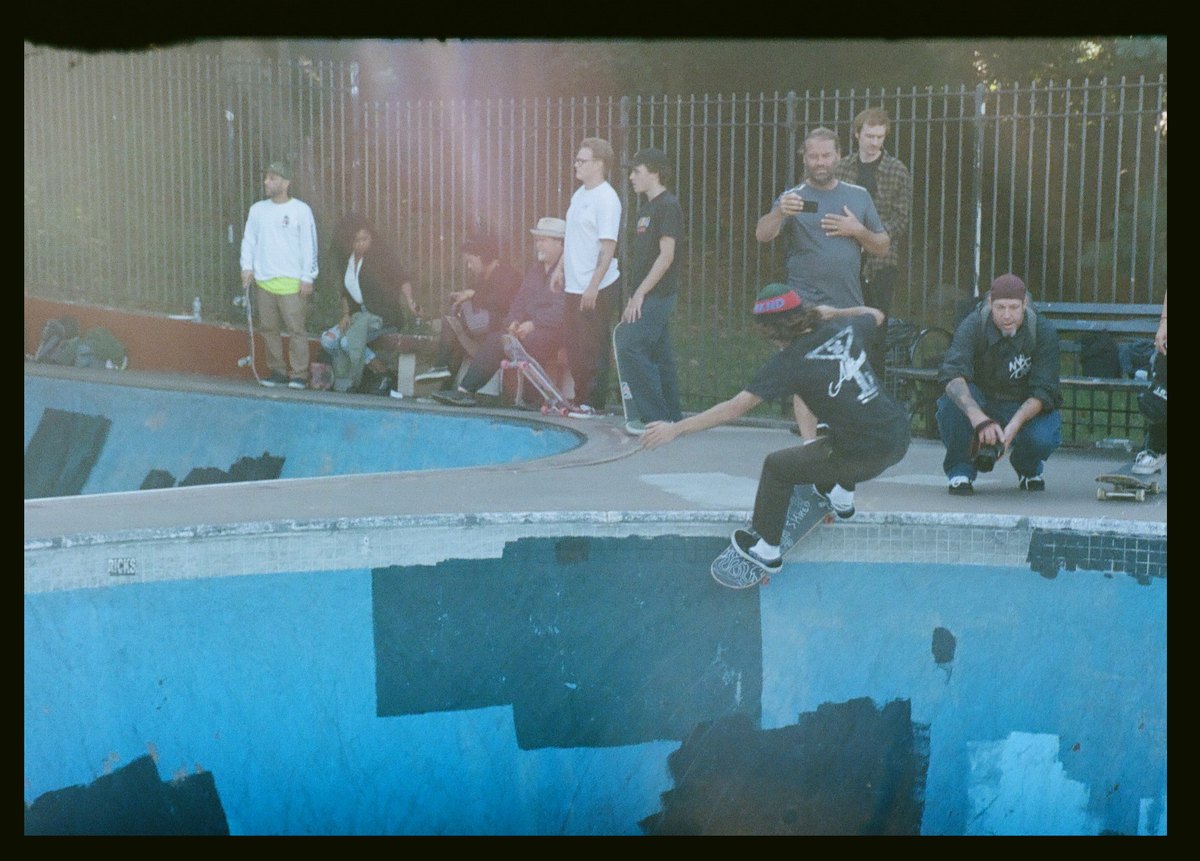
Loose trucks are fun for the first ten minutes. The board reacts to every little ankle twitch. Then you start picking up speed and the deck starts shaking on its own, side to side. That’s speed wobble. Don’t catch it early and you’re eating pavement.
The other trap is wheelbite. You carve hard, the wheel rubs the underside of the deck and locks up dead. The board stops, you don’t. It mostly happens on ollie landings, when you land more on one foot than the other.
Trucks that are too tight won’t throw you off, they’ll just wear you out. You can’t correct your line with your feet anymore, you’re turning by hitching the nose up, and your ankles take all of it.
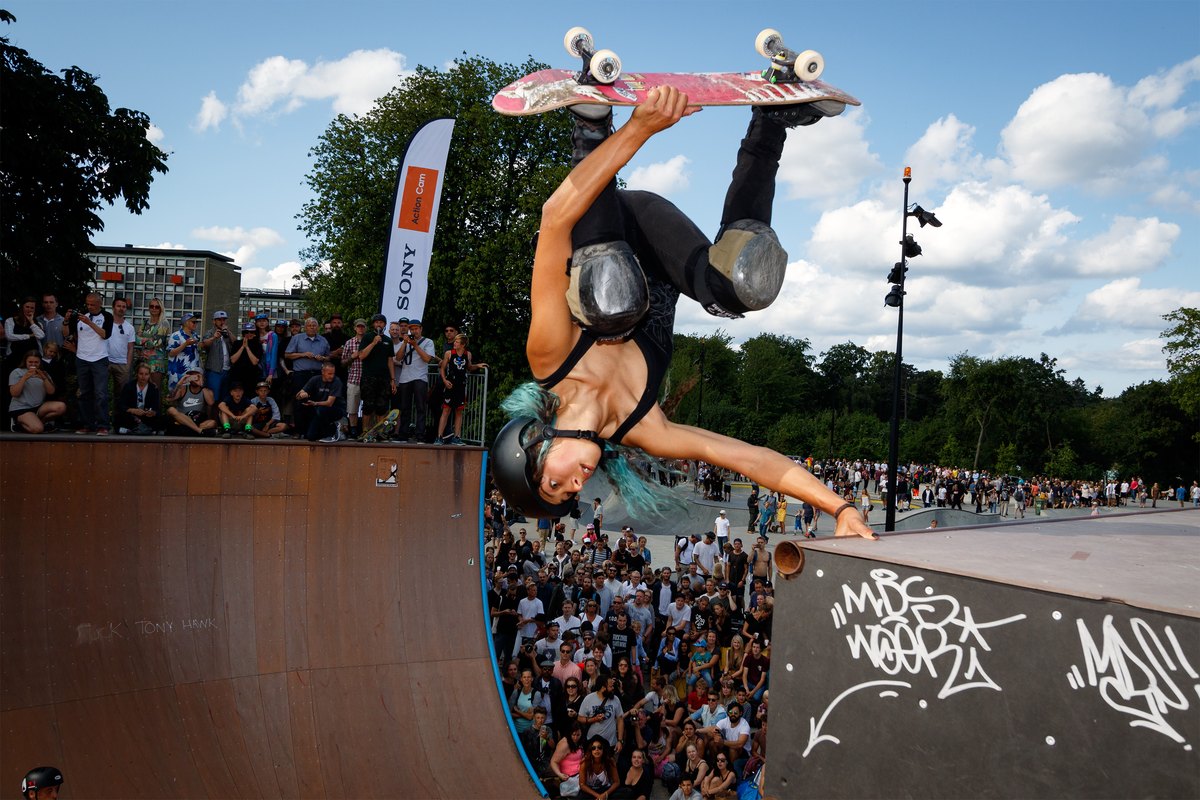
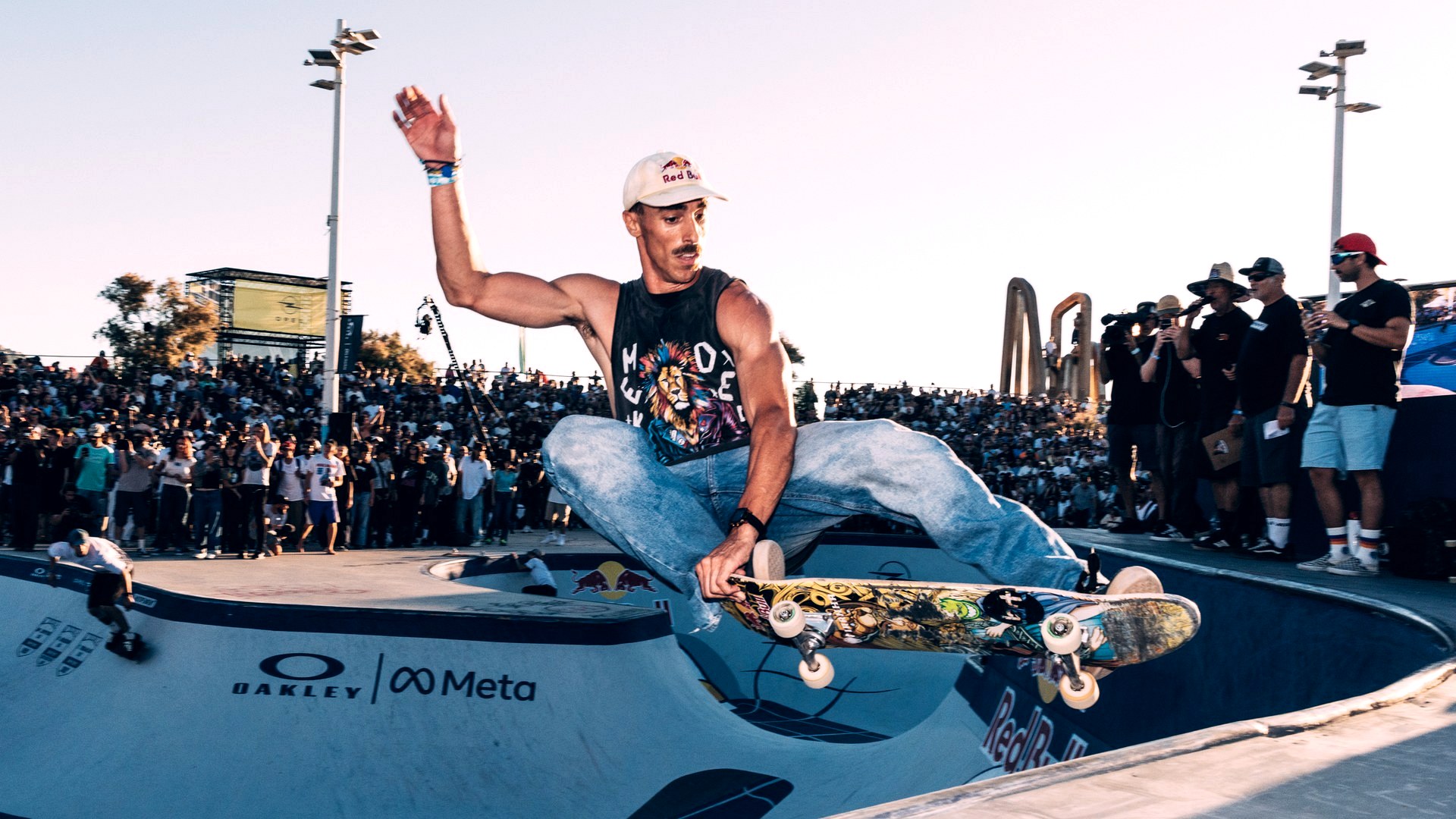
Look at Lizzie Armanto. In 2018, she becomes the first woman to complete The Loop, a 360-degree ramp. On a transition like that, at that speed, a board that shakes doesn’t forgive anything. What she’s after, like everyone who rides fast in transition, is a board that tracks straight and turns when she decides, not before.
The only setting that counts: your weight on your bushings
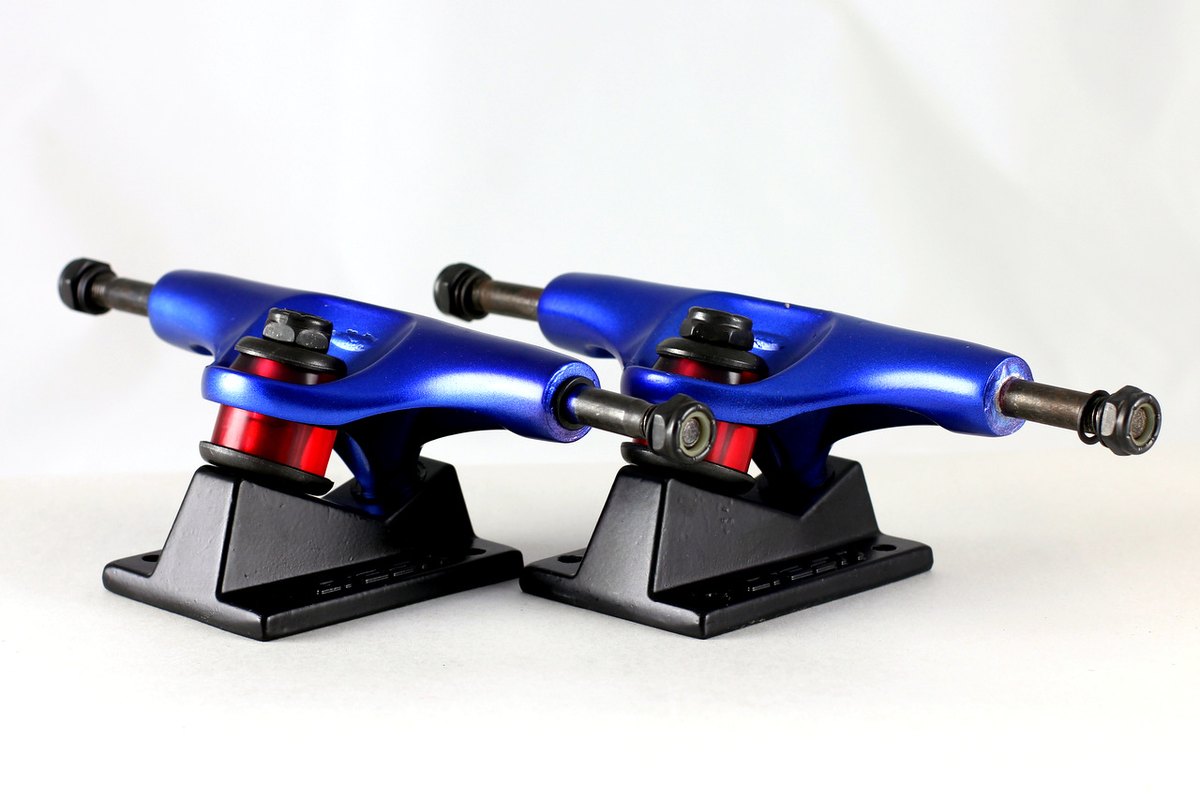
Here’s the answer. The thing that decides whether your trucks should be tight or loose is your weight. Not your spot, not your tricks.
Why? When you lean the board, your body is what compresses the bushings. At 100 lbs, a 94a bushing barely moves: your board feels like concrete even with the nut loose. At 187 lbs, an 88a bushing gets crushed by the slightest pressure: your board feels mushy even with the nut cranked all the way down. Same setting, two boards that have nothing in common.
That’s why copying your homie’s setup doesn’t work. And that’s why you see beginners cranking the nut down until the bushings are completely crushed, instead of just swapping bushings. As a starting point: lighter riders go with 88a, average build with 90a, and over roughly 165 lbs look at 92a or 94a. Only after that do you dial in the nut for your terrain. We broke it all down in our bushings guide.
3 Sessions to Dial In Your Setup Without Eating Pavement
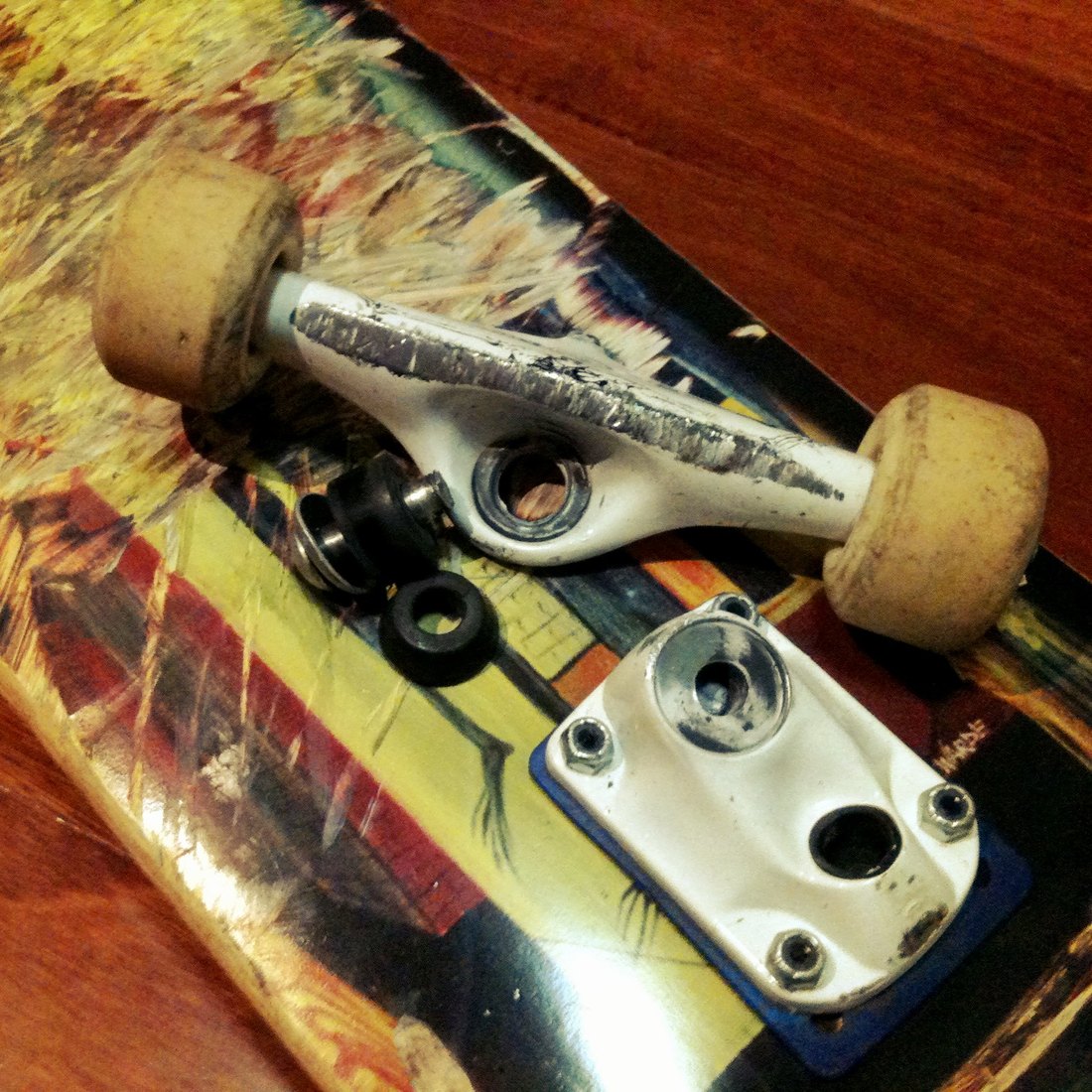
You’ll need a skate tool, a T-tool does the job just fine, and a smooth, flat surface. No slopes, no bowls for testing.
- Session 1, ground zero. Set the nut so it sits roughly flush with the top of the kingpin, same on the front and back. Ride for twenty minutes, do wide turns and tight turns. Note what bugs you: it won’t turn, or it feels loose.
- Session 2, the quarter turn. If it was loose, tighten a quarter turn. If it wouldn’t turn, loosen a quarter turn. Run the exact same turns again. Push a bit faster on a straight line: if the board starts to shimmy, you’re too loose.
- Session 3, the sign-off. Land your actual tricks: ollies, landings, a run at the park. Keep the setting where the board snaps back straight on its own after a turn, without the wheel hitting the deck when you lean all the way over.
A safety rule is non-negotiable: the nut must always stay fully threaded onto the kingpin. If you loosen it and see bare threads under the nut, stop. Your bushings are too hard for you, so swap them. A nut that holds on two threads can come off mid-session.
Frequently asked questions
Tight or loose trucks, what’s better when you’re starting out?
Slightly tight, with bushings suited to your weight. You gain stability and avoid wheelbite and speed wobble. You loosen them up once you feel comfortable carving.
Why does my board only turn on one side?
Often, your two trucks aren’t set up the same, or one bushing is more worn than the other. Count the visible threads above each nut. If they’re identical, check the condition of the bushings.
My trucks squeak when I turn, is that bad?
No, it’s the bushing rubbing against the metal. Take them apart, put a little dry soap or candle wax on the bushings, and reassemble. If the noise comes back fast, the bushings are worn out.
Do I need to swap the stock bushings?
Only if you can’t find a setting you like by adjusting the nut. If you have to crank it all the way down or loosen it to the last threads, that’s a sign the hardness doesn’t match your weight.
The day your board turns exactly when you want it to, you stop thinking about your trucks. You think about your line. That’s exactly where we want to take you.
Ride on.
What bushings are you riding, and your axle nut, do you leave it flush or crank it down? Drop your hardness and your setup. Tell us in the comments ↓
Le lexique
-
1
kingpin
Grosse vis verticale au centre du truck qui relie la base au bras et autour de laquelle il pivote.
-
2
bushings
Gommes en uréthane autour du kingpin qui s'écrasent quand tu penches et ramènent la planche droite.
-
3
speed wobble
Tremblement de la planche de gauche à droite à grande vitesse, souvent quand les trucks sont trop lâches.
-
4
wheelbite
Quand la roue touche le dessous du deck en virage serré et bloque net la planche.




Continue ta lecture
ÉvénementsAsian Games 2026 skate, résultats : 0 titre street pour le Japon chez lui, comment ?
Deux zéros, puis 92,40 : Kang Jun-i prend l'or du street devant Sasaki et Onodera. Chez les femmes, Zhu Yuanling bat Yumeka Oda de 4,61…
Commentaires (0)