

ℹ️ 🛹 Web Média Skate 🛹 ℹ️

 Back
Chroniques · Opinion
EMB, San Francisco: Why Did the Plaza Where Modern Street Skating Was Born Disappear?
Why did EMB, the San Francisco plaza where Mike Carroll filmed Questionable in 1992, disappear? Tickets, police, then a crane in 2026.
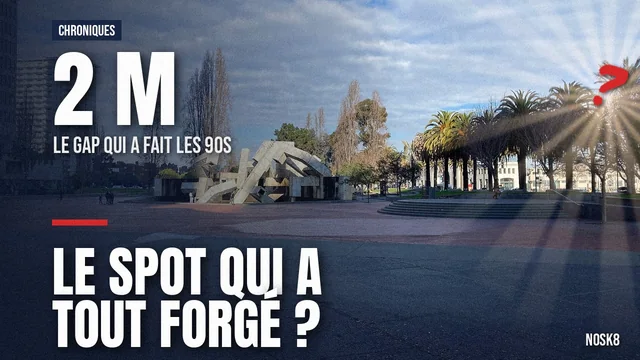
On April 27, 2026, in San Francisco, a crane starts dismantling a 710-ton concrete fountain at the foot of Market Street. The city pays $4 million to store it in a warehouse. Thirty-four years earlier, on the bricks right next to it, Mike Carroll was filming a video that taught street skating to the entire planet.

This plaza is called EMB. Nobody designed it for skating, and City Hall spent thirty years taking it back. How did an office worker corner become the lab of street skating? And why did it end up disappearing?
In this article 6 parts
Market Street, 1972: a plaza under a freeway
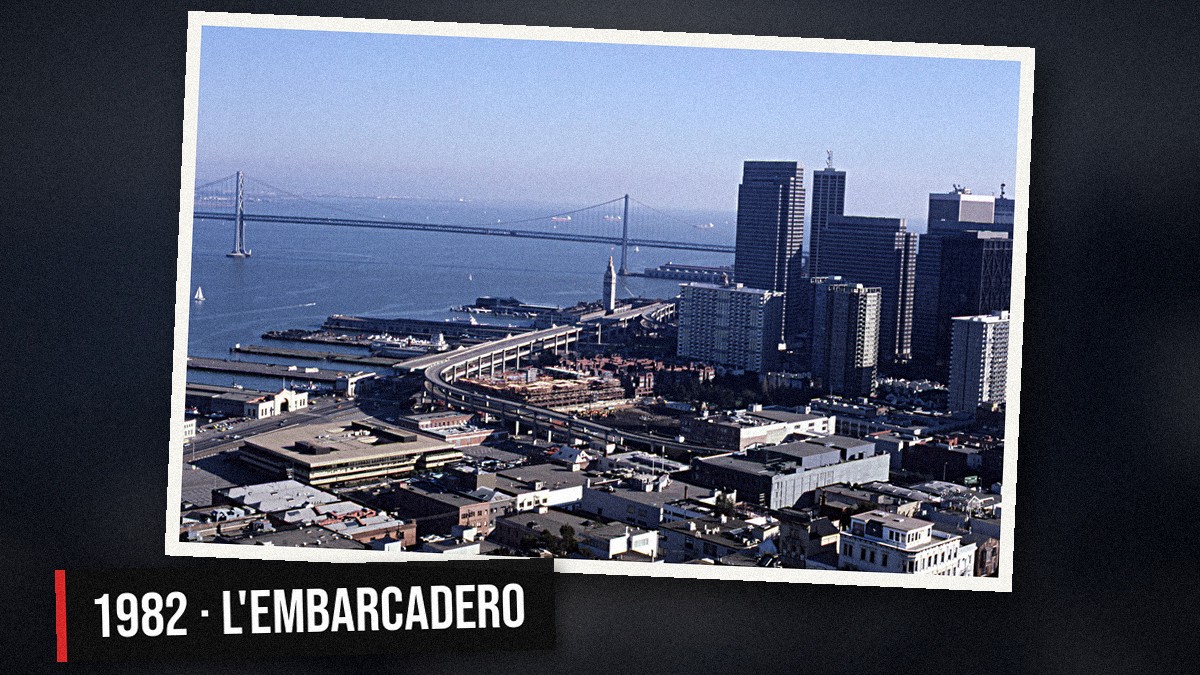
The plaza opens in 1972, at the end of Market Street, facing the Ferry Building. The San Francisco redevelopment agency builds it, based on an idea from landscape architect Lawrence Halprin. It is first named after the head of that agency, Justin Herman. Under his leadership, Black neighborhoods such as the Fillmore are razed. In 2017, the city council votes unanimously to remove his name.
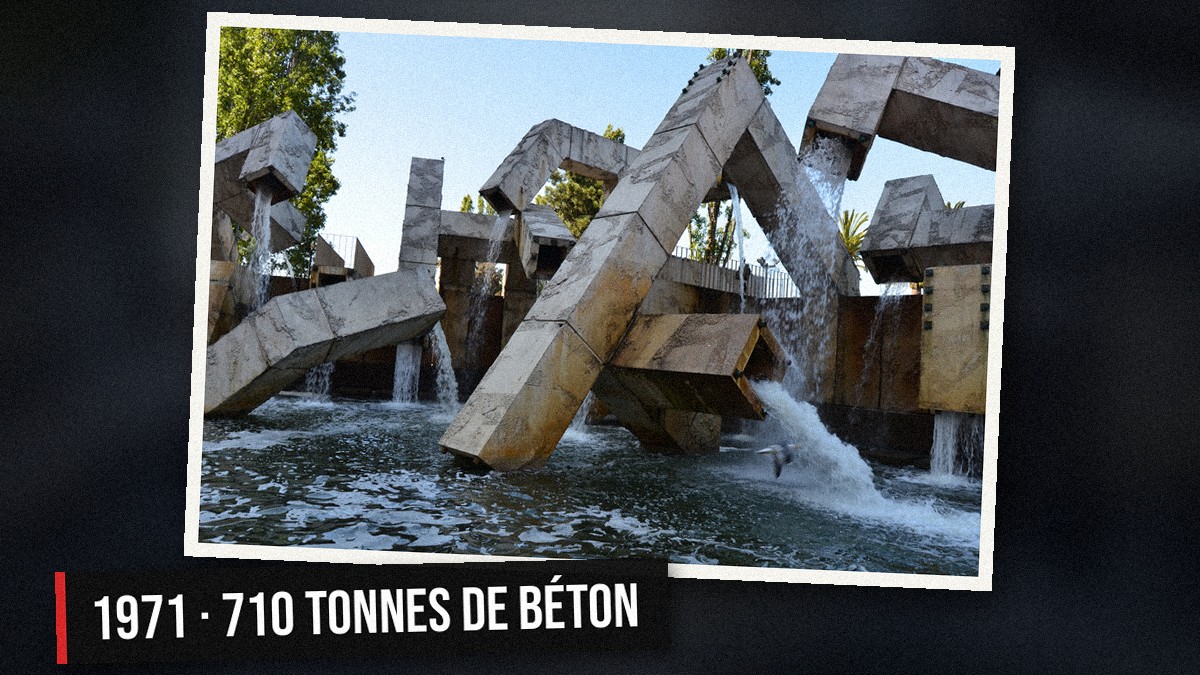
Above it runs the Embarcadero Freeway, an elevated highway. The 1971 Vaillancourt fountain, by Armand Vaillancourt, also serves to cover its noise. Halprin dreamed of a ‘place of participation.’ For John King, architecture critic at the San Francisco Chronicle, it was mostly ‘a kind of void.’
That void is exactly what is going to attract the skaters.
James Kelch, late ’80s: the first one on the bricks
The first time James Kelch drops his board there, in the late ’80s, he’s alone. « It was lunchtime, there were only people in suits eating, » he tells Curbed in 2019. He’s still called the mayor of the Embarcadero.
At first you skate like in the 80s. A concrete wave for handplants, a trampoline placed between bricks. Since 1982 the place also has steps and blocks. Kelch summarizes: you can jump steps, ride the wave, pass gaps, skate blocks. If he built a skatepark today, he said, « it would be the Embarcadero. »
In 1986 Mark Gonzales jumps a gap between two levels. The passage keeps its name: the Gonz gap. He returns in 1993 to kickflip it.
Questionable, 1992: Mike Carroll filmed at his house

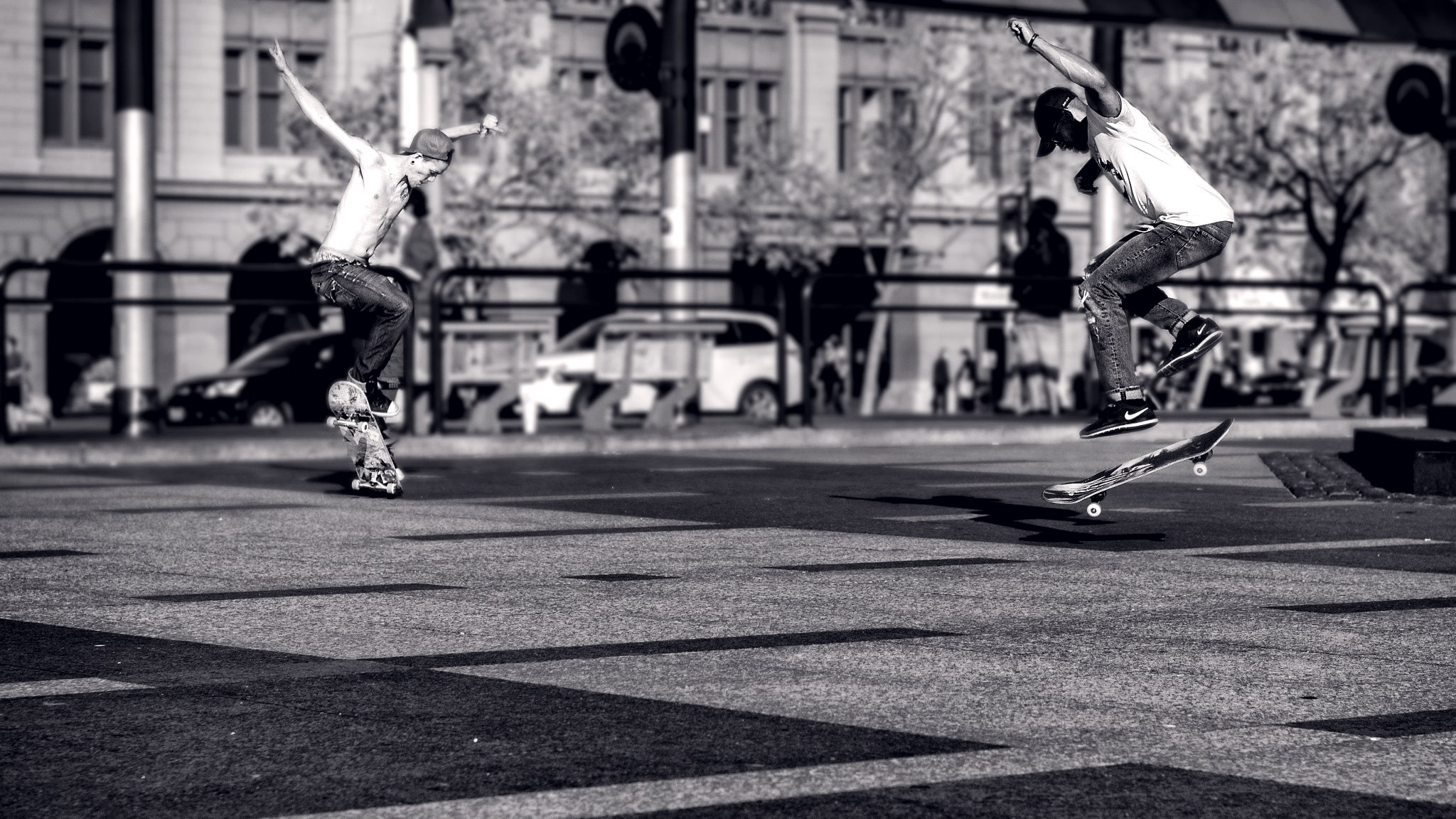
Between 1989 and 1993 the axles mark the bricks. Kelch speaks of « high-tech tricks that flip in all directions. » Mike Carroll, a kid from Daly City who entered Plan B in 1991, strings together late shove-it kickflips. Questionable, the 1992 Plan B video gives EMB a big place, and Carroll is at home. Behind the camera Jacob Rosenberg. He says simply: the place is « intimately linked to skate progression. »
Around Carroll there are Henry Sanchez, whom Thrasher historian Ted Barrow calls « the avant-garde. » There’s Jovontae Turner, Karl Watson, and Kelch, filmed for Real in 1993. Some days, 200 skaters cross the bricks. An old Bay Area guy says he knows best: a bomb on EMB back then, and professional skateboarding didn’t exist anymore.
Just behind it is the Hubba Hideout, which gave its name to all « hubbas » worldwide. Carroll was Skater of the Year at Thrasher in 1994. In between, in 1993, he co-founded Girl. The baggy cut, small wheels, Vans Cab trimming the cutter: everything started there.
Around mid-90s we were getting squeezed every time. — Jacob Rosenberg, Plan B filmer at Curbed
A police car in front of the Hyatt: the years of fines
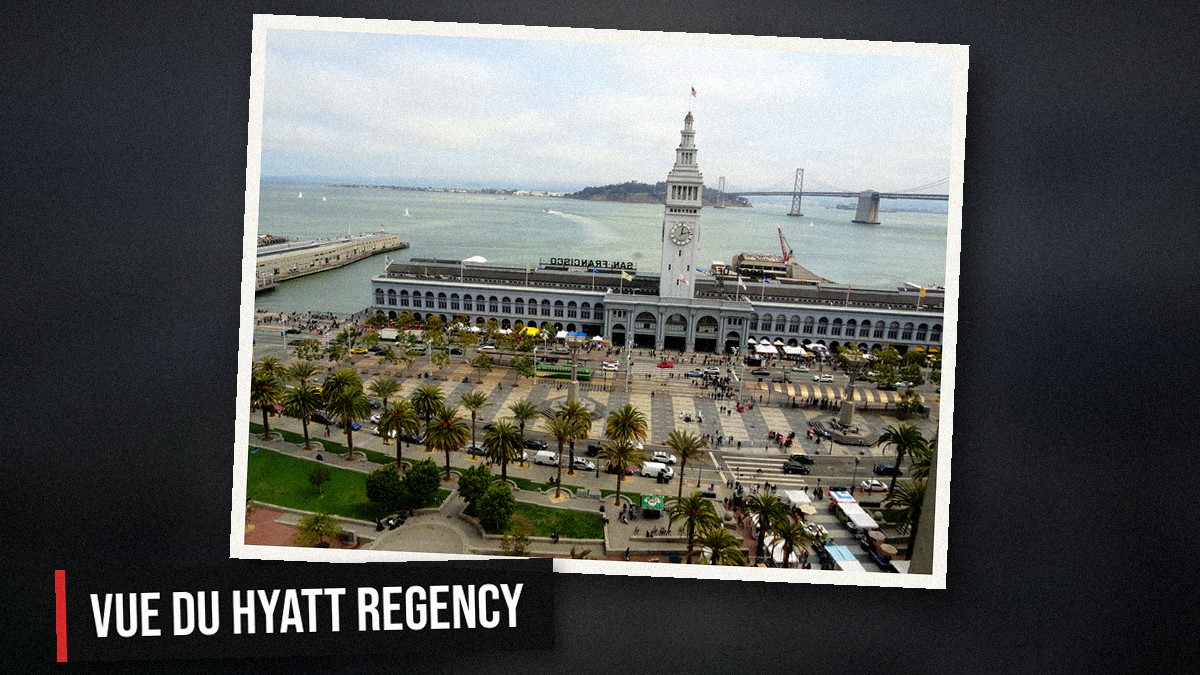
Success comes with a price. There have always been security guards and cops. For a while, an empty police car sat parked in front of the Hyatt Regency, at the edge of the plaza. From the mid-’90s on, one board down, two pushes, and you get a ticket.
The real blow hits around 2000. The city redoes the plaza: the ledges and blocks from that era disappear, replaced by others, then by planters. Then come the metal anti-skate fixtures. Danny Gonzalez’s kickflip on the Gonz gap will stay the last one, just before the work. In 2011, the Hubba Hideout gets razed in its turn.
Ted Barrow does the math in the San Francisco Standard: three decades of skaters ‘criminalized and closely watched’.
Before / after: 1992, the bricks, and 2026, the crane
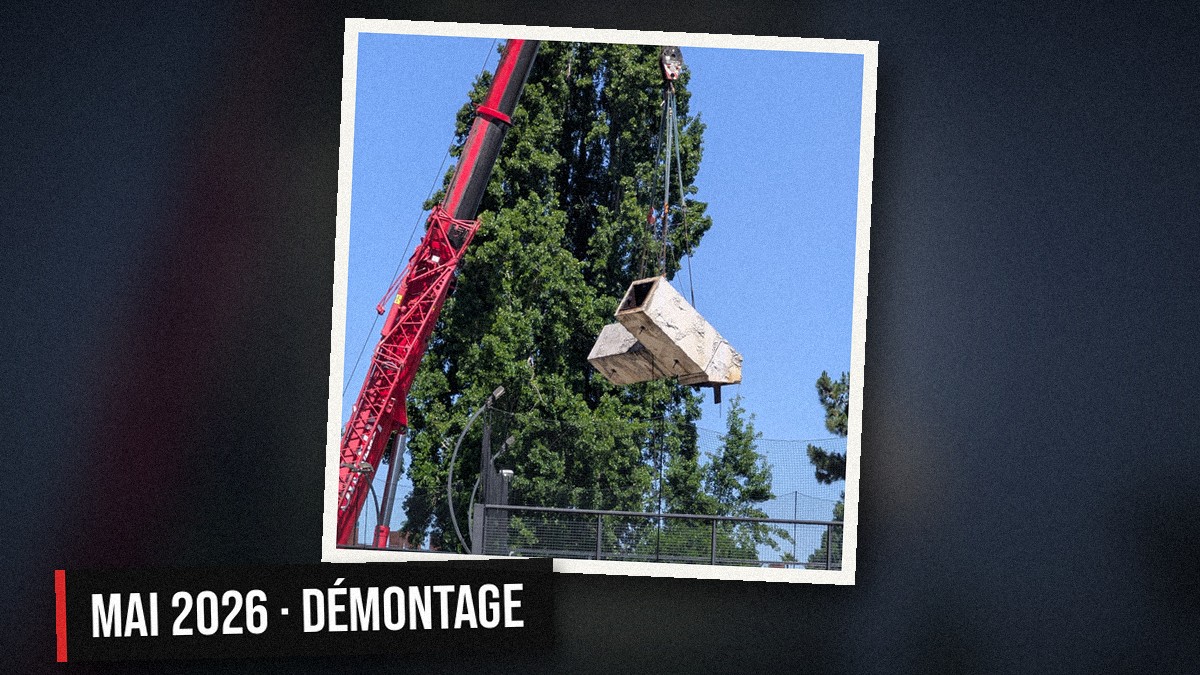
So why did the plaza where modern street was born disappear? Because the city never saw what skaters saw there. To them, it was a botched plaza that needed fixing, and every fix took a piece of EMB. First the tickets, then the blocks around 2000, then the anti-skate fixtures. And in 2026, the fountain, the last original set piece.
The dates are clear. In June 2024, the fountain’s pumps give out. In June 2025, it gets fenced off. On November 3, 2025, the arts commission votes 8 to 5 to remove it. In April 2026, a judge sides with the city, and on April 27 the dismantling begins. The blocks are numbered in case they get reassembled, and the bill hits $4 million. A group, Friends of the Plaza, argued it could be protected in place for $890,000.
EMB, honestly, was already gone around 2000. Skaters had already lost it. 2026 is the day the scenery itself goes too.
Going there today: look down
The city and BXP, owner of Embarcadero Center, are planning a new plaza, with a price tag of up to $50 million. In March 2025, Ted Barrow launched a petition. He’s asking to keep some original bricks, a plaque, and the right to skate there.
If you swing by, check the construction status first. No sessions at lunchtime, skating there has been ticketed for thirty years. In 2024, Barrow could still see axle marks on the bricks. Look down, that’s all that’s left from 1992. To learn everything that got invented there, also read our history of the spot.
If the city let you keep one piece of EMB, what would you save: the marked bricks, the wave, or the Gonz gap? Tell us in the comments ↓

Continue ta lecture
ChroniquesFully Flared, 19 ans plus tard : la vidéo Lakai qui refuse de vieillir
Sortie en 2007 après quatre ans de tournage, Fully Flared reste la vidéo Lakai qui a tout changé. Explosions, M83, rédemption de Guy Mariano, marathon…
Commentaires (0)