
ℹ️ 🛹 Web Média Skate 🛹 ℹ️

Conseils
How to Skateboard: 5 Steps From Zero to Your First Ollie — and the One Everybody Skips
Tu as la planche et aucune idée de par où commencer. Les 5 étapes dans l'ordre, le temps que prend chacune — et celle que presque tout le monde saute, alors que c'est elle qui fait la différence.
→ Pour aller plus loin : Skater sous la pluie : ce que ça détruit vraiment sur ta planche
Level: Beginner
You've got the board. It's been sitting in your room for three days and you keep eyeing it like it's gonna bite you. The real question isn't how to skateboard — it's where to start so you don't look like a total kook the second someone walks by.
Here are the 5 steps, in order, the ones every kid who progresses fast actually follows. Give the first four two to three weeks if you're rolling 30 minutes a day. The fifth one, the ollie, takes way longer — and that's normal.
But here's the thing. Out of these 5 steps, there's one almost nobody does. It takes twenty minutes, it looks like nothing, and it's the exact one that separates the people still skating six months later from the ones who shove the board under the bed. Which one? Answer at the bottom. Steps first.
The mistake we see constantly
The classic: you unbox the board, stand on it in the living room and go for an ollie that same day because that's what you've been watching on loop on TikTok. Result — the board fires into the wall, you roll an ankle, and a week later you're convinced you're "just not built for this." You're not bad at skating. You just skipped the four steps that make the fifth one possible.
Step 1 — Regular or goofy: the 10-second test
Before anything else, you need to know which foot goes up front. Two options: left foot forward is regular; right foot forward is goofy. Neither one is better than the other — your body just decides for you.
The most reliable test: have a buddy shove you gently in the back without warning. Whichever foot shoots out to catch you is your front foot on the board. Second method if you're on your own: run a few steps and slide across a smooth floor in your socks. The foot that ends up in front is the one.
Most skaters ride regular. If you're in the other camp, good news: you're goofy like Tony Hawk, and nobody's gonna give you grief over it.
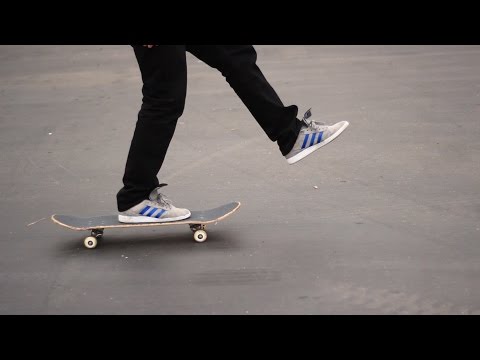
This video from Braille Skateboarding shows the very first moves in real conditions. Watch where they put their feet — that's what's coming next.
Step 2 — Standing on the board without it shooting out
First reflex to kill: don't step onto a board sitting on smooth concrete. It rolls, you eat it, you get spooked. Start on carpet, short grass or packed gravel — the board's locked in place and you can focus on your stance.
Here's the stance. Front foot just behind the front bolts, angled slightly. Back foot on the tail, the kicked-up part at the back. Knees soft, never locked. Shoulders lined up with the board, eyes way out front — never on your feet. If you look at your feet, you go down. That's physics, not advice.
Stay on it for two minutes, bend, rotate your shoulders, lean onto your heels then onto your toes. Feel the board tip: that's how you'll turn. Once stepping on doesn't take any thought, move on.
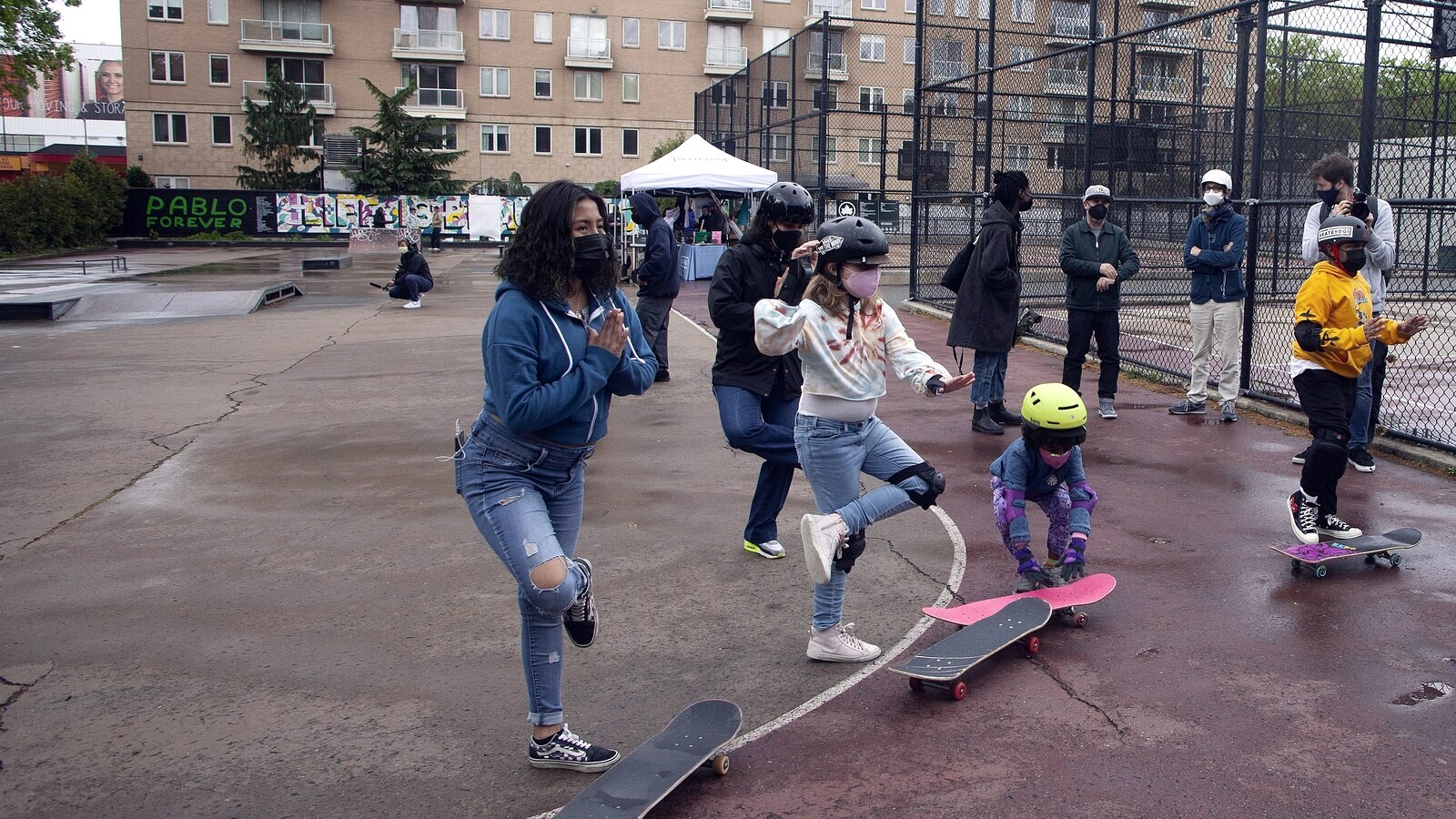
Step 3 — Pushing and rolling: where it turns into actual skating
Find flat, smooth ground. An empty parking lot on a Sunday morning, a gym hallway, a playground. Not the street, not yet.
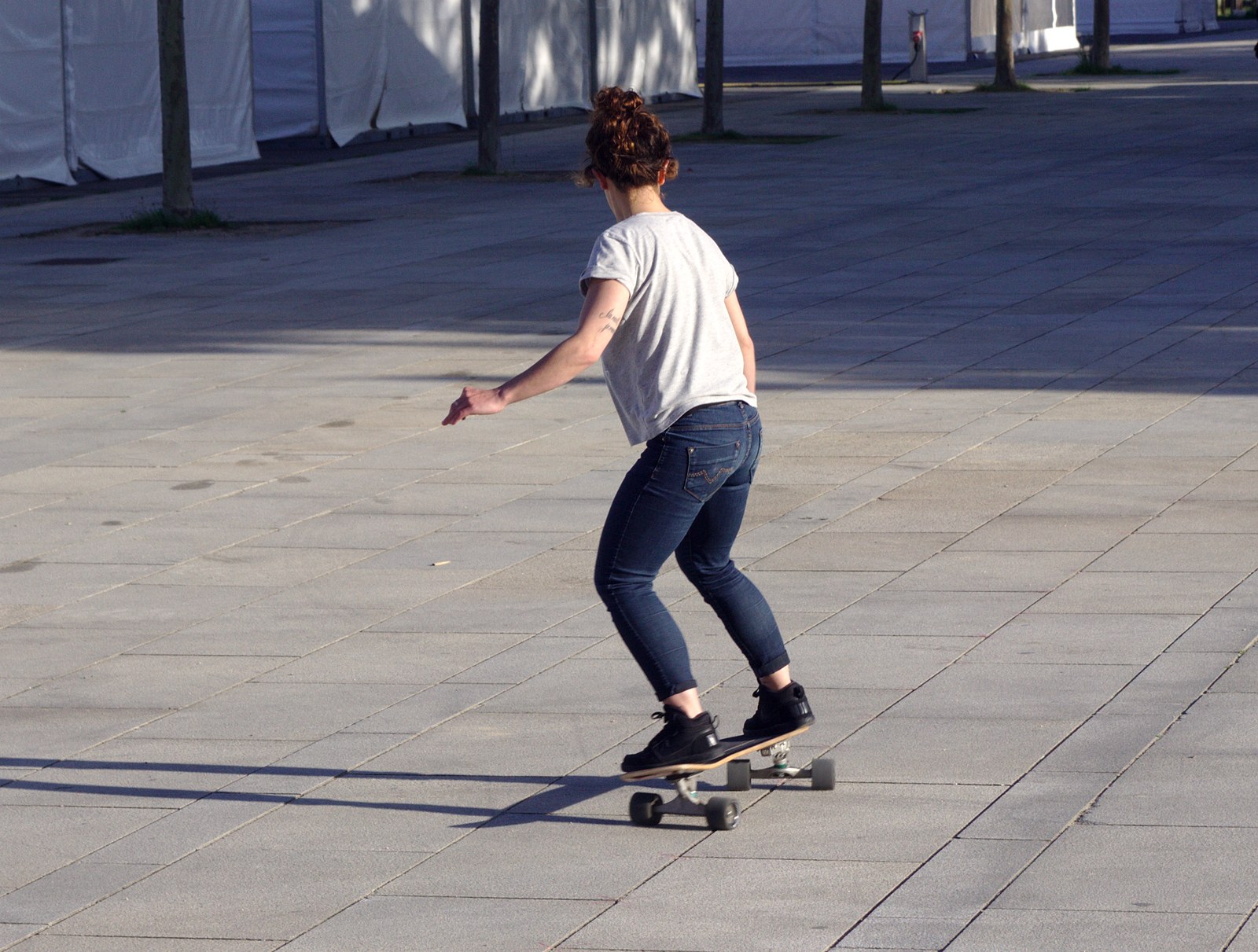
Front foot on the board, pointed forward. Back foot on the ground. You push, bring the back foot onto the tail, and pivot the front foot sideways. That's the whole thing right there: that front-foot pivot has to become automatic. Do it fifty times in a row over ten meters. It's repetitive, it feels a little dumb, and it's what takes you from "I can stand up" to "I can roll."
Once you're rolling, you turn by leaning: weight on your toes to go one way, on your heels to go the other. If it barely turns, your trucks are too tight — back the kingpin nut off a quarter turn with a T-tool, no more.
Step 4 — Stopping, and above all slamming properly
You can roll. You can't stop. That's exactly where beginners get hurt.
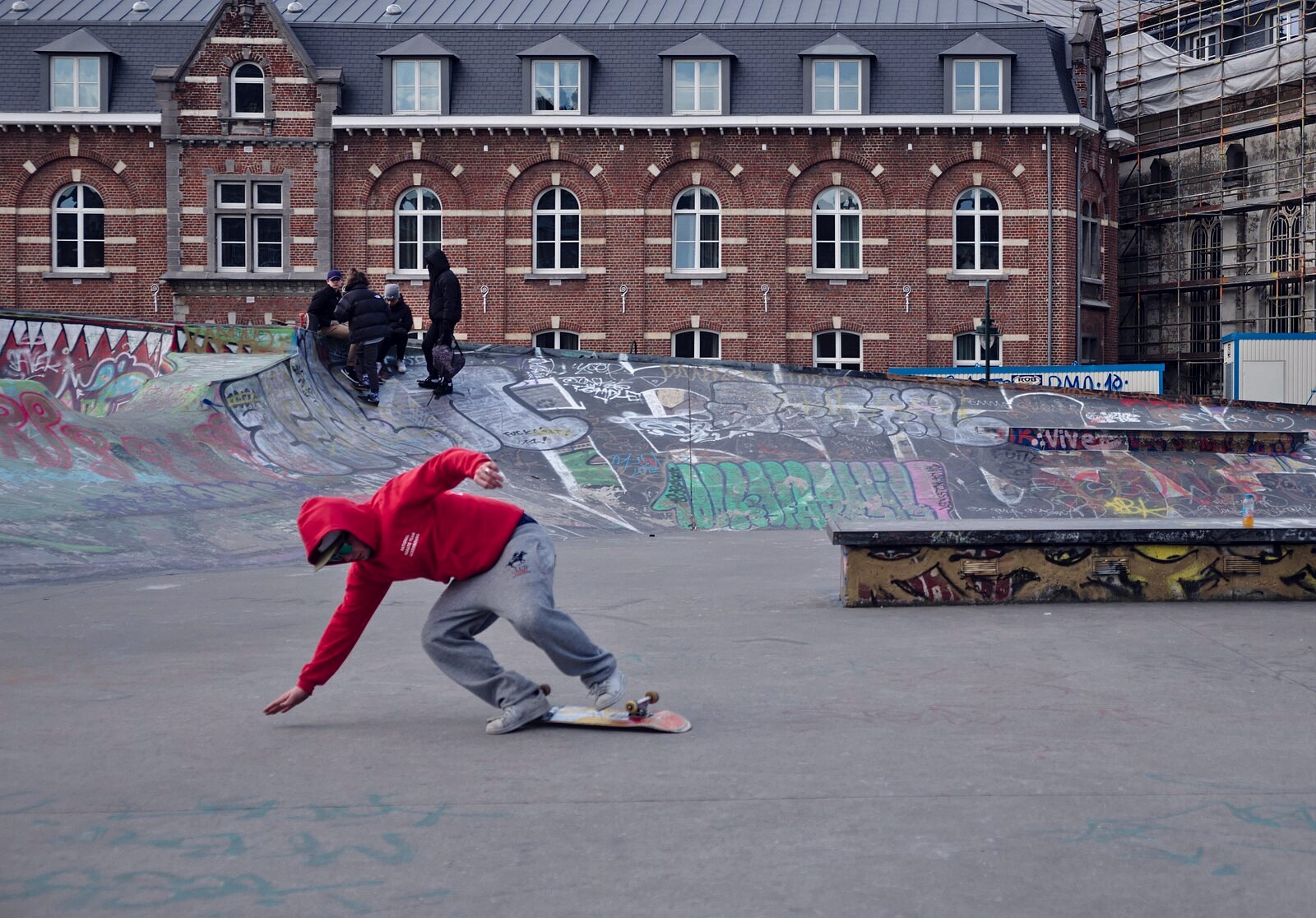
Three ways to slow down, easiest to most useful. The foot brake: drop the sole of your back foot to the ground and drag it in progressively — 90% of your stops. The tail scrape: press on the tail so the end of the board drags, effective but it chews up the wood. The power slide: turn the board sideways to lock the wheels up. Save that one for later.
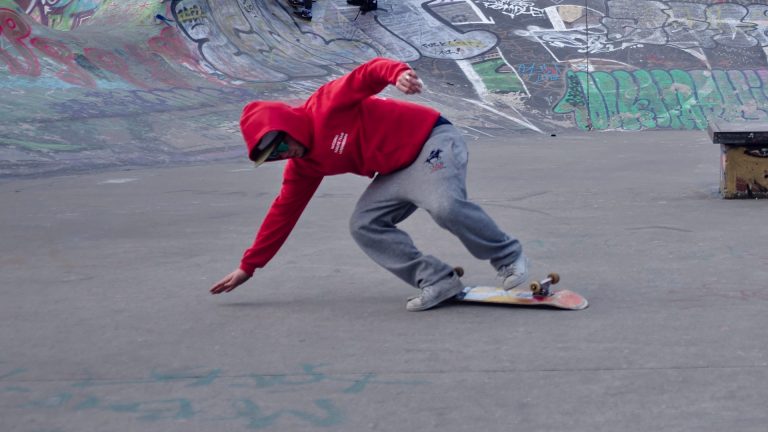
And falling is a skill too. The rule: never absorb the impact with locked wrists. You roll onto your shoulder, spread the impact out, get back up. The wrist is the joint that takes everything when you pitch forward, because the natural reflex is to throw a hand out to catch yourself. A helmet and a decent set of pads get you five more tries instead of a walk home.
Step 5 — The ollie, the door to everything else
The ollie is jumping with the board stuck to your feet. Without it, you're not getting on anything, over anything, and you're not landing any other trick. Alan Gelfand invented it in 1978 on ramps; Rodney Mullen was the first to pull it on flat in 1981. All of modern street skating comes out of those two dates.
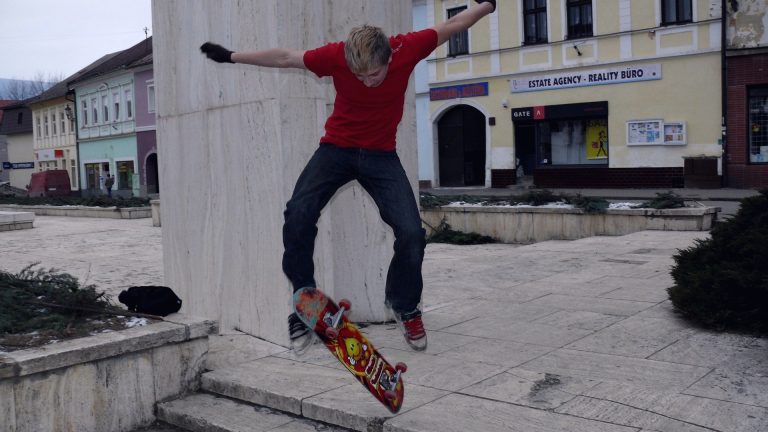
Three-part motion: you snap the tail off the ground hard, you drag your front foot up the board toward the nose, you suck both knees up toward your chest. It's not a vertical jump, it's a snap followed by a slide. Start standing still, on grass or with the board wedged. Then rolling very slowly.
Give it several weeks. We broke the whole motion down in our 6-step ollie guide. Once it's coming out clean on flat, every curb becomes a playground — and at that point, rolling off a curb means something completely different.
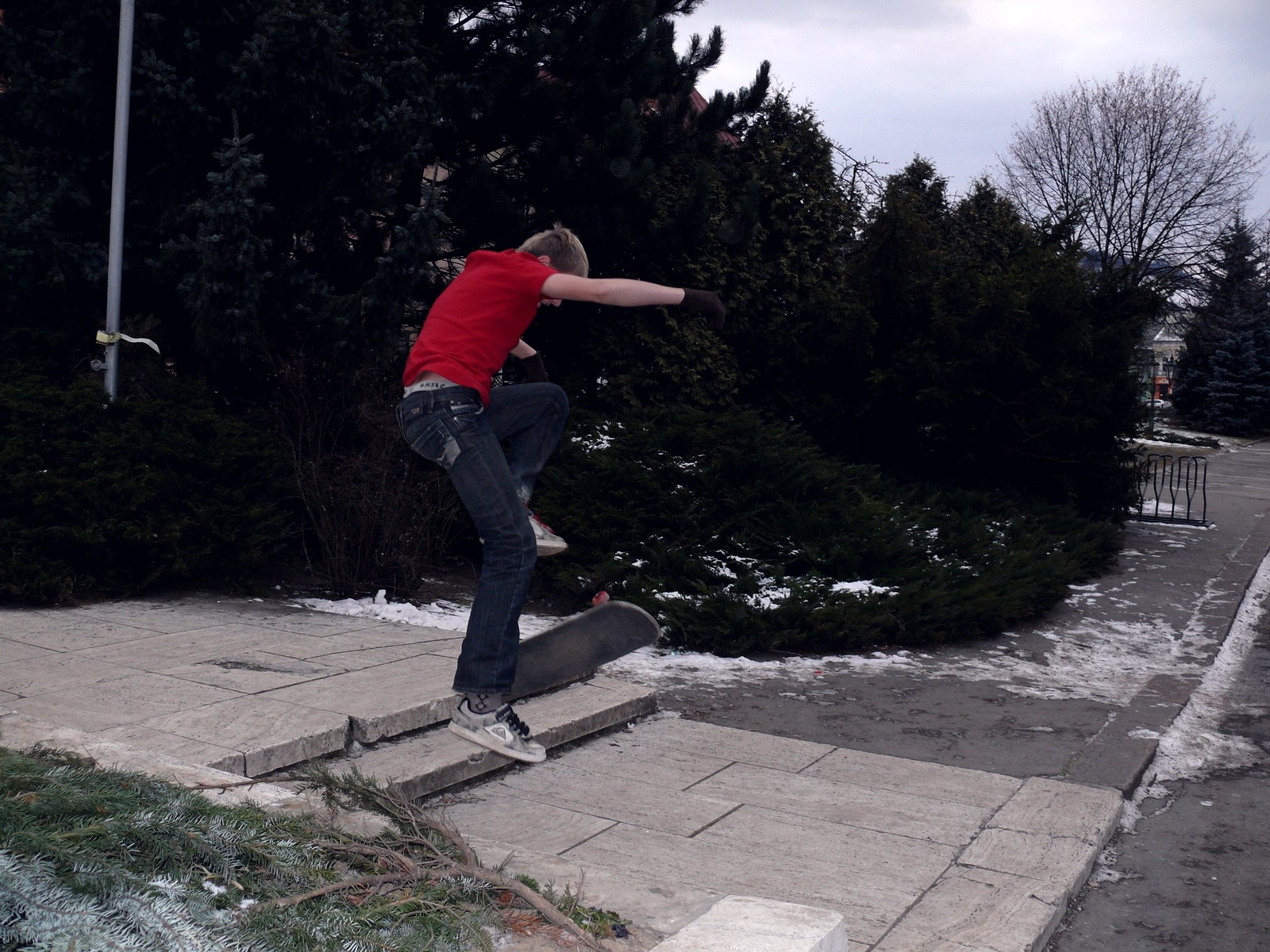

The tail snap, the front foot dragging up, the knees coming back: three beats the video makes clearer than any written explanation ever could.
The step everybody skips — and it's the one that counts
Here's the answer we promised up top. The skipped step isn't the front foot, isn't the push, isn't the ollie. It's step 4: learning to fall, on purpose, cold, before you actually need it.
Nobody practices slamming. It looks like nothing, it doesn't film well, it doesn't get views. So everyone jumps straight from "I can roll" to "I'm trying a trick." And the first real slam shows up with zero reflexes in place: the hand goes out, the wrist takes all of it, and the fear moves in. After that, the body tenses up on every attempt — and a tense body doesn't land anything.
Twenty minutes is enough. Pads on, standing still then rolling very slowly: you let yourself drop onto your side, roll onto the shoulder, get up. Thirty times. Your brain files away that the ground isn't a lethal threat, and it stops holding you back.
That's the actual difference between the two types you see in every skatepark: the one who commits and gets back up, and the one who hesitates for half a second before the snap — and blows it because of that half second. The first one isn't more talented. They've just already hit the ground thirty times without getting hurt.
What it actually changes
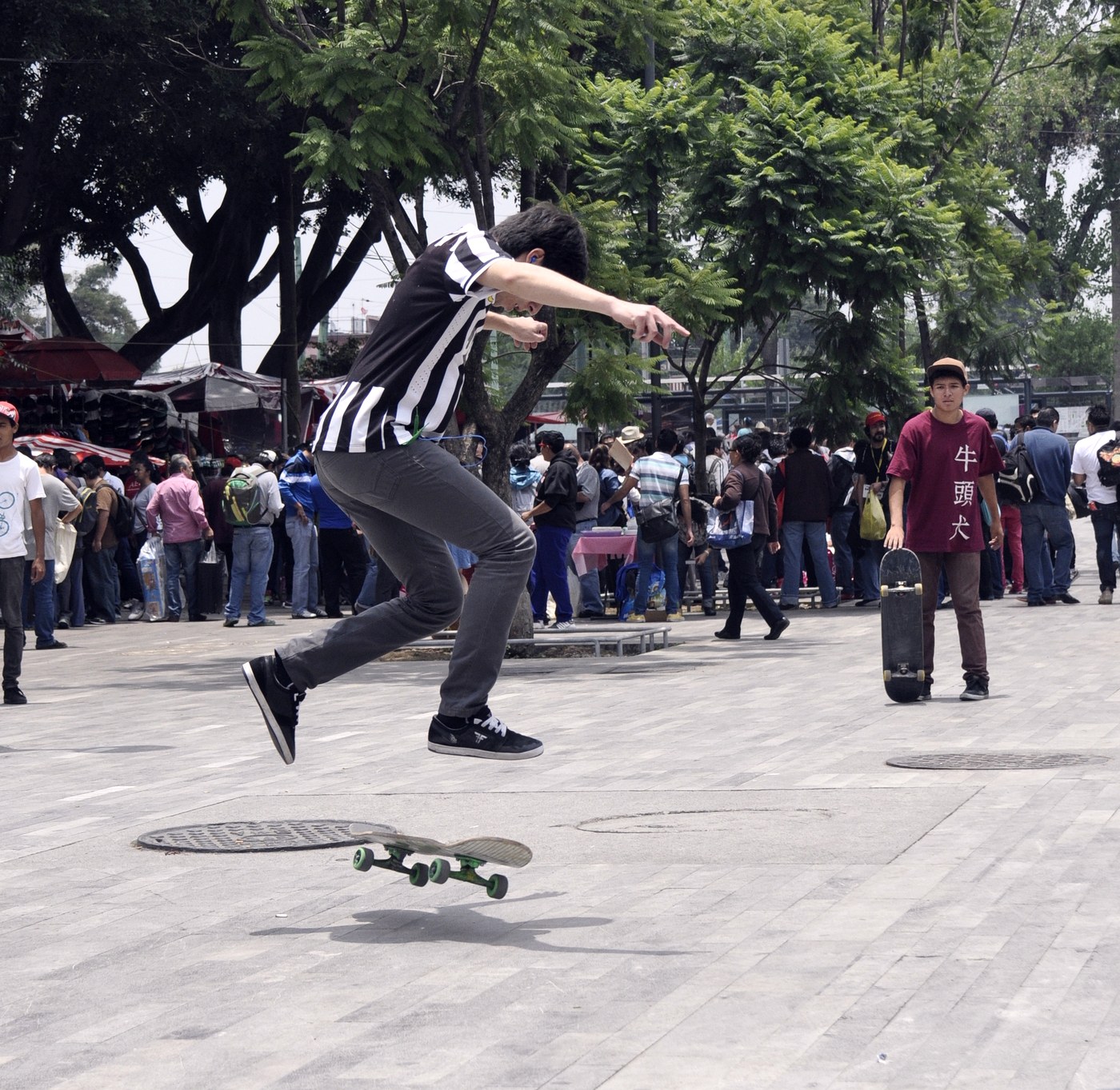
The day falling stops scaring you, you stop skating on the brakes. You push harder, you look further ahead, you go for the trick instead of picturing it. It's not about being brave — it's your body figuring out it knows how to handle the exit. And that's exactly the moment people around you start seeing you as a skater instead of some guy with a board.
How long each step takes, honestly
- Step 1 — front foot: 10 seconds. For real.
- Step 2 — standing on it: 2 to 3 sessions of 20 minutes.
- Step 3 — pushing and turning: 1 to 2 weeks at 30 minutes a day.
- Step 4 — braking and falling: 2 sessions. Best time-to-payoff ratio on the whole list.
- Step 5 — ollie on flat: anywhere from 3 weeks to 6 months depending on the days you put in. No number here is abnormal.
If your board is a noodle or your wheels are squeaking, none of these steps will work right — gear genuinely matters at the start. We sorted through it in the first-board guide: size, brand, real-world budget.
Frequently asked questions
Can I learn to skate on my own, with nobody to help?
Yes, and that's how most people do it. Film yourself with your phone propped on the ground: in ten seconds you'll see what you can't feel — front foot misplaced, shoulders twisted, eyes on your feet. Best free coach there is.
Where do I practice as a beginner if I don't want an audience?
Supermarket parking lot on a Sunday morning, schoolyard on the weekend, a quiet park path. Smooth ground, no slope, no cars. Hit the skatepark at step 3, on a weekday in the early afternoon when it's basically empty.
Is it bad if I still can't ollie after two months?
Nope. Two months is completely ordinary, especially if you only ride on weekends. Check two things before you start doubting yourself: you're really snapping the tail into the ground (you should hear it), and you're dragging your front foot up the board instead of jumping straight up.
Do I really have to wear a helmet?
At the skatepark and on obstacles, yes, no debate — most French parks require it for minors. On a flat parking lot learning to push, it's less of an issue, but knee pads will get you ten more tries instead of two.
You've got the 5 steps and the order that works. The only thing that matters now is how many days you actually put your feet on that board. Nobody ever learned to skate by reading — not even by reading NOSK8.
Have a good one.
Which step are you on right now, and which one's got you stuck ? Tell us in the comments ↓
Follow NOSK8 where you hang out
Parts, spots, behind the scenes: it all drops on the accounts first.
Le lexique
-
1
regular
Position de base avec le pied gauche devant sur la planche. C'est le cas de la majorité des skateurs.
-
2
goofy
Position inverse du regular : le pied droit est placé devant sur la planche.
-
3
tail
La partie relevée à l'arrière de la planche. C'est elle qu'on claque au sol pour décoller.
-
4
ollie
Saut de base où la planche reste collée aux pieds. Toutes les autres figures en découlent.
-
5
foot brake
Freinage en posant la semelle du pied arrière au sol et en frottant progressivement.
-
6
power slide
Arrêt en mettant la planche en travers pour bloquer le glissement des roues.
Continue ta lecture
ÉvénementsPortugal Rookie Fest 2026 : pourquoi les 7 premiers ont tous moins de 16 ans
Podiums, scores et résultats complets du Portugal Rookie Fest 2026 à Peniche. Pacal Teixeira gagne à 81,70 — et le champion des Rookies finit dernier…
Commentaires (0)