
ℹ️ 🛹 Web Média Skate 🛹 ℹ️

★ Chroniques · Opinion
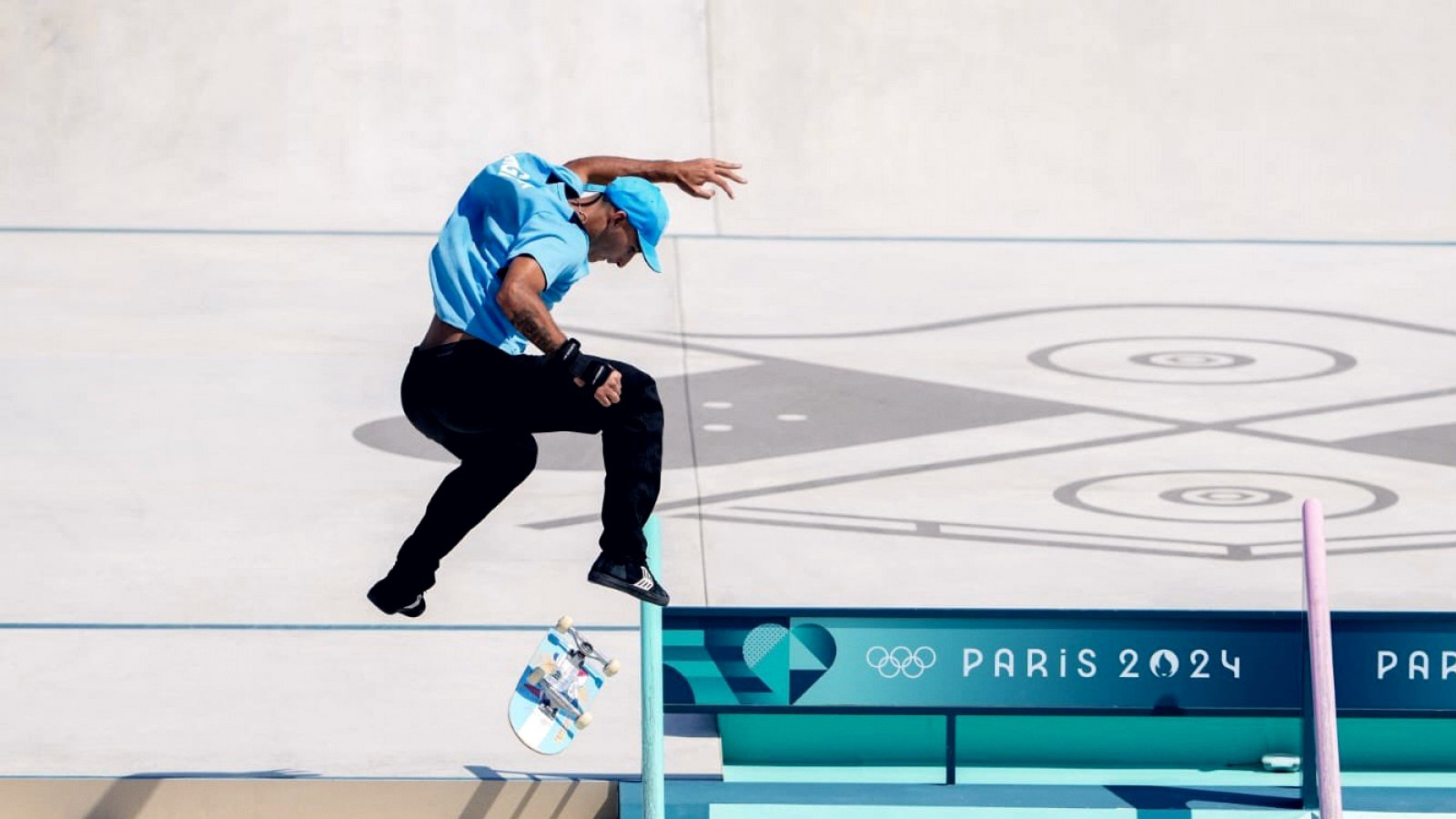
Ten tricks blew a contest apart — only one really changed skateboarding
Du 900 de Tony Hawk en 1999 aux sept notes à 9+ de Ginwoo Onodera à Sydney : le classement des 10 tricks de contest, et celui qui a réellement changé le skate.

→ Pour aller plus loin : Eric Koston a quitté Lakai après 3 ans : 17 ans plus tard, qui a vraiment perdu ?
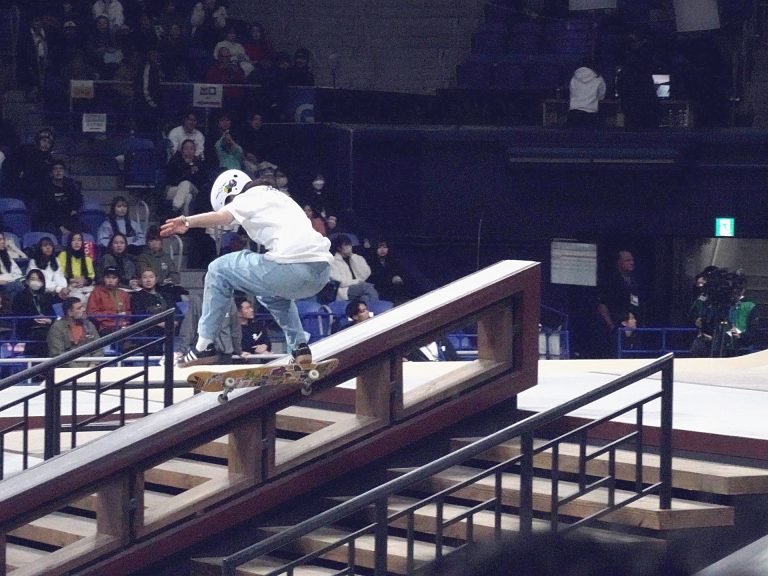
On 15 February 2026, inside Sydney's Ken Rosewall Arena, more than 10,000 people watched something Street League had never seen since its 2010 launch. Ginwoo Onodera, Japanese, turning sixteen that very day, took seven attempts. Seven scores: 9.1 — 9.4 — 9.1 — 9.2 — 9.5 — 9.0 — 9.2. Not a single one below 9. Final tally: 37.3. Julian Agliardi finished on 35.5, Giovanni Vianna on 34.7. Scored perfection, live, on a February night.
And yet. Ten years from now, that evening probably isn't the one people will name when they talk about the contest trick that changed everything. We ranked ten of them — from the wildest to the most decisive, from 1983 to this February. Only one truly moved skateboarding outside of skateboarding. It isn't the one that spins fastest, and the answer comes at the end.
27 June 1999: ten slams, and a clock already at zero
X Games V, San Francisco, Best Trick on the vert ramp. The format had a time limit. That limit ran out a while ago and nobody stops anything: the judges let it roll, the other riders stay on the deck, the crowd doesn't move.
Tony Hawk goes for two and a half rotations. He slams. He climbs back. He slams again. Twice he lands on the board and it shoots out from under him. Ten failed attempts before the eleventh sticks, arms windmilling, one hand grazing the ramp. That night, the first 900 in history lands in front of a rolling camera.
What remains of that sequence isn't the technique. It's that people who had never held a board understood, instantly, that they had just seen something brand new. No commentary required.
Before Hawk: 34 contests won out of 35, and no one filming
Rewind. In 1980, a fourteen-year-old enters the Oasis Pro and beats the reigning world champion. His name is Rodney Mullen. Over the following decade he wins 34 of the 35 freestyle contests he enters. The kind of streak no sport sees twice.
Except freestyle happens on flat ground, in front of two hundred people, with no grandstand and no broadcast. Zero spectacle in the television sense. What comes out of those contests, though, is the alphabet: kickflip and heelflip in 1982, 360 flip in 1983. Every trick you see on a rail today descends from figures landed on flat asphalt in front of a jury in polo shirts.
That's the paradox of this ranking: the technically most important trick is never the one that makes an arena scream.
1080, 1260: the rotation race, and what it cost
On 8 May 2020, Gui Khury lands the first 1080 on a vert ramp. He is eleven, he is at home in Curitiba, there is no contest — just his ramp and a camera. Fourteen months later, on 16 July 2021, he does it again in X Games Best Trick: the first 1080 in competition, and at twelve he becomes the youngest gold medallist in X Games history.
Two years earlier, in August 2019, Mitchie Brusco had sent the first 1260 in Big Air, aged twenty-two. Three and a half rotations. On paper, harder than the 900. In people's memories, it weighs far less — and that is exactly the point of this article.
Arisa Trew, Sky Brown: the bar moved on the other side
On 23 June 2023, at Vert Alert in Salt Lake City, Arisa Trew becomes the first woman to land a 720 in competition. She is thirteen. On 29 May 2024 she puts down the 900 — first woman, twenty-five years after Hawk. That August she takes park gold at the Paris Games and becomes Australia's youngest Olympic champion, at fourteen.
On the same Paris podium, Sky Brown takes bronze. Two years earlier she had already made the "can girls do it" question completely obsolete. Nobody asks it anymore. That may be the real shift of the decade, and it doesn't fit inside a single trick.
The ten, in order — and the detail that stings
Here is the ranking, from most spectacular to most foundational. One: Tony Hawk's 900 at the 1999 X Games. Two: Mitchie Brusco's 1260 in Big Air, August 2019. Three: Gui Khury's 1080 in X Games Best Trick 2021, at twelve. Four: Arisa Trew's 900 on 29 May 2024, the first by a woman. Five: her 720 at Vert Alert 2023. Six: Ginwoo Onodera's 9.5 in Sydney, the highest single score of his record night. Seven and eight: the 900s of Ema Kawakami at seven, in August 2022, and Asher Bradshaw at ten, in May 2014 — landed outside competition, and that's precisely what stings. Nine: Sandro Dias's 900 in May 2004, five years after Hawk, when the trick was still considered impossible to repeat. Ten: Rodney Mullen's 360 flip in 1983, out of a freestyle contest almost nobody watched.
Here's the sting. Two kids aged seven and ten landed the 900 in their own ramps, quietly, with no audience. The trick that flipped an entire generation has become a skate-school rite of passage. It hasn't lost its difficulty — it has lost its charge.
The answer: Tony Hawk's 900, and nothing else
The 900 isn't the hardest — the 1260 spins one and a half rotations more. It isn't the most inventive — Mullen wrote the dictionary. It isn't even the best scored: Ginwoo did better, seven times in a row, last February.
It's the only one whose shockwave left the skatepark. In September 1999, three months after San Francisco, a video game carrying Hawk's name landed in living rooms and taught skate vocabulary to millions of kids who had never seen a board up close. Brands followed. Broadcasters followed. The contest circuit became a televisable product, then an Olympic one. And twenty-seven years later, the board from that night sold at auction for 1.15 million dollars — the price of an object that became cultural.
Put another way: Ginwoo Onodera's night in Sydney exists inside a world the 900 built. Without those ten slams filmed off the clock, there is no Street League with 10,000 spectators, no contract, no 9.5 discussed live. That's what a trick that changes skateboarding looks like: not the one skaters replay among themselves, but the one that brings in people who weren't there.
What it says about the 2026 season
The current level is absurd. Ginwoo holds seven tricks at 9 or above in one night; in Rio, a few months later, Cordano Russell wins a final decided by less than a point. In the women's event in Sydney, Rayssa Leal takes it with 30.1 ahead of Liz Akama and Chloe Covell. Competitive skateboarding has never been this good.
What's missing isn't the level. It's the moment when someone tries something nobody asked for, off the clock, risking ten slams in front of everyone. That moment can't be planned inside a scoring grid — and it hasn't happened in a while.
Le lexique
-
1
900
Figure aérienne à deux tours et demi sur soi-même, soit 900 degrés, posée sur une rampe vert.
-
2
1080
Trois tours complets en l’air, 1080 degrés. Un tour de plus que le 900, sur la même rampe.
-
3
1260
Trois tours et demi en l’air, réservé aux très grands modules type Big Air.
-
4
Best Trick
Format de contest où chaque rider tente une figure unique, la meilleure tentative comptant seule.
-
5
freestyle
Discipline historique pratiquée sur sol plat, faite de figures techniques enchaînées sans module.
Shop NOSK8
Voir toute la boutique →
TEE-SHIRTS
TEE-SHIRT NOSK8® P.B CENTRE #RNB
Le prix initial était : 35,00 €.29,00 €Le prix actuel est : 29,00 €.
TEE-SHIRTS
TEE-SHIRT NOSK8® P.B HEART #ORIGINAL
Le prix initial était : 35,00 €.29,00 €Le prix actuel est : 29,00 €.
TEE-SHIRTS
TEE-SHIRT NOSK8® P.B CENTRE #ORIGINAL
Le prix initial était : 35,00 €.29,00 €Le prix actuel est : 29,00 €.
TEE-SHIRTS
TEE-SHIRT NOSK8® NOSKATE #NSITA
Le prix initial était : 35,00 €.29,00 €Le prix actuel est : 29,00 €.
TEE-SHIRTS
TEE-SHIRT NOSK8® P.B HEART #POLARBEAR
Le prix initial était : 35,00 €.29,00 €Le prix actuel est : 29,00 €.

CASQUETTES
CAP NOSK8® P.B.P #PAW
Le prix initial était : 35,00 €.25,00 €Le prix actuel est : 25,00 €.

CASQUETTES
CAP NOSK8® P.B #POLARBEAR
Le prix initial était : 35,00 €.25,00 €Le prix actuel est : 25,00 €.
CASQUETTES
CAP NOSK8® N8 #NOSK8
Le prix initial était : 35,00 €.25,00 €Le prix actuel est : 25,00 €.
HOODIES
HOODIE NOSK8® NOSKATE #NSITA
Le prix initial était : 60,00 €.49,00 €Le prix actuel est : 49,00 €.
HOODIES
HOODIE NOSK8® P.B HEART #BARÇA
Le prix initial était : 60,00 €.49,00 €Le prix actuel est : 49,00 €.
HOODIES
HOODIE NOSK8® P.B CENTRE #ORIGINAL
Le prix initial était : 60,00 €.49,00 €Le prix actuel est : 49,00 €.
HOODIES
HOODIE NOSK8® P.B HEART #PARIS
Le prix initial était : 60,00 €.49,00 €Le prix actuel est : 49,00 €.
HOODIES
HOODIE NOSK8® P.B HEART&BACK #ORIGINAL
Le prix initial était : 60,00 €.49,00 €Le prix actuel est : 49,00 €.
SWEAT
SWEAT NOSK8® P.B HEART #BARÇA
Le prix initial était : 45,00 €.39,00 €Le prix actuel est : 39,00 €.
SWEAT
SWEAT NOSK8® P.B HEART #PHILI
Le prix initial était : 45,00 €.39,00 €Le prix actuel est : 39,00 €.
SWEAT
SWEAT NOSK8® P.B HEART #NYC
Le prix initial était : 45,00 €.39,00 €Le prix actuel est : 39,00 €.
SWEAT
SWEAT NOSK8® P.B HEART #PARIS
Le prix initial était : 45,00 €.39,00 €Le prix actuel est : 39,00 €.
SWEAT
SWEAT NOSK8® P.B HEART #POLARBEAR
Le prix initial était : 45,00 €.39,00 €Le prix actuel est : 39,00 €.
Continue ta lecture
ChroniquesAnti Hero, 31 ans sans une seule concession : comment c’est encore possible ?
Anti Hero a 31 ans, le même fondateur et les mêmes graphismes crades quand Element et Alien Workshop tombaient. La raison n'a rien à voir…
Commentaires (0)