

ℹ️ 🛹 Web Média Skate 🛹 ℹ️

 Back
Conseils
8.0, 8.25, or 8.5 Decks? Pick the right size by fit, not by shoe size
Discover the real criterion for picking an 8.0, 8.25 or 8.5 deck, the matching truck grid, and the 4 mistakes that force you to buy a new board.
Niveau : Débutant
Andrew Reynolds only has one set of feet. Yet at Baker, the brand he founded in 2000, his two pro boards on sale this October aren’t the same width: 8.38 inches for one, 9.25 for the other.
Watch Quelle taille de skate choisir : 8.0, 8.25 ou 8.5

If a deck size was chosen by shoe size, like they always tell you in the shop, it would make zero sense. So what does he look at when he picks one?
We get there. First the store chart, then what the pros do, then the rule that works for your first deck and the next one.
Évite l’erreur classique
Pick an 8.5 just because your buddy has one, while he spends his days in the bowl and you on a parking lot. The board will feel heavy and slow to spin. You’ll think it’s you. It’s the width.
In this article 5 parts
8.0, 8.25, 8.5 : le tableau des magasins, rangé par pointure
A deck’s size is its width, in inches. One inch is 2.54 cm. Between an 8.0 and an 8.5, the gap is barely 1.3 cm. That’s the centimeter you feel on the first ollie.

- 8.0 inches — The default size they hand you. In store, it’s paired with a 40-43 shoe size. Light, it spins fast under your feet.
- 8.25 inches — The middle. Often recommended from 44 up. A bit more room to plant your feet, barely heavier.
- 8.5 inches — Announced for the big sizes. Stable, but takes longer to spin in flips.
- 8.75 inches and up — Rarely in the beginner chart. That’s where the key to the whole article hides.
- What this chart forgets — It never asks where you’re going to ride. Keep that question in mind for the next part.
Andrew Reynolds and Elissa Steamer: same feet, two widths
Check the product sheets of Baker. Reynolds’ Katch1 deck is 8.38 inches, with a « steep » concave, super carved. His Airheads is 9.25 inches, « mellow » concave, almost flat, with a home‑style shape.
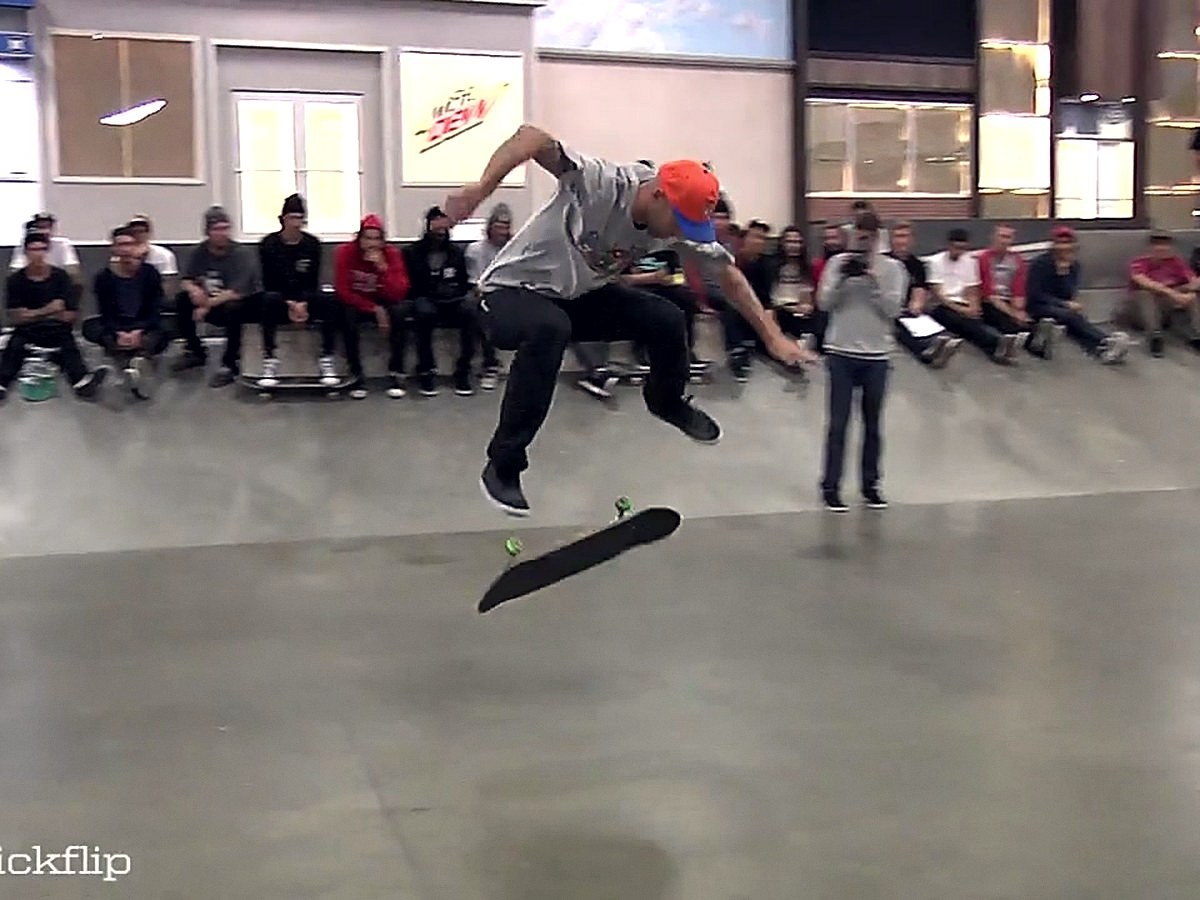
Same story for Elissa Steamer, the rider from Welcome to Hell – 1996. Her Airheads with Baker hit 8.75 inches. And at Primitive, the Hot Streak deck from Paul Rodriguez, pure street, goes for 8.25.
The narrow, carved deck is for flips and slides on stairs. The wide, flat one is for cruising, carving, and taking curves. Reynolds’ feet, however, haven’t moved a millimeter.
Takeaway
A pro doesn’t have “one” size. They have a size for each use. The foot size doesn’t explain the almost‑inch difference between Reynolds’ two boards. Something else does.
The number carved on your trucks reveals a bad width
Choose trucks roughly the same width as your deck. With Independent, the chart is public: a 139 runs from 7.8 to 8.2 inches, a 144 from 8.2 to 8.375, a 149 from 8.375 to 8.6.
Translation: moving from an 8.0 to an 8.5 usually means buying new trucks. Too narrow and your wheels fall under the board, causing it to flip when you land. Too wide and your shoes snag the wheels. Before ordering, check the number stamped on yours. The assembly order is detailed in assemble your own skate.
The Criterion, Finally: Where Your Wheels Will Roll
Here’s the answer. The size of a deck is chosen based on your riding style: the spots you hit and what you want to do there. Footwear comes later, just to fine‑tune the fit.
- Street, parking lots, stairs, flips : 8.0 to 8.25 inches. Narrower decks spin faster on a kickflip.
- Skatepark, all‑purpose : 8.25 inches. The safest compromise for a first board.
- Bowl, ramp, big curves : 8.5 inches and up. Width keeps you stable at speed.
- Cruising, city riding : 8.5 to 9 inches, a gentle concave, like Baker’s Airheads.
Your shoe size adjusts afterward. Above a 45, step up one size. Below a 38, step down one size. A 46‑footed street rider takes an 8.25, not an 8.75.
4 mistakes that make you ditch a deck after a month

- Choosing only by shoe size — You just saw Reynolds offers two widths for the same feet.
- Copying a bowl rider’s size — A bowl video might tempt you to an 8.75. On a parking lot, it’ll slow you down on every flip.
- Switching decks without checking the trucks — An 8.5 on 139 trucks, and the wheels drop under the board.
- Focusing on length — It changes little between brands. Width matters first, as explained in the first board guide.
Frequently Asked Questions
I’m just starting out and don’t know what I’ll be doing yet. What size should I pick?
8.25. It works street‑style and in the park, and it stays light. You’ll tweak it on your second deck when you know where you’re spending your sessions.
Is an 8.0 too small for an adult?
No. Baker’s T‑Funk has a pro model in 8.0 and Jacopo Carozzi in 8.125. If your toes and heels are clearly hanging off the edges, step up a notch.
What’s the difference between 8.25 and 8.38?
Three millimeters. You barely feel it. At that level, the concave and deck shape matter more than the width.
Can I keep my trucks if I switch width?
For a quarter‑inch, usually yes. Beyond that, check the brand’s grid. Wheels that stick out or tuck under the deck show up right away.
The day you know where you love to ride, you’ll know what width to go for. Everyone switches size at least once. Even Reynolds has two widths under his name. Tell us in the comments what width you ride.
Have a great ride.
You ride 8.0, 8.25 or 8.5, and on what terrain? Drop it in the comments ↓
Le lexique
-
1
concave
Le creux du deck dans sa largeur. Très creusé, il aide aux flips ; doux, il laisse les pieds bouger pour carver.
-
2
trucks
Les deux pièces en métal vissées sous le deck qui tiennent les roues. Leur largeur suit celle du deck.
-
3
kickflip
La planche fait un tour complet sur elle-même dans la longueur, sous tes pieds, pendant le saut.
-
4
carver
Tourner en penchant la planche sur ses carres, comme en surf, sans soulever les roues.










Continue ta lecture
ConseilsApprendre le pop shove-it : le trick sous-côté qui débloque tout
Placement des pieds, timing du scoop, erreurs classiques : le guide débutant complet pour réussir ton premier pop shove-it.
Commentaires (0)