

ℹ️ 🛹 Web Média Skate 🛹 ℹ️

★ Conseils
Winter Skating: Only 3 Parts of Your Setup Actually Fear Water — The Rest Couldn't Care Less
Le froid ne casse rien. Sur ton skate, seules trois pièces encaissent mal l'eau : les roulements, la tranche du plateau, le grip. Le reste s'en fiche. La routine de cinq minutes qui fait passer l'hiver à ta planche.

Le froid ne casse rien. Sur ton skate, seules trois pièces encaissent mal l'eau : les roulements, la tranche du plateau, le grip. Le reste s'en fiche. La routine de cinq minutes qui fait passer l'hiver à ta planche.
→ Pour aller plus loin : 44 % des blessures en skate sont des fractures : comment on apprend à tomber sans se casser ?
Level: Beginner
It's 4°C outside, the ground is still damp from the night, and you're hesitating. Not because you're cold — because you're scared of wrecking your board. It cost you three months of saved-up cash, and everybody keeps repeating the same line: "whatever you do, never ride it wet."
The line is true. But it's vague, and vague is what keeps you off your board five months a year.
So let's get specific. On a complete setup, only three parts really take a hit from water. The rest shrug it off. Which ones, and what to do the second you get home: the full answer is waiting at the bottom of the page, with the five-minute routine.
The mistake we see constantly
You get back from a session on wet ground, you drop the board in a corner of the garage, and you forget about it until next weekend. That right there is where everything goes wrong. It's not the puddle that kills your skate, it's the five days it spends sitting damp afterward. The water has all the time in the world to soak through the grip, swell the wood from the edges, and dry inside your bearings, leaving rust behind. Thirty seconds with a rag when you walked in would have been enough.
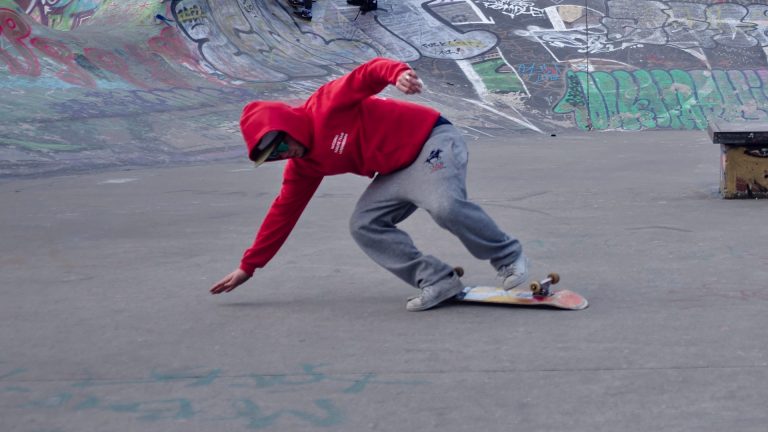
A red T-shirt at −2°C: cold has never snapped a board
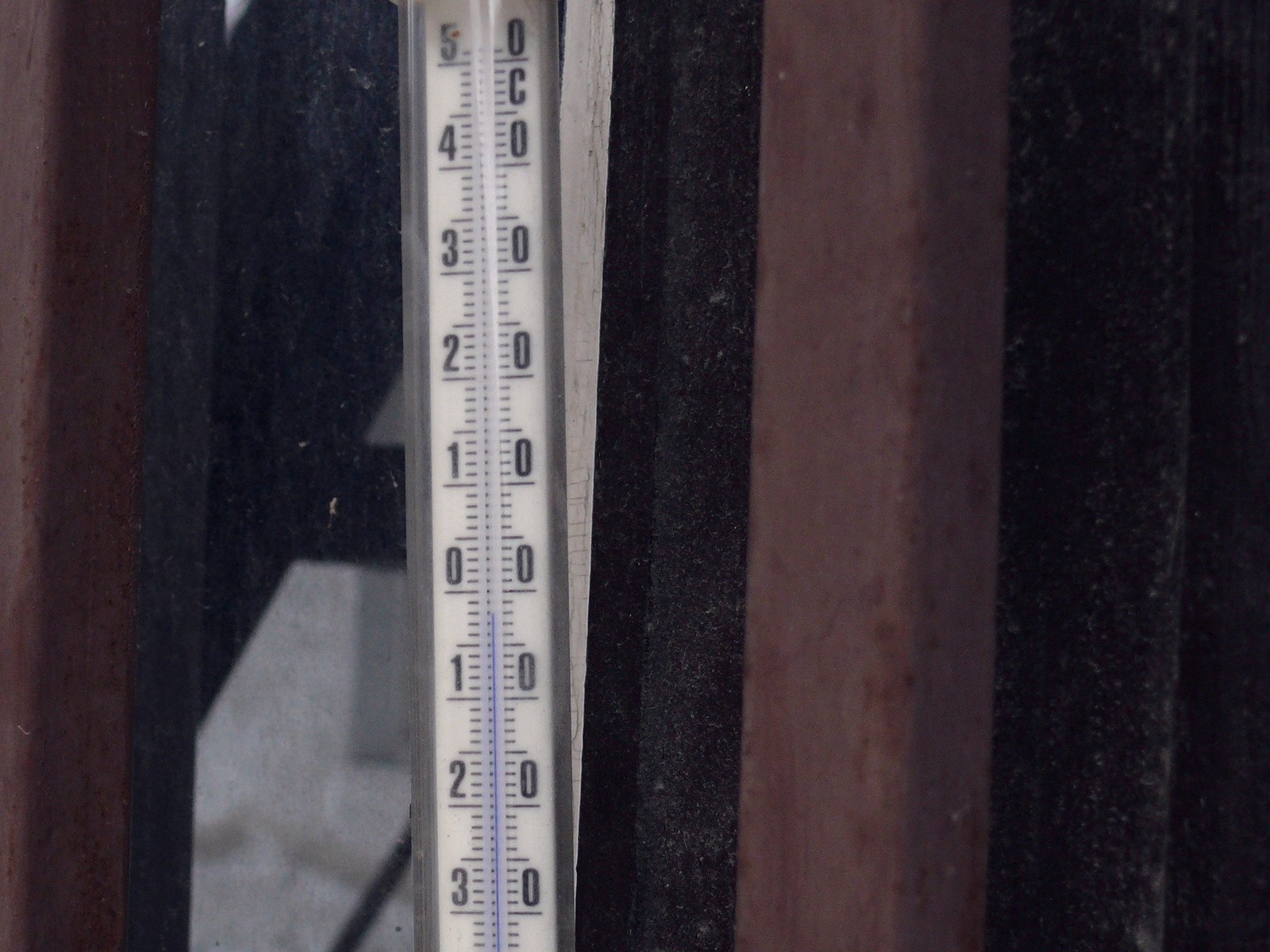
Good news first, because it changes everything: dry cold destroys nothing. Not the wood, not the steel, not the aluminum in your trucks. A board left outside at −5°C in dry weather comes back untouched.
Cold changes exactly one thing. Your wheels and your bushings — the soft rings that let you turn — are urethane, and that plastic stiffens up when the temperature drops. Your wheels grip less on cold pavement, your board gets harder to lean into.
That's not damage, that's a setup issue: a quarter turn on the kingpin, ten minutes of pushing to warm the urethane, and it comes back. Hard wheels, 99A or 101A, feel it the most. All the more reason to think hard about wheel durometer in winter.
Your real enemy doesn't show up on a thermometer. It shows up on the ground.
Bearings: 8 pieces of steel that water eats from the inside
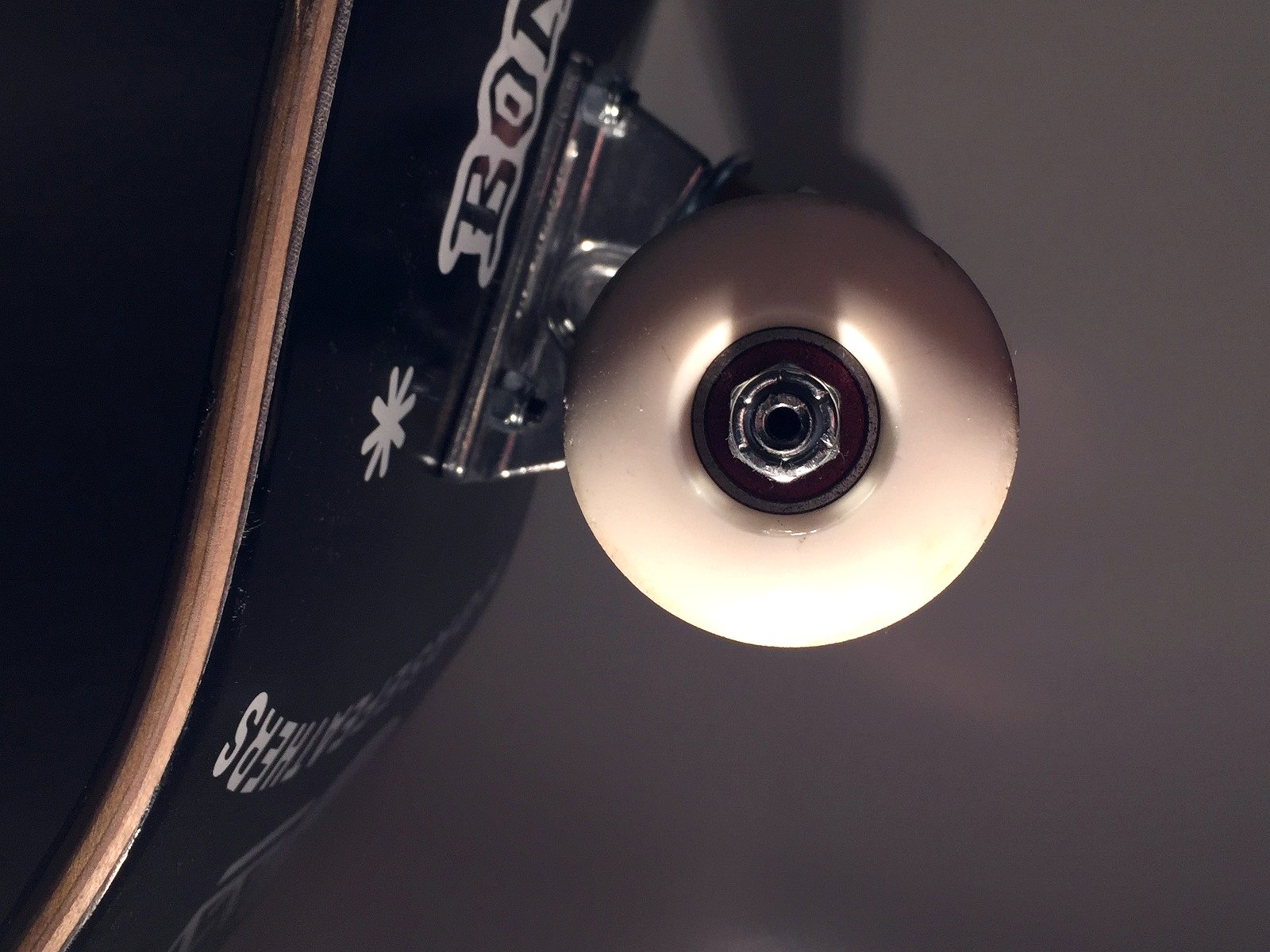
Part number one, by a mile. Your skate carries eight bearings, two per wheel. Each one holds chrome steel balls spinning in a film of lube about as thick as a hair.
Chrome steel rusts. That's not an opinion: Bones Bearings, the most widely ridden brand on the planet, spells it out in five words on its maintenance page — "Water will rust your bearings".
The mechanism is dumb simple: water slips past the shield, the little cover that seals the bearing, and flushes the lube out. Once it dries, a film of oxide is left on the balls. You hear it before you feel it: it grinds, it drags, you're pushing twice as much for the same distance.

The video walks through the full teardown. The points that actually matter, in order:
- Clean dry, never with oil: Bones is blunt about it — "do not add oil to dirty bearings". Dumping lube into a grimy bearing doesn't clean it, it just spreads the grit around. Degrease first, lube after.
- Isopropyl alcohol or acetone: those are the solvents the manufacturer names itself. Soak, shake, let them dry all the way.
- Rubber shields get washed with soapy water, and never with solvent: Bones points out that solvent swells them so they no longer seal properly.
- Two drops of lube per bearing. No more. A generous dose doesn't protect better, it just pulls in dust and slows the spin.
- Dry BEFORE you lube: trap a drop of water under the lube and you've built yourself a rust chamber. It's the single most common first-cleanup mistake.
- Know when it's past saving: a bearing that still feels gritty after a full clean is done. An honest set of eight costs less than a whole day wasted pushing through mud.
The deck: water never gets in from the top
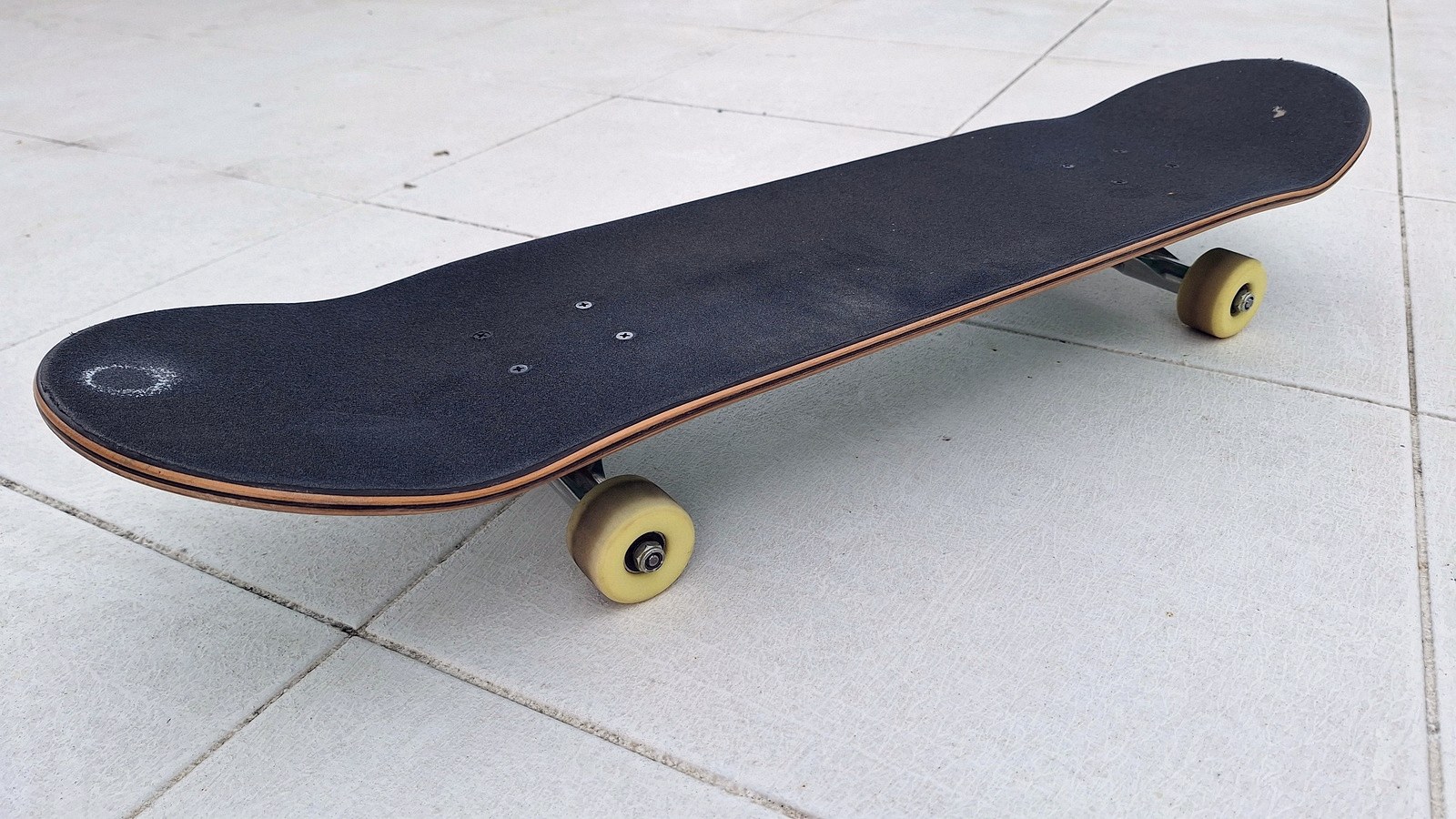
Part number two. Your deck is seven plies of maple pressed and glued together. The bottom is sealed with varnish, the top is covered in grip: both faces are protected.
The problem is the edges. The sides aren't sealed: bare wood, and seven glue lines stopping right there, exposed to the air. Water gets in that way, wicks up between the plies, the wood swells and the glue lets go over a few millimeters.
The result has a name you already know without knowing where it comes from: the board loses its pop. It sounds dead when you snap the tail, it doesn't come up as high, and you figure you're getting worse. You're not getting worse. Your wood drank.
Second way in, sneakier: the eight mounting holes. Drilling goes straight through the varnish and exposes bare wood in the heart of the deck. A board laid flat on wet ground drinks from underneath, and no rag in the world fixes that after the fact.
Worth remembering
Never lay your board flat on wet ground when you're taking a break, and never store it flat when you get home. Stand it up against a wall, wheels facing out: the water runs off instead of pooling in the concave, and both edges dry. It costs nothing and it changes how long a deck lasts.
Grip tape: it doesn't lose its grit, it loses its bite
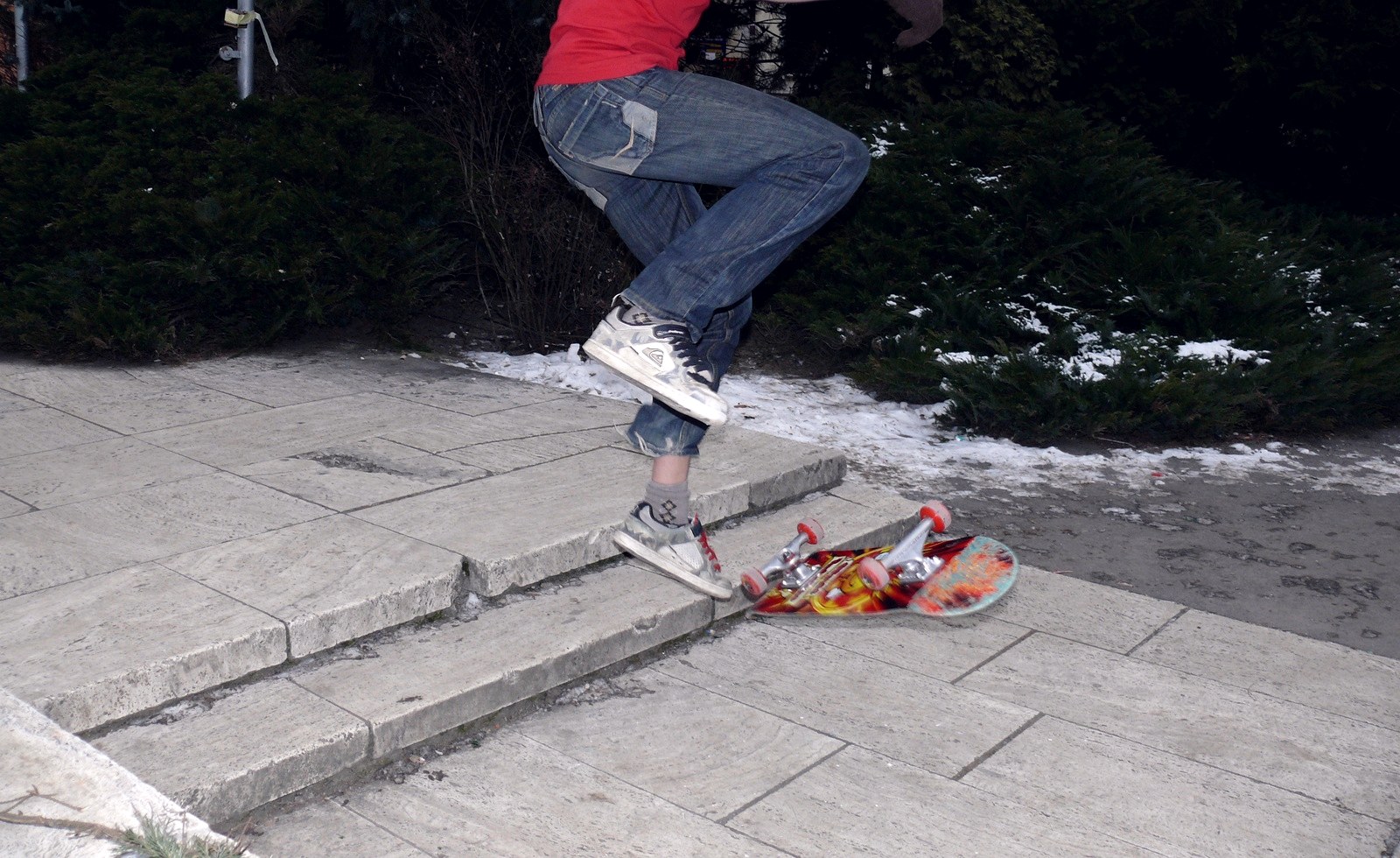
Part number three: grip tape, a sheet of abrasive sitting on a layer of adhesive. Moisture does two things to it that have nothing to do with each other.
Right there and then, wet grip goes slick. The grit is still there, but the film of water cancels its bite: your foot slides on the pop and you can't figure out why your ollie won't come up anymore. Over time, water attacks the adhesive from the edges. The grip starts lifting at the corners, and once that starts, it never sticks back down.
Shoes and trucks: half of what people tell you is wrong
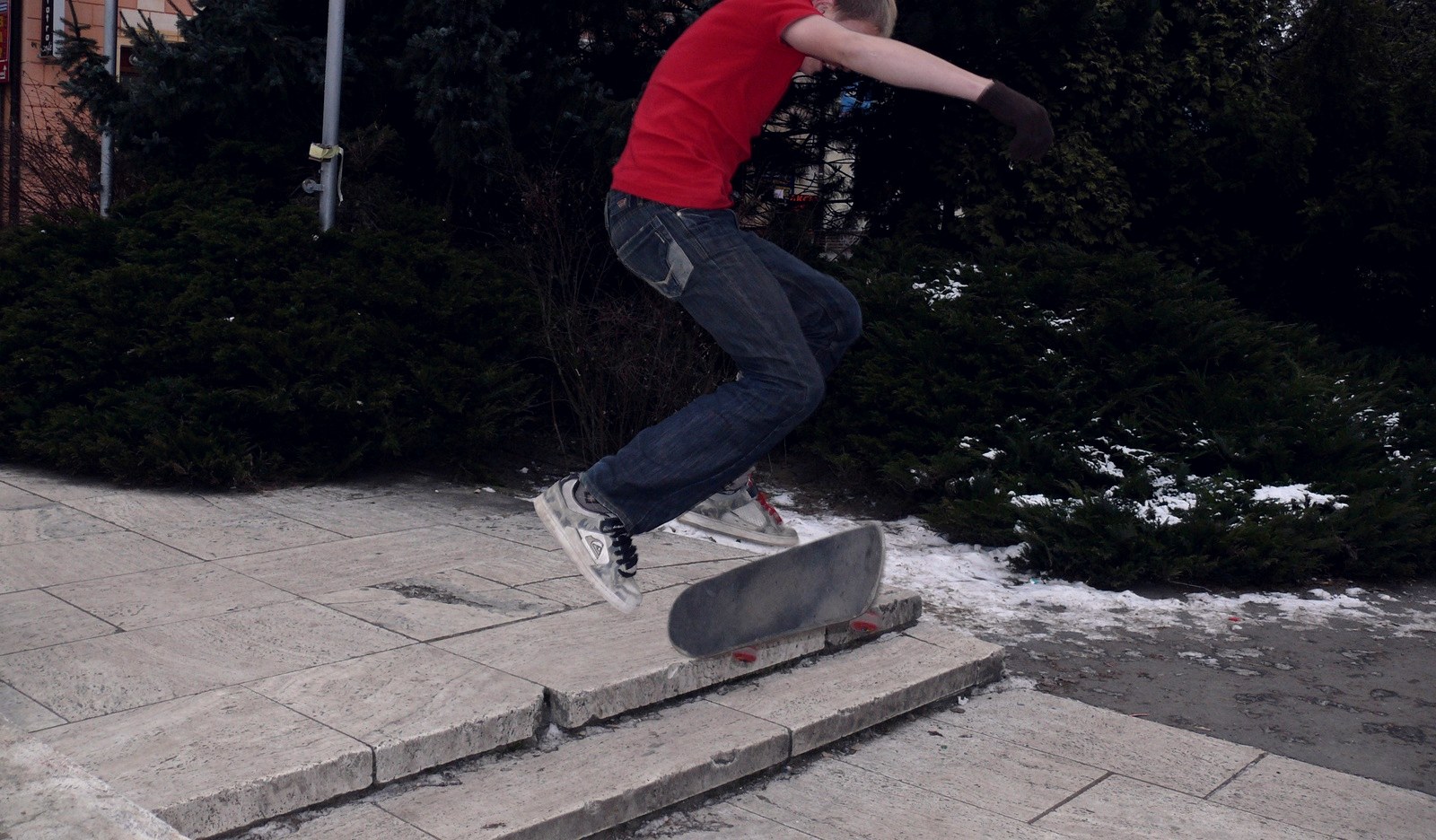
Shoes aren't part of the skateboard: they're a consumable, and they suffer faster than anything else. Waterlogged suede shreds way quicker against the grip.
And there's the trap everybody falls into once: putting them on the radiator. Dry heat cooks the glue between the upper and the sole, it shrinks, and the sole peels off within two weeks. Dry them in open air, stuffed with newspaper, never near a heat source.
Trucks, meanwhile, make a liar out of half of what gets repeated. The body is aluminum: it doesn't rust, it dulls. But the axles and the kingpin are steel. That's the only spot on your trucks that needs a wipe-down — and of course it's the one that hits the ground. For everything else, check out our truck guide.
The 5-minute routine when you get home: the full answer
Here's the answer, straight up. On your skateboard, three parts genuinely fear water: the bearings, the deck through its edges, the grip through its borders. Everything else — wheels, truck bodies, bushings, hardware — takes it without flinching. As for cold, it breaks nothing: it stiffens things up, and a quarter turn of a wrench sorts that out.
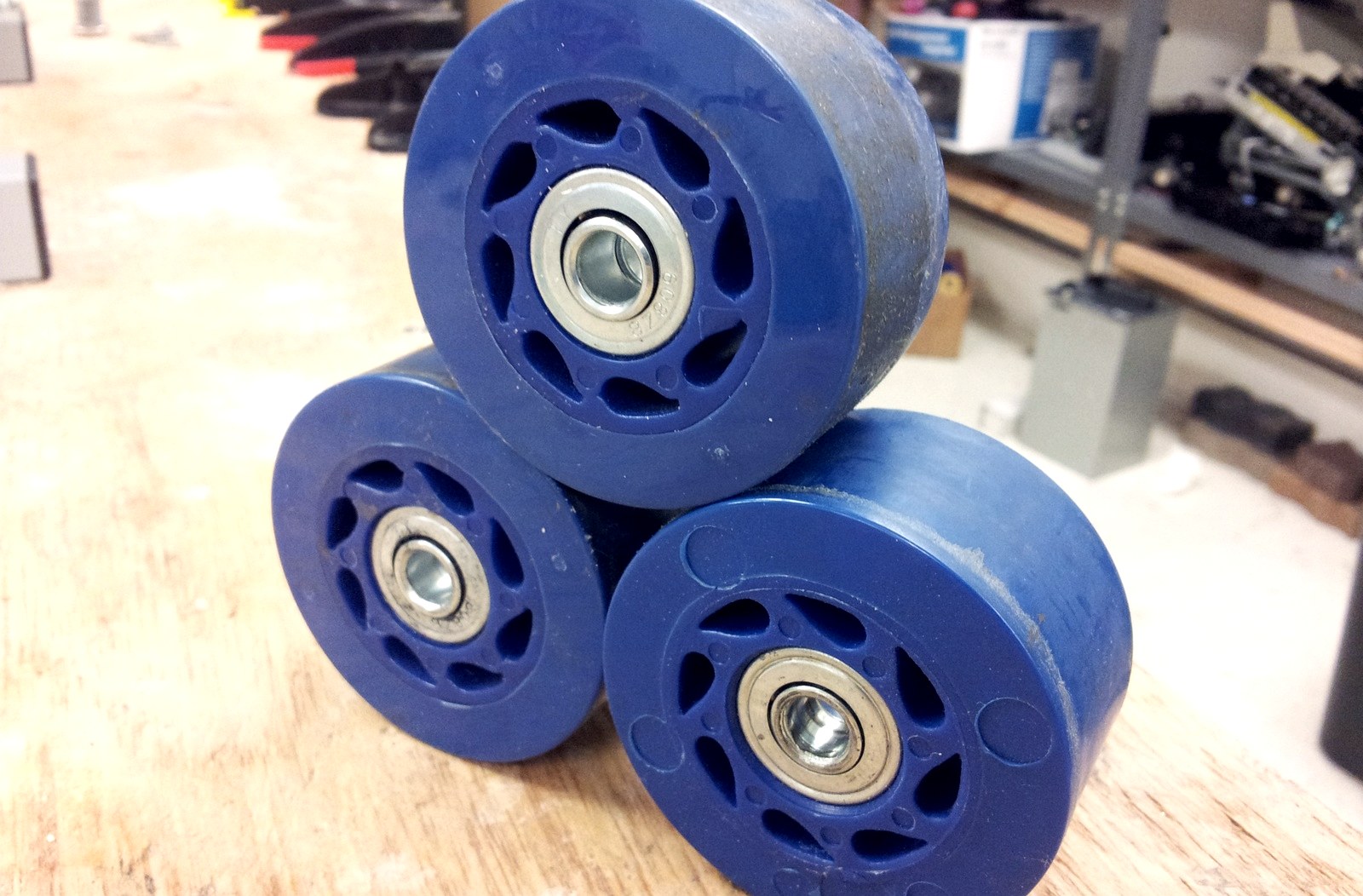
The routine, the moment you walk in, while the board is still damp:
- Dry rag over the whole board, 30 seconds: the bottom, the edges especially, the truck axles. That's 80% of the job and it costs nothing.
- Spin every wheel by hand. If even one grinds, you know what you're doing tonight. If they all sing, don't touch a thing.
- Pat the grip dry with a towel, don't scrub. Scrubbing wet grip lifts the edges faster than the water ever would.
- Store the board standing against a wall, in a heated room but not up against the radiator. Never flat, never in an unheated garage for a week.
- Shoes stuffed with newspaper, open air. Not on the radiator. Ever.
- Full bearing clean: once a month in winter if you're riding wet ground. The rest of the year, two or three times a season is plenty.
Five minutes. That's all that separates a board that makes it through winter from a board that'll have you convinced, come March, that you've stopped progressing.
What's worth buying, and what's a waste of money
The honest winter budget, for someone counting every euro:
- A bottle of isopropyl alcohol (€5 to €10): it'll cover two years of cleanings. Best value on the list, easily.
- A light bearing lube (€8 to €12): one bottle lasts years at two drops per bearing. Whatever you do, no all-purpose penetrating spray: it flushes the lube out and doesn't replace it.
- A spare set of bearings (€15 to €25), worth keeping on hand for the day yours are toast. Solid brands last years if you take care of them.
- What's a waste: "waterproofing" sprays for decks, €30 waterproof board bags, and "rain-proof" bearings. No serious manufacturer promises a waterproof seal. Bones itself just says dry it and re-lube it.
The real investment isn't a product at all, actually: it's a backpack with a rag permanently living in it. The one with the rag is the one whose bearings last.
Frequently asked questions
Can I skate on ground that's just a little damp, or is that a hard no?
You can. Slightly damp ground mostly wears your grip and your bearings faster, but it destroys nothing in a single session. What makes the difference isn't the session, it's what you do when you get home. Rolling through one puddle and drying off beats ten minutes of drizzle followed by five days in the garage.
My bearings already grind. Are they done for?
Not necessarily. Pull them, degrease with alcohol, dry completely, put two drops of lube back in. If the bearing still feels gritty under your fingers after all that, rust has chewed the balls and it's finished. Usually one or two out of the eight are shot. You only replace those.
Do I need to switch wheels for winter?
It's not mandatory, but it's the one adaptation that actually holds up. Slightly softer wheels, around 95A instead of 101A, grip better on cold pavement and soak up the gravel the rain drags everywhere. You give up a little speed on smooth ground, you gain traction.
What if my only spot is outdoors, with nothing covered?
That's most people in France. Look around you: school courtyard shelters on weekends, underground parking garages, covered train platforms, market halls on their closing day. The ground there is almost always smooth and dry. A sheltered spot won't replace your park, but it keeps you rolling from November to March. And it doesn't wreck a thing.
That's it. Three parts to watch, five minutes when you get home, and winter stops being a dead zone. The people who progress fastest between November and March aren't the ones with the best gear. They're the ones who go out anyway, and wipe their board down when they get back.
Have a good one, and bundle up.
Where do you skate when it rains where you live ? Drop the kind of spot, it might save somebody. Tell us in the comments ↓
Le lexique
-
1
shield
Le petit couvercle qui ferme un roulement sur le côté. Il retient le lubrifiant et bloque la poussière, sans être étanche à l'eau.
-
2
kingpin
La grosse vis centrale du truck. La serrer ou la desserrer change la souplesse de tes virages.
-
3
bushings
Les deux gommes souples enfilées sur le kingpin. Elles encaissent l'appui et se raidissent quand il fait froid.
-
4
pop
Le rebond de la planche quand tu claques le tail au sol. C'est lui qui fait décoller le skate dans un ollie.
-
5
grip tape
La feuille abrasive collée sur le dessus du plateau. C'est elle qui accroche tes chaussures.
Shop NOSK8
Voir toute la boutique →
TEE-SHIRTS
TEE-SHIRT NOSK8® P.A CENTRE #PARENTALADVISORY
Le prix initial était : 35,00 €.29,00 €Le prix actuel est : 29,00 €.
TEE-SHIRTS
TEE-SHIRT NOSK8® NOSKATE #SNC
Le prix initial était : 35,00 €.29,00 €Le prix actuel est : 29,00 €.

TEE-SHIRTS
TEE-SHIRT NOSK8® MATRICE HEART #ALT
Le prix initial était : 35,00 €.29,00 €Le prix actuel est : 29,00 €.
TEE-SHIRTS
TEE-SHIRT NOSK8® P.B CENTRE #RNB
Le prix initial était : 35,00 €.29,00 €Le prix actuel est : 29,00 €.
TEE-SHIRTS
TEE-SHIRT NOSK8® P.B HEART #ORIGINAL
Le prix initial était : 35,00 €.29,00 €Le prix actuel est : 29,00 €.

CASQUETTES
CAP NOSK8® P.B #POLARBEAR
Le prix initial était : 35,00 €.25,00 €Le prix actuel est : 25,00 €.

CASQUETTES
CAP NOSK8® N8 #NOSK8
Le prix initial était : 35,00 €.25,00 €Le prix actuel est : 25,00 €.

CASQUETTES
CAP NOSK8® P.B.P #PAW
Le prix initial était : 35,00 €.25,00 €Le prix actuel est : 25,00 €.

HOODIES
HOODIE NOSK8® MATRICE HEART #ALT
Le prix initial était : 60,00 €.49,00 €Le prix actuel est : 49,00 €.

HOODIES
HOODIE NOSK8® MATRICE HEART #CTRL
Le prix initial était : 60,00 €.49,00 €Le prix actuel est : 49,00 €.

HOODIES
HOODIE NOSK8® I.L.N #ILOVEN8
Le prix initial était : 60,00 €.49,00 €Le prix actuel est : 49,00 €.

HOODIES
HOODIE NOSK8® NOSKATE #NSITA
Le prix initial était : 60,00 €.49,00 €Le prix actuel est : 49,00 €.

HOODIES
HOODIE NOSK8® P.B HEART #BARÇA
Le prix initial était : 60,00 €.49,00 €Le prix actuel est : 49,00 €.

SWEAT
SWEAT NOSK8® P.B HEART #BARÇA
Le prix initial était : 45,00 €.39,00 €Le prix actuel est : 39,00 €.
SWEAT
SWEAT NOSK8® P.B HEART #PHILI
Le prix initial était : 45,00 €.39,00 €Le prix actuel est : 39,00 €.
SWEAT
SWEAT NOSK8® P.B HEART #NYC
Le prix initial était : 45,00 €.39,00 €Le prix actuel est : 39,00 €.
SWEAT
SWEAT NOSK8® P.B HEART #PARIS
Le prix initial était : 45,00 €.39,00 €Le prix actuel est : 39,00 €.
SWEAT
SWEAT NOSK8® P.B HEART #POLARBEAR
Le prix initial était : 45,00 €.39,00 €Le prix actuel est : 39,00 €.
Continue ta lecture
ConseilsVans Old Skool 36 Souvenir : à 140 €, la vraie question c’est si tu peux la skater
Le coloris Navy du pack Old Skool 36 Souvenir sort le 20 août à 140 €. Tige peinte, tweed, pin's : on regarde les matériaux…
Commentaires (0)