

ℹ️ 🛹 Web Média Skate 🛹 ℹ️

★ Conseils
Getting Back Into Skateboarding at 30: The Real Danger Isn't Your Age — It's Your First Week
Tu as ressorti la planche et le lundi tu boites. Ce n'est pas ton âge : un tiers des skateurs blessés hospitalisés skataient depuis moins d'une semaine. Le kit et le protocole pour passer le cap.
→ Pour aller plus loin : Skate en hiver : 3 pièces de ton matos craignent l’eau, le reste s’en fout
Level: Back after a break
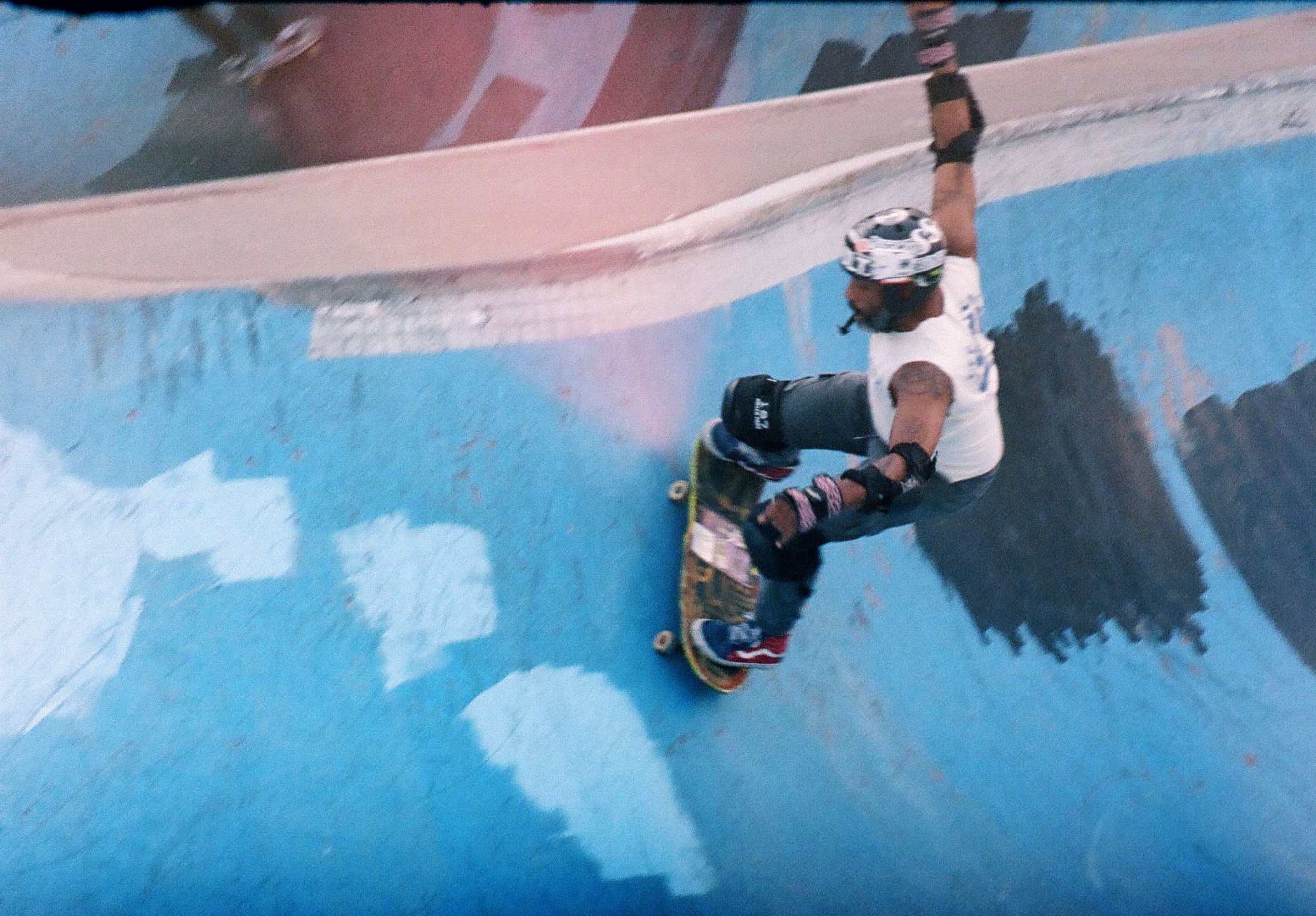
You dug the board back out. Some Saturday, without telling anyone, because a clip crossed your feed and it stirred something up. Five minutes of pushing, the feeling comes back, and you feel dumb grinning by yourself in a parking lot. Then Monday rolls around and you're limping.
So you do what everybody does at 30: you blame it on age. "My body can't hang anymore." The board goes back against the garage wall — and this time for good.
Except the number that actually matters in this story has nothing to do with your age. It has to do with the calendar — specifically, your first seven days. We'll get there, but first let's look at what's really happening under your feet.
Dodge the classic mistake
Rolling back out for "just a quick hour" on day one. That's trap number one. At 16 you could skate three hours straight because you skated every day and your body was calibrated for it. Now you're starting from scratch on tissue that hasn't taken a hit in ten years. Twenty minutes is plenty the first time out. Seriously — twenty.
Three sessions in and the board goes back on the wall: where that really comes from
(function(){
var VID='AhX-boPR6BY';
var container=document.getElementById('yt-AhXboPR6BY');
var played=false;
function initPlayer(){
var player=new YT.Player(container,{
width:'100%',height:'450',videoId:VID,
playerVars:{cc_load_policy:1,cc_lang_pref:'fr',hl:'fr',mute:1,rel:0,autoplay:0,enablejsapi:1},
events:{
onReady:function(e){
try{e.target.setOption('captions','track',{'languageCode':'fr'});}catch(x){}
if('IntersectionObserver' in window){
var obs=new IntersectionObserver(function(entries){
if(entries[0].isIntersecting&&!played){played=true;e.target.playVideo();obs.disconnect();}
},{threshold:0.4});
obs.observe(container);
}
}
}
});
}
if(window.YT&&window.YT.Player){
initPlayer();
} else {
var prev=window.onYouTubeIframeAPIReady;
window.onYouTubeIframeAPIReady=function(){if(prev)prev();initPlayer();};
if(!document.querySelector('script[src*="youtube.com/iframe_api"]')){
var s=document.createElement('script');s.src='https://www.youtube.com/iframe_api';document.head.appendChild(s);
}
}
})();
Your cardio, your legs, your balance: all of that comes back fast. Within three or four sessions, muscle memory wakes up and you get back 80% of what you used to have. That's not where things go sideways.
What doesn't come back at the same pace is the tissue that absorbs impact. The fat pad under your heel, the tendons in your wrists, the cartilage in your knees. Those adapt over weeks, not sessions. And during that gap, your head moves faster than your body: you feel capable of doing what you used to do, so you go for it.
The result isn't some spectacular slam. It's a quiet grind-down: heel pain that has you limping for two weeks, a wrist that cracks on every push, a knee that runs hot when you wake up. Nothing heroic. Just enough to make you put the board away.
- Wrists — the reflex catch point — When you fall backward, your hands go out first. It's automatic — you don't decide it. It's also the zone where protection changes things the most.
- Heels — the impact you never see coming — Every hard landing hammers the same spot. The fat pad gets crushed, and once it's sore, even walking barefoot is a chore. It takes weeks to go away.
- Knees — the fall you take wrong at 30 — At 16 you rolled through your falls. Now you're going to stick a leg out to catch yourself. That's exactly the move that costs you.
- The deck — wider = more stable landings — A wider deck spreads out your landing and forgives a badly placed foot. That's not comfort, that's margin.
- Volume — the variable nobody tracks — How many minutes, how many times a week. It's the only dial you control 100%, and it's the one everybody ignores.
Wrists, heels, knees: what pads are actually worth
Start at the top. Wrist guards are the only piece of protection whose effect is documented in black and white: the literature on skateboarding injuries calls them out explicitly as injury reducers, right alongside helmets for your head. Roughly half of the injuries that end up in the hospital are fractures, and a lot of them start with a hand thrown out reflexively onto concrete.
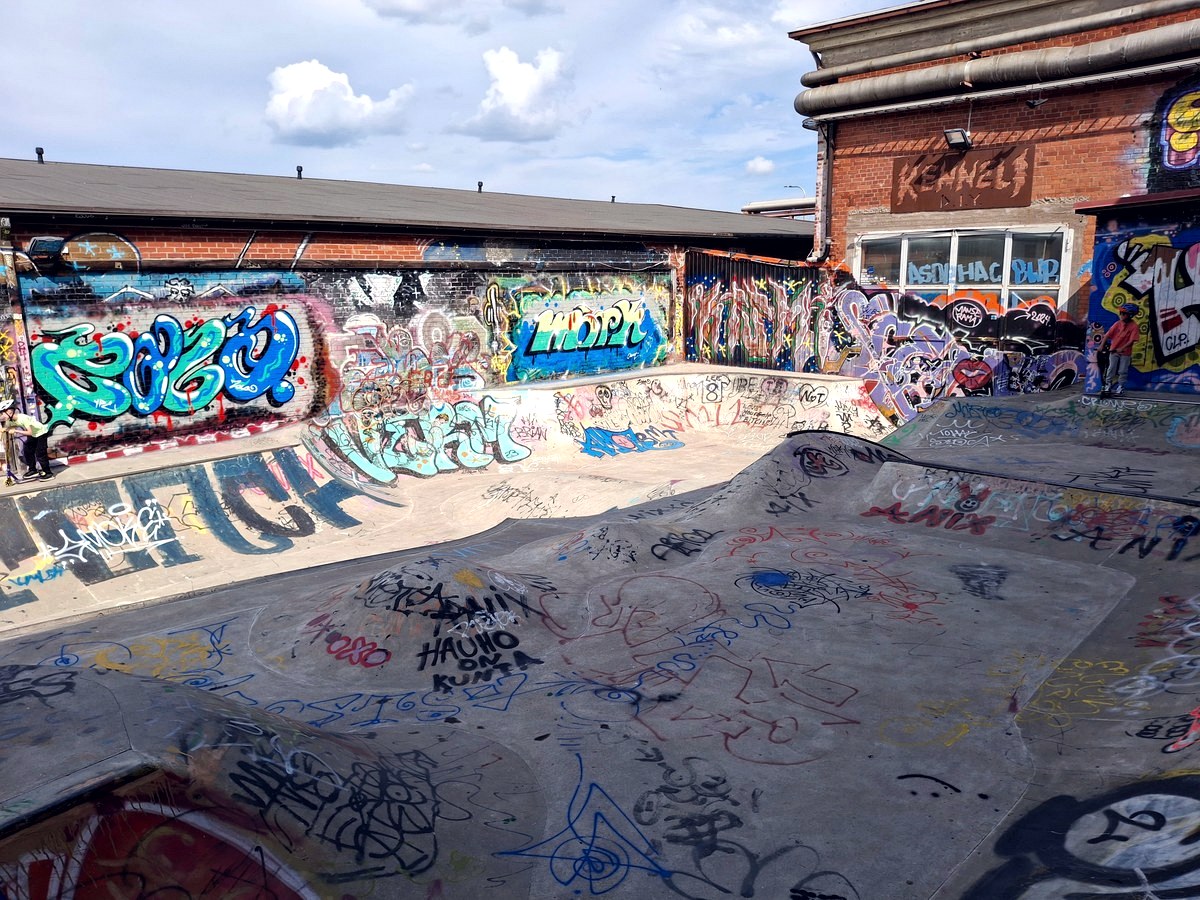
Knees next. 187 Killer Pads is the industry standard — their Pro Knee Pad runs around $136 a pair, which stings. Good news: for street and cruising you don't need that level. A hard-cap pad at €40–60 gets the job done. The high-end model earns its keep if you're heading back into a bowl.
Then the heel, the spot nobody watches. Thick skate insoles exist for exactly this: FP Insoles (Footprint) claims up to 90% shock absorption on its Kingfoam foam, starting at $20 for the base model. You swap out your shoe's stock insole and you're set. A deep stone bruise under the heel — the classic heel bruise — takes several weeks to heal, and in the meantime you're not skating at all.
Finally, the deck. If your last board was a 7.75″, an 8.5″ is going to feel massive for the first ten minutes — then you'll never want to go back. More surface under your foot = more stable landings = fewer bad catches. We broke down the full math in our guide on what deck size to ride after ten years off.
Key takeaway
If you only buy one thing before your first session back: wrist guards. They're the cheapest piece, the least bulky, and they protect the move you'll make without thinking. Knee pads and insoles come after.
A third of hospitalized skaters had been skating for less than a week
Here's the number teased at the start, and it answers the question in the title. Among injured skaters treated at the hospital, a third had started skating less than a week before getting hurt. A third. Not the veterans, not the old heads: the people who just started — or just started again.
That means something very specific for you. Your age isn't the variable. The variable is the gap between what your head thinks it can do and what your body has actually practiced in the last seven days. A 33-year-old who's skated their whole life doesn't have that problem. A 33-year-old coming back after twelve years has it in full, because the technique is still there but the tissue is starting from zero.
And that's actually good news. A danger window is something you can get through. Age isn't.
Your comeback protocol: six weeks, three rules
Weeks 1 and 2 — 20 minutes, three times a week. Pushing, carving, flatground. Zero tricks. You're waking up your balance and letting your tendons figure out what's happening to them. You're going to be bored: that's the price.
Weeks 3 and 4 — 40 minutes, three times a week. Bring back the ollie, manuals, your first slides. You wear your pads from minute one, not "once things get serious." If you don't put them on now, you never will.
Weeks 5 and 6 — a real session. One hour, twice a week, at a real spot. Now you can get back on rough terrain with the right wheels, try stuff, film a clip. You've earned it.
The rule that governs everything: you stop when you start missing what you were landing ten minutes ago. That's the fatigue signal, and it's exactly when the bad slams happen. It's not old-man wisdom, it's risk management.
The real budget — and where to buy
Let's keep it straight:
- Wrist guards: €25–45. Non-negotiable.
- Hard-cap knee pads: €40–60 for street, €120 and up for serious bowl skating.
- Shock-absorbing insoles: €20–45 depending on the model. The best comfort-per-euro on the list.
- 8.5″ deck alone: €55–75. A built complete: €100–140.
- Helmet: €40–70. Mandatory the second you set foot back in a bowl.
Figure €150 for the full pad kit if you keep your board, around €280 if you start over with a fresh setup. That's the price of one weekend away — for six months of sessions instead of three outings.
Where to buy, in order of preference:
- Your local skate shop — they'll let you try knee pads on, which is far from a minor detail: a badly sized pad is a pad you won't wear.
- Specialty online shops — Skatedeluxe and Titus carry the deepest pad catalogs in Europe, with adult sizes actually in stock.
- Big-box stores — skip them. The pads sold in leisure packs are cut for kids and fold on the first real impact.
And if your board has been sleeping in the garage for ten years, read this before anything else: what gives out first on a setup that hasn't rolled — because old gear will have you thinking you're the problem.
Frequently asked questions
Can you really get back into skateboarding at 30?
Yes — and the question is framed wrong. What limits your comeback isn't age but the gap between technique that stayed intact and tissue that hasn't absorbed anything in years. Six weeks of progressive ramp-up is enough to close that gap.
Should you wear pads if you already skated when you were younger?
Especially then. A returning skater tries things a true beginner wouldn't dare, with a body that's no longer used to it. Wrist guards are the bare minimum, and knee pads become essential the moment you set foot back on a transition.
What's a heel bruise and how do you avoid it?
A bruise of the fat pad under the heel, caused by repeated landings on hard ground. The pain feels like a deep hematoma and makes even walking barefoot uncomfortable. The fix: thick Kingfoam-style insoles from your very first session, and limited jumping the first few weeks.
Should you buy a new board or ride the old one?
The deck gets replaced, and so do the bearings and wheels. If your old deck was under 8″, move up to an 8.25″ or 8.5″: the stability you gain on landings is well worth the adjustment time, which is measured in minutes, not weeks.
So here's the answer: it's not your age that decides — it's how you get through your first seven days. Protect the wrists, cushion the heels, count your minutes. Clear that window, and nobody will ever ask for your birth year again.
Now go skate.
How old were you when you got back on, and what gave out first? Drop it in the comments ↓
Le lexique
-
1
push
Le fait de pousser au pied par terre pour avancer, le geste de base pour se déplacer en skate.
-
2
heel bruise
Contusion du coussinet graisseux sous le talon, causée par des réceptions répétées sur sol dur. Douleur profonde, plusieurs semaines de repos.
-
3
coping
Le rebord métallique ou béton en haut d'un bowl ou d'une rampe, sur lequel on bloque et on grinde.
-
4
manual
Rouler en équilibre sur les deux roues arrière seulement, sans que le nose touche le sol.
Shop NOSK8
Voir toute la boutique →
TEE-SHIRTS
TEE-SHIRT NOSK8® P.B CENTRE #RNB
Le prix initial était : 35,00 €.29,00 €Le prix actuel est : 29,00 €.
TEE-SHIRTS
TEE-SHIRT NOSK8® P.B HEART #ORIGINAL
Le prix initial était : 35,00 €.29,00 €Le prix actuel est : 29,00 €.
TEE-SHIRTS
TEE-SHIRT NOSK8® P.B CENTRE #ORIGINAL
Le prix initial était : 35,00 €.29,00 €Le prix actuel est : 29,00 €.
TEE-SHIRTS
TEE-SHIRT NOSK8® NOSKATE #NSITA
Le prix initial était : 35,00 €.29,00 €Le prix actuel est : 29,00 €.
TEE-SHIRTS
TEE-SHIRT NOSK8® P.B HEART #POLARBEAR
Le prix initial était : 35,00 €.29,00 €Le prix actuel est : 29,00 €.

CASQUETTES
CAP NOSK8® P.B #POLARBEAR
Le prix initial était : 35,00 €.25,00 €Le prix actuel est : 25,00 €.
CASQUETTES
CAP NOSK8® N8 #NOSK8
Le prix initial était : 35,00 €.25,00 €Le prix actuel est : 25,00 €.

CASQUETTES
CAP NOSK8® P.B.P #PAW
Le prix initial était : 35,00 €.25,00 €Le prix actuel est : 25,00 €.
HOODIES
HOODIE NOSK8® NOSKATE #NSITA
Le prix initial était : 60,00 €.49,00 €Le prix actuel est : 49,00 €.
HOODIES
HOODIE NOSK8® P.B HEART #BARÇA
Le prix initial était : 60,00 €.49,00 €Le prix actuel est : 49,00 €.
HOODIES
HOODIE NOSK8® P.B CENTRE #ORIGINAL
Le prix initial était : 60,00 €.49,00 €Le prix actuel est : 49,00 €.
HOODIES
HOODIE NOSK8® P.B HEART #PARIS
Le prix initial était : 60,00 €.49,00 €Le prix actuel est : 49,00 €.
HOODIES
HOODIE NOSK8® P.B HEART&BACK #ORIGINAL
Le prix initial était : 60,00 €.49,00 €Le prix actuel est : 49,00 €.
SWEAT
SWEAT NOSK8® P.B HEART #BARÇA
Le prix initial était : 45,00 €.39,00 €Le prix actuel est : 39,00 €.
SWEAT
SWEAT NOSK8® P.B HEART #PHILI
Le prix initial était : 45,00 €.39,00 €Le prix actuel est : 39,00 €.
SWEAT
SWEAT NOSK8® P.B HEART #NYC
Le prix initial était : 45,00 €.39,00 €Le prix actuel est : 39,00 €.
SWEAT
SWEAT NOSK8® P.B HEART #PARIS
Le prix initial était : 45,00 €.39,00 €Le prix actuel est : 39,00 €.
SWEAT
SWEAT NOSK8® P.B HEART #POLARBEAR
Le prix initial était : 45,00 €.39,00 €Le prix actuel est : 39,00 €.
Continue ta lecture
ConseilsFrontside crooked grind : un seul truck te porte — pourquoi ça lâche toujours au même endroit ?
Un seul truck en contact, un angle à tenir. Positionnement, approche du ledge, écart frontside/backside et le détail précis qui te fait décrocher à mi-ledge.
Commentaires (0)