
ℹ️ 🛹 Web Média Skate 🛹 ℹ️

 Back
Tricks
Jake Hayes lands a 86 cm kickflip — when will you try?
Kickflip over an obstacle: a 3‑green‑light test, 6 levels and 4 fails to tell you when to go, without losing your shins.
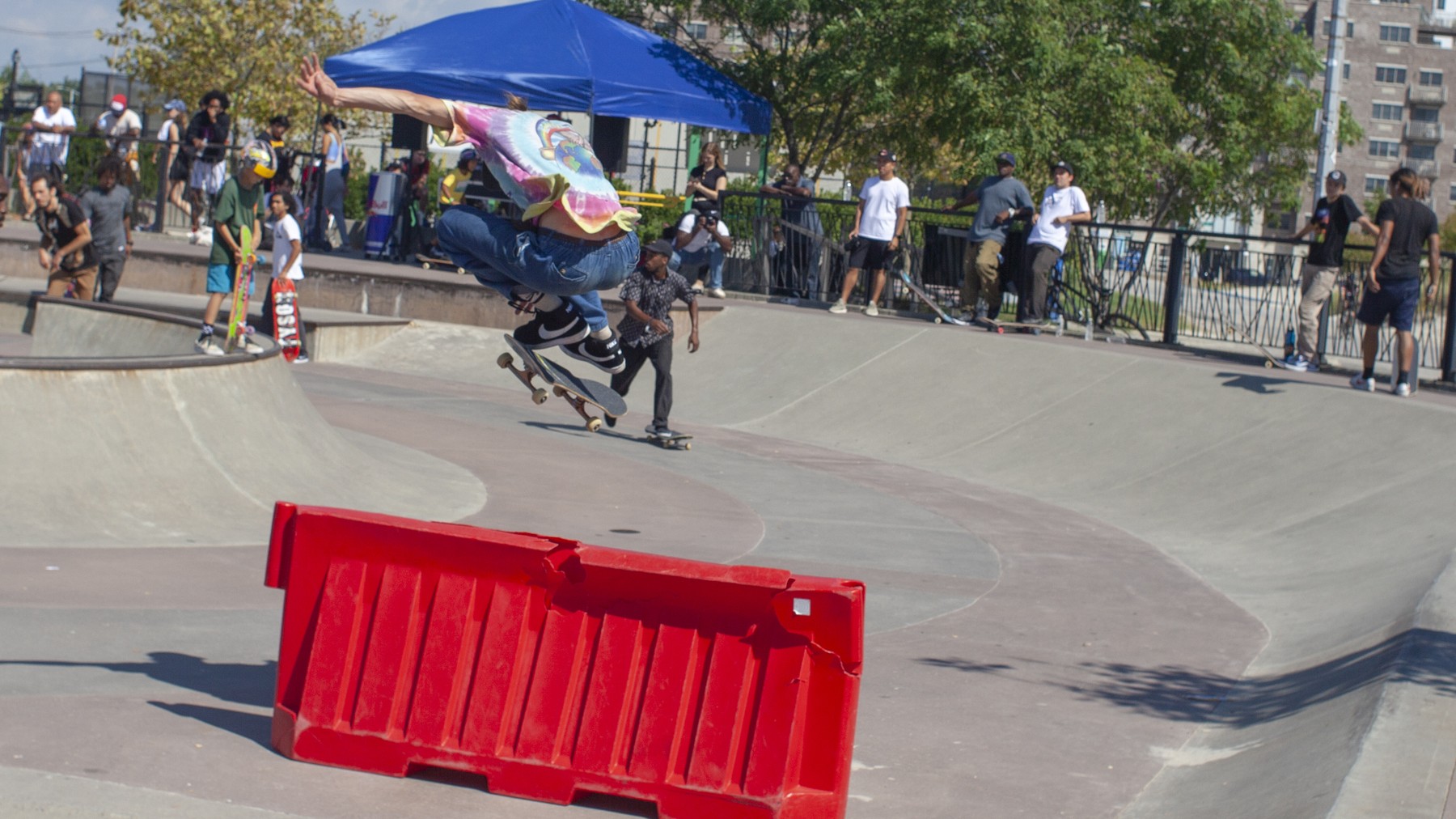
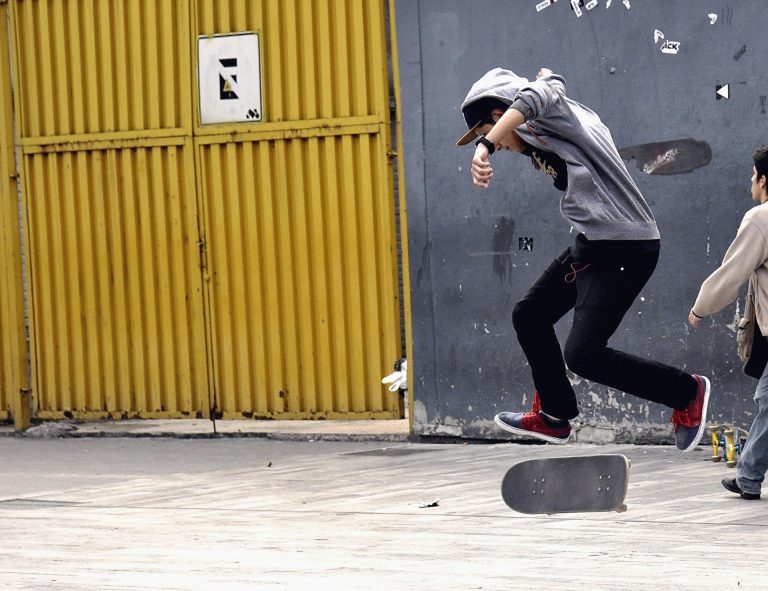
On February 28, 2019, The Berrics, the private skatepark of Eric Koston and Steve Berra in Los Angeles, hangs a rope 86 cm from the ground. The height of a kitchen countertop. Jake Hayes jumps over it on his skateboard, and the board makes a full rotation under him while he is in the air. This rotation is called a kickflip. A kickflip over an obstacle, at kitchen height. Jake Hayes does a kickflip over a parking barrier, 34 inches high in the air. The board makes a complete turn under his feet while he is airborne. This rotation is called a kickflip. A kickflip over an obstacle, at kitchen height.

You, your kickflip lands on the floor some days. You place a parking stop bar in front of you, and it disappears. Your feet do weird things, you slide to the side.
Too early, it’s a tibia session. Wait too long, it’s two years going around the same sidewalk. Then from when are you really doing it? The answer fits in three green lights, with numbers, and you get there after the 6 steps and the 4 fails.
Level
Intermediate
Time
Several weeks
Prerequisites
Kickflip while rolling
Surface
Smooth floor, falling obstacle
In this article 7 parts
- 86 cm for Jake Hayes, 114 cm in ollie: where the rep…
- The Lance Bumper: why your kickflip disappears in front of an obstacle
- Kickflip over an obstacle: the six steps, chalk line on the real…
- The four fails that make you hit the obstacle
- From when do you really try?
- And if you fall in front of the obstacle?
- And once it’s in?
86 cm for Jake Hayes, 114 cm in ollie: where the rep benchmark comes from.
In the video, the rope starts at 23 inches, which is 58 cm. Hayes passes 30, 31, 32, then 33. At 33, a doubt about contact, and he restarts. He finishes at 34 inches, 86.4 cm, inch by inch, so 2.5 cm at a time. The video title asks about the record, it does not affirm it.
Now compare. The ollie record, the basic jump without rotation, is given as 45 inches, 114.3 cm, by Aldrin Garcia. Hayes’ kickflip is 76 % of that. Three quarters, roughly.
These are two different riders, so it’s not a law. But the logic holds: the board needs airtime to finish its turn, and this time you pay for height. Keep this benchmark for later.
The Lance Bumper: why your kickflip disappears in front of an obstacle

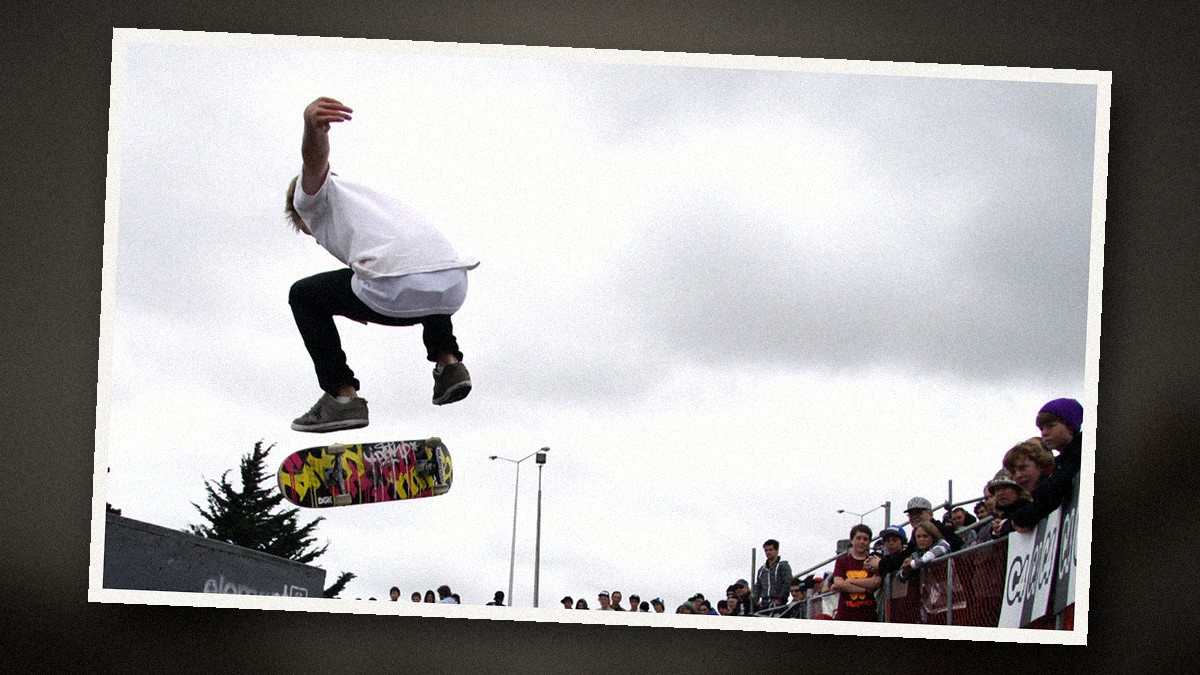
On April 6, 2016, Braille Skateboarding films Lance, who has never kickedflipped over anything. The bumper is small, with a slight slope that provides speed. Gabe gives him the rule: do it first with an ollie, become very good at it, and then it’s like on flat ground
Lance does it anyway. He knows he has to pretend the bumper doesn’t exist, and he says: as soon as he approaches, everything blurs in his head. He eventually drops the real problem. His ground kickflip isn’t as safe as his ollies
That wall is taken by everyone. It’s not in your legs, it’s in your eyes. On flat ground, nothing punishes you. In front of an obstacle, your brain calculates the fall and removes your foot. Lance ends up placing it twice, and his summary holds in one phrase: he should have gone back to ollies and ground kickflips
Kickflip over an obstacle: the six steps, chalk line on the real bumper
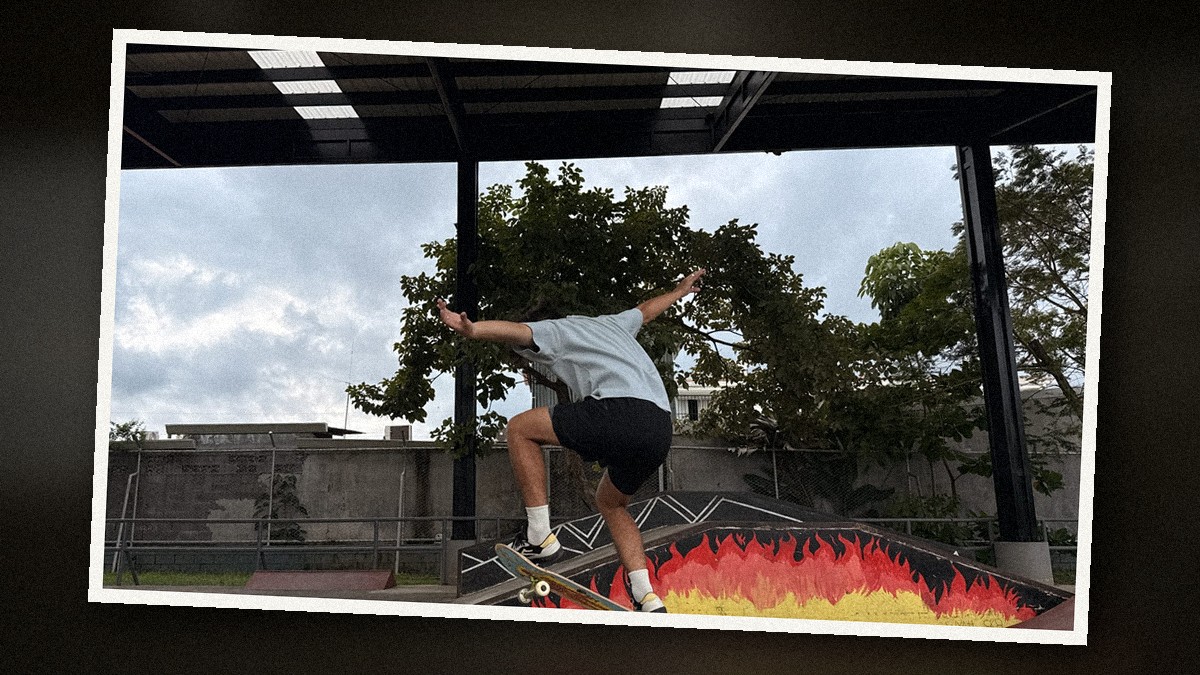
JB, from Skatepark Lessons, classifies the climb as descending from a sidewalk, that’s beginner. Climbing it is intermediate. Passing a gap or steps, advanced. Between the two, there is an escalator you can build at your cruise speed
-
The chalk line
Draws a line on the ground and kickflips over it while rolling. Nothing can block you, but your gaze learns to aim at a point instead of fixing your feet
-
The stick on the ground
Replaces the line with a thin stick. It’s 2 cm long, won’t make you fall if you roll over it, yet your brain sees it as an obstacle already
-
Two buckets of rope
Puts a rope at 10 cm, untied. If you touch it, it falls, you don’t. It’s the step that removes fear, and Jake Hayes’ small montage is mounted
-
Rise by 2.5 cm
Three clean runs in a row, and you pull the cord by 2.5 cm, like Hayes at the end of his session. One bad run leaves you at the same height, never going lower.
-
Five ollies on the real obstacle
It’s Gabe’s rule. Put your footstamp in ollie five times in a row, with the speed you’ll have for the kickflip. Miss one, reset the counter to zero.
-
The kickflip, without slowing down
Same speed, same momentum, and you act like nothing exists, Lance’s phrase. You aim at the ground behind the obstacle, not the obstacle itself.
The four fails that make you hit the obstacle
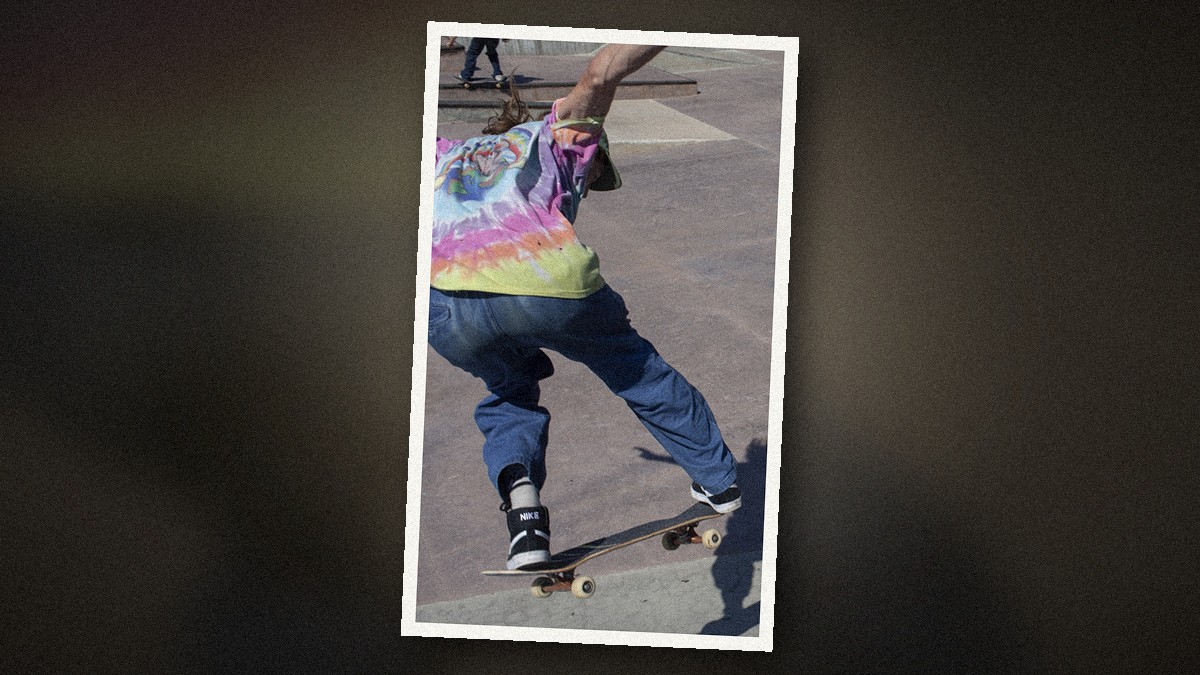
When it sticks, it’s almost always one of these four. The rocket and lack of commitment go straight out of JB’s and Lance’s videos.
The classic four fails
- The board rockets : the nose lifts and the board slides ahead of you. JB advises to tilt your head toward your back foot at the pop moment.
- You slow down on the approach : less speed, less time to get through. Roll back to the previous rail until you keep your momentum.
- Legs spread out : the board spins, but your feet can’t catch it. Jump higher, keep your feet above it.
- Le pied avant revient trop tôt : c’est le fail de Lance, celui du rider qui ne s’engage pas. Tu poses avant la fin du tour, et tu te retrouves à côté.
From when do you really try?
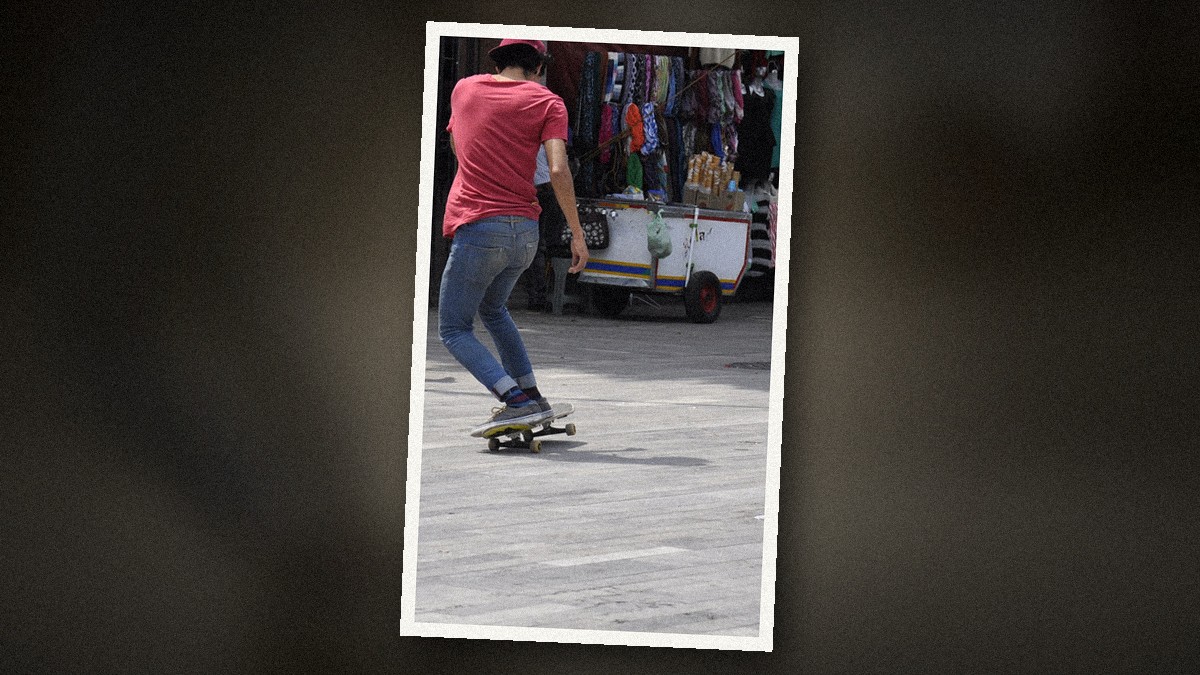
You’re trying when three lights are green at the same time: the obstacle is at most three‑quarters of your best ollie, you land 8 kickflips out of 10 on the ground while rolling, and you just nailed 5 ollies in a row over that same obstacle.
In numbers: your best ollie is 40 cm, your ceiling is 30 cm. Your 8 out of 10 count at approach speed, not at a stop or on a single good day. And the 5 ollies are on the real obstacle, the same day.
The 8 out of 10 and the 5 in a row are our own markers, not an official standard. They translate what Gabe says, what Lance paid for, and the three‑quarters of Hayes. A red light? You know exactly what to work on tonight.
And if you fall in front of the obstacle?
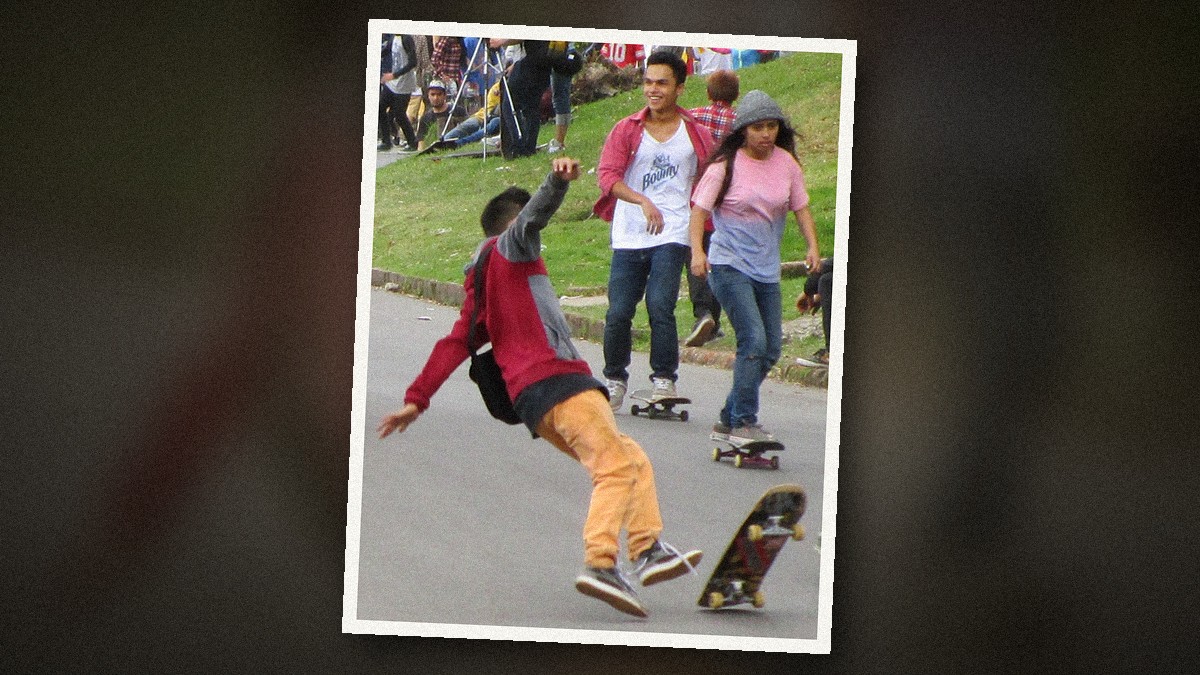
You’re going to fall, so know how. JB gives two reflexes. Commit to the landing, even if the board only did a half‑turn. And if it goes wrong, keep your momentum, push the board with your front foot away from your body, and run.
The click happens without warning. You hear the tail slap, feel the grip return under both feet, and the wheel noise picks up on the other side. You turn to look at the rail. It hasn’t changed size, but it won’t give you the same face again.
And once it’s in?
You just came across something with a figure that Rodney Mullen pulled off in 1982 under the name of « Ollie Flip », then of « Magic Flip ». If your ollie still lacks height, go back to the ollie in six steps.
If you want to add a rotation, check out the varial kickflip or the backside flip. And if your tibias crave more, the hardflip by Daewon Song is waiting for you.
What’s your kickflip doing today: the chalk line, the rope, or the real rail? Drop it in the comments ↓
Le lexique
-
1
Ollie
Le saut de base en skate : la planche décolle avec toi, sans tourner.
-
2
Kickflip
Ollie où la planche fait un tour complet sur elle-même sous tes pieds.
-
3
Pop
Le coup sec du tail contre le sol, qui fait décoller la planche.
-
4
Tail
Bout arrière relevé de la planche.
-
5
Nose
Bout avant relevé de la planche.
Continue ta lecture
PortraitsEnfant star du skate : que devient Rayssa Leal, filmée depuis ses 7 ans ?
Filmée en costume de fée à 7 ans, médaillée olympique à 13, Rayssa Leal a grandi sous les caméras. Thérapie, famille, école : comment elle…
Commentaires (0)