
ℹ️ 🛹 Web Média Skate 🛹 ℹ️

Conseils
Learn the pop shove-it: the underrated trick that unlocks everything
Placement des pieds, timing du scoop, erreurs classiques : le guide débutant complet pour réussir ton premier pop shove-it.

→ Pour aller plus loin : Skater sous la pluie : ce que ça détruit vraiment sur ta planche
Level: Beginner
Everyone wants to land a kickflip on day one. Problem is, the kickflip is a nightmare at first — you bail 300 times and start believing you're just not built for this.
There's one trick almost nobody tells you to learn first, and that's a mistake. The pop shove-it. It teaches you to snap your tail, jump at the right moment, and let go of the board without staring at it. Basically everything you'll need next.
Here's the straight-up guide: where to put your feet, when to scoop, and the mistakes that drop you on every try.
Avoid the classic mistake
The number-one trap: jumping forward instead of jumping in place. You scoop the board, it shoots out ahead of you, and your foot lands in thin air. The pop shove-it spins UNDER you, not in front of you. Stay over your board, look at your bolts, and let it do its half-turn on its own.
See the move for real before you try it

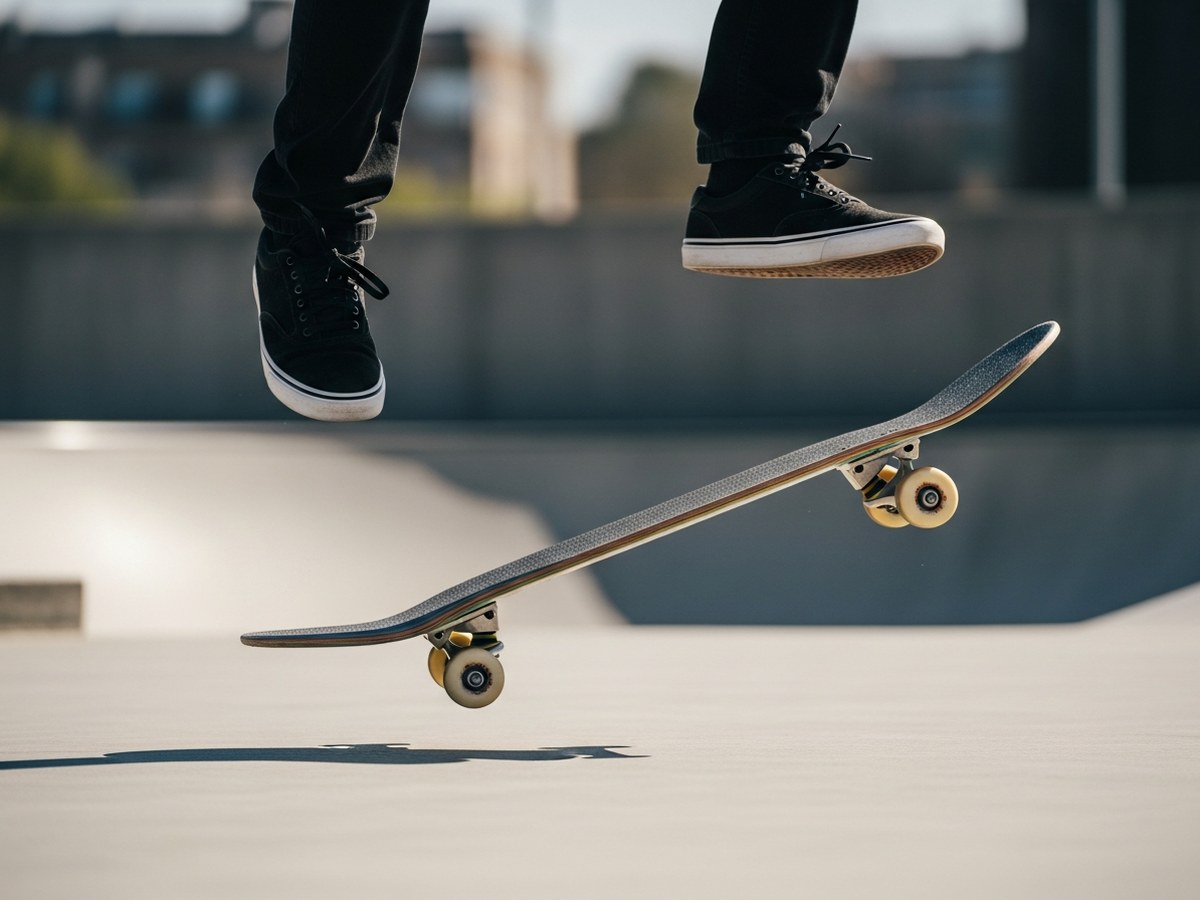
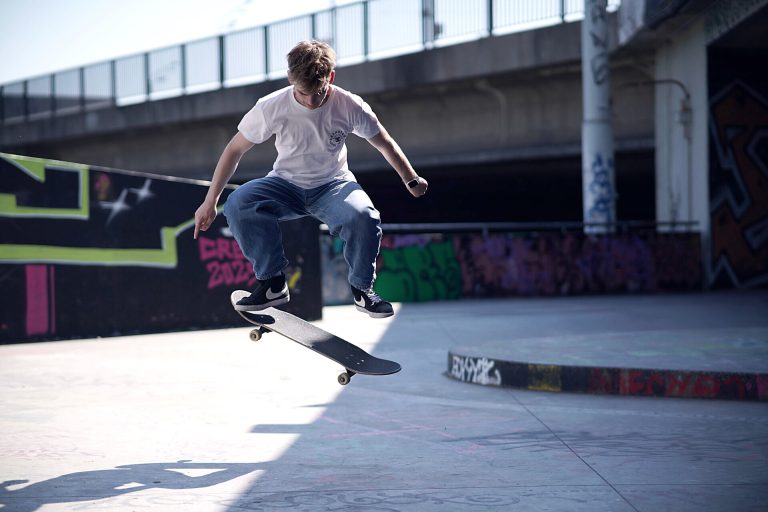
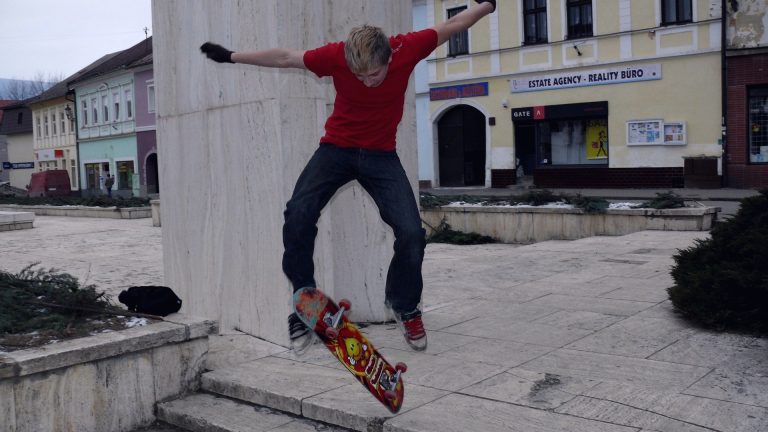
Before you go, watch the board spin in slow motion. A pop shove-it is the board doing a half-turn (180°) flat under your feet, the tail (the raised back end) sweeping backwards. You jump in place and catch it.
- Back foot on the tail — Place the ball of your back foot on the corner of the tail, where it kicks up. That's what snaps and sweeps. Everything starts there.
- Front foot in the middle, slightly angled — Set your front foot over the middle bolts, a little diagonal. It doesn't push: it guides and waits for the board to come back.
- The scoop, the key move — In one sharp motion, snap the tail down AND sweep your back foot backwards, like kicking behind you. That sweep is what spins the board.
- Jump in place and let go — As you scoop, jump by pulling both feet up. Let the board do its half-turn in the air, and put your feet back down once the grip reappears under you.
- Timing above all — The scoop and the jump are almost the same instant. Jump too early, the board stays on the ground. Too late, you crush it. Chase the sharp "snap", not the power.
- Practice stationary first — No need to roll. On grass or carpet, the board stays put and you can drill the motion without bailing. Once it flows, move to smooth ground.
Foot placement — the detail that changes everything
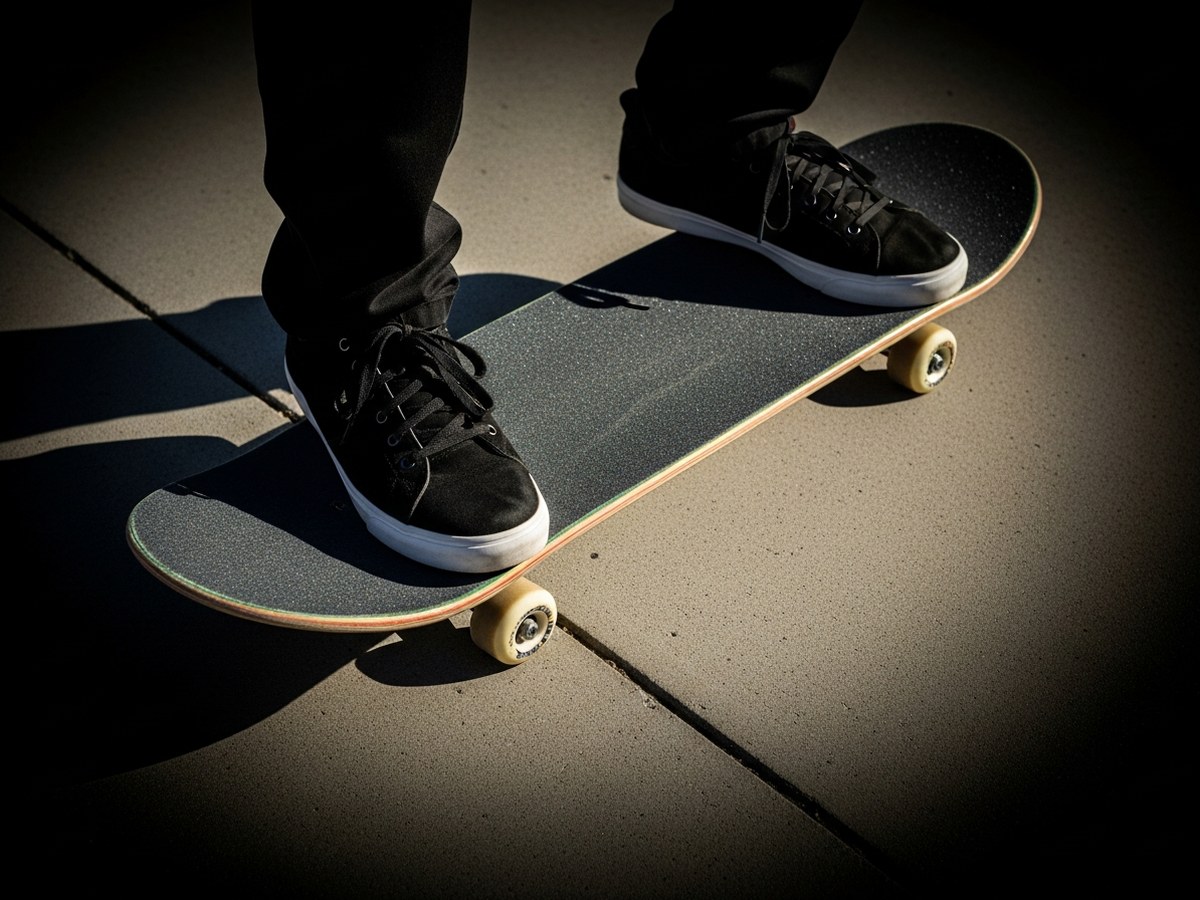
Most beginners miss the trick for one reason: the back foot is badly placed. If it's flat in the middle of the tail, you have no leverage to sweep. The ball of your foot needs to catch the corner of the tail, toward the outside.
For the front foot, stay relaxed. It doesn't jump, it doesn't push forward. Its only job: rise with you and come back down on the board once it has finished spinning. Tense it up and you block the rotation.
Quick mental cue: imagine kicking a pebble behind you with your back heel. That's exactly the angle of the scoop.
Keep in mind
Film yourself from the side with your phone on the ground. You'll spot what's wrong instantly: a forward jump, a foot pushing, a soft scoop. Three filmed tries teach you more than thirty blind ones.
The 3 mistakes that drop you every time
1. You jump forward. The king of mistakes. You sweep, the board shoots ahead, your foot lands in the void. Focus on a clean vertical jump, like skipping rope.
2. You watch your feet in the air. Look at the ground in front of your board, not the rotation. Your body catches what your eyes anticipate. Watching the board spin = landing off to the side.
3. You force instead of snap. The pop is a sharp, short hit, not a heavy push. The longer you crush the tail, the less it pops. Think "snap", not "press". Even Rodney Mullen, the inventor of half the modern tricks, says it: it's all in the timing of the tail.
Pop shove-it or plain shove-it — where to start
Let's be clear about the two versions:
- The shove-it (no pop): the board spins flat on the ground, without lifting off. You just sweep with the back foot. Good drill to feel the rotation, but that's where it stops.
- The pop shove-it: you snap the tail at the same time as the sweep, and the board spins in the air. That's the real version, the one that serves you for everything else.
- The smart order: do 5-10 stationary shove-its to understand the rotation, then add the pop. You'll save weeks.
And if your board holds you back more than it helps, check our guide to choosing your first skateboard — a deck that's too wide or too soft makes the scoop twice as hard.
Once the pop shove-it is dialed, the ollie and kickflip will feel way less scary — you'll already know how to snap, jump and catch.
How long before it clicks
The honest truth: it depends how much you ride. Most beginners land their first clean pop shove-it within one to three weeks riding a few sessions a week. Some get it in two days, others in a month. Neither is "bad".
What matters is short, regular reps. Twenty minutes a day beats two hours on Sunday. And the day it clicks, you'll finally get the line every skater repeats: it's in the legs, not the head.
Frequently asked questions
Do I need to know how to ollie before the pop shove-it?
No, and that's the whole point. The pop shove-it can be learned without an ollie and teaches you the pop and the jump timing. Plenty of skaters even land it before their first clean ollie.
My board doesn't do a full half-turn, it only spins halfway. Why?
Your scoop is too soft or too short. Sweep your back foot further back and sharper. The rotation comes from the length of the sweep, not the power of the jump.
Should I learn stationary or while rolling?
Stationary first, on grass or carpet to lock the board. Once the motion flows, move to smooth ground standing still, then very slowly while rolling. Rolling is actually easier to catch once you've got the move.
What shoes help me feel the trick better?
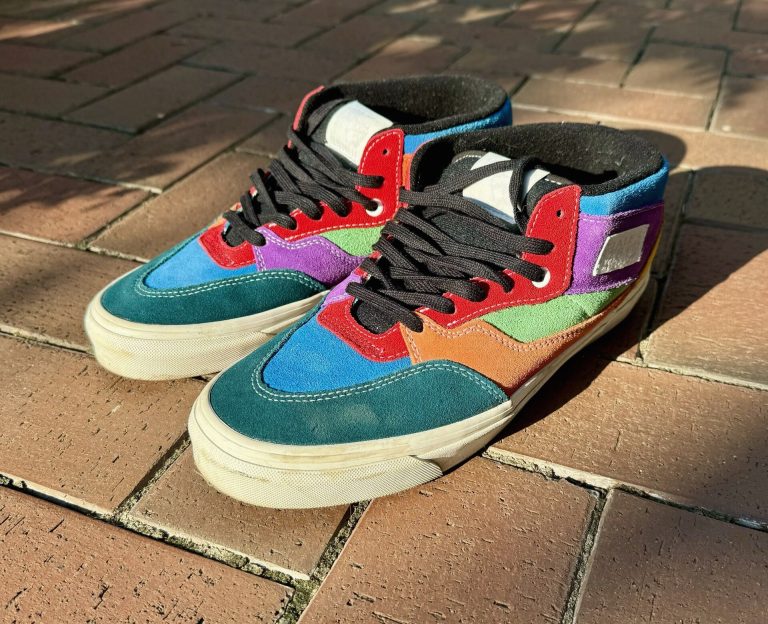
Flat-soled skate shoes, like Vans Old Skool or Nike SB. The flat sole lets you feel the tail under your foot, and the grip holds better for the scoop. Skip thick running sneakers.
You've got the full breakdown: placement, scoop, jump, catch. Next step is to put your feet down and drill it until it goes on its own. Everyone bails at first — even the pros swept hundreds of times before the board landed right under them. The day you land your first clean pop shove-it, you'll feel it.
Ride on.
Follow NOSK8 where you hang out
Parts, spots, behind the scenes: it all drops on the accounts first.
Le lexique
-
1
pop shove-it
Figure où la planche fait un demi-tour à plat dans les airs, après un claquement du tail combiné à un balayage du pied arrière.
-
2
scoop
Balayage sec du pied arrière vers l'arrière qui fait pivoter la planche. C'est ce mouvement qui déclenche la rotation.
-
3
shove-it
Version sans saut du trick : la planche pivote à plat au sol, sans décoller, juste balayée par le pied arrière.
Continue ta lecture
ChroniquesPlan B Skateboards : comment Mike Ternasky a réinventé le street skating en 1991
En 1991, Mike Ternasky claque la porte de H-Street et fonde Plan B. Avec une seule vidéo, Questionable, il fait du skate de rue la…
Commentaires (0)