ℹ️ 🛹 Web Média Skate 🛹 ℹ️

Conseils
Learning the Boardslide — The First Slide That Makes You Feel Like a Real Skater
Le boardslide sur curb : le bon spot, le timing du pop au lock, et les variantes pour progresser sans te faire mal.
→ Pour aller plus loin : Skater sous la pluie : ce que ça détruit vraiment sur ta planche
Level: Intermediate
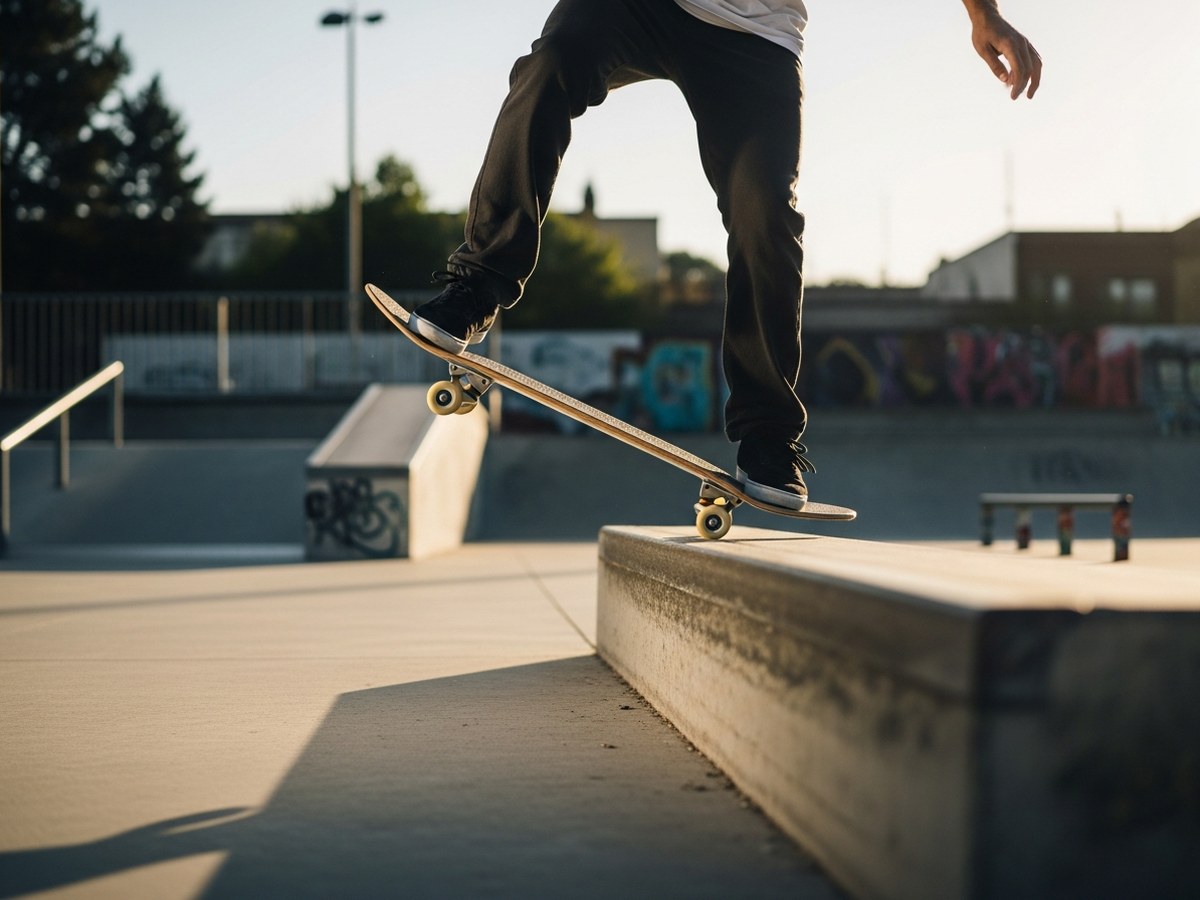
The day you land your first boardslide, something shifts. You already know how to ollie, you can roll around — but the board sliding across the curb, the plastic scraping sound, the clean pop-out — that's the first time you feel like an actual skater, not just "someone with a board".
The problem is most beginners approach the boardslide like an ollie onto a flat obstacle. Result: it catches, you get bucked off, and you get discouraged after two sessions — even though the trick is well within reach if you respect the right order.
Here's the direct method: the right curb, the right timing, and the variations to keep progressing without hurting yourself.
Avoid the classic mistake
The classic scenario: a kid rolls up to a curb at full speed, pops too late, and ends up with the trucks catching instead of sliding. Feet get caught on the edge and they fall backwards — usually onto the back or wrists. Two sessions later they've quit, thinking "boardslides just aren't for me". In reality, the problem is almost never courage — it's approach speed and pop placement, not a lack of talent.
Which curb to train on — the height that changes everything

Before thinking about the trick itself, pick the right obstacle. A curb that's too high scares you off, one that's too low doesn't give you time to feel the lock. Here's what actually works for beginners.
- Ideal height: 15-20 cm (6-8 in) — High enough to actually feel the trick, low enough that falling isn't scary.
- Painted or metal edge — Raw wood or raw concrete grips too much. A painted, waxed or metal edge slides much better right away.
- Wax your curb first — A skate wax stick passed over the edge cuts your failure rate in half during your first sessions.
- Clear area — Pick a spot without foot traffic or a crowded sidewalk. You're going to fall, so make sure there's no audience or extra obstacle in the way.
- Avoid polished marble ledges — Too slippery to learn the lock on: you'll slip out before you even understand the feeling.
Pop-to-exit timing — the 5 phases of the slide
The boardslide is 90% timing and 10% balance. Here's the full breakdown, phase by phase.
- 1. The approach — Moderate speed, not too slow (not enough momentum to slide) nor too fast (you lose control of the pop). Aim for a brisk walking pace.
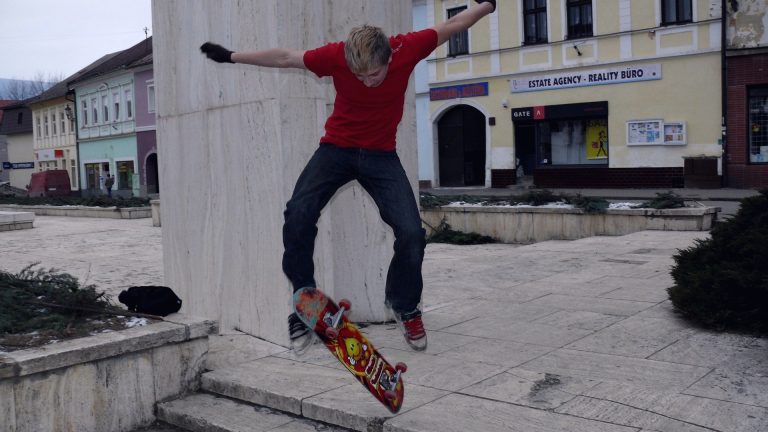
- 2. The pop — A classic ollie, but slightly earlier than usual. You need to be airborne BEFORE the curb, not on top of it.
- 3. The 90° turn — While airborne, rotate your chest and shoulders to bring the board perpendicular to the obstacle. It's this shoulder movement that drives the board, not the feet.
- 4. The lock — The middle of the deck (between the two trucks) needs to land flat on the curb. If one truck touches first, you'll catch.
- 5. The exit — At the end of the curb, rotate your shoulders back the other way to bring the board straight again, and absorb the landing with bent knees.
Key takeaway
The secret isn't "jumping higher" — it's turning your shoulders BEFORE your feet. Your body drives the board, not the other way around. Practice the shoulder turn standing still, board in hand, before even trying it on the curb again.
Once the lock becomes clean and you stop missing the landing, something really changes in how you ride. You stop just enduring street obstacles — you start reading them as things to slide. That's exactly the shift that separates "I do some skating" from "I'm a skater".
Boardslide variations — from board to nose and tail
Once the classic boardslide is locked in, several directions open up. Here's the logical progression order.
- Classic boardslide — The starting point: straight approach, lock in the middle of the deck, symmetrical exit.
- Frontside boardslide — You turn towards the obstacle rather than away from it. More technical visually, since you lose sight of the obstacle for a split second.
- 50-50 grind — Not technically a boardslide (the trucks slide, not the deck), but often mixed up by beginners. A good transition step if the boardslide lock still feels unclear.
- Noseslide / tailslide — Advanced variation where only the front (nose) or back (tail) of the deck touches the curb, off-center. Requires much finer weight control.
- Backside boardslide — Approach with your back to the obstacle. Reserved for once the frontside is solid — it's the version that looks the most impressive on video.
Frequently asked questions
Do you need to master the 50-50 grind before the boardslide?
No, they're two different and independent tricks — the 50-50 slides on the trucks, the boardslide slides on the deck itself. Some skaters learn the boardslide first because locking the deck flat feels more reassuring than balancing on two thin trucks.
How long does it take to land your first boardslide?
With a solid ollie already in place, count on one to three sessions of regular practice. The real limiting factor is the number of attempts, not talent — repeat the shoulder-turn motion standing still between each failed try.
Does the grip tape hurt your shins when you fall during a boardslide?
Typical falls are more like backward slides or lateral bail-outs, rarely a shin against the grip tape. It's mostly your butt, back and wrists that take the hit — knee pads and wrist guards are usually enough to feel safe as a beginner.
Can you learn a boardslide on a rail instead of a curb?
Technically yes, but it's a bad idea to start with: a rail is narrower, usually higher, and forgives a bad lock much less than a curb does. Master the low curb first — the rail will come naturally after.
The boardslide is the first real slide trick in your progression — the one that shifts you from the skatepark to the street with a different eye. You're going to fall, get bruised, try again. That's normal, it's part of the process. Tell us in the comments which curb you landed your first boardslide on.
Ride on.
Follow NOSK8 where you hang out
Parts, spots, behind the scenes: it all drops on the accounts first.
Le lexique
-
1
boardslide
Trick de slide où le milieu du deck (entre les deux trucks) glisse à plat sur un obstacle comme un curb ou un rail.
-
2
50-50 grind
Figure où ce sont les deux trucks, et non le deck, qui glissent sur l'obstacle — souvent confondue avec le boardslide par les débutants.
-
3
lock
Moment où la planche se cale bien à plat sur l'obstacle pendant le slide, sans accrocher ni déraper.
-
4
noseslide
Variante où seule l'avant du deck (le nose) touche l'obstacle, décalée par rapport au centre — demande plus de contrôle du poids.
-
5
tailslide
Variante où seule l'arrière du deck (le tail) touche l'obstacle pendant le slide.
Continue ta lecture
ConseilsCasque de skate : pourquoi en porter un sans avoir l’air d’un noob
FRENESLevel: Intermediate The day you land your first boardslide, something shifts. You already know how to ollie, you can roll around — but the board…
Commentaires (0)