
ℹ️ 🛹 Web Média Skate 🛹 ℹ️


Conseils
44% of Skateboarding Injuries Are Fractures: How Do You Learn to Fall Without Breaking Something?
Sur 5 026 blessures de skate recensées aux urgences, 44 % sont des fractures — et le poignet encaisse le plus. Les 3 réflexes à installer, dans l'ordre.
Level: Beginner
Nobody ever taught you how to fall. They taught you where to put your feet, how to push, how to go for the ollie — but falling, everyone acts like it's an accident. When really, it's the move you're going to repeat more than any other in the next six months.
And that move can go right or go wrong. Out of 5,026 skateboarding injuries logged over ten years in the ERs of Australia's Gold Coast, 44% were fractures. Not bruises, not road rash. Broken bones.
Here's the thing: most of them come from the same reflex. And a reflex can be replaced. Here's what really happens in the half-second when you bail, and the three automatic responses you need to build — in order.
Avoid the classic mistake
Reaching for the ground with your arms out, palms forward, elbows locked. It's the body's natural reflex, and it's exactly the one that breaks you. All your weight plus your speed lands at once on a joint the size of a pebble. The wrist can't carry that load — literally.
Dans cet article 5 parties
What your body really takes when you go down forward
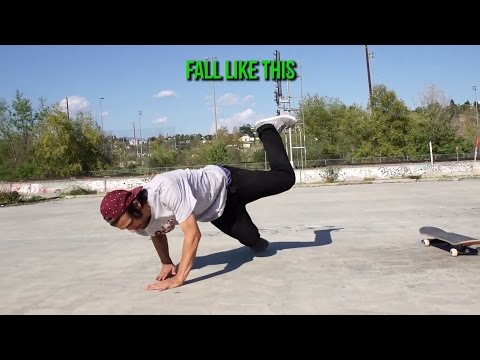
The Australian study published in 2024 combed through every skate-related ER visit between 2008 and 2018. The numbers are cold and they all say the same thing.
Among fractures, 56% hit the upper body. And within the upper body, 57% involve the wrist and hand. In other words: nearly one fracture in three, all types combined, happens at the end of your arms. Average age of the injured? 19. You're right in the crosshairs.
The rest is split between the ankle (45% of lower-body injuries) and the head — the least frequent, but 11% of the head injuries in that study needed neurosurgical care.

- The head — rare but there's no coming back from it. A hit to the back of the skull gives no warning, and a helmet is still the only piece of gear that does the job for you there.
- The wrists and hands — the number one zone. That's where your natural reflex sends you, and it's the most fragile part of the whole package.
- The knees — you land on them coming off an obstacle, or you scrape them across the concrete. Painful, messy, avoidable.
- The elbows — second point of impact when the arm gives out. You don't feel them in the moment, you feel them the next day.
- The ankles — no protection possible, just decent shoes and the habit of jumping off with both feet flat.
Letting go of the board: the move that saves your wrist

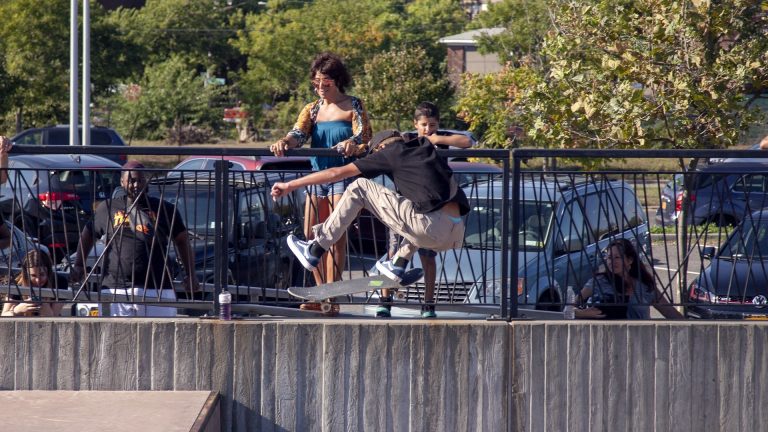
Watch any beginner's slam filmed in slow motion. The same thing always happens: the skater tries to keep the board under their feet half a second too long, they rear back, and when they finally go, they go backward, arms straight out.
The board can't be saved. Once the wheels have gone sideways, it's over — you can pull on your ankle all you want, physics has already made the call. The only thing you've got left is where you put your body.
So you let go. Early. You let the board shoot off and you deal only with yourself. It sounds obvious written down, and yet it's the reflex that takes the longest to build — because your brain wants to save the €90 object.
Remember this
Before you bail, a quick glance: the board always ends up somewhere. Send it toward a wall, a trash can, an empty zone — never toward someone. A board flying at shin height through a packed skatepark is the fastest way to get yourself hated in a single session.
Roll instead of absorbing: the big-surface rule

An impact is a quantity of energy that has to go somewhere. If it goes into a wrist, the wrist breaks. If it goes into a forearm, then a shoulder, then a back rolling across ten feet of ground, it gets spread out and all that's left is a good scrape.
That's the exact principle behind the roll that paratroopers and judokas use: you never brace, you turn the fall into rotation. And you don't need a dojo to learn it.
The move: tuck your chin, round your back, turn your shoulder slightly inward and let the ground slide by. Hands stay close to the body, fists closed — a closed fist doesn't dig into concrete, an open palm does.
For practice, you do this on grass, board set aside, ten times in a row. It looks ridiculous. It's exactly what the riders who've been skating fifteen years without ever wearing a cast do.
The moment you jump instead of fighting it

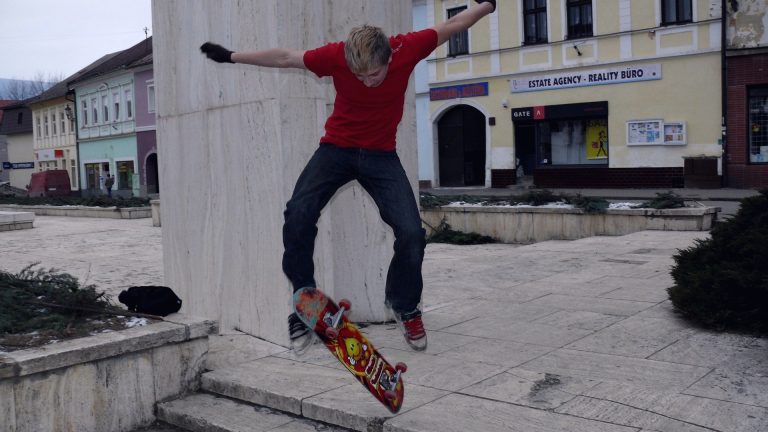
There's a moment, a very short one, where you know it's done. The nose catches, a pebble locks up a wheel, the grind slips out. Your body still has a choice: fight it, or decide to bail.
Fighting it is what produces the worst slams. You go late, off balance, with no control, often backward — and a backward fall means head and wrists all at once.
Bailing means taking back control. You jump, you land on both feet, knees bent, and you run. Yes, you run. Running three steps after jumping off is speed you're not taking in the ribs. It's the first thing to work on when you start dropping off curbs, where the board stops dead and you don't.
How do you recognize the moment? Through experience, and only through experience. The more you fall with awareness, the earlier the alarm goes off. That's also why falling isn't failure: it's information your brain files away somewhere, and it'll come back out on its own next time.
The 3 reflexes to build — and the order that matters

Here's the answer, the one you came for. These three reflexes are learned in this precise order, because each one makes the next possible. Two weeks per step, a few minutes at the start of every session.
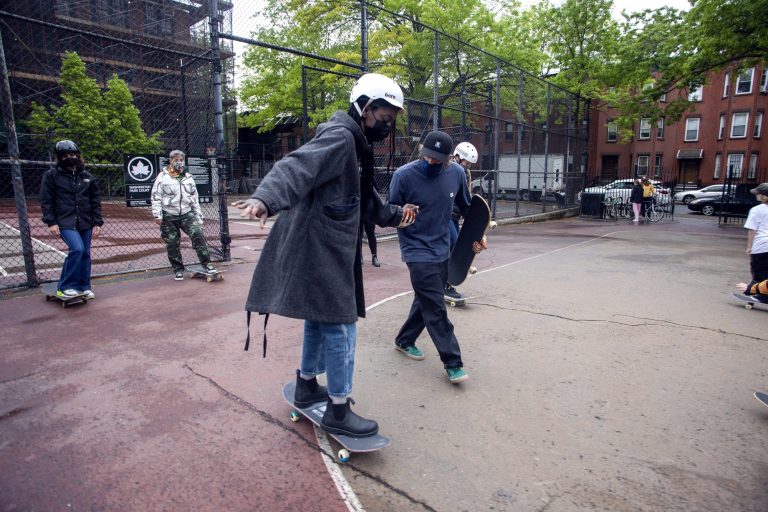
1. Let go of the board, right away. First, because as long as you're hanging onto your board, you can't do anything else. Drill: on grass or a soft surface, roll slowly and jump off the board on purpose, twenty times. No reason, no trick. Just so the move becomes brainless.
2. Land on both feet and run. Second, because at low speed, most of your falls stop right there — you won't even hit the ground. Drill: push, pick up a little speed, jump forward, absorb with your knees, run three steps. Twenty times too.
3. Roll when the ground comes anyway. Third, because it only comes into play when the first two weren't enough — too much speed, a sideways fall, a ramp. Drill: forward rolls on grass, shoulder tucked, fists closed. Ten per session for two weeks and it's burned in.
In that order, never the reverse. A beginner who learns to roll before learning to let go of the board is going to roll with a deck tangled in their legs — we've seen smarter.
And on top of these three reflexes, a layer of gear that does the work while the reflexes settle in. The review of studies on snowboarders — same fall, same wrist — measures a wrist injury risk cut by more than four times among those wearing wrist guards. Three months with them, long enough to learn. After that, you'll see. As for the helmet, that's a different conversation — and it's a shorter one.
Frequently asked questions
Can I really practice falling, or is that just BS?
You practice falling the way you practice a trick: through repetition, slowed down, on a surface that forgives. Grass, a mat, a park lawn. The goal isn't to hurt yourself one more time, it's to move the motion from your brain down into your legs, so it comes out on its own when there's no time left to think.
Don't pads make you look like a noob at the skatepark?
The riders giving you side-eye for wrist guards are usually the ones who don't actually skate. The others have already spent six weeks in a splint and know exactly what it costs. And if it really bugs you: start by wearing them on days you're learning something new, that's when you fall the most.
Why am I more scared of falling now than when I started?
Because you're going faster and you now have a precise memory of what it feels like. That's normal, and it doesn't go away by gritting your teeth. It goes away by taking back control: the more you know what your body will do when you bail, the less you dread it. Falling technique is mostly fear management.
How long should I sit out after a bad slam?
A hit to the head, even a light one, even with a helmet: you end the session, period. For everything else, the simple rule is that if you can't put weight on it or make a normal fist, you get a doctor to look at it. Pain that's still at the same level three days later isn't soreness.
You're going to fall hundreds of times. The only thing that changes is whether you do it as a spectator of your own body or as the pilot. Let go of the board, land on your feet, roll when you have to — in that order, two weeks each. The rest will come because you'll skate more often, and that's exactly where progression happens.
Have a good ride.
What's your worst slam since you started skating? Tell us how you went down. Drop it in the comments ↓
Le lexique
-
1
ollie
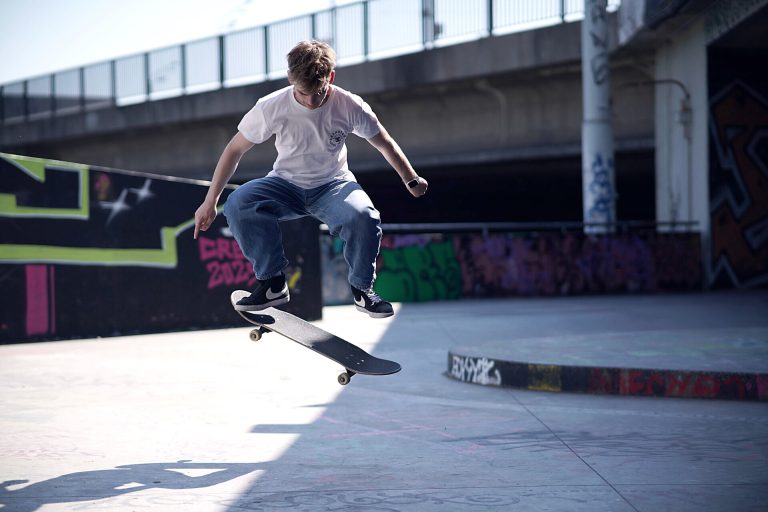
Figure de base : on claque l'arrière de la planche au sol pour la faire décoller avec les pieds, sans les mains.
-
2
grind
Glisser sur une barre ou un rebord en appui sur les parties métalliques de la planche, sous le plateau.
-
3
bowl
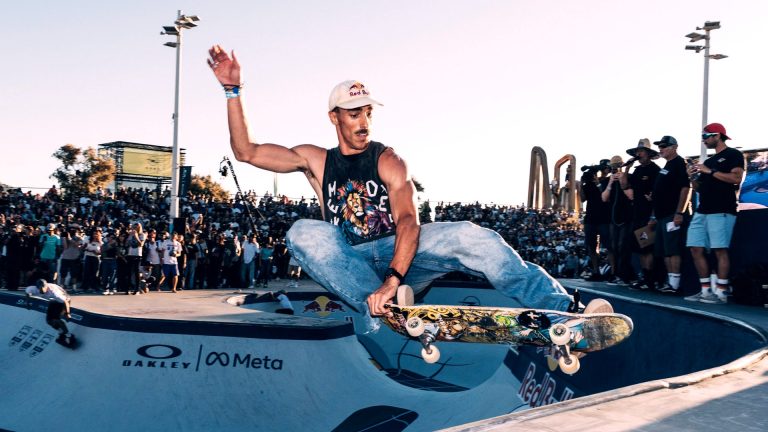
Cuvette en béton aux parois courbes, héritée des piscines vides, où l'on skate en enchaînant les courbes.
Continue ta lecture
ÉvénementsWorld Skate Games 2026 : 3 places par pays à Asunción, et aucun billet en vente à 21 jours du départ
Du 2 au 18 octobre, Asunción accueille les championnats du monde de skate. Dates par discipline, lieux, quotas — et la vérité sur les billets.
Commentaires (0)