

Yeah Right! — in 2003, Spike Jonze turned a skateboarding video into cinema
You remember the first time you saw a skater doing tricks on an invisible board. It was in Yeah Right!, released in September 2003. That day, Spike Jonze and Ty Evans stopped filming skateboarding. They staged it. And skateboarding videos were never the same.
⏱ Reading time: 5 min
Before Yeah Right!: a frozen genre
In the early 2000s, skateboarding videos followed a script. A rider, spots, banger tricks, a big hip-hop track. You knew the formula by heart. Trilogy, The DC Video, Photosynthesis — all excellent, all built on the same skeleton.
And then Girl Skateboards released Yeah Right!. The brand, founded by Mike Carroll, Rick Howard, and Spike Jonze in 1993, had already established a distinct tone with Mouse in 1996. But with Yeah Right!, the team took the grammar of skateboarding videos and fractured it. Deliberately. For 60 minutes.
The cast, first. Eric Koston, Rick McCrank, Brandon Biebel, Mike Carroll, Rick Howard, Tony Ferguson, Brian Anderson, Guy Mariano. You put that on a poster, you fill a theater. But Jonze and Ty Evans didn’t want to build the film as a compilation of parts. They built it as a feature film, with sketches, narrative transitions, an irony no one had dared in skateboarding before them.
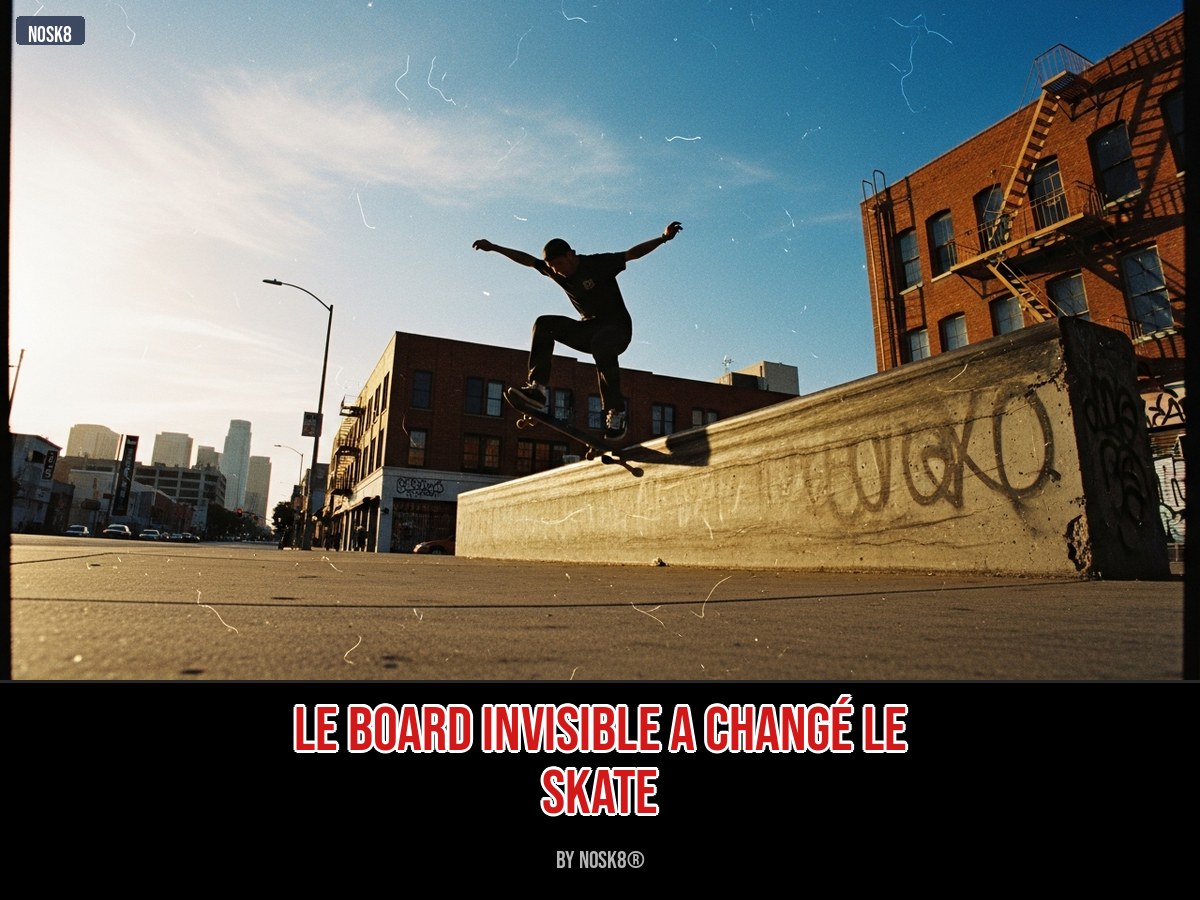
The invisible board sequence
The moment that will go down in history arrives after the credits. Eric Koston, Mike Carroll, Rick Howard, and the others do kickflips, manuals, grinds, nose blunts. Without a board. The board was erased frame by frame, in post-production, across hundreds of shots. Handcrafted compositing in 2003, done on Avid stations at prices that would make you cry today.
The result? You see skaters dancing in the air. Pure movement, without the object. No one had ever filmed skateboarding like that. And no one has done it since without seeming to imitate it.
What’s crazy is that the sequence only lasted 90 seconds. 90 seconds to reduce ten years of discourse on « what is a skateboarding video » to mush. Spike Jonze had just directed Adaptation with Charlie Kaufman. He had already made Being John Malkovich. But it was in Yeah Right! that he slipped his most radical signature. No one in Hollywood saw that part. All of skateboarding saw it.
The Girl-Chocolate family
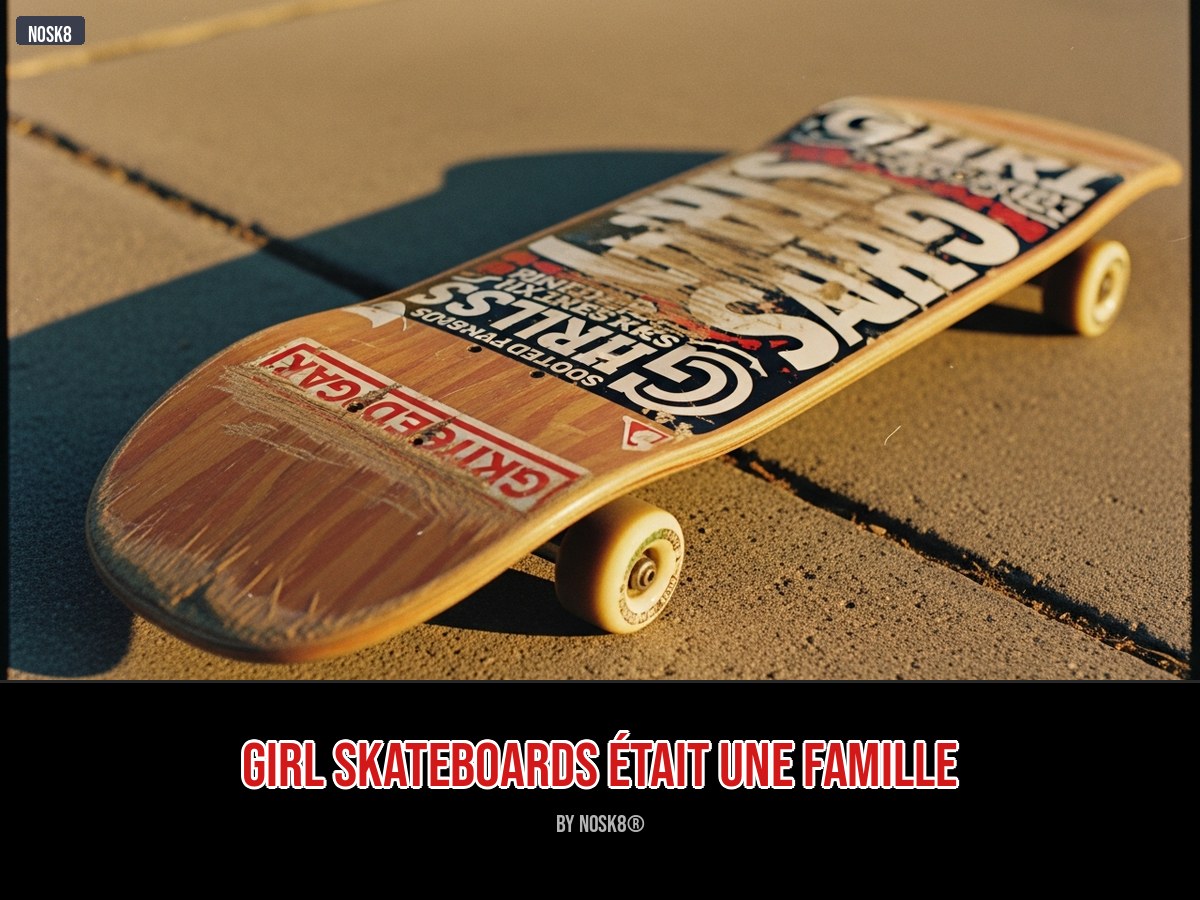
What carried Yeah Right! was the human cast. Girl and its sister brand Chocolate weren’t a sponsored team. It was a family. Mike Carroll and Rick Howard had left Plan B in 1993 to found their own house, because they were tired of the aggressive business. They brought back Eric Koston, Guy Mariano, Sean Sheffey, Gino Iannucci. They signed kids like Brandon Biebel and Brian Anderson.
The tone in Yeah Right! reflects that. No one takes themselves seriously. Absurd sketches, costumes, parts interspersed with nonsense. Owen Wilson makes a cameo. Tony Hawk appears and gets mocked. Lakai would release Fully Flared four years later with the same technical team — Yeah Right! wrote the grammar.
Guy Mariano’s part in Yeah Right! — his reappearance after years of struggles — remains cited as one of the most moving in skateboarding history. You feel that the friends behind the camera know what the kid’s return means. The Q-Tip track accompanying his part, « The Light« , wasn’t chosen by chance. It’s a group hug.
The legacy: 22 years later
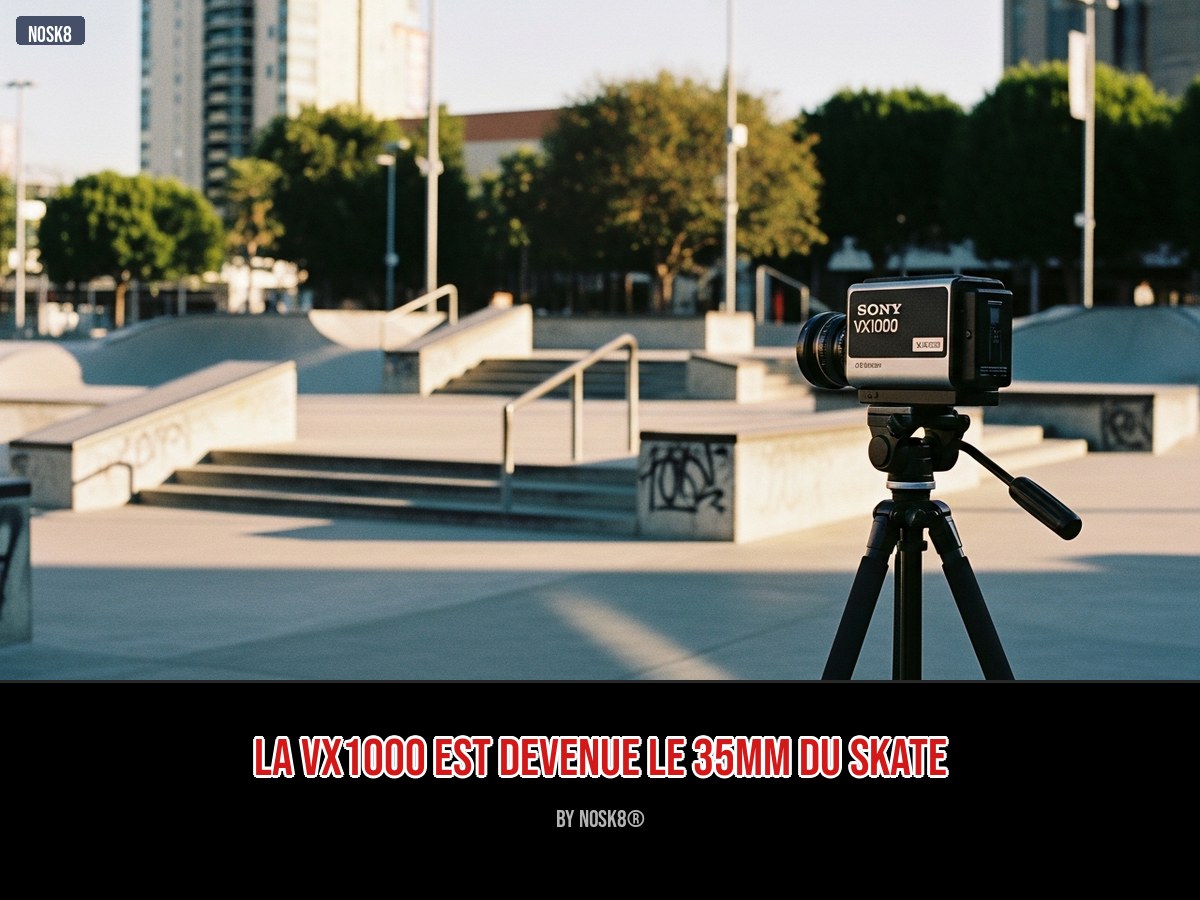
Today, we film skateboarding with phones. The VX1000 is making a comeback in revival mode, but it’s a nod — not a standard. Pros post iPhone clips that get 8 million views on Instagram. And yet, when you ask a kid to name a video that marked them forever, Yeah Right! still comes up.
Why? Because Jonze and Ty Evans didn’t film tricks. They filmed an attitude. The LA of the 2000s, zipped hoodies, Lakai on your feet, the slopes of the Courthouse in Hollywood, the golden light of late afternoon. You put on the DVD, and an entire era comes back. Skateboarding videos stopped being a product to become a documentary object.
And then there’s this technical detail that changes everything: Yeah Right! was the first full-length skateboarding video to use synchronized split-screen shots, two riders, two spots, same music. TikTok and Instagram channels picked up this idea twenty years later without citing the source. Everything you see on your feed in 2026, Spike Jonze already tried it.
If you’ve never seen the whole film, do yourself a favor: 60 minutes, uninterrupted, in order. You won’t learn how to skate. But you’ll understand why, in 2003, kids from the Parisian suburbs started filming their sessions with camcorders, hoping that one day, they too would make something like Yeah Right!.