


X Games League — The day skateboarding held its draft
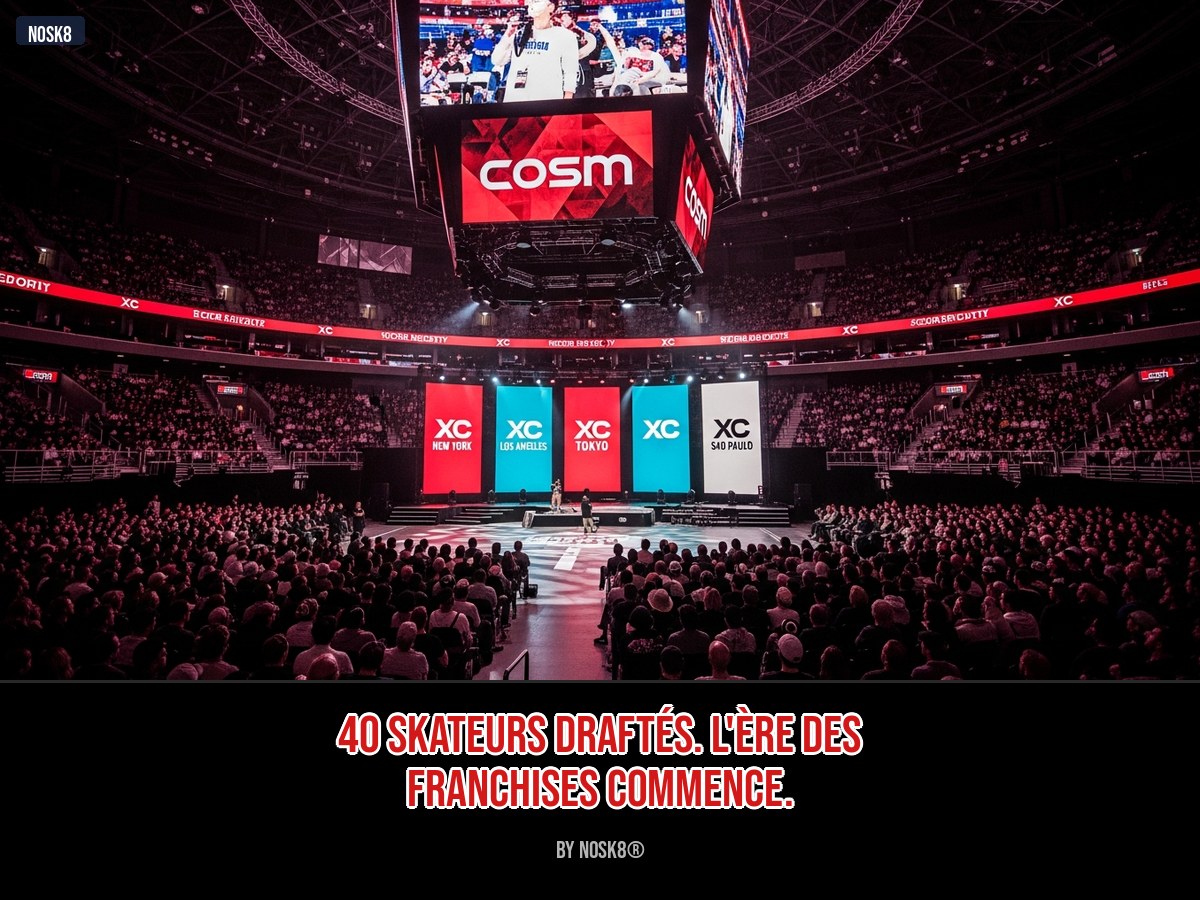
On March 12, 2026, four managers took the stage at Cosm in Los Angeles. In front of 500 people, they selected the best skaters on the planet, just like you’d pick basketball players. Skateboarding just held its first draft in history. Nothing will ever be the same.
⏱ Reading time: 4 min
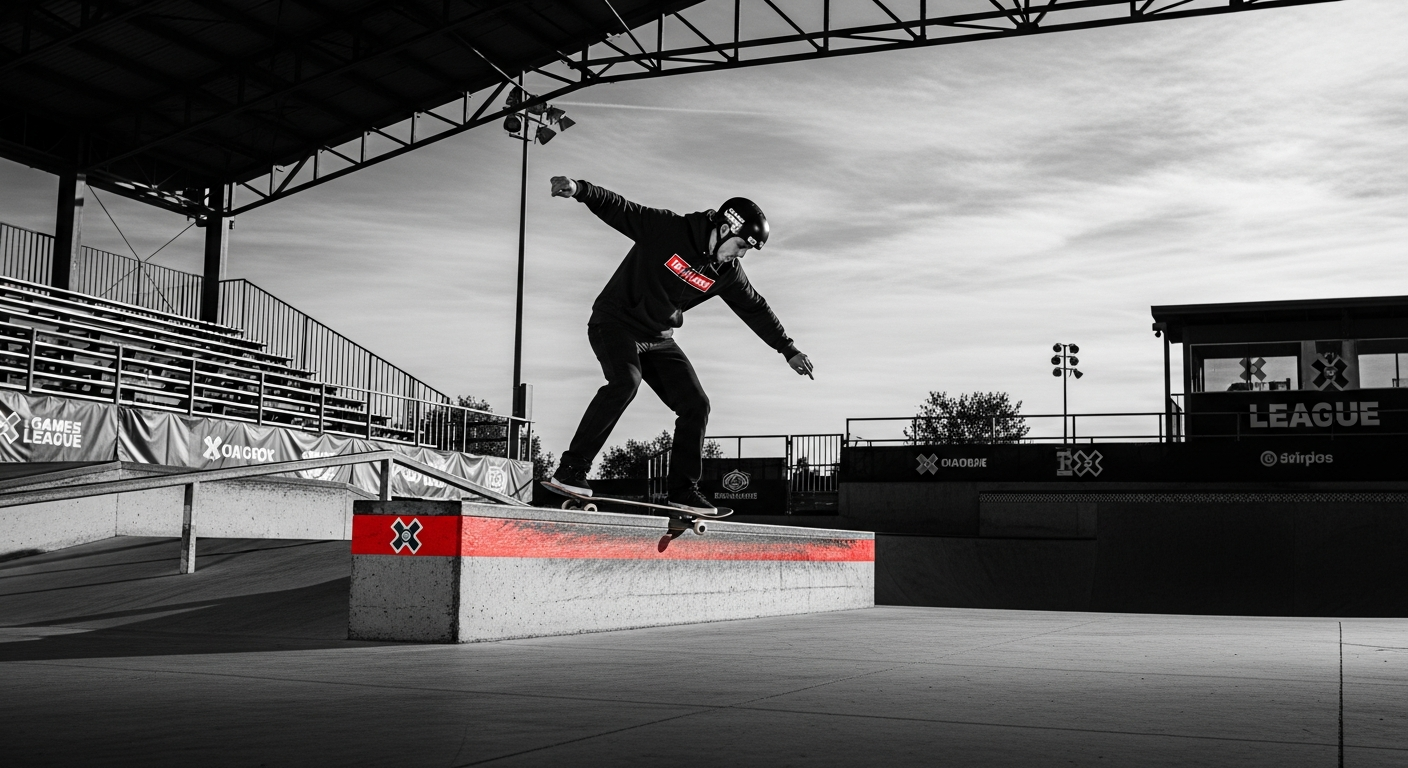
A draft like the NBA — except it’s skateboarding
Over 180 riders applied. 40 were selected. Steve Rodriguez, GM of the New York franchise, made the first pick in league history: Chloe Covell, 16, Australian, already the best female skater on the planet according to most circuits. A number one draft pick who deserves the title.
Following that: Tom Schaar for Los Angeles, Arisa Trew for Tokyo, and — surprise — Gui Khury for São Paulo, selected by none other than Brazilian legend Bob Burnquist, who manages the club himself. When a skateboarding icon from the 2000s picks the new generation live, it’s a rare moment of transmission.
Each drafted rider receives a guaranteed minimum of 30,000 dollars. Travel expenses are covered. In case of injury during the season, the salary continues. For an industry where most pros scraped by between sponsors and uncertain contests, this is a social and sporting revolution.
Four cities, four clubs, a new world
Los Angeles. New York. Tokyo. São Paulo. Four metropolises, four radically different skateboarding cultures. Each club fields 10 riders — five women, five men — across two disciplines: street skateboarding and BMX. For the first time in sports history, a co-educational league mixing disciplines is organized at this level.
Nyjah Huston, who fractured his skull hitting concrete from the top of a 23-stair rail in January, returns as the official MoonPay ambassador for the league. His presence transforms the XGL into a global media event — the king of street skateboarding, crowned after a forced remission, chooses this format for his comeback.
The real question: Is skateboarding losing its soul?
Skateboarding was born against all of this. The empty pools of Dogtown in the 70s, the pirate videos duplicated on VHS in the 90s, the street cultures impossible to franchise. The DNA of skateboarding is precisely the refusal to be framed by the structures that the NFL, NBA, FIFA have built for a century.
So yes, there’s something strange about watching a draft. About seeing street decks and tricks being evaluated with the same logic as football players’ contracts. About hearing « franchises » where we used to talk about « crews » and « DIY teams ».
But the real question isn’t there. It’s in this number: 30,000 guaranteed dollars, paid travel, salary protection in case of injury. For riders who sacrificed their knees, backs, sometimes their skulls — without a safety net — forever. The XGL isn’t the death of skateboarding. It might be its first worthy social protection.
The tension remains real. Street skateboarding isn’t reduced to what you can put in an arena. But this league doesn’t replace Baker, or Thrasher, or 6 AM spot sessions. It adds to it. And it still changes everything for those who participate.
The season starts June 26 — and it’s going to be loud
Sacramento kicks off the season on June 26. Then X Games Japan on July 4 and 5. And the grand finale at the Caesars Superdome in New Orleans, on July 24, 25, and 26. A 73,000-seat venue to crown the first franchise in skateboarding history.
If you grew up with Tony Hawk’s Pro Skater, with Flip and Powell Peralta tapes, with the idea that skateboarding was the sport of outcasts and misunderstood — watching the first XGL tournament at the Superdome will produce something weird. A mix of excitement and nostalgia impossible to untangle.
Maybe that’s exactly what it is, growing up with skateboarding. Watching something you loved precisely because it was small, dirty, free — become something immense. And deciding if you’re proud or nostalgic. Probably both.