

ℹ️ 🛹 Web Média Skate 🛹 ℹ️

 Back
Conseils
12th try for Tony Hawk’s 900 in 1999: how many attempts before you give up on a trick?
Tony Hawk landed the 900 on his 12th try in 1999. How many attempts per session, when to switch your approach, when to come back: the 3-block method.
Level: All levels
On June 27, 1999, in San Francisco, Tony Hawk falls eleven times in a row, live on American TV. He’s 31, the official time is up, and the organizers let him try again anyway. On the twelfth attempt, he spins two and a half times in the air and rolls away standing: the first 900 ever.

Now it’s your turn. Your kickflip, your drop-in, your first rail: how many tries before you stop? Five? Thirty? You’ve already lived that session where the more you push, the worse it gets.
So how many tries before you quit, when to switch approach, and when to head home? Hawk has the answer. It comes in three parts, and we’re getting there.
The classic mistake
Counting your tries without looking at what changes between falls. Fifty times the same missed move isn’t perseverance. It’s fifty times the same mistake, carved a little deeper each pass.
In this article 4 parts
San Francisco, 1999 : Tony Hawk’s 900 after eleven falls
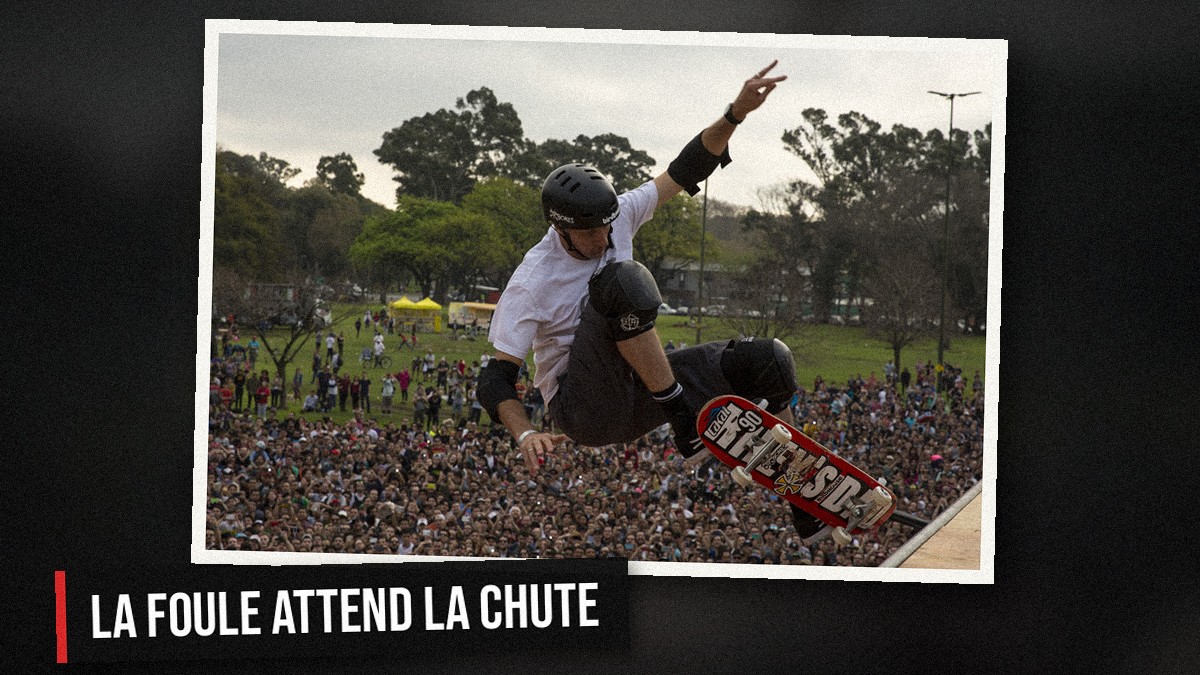
The context is the Best Trick at X Games V. Hawk attempts a trick nobody has ever landed. Ten years earlier, he had written it at the very bottom of a list of tricks to land. The 900 was the last one on the list.
The tries pile up. Twice he comes back down on the board, and twice it shoots out from under his feet. The clock ran out long ago. A commentator blurts out: « We’re making up the rules as we go, let him have another shot. » Some skaters grumble. He keeps going.
The official event recap talks about eleven failed attempts, so the 900 landed on the twelfth try. Other accounts stop at eleven. The detail that matters is elsewhere: when he finally lands it, his arms windmill and his hand brushes the rail. He lands it anyway. Remember this: Tony Hawk didn’t make it because he kept at it eleven times. He made it because every fall taught him something.
Shaun White, 2005: 29 tries and nothing to show for it
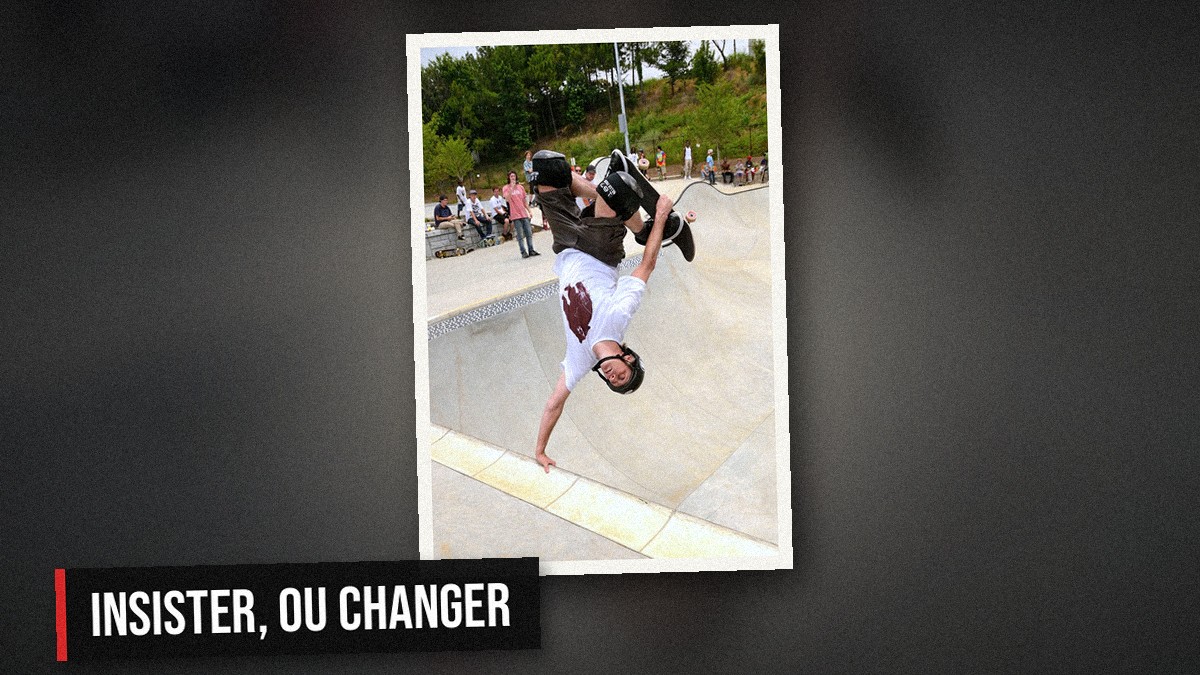
Six years later, at X Games XI in Los Angeles, Shaun White goes for the 1080 on a skateboard. Three full rotations. He tries 29 times. He doesn’t land it. The number of tries did nothing for him.
In March 2012, Tom Schaar lands that same 1080 at Woodward West, on his fifth try. Five against twenty-nine. The difference isn’t courage. It’s timing: when it lands, it lands fast, because the body is ready.
It’s the same on your spot. The trick often comes within the first ten serious tries, or it doesn’t come that day. Beyond that, you’re not practicing anymore. You’re wearing yourself out. Your pop drops, you start jumping off the board before committing, and fear sets in. We saw in our article on the drop that fear gets fixed with speed, not willpower.
Harvard, 2002: the trick lands while you sleep
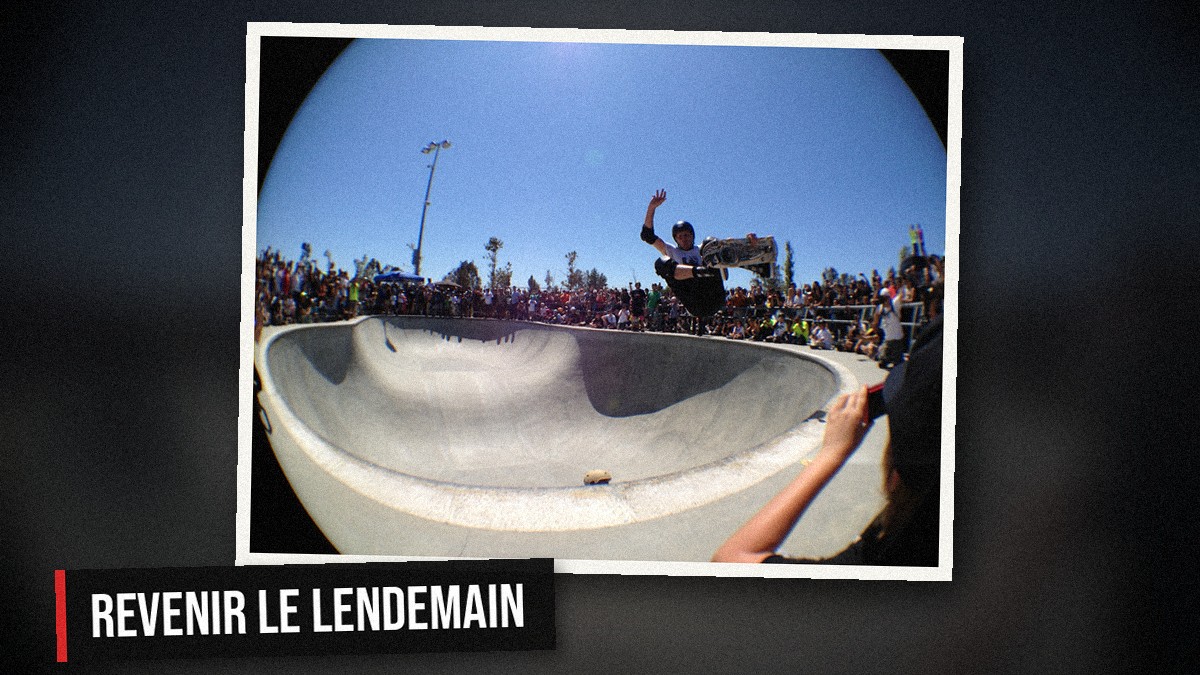
In 2002, a team from Harvard Medical School taught volunteers a precise finger movement. Those who slept one night after training were 20% faster the next day, without losing accuracy. Those who spent the same time awake didn’t improve. The study was published in the journal Neuron.
Translated for you: part of the trick gets learned on the board, the other part in your bed. The brain sorts through what you did during the day overnight. If you grind three hours on the same flip, you mostly just give it fatigue to store away.
Hawk is living proof. In 2011, he posted a video with these words: « I’m 43 years old and I landed a 900 today. » On June 27, 2016, exactly seventeen years after San Francisco, he still lands it, at 48. A move you’ve learned well doesn’t leave you.
The method: three blocks of ten, then you head home
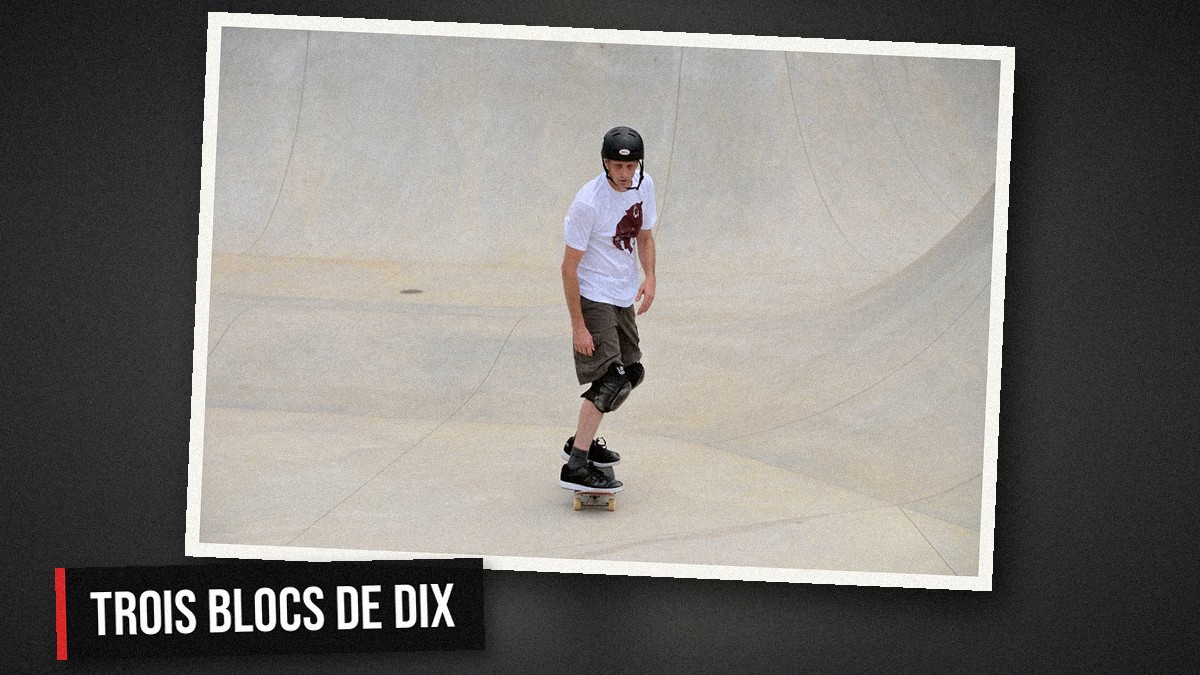
Here’s the answer to the headline. There’s no magic number, but there is a framework. On a new trick, aim for about thirty attempts per session, in three blocks of ten, with a break between each. The number alone doesn’t do it: what matters is what you change between two blocks.
- Block 1, ten tries to see: you attempt it without changing anything, and you watch where you fall. Always in the same spot? That’s your problem to fix.
- Two-minute break: you watch your footage in slow motion, or you ask a homie what he sees. One flaw, not five.
- Block 2, ten tries with a single correction: front foot a bit higher, or the shoulders, or speed. One thing at a time, otherwise you won’t know what’s working.
- Block 3, ten final tries: if it’s getting better, keep going. If nothing has moved since block 1, change your approach or work on half the trick on flat ground.
- The stop signal: your pop drops, you hop off the board before trying again, or you’re hurting. Then you set the trick aside and come back within 48 hours, when you’re fresh.

On May 29, 2024, Arisa Trew became the first skater to land a 900. She’s 14. Twenty-five years after Hawk, the trick is still the same: no magic, repeated sessions, and a body that eventually figures it out.
Key takeaways
Ten tries without changing anything is a test. Twenty tries without changing anything is just beating yourself up. Thirty tries with two adjustments is a session. And if it still doesn’t land, the night will do part of the work.
Frequently asked questions
How long does it take to learn a trick?
It depends on the trick and your base, but count in sessions, not tries. An ollie can take a few weeks, a kickflip a few months. Hawk spent ten years between the list where he wrote down the 900 and the day he landed it.
Is it bad to bail on a trick mid-session?
No. Calling it when your pop gets weak is protecting what you’ve already learned. Pushing through when you’re tired is how you learn the wrong version of the motion, or get hurt.
Why does a trick go better the next day?
Because your brain files the motion away during sleep. A 2002 Harvard study measured 20% more speed after a night’s sleep, and no gain after the same time awake.
Should you film yourself to progress?
Yes, between sets. A slow-mo clip shows you in ten seconds what you can’t feel on the board: a foot placed wrong, shoulders leaving too early.
Eleven falls live, and a 900 at the end. That day Hawk didn’t win by attrition. He won because he had ten years of sessions behind him. Tell us in the comments which trick took you the most sessions.
Good ride.
Your record of attempts on a single trick, how many, and did it end up getting passed? Drop it in the comments ↓
Le lexique
-
1
900
Deux tours et demi en l'air sur une rampe, soit 900 degrés de rotation.
-
2
Best Trick
Épreuve de contest où chaque skateur a un temps donné pour poser la figure la plus dure possible.
-
3
Pop
Le claquement du tail au sol qui fait décoller la planche. Quand il faiblit, la fatigue est là.



Continue ta lecture
TricksNose manual : plus dur que le manual, pourquoi il s’apprend dans l’autre sens ?
Mike Mo Capaldi a bâti sa carrière au sol. Le nose manual y fait la différence, et la méthode qui marche le prend par l'autre…
Commentaires (0)