

Bones Brigade — How 6 Outsiders and a VHS Invented Modern Skateboarding
In 1984, a VHS tape filmed with shoestrings sold 30,000 copies. No one saw it coming. Forty-two years later, Powell Peralta’s Series 17 proves that the Bones Brigade has never stopped haunting the skateboarding world.
⏱ Reading time: 5 min
The Dark Ages and the Birth of the Brigade
You rarely remember the misery. In 1981, skateboarding was clinically dead. The 70s trend, fueled by urethane wheels and empty California pools, collapsed as fast as it rose. Powell Peralta sold 500 boards a month. Tony Hawk, 13, received a royalty check for 85 cents. Eighty-five cents.
It was in this desert that George Powell, an aerospace engineer obsessed with fiberglass, and Stacy Peralta, a former Z-Boy turned visionary manager, decided to recruit the craziest kids they could find. Not the most popular. Not the most bankable. The most obsessed.
In 1979, the Bones Brigade was officially born. The name has nothing to do with Bones wheels — it just sounds good. Six kids, a coach, and zero marketing plan. No one knew yet that this band of misfits would rewrite the rules of an entire industry.
Context 1979-1983: The « Dark Ages » of Skateboarding
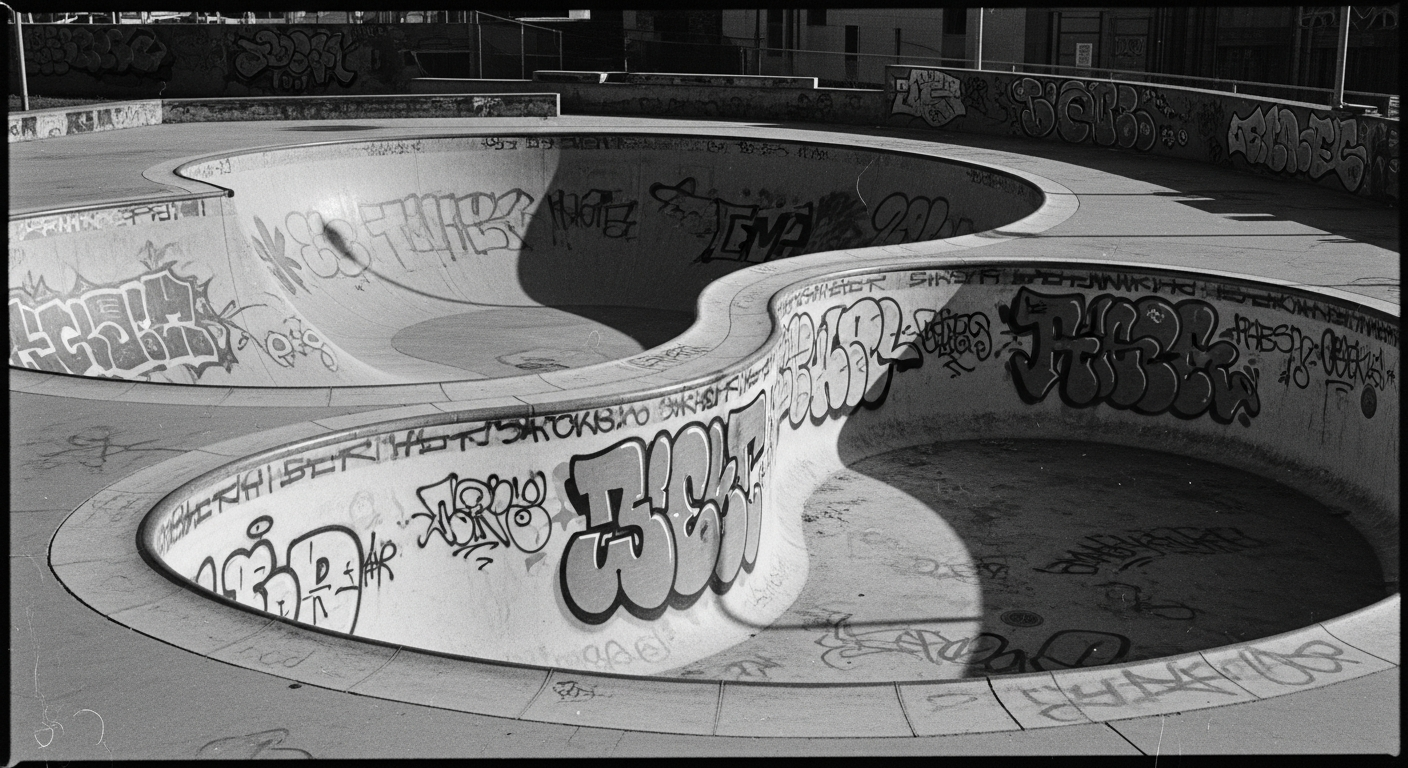
Skateparks were closing one after another due to insurance issues. The social status of a skater was lower than that of the chess club. Magazines barely survived. Only a few die-hards continued to ride in empty pools and drainage ditches in California. That’s exactly where Peralta went looking for his soldiers.
The VHS That Changed Everything
1984. Stacy Peralta had an idea everyone thought was ridiculous. Film his riders, edit it cleanly, and sell the tape. At the time, the very concept of a « skate video » didn’t exist. Paper magazines reigned supreme. YouTube wouldn’t be born for another twenty years. VHS players were just beginning to invade American living rooms.
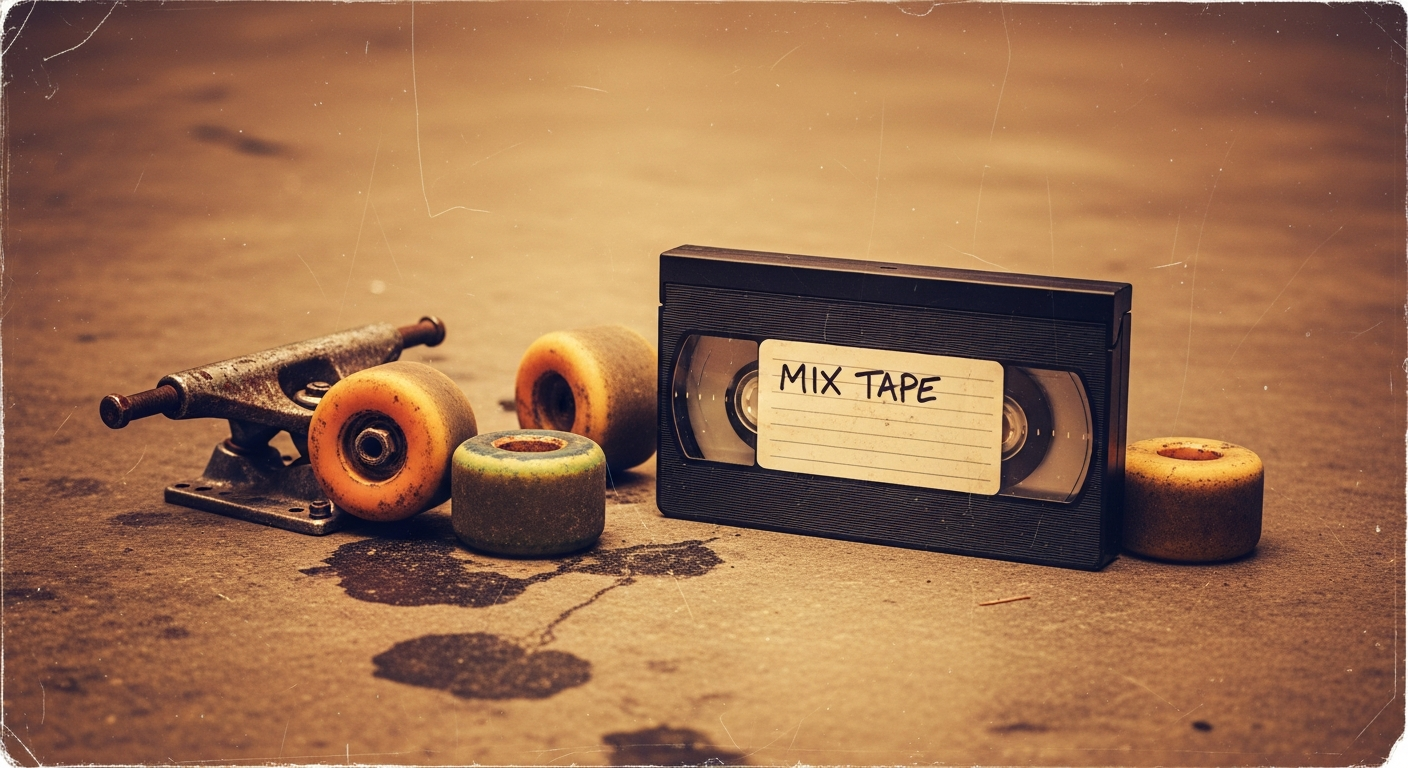
The Bones Brigade Video Show was released in 1984. Powell Peralta hoped for 300 sales. The tape sold 30,000 copies. One hundred times the predictions. The budget was microscopic, the camera shook, the editing reeked of a garage. But every Hawk trick, every Caballero line, every Mullen move oozed raw authenticity.
What Peralta understood before anyone else was that skateboarding is a visual spectacle. Not a stadium sport. Not something you read about in a magazine. Something you watch, again and again, paused, in slow motion, until you understand how the trick is even possible. Each subsequent year, a new video was released: Future Primitive in 1985, The Search for Animal Chin in 1987. The format was born. And with it, the entire economy of modern skateboarding.
Six Riders, Six Revolutions
The strength of the Bones Brigade is that each member invented an entire facet of skateboarding. It wasn’t a team of clones. It was six radically different visions, united by one common thread: absolute obsession.
Tony Hawk redefined vert. The 900 at X Games 1999? That was him. But before that, as early as 1984, he was linking aerials no one else was attempting. At 14, he was already pro. At 16, he was considered the best vertical skater on the planet.
Rodney Mullen literally invented street skateboarding as we know it. The kickflip, the heelflip, the flatground ollie, the 360 flip — that’s him. All of it. Without Mullen, there’s no SLS, no street competition, no Ginwoo Onodera dropping 9.5s in Sydney. Period.
Steve Caballero gave his name to the Caballerial — a fakie 360 that remains one of vert’s most iconic tricks. At 57 in 2026, he has never had a single job outside of skateboarding. His entire life on four wheels.
Lance Mountain was the heart of the team. Less technical than Hawk, less revolutionary than Mullen, but with a contagious style and joy for riding. He invented the fingerboard, the sad plant, and most importantly, he showed that skateboarding could be fun before being competitive.
Tommy Guerrero pioneered street skateboarding in San Francisco. His lines in the streets of SF in Future Primitive showed that skateboarding didn’t need ramps to be spectacular. Today a renowned musician, he embodies the artistic dimension of skateboarding like no other.
Mike McGill invented the McTwist — an aerial 540 on a ramp that has borne his name since 1984. A trick so ahead of its time that some pros took years to replicate it.
The Legacy in 2026 — Series 17
On March 24, 2026 — five days ago — Powell Peralta released the Series 17 of Bones Brigade reissues. Five limited edition numbered decks: Hawk, Mullen, Caballero, McGill, Guerrero. Made in the USA, hard rock maple, shape and concave faithful to the 80s originals. The vintage graphics, intact. Between 1,750 and 4,000 copies per model, at 130 dollars each.
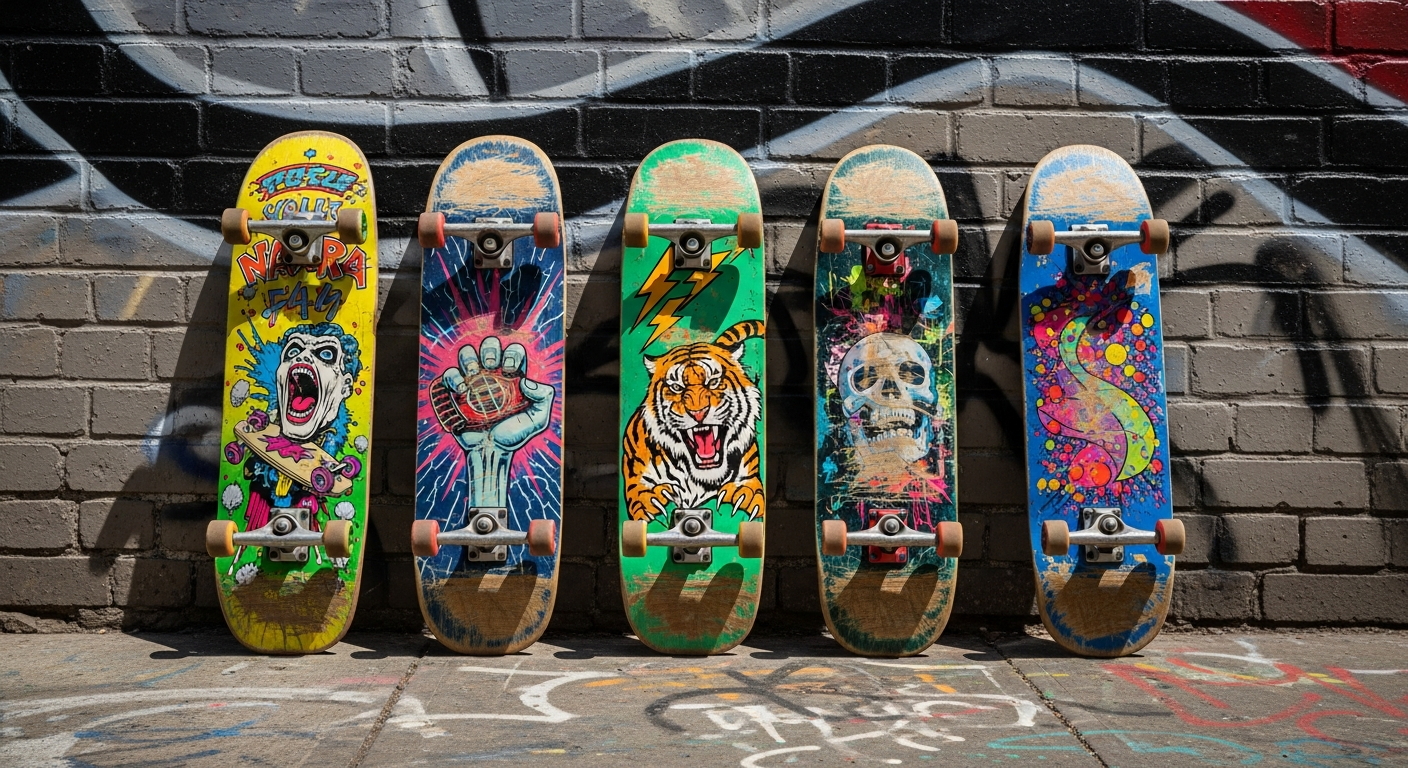
Seventeen series of reissues. Forty-two years after the first VHS. And they still sell like hotcakes. Not out of blind nostalgia. Because these boards represent a moment when six obsessed kids proved that skateboarding wasn’t a sport, a trend, or a hobby — but an entire culture, with its own codes, films, economy, and distinct identity.
In 2012, Stacy Peralta reunited everyone for the documentary Bones Brigade: An Autobiography, which premiered at the Sundance Film Festival. Standing ovation. Lance Mountain’s tears on camera are worth every speech about what this team meant to an entire generation.
When you look at skateboarding in 2026 — the XGL Draft with its NBA-style franchises, the 9.5 scores in SLS, the seven-figure Nike contracts — you can trace a direct line back to that Powell Peralta warehouse in 1984. To that crappy VHS that sold a hundred times its predictions. To those six kids who didn’t know they were inventing a world.
Next time you watch a street clip, think of Rodney Mullen in his garage. Next time you watch a vert run, think of Tony Hawk with his 85 cents. The Bones Brigade didn’t just skate. They built the ground everyone rides on today. To go even further into skateboarding history, our article on Steve Rocco and World Industries tells what happened when the next generation wanted to destroy everything.
We read every comment