


Choosing Your Skateboarding Deck in 2026 — The Complete Guide by Skill Level
The deck is the heart of everything. Not truck size, not wheels — the deck. It dictates your pop, your turns, how you feel every surface under your feet. Wrong deck = bad feel = bad progression. We’ll show you how not to screw it up.
⏱ Reading Time: 5 min
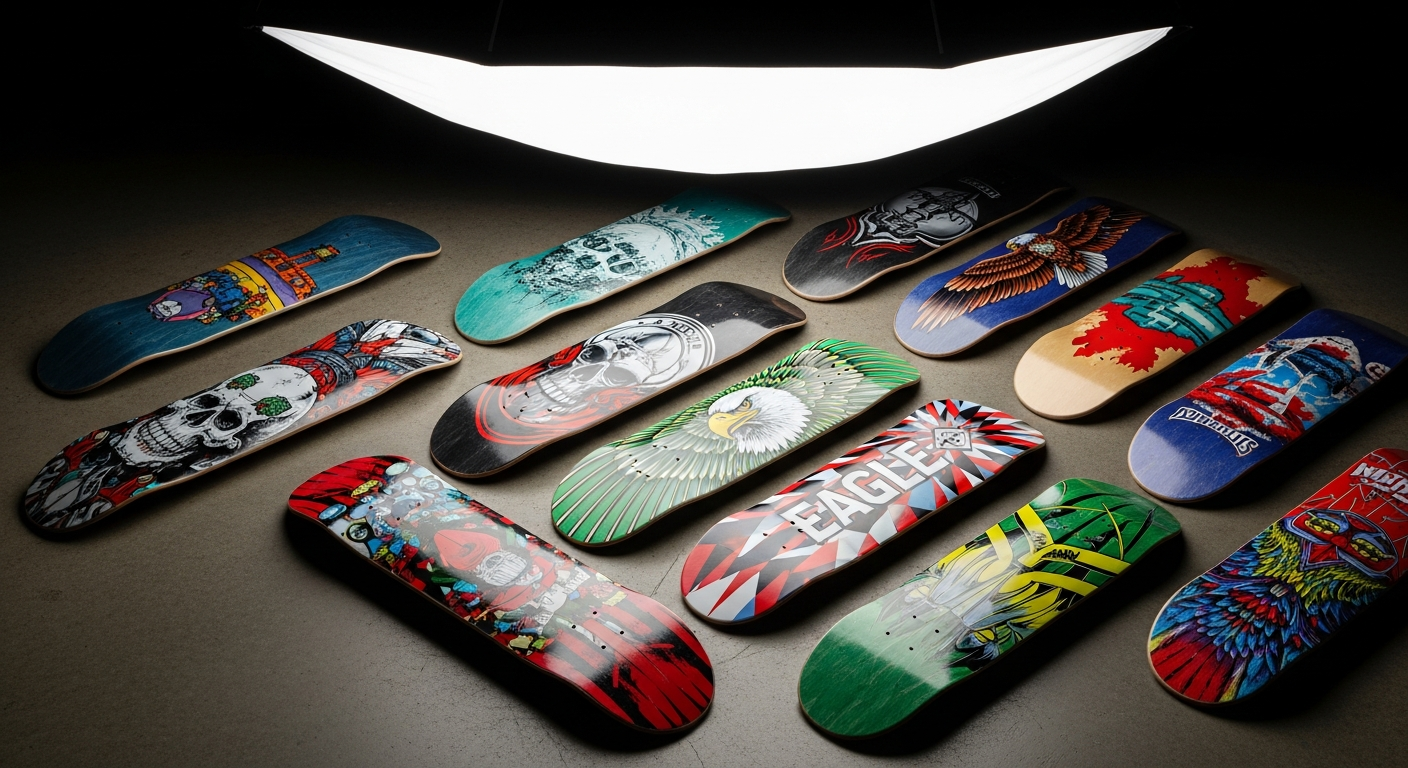
Why the Deck is the Core of Your Setup
Your skateboarding setup is like a musical instrument. You can put gold strings on a crappy guitar — it still won’t sound good. The deck is the body of the guitar. Everything goes through it.
Width affects your stability on grabs. Shape affects your pop. Concave affects your flips. A bad choice here, and you’ll spend months fighting your gear instead of progressing. We’ve all made the mistake. Don’t make it again.
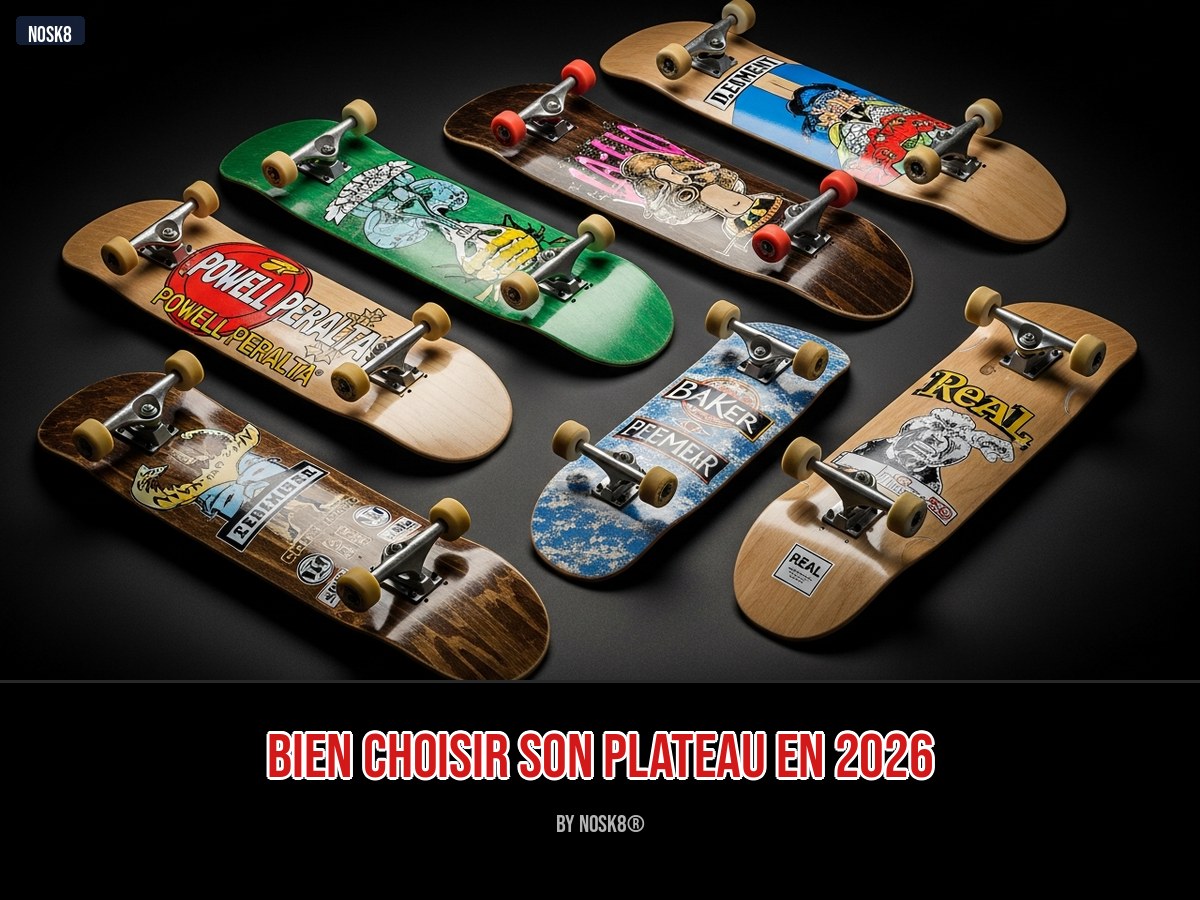
The good news: in 2026, the market is rich. Powell Peralta, Santa Cruz, Girl, Baker, Quasi — each brand has its philosophy and target skater profile. The trick is knowing which category you fall into.
What Deck Size Should You Choose?
Width is measured in inches. It’s the number one criterion. Not the brand, not the graphic — width first. It needs to match your shoe size and your skateboarding style.
| Width | Shoe Size | Skater Profile |
|---|---|---|
| 7.5″ | EU 36–39 | Teens, street skateboarding, technical flips |
| 7.75″ – 8.0″ | EU 39–42 | Versatile street, most sold size |
| 8.25″ – 8.5″ | EU 42–44 | Transition, vert, old school style |
| 8.5″ et + | EU 44+ | Bowl, pool, cruising, larger build |
These ranges are guidelines, not dogma. Many skaters ride 8.0″ their whole lives and land insane clips. Start within your range, then adjust based on how it feels.
The Best Deck Brands in 2026
The market has never been stronger. The old guards are holding strong, and modern brands have raised their standards. Here are the essentials.
Powell Peralta — The Undisputed Classic
Powell Peralta is the very DNA of skateboarding. Founded in 1978 by George Powell and Stacy Peralta, the brand shaped the 80s-90s with the Bones Brigade. Today, the quality of their Flight Technology decks is formidable — lightweight, durable, and pop that lasts. For the nostalgic thirty-something or the skater who wants something solid.
Santa Cruz — The Living Old School Spirit
Santa Cruz embodies Californian culture in every fiber of its decks. The brand leverages its longevity (founded in 1973) and continues to release artist collabs and varied shapes. Their screaming hand graphics remain among the most recognizable in global skateboarding.
Baker — The Brand for Hardcore Skaters
Created by Andrew Reynolds in 2000, Baker Skateboards is street skateboarding at its rawest. Team composed of legends (Reynolds, Figgy, Tyson Peterson), quality wood, classic shapes. If you ride Baker, you know why.
Girl & Chocolate — Premium Californian Skateboarding
Girl Skateboards co-founded modern street skateboarding. Mike Carroll, Rick Howard, Brandon Biebel — the team speaks for itself. 7-ply Canadian maple, clean pop, certified durability.
Quality

Value for Money
Durability
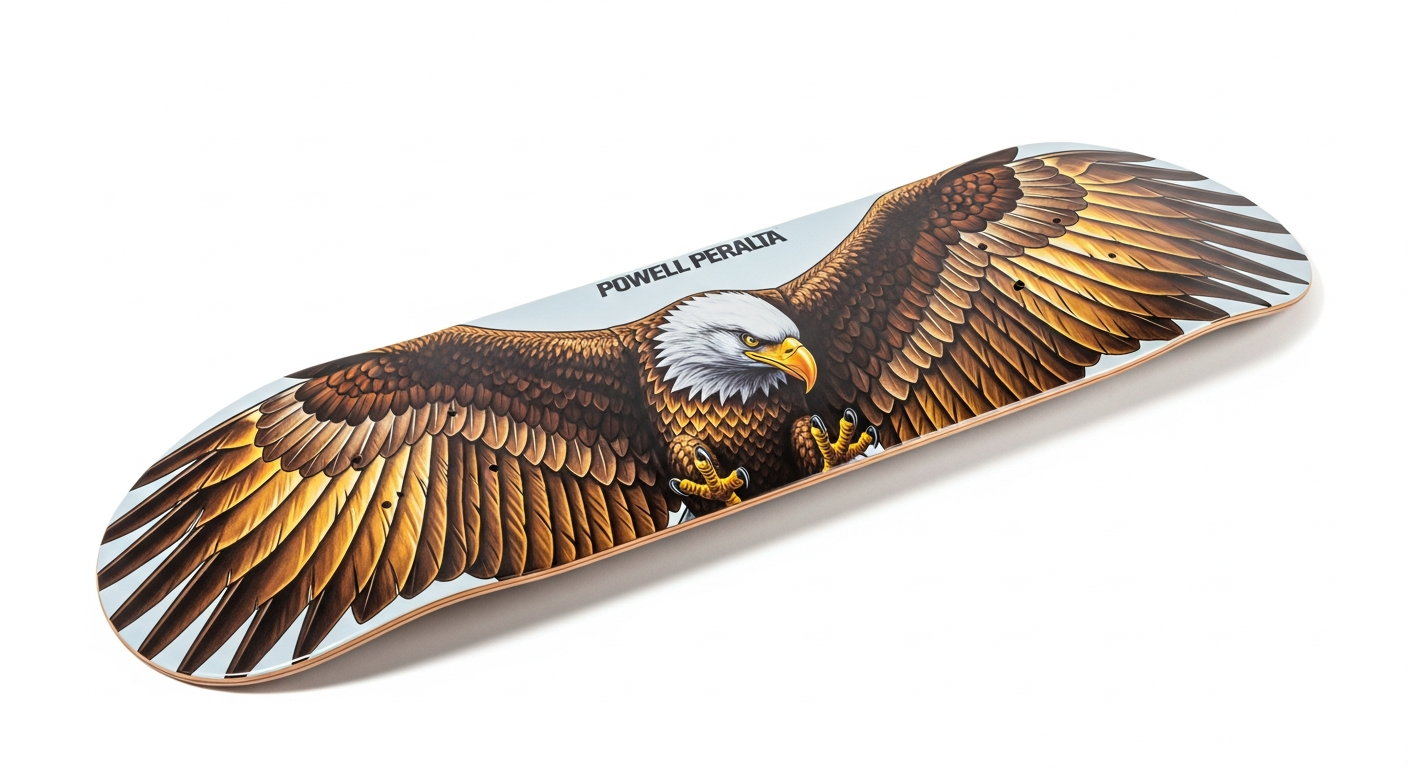
Powell Peralta Flight Deck
Powell Peralta’s Flight technology revolutionizes deck durability: a fiberglass layer between the wood eliminates razor tail in half the time. Consistent pop, maximum lightness. This is the deck that lasts.
Between 85 and 110 euros
Free shipping · 30-day returns
Shape, Concave, Material: The Details That Change Everything
Width is the number one criterion. But two decks identical in size can feel radically different. Here’s why.
The Concave
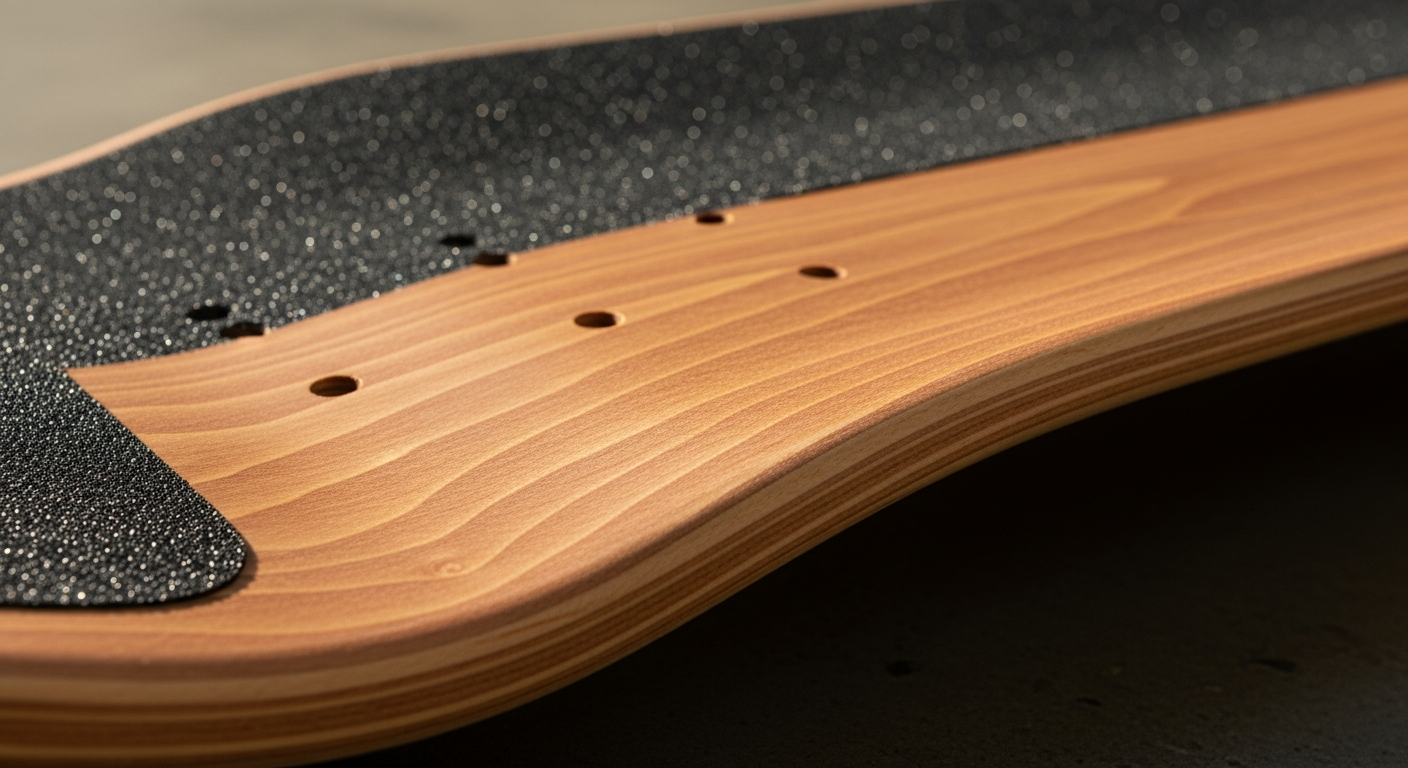
It’s the transverse curve of the deck. High concave = more foot grip, ideal for flips and technical tricks. Flat concave = more comfort, better feel on grabs and vert. Most street decks have medium to high concave.
The Wheelbase
The distance between the front and rear mounting holes. A short wheelbase (around 35 cm) makes the deck more reactive, easier to turn. Long (38 cm+) = more stable at high speeds. For the same width, this criterion changes everything in transition.
The Wood
Almost all pro decks are made of 7-ply Canadian maple. It’s the standard. Denser and harder than American maple. Some brands incorporate carbon or fiberglass (Powell Flight, Deathwish Deathply) to increase lifespan. More expensive, but if you need it: you know it.
Our Selection by Skill Level
We’ve done the legwork for you. Here’s what we recommend, depending on where you’re at.
Beginner (0-6 months)
Grab an Element or a Plan B in 7.75″. Solid wood, reasonable price (between 55 and 70€), accessible shapes. You don’t need the best deck to learn an ollie. You need a deck that’s forgiving and lasts while you find your footing.
Intermediate (6 months – 2 years)
At this stage, you’re starting to feel the difference between a cheap deck and a pro deck. Invest in a Baker or a Girl. The quality of the pop will change your progression. Between 65 and 80€, that’s the sweet spot.
Advanced / Regular Skater
You already know what you want. Flight decks (Powell Peralta) or Deathply (Deathwish) are worth their price if you skate 3-4 times a week and break one every two months. In the long run, a 100€ deck that lasts 4 months is cheaper than two 60€ decks in two months.
To go further on a complete setup, we’ve written a guide on trucks and a comparison of 2026 wheels. The perfect setup is built piece by piece. Make sure you start with the deck.
We read every comment