

Rocco vs. Powell: How World Industries Overthrew the Skateboarding Industry (1987-2002)
In 1987, a 27-year-old ex-freestyle pro left Powell Peralta with a grudge and $5,000. Fifteen years later, he sold his empire for 46 million to an Australian group. In between, Steve Rocco blew up everything skateboarding had become — and saved it.
⏱ Reading time: 6 min
1987 — The Pirate Who Planted a Flag
Get back in the mood. Mid-80s. Powell Peralta dominates everything. The Bones Brigade — Hawk, Caballero, Lance Mountain, Mike McGill — they’re the official team of global skateboarding. Stacy Peralta films his VHS. George Powell cashes in. The market is locked down.
Except in L.A., a guy’s bored. Steve Rocco — ex-freestyle pro for Sims, fired, briefly bought back, despised by the establishment — decides he’s sick of nobody paying riders properly. He starts SMA Rocco Division in 1987. Studio in his garage, Vision distribution, everything just-in-time. The next year, he drops the brand that will change everything: World Industries.
In 1989, an absolute poker move: Rodney Mullen leaves Powell Peralta. The guy who invented the modern flatground flip ditches the brand that made him. He becomes a major shareholder of World, alongside Rocco. The same year, Rubbish Heap, World’s first video, comes out — Mullen films his lines in a car junkyard. It’s dirty, it’s laid out on 4 BetaSP cassettes that were dubbed for copies, and it’s exactly what the Bones Brigade would never do.
Marc McKee, Devil Man, and the Graphics War
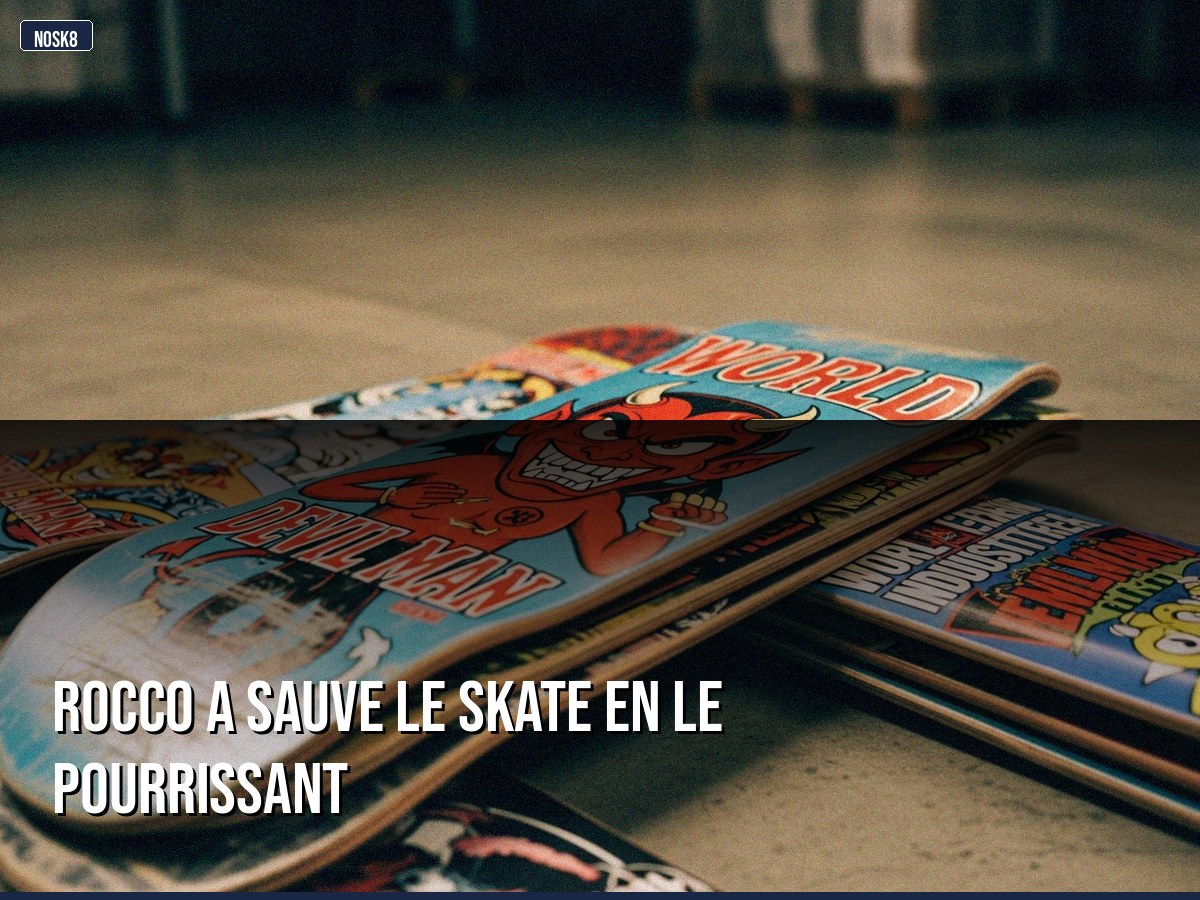
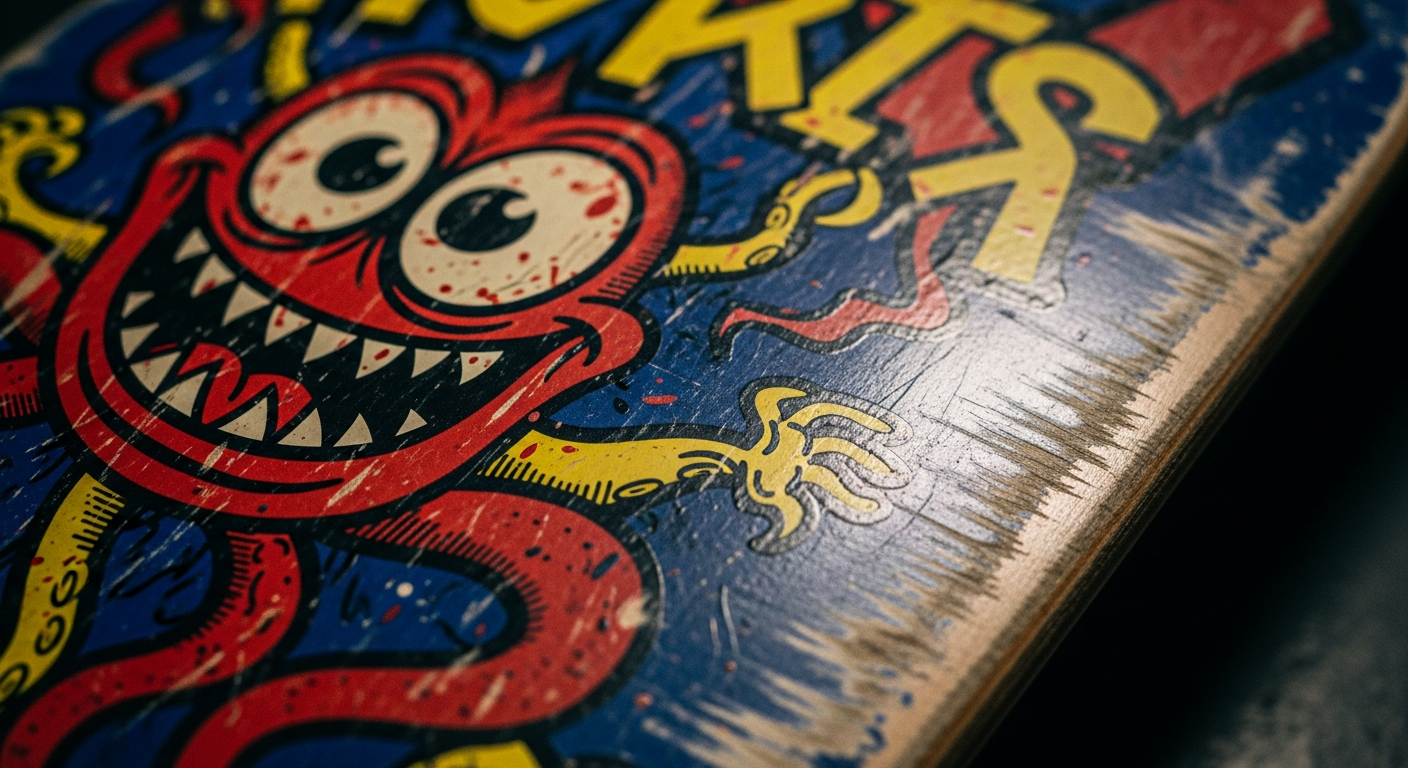
Rocco’s nuclear weapon isn’t the pros. It’s the graphics. In 1989, he hires a 25-year-old illustrator who draws for punk fanzines: Marc McKee. First creation — Devil Man. Sidekick — Flameboy. Antagonist — Wet Willy. Three cartoon characters born in a Santa Monica apartment who would become the faces of global skateboarding for the entire decade.
McKee doesn’t just draw mascots. He makes Jesus vs Satan decks, Disney parody graphics that Rocco sells for two weeks before the lawsuit, barely veiled sexual references on teen boards. Powell Peralta put out clean skeletons. World put out Devil Boy pissing on a Vision logo. What do you think the 14-year-old shop kid in Saint-Étienne in 1994 bought?
At this point, World isn’t just a brand. It’s an attitude. And Rocco capitalizes — he launches Blind Skateboards (Mark Gonzales), 101 (Natas Kaupas, Adrian Lopez), Plan B with Mike Ternasky operating covertly. He snags big pros with salaries Powell couldn’t imagine. Tony Hawk leaves Powell for Birdhouse in 1992 — that’s the end of the reign. Rocco won.
Daewon, Plan B, Big Brother — The Pirate Empire
The thing with Rocco is, he doesn’t stop. Daewon Song comes out of nowhere in 1991, a Korean kid who bails his tricks on camera but still keeps the best clips because he invents. Rodney Mullen and Daewon make Rodney vs Daewon (1997) then Round 2 in 1999 — two of the most-watched videos of the VHS era. 100% footage on picnic tables and obstacles found in the neighborhood. Nothing like the ramps photographed under stadium lights of the 80s.
In 1992, Rocco founds Big Brother Magazine. The magazine co-founded with Steve Caballero openly mocks Thrasher. Articles on « how to successfully commit suicide, » interviews where pros are drunk, intentionally blurry photos. Larry Flynt buys the editorial team in 1997 and Jeff Tremaine works there — a few years later he spins off a TV project called Jackass. You see the lineage.
Meanwhile, Plan B releases Questionable (1992) then Virtual Reality (1993) — the two videos that rewrite what’s expected from a street edit. Mike Ternasky — Plan B director and Rocco’s associate — dies in a car accident in November 1994. The crew disbands. Rocco takes the hit but doesn’t slow down.
2002 — 46 Million and the End of an Era
First exit signal in October 1998: Rocco and his five associates (including Mullen) sell 70% of World to a private equity fund, SPC. Company valuation: 29 million dollars. Rocco remains manager but begins to disengage. The skateboarding of the 90s — his, the brutal, the funny, the disrespectful — is being crushed by its own commercial success.
In 2002, the final blow. Globe International, an Australian publicly traded company, acquires the entire Kubic Marketing group (which owned World, Blind, Darkstar, Tensor, Speed Demons) for 46 million dollars. Rocco and Mullen become multi-millionaires with one signature. Marc McKee leaves. The artistic direction changes. World Industries becomes a brand sold at Walmart in the United States, on beginner decks for 19 dollars. For the pro circuit kids, it’s dead.
What Remains, 30 Years Later
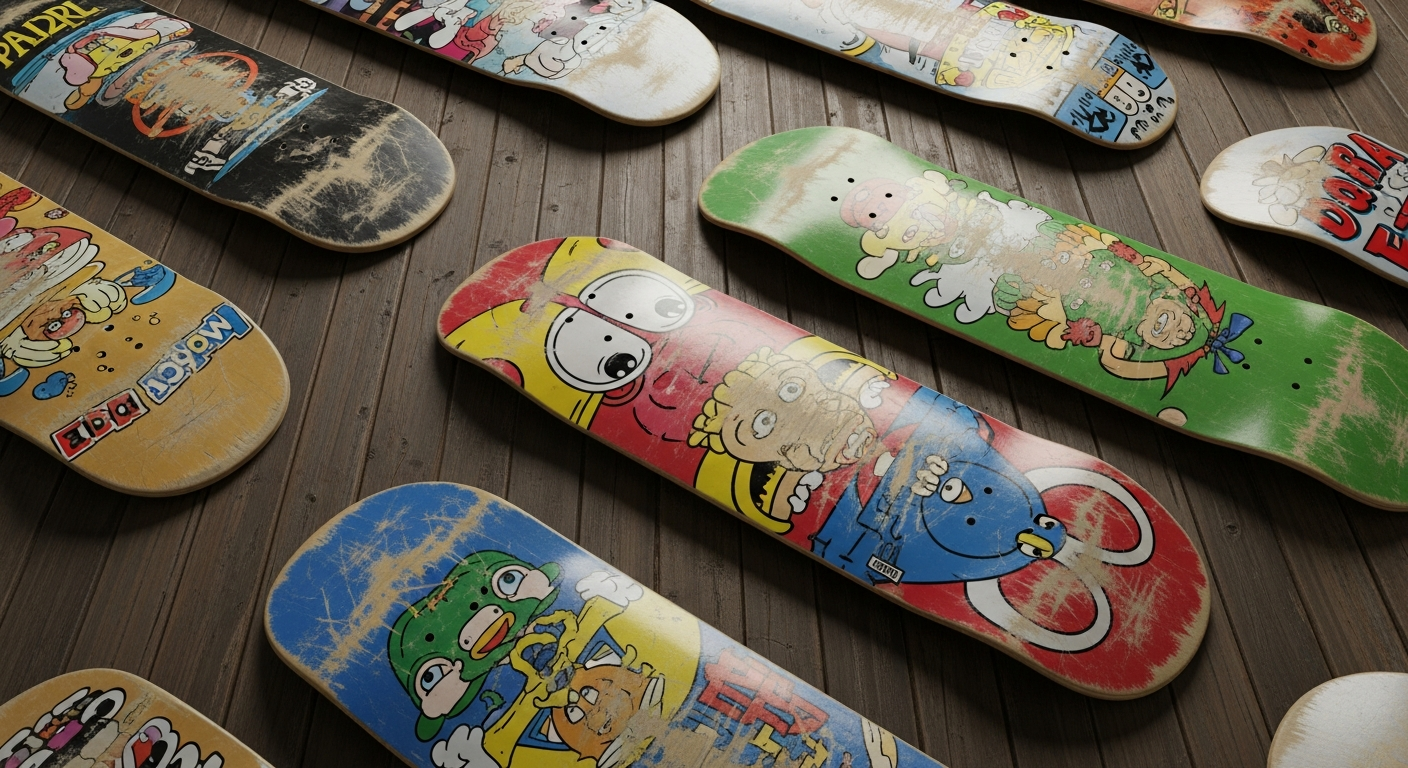
You open Instagram today, you see a kid in a hoodie with the Devil Boy patch. He probably doesn’t know who Rocco is. He might have seen the profile of the kid skateboarding with a Blind reissue deck in a Berrics video. McKee sums it up best: « Today, skateboarding graphics have become vanilla. »
But look closely. The very structure of the modern skateboarding industry — brands owned by skaters, self-produced videos, provocative graphics, teams filmed by their own friends — Rocco imposed it. Before him, there was Powell, Vision, Santa Cruz, and Tracker. Manufacturers. Industrialists. After him, there’s the Marseille scene, Antihero, Polar, Hockey, Fucking Awesome — all author brands, started by skaters, who despise corporates. Rocco invented this model.
As for Rodney Mullen, he pocketed his millions, shut his mouth, and continues skateboarding early in the morning in empty parking lots at 58. They are both in the Skateboarding Hall of Fame since 2022. And you can still find a Devil Boy reissue deck on Amazon, properly manufactured, for 80 bucks. The pirate won. Even against himself.