

Prado Bowl — 35 Years of Legend, the Park That Shaped European Skateboarding
Opened in 1991. Immortalized by Tony Hawk in 2000. Renovated in 2017. Voted « the continent’s most famous skatepark » by Le Monde. For its 35th anniversary, a look back at the Marseille bowl — the only spot that shifted the center of gravity of European skateboarding south.
⏱ Reading time: 5 min
1991 — Birth of a Concrete Monster
At Escale Borély, on the Prado beaches, architect Jean-Pierre Collinet poured five bowls and a spine in 1991. Back then, French skateboarding was still crawling. No pro circuit. No solid sponsors. And yet, in the heart of the South, one of Europe’s deepest bowls was built: 2.70 m on the mega, stainless steel pool coping, endless lines between the modules.
The spine: 1.70 m. Five progressive bowls, from the baby bowl to the mega. Two separate halfpipes. A street section attached to it all. The design was radical for its time — conceived by a guy who skated. Thirty-five years later, the transitions still hold their own against new parks from the 2020s.
2000 — Tony Hawk Carves the Prado into Stone
On September 20, 2000, Tony Hawk’s Pro Skater 2 was released on PlayStation. And with it, a level soberly titled « Marseille« . A pixel-perfect digital recreation of the Prado, playable by millions of teens who had never even heard of France.
The effect was immediate. An entire generation learned to skate the Prado virtually — manual on the spine, grind on the pool coping, gap between the spine and the bowl. When they showed up IRL a decade later, they knew the lines. Le Monde eventually wrote: « undoubtedly the most famous skatepark on the continent« . Not a Parisian park. Not Bordeaux. The Prado.
2017 — The Renovation That Saved the Myth
At 26 years old, the bowl was worn out. Cracked concrete, coping torn off in places, drainage shot. The city council hesitated. Several rumors announced its outright destruction — that’s the usual fate of iconic spots (Embarcadero ended up as a parking lot, Love Park was razed).
Saved in extremis by pressure from the Marseille skateboarding community and Board Spirit Marseille, the Prado underwent a complete renovation in 2017. Repolished concrete. Brand new coping. Night lighting installed — you can skate until 11 PM in May, in a t-shirt, with the sea 200 meters away. Mediterranean climate, 300 days of sun. The only French park where you can pull a bowl session in the middle of January without gloves.
Bowl Rippers — The Annual Gathering
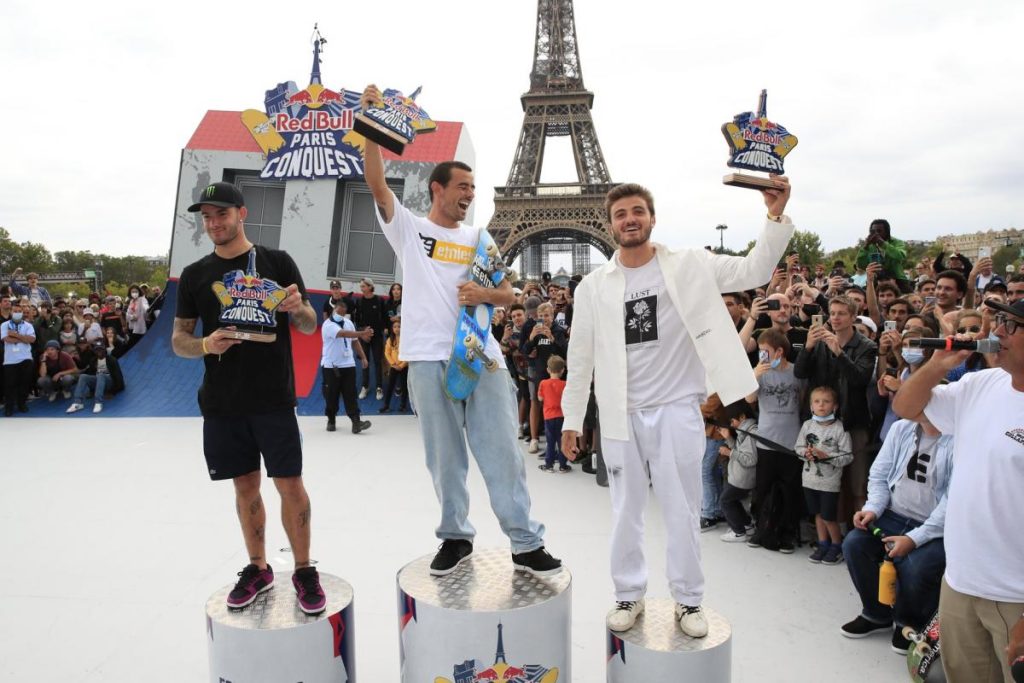
Every summer, the Red Bull Bowl Rippers brings the world to the Prado. European stop of the World Skateboarding Cup, co-organized with the International Skateboarder’s Union. Pedro Barros has been there five times. Sam Beckett. Lizzie Armanto. Alex Sorgente. Tom Schaar. The list is a global Best of bowl skating.
What Marseille succeeded in doing, and no one else in France has managed: creating an event with the international legitimacy of Sydney’s Vert Attack or Volcom Wild in the Park. Not a subsidized local contest. A real global stop, with Red Bull TV broadcast, heavy sponsors, pro riders. That’s what shifted the center of gravity.
The Setup for Skating the Prado
For bowl skating at the Prado, you want big: 8.25 to 8.5 board, wide trucks (Indy 159 or Venture 6.0 high), wheels between 56 and 58 mm in 99A to absorb the transition without losing responsiveness. A good pair of skate shoes with a thick vulcanized sole — drops into the mega will wreck your ankles if you neglect the cushioning.
56 mm 99A bowl friendly wheel set
The ideal diameter to absorb the Prado’s transitions without losing speed. Street compatible.
Fast shipping · 30-day returns
Cap is mandatory (the mistral wind can blow). Water bottle. If you’re new to bowl skating, helmet and elbow pads — the mega is unforgiving. And you can round out your session with a detour to the Friche Belle de Mai, the city’s other skateboarding hub, 25 minutes from the Prado.
Thirty-five years later, the Prado Bowl hasn’t aged a day. It continues to set the pace for European skateboarding. Three generations have grown up on its transitions. A fourth is coming. While other cities close their historic spots, Marseille protects its monster. And that changes everything.