

Skateboarding Wheels 2026 — how to choose the right duro and diameter
You change your wheels, you change your skateboarding. Seriously. A poorly chosen wheel makes you push into nothing, slide when you want grip, vibrate on the smallest pebble. Let’s bust the myth: the right duro and diameter aren’t folklore — they’re what makes the difference between a setup that responds and one that betrays you.
⏱ Reading: 6 min
What exactly is duro?
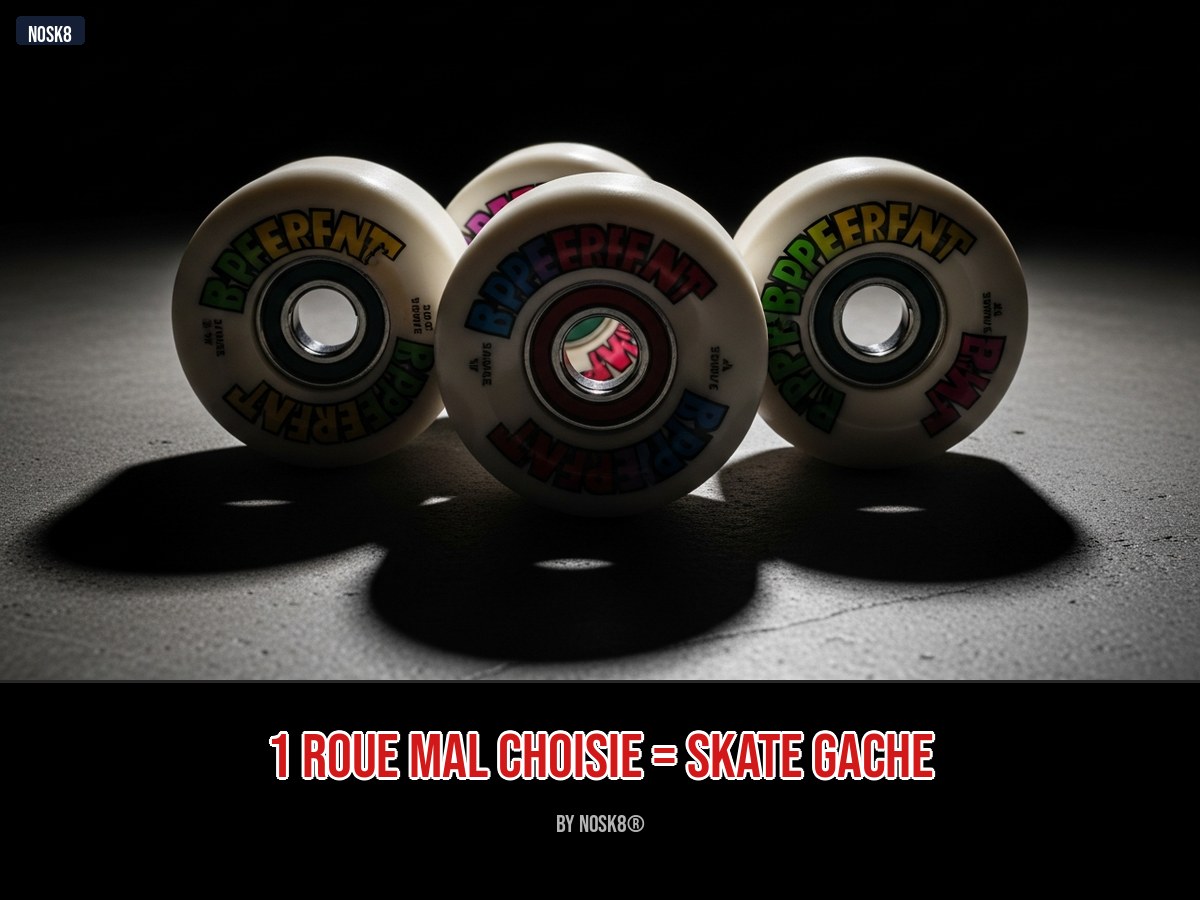
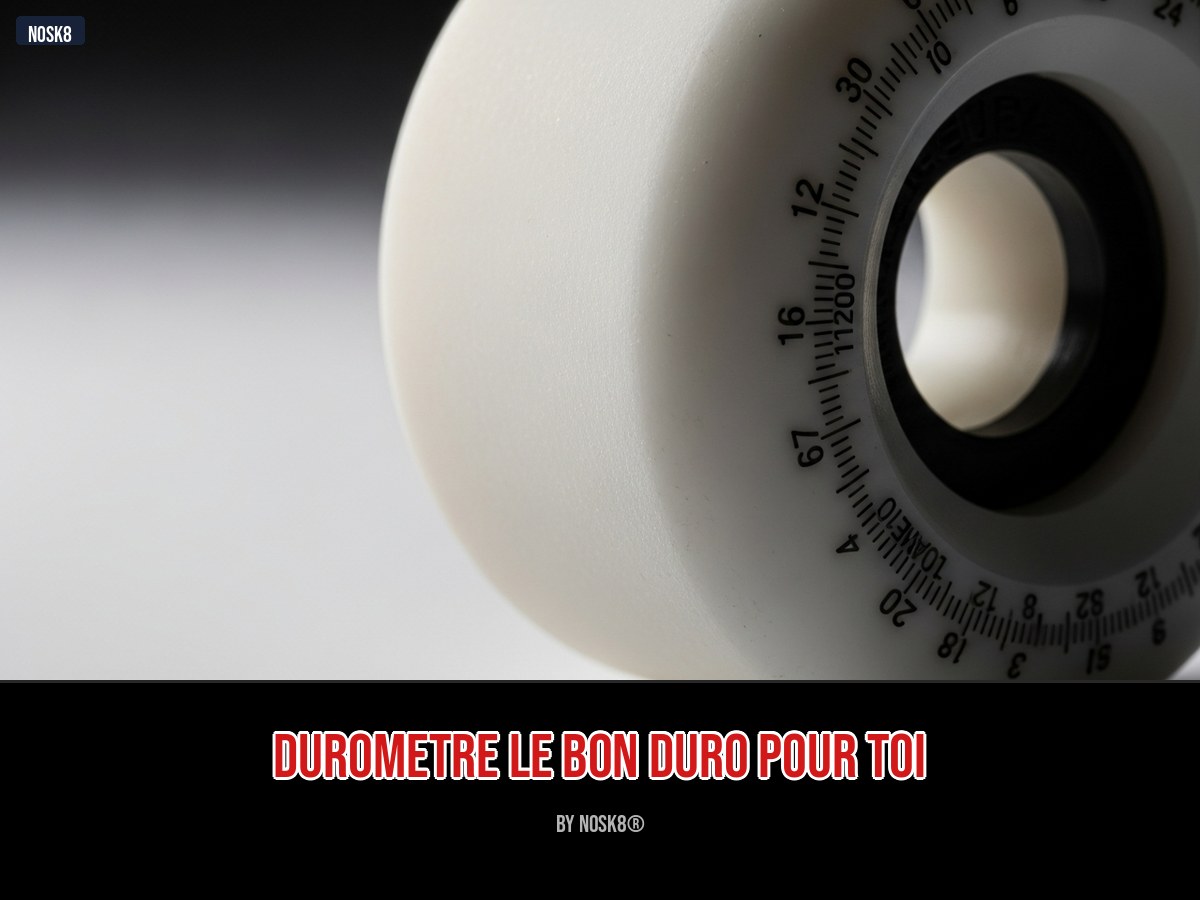
Duro is the hardness of the urethane. A scale from 75A (soft) to 101A (very hard). The harder it is, the faster it slides and the more you feel every imperfection on the ground. The softer it is, the more it absorbs and grips the asphalt.
For street and park: between 99A and 101A. This is the universal standard. Below 95A, you’re entering cruiser territory, and your flips get mushy.
Some brands use a B scale (Bones, for example, on its STF V5s). 84B duro is equivalent to about 104A — this is very, very hard, designed for the smooth surfaces of polished bowls and parks.
Diameter — 50, 53 or 56mm?
Diameter determines your top speed and acceleration. Smaller, more reactive. Bigger, faster once you get going.
50-52mm — Pure Tech Street
Light, lively, fast rotations. Ideal for tight flips and manual game. Downside: you feel every single crack. Reserved for experienced skaters who ride on clean ground.
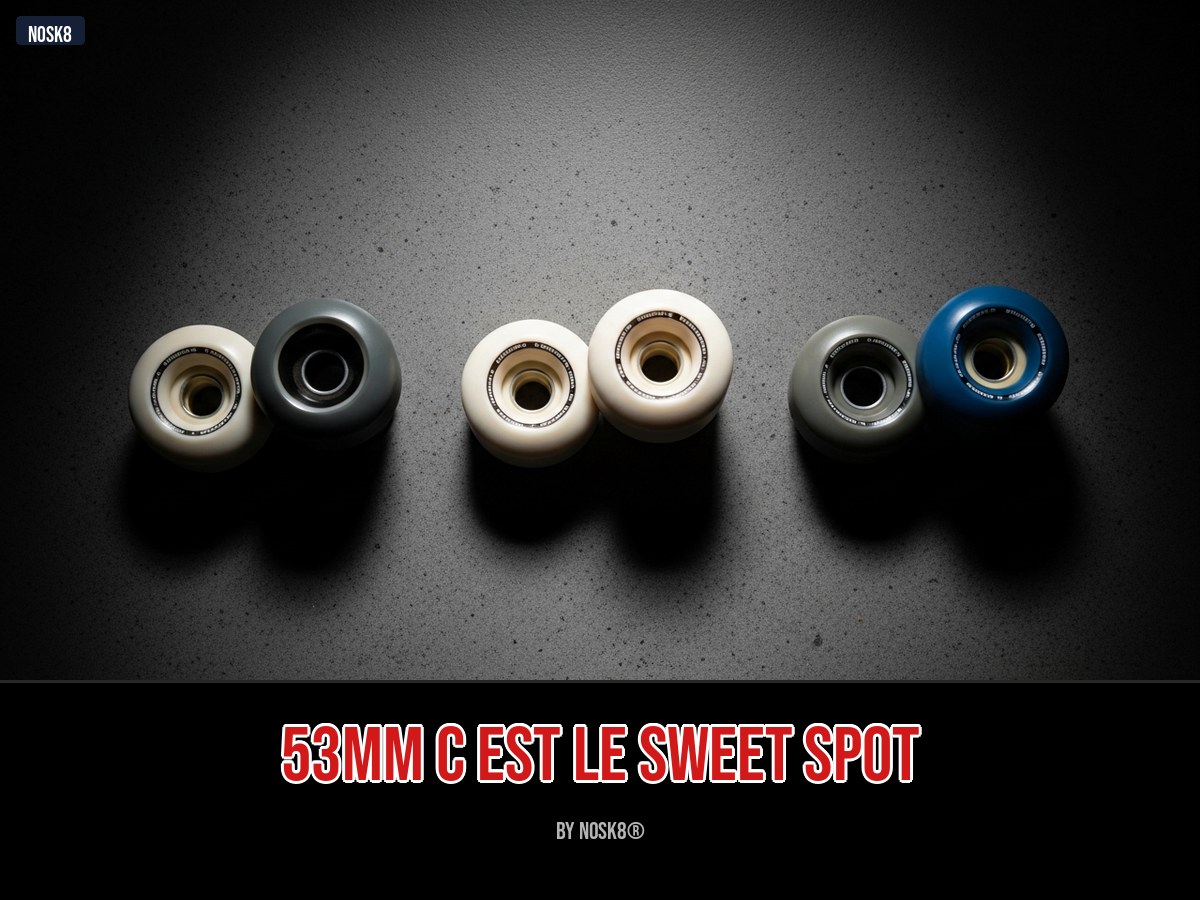
53-54mm — The Universal Sweet Spot
Perfect compromise between maneuverability and forgiveness. If you’re starting out, if you skate everything — street, park, ledges, manny pads — this is where you land. 90% of pros ride 53 or 54mm.
55-58mm — Park, Transition, Rough Ground
More speed, less wheel bite, better in bowls. From 55mm upwards, you’ll consider 1/8″ risers to avoid touching the deck during heavy compression.
The Wheel Shape Changes Everything
Conical: angled edges, narrower contact patch. You slide more easily sideways — perfect for powerslides and grind slides.
Classic / Straight: straight edges, more surface area on the ground. More stable, more grip, longer lasting. The default choice when you’re starting out.
Bighead: large riding surface, low profile. More stable on landings, great for transitions. Spitfire is the benchmark for this shape.
The 3 Wheels We’re Keeping in 2026
We spent the year testing. Here are our three picks based on budget and use. No bullshit — just wheels that last.
4-PACK SKATEBOARD WHEELS 53MM 99A — ENTRY LEVEL
First set to replace worn-out wheels without breaking the bank. Standard 53mm/99A size, decent urethane for cruising and learning your first tricks.
Fast delivery · 30-day returns
Quality
Value for money
Durability
SPITFIRE CLASSICS 53MM 99A — THE ABSOLUTE STANDARD
The classic shape from skateboarding’s most respected brand. Progressive urethane that slides in powerslides without flat-spotting. Still rolling after six months.
Fast delivery · 30-day returns
Quality
Value for money
Durability
BONES STF V5 53MM 103A — THE TECH REFERENCE
Skatepark Formula urethane, zero flat-spots, perfect slide on ledges. What half the Thrasher Mag crew rides. High price, but the lifespan justifies every penny.
Fast delivery · 30-day returns
Quality
Value for money
Durability
Mistakes That Trash Your Skateboarding
Mixing brands and durometers?
Bad idea. You end up with a board that veers or bounces unevenly. Four identical wheels, period.
Choosing 60mm to go faster?
Guaranteed wheel bite. Beyond 56mm on low trucks, your wheel hits the deck when turning and you bail. Add risers or stick to 53.
Keeping flat-spotted wheels?
When a wheel gets a flat-spot (flattened area after a failed slide), it vibrates with every rotation. You replace it. No mercy.
Once your new wheels are mounted, also check your bushings and grip — the combo makes all the difference. Our 2026 bushings guide, our complete grip tape guide, and our Independent / Thunder / Venture comparison finish the job.