

Tom Penny — 30 Years Later, the British Genius Still Haunts Skateboarding
He had it all — the talent, the sponsors, the magazine covers. Then he vanished. And that’s precisely why we’re still talking about him in 2026.
⏱ Reading Time: 4 min
Oxford, 1989 — A Kid Like No Other
Tom Penny was born in Abingdon, near Oxford, on April 13, 1977. No magazines, no VHS, no local scene — just a board, asphalt, and friends. He learned alone. And that’s the kicker: he developed a style that no one influenced. While the skateboarding world copied Mark Gonzales and Natas Kaupas, he invented his own grammar, in his corner, in silence.
At 16, his kickflips were perfect. At 17, his switch flips were too — and that’s what flipped British skateboarding. Back then, switching your tricks was an elite sport: Salman Agah had just won Skater of the Year based on that. Tom, he switched like he breathed. Frontside flip, switch frontside flip, kickflip, switch kickflip — for him, all four came out identical. Nobody was doing that in 1994.
Jeremy Fox spotted him. He brought him to Deathbox — the British brand that would become Flip Skateboards in 1994. Tom Penny was the brand’s very first signature pro. He was 17. He still lived with his mom.
Sorry — The Missed Appointment That Changed Everything
2002. Flip released Sorry, the video meant to consecrate Geoff Rowley, Arto Saari, Bob Burnquist, and Tom Penny. Penny’s part had been anticipated for six years. Six years of promises, rumors, lost footage, exhausted filmers. Six years during which the legend grew on its own, without producing anything.
When the part dropped, it was a collective collapse. Not because it failed — quite the opposite. But because it was too short, too calm, too obvious. Tom skated like he was just coming back from the corner store. No visible effort. No shouts, no moonwalks after the trick. Just clean lines, a frontside flip that would never land that perfectly again, and that’s it.
Skateboarding, at that moment, shifted. Really Sorry in 2003 then Extremely Sorry in 2009 would confirm the pattern: Tom Penny gives no more than what he feels like giving. And that’s exactly what his fans want.
Argentina, Christiania, France — The Permanent Escape
While the Video Days generation filled contests and covers, Tom Penny bolted. Buenos Aires, late 90s. Barcelona, early 2000s. Christiania, Copenhagen’s hippie enclave, mid-2000s. Then England. Then the United States. Then nothing for two or three years.
His routine? Tai Chi, meditation, weed, and skateboarding. In that order, or out of order. No agent, no Instagram, no autograph tours. The myth is built on absence — a bit like Mark Gonzales, but in a totally off-grid version.
Meanwhile, his Flip Tom Penny signature series kept flying off the shelves, month after month. The Cheech & Chong board became one of the brand’s best-sellers. The guy does nothing — and his boards sell. That’s the Tom Penny status.

2025 — The Barn, The Mini-Ramp, The Returnee
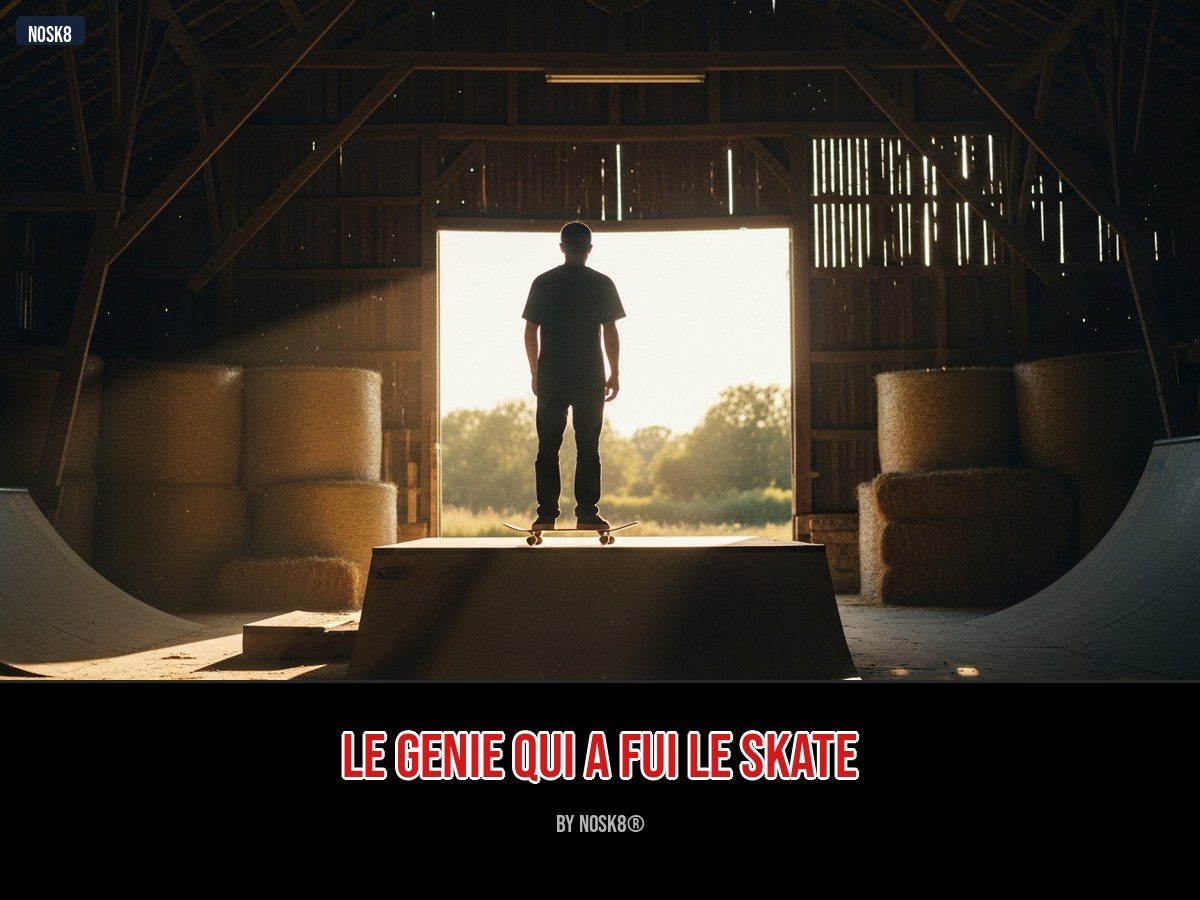
In spring 2025, the skate-net exploded. A video resurfaced: Tom Penny, 48, on a wooden mini-ramp set up in a lost barn in the French countryside. Persistent rumor: the barn belongs to his mother, who has been living in France for years.
In the clip, Penny strung together: clean half-cab noseslide, 360 flip to fakie without flinching, frontside flip — still the same frontside flip as in 1996. No higher, no further, just exactly as perfect. The guy is 48 and hasn’t lost an ounce of pop.
In 2023, the Skateboarding Hall of Fame inducted him. He didn’t show up for the trophy. In 2025, his own curbs and banks filmed harder than most pro parts of the year.

Why His Silence Became His Masterpiece
Tom Penny is living proof of something skateboarding refuses to admit: talent only wears out if you use it for the wrong reasons. By rejecting the industry, contests, and star status, he preserved exactly what the industry tries to artificially manufacture in others — an intact style, a non-negotiable identity, a legend that demands no validation.
In an era where every rider has to post three reels a week to exist, Penny’s silence increasingly looks like a political act. He never sought to be seen. That’s why we still watch him.
30 years after Sorry, skateboarding continues to await Tom Penny’s next appearance like you’d await a message from a friend who went to travel the world. Maybe he’ll come back. Maybe he won’t. And that’s perfectly fine.